


Manali – Leh Highway is one of the two roads that lead to heaven on earth called Leh – Ladakh (the Srinagar – Leh Highway being the other one). Having traveled this highway multiple times over the last 14+ years, I can tell you with all honesty that it is one of those roads in the world which offers almost everything nature has to offer to an adventure lover.
Serious travelers in India and abroad do have a dream of traveling on this dangerous and beautiful highway at least once in their lifetime. I am one of those honored souls to have experienced this journey of my life multiple times, and the thrill never gets old, my friend.
Having said that, the journey on Manali – Leh Highway could be a bit tricky to plan if you haven’t researched well enough. As of 2026, about 350 km out of the approximately 430 km long Manali – Leh Highway (shortened from 474 km after the Atal Tunnel became operational in 2020) does not have any civilization. Even fuel (petrol/diesel) is not available for about 345 km between Tandi and Karu on this route. Hence, adequate planning is very well required to travel on Manali – Leh Highway so as to make it a memorable experience.
2021 Update: With the opening of the Rohtang Pass Tunnel or Atal Tunnel in 2020, the distance of Manali – Leh Highway has been reduced by 45 km and brought it down to a total of 430 km from Manali to Leh. It is not just the distance but the overall time to reach Keylong from Manali is reduced by 3.5-4 hrs and that means Manali to Leh journey can be done in about 13-14 hrs. This 9.02 km Atal Tunnel connects Manali to Keylong in Lahaul Valley. You are no longer required to travel over Rohtang Pass which means there is no longer a dependency on its opening date to travel to Keylong from Manali. Along with it, you no longer have to worry about avalanches, bad roads, traffic jams, landslides which were pretty common when traveling to Leh from Manali via Rohtang Pass.
In this detailed travel guide, I have covered everything you need to know for planning a trip on Manali – Leh Highway in 2026 — from road conditions and best time to travel, to bus fares, taxi rates, accommodation, fuel stops, AMS prevention, and much more. Let us get started 🙂 …
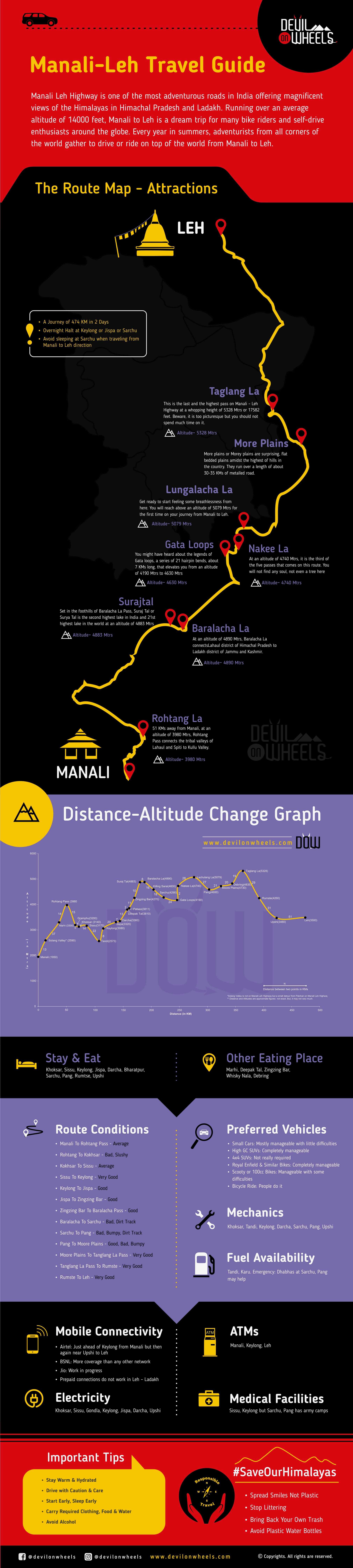
Download your FREE high-resolution version pdf copy of this Manali to Leh infographic guide. If, you liked it and found it helpful, please feel free to share it with your family and friends to help them too.
Let's quickly dive into the details:
Practical Info at a Glance
| Best Time | June to September (highway open late May to mid-October) |
| Total Distance | ~430 km via Atal Tunnel (earlier 474 km via Rohtang Pass) |
| Budget (per person, 2 days) | Rs 1,500 (HRTC bus) to Rs 18,000 (private taxi) |
| Difficulty | Challenging — high altitude, remote, limited fuel & medical facilities |
| Nearest ATM | Manali and Keylong only; next ATM at Leh |
| Mobile Network | BSNL best coverage; Jio expanding; Airtel till Keylong; no signal Sarchu-Pang |
| Fuel Availability | Tandi (110 km from Manali) — next pump at Karu (30 km before Leh) |
| Permits Required | Rohtang Pass permit (online, Rs 500/vehicle); ILP for Ladakh restricted areas |
| Last Updated | February 2026 |
How to Plan a Trip on Manali – Leh Highway? [Complete Travel Guide 2026]
Plan your Manali – Leh Highway trip between June and September 2026. Use the Atal Tunnel to bypass Rohtang Pass, fuel up at Tandi, plan overnight halts at Keylong/Jispa or Sarchu, carry AMS medicines, and get the Rohtang Pass permit online. The highway is approximately 430 km long and best covered in 2-3 days. Before heading out, check the Manali Leh Highway Status 2026 for real-time pass opening dates and BRO road condition updates.
I hope the below information in this detailed travel guide of Manali – Leh Highway will be helpful for someone planning a journey on this route. I have tried to cover every aspect based on my personal experience and the latest information as of 2026.
Should I Travel to Leh Ladakh via Manali or Leh to Manali?
I always suggest traveling from Leh to Manali, NOT Manali to Leh. Enter Leh via Srinagar side first, spend a few days acclimatizing, then enjoy the Manali – Leh Highway on your return journey. This way your body is acclimatized, and you truly enjoy the ride without AMS worries.
Before anything, if you want to enjoy Manali – Leh Highway then do it from Leh side. That is, travel from Leh to Manali, NOT Manali to Leh. This direction will help you enjoy the highway without bothering to rush through the place or worry about AMS or driving with nausea, headaches, etc.
1. Better Acclimatization
Traveling from Manali to Leh will hold you back from the enjoyment. Mostly due to AMS and its symptoms because for the majority of the time, you are above 4,000 meters of altitude, which your body cannot adapt to easily so quickly. But while coming from Leh towards Manali, your body will be acclimatized for the high altitudes much more than when you travel to Ladakh from Manali.
If you still prefer to travel to Leh Ladakh via Manali, then you can follow the most common itinerary to travel to Ladakh from Manali.
2. Avoid Sleeping at Sarchu
Secondly, traveling from Leh to Manali will also help you halt your journey at Sarchu which is at an even distance between Manali and Leh and offers a varied amount of accommodation options. Otherwise, you will end up doing Manali – Keylong on one day and push from Keylong to Leh on the second.
Sleeping at Sarchu is not recommended if you are coming from Manali unless your body has completely acclimatized to Sarchu altitude by staying in Spiti and Lahaul Valley for about 4-5 days.
Hence, always try to plan a journey to Ladakh in such a manner that you enter Leh via Srinagar side and then after exploring Leh – Ladakh for a few days, come back via Manali – Leh Highway. You should also read: 5 Reasons to choose Srinagar – Leh Road to enter Leh over Manali – Leh Road.
When Is the Best Time to Travel on Manali – Leh Highway?
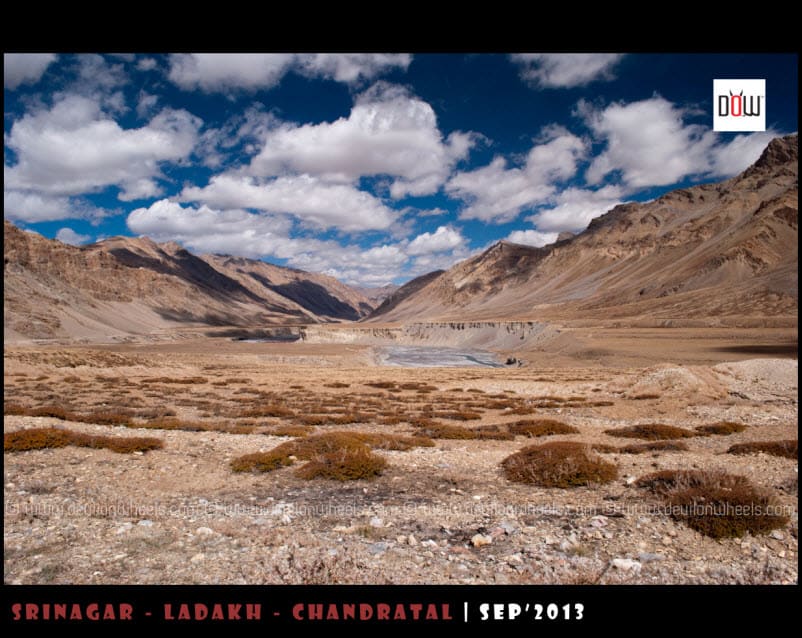
The best time to travel on Manali – Leh Highway is June to September. The highway typically opens in late May after BRO clears snow from Baralacha La and other high passes. July mid to September offers the best road conditions with dried-out mud and completed maintenance work. June offers snow views but riskier roads.
Usually, the opening of Baralacha La majorly governs the travel time on Manali – Leh Highway. With the Atal Tunnel now operational since 2020, Rohtang Pass is no longer a bottleneck for the highway opening — the tunnel provides all-weather access up to Sissu/Keylong year-round. However, Baralacha La (16,040 feet) still gets heavily snowed in and usually opens up close to May end.
Hence, June to September is the time window when the Manali – Leh Highway is fully open and is considered the ideal time for traveling on it. I have been watching it for the last fourteen-fifteen years now and eventually, it all gets down upon the weather.
What to Expect Month by Month on Manali – Leh Highway?
June brings snow views but slushy roads and water crossings. July sees improving conditions but monsoon affects the Manali side. August-September offers the best road conditions with dried mud and completed BRO maintenance. Late September risks early snowfall closures.
June – Early July: Snow and Slush Season
In the early stages, i.e., June, one can find huge stocks of snow en-route, but the road conditions may be a challenge to drive. The weather in June is always unpredictable and the chances of rain are also bright. This leads to the closure of certain sections on Manali – Leh Highway due to landslides triggered by rains. However, you may be lucky in June as well to cruise this Highway in bright sunshine.
Keep in mind that June is not exactly the ideal time when one wants to be in Manali due to the mad tourist influx. However, once you cross through the Atal Tunnel and leave the Manali crowds behind, the highway opens up into its desolate beauty.
July – August: Monsoon Season
As July – August comes, the monsoon comes as well in the Northern parts of India. However, the regions on the Northern side of Rohtang Pass, that is Keylong and beyond, mostly remain untouched by these monsoon rains (except the year 2010 and some exceptional years with cloudbursts). So in July-August, though you may need to cross the Southern side in monsoon rains, that is Manali and lower hills, after especially Keylong, you are almost good to go without much trouble with these rains.
Late August – September: Best Road Conditions
In the later stages, i.e., late August to September, the conditions of the roads are almost perfect in shape with all the mud dried out, maintenance work almost completed on these roads by BRO, but your eyes will be devoid of the snow mostly. If you are planning to take a sedan or hatchback on this highway, September is your best bet.
How to Handle Water Crossings and Slush on Manali – Leh Highway?
Cross water crossings (nallas) as early in the morning as possible, before the sun melts more snow. Maintain momentum through water and slush without half-clutch measures. Post afternoon, some nallas become dangerously violent. As of 2026, BRO has built bridges on many crossings, but a few near Zingzing Bar and Baralacha La remain challenging in early season.
June – July is also the time window when the snow melts on high passes creating almost tiny rivers or water crossings (nallas) on roads. This high gush of water is quite a challenge to dodge, especially with vehicles having low ground clearance.
Post afternoon, when the sun is burning at its best, some of these water crossings or nallas become so violent that they are almost impossible to cross. This gushing water may force you to halt the journey of the day in the middle of nowhere or return to some civilized place for a night halt. The best way to overcome these water crossings is to know the specific nallas on Manali – Leh Highway and plan to cross them as early in the morning as possible.
In recent years, one of the major hurdles was the water crossing near Zingzing Bar, even though bridges have been built on many of the water crossings. Another major one was between Rohtang Pass and Sissu (now mostly bypassed via Atal Tunnel). In the early stages (June), even crossing Baralacha La is a big challenge due to melting snow, which creates some deep water streams on the road itself.
Slush is also bound to be present on Baralacha La in the early stages of the season and is quite a challenge to negotiate without proper skills even on SUV/MUV. Hence, try to cover these sections of Manali – Leh Highway in the early part of the day, when the snow melts very slowly and traffic is less.
Are you planning your trip on Manali – Leh Highway in late September and October? If yes, then you must read my article about 5 Reasons to Avoid Manali – Leh Highway in Late September or October
What Are the Road Conditions on Manali – Leh Highway in 2026?
As of 2026, road conditions have improved significantly thanks to BRO efforts and the Atal Tunnel. The stretch from Manali to Keylong via Atal Tunnel is excellent. Keylong to Jispa is good. Jispa to Sarchu has some bad patches. Sarchu to Pang remains the toughest section. Pang to Leh via Tanglang La is mostly well-paved now.
Below is the general idea of road conditions on Manali – Leh Highway as of 2026. Of course, they are subject to change with the season, time of travel, and weather conditions. However, in general, you will get an idea of road conditions from Manali to Leh road.
- Manali to Atal Tunnel South Portal – Good to Very Good (NH-3)
- Atal Tunnel (9.02 km) – Excellent (all-weather tunnel, speed limit 40 kmph)
- Atal Tunnel North Portal to Sissu – Average to Good
- Sissu to Keylong – Very Good
- Keylong to Jispa – Good
- Jispa to Zingzing Bar – Good
- Zingzing Bar to Baralacha La – Good (slushy in June)
- Baralacha La to Sarchu – Average to Bad, Dirt Track sections
- Sarchu to Pang – Bad sections, Bumpy, Dirt Track (Gata Loops)
- Pang to More Plains – Good (some bumpy patches)
- More Plains to Tanglang La Pass – Very Good (improved significantly)
- Tanglang La Pass to Rumtse – Very Good
- Rumtse to Upshi – Very Good
- Upshi to Leh – Very Good (NH-3, well-paved)
You can track the real-time road conditions and opening dates on my dedicated Manali Leh Highway Status 2026 post, which I update regularly throughout the season. You can also check the official District Lahaul and Spiti road status page and the District Leh road status page for official updates.
2021 Update: You no longer need to travel from Manali to Rohtang Pass to Keylong. You can take the route from Manali to Keylong via Atal Tunnel to reach Keylong in just 2 hrs from Manali and avoid all the bad roads of Rohtang Pass.
What Is the Atal Tunnel and How Does It Change the Manali – Leh Route?
The Atal Tunnel is a 9.02 km highway tunnel under Rohtang Pass, inaugurated in October 2020. It reduces the Manali to Keylong distance from 6+ hours to about 2 hours, saves approximately 46 km, and provides all-weather access to Lahaul Valley. You no longer need a Rohtang Pass tourism permit if using the tunnel.
One of the biggest game changers for the Manali – Leh Highway in recent years is the Atal Tunnel (formerly Rohtang Tunnel), which was inaugurated on October 3, 2020. Built at a mean altitude of 10,050 feet, this 9.02 km tunnel is the longest highway tunnel in the world at this altitude.
Here is what it means for your Manali – Leh Highway trip in 2026:
- Reduced distance: The total highway distance has come down from 474 km to about 430 km
- Time saved: Manali to Keylong that used to take 6+ hours via Rohtang Pass now takes about 2 hours through the tunnel
- No Rohtang Pass hassle: If you use the Atal Tunnel, you do not need the Rohtang Pass tourism permit. However, a “Beyond Rohtang” permit is still required for vehicles proceeding beyond to Lahaul, Spiti, or Ladakh
- All-weather connectivity: The tunnel provides year-round access to Keylong and Lahaul Valley, though the highway beyond Baralacha La still closes in winter
- Speed limit: The tunnel has a speed limit of 40 kmph and is well-lit with ventilation, fire safety, and emergency features
However, keep in mind that you can still choose to drive over Rohtang Pass (with a tourism permit) if you want that experience. The pass road is usually open June to October. Many travelers still prefer the scenic Rohtang route for the views, especially on the return journey.


What Are the Modes of Travel on Manali – Leh Highway?
You can travel on Manali – Leh Highway by self-drive car, motorcycle, HPTDC deluxe bus (Rs 3,500), HRTC ordinary bus (Rs 850), private taxi (Rs 18,000-22,000), or shared taxi (Rs 2,000-2,500 per person). Each mode has its own trade-offs in terms of comfort, cost, and experience.
IMPORTANT NOTE (2026): While the Atal Tunnel does not require a tourism permit, vehicles crossing Rohtang Pass still need the Rohtang Pass permit available online at rohtangpermits.nic.in. The permit costs Rs 500 per vehicle. A “Beyond Rohtang” permit is required for those heading to Ladakh, Lahaul, or Spiti. Bikes also need a permit to cross Rohtang Pass. Apply at least 2-3 days in advance.
Can I Self-Drive or Ride to Leh on Manali – Leh Highway?
Yes, self-driving a car or riding a bike is the most popular way to travel this highway. SUVs and 4WDs are recommended but hatchbacks and sedans can manage in September. Carry a basic toolkit, extra fuel in 2-litre bottles, and get your vehicle serviced 2-3 weeks before departure.
Most people prefer to travel from Manali to Leh on a bike or self-drive to Ladakh in their own car. Some people also prefer to self-drive or self-ride to Ladakh by hiring a rental bike or car from the cities. In any case, the idea is to live the passion of driving or riding through one of the toughest and most adventurous terrains accessible in India.
You can take your own or rented car or bike to Ladakh on Manali – Leh Highway, but one must be careful while driving or riding through slushy roads, snow, and water crossings. Also, it is always handy to learn little maintenance tasks of your vehicle before the start of this arduous and desolate journey.
For cars, although an SUV/MUV is good to have and a 4WD SUV will definitely help, I have seen hatchbacks (including Altos and Nano) and sedans doing a good enough job on Manali – Leh Highway. However, I would highly recommend an SUV or 4X4 for this journey, especially if you are going in June or July.

Please note that when you are planning from Manali to Leh on bike, the bike registered in Manali will not be allowed for sightseeing in Ladakh. You will need to rent a bike again in Leh for sightseeing in Ladakh.
Can I Do Manali – Leh Trip in a Small Car?
With sedans/hatchbacks or small cars on Manali – Leh Highway, one must drive with extra care and caution. Also, be ready for a few scratches or sacrifice some parts on your sedan’s underbelly due to the lack of enough ground clearance required in some water crossings or landslides.
If you are trying to travel on Manali – Leh Highway in a small car or a hatchback or sedan, I will suggest planning the journey late in the season (September) when the roads are in good shape.
Are you planning to hire or rent a bike from Manali? If yes, then you must go through the article on How to Hire or Rent a Bike or Motorcycle in Manali?
Tips for a Self-Drive on Manali – Leh Highway
If you are traveling on Manali to Leh by car, whenever in doubt, always step out of your car, walk down the path, inspect with your foot and plan the path of exit before crossing a dangerous landslide or water crossing on your vehicle. You can also park aside and see how others are crossing the risky section to plan your route of escape.
In deep water crossings, try to maintain the momentum without any half-clutch measures and complete the entire stretch in one go only. Similarly, in slush stretches, do not force the issue — rather keep the smooth momentum with the required speed to pass you through. Do keep an eye on the direction of the vehicle too.
If you get stuck in the mud, then try to back and forth your vehicle to get out of the stuck position. It is always handy to ask your fellow co-travelers to get out of the car and push the vehicle from behind in case the car is struggling to pass through.
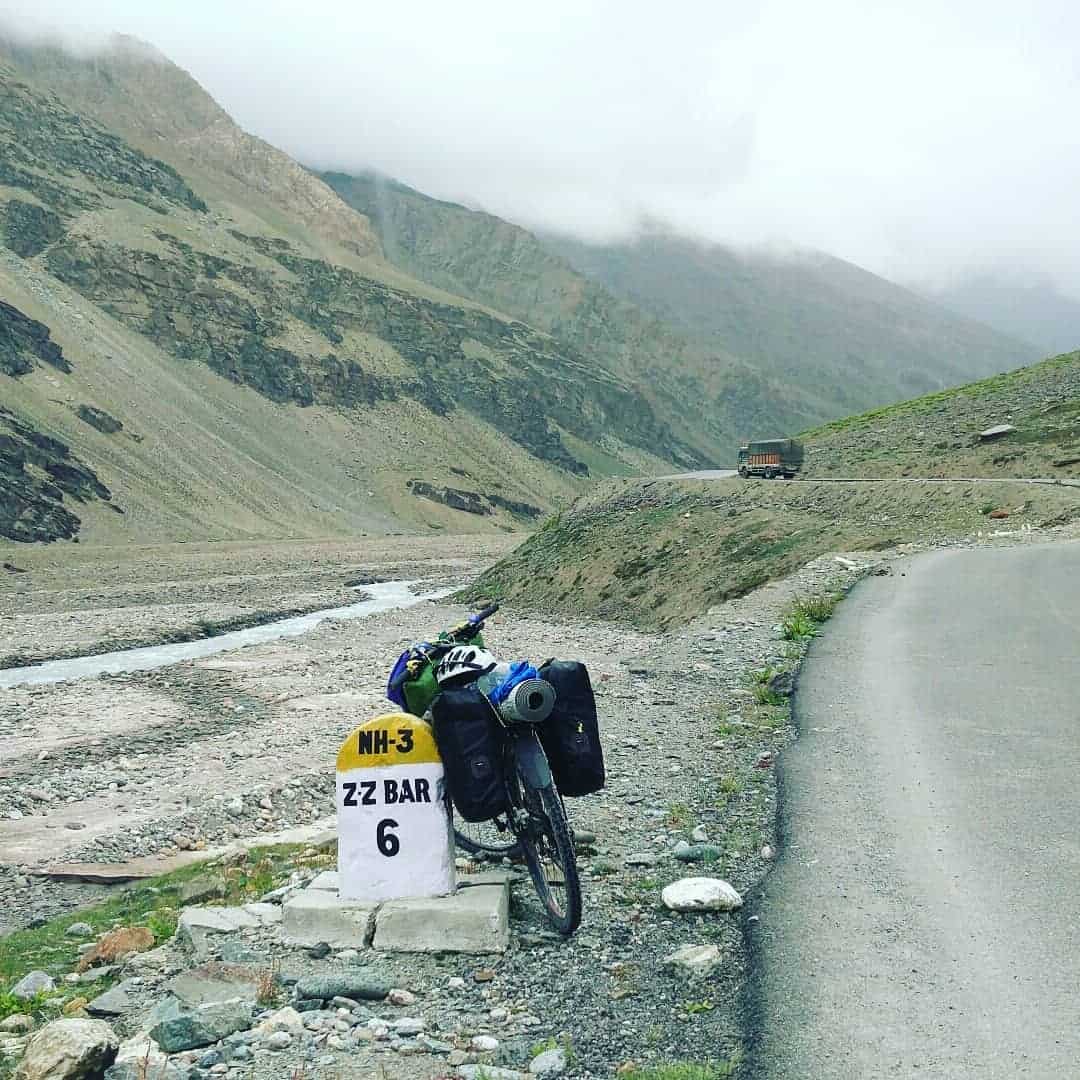
What Should I Carry for a Self-Drive on Manali – Leh Highway?
Basic toolkit, screwdriver set, small hammer, puncture repair kit, iron rod, two or three “2 ltr” empty bottles of Pepsi / Coke / Limca to carry extra petrol or diesel (jerry cans will leak, cold drink bottles do not leak), funnel, towing rope, spare tube (must for bikes), Elfy or Fevi Quick (2-3 sachets), jump-start cables/wires, M-seal to prevent leakage, etc. were among the few things which I carried along on my trip to Ladakh.
Also, do not forget to get your vehicle (car/bike) serviced about 2-3 weeks before the start of the Ladakh journey. Having it serviced will ensure that you have proper time in advance to test your serviced vehicle and get fixed any hitches that may have been introduced in that service.
You can prepare the checklist from my list of 40 must have things to carry on a Ladakh self-drive trip
Should I Hire a Private Taxi for Manali – Leh Highway?
A private taxi from Manali to Leh costs Rs 18,000 to Rs 22,000 as of 2026. Always hire from the Manali taxi stand directly, not through tour operators. Drivers with Ladakh registration return empty and may offer discounts of Rs 3,000-4,000. Keep in mind that taxis with tourist permits cannot do local sightseeing in Ladakh.
All taxis (except Ladakh registration number) having taxi number or tourist permit number plates are only allowed for a drop in Leh – Ladakh. You cannot drive them in Leh – Ladakh, as per the taxi union rules; only taxis with Ladakh number are allowed to roam in the Ladakh region for sightseeing.
If you want to travel within Leh – Ladakh in your private taxi hired from a place other than Ladakh, then you need to hire a taxi with a private number plate only. However, in that case, be ready for some queries by the local taxi drivers in Ladakh or police constables on your route.
What Is the Manali to Leh Taxi Fare in 2026?
Whenever you need to hire a taxi, always try to hire it from Manali, as the drivers of Manali will always be more skilled and more accustomed to the route. To hire a taxi, go directly to the Manali taxi stand and bargain hard with the local drivers only for a drop to Leh. Do not involve any tour operator or hotel staff at any stage to save costs.
As of 2026, the private taxi fare from Manali to Leh is about Rs 18,000 to Rs 22,000 for a drop, depending on your bargaining power, tourist rush, and time when you are visiting the place. June is the highest-paid and September being the less paid. The local taxi drivers will charge about Rs 1,500-2,000 extra for a planned night halt on the way to Leh.
On the Manali bus stand, the taxis that drop people coming from Ladakh are also available sometimes. If you can catch any of those Ladakhi drivers, you might save yourself Rs 3,000 to Rs 4,000 for a drop to Leh from Manali. The same rule is applicable from Leh to Manali side as well — if you can get hold of some Himachali driver at Leh taxi stand, you will again save about Rs 3,000 to Rs 4,000 on your return drop.
However, you need to be a bit careful from local drivers while fixing a deal with non-local drivers. So, it is always nice if you have some references upfront and call them directly to fix the deal.
You can check the Leh – Ladakh taxi union rate list 2025-26 including the contacts of some reliable taxi drivers within Leh – Ladakh. You can get about 10-12% discount by directly getting in touch with drivers, and of course, talking in person rather than on phone always helps in bargaining more.
What Is the Manali to Leh Bus Service and How Much Does It Cost?
Two bus services operate on this route: HPTDC deluxe bus (approximately Rs 3,500, includes hotel stay and meals at Keylong) and HRTC ordinary bus (Rs 850 Manali to Leh direct). Both take 2 days with a night halt at Keylong. The HPTDC bus is the better option for comfort.
Perhaps if you are traveling alone or with one or two friends, you can book tickets for the Manali – Leh bus service of HPTDC. This semi-deluxe bus covers the Manali – Leh stretch with a night halt at HPTDC Hotel Chandrabhaga, Keylong, coming from either side.
HPTDC Bus Fare (2026)
The ticket costs approximately Rs 3,500 per person as of 2026 (previously Rs 2,900 in 2020), which includes a stay at HPTDC Hotel Chandrabhaga, Keylong, and two meals, i.e., dinner and breakfast at the same hotel. The prices may change, so please check the HPTDC website for updated info. The overall comfort level of the bus is much better than other HRTC buses that ply on Manali – Leh Highway.
HPTDC Bus Schedule
The HPTDC bus departs at around 10 AM from Manali on the first day and 4-5 AM from Keylong on the second day to reach Leh by evening. With the Atal Tunnel operational, the travel time from Manali to Keylong has reduced significantly. Do not book the seats at the back — in the back seats, you may have trouble when the road gets bad, especially on the second day from Keylong to Leh.
Read my detailed article on Manali to Leh Bus Service.
What About HRTC Buses from Delhi / Keylong to Leh?
HRTC runs the cheapest buses on this route. Manali to Keylong costs about Rs 200, Keylong to Leh costs about Rs 600, and the direct Manali to Leh bus costs about Rs 850 as of 2026. The bus departs at 5 AM from Keylong. Less comfortable but very budget-friendly.
HRTC also runs a regular bus service to Leh from Manali and also from Delhi and Keylong. You can book tickets for connecting buses (Manali – Keylong, and Keylong – Leh) from Manali bus depot itself or even ISBT, Delhi. You can also reach Keylong by getting a seat in numerous shared taxis that ply between Manali – Keylong every day. The HRTC buses may not be as comfortable, but comfort comes with the price.
As of 2026, the ticket between Manali – Keylong costs about Rs 200 and then Keylong – Leh about Rs 600. The direct bus from Manali to Leh costs about Rs 850. The bus departs at 5 AM from Keylong and reaches Leh about 7 PM.
You can also read the details of HRTC Delhi Leh Bus Service
How Much Does a Shared Taxi Cost on Manali – Leh Highway?
Shared taxis from Manali to Leh cost Rs 2,000 to Rs 2,500 per person as of 2026. They depart midnight from Manali and reach Leh by next evening without any night halt. It is a 15-17 hour cannonball run with 7-8 other passengers. Second cheapest after HRTC bus but very tough on the body.
You can also buy yourself a seat in a shared taxi which runs every midnight from Manali and reaches Leh on the next evening without any night halt. In the same way, shared taxis run from Leh to Manali as well.
You need to pay about Rs 2,000 to Rs 2,500 per person for a drop to Leh from Manali or Manali from Leh as of 2026. Since it is shared with 7-8 other people plus the driver and completes the back-breaking cannonball run of Manali – Leh in 15-17 hours, you can imagine the level of comfort yourself.
This one is the second cheapest mode of travel on Manali – Leh Highway but mind you, it could be the toughest on the body too 🙂
What About Other Travel Modes on Manali – Leh Highway?
You can also get in touch with some travel agent or taxi union in Manali who also run their private buses or Tempo Travelers on Manali – Leh Highway. They run according to dates, so you may not find immediate bookings. Some travel agencies also offer Manali to Leh road trip packages including stay and travel. Let me know in case you are interested to know about them.
Where Should You Plan Night Stays on Manali – Leh Highway?
For a 2-day journey, stay at Keylong or Jispa (Day 1). I personally always prefer Jispa for its riverside beauty. For a 3-day journey, add Sarchu or Pang (Day 2). Avoid sleeping at Sarchu/Pang if coming from Manali side due to AMS risk at high altitude. Accommodation ranges from Rs 500 at dhabas to Rs 3,000 for Swiss tents.
Based on my experience, you can opt to plan a journey on Manali – Leh Highway in one of the following ways.
How to Plan a Two-Day Journey on Manali – Leh Highway?
The two-day option is the most common. Day 1: Manali to Keylong/Jispa (2-3 hours via Atal Tunnel). Day 2: Keylong/Jispa to Leh (10-12 hours). Public buses and private taxis follow this pattern. Start by 5-6 AM on Day 2 to reach Leh before dark.
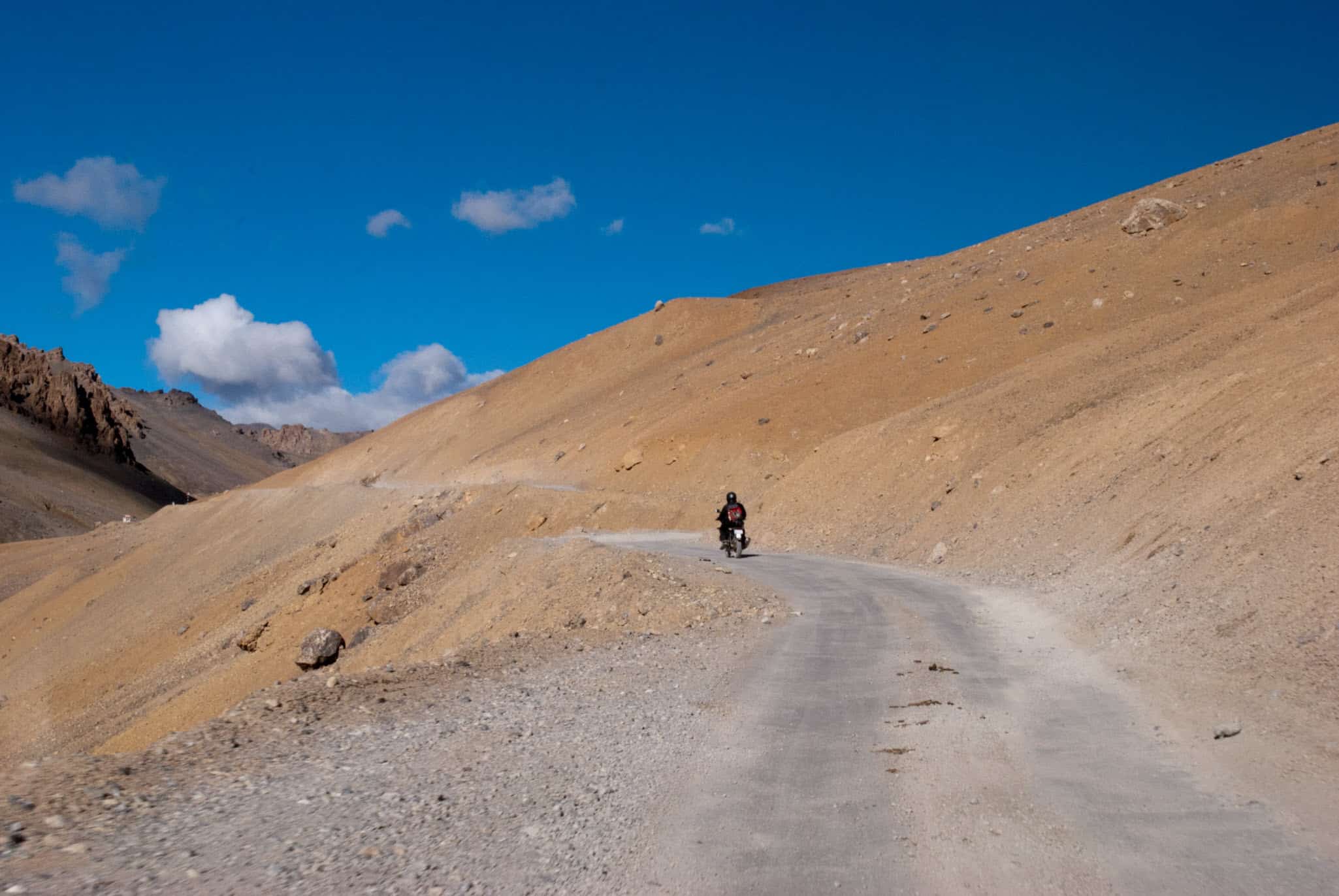
The options of stay or accommodation are limited on Manali – Leh Highway due to limited civilization. Hence, a two-day journey is the most common among all travelers. Private taxis and buses run by HPTDC or HRTC also cover the Manali – Leh Highway in two days.
Manali – Keylong / Jispa (Day 1) and Keylong / Jispa – Leh (Day 2)
This option is mostly preferred by people who do not want to run the risk of acute mountain sickness (AMS) by staying at higher altitudes than Keylong or Jispa. With the Atal Tunnel, reaching Keylong from Manali now takes only about 2-3 hours, giving you plenty of time to relax on Day 1. However, on the second day, you need to leave early in the morning like by 5-6 AM from Keylong or Jispa to reach Leh in time.
Personally, out of Keylong or Jispa, I will always prefer to stay at Jispa if traveling on your own or privately hired vehicle. You can also read my detailed comparison in Why choose Jispa over Sarchu on Manali – Leh Highway. Jispa is situated right on the banks of river Bhaga and is further 20 km away from Keylong town. Spending the evening at this place is extremely refreshing and is a far better experience than the boring Keylong town.
While Keylong town offers varied accommodation options, Jispa has only a few options available for a stay and hence, you must pre-book them. If you are traveling by public transport, i.e., HRTC or HPTDC buses, then you need to stay at Keylong only. Mobile phones may or may not work in Jispa.
Manali – Sarchu / Pang (Day 1) and Sarchu / Pang – Leh (Day 2)
After Keylong and Jispa, you will find accommodation majorly at Sarchu and Pang only. Many travelers take this option. However, Sarchu and Pang being at much higher altitudes (Sarchu at about 4,290 meters, Pang at about 4,600 meters), many people suffer from headaches, vomiting, or sleepless nights.
Hence, if you have plans to stay either at Sarchu or Pang, then it is critical that you stay at Solang Valley (not in Manali) to acclimatize your body a little bit. In between Sarchu and Pang, I will suggest a stay at Sarchu due to its lower altitude. As of 2026, Sarchu offers Swiss tents with attached toilets costing about Rs 1,500-3,000 per night, while Pang has basic dhaba tents costing Rs 500-1,000.
In the end, if you are coming from Leh, then you can stay at either Pang or Sarchu without any trouble because by then your body will be acclimatized to handle such altitudes.
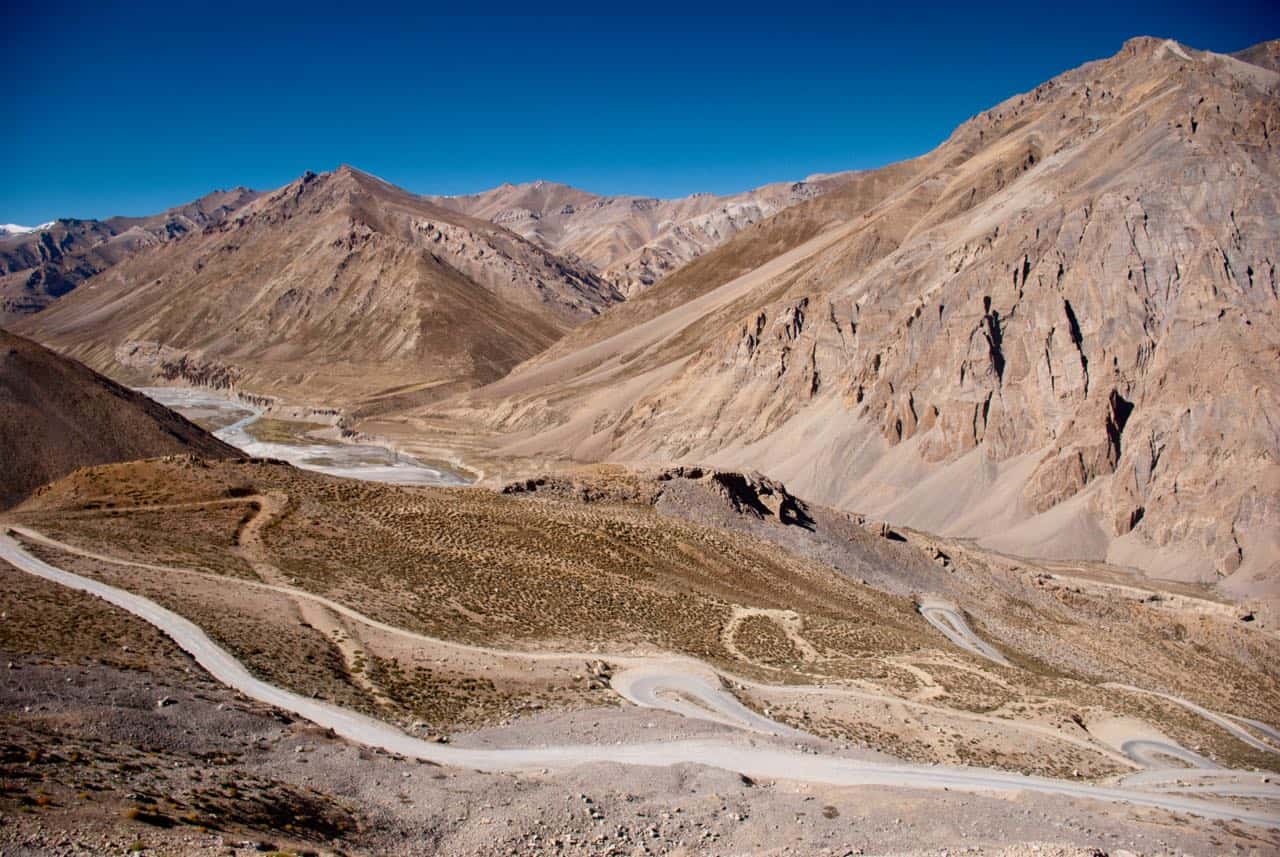
Can You Complete Manali to Leh in a Single Day?
Yes, but I do NOT recommend it. The 15-16 hour cannonball run puts immense toll on your body and you face serious AMS risk by climbing from 1,900 meters to 5,000+ meters in a single day. Shared taxis and some experienced drivers do this, but it kills the joy of the journey completely.
This option of completing the journey in a single day is most common among local people or people who are in a high rush and is least recommended if you want to enjoy your travel. Shared taxis are the preferred way to avail of this option.
Keep in mind that you are most likely to get hit with mountain sickness in this option. If you get away with it, consider yourself extremely lucky. Otherwise, keep in mind that any breakdown of the vehicle like puncture, engine heat down, etc. at some high altitude (Tanglang La, Nakee La, Lachulung La, etc.) with you suffering from mountain sickness may lead to very ugly outcomes. Hence, DO NOT, I repeat DO NOT take the acclimatization factor lightly.
How to Plan a Three-Day Journey on Manali – Leh Highway?
Day 1: Manali to Keylong/Jispa. Day 2: Jispa to Sarchu/Pang. Day 3: Sarchu/Pang to Leh. This is the best way to enjoy the highway but requires more time and money. I recommend this only when coming from Leh side or after spending days acclimatizing in Spiti/Lahaul.
Well, this option is nothing but the combination of the other two to cover Manali – Leh Highway in three days. This option will require more time, as well as more money. This option is the best way to thoroughly enjoy the beauty of nature that is offered by Manali – Leh Highway, with some worries of mountain sickness. There are plenty of places, vistas, and picture-taking points on Manali – Leh Highway that are worth spending this extra time and money.
I suggest this option of travel, or in particular overnight stay at Sarchu/Pang, only when you are coming from Leh towards Manali. I DO NOT recommend it while going towards Leh from Manali side unless you are coming after spending some nights in Spiti and Lahaul Valley. If you traveled to Leh via Srinagar side and coming from Leh after spending a few days, your body will be acclimatized better to minimize the chances of AMS at Sarchu or Pang.
Very few people follow this option due to lack of time and to save money for the ultimate heaven. If these two things have no place for consideration at your grounds, then I will say go with it, and you will make your journey on Manali – Leh Highway much more than a memorable experience :).
This option will mostly be available if you are traveling by your private vehicle. You will even have a tough time bargaining with drivers at Manali taxi stand for 2-night halts unless you are ready to pay them handsomely.
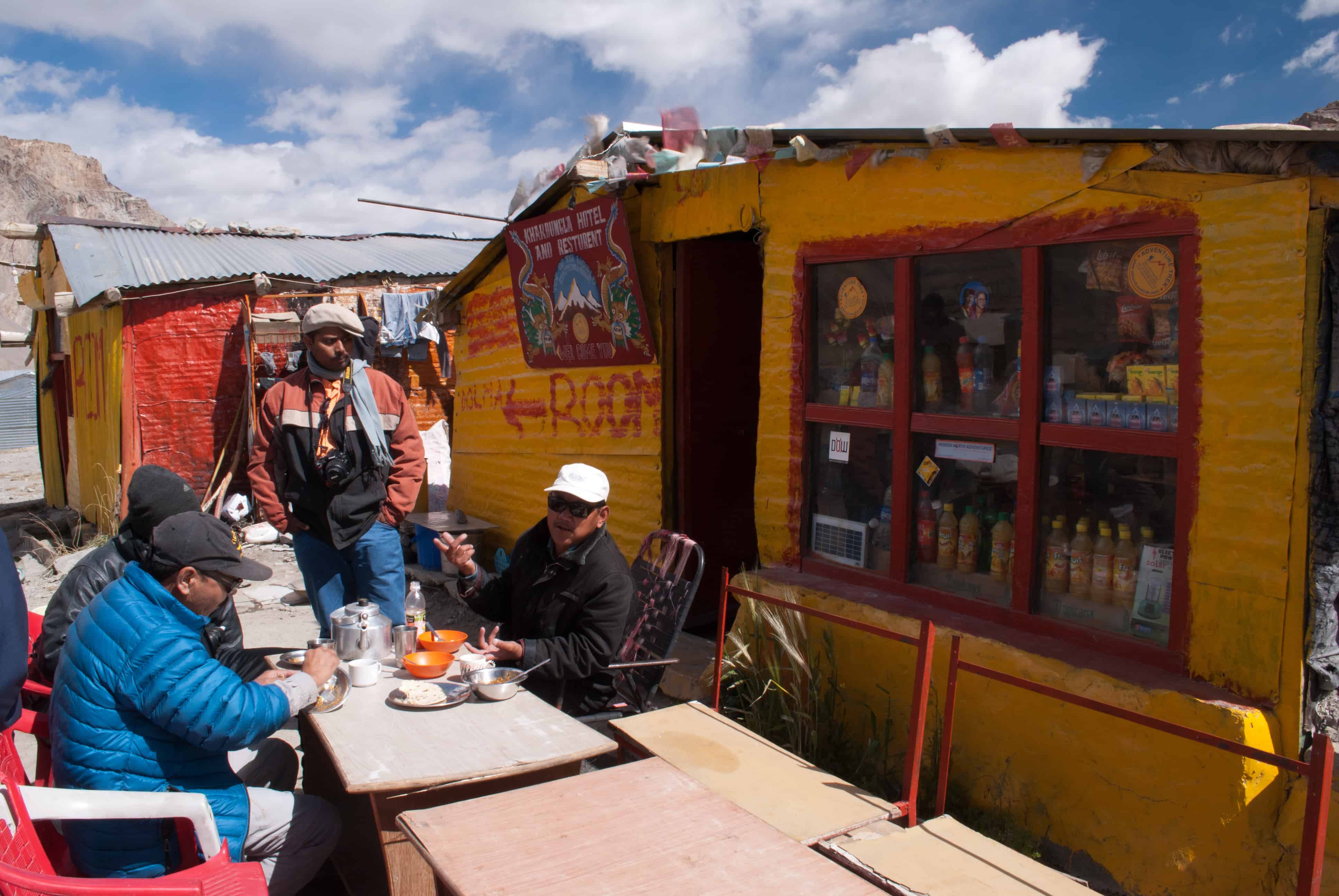
What Are the Accommodation Options on Manali – Leh Highway?
Accommodation ranges from hotels and guesthouses at Keylong and Jispa (Rs 800-3,000) to Swiss/normal tents at Sarchu (Rs 1,500-3,000) and basic dhaba tents at Pang (Rs 500-1,000). Food is available at Sissu, Keylong, Jispa, Darcha, Zingzing Bar, Sarchu, Pang, and Upshi. Always carry snacks as backup.
It is always better to know or have the list of all accommodation places on Manali – Leh Highway before you travel because in such unpredictable terrain you can never predict what can come to your rescue. So, having as many details as possible about the place is always favorable.
I have compiled the list of accommodation or stay options on Manali – Leh Highway which includes the information about their contacts, location, price range, experiences, etc. Refer the link below for details — List of Accommodation Options on Manali – Leh Highway
How to Prevent Acute Mountain Sickness (AMS) on Manali – Leh Highway?
AMS is the biggest health risk on this route as you cross multiple passes above 4,000 meters. Key prevention: stay hydrated, avoid alcohol and smoking, sleep at lower altitudes (Keylong/Jispa over Sarchu/Pang), carry Diamox after consulting your doctor, never ignore symptoms like severe headache or nausea, and descend immediately if symptoms worsen.
The journey on Manali – Leh Highway goes through a series of high-altitude passes which are good enough to cause headaches, vomiting, disorientation, and mountain sickness to the best in the business. Please take a sensible call for yourself and your loved ones waiting for your safe return.
After crossing Patseo or Deepak Tal, you are bound to run this high road to Ladakh above 4,000 meters until you descend from Tanglang La towards Rumtse / Upshi. However, with little prevention and care, you can combat or minimize the effects of altitude sickness.
Here are some tips which will help to fight AMS on Manali – Leh Highway:
- Avoid overnight stay at Manali; rather stay at Solang Valley which helps in acclimatization whereas Manali does not
- On Manali – Leh Highway, do stay at either Keylong or Jispa which are lower in altitude than Sarchu and Pang to minimize the effects of mountain sickness
- Keep your body properly hydrated — drink at least 3-4 liters of water per day
- Avoid sleeping at high altitudes during the day
- Avoid tobacco, smoking, alcohol, and other depressant drugs
- Keep your body warm and eat lots of carbohydrates
- Sleep in an upright position, if possible
- Carry preventive medicines for AMS (Diamox — consult your doctor before the trip)
- Immediately descend if symptoms increase — this is the single most important rule
- Avoid overexertion — take it slow and easy
For more information on Acute Mountain Sickness and all above acclimatization tips, please refer to my article on Acute Mountain Sickness and Importance of Acclimatization
Where Are the Fuel Stations on Manali – Leh Highway?
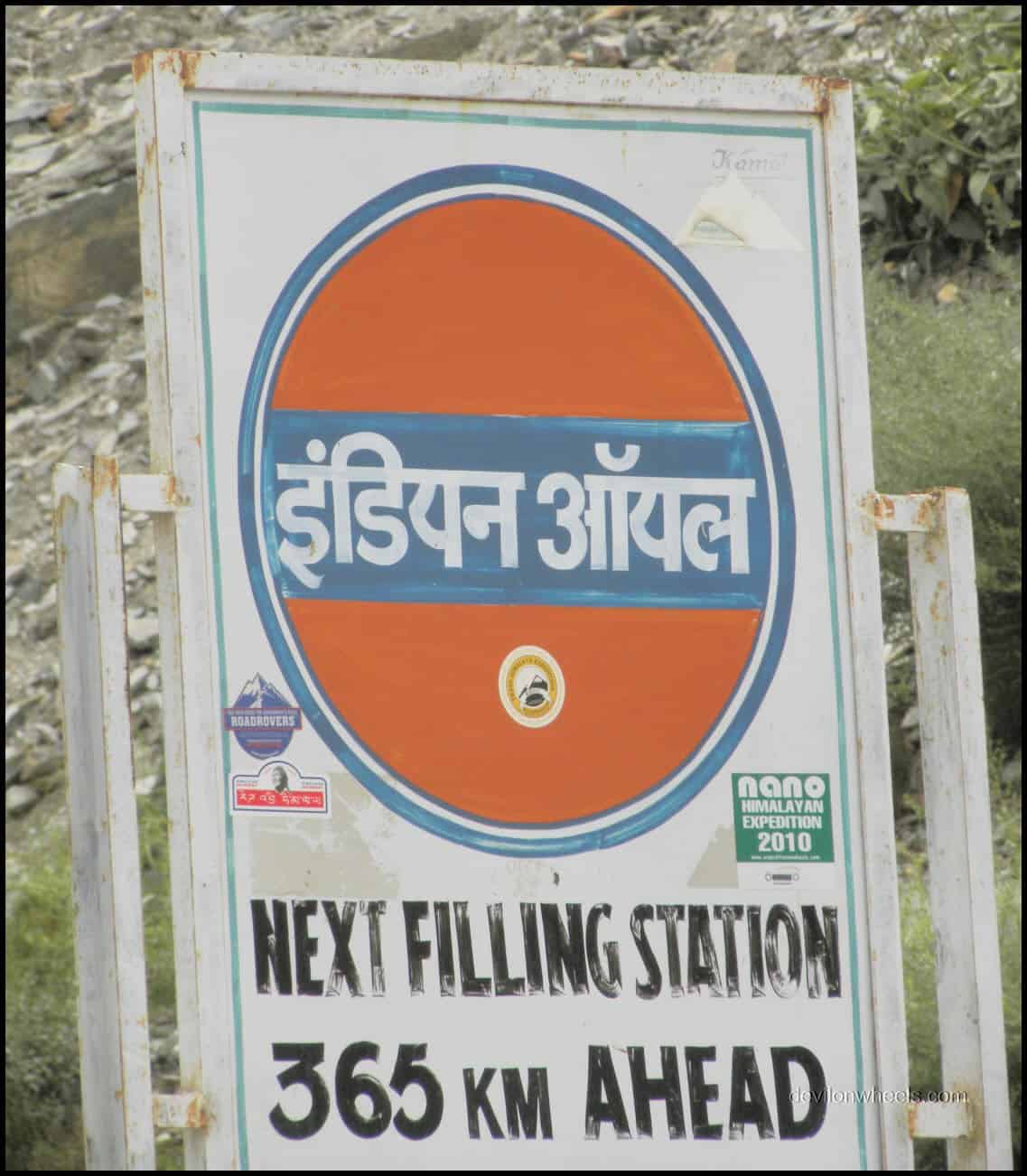
After Manali, the only petrol pump on Manali – Leh Highway is at Tandi (110 km from Manali). The next pump is at Karu (about 30 km before Leh) — that is a gap of approximately 345 km with no fuel. Always fill your tank at Tandi and carry extra fuel in cold drink bottles (not jerry cans, they leak).
After Manali town, there is only one petrol pump at Tandi (about 110 km from Manali via Atal Tunnel) on the entire Manali – Leh Highway before Karu (about 30 km before Leh). DO NOT forget to get the full tank fuel at the Tandi petrol pump, even if you had it filled at Manali. The more you have, the better it will be for you.
In case you need more detailed information about fuel availability across all of Ladakh, you can refer to my comprehensive guide on Fuel Availability in Leh – Ladakh which covers every petrol pump location including the ones on Srinagar – Leh Highway and within Ladakh.
Where Are the ATMs on Manali – Leh Highway?
ATMs are available only in Manali and Keylong on the Manali – Leh Highway. After Keylong, you will not find an ATM until Leh town. Carry at least Rs 10,000-15,000 in cash for the journey as most dhabas, tent operators, and mechanics only accept cash.
Do carry enough cash with you as the ATM is available only in Keylong and Manali town. If you have no plans to stay at Keylong, then do not forget to withdraw cash from Manali town. After Keylong, you will get hold of an ATM only at Leh town. Some accommodations at Sarchu have started accepting UPI payments in recent years, but do not rely on it — cash is king on this route.
What Is the Mobile Network Coverage on Manali – Leh Highway?
BSNL offers the best coverage on this route. Jio has been expanding and now covers many parts of Manali to Leh. Airtel works till Keylong and resumes at Upshi/Leh. No signal between Jispa and Upshi for most operators. Prepaid connections do not work in Leh – Ladakh — only postpaid works.
As of 2026, here is the mobile network situation on Manali – Leh Highway:
- BSNL: Best coverage on the entire route. Works in Keylong, and has more coverage points between Manali and Leh than any other operator
- Jio: Has been expanding significantly and now covers a lot of parts of the highway including parts of Lahaul Valley. Check latest coverage before your trip
- Airtel: Works till Keylong and signal is restored after crossing Upshi. SMS may work in a few spots in between
- Vodafone/Vi: Very limited — may not work beyond Manali on this route
- Important: Prepaid connections do not work in Leh – Ladakh. You need a postpaid connection or get a local BSNL postpaid SIM in Leh
How Much Does a Manali – Leh Road Trip Cost in 2026?
A budget traveler on HRTC bus can do the Manali to Leh journey for under Rs 2,000. A self-drive trip costs Rs 5,000-8,000 per person (fuel + accommodation + food). A private taxi trip costs Rs 18,000-22,000 for the vehicle. Add Rs 1,500-3,000 per night for accommodation at Keylong/Jispa/Sarchu.
| Expense Category | Budget (Rs) | Mid-Range (Rs) | Comfortable (Rs) |
| Transport (Manali-Leh one way) | Rs 850 (HRTC bus) | Rs 2,500 (shared taxi) | Rs 5,000+ (private taxi share among 4) |
| Accommodation (per night) | Rs 500-800 (dhaba tent/basic room) | Rs 1,500-2,000 (Swiss tent/guesthouse) | Rs 2,500-4,000 (good hotel Keylong) |
| Food (per day) | Rs 300-500 (dal-chawal at dhabas) | Rs 500-800 | Rs 800-1,200 |
| Fuel (self-drive, one way) | Rs 3,000-5,000 depending on vehicle mileage (approximately 430 km) | ||
| Rohtang Permit | Rs 500 per vehicle (if going via Rohtang Pass) | ||
| Total (per person, 2 days) | Rs 1,500-2,500 | Rs 5,000-8,000 | Rs 10,000-15,000 |
For a detailed breakdown of the complete Ladakh trip cost including sightseeing, accommodation in Leh, and local travel, check my article on How to Calculate Cost or Budget for a Ladakh Trip in 2026.
What Are the Must-Visit Places on Manali – Leh Highway?
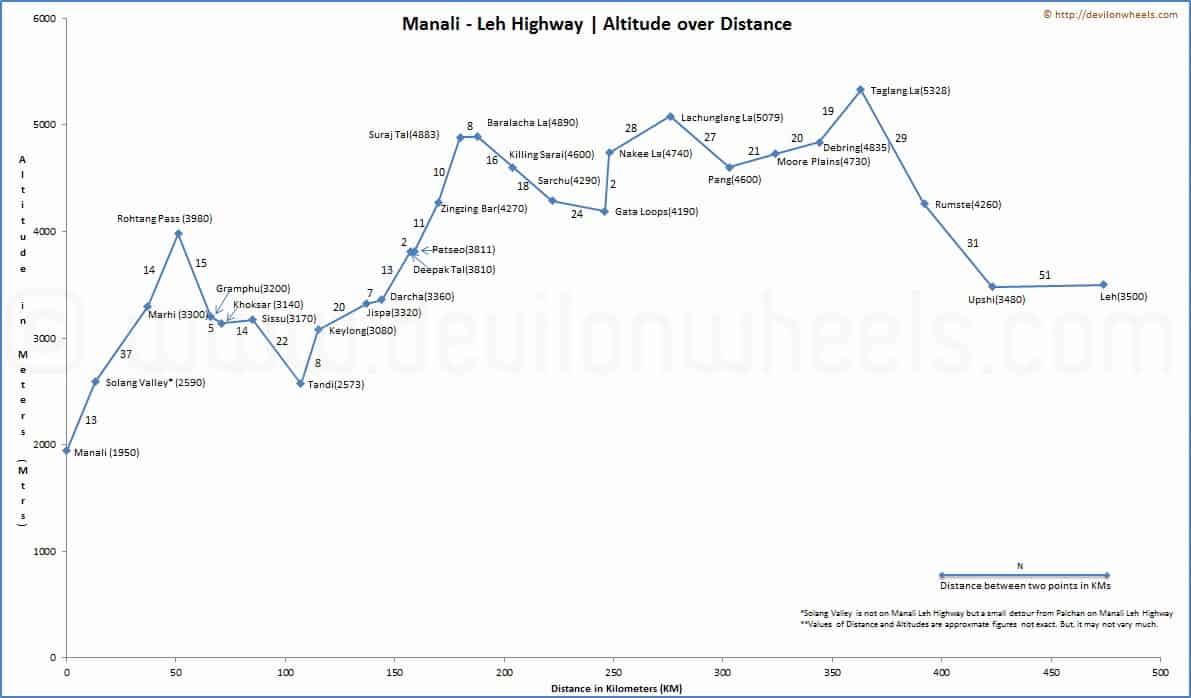
Key stops include Atal Tunnel, Sissu Waterfall, Deepak Tal, Suraj Tal near Baralacha La, the strange soil formations before Sarchu, Gata Loops (21 hairpin bends), More Plains (look for wild kiangs), and Tanglang La Pass. Each place is unique and worth stopping for photos and a short break.
For a detailed description of the major places to visit on Manali – Leh Highway including the distance between them and their respective altitudes, please refer to the article Places on Manali – Leh Highway | A Detailed Description
What Facilities and Amenities Are Available on Manali – Leh Highway?
Facilities on this 430 km stretch are extremely limited. Hotels exist at Keylong and Jispa only. Tent camps at Sarchu and Pang. Fuel at Tandi and Karu. ATMs at Keylong only. Medical help at Sissu and Keylong (army camps at Sarchu and Pang in emergencies). Mobile network mostly dead between Jispa and Upshi.
| Facility | Places (2026 Updated) |
| Hotel / Guest Houses | Sissu, Gondola, Tandi, Keylong (Many options), Jispa, Upshi |
| Tents / Camps (Dhaba / Swiss / Normal) | Jispa, Darcha, Zingzing Bar, Bharatpur, Sarchu (Many options), Pang |
| Food / Beverages | Sissu, Keylong, Jispa, Darcha, Deepak Tal, Zingzing Bar, Bharatpur, Sarchu, Pang, Rumtse, Upshi |
| Diesel / Petrol Pumps | Tandi (110 km from Manali via Atal Tunnel), Karu (30 km from Leh) |
| Mobile Connectivity | BSNL: Best coverage overall Jio: Expanding — works in many parts of Lahaul and towards Leh Airtel: Works till Keylong, resumes at Upshi Note: Prepaid connections do not work in Leh – Ladakh |
| Electricity | Sissu, Gondola, Keylong, Jispa, Darcha, Upshi |
| Medical Facilities | Sissu, Keylong (proper facilities); Sarchu, Pang have army camps for emergencies |
| ATMs | Keylong (after that, only at Leh) |
| Police Checkpoints | Darcha, Sarchu, Upshi (foreigners also at Khoksar) |
| Mechanic / Puncture Shops | Keylong, Darcha, Sarchu, Upshi |
| Natural Highlights | Rohtang Pass, Atal Tunnel, Sissu Waterfall, Tandi Confluence, Deepak Tal, Suraj Tal, Baralacha La, Gata Loops, More Plains (Wildlife), Tanglang La |
Frequently Asked Questions About Manali – Leh Highway
What is the cost of a Manali to Leh road trip in 2026?
A budget trip on HRTC bus costs about Rs 1,500-2,500 per person including food and accommodation. Shared taxi costs Rs 2,000-2,500 per person. Self-drive costs about Rs 5,000-8,000 per person (fuel + accommodation + food). Private taxi costs Rs 18,000-22,000 for the vehicle. Add sightseeing and accommodation costs in Leh separately.
When does Manali – Leh Highway open in 2026?
Manali – Leh Highway typically opens in the last week of May or first week of June after BRO clears snow from Baralacha La and other high passes. In 2025, it opened around May end. The expected opening for 2026 is around May 30, subject to weather conditions. Track the latest updates on my Manali Leh Highway Status post.
What are the road conditions on Manali – Leh Highway in 2026?
As of 2026, road conditions have improved significantly. The Atal Tunnel provides excellent connectivity to Keylong. Sissu to Keylong is very good. Keylong to Sarchu has some bad patches. Sarchu to Pang via Gata Loops remains the toughest section. Pang to Leh via More Plains and Tanglang La is mostly well-paved now. Conditions vary by month — June has slush, September has the best roads.
Do I need a permit for Atal Tunnel on Manali – Leh Highway?
No permit is required for the Atal Tunnel itself. However, if you choose to drive over Rohtang Pass instead, you need a Rohtang Pass permit (Rs 500 per vehicle, apply online at rohtangpermits.nic.in). A ‘Beyond Rohtang’ permit is required for vehicles proceeding to Ladakh, Lahaul, or Spiti. For restricted areas in Ladakh (Pangong, Nubra, Tso Moriri), you need an Inner Line Permit (ILP) obtainable in Leh.
Can I take a small car or sedan on Manali – Leh Highway?
Yes, small cars and sedans can do Manali – Leh Highway, but drive with extra caution. Plan the trip in September when roads are in best condition. Be prepared for scratches on the underbelly at water crossings. An SUV or 4WD is recommended but not mandatory. Many people have done this route in hatchbacks like Alto and even Nano.
Where can I get fuel on Manali – Leh Highway?
There is only one petrol pump on the highway at Tandi (110 km from Manali via Atal Tunnel). The next fuel station is at Karu, about 30 km before Leh — a gap of approximately 345 km. Always fill up at Tandi and carry extra fuel. Use 2-litre cold drink bottles (not jerry cans which may leak) with a funnel. Most vehicles with a full tank plus 5-10 litres extra can manage comfortably.
Which month is best for Manali to Leh road trip?
Late August to September is the best time for the smoothest road conditions — mud is dried out, BRO maintenance is complete, and water crossings are manageable. June offers stunning snow views but risky roads and slush. July has decent conditions beyond Keylong but monsoon affects Manali side. If taking a sedan, September is your best bet.
Does mobile network work on Manali – Leh Highway?
Mobile network is very limited on this route. BSNL offers the best coverage. Jio has been expanding and works in several parts. Airtel works till Keylong and resumes at Upshi. Between Jispa and Upshi (the most remote stretch), you will have little to no signal on any network. Important: Prepaid connections do not work in Leh – Ladakh — only postpaid works.
Last Updated: February 2026. This article has been updated with the latest information on road conditions, bus fares, taxi rates, Atal Tunnel status, and mobile network coverage for planning a road trip on Manali – Leh Highway.
Conclusion
In the end, if you have been to Manali – Leh Highway, then please share your valuable thoughts or suggestions which can make the above information more concrete and useful for someone planning to cover Manali – Leh Highway. Your comments and inputs are most welcome.
I hope this travel guide will help you make a wonderful trip on these dangerous yet beautiful roads in the world. For other details about traveling over this adventure trip, discussions, queries, or finding travel partners, please go through the DwD Community. Feel free to ask any questions in the comments section below — I will be happy to hear from you 🙂 …
Have a travel question?? You can subscribe to my YouTube channel and leave a comment to ask your travel questions about traveling to the Himalayas.
If you know your friends or family are planning a trip to Manali – Leh Highway, do share this article with them to help them make a memorable trip on Manali – Leh road. Also, do check the DoW Travel Calendar from the link in the Main Menu of the website for upcoming group trips and meets.
