


Last Updated: February 2026
If you are planning a road trip to Ladakh and wondering how many mountain passes you will cross along the way, this article is for you. During our Ladakh Mega Meet back in 2013, we crossed a total of 17 high mountain passes spread across two of the most famous highways in India, the Srinagar – Leh Highway and the Manali – Leh Highway, along with offbeat routes through Changthang and Zanskar regions. In this article, I will walk you through each of these passes with photos, altitudes, and practical tips that will help you plan your own Ladakh trip better.
Before we get into the passes, keep in mind that the altitude data I have shared here is based on signboards at the passes and GPS readings from our trip. Some of these numbers differ slightly across different sources, so treat them as close approximations rather than exact figures. Also, “La” means a mountain pass in Ladakhi/Tibetan language. Hence, when you hear Khardung La or Chang La, the “La” itself means “pass.”
Ladakh’s major named mountain passes, from lowest to highest altitude, are Zoji La, Rohtang Pass, Fotu La, Kunzum Pass, Baralacha La, Tanglang La, Wari La, Khardung La, Chang La, and Umling La, currently the world’s highest motorable pass. Ladakh has over 20 named passes in total, each marked “La,” meaning pass.
- Zoji La – 3,528 m / 11,575 ft (Srinagar – Leh Highway)
- Rohtang Pass – 3,979 m / 13,054 ft (Manali – Leh Highway)
- Fotu La – 4,108 m / 13,478 ft (Srinagar – Leh Highway)
- Kunzum Pass – 4,590 m / 15,059 ft (Spiti Valley entry)
- Baralacha La – 4,890 m / 16,040 ft (Manali – Leh Highway)
- Tanglang La – 5,328 m / 17,480 ft (Manali – Leh Highway)
- Wari La – 5,250 m / 17,224 ft (Nubra to Pangong direct)
- Khardung La – 5,359 m / 17,582 ft (Leh to Nubra Valley)
- Chang La – 5,360 m / 17,585 ft (Leh to Pangong Tso)
- Umling La – 5,798 m / 19,024 ft (world’s highest motorable pass, near Hanle)
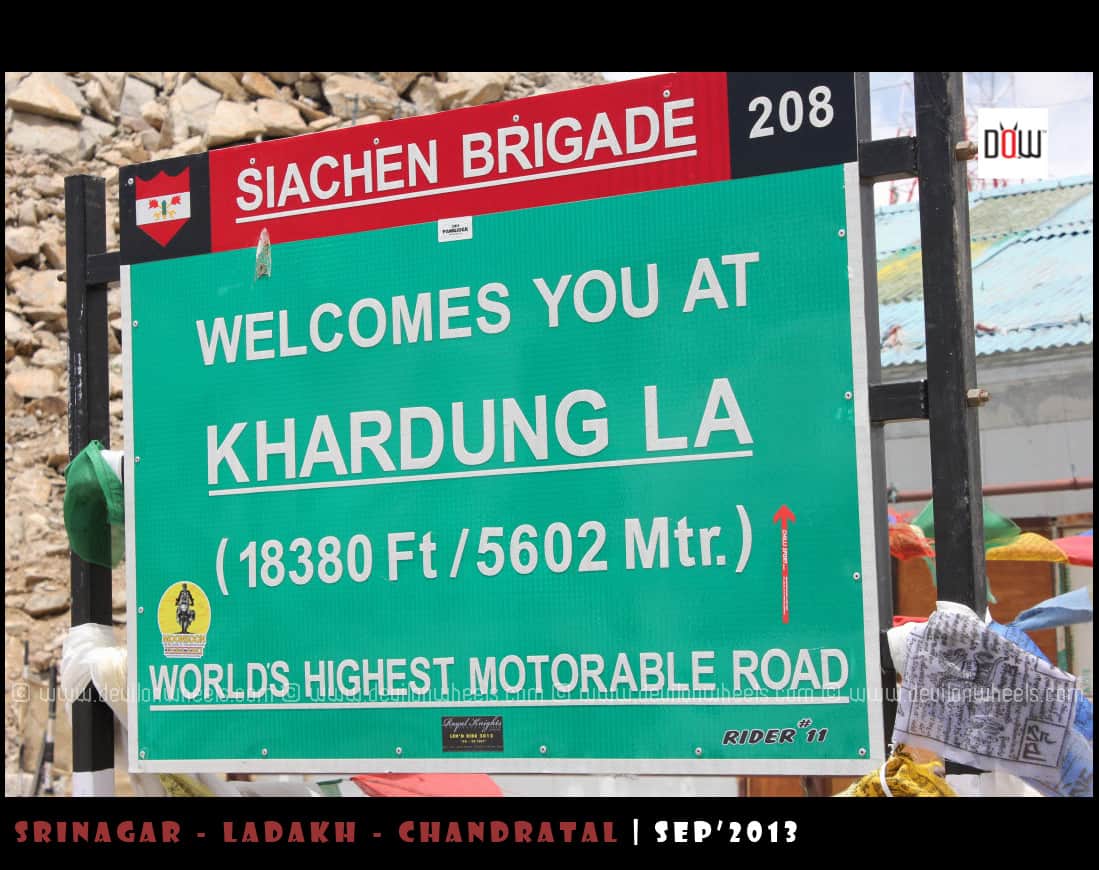
The list above covers the 10 most-searched named passes. Our complete table further down covers all 17 passes we personally crossed during the 2013 Ladakh Mega Meet, including offbeat Changthang and Zanskar routes. These altitudes are cross-checked against BRO signboards and our own GPS readings from the trip, since online sources vary widely. As one example, the Khardung La signboard itself overstates the height at 18,380 ft, while the GPS-surveyed altitude is closer to 17,582 ft, a discrepancy most other Ladakh pass guides do not mention.
Let's quickly dive into the details:
How Many Mountain Passes Are There on a Ladakh Trip?
On a standard Ladakh circuit covering Srinagar – Leh – Nubra Valley – Pangong Tso – Tso Moriri – Manali, you will cross anywhere between 8 to 12 mountain passes depending on your route choices. However, if you add offbeat routes like Wari La (Nubra to Pangong direct), the Changthang loop (Chusul, Hanle, Kyon Tso), and the Tso Moriri – Tso Kar stretch, that number can go well above 15. On our Ladakh Mega Meet, we managed to cross 17 passes in a single trip. Here is the complete list with altitudes, routes, and our experience at each one.
If you are planning your first trip to Ladakh, I suggest you first check the most common itinerary for Leh Ladakh to understand the overall route and then come back to this article for details about each pass you will encounter.
Quick Reference: All 17 Mountain Passes at a Glance
| # | Pass Name | Altitude | Route / Highway |
|---|---|---|---|
| 1 | Zoji La | 3,528 m (11,575 ft) | Srinagar – Leh Highway |
| 2 | Namki La | 3,815 m (12,516 ft) | Srinagar – Leh Highway |
| 3 | Fotu La | 4,108 m (13,478 ft) | Srinagar – Leh Highway |
| 4 | Khardung La | 5,359 m (17,582 ft) | Leh to Nubra Valley |
| 5 | Wari La | 5,250 m (17,224 ft) | Nubra to Pangong (direct) |
| 6 | Chang La | 5,360 m (17,585 ft) | Leh to Pangong Tso |
| 7 | Chusul La | ~4,900 m (est.) | Pangong to Chusul – Hanle |
| 8 | Tsaga La | 4,635 m (15,207 ft) | Chusul to Tsaga Village |
| 9 | Thit Zarbo La | 5,213 m (17,103 ft) | Hanle to Nyoma via Kyon Tso |
| 10 | Nurpa La / Thato La | 4,815 m (15,797 ft) | Mahe to Yaye Tso |
| 11 | Namashang La | ~5,300 m (17,388 ft) | Chumathang to Tso Moriri |
| 12 | Polakongka La | 4,966 m (16,293 ft) | Tso Moriri to Tso Kar |
| 13 | Lachalung La | 5,059 m (16,598 ft) | Manali – Leh Highway |
| 14 | Nakee La | 4,750 m (15,584 ft) | Manali – Leh Highway |
| 15 | Baralacha La | 4,890 m (16,040 ft) | Manali – Leh Highway |
| 16 | Kunzum Pass | 4,590 m (15,059 ft) | Spiti Valley / Chandratal |
| 17 | Rohtang Pass | 3,979 m (13,054 ft) | Manali – Leh Highway |
Now let us go through each pass in detail, in the order we crossed them on our trip 🙂
Passes on Srinagar – Leh Highway
We started our Ladakh Mega Meet from Srinagar and headed towards Leh via the Srinagar – Leh Highway. The first three passes on our journey all fell on this route.
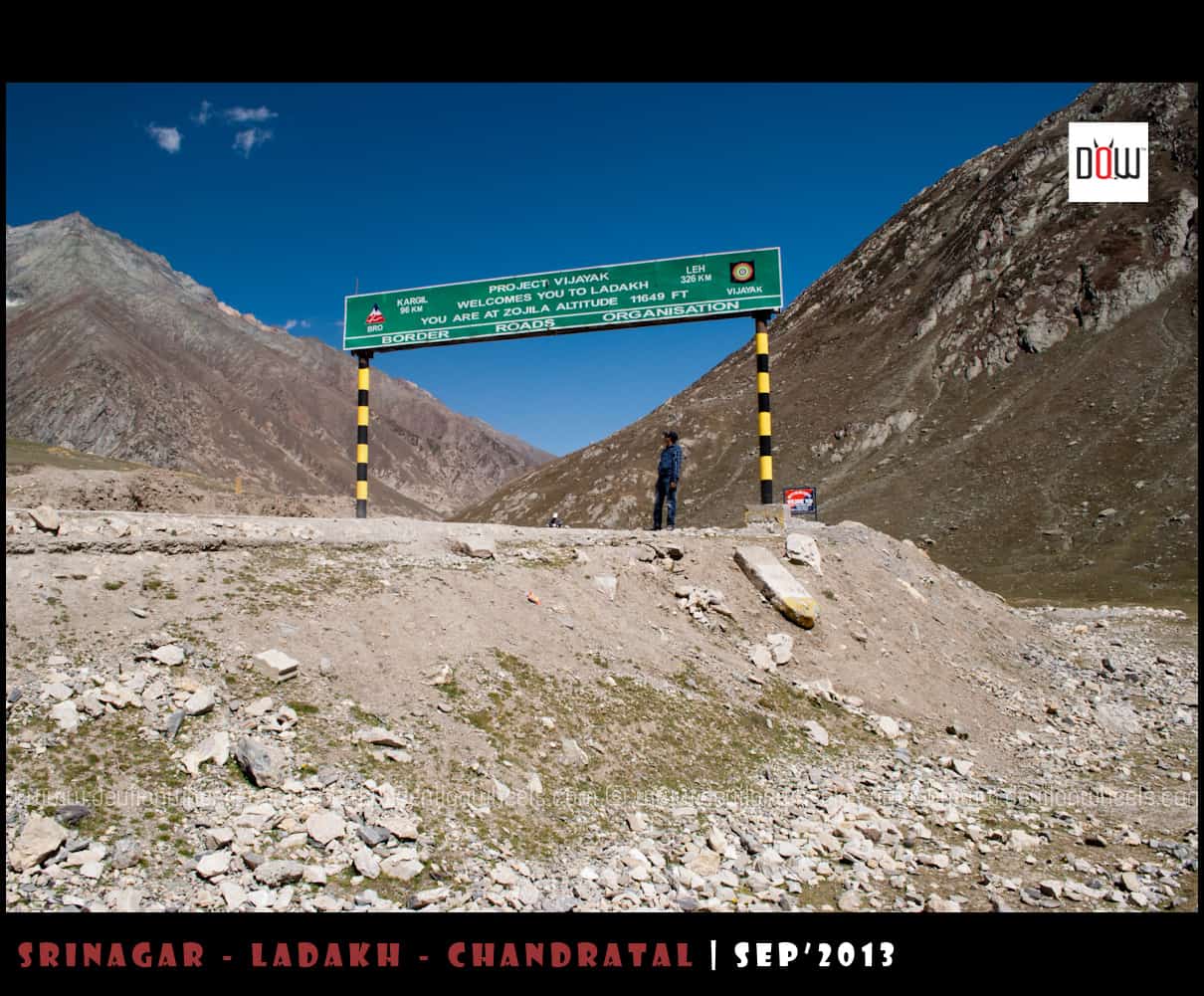
1. Zoji La Pass (3,528 m / 11,575 ft)
The first pass we came across was Zoji La, one of the most well-known passes on the Srinagar – Leh Highway. It connects the Kashmir Valley with the Dras sector and marks the point where the landscape transforms dramatically from lush green to stark brown mountains. The altitude of Zoji La is 3,528 meters, making it the lowest of all the passes on our list, but do not let that fool you. The road at Zoji La is notoriously tricky, with narrow stretches, slush, and heavy traffic from both sides especially in peak season.
As of 2026, the Z-Morh tunnel (6.5 km) between Sonamarg and Zoji La is operational, making the approach much smoother. The larger Zoji La tunnel project is still under construction and expected to be completed by 2028-2030. Once that tunnel opens, Zoji La as a pass will be bypassed entirely for regular traffic. For now, you still get the full experience of crossing it. If you want to read more about this route, check my guide on how to plan a journey on Srinagar – Leh Highway.
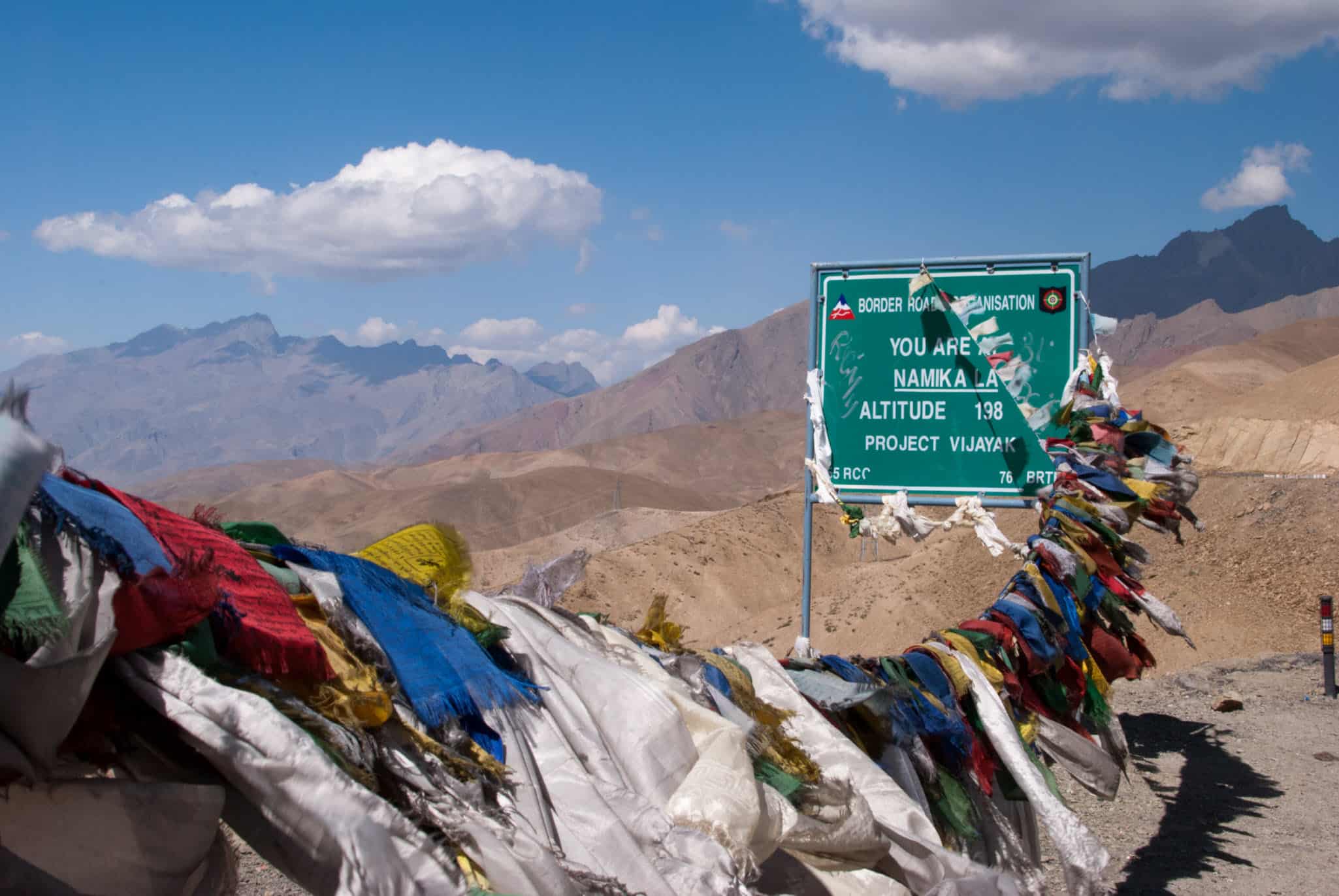
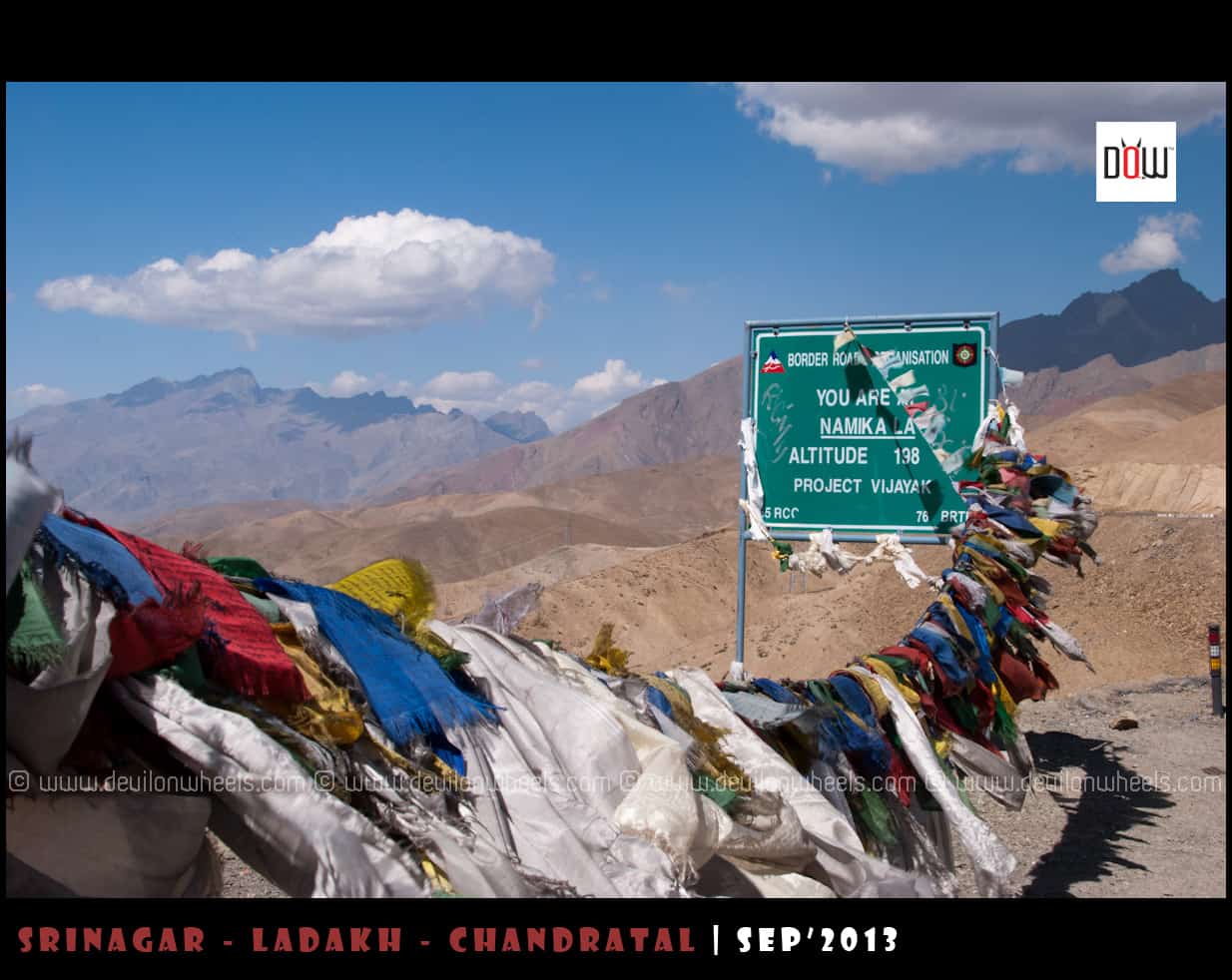
2. Namki La Pass (3,815 m / 12,516 ft)
The second pass, Namki La, came on Day 2 when we moved from Kargil towards Leh. Namki La sits at an altitude of 3,815 meters and is a relatively gentle pass compared to the ones ahead. Most travelers barely notice it because the road is well-maintained through this stretch. It falls between Kargil and Lamayuru, a section of the highway that is surprisingly scenic with its moonland-like terrain.
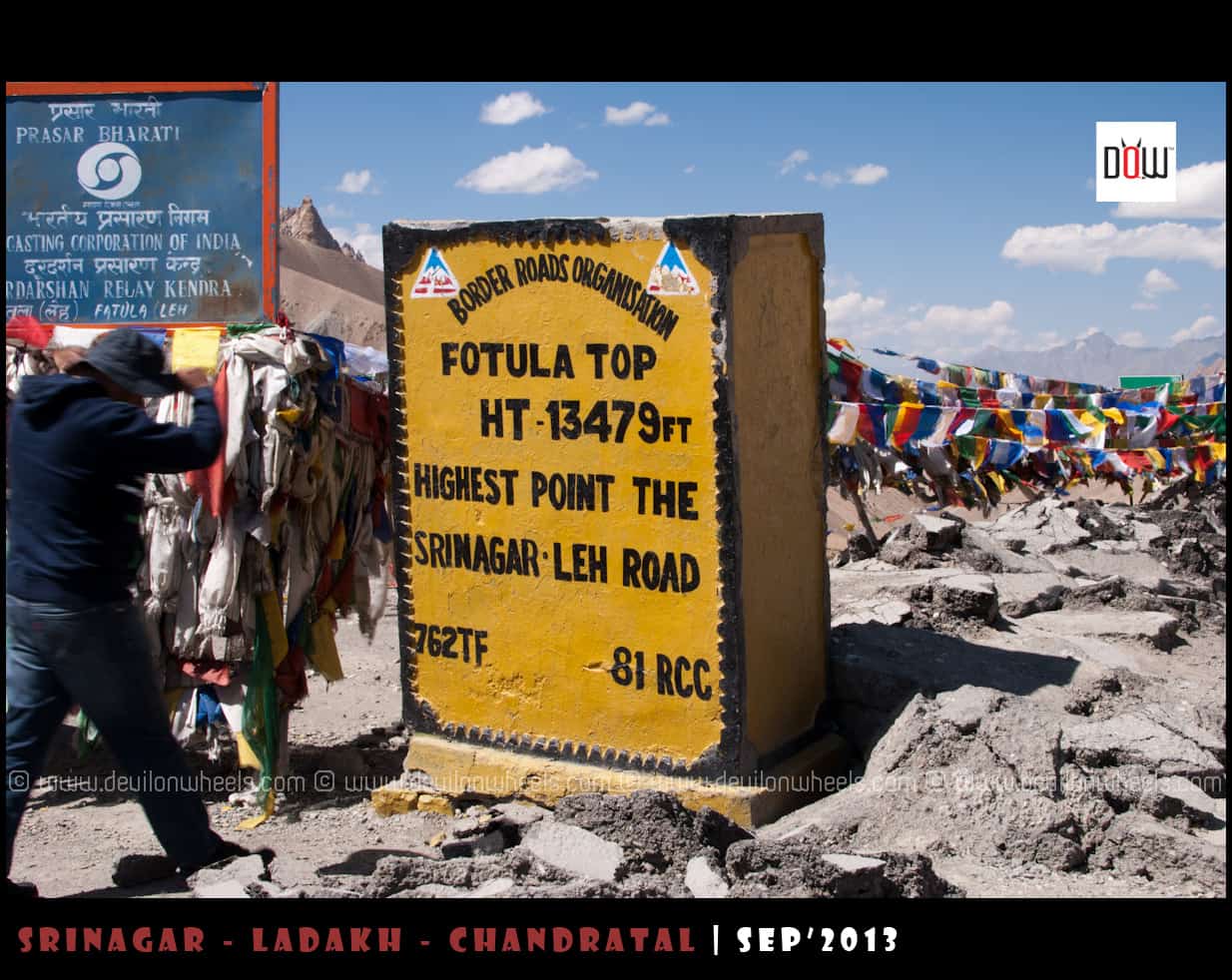
3. Fotu La Pass (4,108 m / 13,478 ft)
As we moved further from Namki La towards Lamayuru, we reached the highest point on the Srinagar – Leh Highway at an altitude of 4,108 meters, known as Fotu La Pass. This is where most travelers stop for a quick photo and tea. The pass is well-marked with a signboard. From here, the descent towards Lamayuru and then Leh begins. The entire stretch from Kargil to Leh via Namki La and Fotu La takes about 8-9 hours depending on road conditions and the number of stops you make.
Passes Around Leh, Nubra Valley, and Pangong Tso
Once you reach Leh and spend a day or two acclimatizing (which is very important, please read my guide on AMS and acclimatization), the next passes come when you head out to Nubra Valley and Pangong Tso.


4. Khardung La Pass (5,359 m / 17,582 ft)
This time we landed up in quite a bit of chaos at Khardung La, commonly claimed to be the highest motorable road at an altitude of 5,359 meters. The claim is actually a myth as the actual surveyed altitude is closer to 5,359 m, and there are higher motorable roads like Umling La at 5,798 m. But Khardung La remains the most popular and most photographed pass in Ladakh. It is the gateway to Nubra Valley and Siachen Glacier area.
I could not even click a picture myself this time because of the weather and chaos, so I asked a friend Shakti who was there with us to share one. Keep in mind that Khardung La can be extremely cold and windy even in summer. Do not spend more than 10-15 minutes at the top, especially if you are not fully acclimatized.
5. Wari La Pass (5,250 m / 17,224 ft)
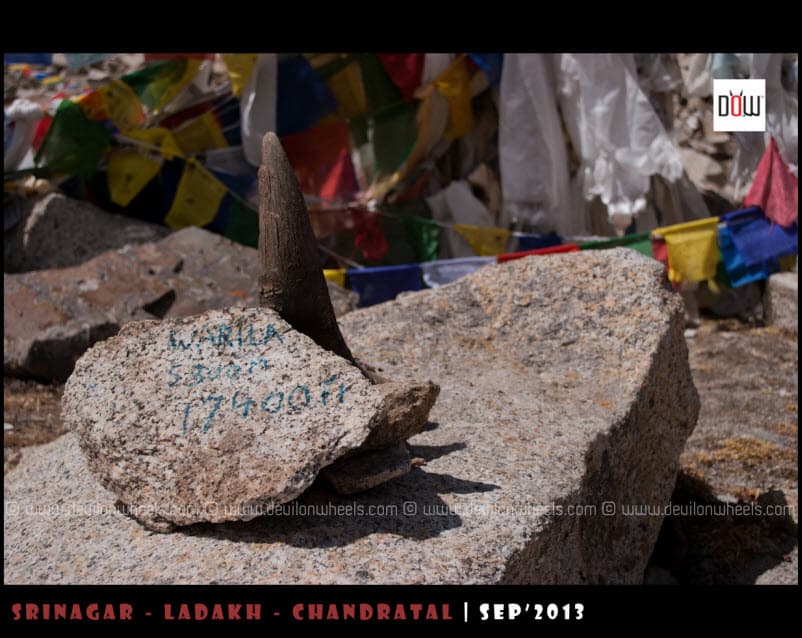
Connecting the direct route from Nubra Valley to Pangong Tso, we climbed this mighty and desolate pass named Wari La at an altitude of 5,250 meters. The climb to Wari La was so desolate that you can feel completely disconnected from the civilized world while traversing the path. There is literally no one around you for kilometers. This route is not taken by most tourists because the road is rough and suitable mostly for SUVs and bikes. If you are taking this route, I suggest you read my detailed article on tips for the Nubra Valley to Pangong Tso direct route.
6. Chang La Pass (5,360 m / 17,585 ft)
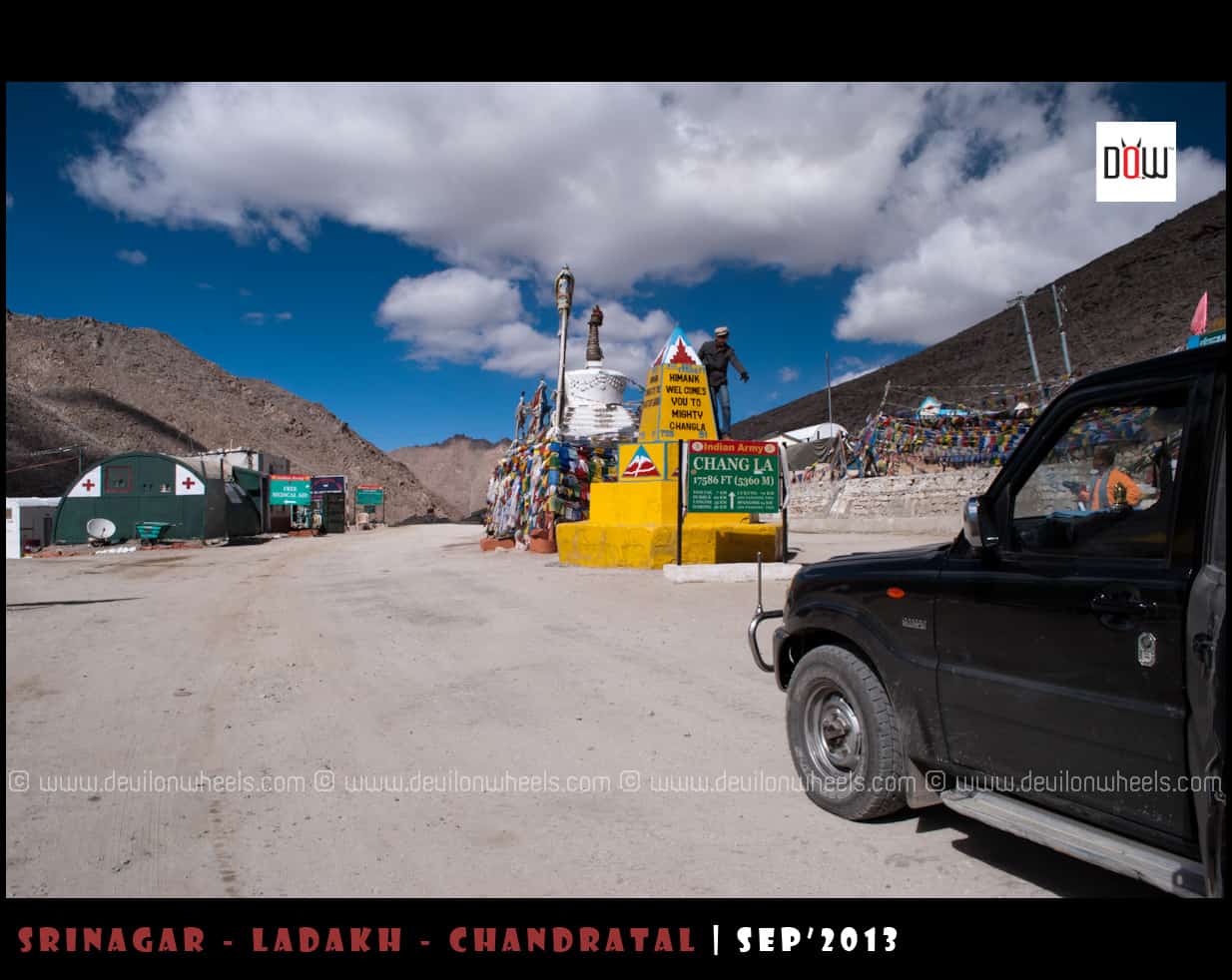
As we descended from Wari La towards Sakti Village, we had to start the climb to Chang La Pass, which boasts a height of 5,360 meters. It was commonly claimed to be the third highest motorable road, but that too is a myth since several other passes surpass it. However, I love the climb to Chang La much more than Khardung La any day. The road up to Chang La is better maintained, the views are more rewarding, and there is a nice little cafe run by the Army at the top where you can get hot tea and Maggi.
Chang La is the pass you will cross if you take the standard Leh to Pangong Tso route. It is open from around late May to October each year.
Passes on the Changthang Circuit (Chusul, Hanle, Nyoma)
This is where the trip got truly offbeat. After visiting Pangong Tso, instead of returning to Leh the same way, we continued south towards Chusul, Hanle, and the Changthang plateau. This stretch has some of the most remote and least-visited passes in all of Ladakh. You will need inner line permits for this area. Check the latest requirements at my Ladakh permits guide.
7. Chusul La (~4,900 m / est.)
As we moved from Pangong Tso towards Chusul and Hanle, we came across an unnamed pass that locals call Chusul La or Chusul Pass. The altitude or elevation of this pass was not mentioned on any signboard, so I do not know the exact height. My best estimate based on GPS readings is around 4,900 meters. The road through this section runs close to the Line of Actual Control (LAC), and you will see heavy Army presence. You can read more about this stretch in my Pangong to Chusul – Hanle travelogue.
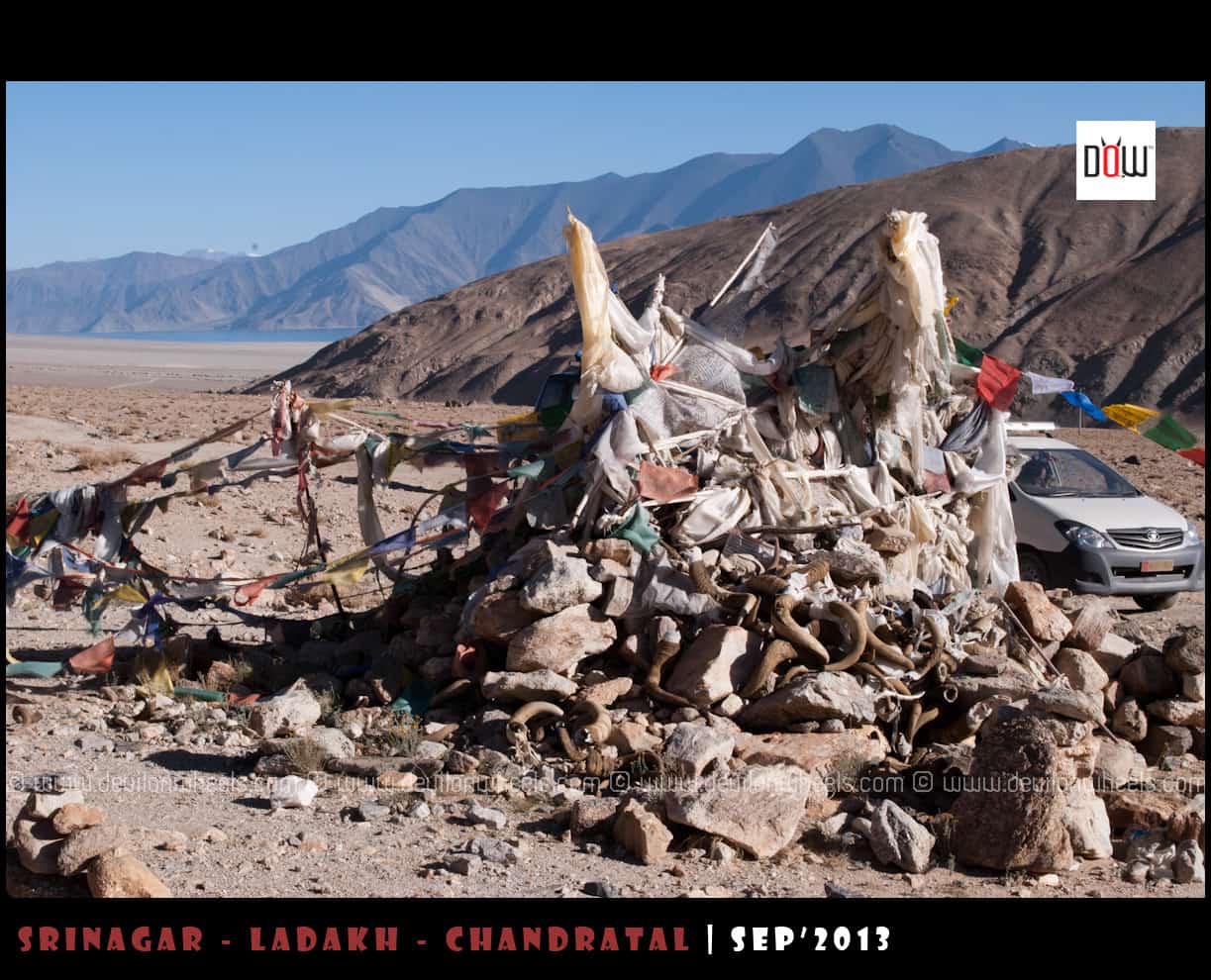
8. Tsaga La (4,635 m / 15,207 ft)
Once we crossed Chusul and went towards Tsaga Village, we crossed over to Tsaga La at an altitude of 4,635 meters. This pass is barely known and you will find almost no information about it online. The road is rough but the landscape around Tsaga is stunning, with wide open plains and distant snow-capped peaks.
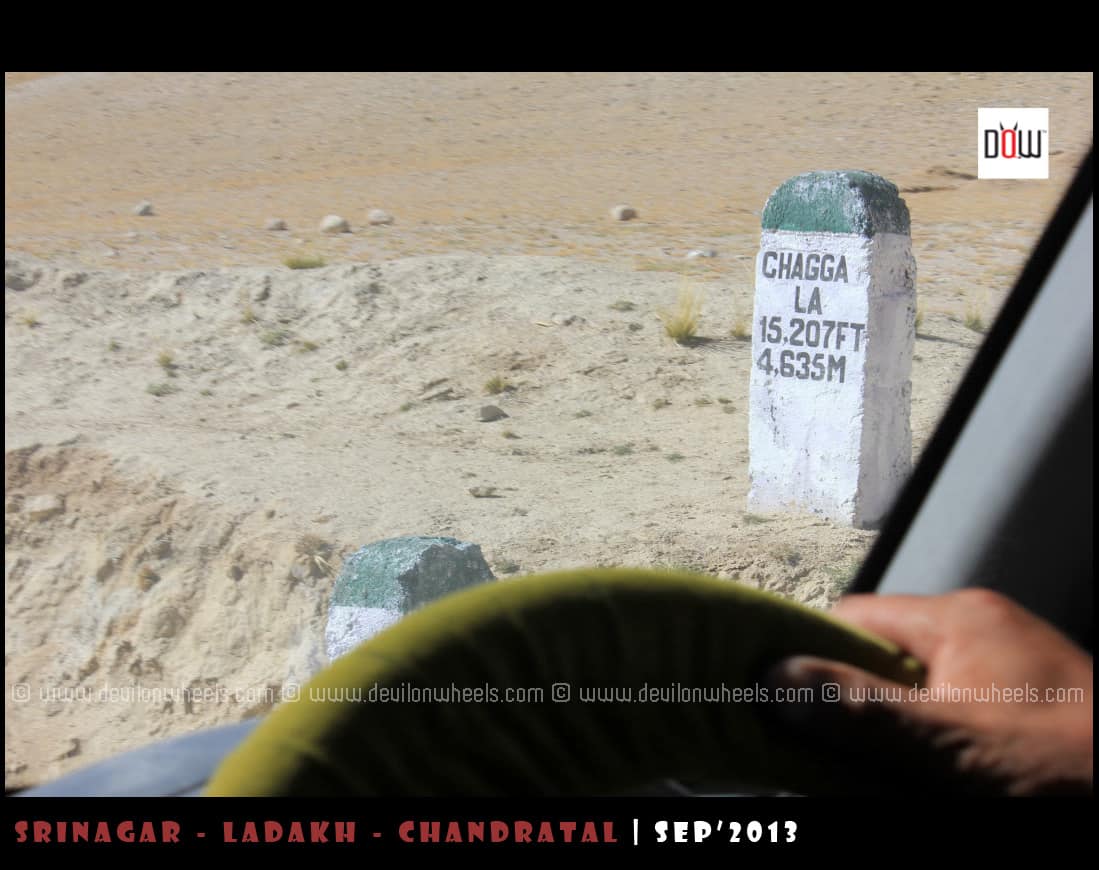
9. Thit Zarbo La Pass (5,213 m / 17,103 ft)
When we reached Hanle, we took another route from Hanle to Nyoma that goes via Nidar, covering the twin lakes of Kyon Tso. After crossing Kyon Tso 2, you ascend towards Thit Zarbo La Pass at an altitude of 5,213 meters. This pass is on the offbeat Hanle to Kyon Tso route, and the views from the top are absolutely surreal. If you are visiting Hanle, I would strongly recommend taking this detour.
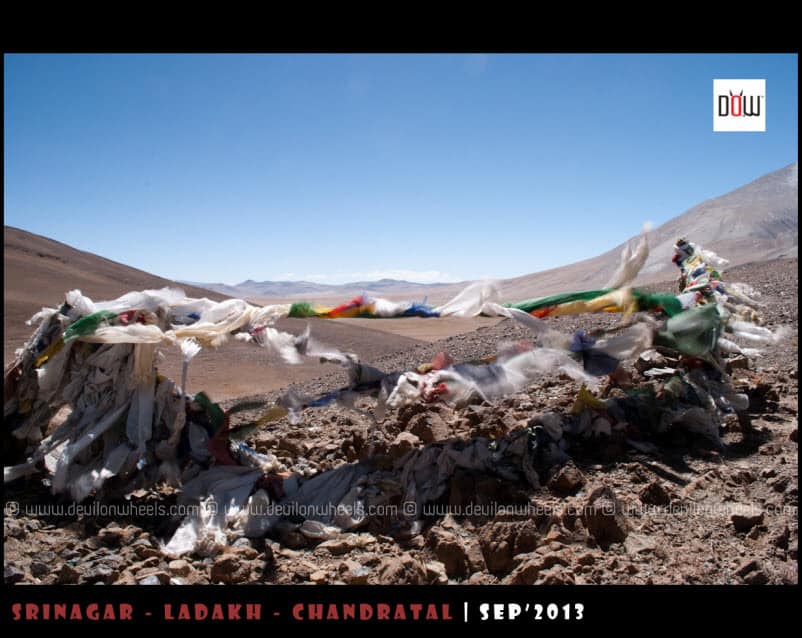
10. Nurpa La / Thato La Pass (4,815 m / 15,797 ft)
As we reached Mahe, there goes another route towards Chusul via Kaksang La, but we went up to Nurpa La Pass (also called Thato La) at an altitude of 4,815 meters to see the heart-shaped lake named Yaye Tso. Earlier, I confused Nurpa La with Hora La 🙁 🙁 but they are different passes. Hora La is at an altitude of 4,936 meters and lies a few kilometers ahead of Nurpa La.
Passes on the Tso Moriri – Tso Kar Stretch
After completing the Changthang circuit, we headed towards Tso Moriri, one of the most beautiful high-altitude lakes in Ladakh. The passes on this stretch are high, remote, and the roads can be challenging.
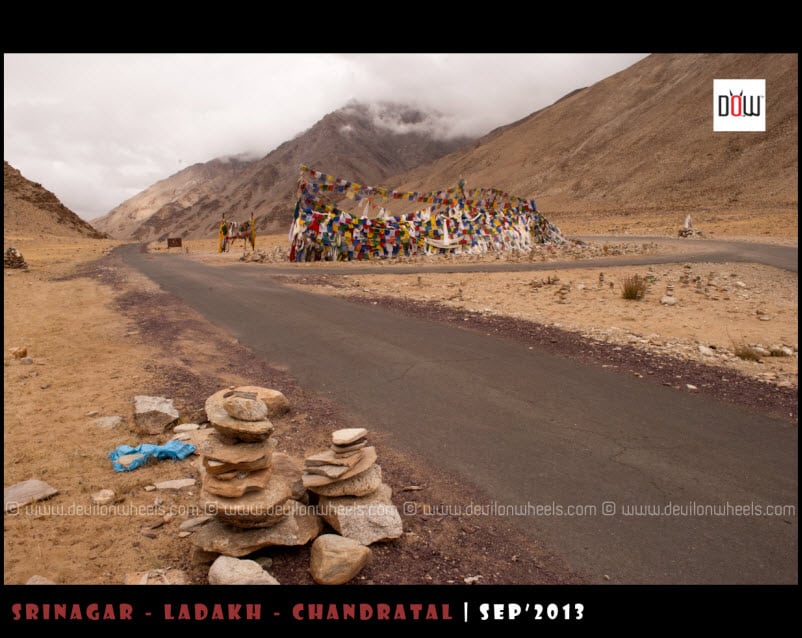
11. Namashang La Pass (~5,300 m / 17,388 ft)
We moved from Chumathang to Tso Moriri, and just before Kiagar Tso, we reached Namashang La at an altitude of approximately 5,300 meters. This is one of the highest passes we crossed on the entire trip, and the thin air is very noticeable here. If you have not acclimatized properly, this pass can hit you hard. I would suggest spending at least 2-3 days in Leh before attempting this route.
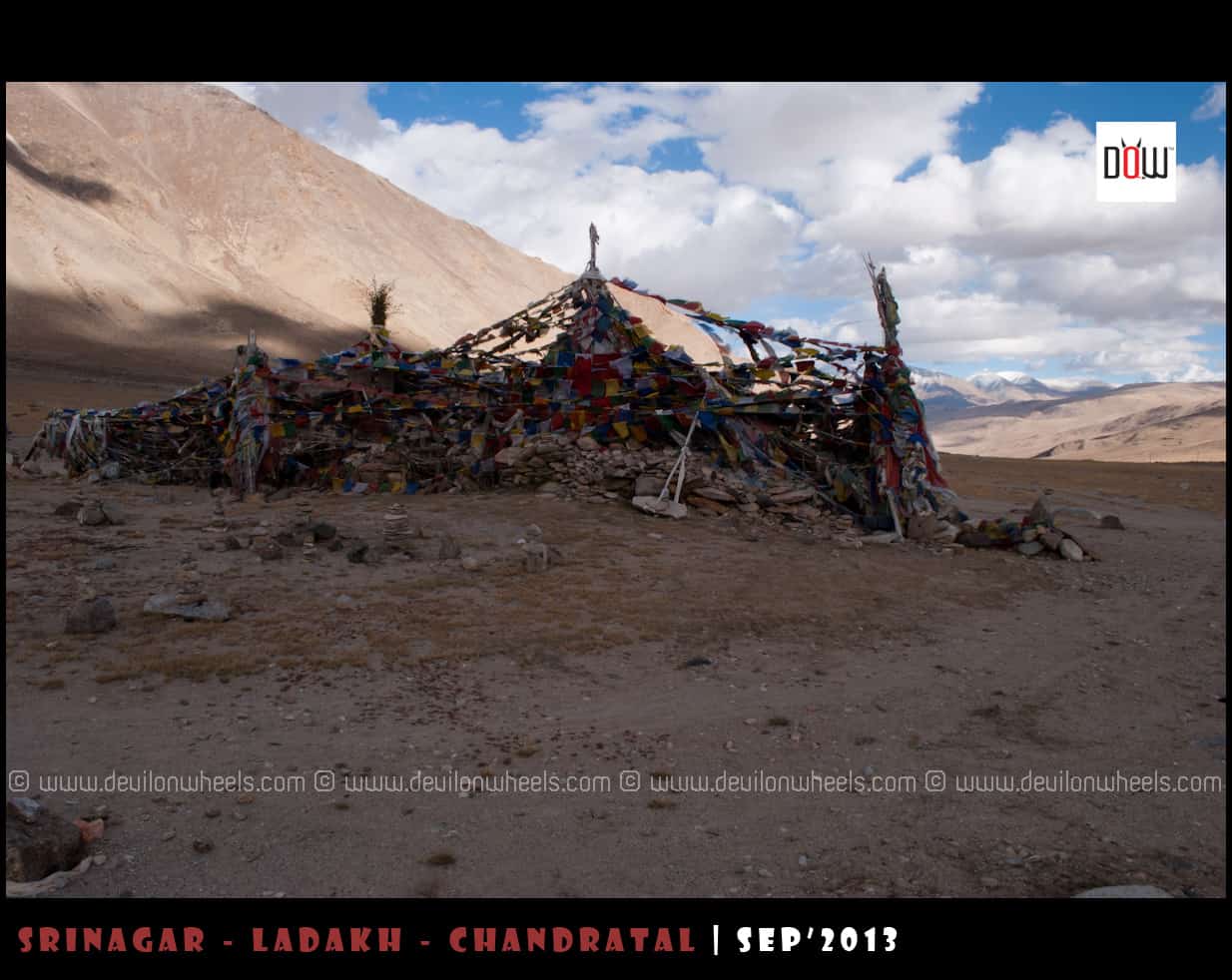
12. Polakongka La Pass (4,966 m / 16,293 ft)
After visiting Tso Moriri, we took the route to Tso Kar lake. On the way, we crossed Polakongka La Pass at an altitude of 4,966 meters. This stretch between Tso Moriri and Tso Kar is one of the most scenic drives in all of Ladakh. You pass through wide open valleys with nomadic Changpa settlements and the road is surprisingly decent for most of the stretch. If you want more details, check my article on tips for the Pangong Tso to Tso Moriri direct route.
Passes on Manali – Leh Highway (Return Leg)
For the return journey, we took the Manali – Leh Highway. This highway is famous for its five major passes. We crossed three of them on our way back from Pang towards Manali. The other two passes on this highway, Tanglang La (5,328 m) and the Gata Loops section, were behind us as we had already reached Pang from the Tso Kar side.
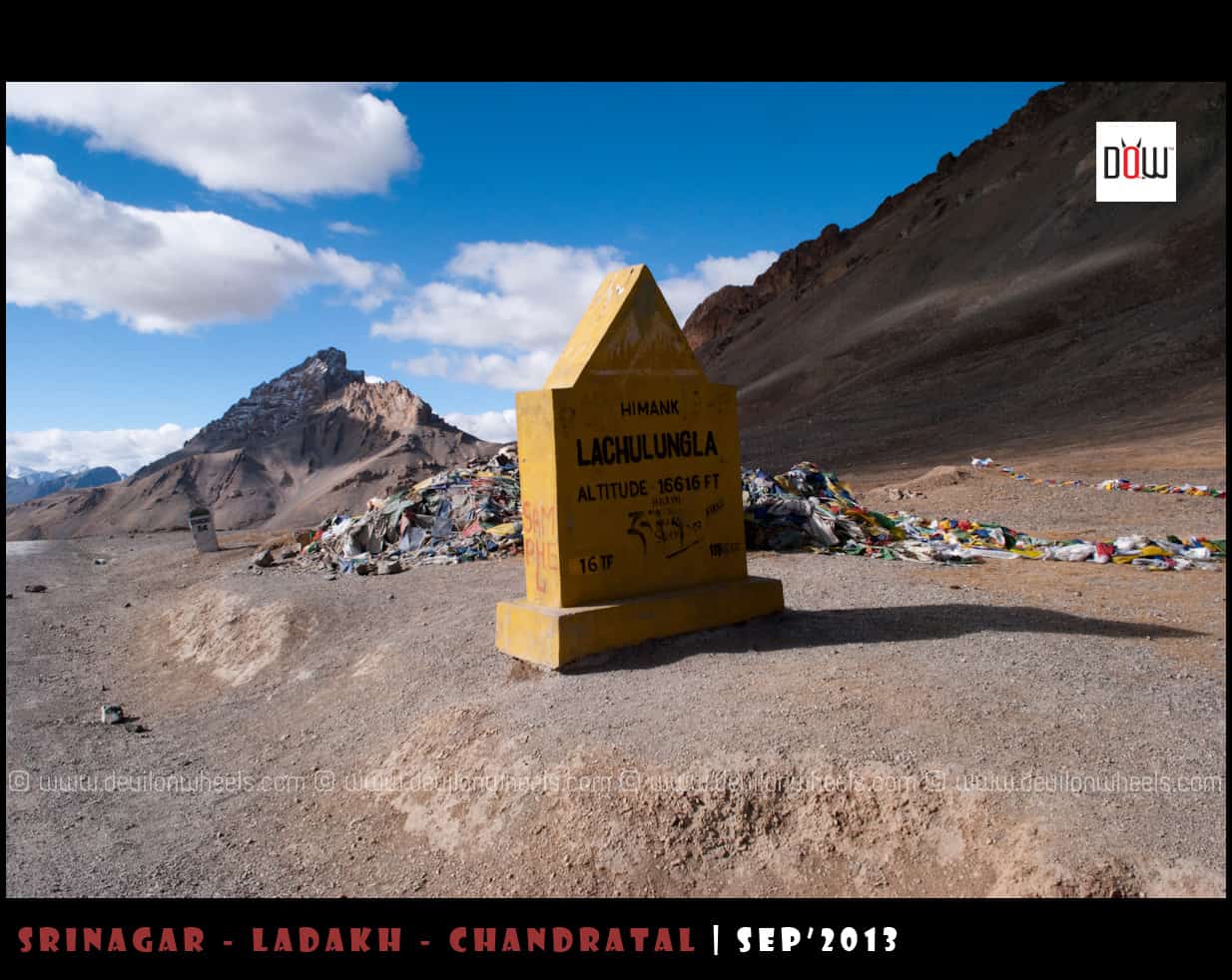
13. Lachalung La Pass (5,059 m / 16,598 ft)
Traveling over the Manali – Leh Highway from Pang, we first topped Lachalung La Pass at an altitude of 5,059 meters. The pass was deserted, but the winds blowing up there were super cold. This pass comes right after you clear the famous 21 hairpin bends called the Gata Loops. If you are driving yourself, take it slow through this section as altitude fatigue can hit you suddenly. I have covered this highway in detail in my guide on how to plan a journey on Manali – Leh Highway.
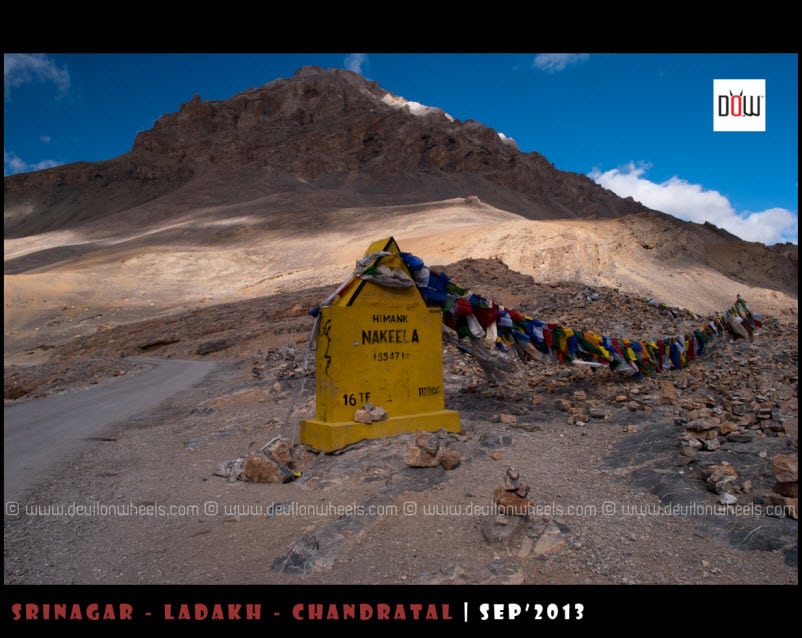
14. Nakee La Pass (4,750 m / 15,584 ft)
As we moved ahead on the highway, we reached Nakee La Pass at an altitude of 4,750 meters. It was again quite windy up there. We clicked a couple of pictures and got back quickly in the car. Nakee La is a relatively quick pass to cross, and most people do not stop here for long. It falls between Lachalung La and Baralacha La on the highway.

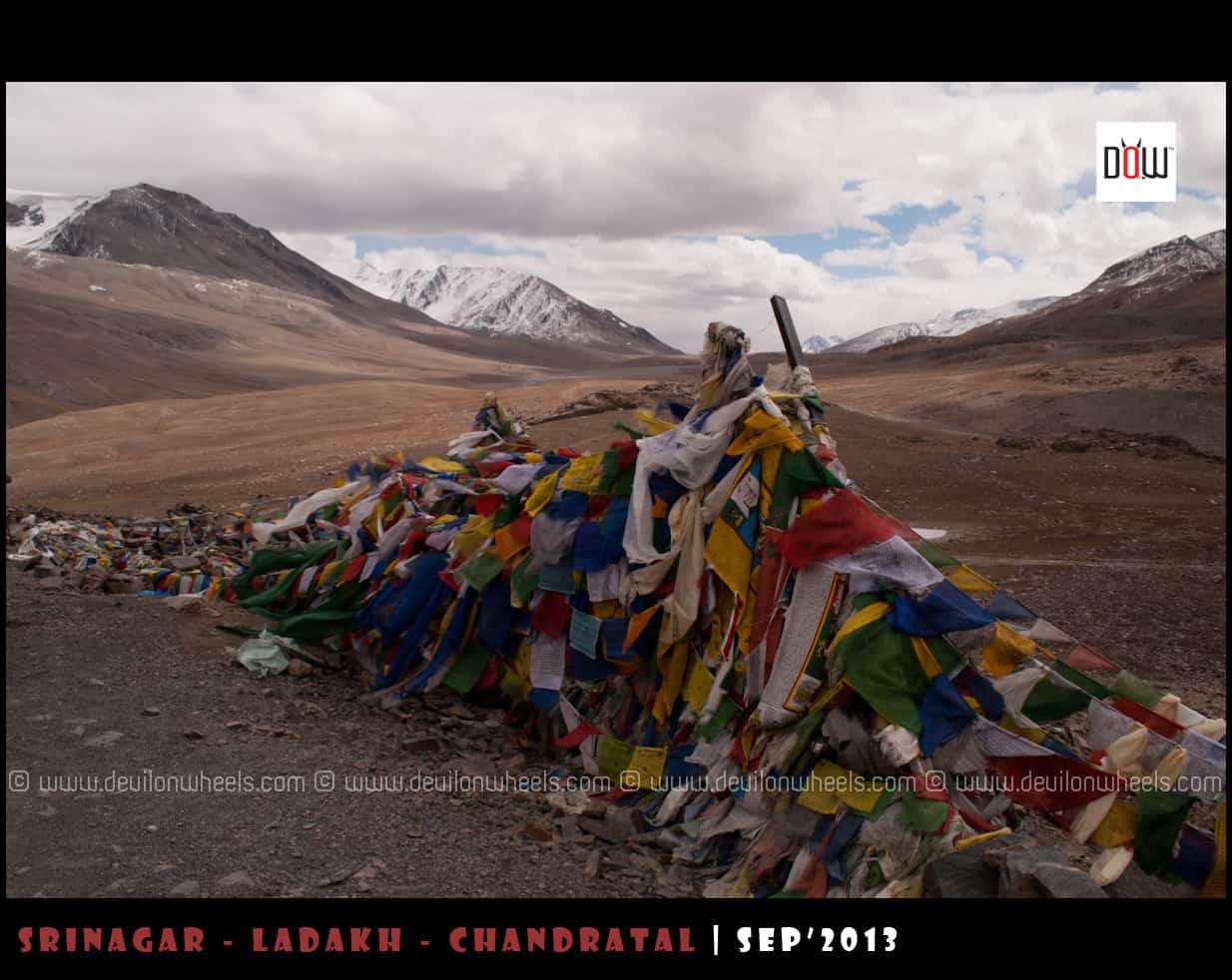
15. Baralacha La Pass (4,890 m / 16,040 ft)
Then we reached one of the passes that I love the most, Baralacha La Pass, at an altitude of 4,890 meters. For the first time, I saw this pass devoid of any snow, though there was a light snowfall happening when we reached. Baralacha La is where Lahaul, Zanskar, and Spiti meet, making it a triple watershed. The views here on a clear day are nothing short of surreal. Crossing over it gave an impression of coming closer to home somehow 🙂
Passes on the Spiti Valley Detour (Chandratal – Kunzum – Rohtang)
Instead of heading straight to Manali from Baralacha La via Jispa, we took a detour through Chandratal Lake and Spiti Valley. This added two more passes to our tally.
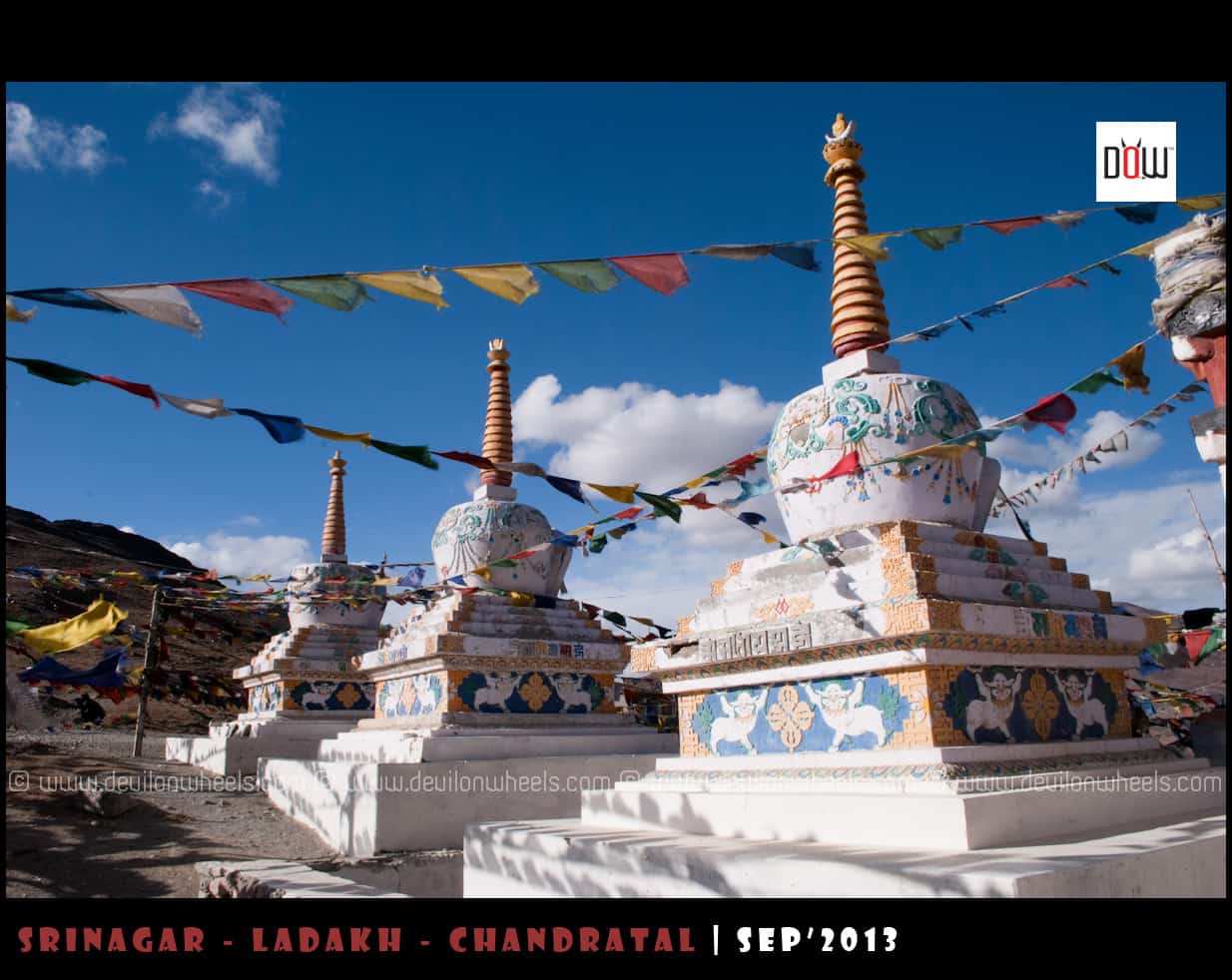
16. Kunzum Pass (4,590 m / 15,059 ft)
After visiting Chandratal Lake, we ascended to Kunzum Pass at an altitude of 4,590 meters. We did the parikrama (circumambulation) of the temple at the top, as is the tradition, and then headed down to Losar village for our night stay. Kunzum Pass marks the entry point to Spiti Valley from the Lahaul side. The road from Batal to Kunzum can be very tricky, especially during the monsoon. You can read more about this stretch in my Kunzum Pass to Batal travelogue.
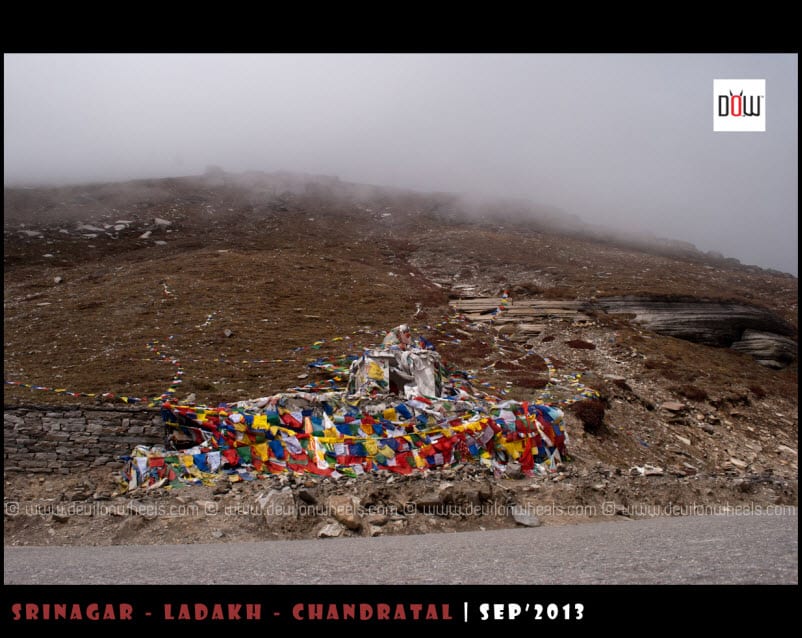
17. Rohtang Pass (3,979 m / 13,054 ft)
Finally, we scaled Rohtang Pass at an altitude of 3,979 meters to cross over towards Manali and further home. Rohtang is probably the most commercially visited pass in India, with thousands of tourists visiting it daily in summer. As of 2026, the Atal Tunnel (Rohtang Tunnel) has reduced the need to cross Rohtang Pass if you are traveling between Manali and Keylong/Sissu. However, if you are coming from the Chandratal/Spiti side via Gramphu, you will still need to cross Rohtang. Keep in mind that you need a Rohtang Pass permit for personal vehicles.
What About Umling La and Other Passes We Missed?
You might notice that some famous Ladakh passes are not on this list. That is because we did not cross them on this particular trip. Here are a few notable ones that you may encounter on your Ladakh trip depending on your route:
- Umling La (5,798 m) – Currently the world’s highest motorable pass, located near Hanle. We did not have this road available in 2013.
- Tanglang La (5,328 m) – On the Manali – Leh Highway between Upshi and Pang. We bypassed it coming from the Tso Kar side.
- Pensi La (4,400 m) – The gateway to Zanskar Valley from Kargil side.
- Shinku La / Shinkun La (5,091 m) – The new route connecting Manali to Leh via Zanskar. The road through Shinku La was completed in 2024.
If you want a broader perspective on the highest motorable passes in the world, do check my article on Top 13 Highest Motorable Passes in the World.
Practical Tips for Crossing High Mountain Passes in Ladakh
Based on my experience of crossing these 17 passes and many more over the years, here are a few tips that will help you prepare.
- Acclimatize before attempting high passes. Spend at least 2 days in Leh before heading to passes above 5,000 m. Read my detailed guide on AMS prevention.
- Start early. Most passes are best crossed before noon. Weather deteriorates in the afternoon with rain, snow, and reduced visibility.
- Carry warm clothes even in summer. At 5,000+ m, temperatures can drop below freezing even in July. Wind chill makes it worse.
- Do not stop too long at pass tops. 10-15 minutes is enough for photos. Extended exposure at high altitude without proper acclimatization can trigger AMS.
- Keep fuel in mind. Some stretches between passes have no fuel stations for 200+ km. Check my fuel availability guide for Ladakh.
- Check road status before starting. Passes can close due to snow, landslides, or BRO maintenance. Monitor the Manali – Leh Highway status and Srinagar – Leh Highway status pages.
- SUV or bike recommended for offbeat passes. Wari La, Changthang passes, and the Tso Moriri circuit are not suitable for sedans in most conditions.
- Carry basic medicines. Diamox (for AMS), Disprin, ORS packets, and any personal medication. Medical help is hours away from most passes.
The Ladakh Mega Meet Travelogue Series
This article is part of the larger Ladakh Mega Meet travelogue series. Here are the other parts of the journey:
- Prologue, Itinerary & Road Updates | Ladakh Mega Meet
- Mess-up at Khardung La to Nubra Valley
- Nerves of Wari La Pass Route
- Charmness over Chang La Pass to Pangong Tso
- Anxiety over Pangong Tso – Chusul – Hanle
- Freedom around Kyon Tso 1 & Kyon Tso 2
- Darkness over Tso Moriri – Tso Kar Lake
- Solitude of Manali – Leh Highway
- Struggle of Kunzum Pass – Batal – Gramphu Road
- Preview – 14 Magical Lakes
Frequently Asked Questions
What are the names of the mountain passes in Ladakh?
The most commonly crossed named passes in Ladakh are Zoji La, Fotu La, Khardung La, Wari La, Chang La, Baralacha La, Tanglang La, Kunzum Pass, and Rohtang Pass, plus Umling La near Hanle, currently the world’s highest motorable pass at 5,798 m (19,024 ft). Ladakh has over 20 named passes in total. See the quick list with altitudes near the top of this article and the complete 17-pass table below for the ones we crossed during our Ladakh Mega Meet.
How many mountain passes are there in Ladakh?
There are over 20 named mountain passes in and around Ladakh that tourists can cross on motorable roads. The exact number depends on your route. A standard Srinagar – Leh – Manali circuit covers 8-10 passes, while extended trips through Changthang, Zanskar, and Umling La can add 5-10 more.
Which is the highest mountain pass in Ladakh?
Umling La at 5,798 meters (19,024 ft) near Hanle is currently the highest motorable pass in Ladakh and the world. Among the commonly visited passes, Khardung La (5,359 m) and Chang La (5,360 m) are the highest.
Do I need a permit to cross mountain passes in Ladakh?
As of 2026, Indian tourists need to pay the Ladakh Environment Fee (also called the Green Tax) for all areas. Additionally, Inner Line Permits are required for certain restricted areas like Nubra Valley, Pangong Tso, Tso Moriri, Hanle, and the Changthang region. The permits can be obtained online. Check my complete Ladakh permits guide for the latest process.
What is the best time to cross passes in Ladakh?
June to September is the best window for crossing all the major passes in Ladakh. The Srinagar – Leh Highway opens around late April, and the Manali – Leh Highway opens around late May or early June. By October, snow starts closing the higher passes. For a detailed month-by-month breakdown, check my best time to visit Ladakh guide.
Can I cross Ladakh passes in a sedan or hatchback?
The standard passes on Srinagar – Leh and Manali – Leh Highways (Zoji La, Fotu La, Khardung La, Chang La, Baralacha La, Rohtang) are doable in a sedan with careful driving. However, offbeat passes like Wari La, Changthang circuit passes, and the Tso Moriri stretch require a high ground clearance vehicle, preferably an SUV or 4×4.
Is Khardung La really the highest motorable pass in the world?
No. This is a common myth. The signboard at Khardung La claims an altitude of 18,380 ft, but the actual surveyed altitude is around 17,582 ft (5,359 m). The highest motorable pass in the world is Umling La at 19,024 ft (5,798 m), also in Ladakh near Hanle.
How dangerous are the mountain passes in Ladakh?
The passes themselves are not inherently dangerous if you are prepared. The main risks are Acute Mountain Sickness (AMS) from altitude, sudden weather changes, poor road conditions, and lack of medical facilities. Always acclimatize properly, carry warm clothes, keep fuel reserves, and never drive when visibility is poor. Please take a sensible call for yourself and your loved ones.
Are Ladakh mountain passes open in winter?
Most mountain passes in Ladakh are closed from November to April/May due to heavy snowfall. The only way to reach Leh in winter is by air. The Srinagar – Leh Highway usually opens in late April and the Manali – Leh Highway in late May or early June, depending on snow clearance by BRO.
I hope this detailed guide on the 17 mountain passes in Ladakh helps you plan your trip better. If you have crossed any of these passes or have updated information, feel free to share in the comments section below. It will help other fellow travelers. Also, if your friends or family are planning a Ladakh trip, do share this article with them. For other trip-related discussions, you can always check out the DwD Community 🙂 …
Have a travel question?? You can subscribe to my YouTube channel and leave a comment to ask your travel questions about traveling to the Himalayas.

13 Comments
Comments section gets closed in 90 days. To ask your travel questions, you can follow my YouTube Channel for a faster reply or for a much slower reply follow me on Instagram. :)
Thank you for your blog article.Thanks Again. Really Cool.
Nice information. Have been to 2 of them and hope to visit the others too.
Best wishes Avik, we missed one pass by the name Horala by just 2-3 KMs from Nurpa La. Do check out when you visit Ladakh. Any queries for planning your ladakh trip, feel free to post here 🙂
Sure Dheeraj, will do.
Wonderful photos and informative too..I’ve been only to the Rohtang Pass..:-(.. hope I would be able to visit the other passes some day..
Thank you so much !! Yeah, whenever you do then feel free to post any queries you have for Ladakh trip either here on the DoW blog or in community 🙂
🙂 Sure
Congrats Dheeraj, for the best blogger
ur suggest.., ur detailings,
ur updates r superb.
Thank You so very very much Vikas !! Just doing my tidbits for my passion and love for traveling in Himalayas…
Hi Dheeraj,
Many congratulations on being listed among top 25 bloggers from India on Thrillophilia. Truly deserved.
About the passes the 17 passes pics look amazing. I had been to first 4 in my Ladakh trip and hope to visit more in coming years.
Thank you so very much Makrand. Yeah, it was quite a surprise… Well, now you have many more passes on your TODO list then. I wish you all the best and any info. you need, please feel free to drop in here for your upcoming Ladakh trip.