


Hanle village sits at 14,764 ft (4,500 m) on Ladakh’s Changthang Plateau, about 250 km southeast of Leh via Chumathang, Nyoma, and Loma. This altitude tops Leh’s 11,520 ft, so acute mountain sickness is a real risk without 2-3 days of acclimatization first. Home to roughly 1,000 people, Hanle hosts India’s first Dark Sky Reserve.
This travelogue is part of my 2012 Ladakh trip series. If you are joining mid-way, here is the journey so far.
- My Never Ending Journey to Ladakh
- Sham Valley, Nature, Monasteries and More
- Stakna, Hemis and Chumathang Hot Springs
- Magical Colours of Tso Moriri
Quick Info: Hanle at a Glance
| Altitude | 14,764 ft (4,500 m) |
| Distance from Leh | ~250 km via Chumathang-Nyoma-Loma (7-9 hrs) |
| Permit | EDF only for Indians (Rs 400 + Rs 20/day). Foreigners need ILP, day-visit only |
| Best Time | May to September (Jun-Aug best for stargazing) |
| Homestays | Rs 1,000 to Rs 2,500/night (Padma, Sonam, Gua, Naga Basti) |
| Bus from Leh | Weekly Saturday 6:30 AM, ~Rs 525 one-way |
| Mobile Network | BSNL postpaid works. Jio/Airtel patchy or absent |
| Fuel | No pump at Hanle. Last reliable at Karu. Nyoma pump operational since 2024 |
| Key Attractions | Dark Sky Reserve, Hanle Monastery, IAO Observatory, Kiangs, Umling La |
How Did We Travel from Tso Moriri to Hanle?
The drive from Tso Moriri to Hanle covers roughly 150 km via Sumdo, Mahe, Nyoma, and Loma. It took us about 4 hours of actual driving, with plenty of photo stops in between. The route passes through the heart of the Changthang Plateau, one of the most remote and visually striking landscapes in all of India.
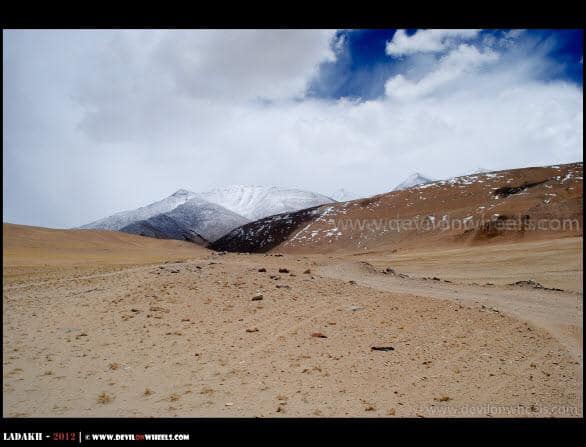
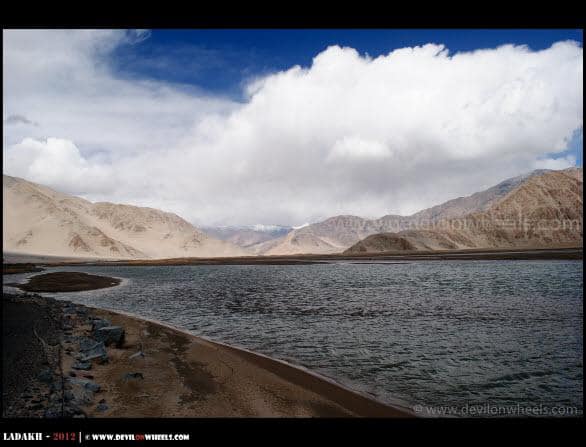
It was a great, fun-filled hour near the banks of Tso Moriri lake before we actually started towards Hanle, our night stop for the day, at about 11:15 AM. The land was so barren and remote that it made us feel right in the lap of mother nature and the Himalayas. Beauty, ever so serene, ever so bold, ever so barren, and ever so harsh. Only a few days in today’s modern age of life do you see or witness such things. I was in a state of trance, floating in dreams, ogling at the beauty outside the car windows.
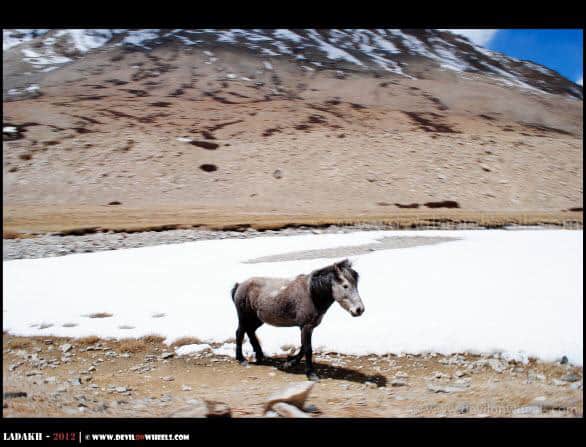
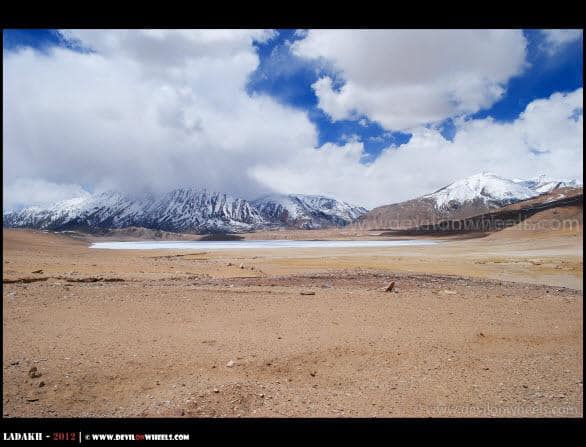
We saw so many wild horses running around, grazing, giving it a final touch of heaven :). Once we crossed Kiagar Tso, finally, after about 30 odd km the road appeared back and it was some sign of relief. Some civilization at last, as we saw a local from Sumdo Village standing in the middle of the road, asking for a lift to the village. We had space in the car, so a “Juley” and we got him with us, dropped him at Sumdo. Another Juley with smiles, and we moved on. Around 12:45 PM we reached Mahe bridge, which brought us back to the main road. There is a small dhaba at Mahe where we had black tea, Maggie, and Thupka. After about half an hour, we left for Hanle.
What is the Route from Mahe to Hanle via Nyoma and Loma?
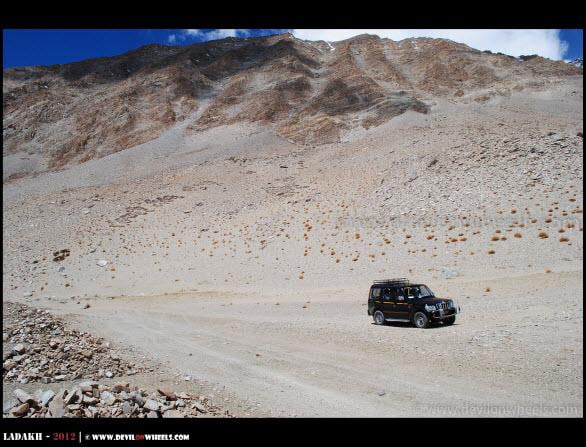
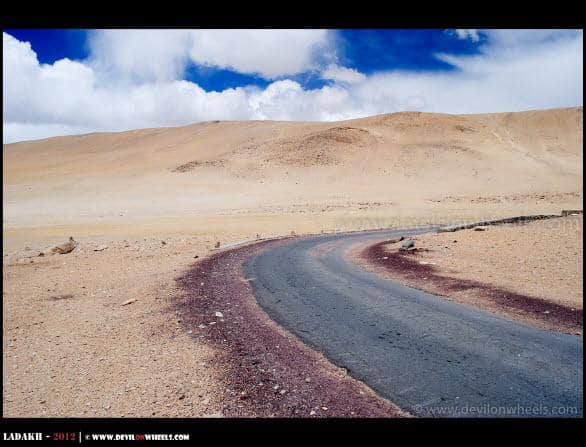
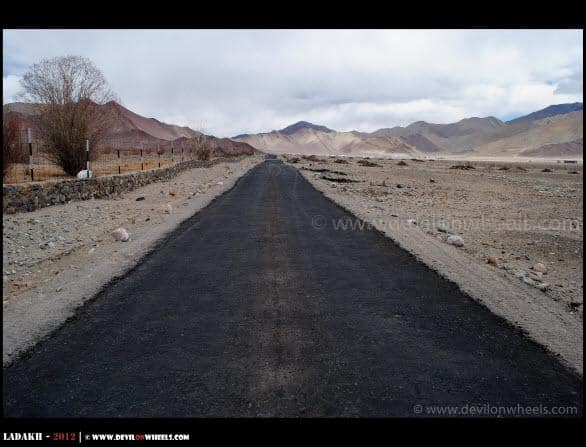
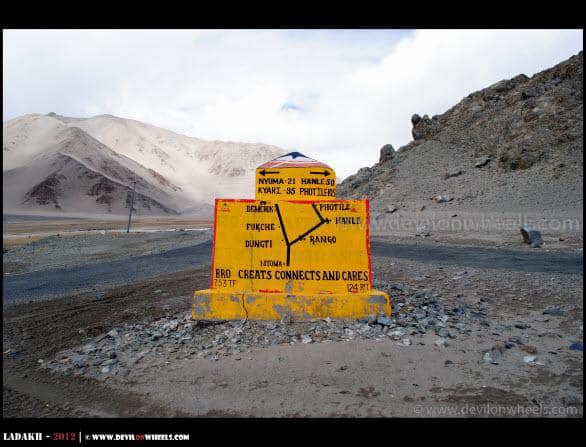
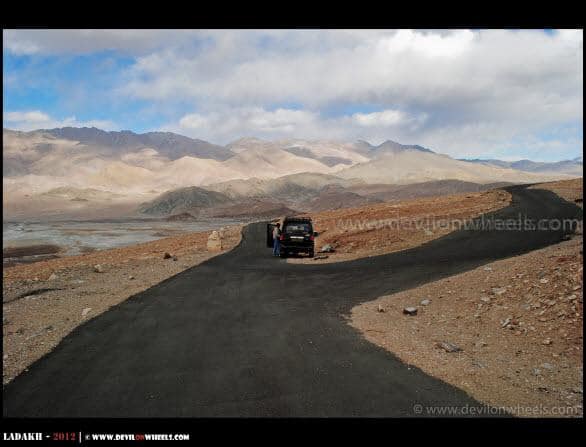
From Mahe, Hanle is about 150 km. The road runs through Nyoma and then Loma, where you need to cross the bridge on the right that takes you towards Hanle, roughly 50 km ahead of Loma. Hats off to BRO for creating such smooth roads in the cold desert at such high altitude and harsh conditions.
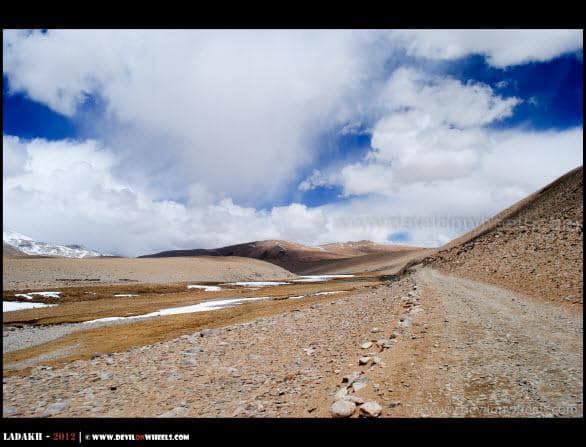
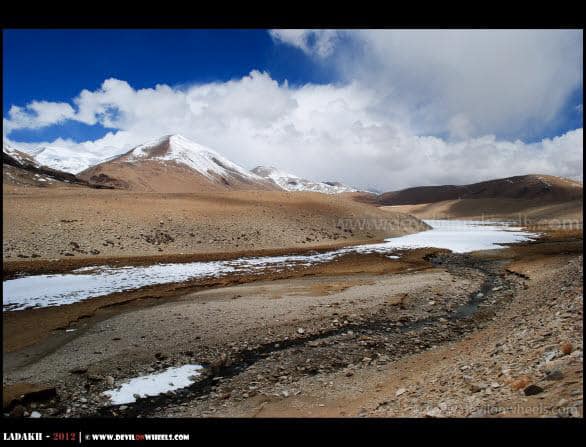
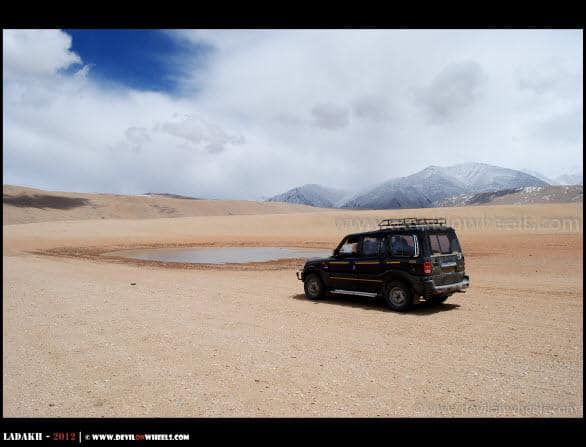
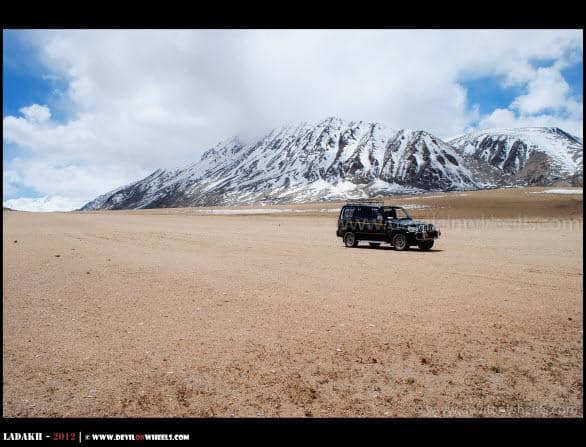
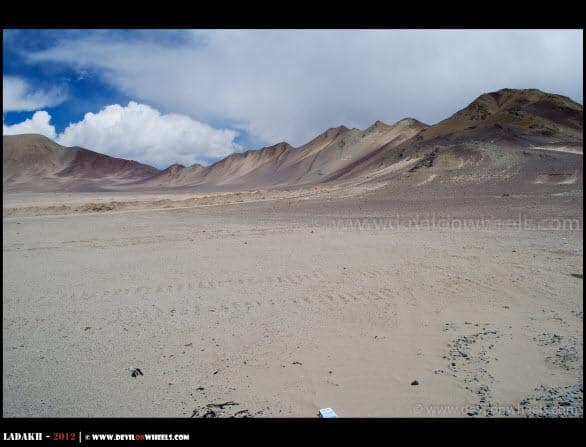
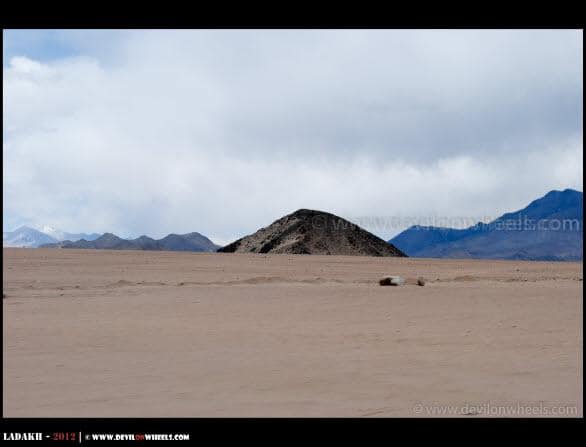
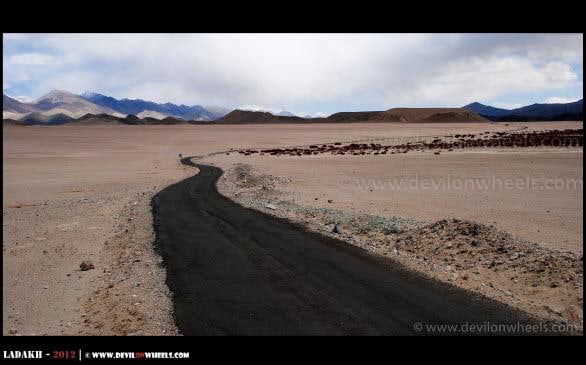
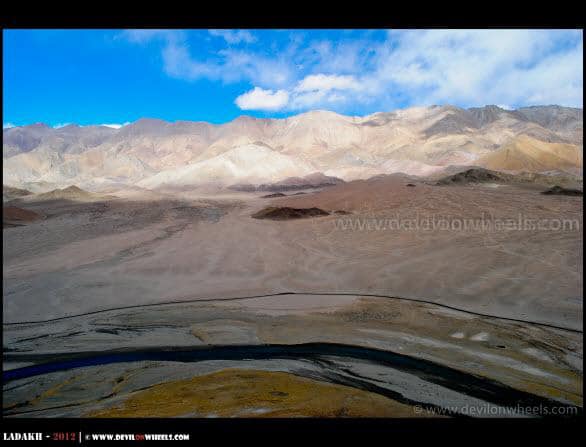
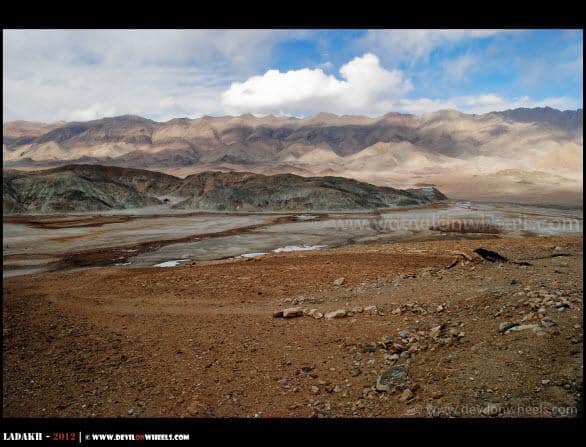
As you move towards Hanle, the size of the mountains starts to decrease. You start witnessing a series of small, clustered mountains giving a feeling of a different world altogether. The journey from Nyoma to Loma and up to Hanle is one of the most visually rewarding drives I have ever done. In fact, it is one of those journeys which I can do again and again without getting bored. Roads were freshly laid, but with caution, do not cruise as there are inverted bumps left on the road for water drainage. Keep in mind, be careful with your speed :).
We passed through Nyoma, which is essentially a small village and primarily an army settlement. We clicked a few pictures and moved on. Another 30 minutes and we were at Loma, where there is a checkpost. One has to submit permits here before moving ahead, either towards the Tsaga, Chusul, Pangong Tso route or towards Hanle. In both cases, permits need to be submitted at the Loma checkpost. The army is extremely strict here and you cannot take pictures of any bridge, including the Loma bridge. In fact, norms are so strict that there is no off-roading allowed in the entire Changthang region. This is one of the violations most people make, which sometimes leads the DC office to temporarily stop issuing permits. Hence, please respect these rules.
2026 Update: Since late 2021, Indian tourists no longer need the old Inner Line Permit (ILP) for Hanle. You still need to pay the Ladakh Environment and Development Fee (EDF) online, which is Rs 400 per person (one-time per year) plus Rs 20/person/day plus a one-time Rs 50 Red Cross Fund fee (optional). However, the Loma checkpost still operates and you will need to show your EDF receipt. Foreign nationals still require an ILP, and as of 2022, they can visit Hanle during the day but must return to Nyoma for overnight stay. The no off-roading rule remains strictly enforced, so please travel responsibly.
We submitted the permits and did not dare to get out of the car due to some scary dogs watching us :). Permits done, and we moved into the interiors of the cold desert towards Hanle.
What Did We See on the Drive to Hanle?
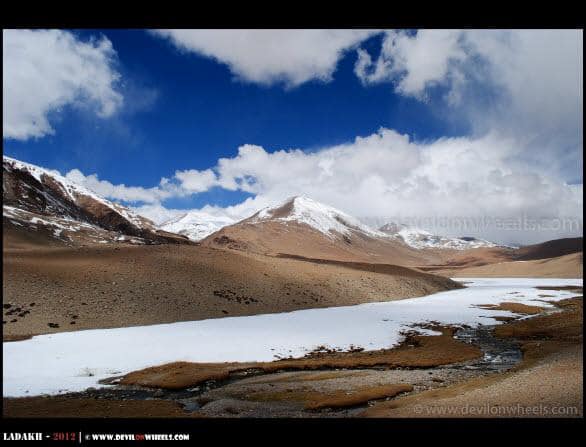
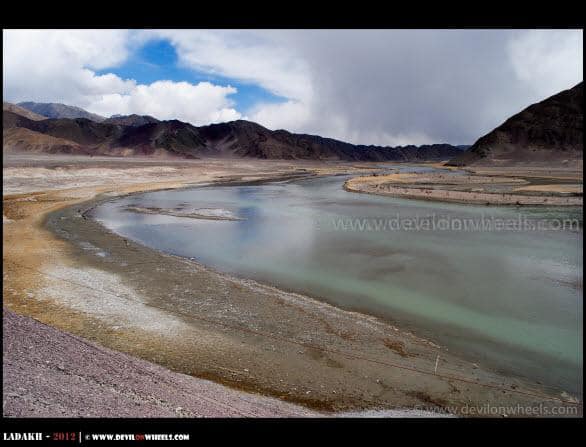
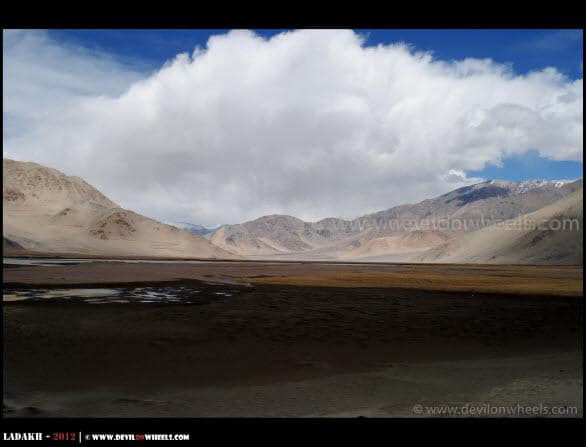
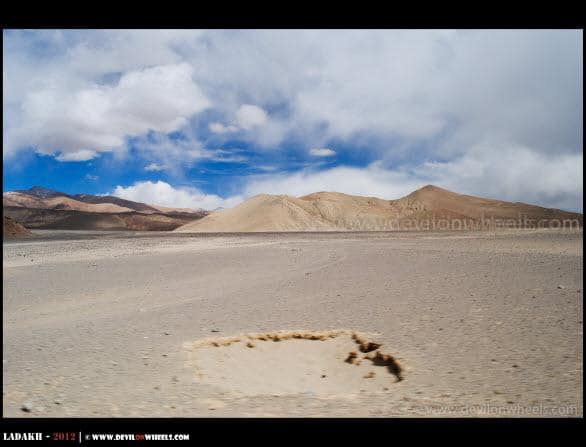
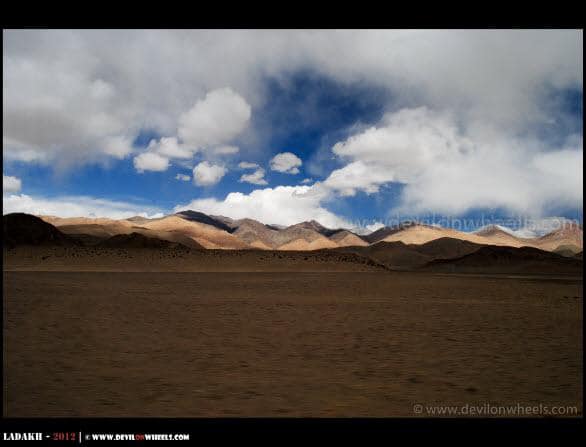
As we moved deeper into Changthang, the vistas kept getting more and more stunning. Some of the mountains looked like the pyramids of Egypt. The natural light play over the peaks was as majestic as the freshly laid roads beneath us.
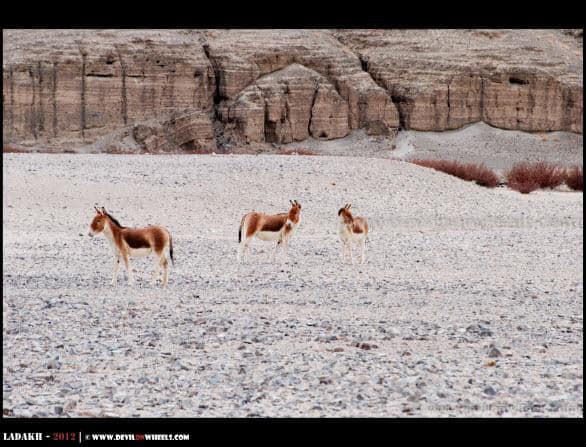
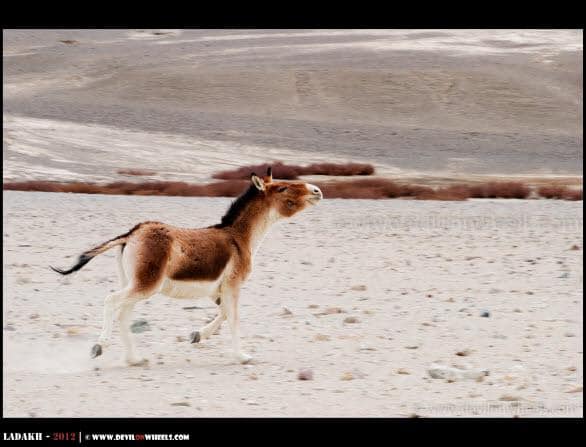
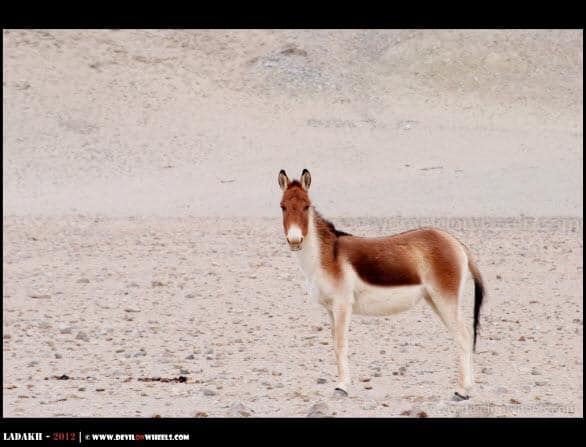
And then, finally, what I had been looking for appeared. Kiangs, the Tibetan Wild Asses. These animals are pretty shy by nature and mostly feed on the rarest of vegetation found in this harsh terrain. Kiangs are mostly found in the Changthang region of Ladakh and the Moore Plains along the Manali to Leh Highway. They are extremely shy and run away in the blink of an eye, but it is wonderful to watch and photograph them. If you want to spot them, drive slowly and keep your windows down. The moment you stop the car or open the door, they bolt. My Nikkor 70-300 was the hero of the day, letting me get a few distant shots without scaring them off.
We did not find a single person en route so far and were traveling completely alone. Around 3:15 PM, we finally reached Hanle, passing the road that leads to Photi La, which at the time was being developed as the highest motorable road in India. Today, this road connects all the way to Umling La Pass at 19,024 ft, officially the highest motorable road on Earth. Things have changed dramatically since 2012.


What is Hanle Monastery Like?
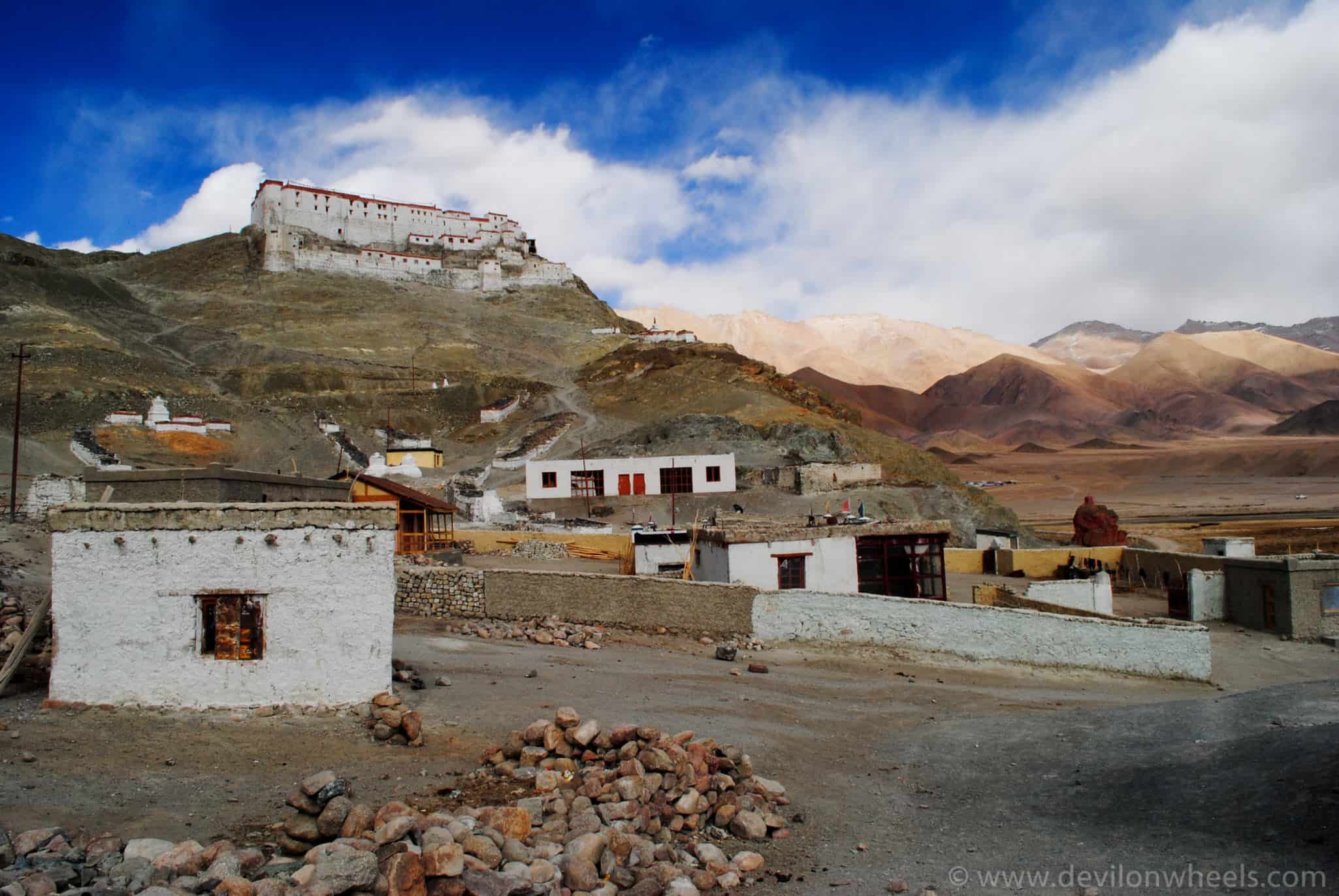
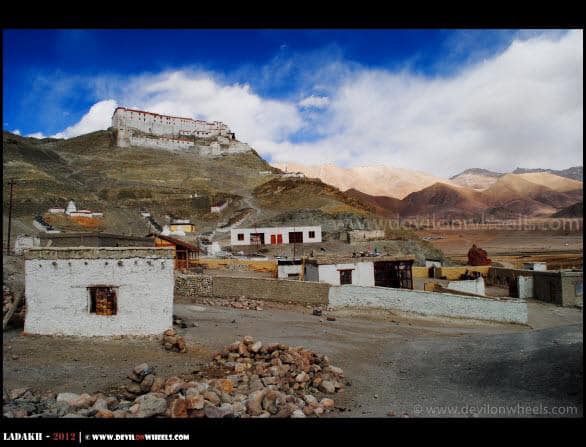
Hanle Monastery is a 17th-century gompa built by King Sengge Namgyal around the 1630s. It belongs to the Drukpa Kagyu sect and sits atop a hill overlooking the entire village of about 1,000 people. The monastery has deep historical significance, as King Sengge Namgyal himself died here in 1642.
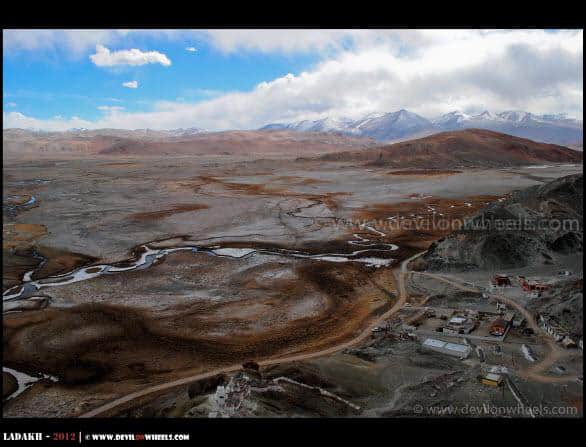
The Hanle Monastery offers some incredible aerial views of the whole village and the surrounding cold desert. Even after hearing some scary stories about ghosts from locals, we decided to pay a visit to this lovely monastery. It was too cold outside and the approach road to the monastery top was full of loose gravel. Rough, to say the least.
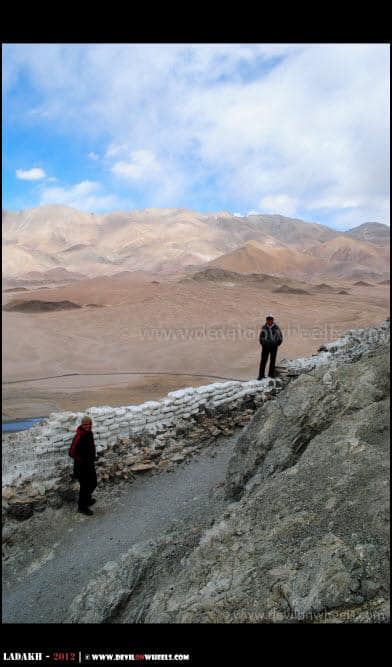
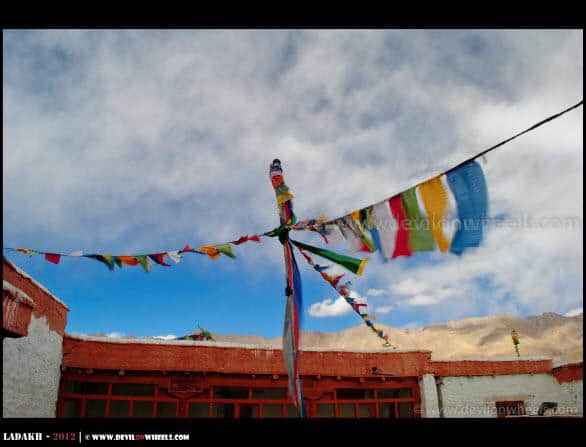
We were very much excited though. We took so many pictures of the stunning backdrop (the way we came from) and the aerial views of Hanle village. The monk of the monastery came rushing on a Pulsar bike to let us see the inside. We offered prayers, took pictures from the terrace, and soaked in the silence of this remote place. There is something deeply calming about standing at the top of a monastery in a cold desert at 14,764 ft with absolutely nobody else around.
The monastery interiors have some beautiful murals and thangka paintings typical of Drukpa Kagyu tradition. The main prayer hall is small but has a serene energy to it. From the terrace, you get a complete 360-degree view: the road from Nyoma on one side, the observatory hill on the other, and the vast Changthang plateau stretching in every direction. If you are a photographer, the golden hour light here is something else entirely.
What is the Indian Astronomical Observatory at Hanle?
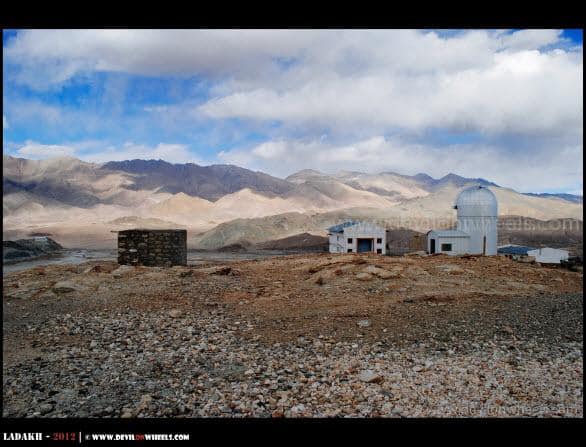
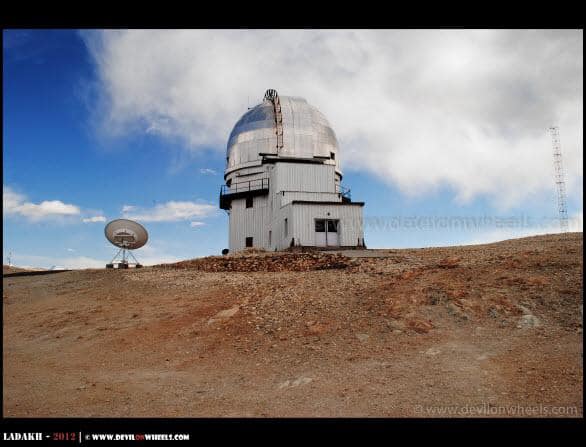
The Indian Astronomical Observatory (IAO) at Hanle is one of the highest astronomical observatories in the world, sitting at 4,500 meters (14,764 ft). Operated by the Indian Institute of Astrophysics (IIA), Bengaluru, it houses the 2.01-meter Chandra telescope (also called HCT). In October 2024, the MACE (Major Atmospheric Cherenkov Experiment) telescope was inaugurated here. It is Asia’s largest and the world’s highest imaging Cherenkov telescope, designed to detect high-energy gamma rays from distant cosmic sources. In January 2025, MACE detected gamma-ray signals from a galaxy about 8 billion light years away, which was a significant scientific milestone.
In 2022, the area was declared as India’s first Dark Sky Reserve, the Hanle Dark Sky Reserve (HDSR), covering about 1,073 square kilometers of the Changthang Wildlife Sanctuary. This happened thanks to roughly 270 cloud-free nights per year and a Bortle Class 1 rating, which is the darkest sky classification possible. To put that in perspective, Delhi sits at Bortle 8-9, meaning you can barely see a few stars. At Hanle, you can see the Milky Way with your naked eyes so clearly that it looks like a photograph.
As we reached the top, the wind was blowing with such force that we felt like being blown away. Somehow, gasping for breath, we managed to reach the observatory building from the parking lot and went in to see the telescope. They told us that readings start at around 5:30 PM every evening, and if you are interested, you can watch how the telescope opens and starts reading the sky. We were unlucky though, as the sky was not clear that day and control had been taken over by the Bengaluru office remotely. They offered to show us a video recording, but we were not that interested.
We had bookings for the observatory guest house, but for the next day. They did not entertain our request to accommodate us a day earlier. So after some more pictures outside, we went down to Khaldo Village at the foothill to search for accommodation.
2026 Update: Visiting the IAO now requires prior permission from IIA Bengaluru, submitted at least 15 days in advance through their online request form. Visiting hours are 9:30 AM to 10:30 AM and 3:30 PM to 5:30 PM. The visit usually includes a guided tour and presentation about the telescopes. Tourists cannot look through the research telescopes as they are designed for long-exposure scientific work. For stargazing, several homestays in Hanle now offer small telescopes and astro-tour arrangements under the Dark Sky Reserve framework. A group of 24 local residents, predominantly women (around 70%), have been trained as “Astro-Ambassadors” by IIA to guide visitors through night sky observation. The community follows strict light-control rules, with no outdoor lights after 10 PM to preserve the dark sky quality.
What Makes Hanle Special for Stargazing in 2026?
When I visited in 2012, stargazing at Hanle was something you did informally, lying on a charpoy outside your homestay and looking up at a sky full of stars. There was no organized framework, no trained guides, no telescope available to tourists. You just soaked it in with your eyes.
Fast forward to 2026, and Hanle has become one of the most exciting astro-tourism destinations in Asia. The Hanle Dark Sky Reserve hosted its third annual Star Party in September 2025, according to the Department of Science and Technology, drawing amateur astronomers and astrophotographers from across India. The HDSR welcomed approximately 10,000 visitors in 2024 alone, which is remarkable for a village that had barely a handful of tourist visitors when I was there in 2012.
What makes the stargazing here genuinely world-class is a combination of altitude (4,500 m), extreme dryness (low atmospheric moisture means less light scattering), and strict light pollution controls. The village maintains a dark sky protocol where outdoor lighting is minimized after 10 PM. Several homestays now offer small telescopes and guided stargazing sessions conducted by the trained Astro-Ambassadors. If you are into astrophotography, this is one of the few places in India where you can get clean shots of the Milky Way core, nebulae, and even Andromeda without specialized tracking mounts.
The best months for stargazing are June to August, when the Milky Way’s galactic core is directly overhead and the skies are generally clearer between bursts of monsoon clouds. Keep in mind, even in summer, night temperatures at Hanle drop to around -5 to 0 degrees Celsius, so carry proper warm layers for any night session.
Where Did We Stay in Hanle?
Back in 2012, accommodation options in Hanle were very limited. There was the observatory guest house (the only “decent” option), but you had to write to the Director of IIA Bengaluru for bookings. If approved, no date changes were allowed, so you had to reach on the exact booked date.
The other options were homestays in Khaldo village, very close to the observatory. One homestay near the start of the village had a landline phone. The rooms were decent but the pricing was not fair. There was another homestay at the end of the village, just before the pasture land, run by a lady named Padmadeskit. We stayed at this one and found it good enough. If you are visiting Hanle, keep in mind that you should not expect too much from a homestay at this altitude and remoteness. Padmadeskit’s place was more honest with pricing compared to the other one.
Our driver Rigzin was all helpful in finding the accommodation for us. We placed our baggage in the room and had a cup of tea with biscuits. She also ran a small general store inside the house.
2026 Update: Accommodation in Hanle has improved significantly over the years. There are now several registered homestays including Padma Homestay (yes, the same one from 2012, now listed on Booking.com), Sonam Guest House, Gua Home Stay, Naga Basti Homestay, and a few more. Expect to pay Rs 1,000 to Rs 2,500 per night depending on the homestay and facilities. Many of these now offer stargazing telescopes and astro-tour arrangements as part of the Dark Sky Reserve initiative. The observatory guest house still requires advance booking through IIA Bengaluru. For a detailed review, check our Sonam Guest House Hanle review.

How Was the Evening at Hanle?
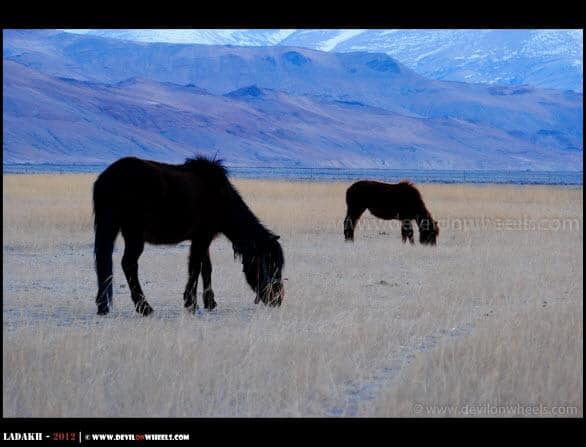
As the evening set in, the cold started creeping up fast. We decided to go for a long walk up to the grazing pasture lands behind the guest house. So many horses were grazing out there and it looked purely magical. After some pictures, we were back in our room. It was getting colder and colder, so another layer of woolens came on.
The toilet was outside the house, Ladakhi style dry pit, so we decided to use it while there was still some daylight left. After some rest, it was time for dinner. Thankfully, electricity came up which allowed us to eat in light and get our mobile and camera batteries charged. The room where dinner was served had a bukhari (wood-burning stove) running, which kept it very warm. The lady cooked a tasty dinner for us.
But here is the thing about bukharis. Sitting in the bukhari room gets you nice and warm. The moment you step out, the sudden temperature change hits you like a wall. We were shivering within seconds. Without wasting a moment, we jumped into double quilts, and after a while the shivering settled, letting us peacefully sleep with dazzling dreams of the day :).
How to Plan a Trip to Hanle in 2026?
A lot has changed since my 2012 visit. Here is a quick practical summary for anyone planning a trip to Hanle now. For a much more detailed and updated guide, I have written a separate Hanle Ladakh Complete Travel Guide that covers everything in depth.
What Permits Do You Need for Hanle?
Since late 2021, Indian tourists no longer need the old Inner Line Permit (ILP) for Hanle. You do need to pay the Ladakh Environment and Development Fee (EDF) online at lahdclehpermit.in, which is Rs 400 per person (one-time per year) plus Rs 20/person/day plus a one-time Rs 50 Red Cross Fund fee (optional). Foreign nationals still need ILP, and as of 2022, they can visit Hanle during the day but must stay overnight at Nyoma. For visiting the observatory specifically, you must apply to IIA Bengaluru at least 15 days in advance through their online portal.
How to Reach Hanle from Leh?
Hanle is approximately 250 km from Leh, which takes 7 to 9 hours of driving. The most common route is Leh to Upshi to Chumathang to Nyoma to Loma to Hanle. You can also reach via the Pangong to Chusul to Hanle route. There is a weekly bus from Leh to Hanle every Saturday at 6:30 AM (fare approximately Rs 525 as of 2025, verify locally). The bus returns from Hanle to Leh the next day. For private taxis, check the Leh Ladakh taxi rates page. Keep in mind, there is no fuel station at Hanle. The Nyoma petrol pump became operational in 2024, which helps, but it is still wise to carry extra fuel. The last fully reliable pump before this stretch is in Karu, near Leh. Also check our fuel availability guide for Ladakh before you start.
When is the Best Time to Visit Hanle?
May to September is the travel window for Hanle. June to August is the best time if your primary interest is stargazing, as the Milky Way’s galactic core is brightest during these months. For the best time to visit Ladakh overall, June and September tend to offer the best combination of clear skies and manageable roads. Nights remain extremely cold even in summer (dropping to -5 to 0 degrees Celsius), so pack heavy woolens regardless of when you go.
What to See and Do at Hanle?
Hanle Monastery (17th century, Drukpa Kagyu sect), the Indian Astronomical Observatory (prior permission needed from IIA), India’s first Dark Sky Reserve for stargazing with trained Astro-Ambassadors, Kiangs (Tibetan Wild Asses) in the surrounding Changthang area, and now Umling La Pass (75-90 km from Hanle), the highest motorable road in the world. For a complete list, check the Hanle complete travel guide.
Important Safety Tips for Hanle
Hanle sits at 14,764 ft, which is significantly higher than Leh (11,520 ft). Acute Mountain Sickness (AMS) is a real concern here, especially if you drive directly from Leh without proper acclimatization. Spend at least 2-3 days in Leh before heading to Hanle. Carry Diamox (consult your doctor first), stay hydrated, and do not overexert yourself on arrival. Mobile connectivity is limited. BSNL postpaid works intermittently, but Jio and Airtel are mostly absent. Carry a BSNL SIM if you need to stay connected. There is no hospital at Hanle, so the nearest medical facility is at Nyoma (army hospital) or back in Leh. Carry a basic first-aid kit and any prescription medication you might need.
The Journey Ahead
The next morning, we left Hanle and headed deeper into the remoteness of Changthang. You can read about it in the next part of this travelogue.
Related Reading
- Hanle Ladakh 2026 Complete Travel Guide
- Tso Moriri Lake Complete Travel Guide
- Maps of Ladakh, Nubra Valley and Changthang
- Padma Sonam Guest House Hanle Review
- Ladakh Permits and Environment Fee Guide
- Best Leh Ladakh Itinerary 2026
- Pangong Tso to Tso Moriri Direct Route
- AMS Prevention and Acclimatization Guide
I hope this travelogue was helpful and brought back some of the raw beauty of Changthang for you. Hanle has changed so much since 2012, from a barely-known village with one phone line to India’s premier Dark Sky Reserve drawing thousands of visitors every year. Yet the core charm remains the same: the silence, the barren beauty, and the feeling of being truly alone with the mountains. If you have any questions about visiting Hanle, feel free to ask in the comments below or drop a message on the Hanle guide page. The DwD community and I will be happy to help you plan your trip :).
Last Updated: August 2026
Frequently Asked Questions
What is Hanle village?
Hanle is a remote village in Ladakh’s Changthang Plateau, sitting at 14,764 ft (4,500 m) with a population of roughly 1,000 people. It hosts a 17th-century Drukpa Kagyu monastery, the Indian Astronomical Observatory, and India’s first Dark Sky Reserve, a Bortle Class 1 zone about 250 km southeast of Leh via Chumathang, Nyoma, and Loma.
What is the altitude of Hanle in Ladakh?
Hanle village sits at approximately 14,764 ft (4,500 m) above sea level. The Indian Astronomical Observatory nearby is also at the same altitude. This makes Hanle one of the highest permanently inhabited villages in Ladakh. Proper acclimatization in Leh for 2-3 days before visiting is strongly recommended.
Do you need a permit to visit Hanle?
Since late 2021, Indian tourists no longer need an Inner Line Permit for Hanle. You only need to pay the Ladakh Environment and Development Fee (EDF) of Rs 400 per person (one-time) plus Rs 20/day plus a one-time Rs 50 Red Cross Fund fee (optional), all paid online at lahdclehpermit.in. Foreign nationals still require an ILP, and as of 2022, they can visit Hanle during the day but must return to Nyoma for overnight stay. To visit the Indian Astronomical Observatory specifically, prior permission from IIA Bengaluru (submitted 15 days in advance) is needed.
How far is Hanle from Leh?
Hanle is approximately 250 km from Leh. The drive takes 7 to 9 hours depending on road conditions and stops. The most common route goes via Upshi, Chumathang, Nyoma, and Loma. You can also reach Hanle from Pangong Tso via the Chusul route, which is roughly the same distance.
Is there a bus from Leh to Hanle?
Yes. There is a weekly bus from Leh to Hanle every Saturday at 6:30 AM. The one-way fare is approximately Rs 525 (as of 2025, verify locally for current rates). The bus returns from Hanle to Leh the next day. Since it runs only once a week, plan your itinerary accordingly.
What can you see at Hanle?
The main attractions at Hanle include the 17th-century Hanle Monastery (Drukpa Kagyu sect, built by King Sengge Namgyal), the Indian Astronomical Observatory with the MACE telescope (Asia’s largest Cherenkov telescope, inaugurated 2024), India’s first Dark Sky Reserve for stargazing with trained local Astro-Ambassadors, Kiangs (Tibetan Wild Asses) in the surrounding Changthang area, and Umling La Pass (75-90 km away), the highest motorable road on Earth.
Where to stay in Hanle?
Hanle has several homestays in Khaldo village near the observatory. Popular options include Padma Homestay, Sonam Guest House, Gua Home Stay, and Naga Basti Homestay. Rates range from Rs 1,000 to Rs 2,500 per night. Many homestays now offer stargazing equipment and guided night sky sessions as part of the Dark Sky Reserve initiative. The observatory guest house requires advance booking through IIA Bengaluru.
Can you see the Milky Way from Hanle?
Yes, Hanle is one of the best places in India to see the Milky Way with the naked eye. The area has a Bortle Class 1 rating, which is the darkest sky classification possible. The best months for Milky Way viewing are June to August, when the galactic core is directly overhead. The Dark Sky Reserve enforces strict light pollution controls, with no outdoor lighting after 10 PM, keeping conditions ideal for stargazing.
Is Hanle safe for solo travelers?
Hanle is generally safe for solo travelers, but you need to prepare for the remoteness. There is no hospital, no fuel pump (Nyoma pump opened in 2024, about 75 km away), and very limited mobile connectivity (only BSNL postpaid works intermittently). Carry enough cash, fuel, medicines, and warm clothing. Acclimatize in Leh for 2-3 days first, as the altitude of 14,764 ft can cause serious AMS symptoms. If you are on a motorcycle, ensure your bike is in good condition as there are no mechanics at Hanle.

38 Comments
Comments section gets closed in 90 days. To ask your travel questions, you can follow my YouTube Channel for a faster reply or for a much slower reply follow me on Instagram. :)
Very beautiful write up. I would love to read about the complete trip in Ladakh
Thank you Dr. Arun, I hope you were able to find all the links to it
Where are you?
Hi Dheeraj, I could not find any previous queries on your site, so please help me.
Hi Dheeraj, I am little confuse regarding trip to Hanle because of permit issue. But yesterday I had a chat with Rigzin, he told me it is possible to go Hanle by following route- Chumathang-Mahe-Loma-Hanle-Loma-Mahe-Tsomoriri. I desperately need your suggestion.
Hi Himadri,
O yes, that is what I am saying as well that you can visit the route in this direction but you need permits to by pass/reach Tso Moriri, Nyoma, Loma and Hanle. If you have these permits with you, then you can surely visit this region. Rigzin might be thinking that you will have the permits made yourself and might not be aware that DC office is not issuing the permits now. Request him, if he can help you guys get the permits from the DC office.
Regards
Dheeraj
Also waiting for next journey post; hope it will be published b4 my departure to leh on Tuesday 🙂
Sorry, for the delay Swapnil!! But, for sure you will be able to read the next part on Monday morning. My son wasn’t well in the last week or so, so could not get time to write the article 🙁 … But, now m planning to write 2 article over a weekend so that if I miss one week, the article at least is there not breaking the rhythm of the story.
Regards
Dheeraj Sharma
Hello dheeraj sir 🙂 one more quest again
I will b reaching leh on coming Tuesday ;
I checked a posts with photographs on bcmt touring for July month where river colour of zanskar was quite dirty & non photogenic as compared to yours with beautiful blue color. Being interested in photography just want to know which is the best month to get such nice colors of zanskar? & will it b wrong decision to visit in July? I already did my all bookings 🙁
Regards,
Swapnil k
Hi Swapnil,
As the monsoon kicks-in and snow melts the water with mud starts to mix with the pristine colors of rivers in Ladakh making them look dirty and muddy. You cannot control it in this season unfortunately and same will be the colors of Indus at many places and also the Shyok river. So, if you are too keen on Photography then perhaps you have not chosen the right month. Ideally, for most magical colors of Trans Himalayan terrain including Ladakh, late September is the best time to visit the place. You might know with overcast conditions what happens to light used for photography and many a times colors eventually die, though many a times overcast conditions makes you take some dramatic shots but most photographers love colors, AFAIK 🙂 …
Regards
Dheeraj Sharma
Hi Dheeraj, is it possible to go Hanle via Chumathang-Mahe-Loma. Then what is the procedure to gate permit.
Hello Himadri,
Yes, it is possible but like I said I do not think permits are still being issued. The procedure to get the permits is same, you will just need to mention then Loma, Nyoma and Hanle along with other places you need to travel.
Regards
Dheeraj
hi dheeraj,
have you talk to rigzin about our discount, if not then can you please talk to him about it, we are reaching leh on 17 or 18 july, I iave talk to him he is arrenging another cab for us(9 people) and
we are starting our itinerary from 10th july amarnath cave so may I cant be able to remind to you, I will refer you name but please do call him
Sure, Ajinkya. I did try his number overweekend but could not get connected, thinks he is on some trip. Will try for another few days and weekend.
Have a great journey and wonderful trip…
Jai Bhole Nath!!
Regards,
Dheeraj Sharma
Awesome post…loved the photos 🙂
Thanks alot Suchi, glad you liked the pictures…
Regards
Dheeraj
Hello Dheeraj bhai,
i will be travelling to pangong and from there plan to take chusul,loma nyoma,chamthang route for tsomoriri and will stay tsomoriri for a night before leaving for manali can you please suggest where can i add hanle into it???
Thanks kunal.
Hi Kunal,
It is done like: Pangong Tso – Man – Merak – Chusul – Tsaga – Loma – Hanle and then Hanle – Loma – Nyoma – Mahe – Sumdo – Tso Moriri. Unfortunately, the permits to Man – Merak – Chusul or remote Changthang routes including Marsimik La and Wari La are still not being given by DC office in Leh, so keep your fingers crossed and hope for the best if they start issuing the permits by the time you visit. Otherwise, you have to take the traditional routes only.
Regards
Dheeraj Sharma
Thank you dheeraj bhai,
Can i complete pangong to hanle and hanle to tsomoriri in one day???or that will be tooo difficult?A Big thanks for all your replies!!!
Hi Kunal,
Nopes, Kunal. You cannot!! Pangong Tso to Tso Moriri direct is quite tough and arduous and another 100 KMs would be almost impossible to let you enjoy anything left for the day.
Regards
Dheeraj Sharma
Hi dheeraj! lucky chap got permit for chushul & tsaga, i tried for it this year, requested each & every person in DC office but at the end it was a futile effort. How come you people so easily get permits for these areas.
Hello AdventureNorth,
O yes, we were lucky enough to get the permits for this circuit without much hassle. Actually, the issue is these permits are issued when the situation at LAC is very much normal and the tourist influx is less, so that the large number of people visiting this region do not make any nuisance. This year, they went too strict because I read somewhere that some idiot bikers have created such nuisances across the LAC near Chusul, due to this very reason there is more strictness and permits are not being issued for Wari La and Marsimik La as well along with Loma – Chusul – Merak route.
I hope this helps. Let me know incase you have any queries.
Regards,
Dheeraj Sharma
A wonderful set of photographs.
It gives us a kind of getting to know the place feeling. Beautiful captures.
Thanks for sharing.
Thanks alot Pattu, it is pleasure to share such wonderful places to all the fellow travelers and try best to provide enough details so that they could undertake the trip themselves and travel with a difference too 🙂 … Glad you liked the pictures as well, the place itself is such wonderful!!
Regards
Dheeraj Sharma
Hi Dheeraj, any good news regarding permit for this route.
Nopes, Himadri!! Still the news is same, no permits getting issued for this sector. Last bet will be to go over to DC office and request the ADC in person to get those permits even after the clerk says not possible. Just tell the clerk that you will request for the permissions in person and who knows, you might be lucky enough to get the required permits 🙂
Regards
Dheeraj Sharma
Beautiful captures & very helpful info for that route.
thanks alot Chandra glad you loved the log and pictures. Did you finalize on the itinerary, I couldn't see you reply back?
Regards
Dheeraj
Excellent Coverage Dheeraj..
Thanks alot Amit sirji 🙂
Regards
Dheeraj
Dheeraj,can you add phone no of Hanle homstay you stayed in.It would be of much help.BTW,impressive writeup and nice visuals.
Hi Narender,
Thanks alot. I do not think buddy that cellphone worked in Hanle and if at all, that lady didn't have any contact. So, it is difficult to pre-book and you have to try your luck.For the other person homestay I have this: 08991922047(DSPT) — Landline number which may not work when power isn't there. And, 09622997003 – Cell Number of Mr. Katak (owner) but this might work only when he is in Leh.
Regards
Dheeraj
dheeraj bhai aap to wikipedia ho on leh . nice trip log & as usual superb pic . how u got the bookings for guest house .is it open for public ?
Hi Samaresh,
Ha ha ha, lolz… Nhn bhai, just doing what I love most – Learning and Loving more about Ladakh … Thanks for liking it, please send me an email and I will share the details with you. You need to humbly request the Director of Indian Institute of Astrophysics for the same. Things become much easy in non-season time and if you have some contact in IIA or ISRO, you might get the bookings anytime of the year you want 🙂
Regards,
Dheeraj
Looks like you stayed in the same homestay as I did! They also have a sat phone booth, isn't it?
Hello HVK Sir,
Nopes, sir I didn't stayed there because the guy had gone greedy and was asking money at his will. Wanted us to pay Rs 1500 for three person and there are no facilities at all, as you might know. We got similar one right at the last house of village, run by lady Padamadeskit which is just before the pasture lands. It is last house in the village with a general store in it. She is constructing a nice two room set with attached bathroom, western style but was out of funds to finish it this season being no help from GOVT. We gave a her a good amount in the tip for the same and hope it gets finished by next season or she gets the help sanctioned from the GOVT. She charged Rs 600 for room and Rs 50 each for food for two times 🙂
Regards
Dheeraj
Most awaited hanle journey 🙂
Fantastic photography and good writing work.
Keep it up. Waiting for more to come 🙂
Regards
Swapnil k
Hi Swapnil,
Thanks alot buddy, glad you loved the story and pictures. Stay tuned for next wee's article which also have some nice pictures of Hanle and the route upto where the Pangong Tso starts on this route 🙂
Regards
Dheeraj