


Camping in Ladakh is one of those experiences that stays with you long after you return home. I still remember my first night under the open sky somewhere between Sarchu and Pang, with nothing but the sound of wind and a sky full of stars so bright it felt unreal. If you are planning to camp in Ladakh, there are some important things you need to know before you pack your tent and head out. In this guide, I will share practical tips from years of camping across Ladakh, the best spots to pitch your tent, gear you should carry, permit rules, and common mistakes to avoid.
Last Updated: August 2026
Camping in Ladakh, the short answer: yes, you can camp almost everywhere in Ladakh, both wild camping with your own tent and at organized campsites, except the Ramsar-protected lake banks of Pangong Tso and Tso Moriri and army-restricted zones. The strongest combination of scenery, campsite density, and safety is Pangong Tso, Nubra Valley, Tso Moriri, Hanle, and the Sarchu-Pang stretch of the Manali-Leh Highway. Budget roughly Rs 590 per person for the Ladakh Environment and Development Fee (EDF) on a 7-day trip if you are entering a restricted area, and anywhere from free (your own gear, wild camping) to Rs 15,000 a night for a luxury Swiss tent camp. June to September is camping season, July is the warmest month. Everything below covers each of these in detail, permit rules, gear, and safety.
Quick Facts: Camping in Ladakh
Best season: June-September (July warmest)
Permit: No stamped Inner Line Permit needed since 2021, pay the online EDF, roughly Rs 590 for a 7-day trip
Cost range: Free wild camping to Rs 15,000/night for luxury camps
Altitude range: 10,000-18,000 ft (acclimatize 2-3 days in Leh first)
Mobile network: BSNL widest coverage, patchy to zero at remote spots
Camping banned: Directly on the banks of Pangong Tso and Tso Moriri (protected wetlands)
Let's quickly dive into the details:
Can You Camp Anywhere in Ladakh?
Quick answer: Yes, you can camp at most places in Ladakh, both wild camping and at organized campsites. The exceptions are the banks of Ramsar-protected wetlands (Pangong Tso, Tso Moriri) and army restricted zones. Everywhere else, common sense, permission from locals, and acclimatization are your main concerns.
Yes, you can pitch your tent at most places in Ladakh, but not everywhere. Ladakh is a cold desert at high altitude, and camping here is quite different from camping in the lower hills or forests. Water sources are limited, temperatures drop sharply after sunset even in June, and altitude sickness is a real concern if you push too hard without acclimatizing first.
Thousands of people camp in Ladakh every year, both at organized campsites and wild camping spots. The key is knowing where you can and where you cannot set up camp. Certain areas fall under army restricted zones or protected wetland reserves where camping is strictly prohibited. I will cover the restricted spots in detail below.
What Are the Best Camping Spots in Ladakh?
Quick answer: The best camping spots in Ladakh are Pangong Tso, Nubra Valley, Tso Moriri, Hanle, Sarchu-Pang on the Manali-Leh Highway, the Srinagar-Leh route, and Sham Valley near Uleytokpo. Each offers a different altitude, budget, and crowd level, so pick based on your comfort with high altitude and how offbeat you want to go.
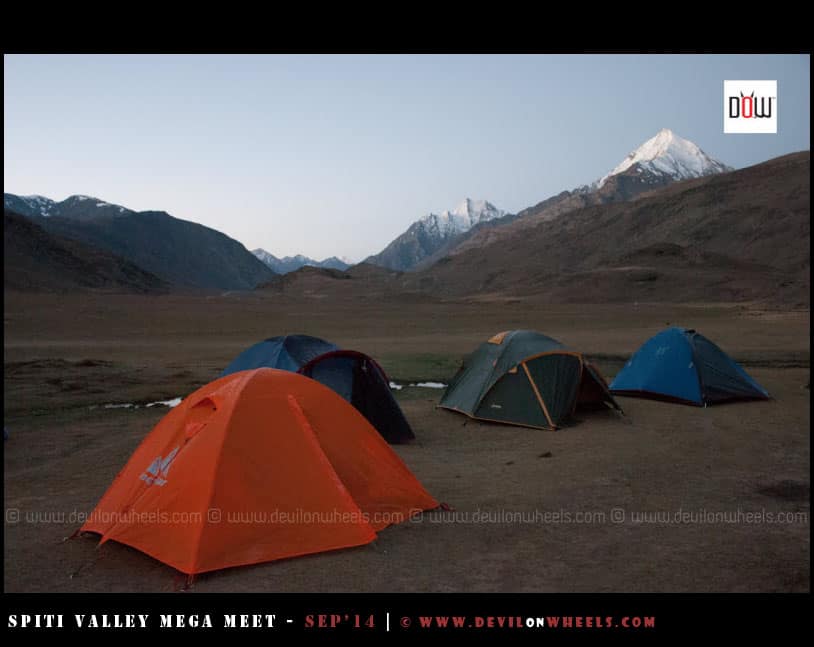
Ladakh has some of the most stunning camping locations in India. Here are the spots where camping is both safe and rewarding, based on my experience and what fellow travelers from the DwD community have shared over the years.
1. Pangong Tso Area
Pangong Tso is the most popular camping destination in Ladakh. Keep in mind that camping directly on the lake banks is not allowed since it is a protected wetland. However, organized campsites operate a short distance from the lake near Spangmik and Man villages. Budget camps start from Rs 3,000-4,500 per night, and luxury camps with attached bathrooms go up to Rs 7,000-10,000. If you want to pitch your own tent, you can do so near the organized camps or at nearby villages after asking locals for permission.
2. Nubra Valley (Hunder and Diskit)
Nubra Valley offers some of the warmest camping conditions in Ladakh. The sand dunes near Hunder are iconic, and several campsites operate there from May to September. Camp prices in Nubra range from Rs 1,000 for basic tents to Rs 10,000 for luxury options. Wild camping is possible near the river banks and open areas around Diskit and Sumur, but always ask the local villagers before pitching your tent.
3. Tso Moriri Lake
Tso Moriri is a Ramsar wetland site, and camping on the lake banks is strictly banned. The nearest camping options are at Korzok village, about 1-2 km from the lake. This is one of the most peaceful camping experiences in Ladakh, far from crowds, with marmots and migratory birds as your only company. Homestays in Korzok cost Rs 800-1,500 per night if you prefer a roof over your head.
4. Hanle
Hanle is a stargazer’s paradise and home to one of the world’s highest astronomical observatories. The night sky here has almost zero light pollution, making it one of the best camping spots in Ladakh for astrophotography. Organized camps and homestays are available. This is an offbeat spot that most tourists skip, and that is exactly what makes it special.
5. Sarchu and Pang (Manali-Leh Highway)
If you are driving the Manali-Leh Highway, Sarchu and Pang are common overnight camping stops. Organized tent camps at Sarchu cost Rs 1,500-3,500 per night with meals. However, I always recommend choosing Jispa or Keylong over Sarchu for your first night stop, especially if you are a first-timer, because Sarchu sits at 14,070 ft where altitude sickness risk is much higher.
6. Along the Srinagar-Leh Highway
The Srinagar-Leh route offers beautiful camping spots near Sonamarg, Dras, and along the Indus river valley before Leh. These are at lower altitudes (8,000-11,000 ft), making them safer for camping without full acclimatization.
7. Sham Valley (Uleytokpo)
Sham Valley is often skipped by first-timers rushing to Nubra or Pangong, but Uleytokpo village, about 70 km west of Leh on the Leh-Srinagar highway, is one of my favourite low-key camping stops. It sits at roughly 10,500 ft, about 1,000 ft lower and noticeably warmer than Leh, which makes it a genuinely useful acclimatization stop if you are coming in from Srinagar or want a gentler first night than Nubra or Pangong. Eco-resorts and organized camps operate here, with tent stays running roughly Rs 2,000-4,000 per night depending on season, and wild camping near the Indus is possible with permission from the village. Hence, if you want scenery without the altitude stress of the more famous spots, keep Uleytokpo in mind.
What Are the Rules for Camping in Ladakh?
Quick answer: Camping is banned on the lake banks of Pangong Tso and Tso Moriri (Ramsar-protected wetlands) and inside army restricted zones. Everywhere else, you need an Inner Line Permit for restricted areas and the Ladakh Environment and Development Fee, which totals around Rs 590 for a 7-day trip.
Ladakh has specific regulations around camping, especially near protected areas. Here is what you need to know to stay out of trouble.


Restricted Areas Where Camping Is Banned
Both Pangong Tso and Tso Moriri are Ramsar-protected wetland reserves where camping on the lake banks is illegal. The Ladakh administration has been strict about this, and fines can be imposed. You must camp at designated areas or at nearby villages, not directly at the waterline.
Army restricted zones are also off-limits. These are clearly marked, and you should never pitch your tent near military installations or border areas. When in doubt, ask the locals or the nearest police checkpoint.
Permits You Need
Indian nationals do not need a separately stamped Inner Line Permit (ILP) for Nubra Valley, Pangong Tso, Tso Moriri, Hanle, Turtuk, or the other restricted areas anymore. That requirement was dropped back in 2021. What you need instead is the Ladakh Environment and Development Fee (EDF), paid entirely online through the official LAHDC Leh permit portal, no Tourist Information Center visit or physical stamping required. Foreign nationals still need a Protected Area Permit (PAP), arranged through a registered travel agency in Leh.

The EDF breaks down to Rs 400 per person as a one-time environment fee, plus Rs 20 per person per day as a wildlife fee (this one is daily, not flat), plus an optional one-time Rs 50 Red Cross contribution. For a typical 7-day camping trip, that works out to roughly Rs 590 per person, and the receipt stays valid for 21 days, covering Nubra, Pangong, Tso Moriri, and Hanle on the same trip. No separate camping permit exists on top of this, the EDF receipt covers it.

Download your FREE high-resolution PDF copy of this infographic guide for tips about camping in Ladakh. If you liked it and found it helpful, please feel free to share it with your family and friends.
What Are the Top 10 Tips for Camping in Ladakh?
Quick answer: Camp near a dhaba or village for safety, never at restricted wetlands, choose elevated ground away from flash-flood paths, fasten your tent against strong winds, acclimatize before high-altitude camping, filter your water, and always leave nothing but footprints behind.
These are practical tips I have gathered from my own camping trips across Ladakh and from fellow travelers in the DwD community. Keep these in mind whether you are wild camping or staying at an organized campsite. In case you are self-driving to reach these camping spots, read that guide alongside this one.
1. Where Should You Pitch Your Tent?
You can pitch your tent almost anywhere in Ladakh, but I strongly recommend setting up near a dhaba tent, an organized campsite, or close to a village. Gently ask the villagers or dhaba owners for permission. Most will agree, and some might ask for a small tip or just expect you to eat at their dhaba. This gives you a sense of security from both wildlife and isolation, especially if you are camping solo in Ladakh for the first time.
2. Never Camp at Restricted Sites, Wetlands, or Lake Banks
As I mentioned above, camping at the banks of Pangong Tso and Tso Moriri is illegal. These are Ramsar wetland sites, and any camping or construction near the water is treated as a violation. Pitch your camps away from the lakes where either other camps are present or at a nearby village. I request everyone to respect mother nature and follow the rules. Try to politely ask others doing it to respect the laws and nature as well.
3. Choose a Spot Near Water but Safe from Flash Floods
Always camp near a water stream for your water supply needs, but make sure your campsite is on elevated ground above the stream level. Flash floods can happen suddenly in Ladakh during July and August, even when the sky above you is clear. Look for signs of past water marks on rocks and soil. Also try to choose a spot sheltered from wind, as Ladakh winds can be extremely strong, especially at higher altitudes. Check the India Meteorological Department forecast before you set up, cloudbursts upstream can flood a dry-looking nallah within minutes.
4. Fasten Your Tent Properly and Check the Weather
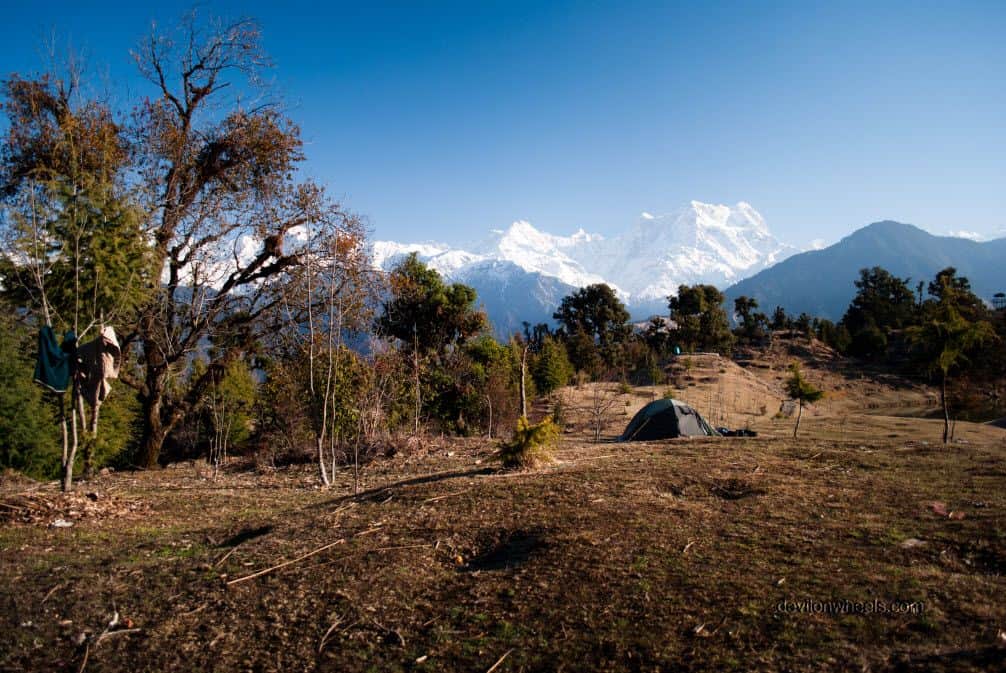
Even light rain in Ladakh, combined with strong winds, can uproot a poorly set up tent. Make sure all pegs are hammered in deep and guy lines are taut. Check the weather forecast before setting up camp. In case you are near a village and the weather looks bad, consider spending that night at a homestay instead. Better safe than sorry. The mountains will always be there, and camping should be about enjoying nature, not facing nightmares 🙂
5. Put Out Your Campfire Completely
If you set up a campfire, make sure you do not light it near thatched roofs or dry grass in the vicinity. And always, always put it out completely before you sleep or leave. No embers left, no exceptions. One careless moment can be life-threatening and damaging for the locals and the environment.
6. Acclimatize Before Camping at High Altitude
Acclimatization is critical when camping in Ladakh. Setting up and breaking down camp requires physical exertion, and doing this at 14,000+ ft without proper acclimatization can trigger Acute Mountain Sickness (AMS). Spend at least 2-3 days in Leh (11,520 ft) before heading to higher camping spots. Stay warm, drink plenty of water, and avoid alcohol.
The Manali-Leh Highway is a perfect example. You can camp anywhere along it, but beyond Darcha (10,800 ft), the highway runs at an average altitude of 14,000 ft almost until you descend to Rumtse from Taglang La. If you are on this route, I suggest camping only around Sarchu or Pang where other people are present and help is available in case of an emergency.
Staying warm and staying hydrated will help your body acclimatize faster.
7. Carry a Water Filter and Sanitize Your Hands
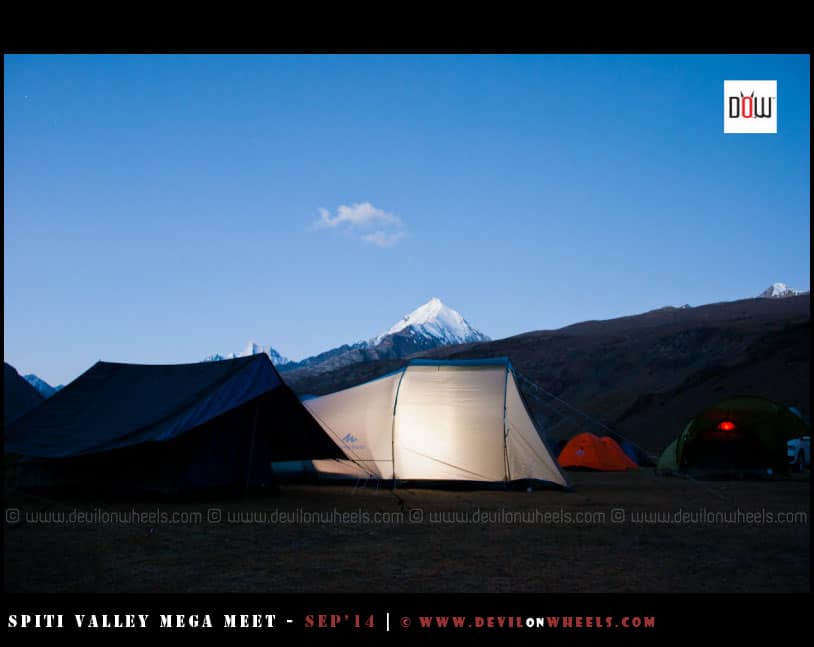
Diarrhea at high altitude is no joke. It can dehydrate you fast and make AMS worse. Wash or sanitize your hands frequently, and carry a water bottle with a built-in filter. Stream water in Ladakh is generally clean, but you should still filter it to be safe. Carry medicines for stomach upset, diarrhea, headache, and any condition you are personally vulnerable to.
8. What Essentials Should You Carry for Camping in Ladakh?
Here is a quick checklist of essentials for camping in Ladakh. For a more detailed list, check the complete things to carry guide and the 40 must-have items for Ladakh.
- Tent: 3-season minimum, 4-season recommended for September or higher altitudes. Ensure it is rated for strong winds.
- Sleeping bag: Comfort rating of at least -5C. For September camping or spots above 14,000 ft, go for -10C or lower.
- Sleeping mat: Insulated foam or inflatable pad. The ground in Ladakh gets extremely cold at night.
- Warm layers: Thermal innerwear, fleece, down jacket, woolen socks, gloves, balaclava. Check the Ladakh clothing guide for details.
- First aid kit: Including Diamox for AMS, ORS packets, pain relievers, bandages, antiseptic.
- Torch/headlamp: With extra batteries. Nights are pitch dark away from villages.
- Portable stove and fuel: Firewood is scarce in most parts of Ladakh. A portable gas stove is essential.
- Water filter bottle: LifeStraw or similar. Stream water needs filtering.
- Dry food and snacks: Instant noodles, dry fruits, energy bars, biscuits. Always carry 1-2 days of buffer food.
- Sunscreen and sunglasses: UV exposure at high altitude is intense. SPF 50+ is recommended.
- Camping knife and lighter/flint: Basic tools for camp setup and fire starting.
- Mosquito repellent: Especially useful near streams and in Nubra Valley at lower altitudes.
9. Keep All Food Sealed and Stored Safely
Never leave food open at your campsite, especially at night. Open food can attract wild animals including foxes, dogs, and in rare cases, wolves near remote areas like Hanle and Changthang. Pack up all your food after cooking and store it inside your vehicle or hang it from a height if you are on a trek. You definitely do not want a midnight visit from wildlife while camping in Ladakh 🙂
10. Leave Nothing but Footprints
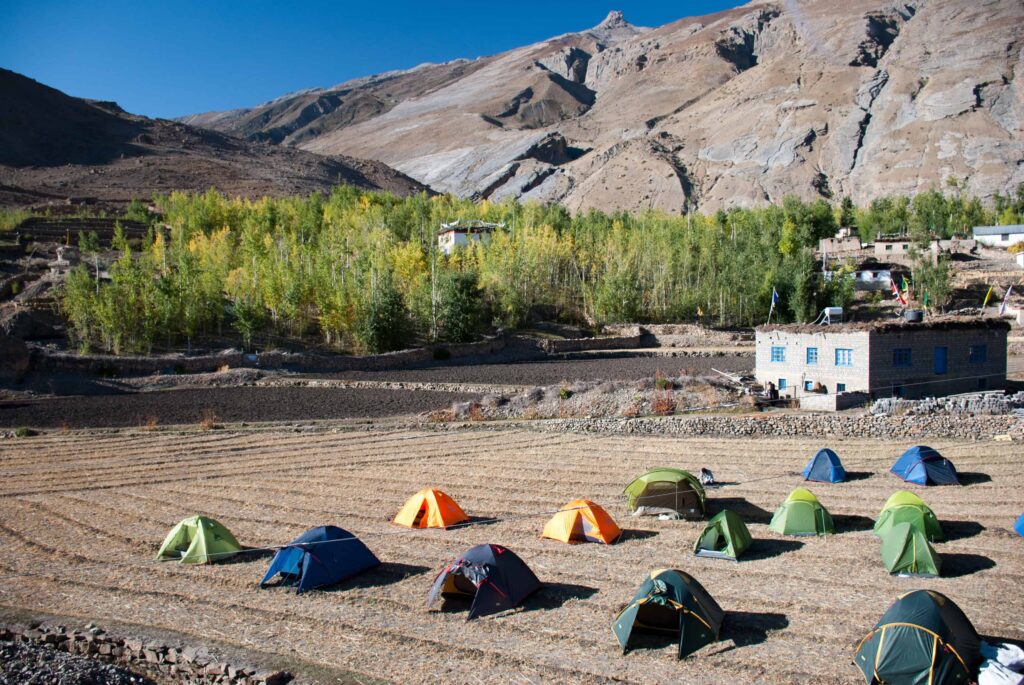
This is the most important tip. Please, never litter in the Himalayas and never disturb the flora and fauna. Take all non-biodegradable waste back with you. Ladakh’s fragile ecosystem is already under pressure from increasing tourism, and every piece of trash left behind adds to the damage. If you see others littering, politely ask them to stop. For more detailed guidance, read the tips for responsible travel in the Himalayas.
This is not just a courtesy anymore. In 2026, the Ladakh administration under Lieutenant Governor VK Saxena ordered a strict ban on identified single-use plastic items and littering across the entire Union Territory, with awareness drives run through Leh and Kargil districts (including Nyoma, on the Pangong route) in June 2026. A first offence draws a Rs 5,000 fine, rising to Rs 10,000 for repeat violations, and the Wildlife Department separately fines vehicles up to Rs 50,000 for littering or off-roading inside protected zones like Pangong Tso. Skip single-use plastic bottles and packaging when you pack for your camping trip, carry a refillable bottle and a trash bag instead, and pack every wrapper back out with you.
How Much Does Camping in Ladakh Cost?
Quick answer: Camping in Ladakh costs anywhere from free (wild camping with your own gear) to Rs 15,000 per night for a luxury Swiss tent camp. Most travelers land in the Rs 1,000-6,000 range for a decent organized camp with meals and a shared or attached toilet.
Here is a rough cost breakdown for camping in Ladakh, updated for 2026. These are per-night costs.
| Camping Type | Cost Per Night (INR) | What You Get |
|---|---|---|
| Wild camping (own tent) | Free – Rs 200 | Your own gear, possible tip to landowner |
| Budget organized camp | Rs 1,000 – 3,500 | Basic tent, shared toilet, meals |
| Mid-range camp | Rs 3,500 – 6,000 | Better tent, attached toilet, meals included |
| Luxury camp | Rs 6,000 – 15,000 | Swiss/geodesic tent, hot water, all meals |
For a detailed budget breakdown of your entire Ladakh trip, check the Ladakh trip cost calculator.
What Is the Best Time for Camping in Ladakh?
Quick answer: June to September is the best time for camping in Ladakh, with July being the sweet spot for warm days, mild nights, and every organized campsite open. May and October are borderline and need serious cold-weather gear, while winter camping is only for well-prepared, experienced groups.
The best time for camping in Ladakh is from June to September. June and July bring the warmest nights, making camping more comfortable. August sees some rain and higher flash flood risk. September is beautiful with clear skies but nights get very cold (dropping to -5C at higher spots). For a detailed month-by-month breakdown, check the best time to travel to Ladakh guide.
May and October are borderline. You can camp, but you need serious cold-weather gear and should be prepared for near-freezing nights even at moderate altitudes. If you plan to camp in colder months, read the cold weather camping tips guide.
What Gear Do You Need for Camping in Ladakh?
Quick answer: You need a wind-rated 3-season tent (4-season for September or 14,000+ ft), a sleeping bag rated -5C or lower, an insulated sleeping mat, and a portable gas stove since firewood is scarce almost everywhere in Ladakh.
Your gear can make or break your camping experience at high altitude. Here is what I recommend based on personal experience.
Tent Selection
A 3-season tent works for June-August camping below 14,000 ft. For September, for Pangong or Tso Moriri area (14,000+ ft), invest in a 4-season tent. The tent must be wind-rated. Ladakh winds can reach 60-80 km/h at exposed locations, and a flimsy tent will not survive the night. Brands like Quechua (Decathlon) offer budget-friendly options that work well in Ladakh conditions.
Sleeping System
Your sleeping bag should have a comfort rating of at least -5C for summer camping. For September or high-altitude spots, go for -10C to -15C. Pair it with an insulated sleeping mat. The ground in Ladakh is rocky and conducts cold very efficiently, so without a proper mat, you will lose body heat rapidly even inside a good sleeping bag.
Cooking Equipment
Carry a portable gas stove since firewood is extremely scarce in most parts of Ladakh. MSR or Jetboil-type stoves work well at altitude. Keep in mind that water boils at a lower temperature at high altitude (around 86C at 14,000 ft), so cooking takes longer. Carry instant food items that need minimal cooking time.
How to Stay Safe While Camping in Ladakh?
Quick answer: The main risks while camping in Ladakh are altitude sickness, flash floods, hypothermia, and patchy mobile network. Acclimatize first, camp on elevated ground, carry a properly rated sleeping bag, and always tell someone where you are headed before you lose signal.
Safety while camping in Ladakh comes down to preparation and common sense. Here are the key safety points to keep in mind.
- Altitude sickness: Never camp at high altitude on your first day. Acclimatize in Leh for 2-3 days first. Carry Diamox and know the symptoms of AMS.
- Wildlife: Store food securely. Foxes, feral dogs, and occasionally wolves can visit campsites at night. In rare cases, snow leopards have been spotted in remote areas, though they generally avoid humans.
- Flash floods: Camp on elevated ground, never in dry riverbeds. Ladakh experienced devastating flash floods in 2010 and 2023, and smaller incidents happen every monsoon season.
- Hypothermia: Even in summer, night temperatures at 14,000+ ft can drop to -10C. Carry adequate warm layers and a properly rated sleeping bag.
- Communication: Mobile network coverage in Ladakh is limited. BSNL postpaid has the widest coverage. Jio and Airtel work in Leh and along some highway stretches. At remote camping spots, you may have zero connectivity. Inform someone of your camping plans and expected return.
Camping in Ladakh vs Camping in Spiti and Zanskar
Quick answer: Ladakh has the most organized campsites and the easiest wild camping of the three regions, but also needs the EDF payment for restricted areas. Spiti and Zanskar have fewer campsites, more remoteness, and no permit fee for Indians.
If you are comparing camping destinations in the Himalayas, here is how Ladakh stacks up against Spiti Valley and Zanskar Valley camping. And if your trip includes the full Manali-Leh-Zanskar loop, our complete Manali-Leh via Zanskar route guide covers the road logistics in detail.
| Factor | Ladakh | Spiti | Zanskar |
|---|---|---|---|
| Best season | June-September | June-September | July-September |
| Altitude range | 10,000-18,000 ft | 9,000-15,000 ft | 11,000-16,000 ft |
| Organized camps | Widely available | Limited | Very limited |
| Wild camping ease | Easy, many spots | Easy, fewer crowds | Remote, challenging |
| Permit needed | EDF (~Rs 590/7 days) for restricted areas | No permit for Indians | No permit for Indians |
| Mobile coverage | Patchy (BSNL best) | Very limited | Almost none |
For a detailed comparison of Ladakh and Spiti as travel destinations, read the Ladakh vs Spiti comparison. For general Himalayan camping tips that apply everywhere, check the complete guide to camping in the Himalayas.
Conclusion
Camping in Ladakh is one of the most rewarding outdoor experiences you can have in India. The key is preparation. Acclimatize properly, carry the right gear, respect the environment, follow the rules about restricted areas, and you will have memories that last a lifetime. If this is your first time, I recommend starting with organized camps at Nubra Valley or Pangong area before trying wild camping at more remote spots.
Feel free to share this article with your friends or family who you know will be going camping in Ladakh. Do you have any camping tips that fellow travelers should know? If yes, share them in the comments section below. And if you have any questions, feel free to ask. You can also join our community for more travel discussions and real-time updates from the road.
Frequently Asked Questions
Is wild camping legal in Ladakh?
Yes, wild camping is legal in most parts of Ladakh. However, camping is banned at protected wetland sites like the banks of Pangong Tso and Tso Moriri, and near military restricted zones. You can camp freely at open areas, near villages (with permission), and along the highways. Always carry your EDF payment receipt for restricted areas.
What is the best month for camping in Ladakh?
July is the best month for camping in Ladakh. The days are warm (15-25C in valleys), nights are relatively mild compared to other months, all roads and passes are open, and most organized campsites are operational. June and August are also good, though August brings occasional rainfall.
Do I need a permit for camping in Ladakh?
You do not need a separately stamped Inner Line Permit to camp in areas like Nubra Valley, Pangong Tso, Tso Moriri, Hanle, and Turtuk, that requirement ended in 2021. What you pay instead is the Ladakh Environment and Development Fee (EDF), entirely online: Rs 400 one-time, plus Rs 20 per person per day (wildlife fee), plus an optional one-time Rs 50 Red Cross contribution, roughly Rs 590 total for a 7-day trip. The receipt is valid for 21 days. No separate camping permit is required.
Is camping in Ladakh free?
Wild camping with your own tent and gear can be effectively free, or close to it, if you camp on open land away from villages and protected wetlands. In practice, most travelers pitch near a village or dhaba and pay a small tip or eat at the dhaba, which usually costs Rs 100-200. Organized campsites start from around Rs 1,000 per night and go up to Rs 15,000 for luxury tents. You will still need the EDF (roughly Rs 590 for a 7-day trip) for restricted areas regardless of which camping style you choose.
Can I camp near Pangong Lake?
You cannot camp directly on the banks of Pangong Lake as it is a protected wetland. However, organized campsites operate near Spangmik and Man villages, a short distance from the lake. You can also pitch your own tent near these camps or at nearby villages with permission from locals.

What temperature should my sleeping bag be rated for?
For summer camping (June-August) below 14,000 ft, a sleeping bag with -5C comfort rating works. For September camping or spots above 14,000 ft like Pangong or Tso Moriri, go for -10C to -15C rated bags. Night temperatures at these altitudes can drop well below freezing even in summer.
Is it safe to camp alone in Ladakh?
Camping alone in Ladakh is relatively safe from a crime perspective, as the locals are generally very helpful and welcoming. The main risks are altitude sickness, wildlife encounters, and weather changes. If you are camping solo, always camp near a village or dhaba, inform someone about your location, and carry a fully charged phone with BSNL postpaid SIM for the widest coverage.
Where can I buy camping gear in Leh?
Leh Main Bazaar and Changspa Road have several shops selling and renting camping equipment including tents, sleeping bags, and stoves. Prices are higher than in Delhi, but the convenience is worth it if you forgot something. You can rent a 2-person tent for Rs 300-500 per day and a sleeping bag for Rs 150-300 per day.

3 Comments
Comments section gets closed in 90 days. To ask your travel questions, you can follow my YouTube Channel for a faster reply or for a much slower reply follow me on Instagram. :)
yes and thanks for all the details it is very helpful.
I have already done ladakh but I am planing to go some where on hill station.
Ankit, you can travel to Spiti Valley. Check the plan: Spiti Valley | Most Common Itinerary
yes and thanks for all the details it is very helpful.
I have already done ladakh but I am planing to go some where on hill station.