


Rishikesh is not just about yoga ashrams and meditation retreats. For anyone who loves getting wet, pushed around by rapids, and thrown off their comfort zone, this town at the foothills of the Himalayas offers some of the most exciting water-based adventure activities in India. Shivpuri, located about 16 km upstream from Rishikesh on the banks of the Ganga, is where most of the action happens. I have personally experienced four different ways of “adventure bathing” here, and trust me, each one was more thrilling than the last.
In this article, I am sharing two of those four experiences. The first is a simple but powerful dip in the Ganga at Shivpuri, and the second is canyoning, which involves rappelling down a waterfall. The remaining two experiences are covered in Part 2 of this article. If you are planning a trip to Rishikesh and wondering what adventure activities are available beyond river rafting, keep reading.
Last Updated: August 2026
Quick Info: Adventure Activities in Rishikesh at a Glance
Rishikesh sits at an altitude of about 1,100 feet (340 m) on the banks of the Ganga in the Garhwal region of Uttarakhand. It is roughly 240 km from Delhi (5-6 hours by road) and 20 km from Haridwar. Most adventure activities happen at Shivpuri, 16 km upstream. The adventure season runs from September to June, with a mandatory government ban during the monsoon (July to mid-September). You do not need any permits for these activities, and non-swimmers can participate safely with life jackets.
What Are the Best Adventure Water Activities in Rishikesh?
Rishikesh and Shivpuri together offer a wide range of water-based adventure activities. River rafting gets all the attention, but there is much more. You can go cliff jumping into the Ganga, try body surfing in the rapids, rappel down waterfalls (canyoning), or simply take a dip in the ice-cold river with a life jacket and let the current carry you. Each activity gives you a completely different relationship with the water. Rafting is teamwork. Cliff jumping is a solo leap of faith. Canyoning is technical and physical. And a dip in the Ganga? That is pure, unfiltered joy.
Here is a quick overview of what you can expect in terms of costs and difficulty levels as of 2026.
| Activity | Approx. Cost (2026) | Duration | Difficulty | Best Season |
|---|---|---|---|---|
| River Bathing / Dip in Ganga | Free (life jacket rental Rs 100-200) | As long as you want | Easy | March to June, Sept to Nov |
| Canyoning / Waterfall Rappelling | Rs 1,200-2,500 per person | 3-4 hours (including hike) | Moderate to Hard | March to June, Sept to Nov |
| River Rafting (Shivpuri stretch) | Rs 1,000-1,200 per person | 2-3 hours (16 km) | Moderate | Sept to June |
| Cliff Jumping | Rs 800-1,000 (usually included with rafting) | 15-20 minutes | Moderate | Sept to June |
| Bungee Jumping (Jumping Heights) | Rs 3,550-3,700 per person | 30 minutes | Easy (just jump!) | Year-round |
Keep in mind that these prices are subject to seasonal changes. Weekends and holidays tend to be more crowded and some operators charge a premium during peak times. Also, there is a mandatory Uttarakhand Forest Department rafting slip fee of Rs 20 per person, payable in cash at the starting point.
How Did I End Up at Shivpuri for Adventure Bathing?
This trip happened a few years back when my employer organized a team-building outing to Shivpuri. It was the first week of March, and the plan was to reach there from Delhi, which is about 240 km away. We left on a Thursday evening, expecting a 5-6 hour drive. What we got instead was a 12-13 hour marathon, thanks to a massive 7-8 hour traffic jam near Moradabad. If you have ever driven on the Delhi-Haridwar highway during peak hours, you know exactly what I am talking about.
We reached Shivpuri by noon the next day, exhausted and hungry. Breakfast had been at Moolchand’s resort at 6 AM, so by the time we arrived at the campsite, everyone was running on fumes. And then came the news that we had to trek down to the river bank with all our luggage. No one was in the mood, but no one had a choice either. The silver lining was that lunch was ready at the camps by the time we made it down. After eating, there was only one thing on everyone’s mind: beating the heat and getting into the water.
What Is It Like to Take a Dip in the Ganga at Shivpuri?
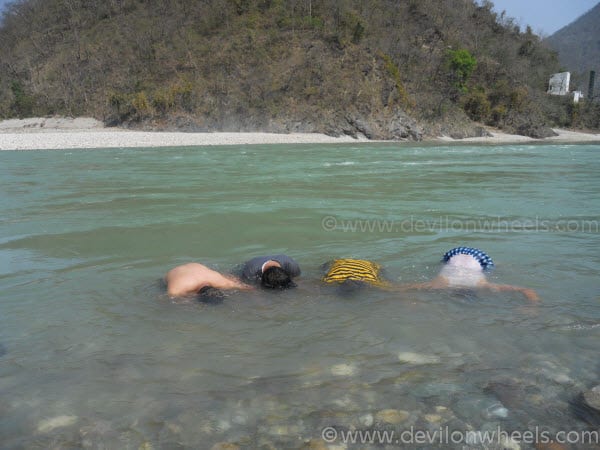
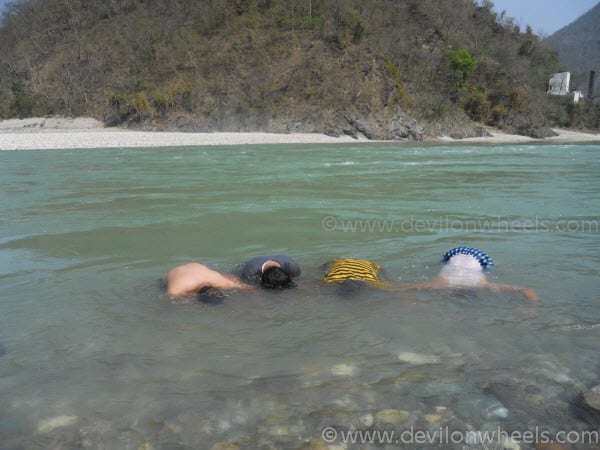
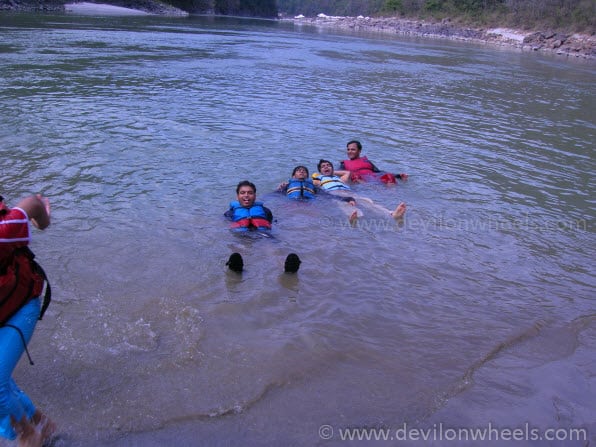
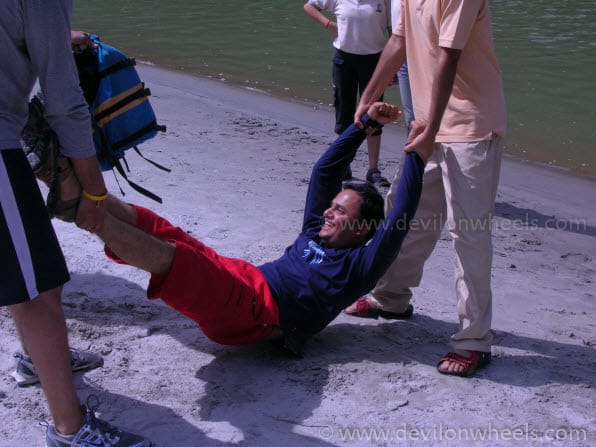
A dip in the Ganga at Shivpuri is nothing like bathing at the ghats in Haridwar or Varanasi. Here, the river is fast, cold, and surrounded by forested hills. The water comes straight from the higher Himalayas, and even in the first week of March, it was bone-chilling cold. We put on our life jackets and headed to the river bank near our campsite.
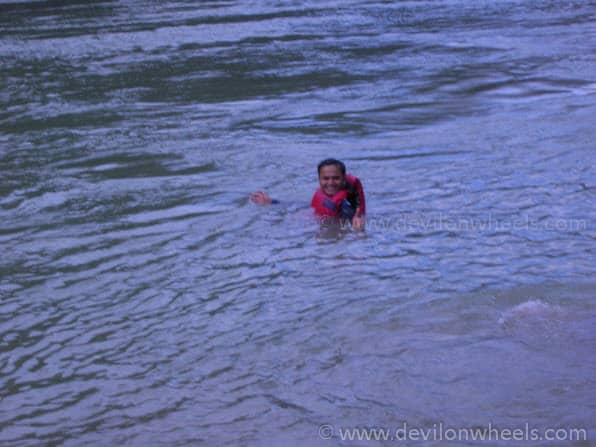
I took a deep breath, closed my eyes, and jumped in. The cold hit me everywhere at once. Ears, eyes, nose, and before I knew it, I was gasping for breath as I surfaced. It was my first ever dip in a river, and the feeling was genuinely electric. One jump turned into two, then three, and soon I was completely in love with it. We started throwing each other into the river, laughing like kids. All the tiredness from the overnight bus ride just disappeared.
If you are visiting Shivpuri and not doing any organized activity, just getting into the Ganga with a life jacket is an experience worth having. The current is strong enough to give you a thrill but manageable near the banks if you are with a group. Keep in mind that you should always wear a life jacket, even if you are a strong swimmer. The undercurrents in the Ganga can be unpredictable, and every year there are incidents of people underestimating the river.
What Is Canyoning in Rishikesh and How Does It Work?
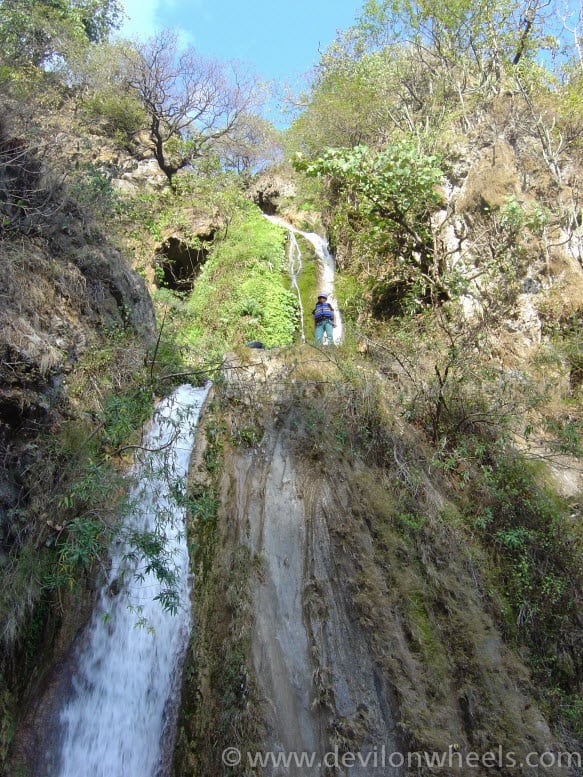
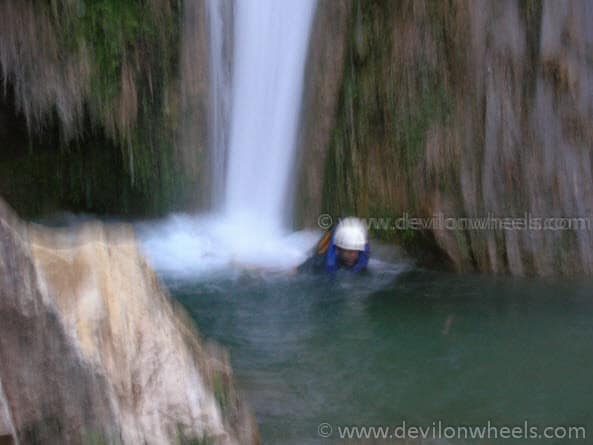
Canyoning is an adventure activity where you rappel down a waterfall, much like rock rappelling, except with a massive stream of water crashing onto you the entire time. In Rishikesh and Shivpuri, canyoning is typically done at a waterfall called Jogi Fall (if I remember correctly). The activity involves hiking up to the top of the waterfall, getting harnessed, and then rappelling down through the falling water into a pool below. Keep in mind that canyoning and most adventure camps in the Shivpuri belt shut down for the monsoon every year (Jumpin Heights, for instance, closes from around 11th July to mid-September in 2026), so this is strictly a September to June activity.


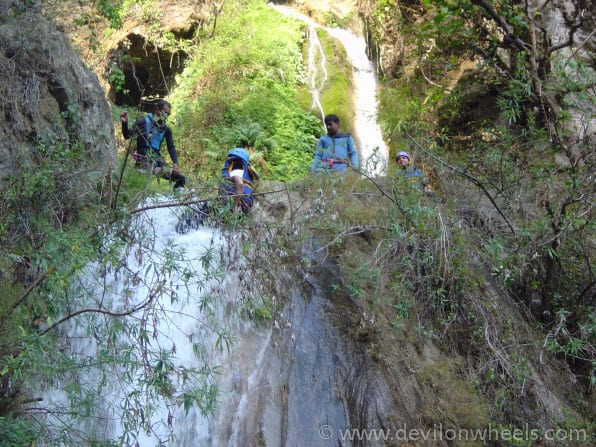
After our river dip, the organizers told us to get ready in half an hour for something called “canyoning.” The word was completely new to me. We were driven to a point from where we had to hike uphill for about 45-50 minutes to reach the waterfall. For someone like me who was completely out of fitness at that time, it was a proper workout. But when we reached the top and saw the waterfall, a 35-40 feet cascade falling in full glory, all the fatigue vanished.
How Difficult Is Canyoning for First-Timers?
Let me be honest here. Canyoning looks simple when you are watching from below. The first person to go was a girl from our group, and she made it look effortless. But soon the reality checks started. A couple of guys toppled the moment they planted their first foot into the waterfall. The force of the water is deceptive. It looks like a gentle flow from below, but when you are standing at the top with water crashing onto your feet, the force is genuinely powerful enough to knock you off balance.

When my turn came, I first had to climb to the top of the waterfall. There was one tricky section during the climb where I took a wrong step and had to scramble to recover. At the top, the noise was so loud that I could not hear what anyone was shouting from below. Everyone had tips to offer when they were spectators, and I had been doing the same. But being the performer is a completely different story.
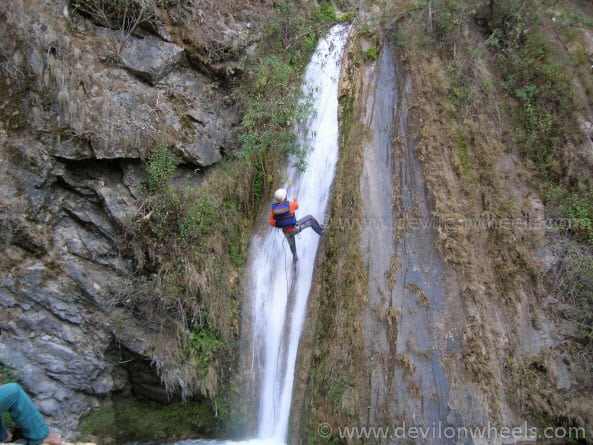
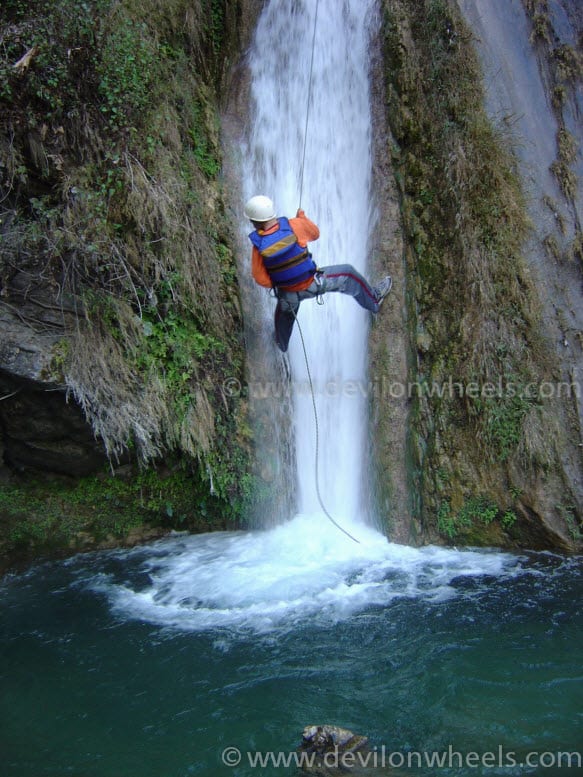
After getting strapped into the harness, I planted my first foot into the waterfall. The water threw it away instantly. That is when I understood why so many people had toppled. I managed to steady myself, firmly planted my foot, and released myself for the first descending step. One or two steps down, I started getting used to it. The key is to keep your body as parallel to the ground below as possible and maintain your initial balance. By this point, I was completely drenched in ice-cold March water, but I was absolutely loving every second of it.
I came rappelling down with complete joy, getting the most adventurous bath of my life. Near the bottom, you have to push yourself hard and jump as far as possible into the pool, away from the falling current. If you do not push far enough, the force of the waterfall can injure you. I hung there for 2-3 minutes, completely soaked, before my friends started shouting at me to jump so the next person could go. One, two, three, and I pushed off into the pool with a splash. Coming out gasping for breath, I knew this was one of those once-in-a-lifetime experiences.
What Are the Safety Risks of Canyoning?
I want to share one incident from our trip that highlights why you should take canyoning seriously. Just before we wrapped up that evening, a friend of mine completely toppled upside down while attempting the rappel. She lost her balance at the very first step, where the water force is strongest. The guide had to rappel down alongside her and bring her back on his shoulder because she had almost fainted from panic while hanging upside down. She was okay in the end, but it shook all of us.
The lesson is simple. That first foot placement is everything. You need to plant it firmly and be prepared for the water to push against you with unexpected force. Listen to the instructor carefully, do not rush, and if you feel unstable at the top, ask the guide for help before proceeding. Canyoning is not something you should attempt without a trained instructor and proper safety equipment.
How Much Do Adventure Activities Cost in Rishikesh in 2026?
Here is a detailed cost breakdown for all the popular adventure activities in and around Rishikesh. These prices are cross-checked against multiple operator listings and are current as of August 2026.
| Activity | Cost per Person (INR) | What is Included |
|---|---|---|
| River Rafting – Brahmpuri (9 km, Grade I-II) | Rs 600-800 | Raft, guide, safety gear, life jacket |
| River Rafting – Shivpuri (16 km, Grade II-III) | Rs 1,000-1,200 | Raft, guide, safety gear, cliff jumping point |
| River Rafting – Marine Drive (24 km, Grade III-IV) | Rs 1,500-1,700 | Raft, guide, safety gear, body surfing |
| River Rafting – Kaudiyala (34 km, Grade III-IV) | Rs 2,500-3,000 | Full day expedition with lunch |
| Canyoning / Waterfall Rappelling | Rs 1,200-2,500 | Guide, harness, safety gear, 2-3 hour session |
| Bungee Jumping (Jumping Heights, 83m) | Rs 3,550-3,700 | Jump, certificate, transport from pickup point |
| Flying Fox + Giant Swing Combo | Rs 4,750 | Both activities at Jumping Heights |
| Thrilogy Combo (Bungee + Fox + Swing) | Rs 8,250 | All three adventure activities |
| GoPro Video (for rafting) | Rs 2,000-2,500 per raft | Split among 6-8 people in the raft |
| Adventure Camp (per night) | Rs 1,500-4,000 | Tent, meals, one rafting session, bonfire |
A couple of things to keep in mind about these costs. The government rafting slip fee of Rs 20 per person is mandatory and payable in cash at the starting point. If you book through camps, most of these activities are bundled into camping packages, which works out cheaper than booking individually. Also, Jumping Heights at Mohanchatti is about 25 km from Rishikesh, so factor in the transport. They run a shuttle coach at 9 AM, 11 AM, and 1 PM for Rs 400.
How to Plan Adventure Activities in Rishikesh in 2026?
If my experience has made you want to try these activities, here is everything you need to know to plan your trip. Rishikesh is well connected from Delhi (about 240 km, 5-6 hours by road) and is a popular weekend getaway from the NCR region. Most adventure camps are located in the Shivpuri area, about 16 km upstream from Rishikesh town.
How to Reach Shivpuri from Delhi?
By Road: Take the Delhi-Haridwar highway (NH 334 via Meerut-Roorkee). The drive takes about 5-6 hours without traffic. However, if you are traveling on a Friday evening or holiday, expect delays near Meerut and Roorkee. Shivpuri is 16 km before Rishikesh on this route, so you do not even need to enter the main town.
By Bus: UPSRTC and UTC buses run regularly from Delhi ISBT Kashmere Gate to Haridwar and Rishikesh. Ordinary bus fare is around Rs 350-500 and Volvo/AC buses cost Rs 700-1,000. From Rishikesh bus stand, you can take a shared auto or taxi to Shivpuri (Rs 50-200).
By Train: The nearest railway station is Haridwar (about 40 km from Shivpuri). Several trains run from Delhi to Haridwar daily. From Haridwar, shared taxis and buses are available to Shivpuri.
What Is the Best Time for Water Activities in Rishikesh?
The best time for adventure water activities in Rishikesh is September to June. The ideal months are March to May (spring, moderate water flow, pleasant weather) and September to November (post-monsoon, strong currents, clear water). Rafting and most water activities are closed during monsoon (July to mid-September) due to dangerously high water levels. The Uttarakhand government issues an annual ban on river activities during peak monsoon. Winter months (December-February) are open but the water is extremely cold, so fewer operators run trips.
Where to Stay in Shivpuri for Adventure Activities?
Most visitors stay at riverside adventure camps in Shivpuri. These camps typically offer tented accommodation, meals, and adventure activity packages bundled together. Budget camps start at Rs 1,500-2,000 per person per night (includes meals and one rafting session). Mid-range camps with better tents and more activities cost Rs 2,500-4,000 per person. If you prefer a hotel, Rishikesh town has options ranging from Rs 800 to Rs 5,000 per night, but you will need to arrange separate transport to Shivpuri for activities.
What Safety Tips Should You Follow for Water Activities in Rishikesh?
Having done these activities myself, here are some practical safety tips I would share with anyone planning adventure water activities at Rishikesh.
- Always wear a life jacket. Even if you are a strong swimmer, the Ganga’s undercurrents are unpredictable. Life jackets are provided by all operators.
- Listen to your instructor. This is especially critical for canyoning. The foot placement technique they teach you is the difference between a great experience and an injury.
- Wear shoes that grip wet rocks. Sandals and flip-flops are dangerous on the slippery rocks around waterfalls and river banks. Sports shoes or water shoes with good grip are ideal.
- Do not attempt any water activity during monsoon (July to mid-September). The river levels are dangerously high and most activities are officially banned during this period.
- Carry a dry bag for valuables. Your phone, wallet, and camera should be in a waterproof bag. Some camps provide lockers, but it is better to be prepared.
- Check the operator’s credentials. Ensure your rafting or canyoning operator is registered with the Uttarakhand Tourism Department. Ask about guide certifications and safety equipment before paying.
- Know the age limits. Most rafting operators require participants to be between 14 and 65 years of age. For bungee jumping at Jumping Heights, the minimum age is 12 years and weight must be between 35-120 kg. For canyoning, a reasonable level of fitness is expected.
- Do not consume alcohol before water activities. This should be obvious, but it needs to be said. Alcohol impairs judgment and reaction time, both of which are critical in fast-moving water.
What Else Can You Do in Rishikesh Besides Water Activities?
While water activities are the main draw at Shivpuri, Rishikesh itself has plenty to offer. You can visit the famous Laxman Jhula and Ram Jhula suspension bridges, explore the Beatles Ashram (Chaurasi Kutia), attend the Ganga Aarti at Triveni Ghat in the evening, or simply walk along the ghats and soak in the spiritual atmosphere. For the more adventurous, bungee jumping at Jumping Heights (India’s highest commercial bungee at 83 meters, Rs 3,550-3,700 per person) is a must-try. There are also options for flying fox, giant swing, and zip-lining in the area.
If you have more time, Rishikesh is also a great base for exploring the Garhwal region of Uttarakhand. You can plan a trip to Garhwal and its surrounding hill stations, explore offbeat places in Uttarakhand, or try some of the easy treks in Uttarakhand that are perfect for beginners. If you are up for a proper Himalayan trek, the Hampta Pass trek is one of the best options for first-timers. And if you are heading towards the higher Himalayas, the Tungnath and Chandrashila trek near Chopta is another fantastic option that combines spirituality with adventure.
How Does Rishikesh Compare to Other Adventure Destinations in India?
I get asked this question a lot. How does Rishikesh stack up against other adventure destinations like Manali, Goa, or Coorg? Here is my honest take.
For water-based adventure, Rishikesh is unmatched in North India. The Ganga offers consistent Grade II-IV rapids across multiple stretches, and the infrastructure around Shivpuri is well established. Manali has the Beas River, but the rafting there is shorter and less intense. Goa has water sports like parasailing and jet-skiing, but those are ocean-based and very different in character. For canyoning specifically, Rishikesh is one of the very few places in India where you can do it commercially with trained operators.
The biggest advantage of Rishikesh is accessibility. It is a 5-6 hour drive from Delhi, making it perfect for a weekend trip. You can leave Friday evening and be back by Sunday night. In case you are planning a longer trip, Rishikesh also works as a starting point for Kedarnath, Char Dham Yatra, and other Uttarakhand destinations.
My Experience: Why You Should Try Adventure Bathing in Rishikesh
Looking back at this trip, what stands out is not just the activities themselves but how they changed my perspective on adventure. Before this trip, the word “adventure” was just a dictionary word to me. I was a tech guy who could not understand why people did these “insane” activities. That first dip in the Ganga, the shock of cold water, the laughter with friends, and then the raw thrill of rappelling down a waterfall with water crashing on my face. Those experiences rewired something in my brain.
Adventure became a part of my life after that. It led to motorcycle trips across Ladakh, treks in the high Himalayas, and eventually this blog. If you are someone who has never tried any adventure activity, Rishikesh is the perfect place to start. The activities are well-organized, the operators are experienced, and the setting is spectacular. You do not need to be fit or brave. You just need to be willing to jump.
In Part 2 of this article, I share two more adventure bathing experiences from the same trip, including river rafting and cliff jumping. Do give it a read.
If you have been to Rishikesh and tried any of these activities, I would love to hear about your experience. Feel free to drop a comment below or reach out to the Discover With Dheeraj community on Facebook where fellow travelers share their stories and help each other plan trips 🙂
Related Reading
- 4 Ways of Adventure Bathing in Rishikesh, Part 2
- Garhwal, Uttarakhand – Most Common Itinerary
- Top Offbeat Places in Uttarakhand
- Easy Treks in Uttarakhand for Beginners
- Hampta Pass Trek – Complete Guide
- Tungnath and Chandrashila Trek Guide
- Kedarnath Travel Guide
Frequently Asked Questions
Is Rishikesh safe for water activities?
Yes, Rishikesh is generally safe for water activities as long as you go with a registered operator and follow safety guidelines. Always wear a life jacket, listen to your instructor, and avoid water activities during monsoon (July to mid-September) when the river is dangerously swollen. The Uttarakhand government regulates adventure operators, so check for valid registration before booking.
What is the cost of adventure activities in Rishikesh in 2026?
As of 2026, river rafting from Shivpuri costs Rs 1,000-1,200 per person for the 16 km stretch. Canyoning (waterfall rappelling) costs Rs 1,200-2,500 per person. Bungee jumping at Jumping Heights costs Rs 3,550-3,700 per person. Cliff jumping is usually included in rafting packages at Rs 800-1,000. Adventure camp packages with accommodation and meals start at Rs 1,500-2,000 per person per night.
What is canyoning and where can I do it in Rishikesh?
Canyoning involves rappelling down a waterfall using ropes and harness, similar to rock rappelling but with water crashing on you. In Rishikesh, canyoning is done at waterfalls near Shivpuri, typically at locations like Jogi Fall. Several registered adventure camps in the Shivpuri belt offer canyoning packages, so always check for valid Uttarakhand Tourism registration before booking. The activity takes 3-4 hours including the hike to the waterfall.
What is the best time to visit Rishikesh for adventure sports?
The best months are March to May and September to November. March to May offers pleasant weather and moderate river flow, perfect for beginners. September to November has stronger currents post-monsoon, ideal for experienced rafters. Avoid July to mid-September entirely as most water activities are banned due to flooding. Winter (December-February) is possible but the water is extremely cold.
Can beginners try canyoning in Rishikesh?
Yes, beginners can try canyoning, but you should be reasonably fit and comfortable with heights. No prior rappelling experience is needed as the instructors guide you through every step. However, the first foot placement at the top of the waterfall requires confidence and strength. If you are scared of heights or water force, discuss it with your instructor beforehand. They can provide extra assistance during the rappel.
How do I reach Shivpuri from Delhi?
Shivpuri is about 240 km from Delhi, reachable in 5-6 hours by road via the Delhi-Haridwar highway (NH 334 through Meerut and Roorkee). UPSRTC and UTC buses run from Delhi ISBT to Rishikesh (Rs 350-1,000 depending on bus type). The nearest railway station is Haridwar (40 km). From Rishikesh, shared autos and taxis reach Shivpuri in 20-30 minutes.
Do I need to know swimming for rafting or river bathing in Rishikesh?
No, you do not need to know swimming. All participants are provided life jackets, and trained guides accompany you throughout. For rafting, you stay inside the raft unless you fall out, in which case the life jacket keeps you afloat while the guide rescues you. For river bathing at the banks, the life jacket provides enough buoyancy. That said, being comfortable in water helps you enjoy the experience more.
What are the different rafting stretches in Rishikesh?
There are four main rafting stretches in Rishikesh. Brahmpuri (9 km, Grade I-II, Rs 600-800) is the easiest and best for families. Shivpuri (16 km, Grade II-III, Rs 1,000-1,200) is the most popular and offers a good mix of rapids and calm stretches. Marine Drive (24 km, Grade III-IV, Rs 1,500-1,700) is for those who want stronger rapids. Kaudiyala (34 km, Grade III-IV, Rs 2,500-3,000) is the longest and most challenging, suitable for experienced rafters.
