


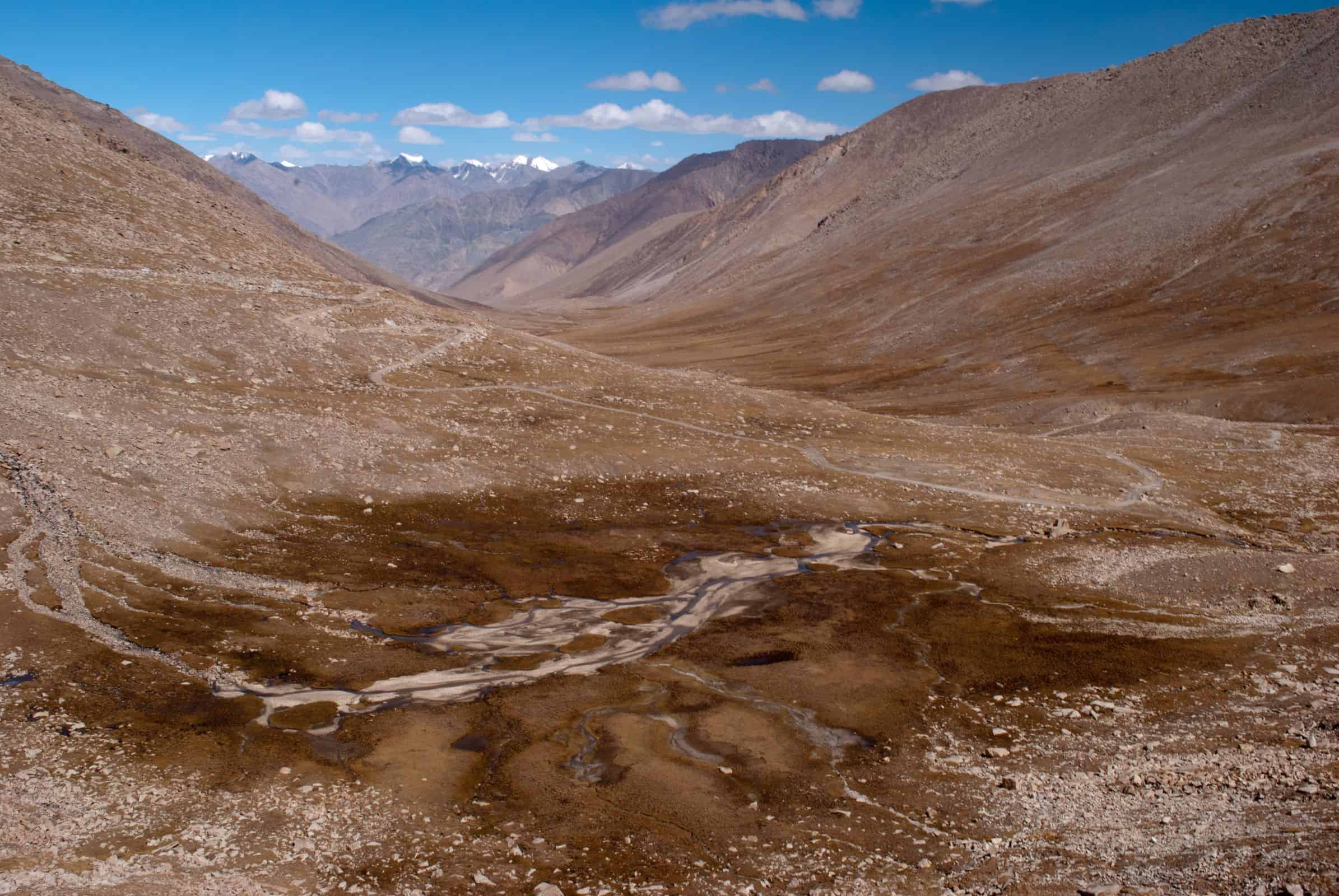
Ladakh has been on every Indian traveler’s bucket list for years now, and rightly so. But here is the thing. Most people who visit Ladakh end up covering the same route: Leh, Khardung La, Nubra Valley, Pangong Lake, and back. There is nothing wrong with that itinerary, it is wonderful. But Ladakh has so much more to offer beyond these well-worn circuits. Over multiple trips to the region, I have explored corners that rarely show up on the standard tourist map, and each of these places left a lasting impression on me.
This guide covers 10 offbeat places in Ladakh that most travelers miss entirely. These are not just “hidden gems” for the sake of a catchy title. These are real destinations with real logistics, and I will share how to reach each one, what permits you need, where to stay, and what makes each place worth the detour. If you are someone who has already done the mainstream Ladakh circuit and are looking for something different, this list is for you.
Let's quickly dive into the details:
What Makes a Place “Offbeat” in Ladakh?
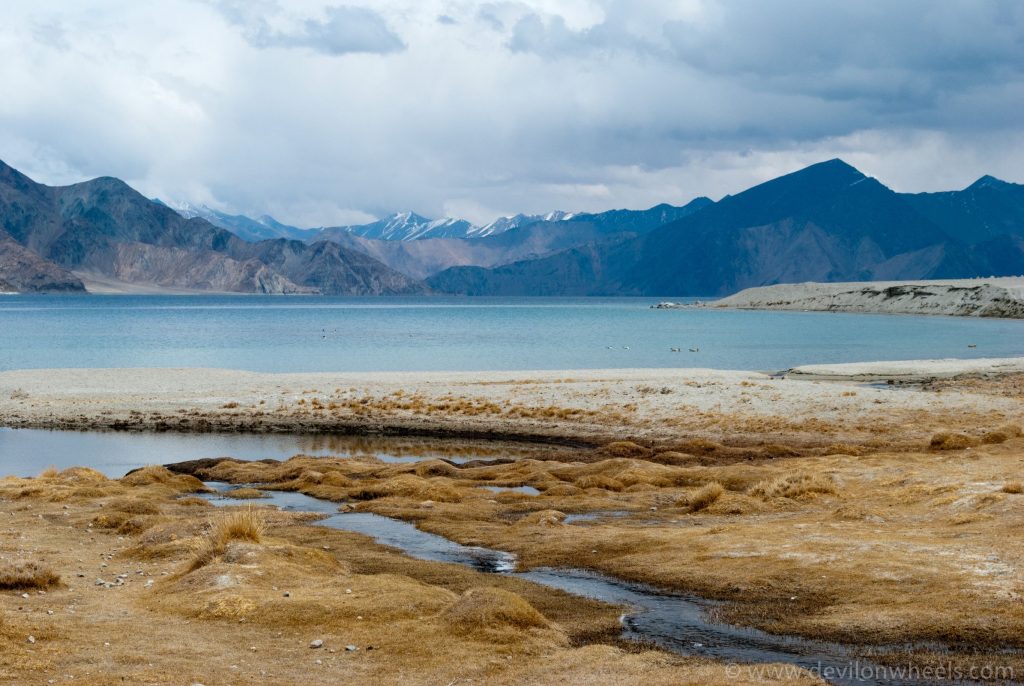
Before diving into the list, let me clarify what I mean by offbeat. These are places that receive very few tourists compared to Pangong or Nubra, often because they require extra driving time, a detour from the main highway, or simply because they are not marketed as heavily. Most of these destinations have basic homestay accommodation, limited or no mobile connectivity, and roads that range from decent to adventurous. That is precisely what makes them special.
Practical Info: Indians no longer need a stamped Inner Line Permit for any of these places. Since 2021, it has been replaced by the Ladakh Environment Development Fee (EDF), which you pay entirely online at lahdclehpermit.in and print yourself, no TIC Office visit required. As of 2026, the EDF works out to Rs 400 per person one-time, plus Rs 20 per person per day, plus an optional one-time Rs 50 Red Cross Fund contribution, roughly Rs 590 for a 7-day trip. Keep the printout handy, as checkposts still verify it. The best time to visit most of these places is June to September, when roads are open and weather is manageable.
1. Why Should You Visit Turtuk on Your Ladakh Trip?
Turtuk tops my list without any hesitation. This Balti village, the last northernmost settlement before Pakistan-Occupied Kashmir, has a history and culture that is completely different from the rest of Ladakh. It was part of Pakistan until 1971 and was opened to tourists only in 2010. The village sits along the Shyok River, with around 4,000 residents living amidst apricot orchards and terraced fields.
What struck me about Turtuk is the warmth of the people and the Balti culture that feels distinctly different from Buddhist Ladakh. The local museum run by the erstwhile royal family of Turtuk tells fascinating stories of the border’s shifting ownership. The apricots here are the best you will taste anywhere in India, and the villagers are more than happy to share stories over cups of butter tea.
How to reach: Turtuk is about 205 km from Leh (7-8 hours) via Khardung La and Nubra Valley. You drive through Diskit and continue north along the Shyok River. The standard Ladakh EDF, paid online, covers Turtuk, so keep your printed receipt with you. Homestays cost Rs 1,000 to 1,500 per night including meals. There is no ATM and limited mobile connectivity (BSNL works intermittently), so carry enough cash.
2. What Makes Hanle and Nyoma Special for Stargazing and Remote Travel?
Hanle is one of those places that stays with you long after you leave. Situated in the Changthang region at around 14,100 feet, this tiny village of about 300 people is home to the Indian Astronomical Observatory, one of the highest optical telescopes in the world. The village sits just 19 km from the Line of Actual Control with China, which is why you need to select the Hanle circuit when applying for your EDF online.
The views from the Hanle Monastery perched on a hilltop are soul-satisfying. On a clear night, the Milky Way is visible to the naked eye, and the complete absence of light pollution makes this one of the best stargazing spots in Asia. The monastery houses about 10 monks and the silence here is something that urban travelers find both unsettling and deeply calming. Hanle is also the anchor point of the Hanle Dark Sky Reserve, Asia’s largest, jointly managed with the observatory. If you plan to be out near the IAO after dark, book one of the registered Astro-stays rather than a regular homestay, they are set up for it.
Nyoma is the settlement you pass on the way, and on most itineraries it gets reduced to a fuel-and-chai stop, which is a mistake. It is the block headquarters of the wider Changthang tehsil, a proper Changpa village on the banks of the Indus, sitting at roughly 13,710 feet (4,180 m), 150 to 180 km from Leh depending on the exact route. If Hanle’s limited homestay beds fill up during the June to September peak, Nyoma has its own, quieter options. Nyoma also sits inside the Changthang Wildlife Sanctuary’s restricted zone, and that is the specific reason the Rs 20 per person per day component of the EDF applies here. It is a Wildlife Protection Fee charged for days spent inside restricted or sanctuary areas like Hanle and Nyoma, not a blanket daily charge across all of Ladakh. Add the Rs 400 one-time Environment Fee and the optional one-time Rs 50 Red Cross Fund contribution (this is never a recurring Rs 10 per day charge, a stale figure that still circulates on a few travel sites), and a 3-day Hanle-Nyoma loop from Leh works out to roughly Rs 460 to 510 per person, checked against the current 2026 fee notices at lahdclehpermit.in.
Hanle-Nyoma at a Glance
- Altitude: Nyoma about 13,710 ft (4,180 m), Hanle about 14,100 ft (4,300 m)
- Distance from Leh: Nyoma 150-180 km (5-7 hours), Hanle around 250 km (8-9 hours) via Upshi, Chumathang, and Nyoma
- Permit: Select the Hanle circuit on the online EDF, it covers Nyoma en route. Foreign nationals need a Protected Area Permit (PAP) in addition, applied for at least 15 days in advance
- Fee at this stretch: Rs 400 one-time Environment Fee, plus Rs 20 per person per day Wildlife Protection Fee (applies specifically because Hanle and Nyoma fall in the restricted sanctuary zone), plus an optional one-time Rs 50 Red Cross Fund contribution
- Dark sky status: Hanle Dark Sky Reserve, Asia’s largest, managed jointly with the Indian Astronomical Observatory. Foreign tourists should stick to registered Astro-stays near the IAO
- Homestays: Hanle Rs 1,200-1,500/night, Nyoma Rs 800-1,200/night, both usually with meals
- Fuel: Last reliable pump is Karu, near Leh. Nothing between Karu and Hanle, so fill up and carry a jerrycan
- Best window: June to September for road access, September and October for the clearest, most cloud-free night skies
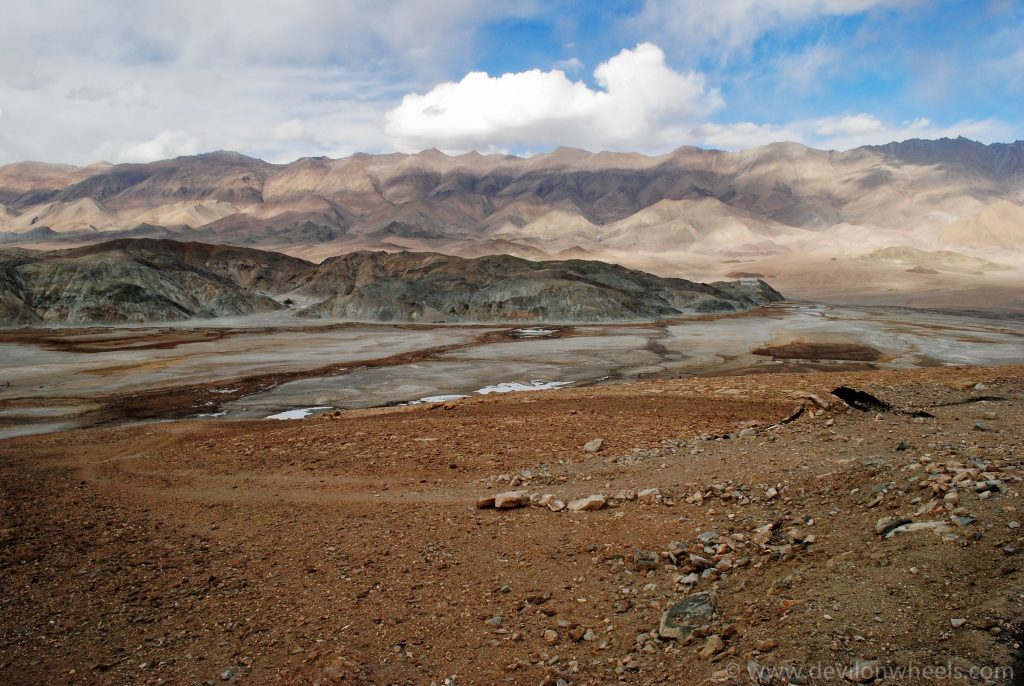
How to reach: Hanle is approximately 250 km from Leh (8-9 hours). The usual route goes via Upshi, Chumathang, and Nyoma, so you pass straight through Nyoma on the way in. Select the Hanle circuit when you apply for the EDF online, the same receipt that covers other inner areas works here too. Homestays run by locals like Sonam Guest House charge Rs 1,200 to 1,500 per night with meals. Nyoma has its own homestays at Rs 800 to 1,200 per night if you want to split the drive or Hanle is full. Carry extra fuel as there are no petrol pumps between Karu and Hanle.
3. Is Uleytokpo Worth Visiting in Sham Valley?
If you want to escape the “city” feel of Leh and prefer the sound of the Indus River over traffic, Uleytokpo in the Sham Valley is your answer. Located about 60 km from Leh on the road towards Kargil, this camping area on the banks of the Indus is perfect for travelers who want nature without the rough logistics of deep interior Ladakh.
Both permanent cottages and tented camps are available here, so you do not need to carry your own gear. In summer (June to August), the valley around Uleytokpo is lush green, which is a stark contrast to the typical barren Ladakh landscape. This is also an excellent acclimatization stop if you have flown directly into Leh, because the altitude here (around 10,500 ft) is slightly lower than Leh itself, and the peaceful setting helps your body adjust before heading to higher passes.
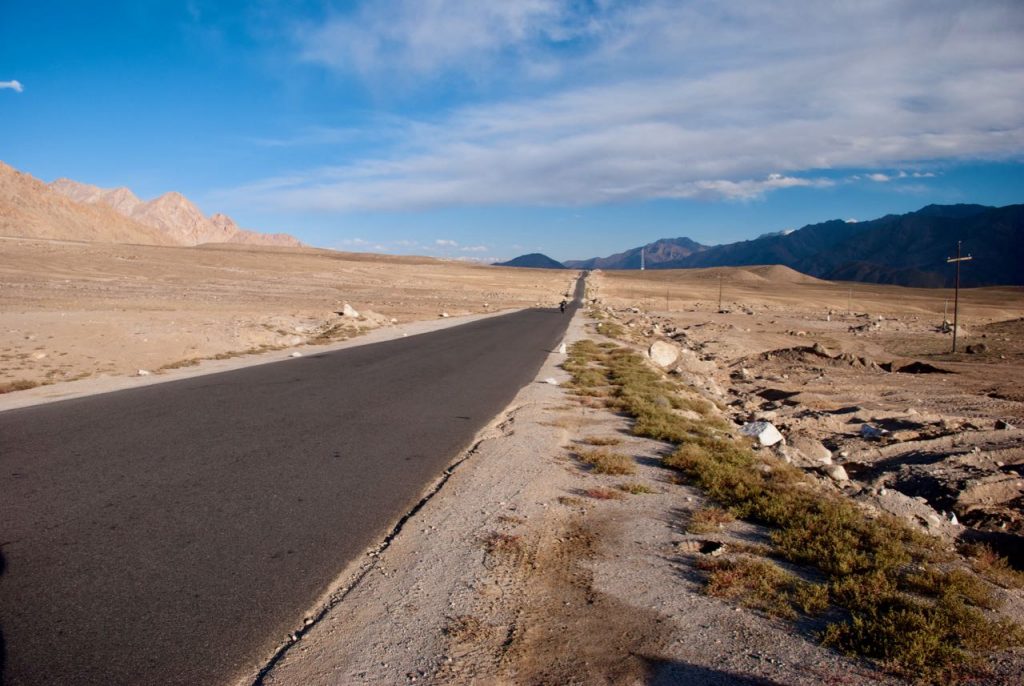
How to reach: Drive from Leh on the Srinagar-Leh Highway towards Kargil. Uleytokpo is about 1.5 hours from Leh. Camp stays cost Rs 2,000 to 4,000 per night depending on the season and type (tent vs cottage). BSNL and Airtel have decent coverage here.
4. What Can You Explore in the Changthang Region?
The Changthang plateau, an extension of the Tibetan Plateau, is one of the most remote and rewarding regions in all of Ladakh. While Pangong Lake technically falls in Changthang, the villages of Chusul, Nyoma, Chumathang, and Hanle in this region receive a fraction of the tourist traffic. The plateau sits at around 15,400 feet and is characterized by vast, treeless expanses, frigid temperatures, and the Changpa nomads who herd the famous Changi goats (the source of Pashmina wool).


The Changthang Wildlife Sanctuary is home to Tibetan wolves, snow leopards, Tibetan gazelles, and a remarkable variety of migratory birds. You can visit Chusul and Nyoma by taking the direct route from Pangong Tso to Tso Moriri, stopping at these villages along the way. This is one of those drives where you feel like you have left India entirely and entered a different world.
How to reach: Chusul is about 200 km from Leh (6-7 hours) via Pangong route or via Upshi-Chumathang road. Select the Changthang circuit when applying for the EDF online. Homestays at Nyoma and Chumathang charge Rs 800 to 1,500 per night. Mobile coverage is BSNL only and extremely patchy. Carry extra fuel, warm clothing, and be prepared for altitude sickness symptoms at this elevation.

5. Why Is Rangdum in Suru Valley So Unique?
Rangdum is the last Buddhist hamlet in the Suru Valley, situated on the route from Kargil to Padum (Zanskar). What makes Rangdum so striking is the contrast. On one side, you have colorful, grassy hills. On the other, glaciers and stark grey mountains. The 16th-century Rangdum Monastery sits on a small hill with about 45 monks in residence, and the silence here is almost physical.
Rangdum is an excellent overnight stop if you are heading to Zanskar Valley, and it deserves more than just a pit stop. Spend a morning at the monastery and walk around the village. The landscape around Rangdum is unlike anything else in Ladakh, more reminiscent of the Tibetan Plateau than the typical Ladakhi valleys.
How to reach: Rangdum is about 130 km from Kargil (5-6 hours on a rough road) or 337 km from Leh. The road is open June to October. Very basic guesthouses and a monastery guesthouse are available at Rs 500 to 1,000 per night. No mobile network. No petrol pump. Carry everything you need.
6. What Will You Find at Sumur and Tirith in Nubra Valley?
Most Nubra Valley visitors stick to Diskit and Hunder (for the sand dunes and double-humped camels). But the villages of Sumur and Tirith, further north along the Nubra River, offer a quieter, more authentic experience. Sumur is known for the Samstanling Monastery, built in 1841. Unlike the ancient monasteries that give you a sense of stepping into history, this one feels different. It is relatively new in monastery terms, with vibrant paintings on the walls, colorful depictions of deities, and large scroll paintings on silk cloth that are simply exquisite.
From Sumur, several trails lead to even smaller settlements, and if you enjoy hiking, I would highly encourage you to explore these on foot. The monastery experience in Ladakh is deeply personal, and these smaller, less-visited gompa offer a more intimate connection than the larger tourist-heavy ones.
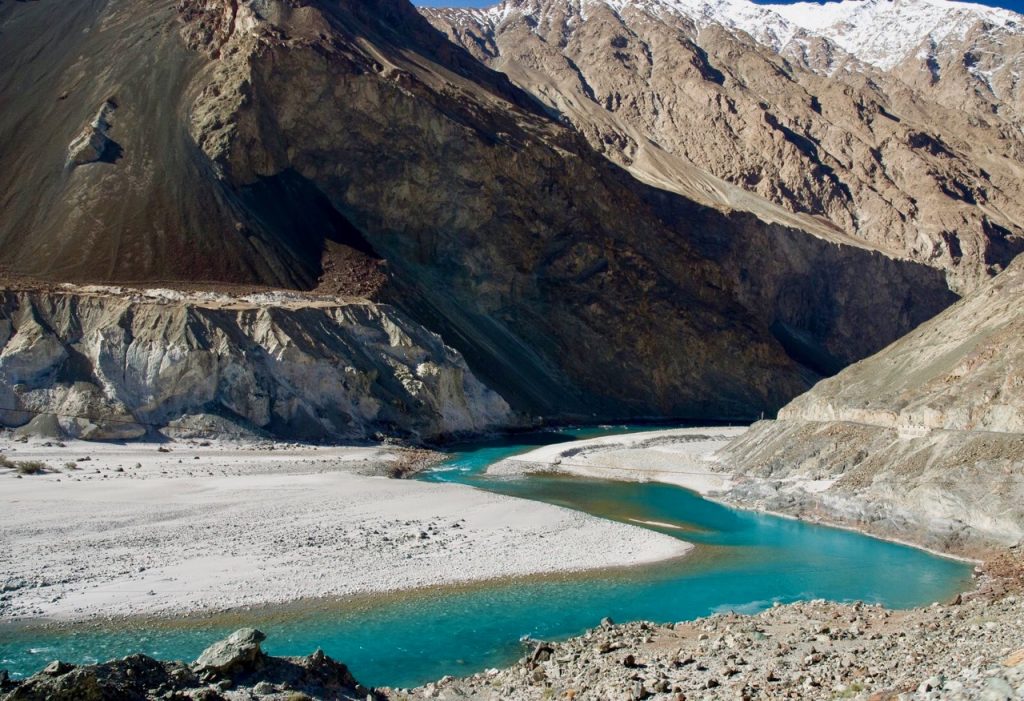
How to reach: Sumur is about 25 km from Diskit (30-40 minutes). Tirith is another 10 km ahead. The standard Nubra Valley EDF, selected during your online application, covers this area. Homestays and guesthouses in Sumur cost Rs 1,000 to 2,000 per night. BSNL coverage is available in Sumur.
7. Are Yarab Tso Lake and Panamik Worth the Detour?
Panamik, situated about 55 km from Diskit, is one of those places that most Nubra Valley itineraries skip. It lies en route to the Siachen Glacier and marks the last civilian-accessible point in that direction. Your primary companions on the road here will be army trucks, which adds a certain gravitas to the drive.
Panamik is known for its hot sulphur springs, with separate bathing pools for men and women. Honestly, I am not the biggest fan of hot springs, but after days on rough Ladakh roads, a soak in these naturally heated pools does feel restorative. The bigger draw for me is the sacred Yarab Tso, a small but stunningly blue lake hidden behind the village. It is a short walk from the main road and receives almost no visitors.
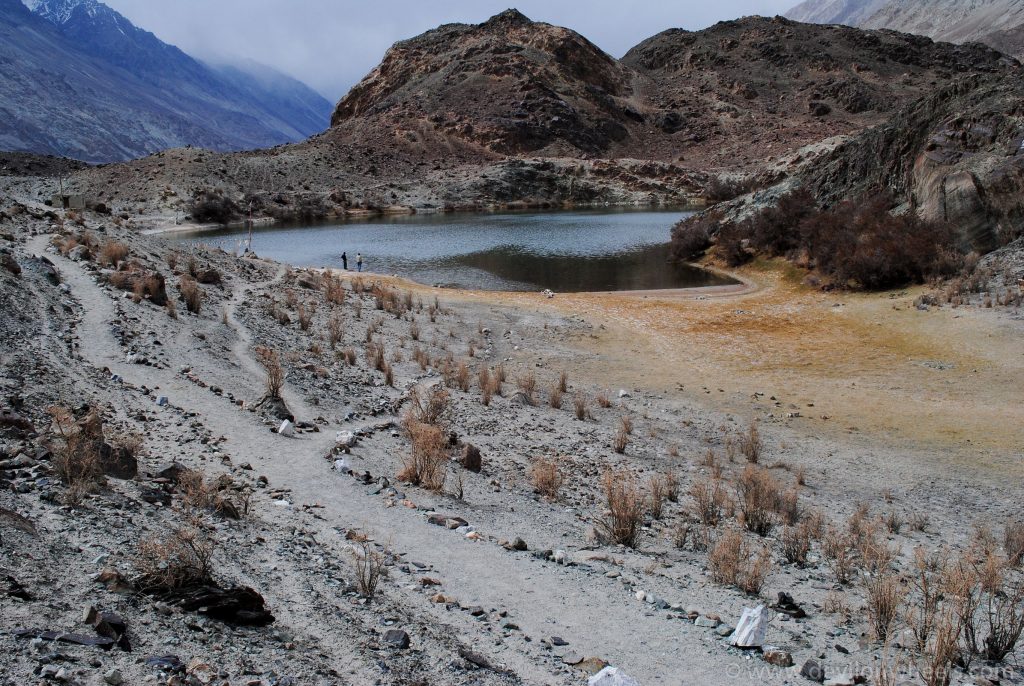
How to reach: Panamik is 55 km from Diskit (about 1.5 hours). The standard Nubra Valley EDF covers this area. There are a few basic homestays at Rs 800 to 1,200 per night. The hot springs have a nominal entry fee of Rs 20-30 per person. BSNL works intermittently.
8. What Is the Story Behind Basgo Palace Ruins?
When I was researching for my first trip to Ladakh, I came across Basgo and was fascinated by its history. Located about 40 km from Leh on the Srinagar-Leh Highway, Basgo was once a prosperous settlement and a political center. Today, it is a quiet village with a monastery that is almost entirely in ruins, and it is hardly visited by anyone.
The monastery consists of three main temples, all dedicated to Maitreya (the Buddha of the future). The copper statues and wall paintings depicting incidents from Lord Buddha’s life are remarkably well preserved despite the crumbling structure around them. What I remember most is the monk who was there. He was exceptionally warm and spent a long time walking us through the history of the place. The drive up to the monastery entrance is smooth and easy, so accessibility is not an issue at all.
How to reach: Basgo is on the main Leh-Kargil highway, about 40 km from Leh (45 minutes). No special permit required beyond the standard Ladakh EDF. No entry fee. You can easily club this with a visit to Lamayuru Monastery and Alchi on the same day.
9. Why Should You Stop at Upshi and Its Nearby Monasteries?
If you are traveling on the Manali-Leh Highway, Upshi is the first settlement you encounter after crossing the last pass of the journey, Taglang La. After hours of high-altitude passes and rough terrain, Upshi appears with its relatively smooth roads and the feeling of finally being “in Ladakh.” This is also the area where Changpa nomads sell Pashmina wool, and you can sometimes see the wool collection process firsthand.
What makes Upshi worth more than a quick chai stop is the cluster of monasteries nearby. Stakna, Hemis, Thiksey, and Shey all lie within 50 km from Upshi. Instead of rushing to Leh, spend a day here exploring these monasteries. Each one has a different character and offers a peaceful introduction to Ladakhi Buddhist culture.
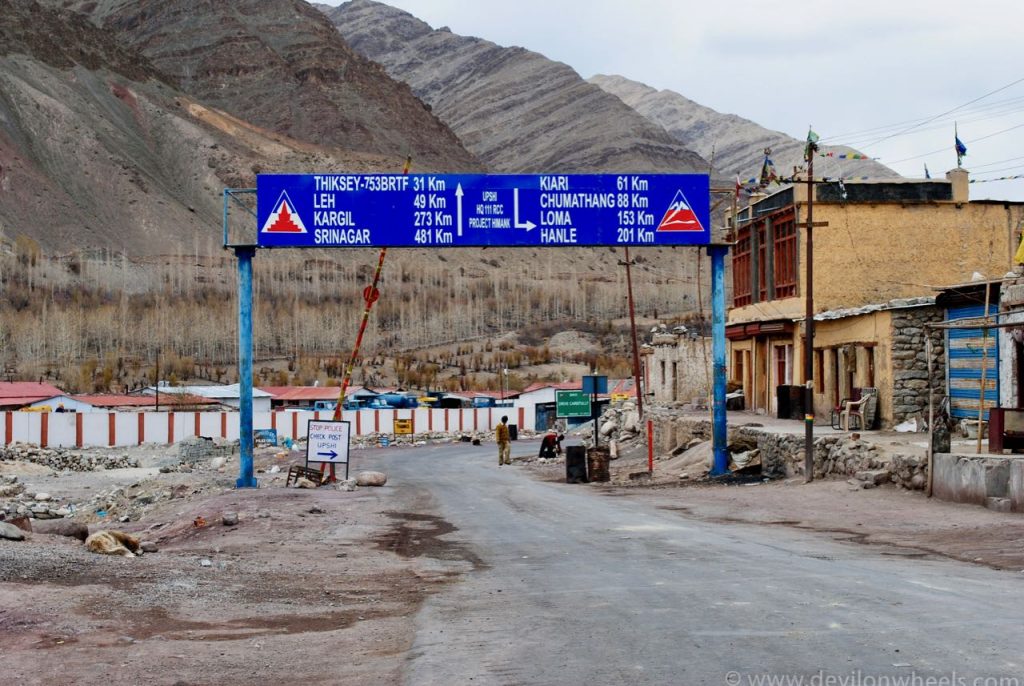
How to reach: Upshi is about 47 km from Leh (1 hour) on the Manali-Leh Highway. No special permit needed for Upshi itself. Basic dhabas and a few guesthouses are available. Jio 4G and Airtel work at Upshi, and BSNL has coverage throughout the area.
10. What Makes Rumtse a Gateway to Deeper Ladakh?
Rumtse, another settlement on the Manali-Leh Highway, is the starting point for several spectacular treks, including the famous Rumtse to Tso Moriri trek (9 days, covering around 165 km). This village represents a different face of Ladakh. While most of the region is known for its barren beauty, Rumtse and the valleys leading south from here show a lush, green side that surprises first-time visitors.
Even if you are not trekking, Rumtse is worth a stop to stretch your legs and appreciate the scale of the landscape. The village also serves as the entry point for the road towards Tso Moriri via Chumathang, which is an alternative to the direct highway route and gives you a taste of the Changthang plateau without committing to the full circuit.
How to reach: Rumtse is about 80 km from Leh (2 hours) on the Manali-Leh Highway, just past Upshi. No special permit needed for the village itself. Very basic homestay accommodation at Rs 500 to 800 per night. Carry your own food and water for treks.
Bonus: Dah-Hanu and the Aryan Villages
I could not leave this one out. The Dah-Hanu villages along the Indus River are home to the Drokpa community, believed to be among the last descendants of the original Aryan race. The culture here is entirely different from the rest of Ladakh. Women wear elaborate floral headdresses, and the community follows traditions that predate both Buddhism and Islam in the region.
Visiting Dah-Hanu requires selecting the Dah-Hanu circuit when you apply for the EDF online, it is not a separate document, just the correct box ticked at application time. The villages are about 163 km from Leh (5-6 hours), and the best time to visit is during the Bono-na Festival (usually in September/October), when the community celebrates with traditional music and dance. Homestays here are basic but warm, at Rs 1,200 to 1,500 per person including meals.
How to Plan Your Offbeat Ladakh Trip?
Planning a trip to offbeat Ladakh requires a bit more effort than the standard tourist circuit, but the rewards are proportionally greater. Here are some practical tips to help you plan.
Permits: Indians no longer need a stamped ILP for any of these offbeat areas. Since 2021, a single online Environment Development Fee (EDF) receipt, applied for at lahdclehpermit.in, covers you. Hanle, Changthang, and Dah-Hanu each need you to select the correct circuit while applying online, but it is the same receipt, not a separate document. The total EDF cost for a 7-day trip covering multiple areas works out to roughly Rs 590 per person (Rs 400 one-time environment fee, plus Rs 20 per person per day, plus an optional one-time Rs 50 Red Cross Fund contribution).
Transport: Self-drive is the most flexible option. If you prefer not to drive, check the Ladakh taxi union rates for specific routes. Shared taxis to Nubra Valley are available from the taxi stand in Leh, but for deeper offbeat routes like Changthang or Dah-Hanu, you will likely need a private vehicle. A taxi for a week-long offbeat circuit costs roughly Rs 35,000 to 50,000 depending on the route and vehicle type.
Accommodation: Expect homestays at Rs 800 to 1,500 per night at most offbeat places, usually including meals. At some locations like Rangdum or Rumtse, options are extremely limited, so carry sleeping bags as backup. For budget planning, allocate Rs 1,000 to 1,500 per person per day for food and stay at offbeat locations.
Fuel and supplies: This is critical. Once you leave Leh, petrol pumps become scarce. Fill up in Leh. The Diskit petrol pump in Nubra Valley and the Tangste pump (opened in 2023, 34 km before Pangong) are the only reliable options on the Nubra-Pangong circuit. For Changthang and Hanle, there is no petrol pump at all after Karu. Carry extra fuel, especially in jerrycans.
Things to Keep in Mind for Offbeat Ladakh Travel
- Altitude and AMS: Many offbeat places are at 14,000 to 15,400 feet. Acclimatize properly in Leh (at least 2 days) before heading to high-altitude areas. Carry Diamox and stay hydrated.
- Pack well: Dress in layers. Temperatures can drop to near-freezing even in summer at these elevations. Carry a good windproof jacket, thermals, and sunscreen (UV is intense at this altitude).
- Respect local customs: Villagers in offbeat areas are friendly and hospitable, but always ask before clicking photos. Remove shoes before entering monasteries. Dress modestly. In Balti villages like Turtuk, be mindful of the local Muslim customs.
- Do not litter: This should go without saying, but it is even more critical in offbeat areas where there is no waste management infrastructure. Carry a garbage bag and bring all your waste back to Leh.
- Mobile connectivity: BSNL has the widest coverage across Ladakh, including some offbeat areas. Jio and Airtel work in Leh and along the main highways but are unreliable in interior regions. Download offline maps before your trip. For detailed coverage information, check my Ladakh mobile connectivity guide.
Suggested Itinerary for Offbeat Ladakh (12 Days)
If you want to cover most of these offbeat places in one trip, here is a practical 12-day itinerary starting from Leh. You can adjust this based on your available days and interests.
- Day 1-2: Arrive in Leh, acclimatize. Visit local sightseeing in Leh (Shanti Stupa, Leh Palace, Main Market).
- Day 3: Leh to Uleytokpo via Basgo Ruins and Alchi. Stay overnight at Uleytokpo camp.
- Day 4: Uleytokpo to Leh. Afternoon visit to nearby monasteries (Hemis, Thiksey, Shey).
- Day 5: Leh to Diskit (Nubra Valley) via Khardung La. Evening at Diskit.
- Day 6: Diskit to Turtuk. Explore the village. Return to Sumur/Tirith for the night.
- Day 7: Sumur to Panamik and Yarab Tso. Return to Diskit. Or continue to Pangong via Shyok route.
- Day 8: Diskit/Pangong to Leh. Rest day.
- Day 9: Leh to Chusul/Nyoma via Changthang route. Overnight at Nyoma or Chumathang.
- Day 10: Chumathang to Hanle. Stargazing at night.
- Day 11: Hanle to Leh via Upshi and Rumtse. Stop at Upshi for monasteries.
- Day 12: Buffer day in Leh or departure.
For a detailed Ladakh itinerary that includes the standard circuit along with offbeat additions, check the linked guide. If you are planning a solo trip, most of these offbeat places are safe for solo travelers, though I would recommend having a travel buddy for the Changthang region due to the remoteness and altitude.
Frequently Asked Questions
What are the best offbeat places in Ladakh for first-time visitors?
For first-time visitors, Turtuk, Uleytokpo, and Basgo Ruins are the easiest offbeat destinations to include. They require minimal detour from the standard Ladakh circuit, have decent road access, and offer experiences distinctly different from Pangong and Nubra. Add one or two of these to your regular itinerary without extending your trip significantly.
Do I need a special permit for offbeat places in Ladakh?
Indians do not need a stamped Inner Line Permit (ILP) anymore. Since 2021, it has been replaced by the online Environment Development Fee (EDF). Apply at lahdclehpermit.in and select the correct circuit for Hanle, Changthang (Chusul/Nyoma), and Dah-Hanu, since these areas need the right circuit chosen at the time of application, not a separate physical permit. As of 2026, the EDF is Rs 400 per person one-time plus Rs 20 per person per day, plus an optional one-time Rs 50 Red Cross Fund contribution, roughly Rs 590 for a 7-day trip.
How many days do I need for offbeat Ladakh?
A minimum of 10 to 12 days is recommended if you want to cover multiple offbeat destinations along with the standard circuit. If you are adding just one or two offbeat places (like Turtuk or Basgo) to a regular itinerary, 8 to 9 days is sufficient. Allow 2 days for acclimatization in Leh before heading to high-altitude offbeat locations.
Is it safe to visit offbeat places in Ladakh solo?
Most offbeat places in Ladakh are safe for solo travelers. Places like Turtuk, Uleytokpo, Basgo, and Sumur are well-connected and have enough tourist infrastructure. For remote areas like Changthang, Hanle, or Rangdum, having a travel companion is advisable due to limited mobile connectivity, no medical facilities, and the sheer remoteness. Always inform your hotel in Leh about your itinerary.
What is the best time to visit offbeat places in Ladakh?
June to September is the best window for most offbeat places. Roads to Zanskar (Rangdum), Changthang, and Dah-Hanu are open only during these months. July and August can bring occasional rain and landslides on some routes. For stargazing at Hanle, September and October offer the clearest skies with minimal cloud cover.
How much does an offbeat Ladakh trip cost?
A budget offbeat Ladakh trip for 10 to 12 days costs approximately Rs 20,000 to 30,000 per person if traveling by own vehicle or shared transport, staying in homestays, and eating at local dhabas. With a private taxi and mid-range hotels, expect Rs 40,000 to 60,000 per person. The biggest cost variables are transport (self-drive vs taxi) and the number of offbeat detours you add to your route.
What is the Wildlife Protection Fee for Hanle and Nyoma?
It is the Rs 20 per person per day component of the EDF, charged specifically because Hanle and Nyoma fall inside the Changthang Wildlife Sanctuary’s restricted zone, not a blanket daily charge that applies across all of Ladakh. Combined with the Rs 400 one-time Environment Fee and an optional one-time Rs 50 Red Cross Fund contribution, a 3-day Hanle-Nyoma loop from Leh works out to roughly Rs 460 to 510 per person. It is never a recurring Rs 10 per person per day charge, that figure is outdated and still shows up on a few older travel sites.
Do foreign tourists need extra permission to visit Hanle?
Yes. Indian citizens select the Hanle circuit on the standard online EDF, the same receipt that covers the rest of Ladakh. Foreign nationals need an additional Protected Area Permit (PAP), which should be applied for at least 15 days in advance through the appropriate Ladakh tourism channel, since Hanle sits just 19 km from the Line of Actual Control and inside the Dark Sky Reserve zone around the Indian Astronomical Observatory.
Is Nyoma worth a stop on its own, or just a stopover to Hanle?
Nyoma is worth more than the fuel-and-chai stop most itineraries reduce it to. As the block headquarters of the Changthang tehsil on the banks of the Indus at roughly 13,710 feet, it gives you a genuine Changpa village experience with far fewer tourists than Hanle, and its own homestays at Rs 800 to 1,200 per night. If Hanle’s limited beds are full during the June to September peak, or you want to split the long drive from Leh, staying a night in Nyoma is a practical and rewarding alternative.
Final Thoughts
Ladakh is truly the land that keeps on giving. Every time I visit, I discover a new corner, a new village, a new perspective that makes me fall in love with the region all over again. The places on this list are not just “offbeat for the sake of being offbeat.” They each offer something genuinely different from the standard Ladakh experience, whether it is Turtuk’s Balti culture, Hanle’s night sky, or the vast emptiness of Changthang.
If you have any questions about visiting these places or need help planning your offbeat Ladakh itinerary, feel free to ask in the comments below or connect with us on the DwD Community. Have you visited any of these offbeat places? Or do you have a recommendation that should be on this list? I would love to hear about it. Happy travels, my friend 🙂
Last Updated: August 25, 2026

4 Comments
Comments section gets closed in 90 days. To ask your travel questions, you can follow my YouTube Channel for a faster reply or for a much slower reply follow me on Instagram. :)
amazing pics, thanks for sharing
Thank for amazing places.
Hi,
This was a really amazing article, we always need a guide or some information before visiting such places. I think this is the right website especially to know more about Ladakh. Many people especially youth would love to visit this place.
Thanks a lot for sharing this blog, will looking forward to more such blogs
Hi,
Wow!! this was really an amazing article. Definitely, these places will go on my bucket list, really got to know more about Ladakh.
Thank you for sharing