


Zanskar Valley is rapidly gaining popularity as more travelers seek offbeat alternatives to the crowded circuits of Ladakh and Spiti Valley. With the Shinku La route from Manali to Padum now open seasonally and BRO improving the Nimmu-Padum-Darcha road, reaching Zanskar is easier than it was even a few years ago. Adventurists and budget travelers alike are drawn to this remote wonderland of towering peaks, ancient monasteries, and the turquoise Zanskar River.
Hence, one of the most frequently asked questions on my blog is “Can I make a budget trip to Zanskar Valley?” The answer is yes, but it requires more planning than a Ladakh or Spiti trip. In this article, I will share practical, tested tips that will help you save money and plan a Suru-Zanskar trip without breaking the bank.
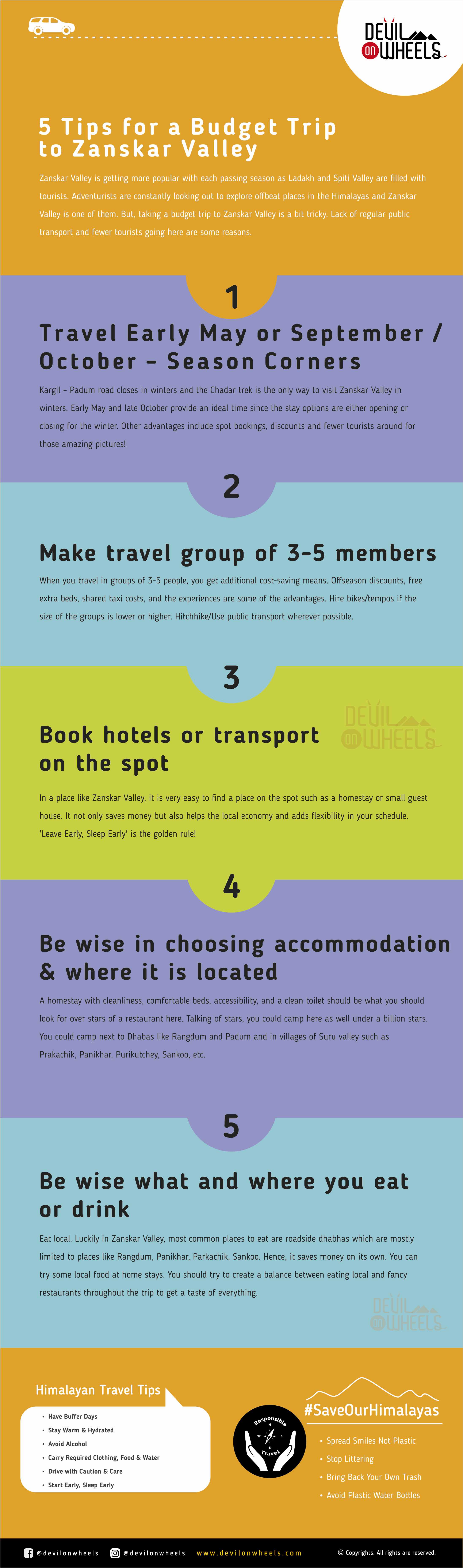
Let's quickly dive into the details:
Zanskar Valley Budget Trip: Quick Reference
| Detail | Information |
|---|---|
| Best Budget Months | Late May to early June, September to mid-October |
| Daily Budget (per person) | Rs 1,200 to Rs 2,500 depending on travel style |
| Accommodation Range | Rs 150 to Rs 200 (dhaba shack), Rs 400 to Rs 800 (homestay), Rs 800 to Rs 1,500 (guesthouse) |
| Food Cost Per Day | Rs 200 to Rs 400 at dhabas and homestays |
| Kargil to Padum Shared Taxi | Rs 1,500 to Rs 1,800 per seat |
| Kargil to Padum Private Taxi | Rs 13,000 to Rs 15,000 one way |
| Permit Required | No permit for Indian nationals. Foreigners need PAP. |
| Mobile Network | BSNL postpaid only beyond Kargil. No signal between Rangdum and Padum. |
| Minimum Days Needed | 8 to 10 days from Delhi (by road) |
Why Is a Budget Trip to Zanskar Valley More Challenging Than Ladakh?
A budget trip to Zanskar Valley is trickier than Ladakh or Spiti because of three factors: limited public transport, fewer tourists to share costs with, and a longer travel duration. Unlike the Leh circuit where HRTC and shared taxis run frequently, Zanskar has only a handful of bus services and shared cabs that may require you to break the journey in stages.
Having said that, budget travelers like me have been making affordable trips to Zanskar for years. Like Ladakh and Spiti, you need a good number of days to plan a trip to Zanskar Valley. The more days you spend, the higher the total cost. Hence, your daily budget becomes the most critical factor in keeping overall expenses manageable.
What Is the Overall Cost of a Zanskar Valley Trip in 2026?
For a budget traveler on a motorcycle from Srinagar, the total cost works out to roughly Rs 16,500 to Rs 19,000 for 8 to 10 days, including fuel, food, and accommodation. By car with 3 to 4 people sharing, expect Rs 20,000 to Rs 30,000 per person for the same duration. I have already written a detailed article on calculating the budget for a Zanskar Valley trip which breaks down every cost category. In this article, I will focus specifically on tips that help you cut costs without compromising the experience.
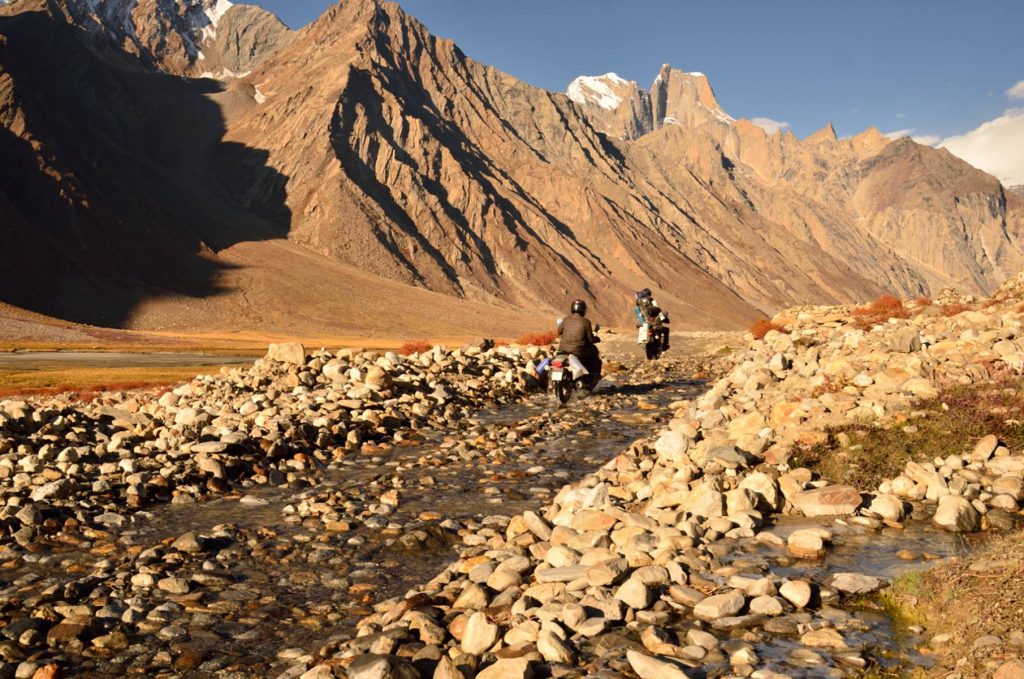
When Should You Travel to Zanskar Valley to Save Money?
Timing your trip right is the single biggest money-saver for a Zanskar Valley visit. The peak season (July and August) brings the most tourists and the highest prices. The shoulder months of late May to early June and September to mid-October offer significantly better deals.
The Kargil to Padum road via Pensi La typically opens around May and closes by November. The Shinku La route from Manali side has been open seasonally since 2021, giving you a second access point. In case the Shinku La tunnel (construction began May 2025, expected completion by 2028 to 2029) finishes, Zanskar will have all-weather road access from the Manali side. For now, plan your trip between June and September for the most reliable road conditions.
What Are the Advantages of Traveling to Zanskar in the Shoulder Season?
The biggest advantage of traveling in May or September is that stay options are either just opening or about to close for the season. Owners are happy to welcome any guest, giving you real bargaining power.
- Most guesthouses and homestays accept walk-in bookings with no premium, since tourist numbers are low.
- Hotels and guesthouses offer deals like free extra beds, no charge for additional guests in a room, and flat discounts of 20 to 40 percent. In our case, most guesthouses in Padum did not even care if we were 3 or 5 in a room.
- You get more time at each location with fewer tourists around. No waiting at monasteries or viewpoints for crowds to clear.
What Are the Challenges of Shoulder Season Travel in Zanskar?
Keep in mind that shoulder season travel comes with some trade-offs.
- Fewer tourists means fewer chances of finding travel partners to share taxi or fuel costs.
- Temperatures can drop significantly, especially in September and October. Carry proper woolens and clothing suitable for a Zanskar trip.
- Some passes, especially Pensi La, may have fresh snow in early May or late October, making the road slippery or temporarily closed.
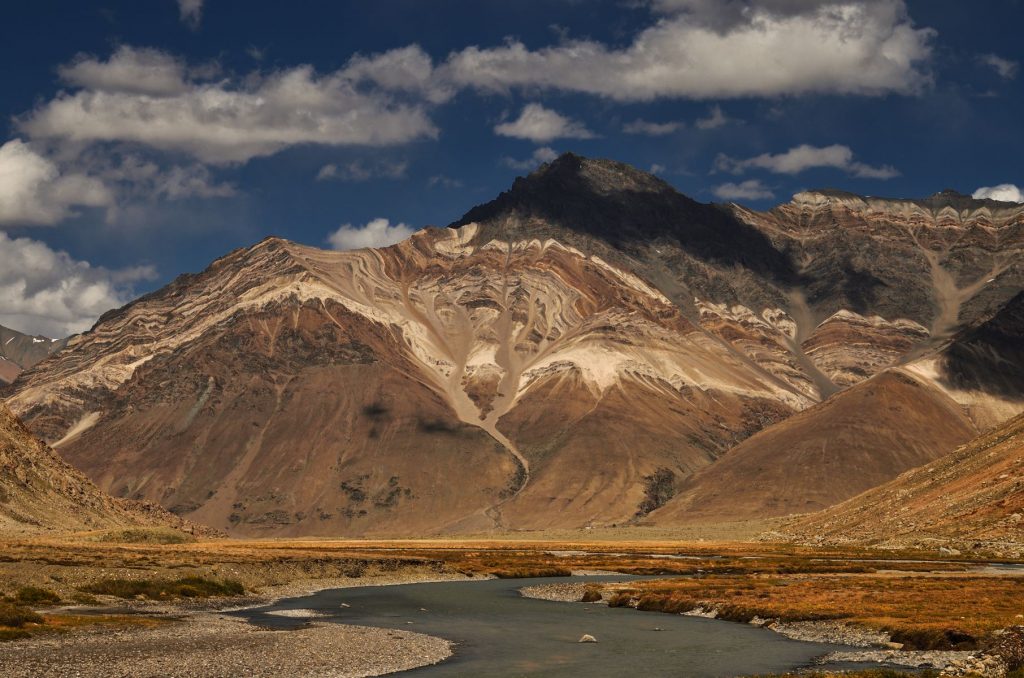
How Does Group Size Affect Your Zanskar Valley Trip Budget?
Traveling in a group of 3 to 5 people is probably the most effective way to bring down Zanskar trip costs. Transport is the single largest expense, and splitting it 4 ways makes a massive difference. Here is how group size changes your transport strategy.
- 1 to 2 people: Rent a bike from Srinagar or Leh, or use shared taxis and hitchhikes. Solo travelers to Zanskar can also rely on public transport, though connections are infrequent.
- 3 to 5 people: Hire a private taxi or bring a self-drive SUV. A private cab from Kargil to Padum costs Rs 13,000 to Rs 15,000 one way. Split 4 ways, that is under Rs 4,000 per person.
- 6 to 10 people: Book a Winger or Tempo Traveller. This saves 55 to 60 percent compared to hiring two separate taxis, and the group travels together.
Self-drive on your own car or motorcycle remains the cheapest and most flexible option for commuting. Combined with group travel, it can bring down transport costs dramatically, since commute forms the biggest slice of any Zanskar Valley trip budget.


Pro Travel Tip: If you are doing a self-drive to Zanskar Valley, make sure to read the article on 40 must-have things to carry on a self-drive trip to Zanskar Valley.
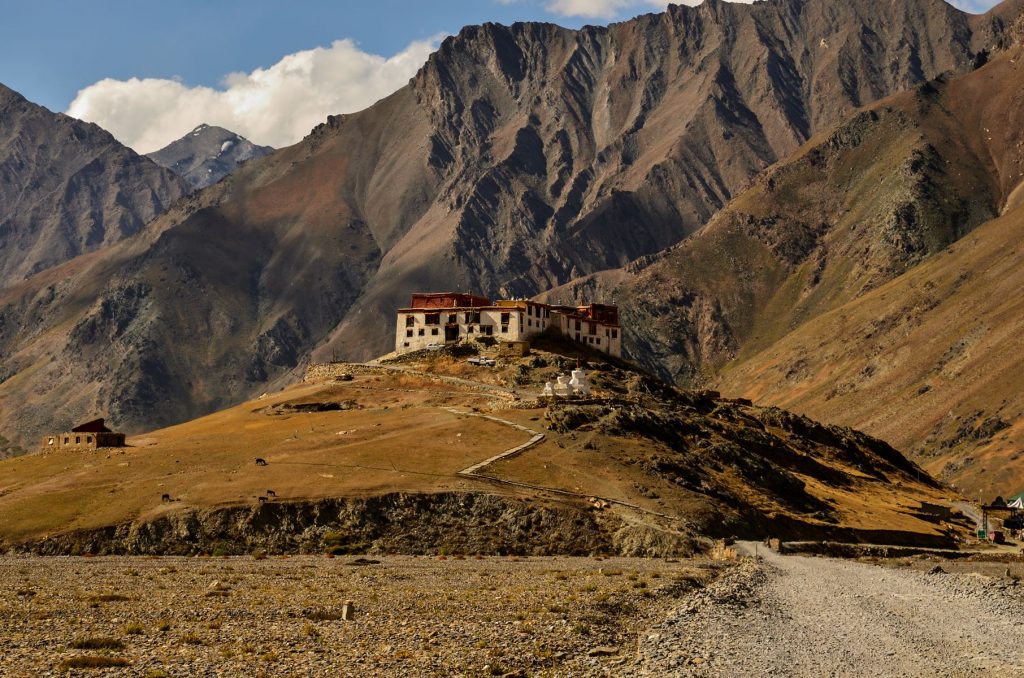
Should You Book Hotels and Transport in Advance for Zanskar?
For Zanskar Valley specifically, my advice is to avoid advance bookings wherever possible. Pre-booking locks you into a rigid schedule, and in a place where landslides, roadblocks, and altitude sickness are common, rigidity costs you money. Here is what often happens: you pre-book a hotel in Padum, a landslide blocks the road for half a day, you rush through the journey skipping all the scenic stops just to reach in time, and if you do not reach, you pay for a hotel you never used.

How to Find Cheap Stays in Zanskar Valley?
Finding a place on the spot in Zanskar is straightforward. Homestays and small guesthouses in villages like Padum, Rangdum, and Panikhar welcome walk-in guests warmly. Here are the current price ranges (as of 2025, verify locally for current rates).
- Dhaba shacks along the route: Rs 150 to Rs 200 per night. Basic but functional.
- Village homestays in Padum, Sankoo, Panikhar: Rs 400 to Rs 800 per night, often including dinner and breakfast.
- Budget guesthouses in Padum and Kargil: Rs 800 to Rs 1,500 per night.
- Camping for free: Carry your own tent and camp practically anywhere. Many dhabas at Rangdum and Padum let you camp outside and provide food for a nominal charge.
The golden rule for on-the-spot bookings: follow the leave early, sleep early principle. Reach your destination by 3 to 4 PM. This gives you time to walk around, compare options, and negotiate. If you arrive after dark, hotel owners know you have no alternatives and your bargaining power drops to zero.
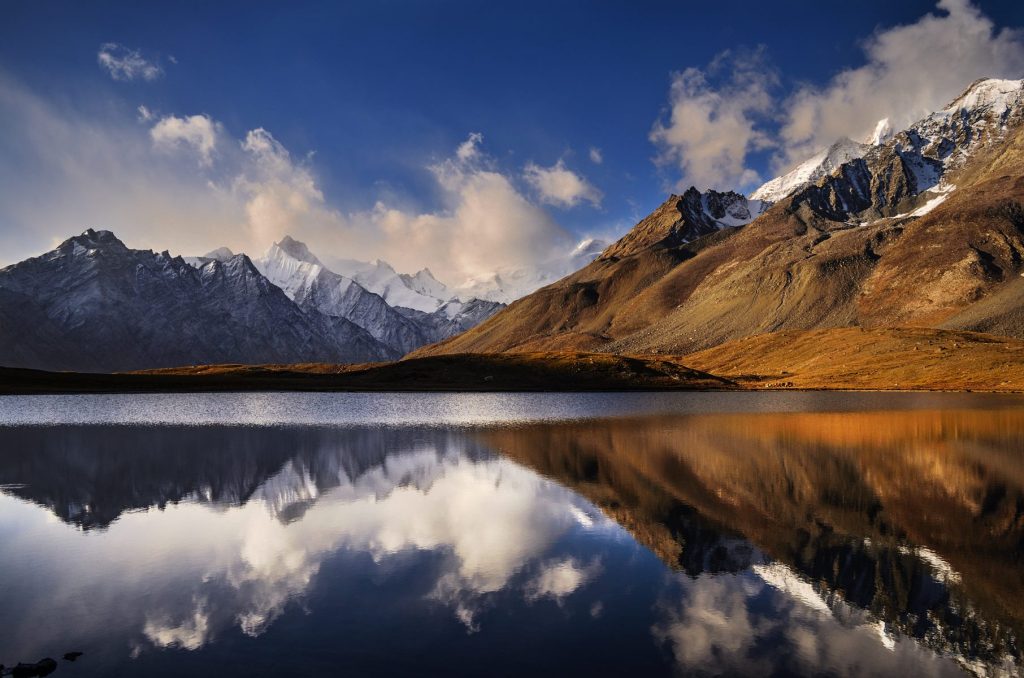
How to Save on Taxi Costs for Zanskar Valley?
You can call local drivers directly to negotiate better rates. Check the comprehensive list of taxi drivers for Zanskar, Ladakh, Srinagar, Leh, and Manali with reviews from the DwD community.
Also check the Leh Ladakh taxi union rate list for official rates. Contacting drivers directly (rather than through a travel agent) typically saves you 12 to 15 percent. Meeting the driver in person and negotiating face-to-face helps even more.
Shared taxis between Kargil and Padum cost about Rs 1,500 to Rs 1,800 per seat, but keep in mind that you may not always find a direct shared cab. You might need to break the journey: first a cab to Sankoo or Panikhar, then another to Rangdum, and finally one to Padum. Budget for this possibility.
How to Choose the Right Accommodation on a Budget Zanskar Trip?
If you are on a budget, forget about star ratings. Focus on three things: cleanliness, comfortable beds, and clean toilets. You will spend most of your day outdoors anyway, so the room is just for sleeping. A decent homestay with these basics is more than enough.
One thing to keep in mind: smaller homestays may not serve food on demand. Meals are usually prepared along with the family’s food, so you eat what the family eats and at their mealtime. If you are particular about food choices and timing, a guesthouse or small hotel might be more suitable.
Camping remains the ultimate budget hack for Zanskar Valley. The valley is vast, open, and camping-friendly. You can pitch your tent near village homestays and ask them to provide food for a small fee. Places like Rangdum, Parkachik, Panikhar, and Sankoo all have dhabas where you can camp outside and eat at the dhaba. You can also camp near JKTDC Alpine huts in Suru Valley villages. For detailed camping advice, read our guide on camping in Zanskar Valley.
Pro Travel Tip: Stay connected with your family when traveling to remote corners of the Himalayas. Read my article on mobile phone networks and connectivity tips in Zanskar Valley. BSNL postpaid is the only reliable option beyond Kargil.
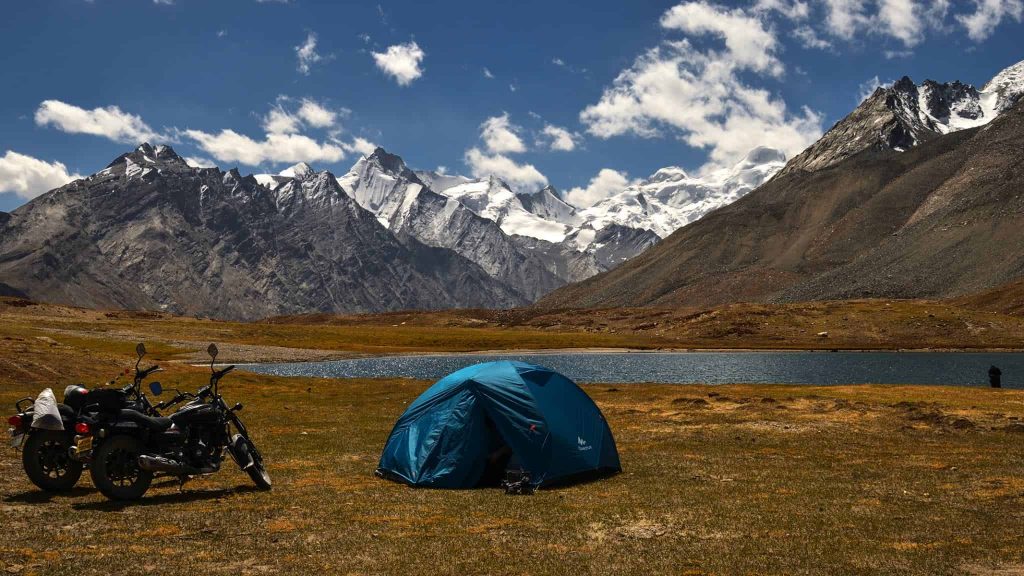
How to Save on Food and Drinks During a Zanskar Valley Trip?
Food in Zanskar Valley is naturally budget-friendly because fancy restaurants simply do not exist here. Most eating options are roadside dhabas at places like Rangdum, Panikhar, Parkachik, and Sankoo. A typical dal-rice-roti meal at a dhaba costs Rs 100 to Rs 200. Your total food expense per day should come to Rs 200 to Rs 400 if you stick to local dhabas and homestay meals.
Here are a few practical food tips for keeping costs low.
- Carry packed lentils, rice, and basic spices. Many dhabas let you use their kitchen or stove for a small fee.
- Eat local food at homestays. Thukpa (noodle soup), momos, and butter tea are filling, cheap, and widely available.
- Limit spending on bottled water. Carry a water filter bottle or purification tablets instead.
- Stock up on dry fruits and energy bars before entering the valley. These are essential if you plan treks like the Phugtal Monastery trek.
- Create a balance between dhaba meals and occasional restaurant meals in Kargil or Padum to enjoy the trip without overspending.
What Are the New Routes to Zanskar Valley in 2026?
Zanskar Valley connectivity has improved significantly since 2020. Previously, the only reliable route was Srinagar to Kargil to Padum via Pensi La. Now you have multiple options, and understanding them helps you pick the cheapest approach.

- Kargil to Padum via Pensi La: The traditional route, 240 km, open May/June to November. Most public transport and shared taxis run on this road.
- Manali to Padum via Shinku La (Darcha): Open seasonally since 2021. HRTC runs a minibus service on this route. This is a game-changer for budget travelers coming from Delhi/Manali, as it avoids the longer Srinagar detour. Read the complete guide to the Manali to Leh via Zanskar route.
- Leh to Padum via Nimmu-Wanla: The Nimmu-Padum-Darcha road is being built by BRO. As of 2025, this route is open seasonally. Once fully complete, people flying to Leh can access Zanskar more easily.
- Winter access: Currently, the only way to visit Zanskar in winter is the Chadar Trek, a 7 to 10 day frozen river trek (the earlier 21-day trek duration has been shortened thanks to road improvements reaching closer to Chilling).
How to Find Travel Partners to Split Costs for a Zanskar Trip?
Finding travel partners is one of the best ways to reduce your Zanskar Valley trip budget, especially for taxi and fuel costs. At the DwD Community, we see many solo travelers connecting with groups before the Zanskar season starts.
You can post in our community forums or social media groups specifying your travel dates, preferred route, and budget range. Many travelers find partners for Kargil-Padum taxi sharing this way. The key is to start looking at least 2 to 3 months before your planned travel date, since Zanskar trips need coordination.
Traveling in a group also opens up possibilities like splitting camping gear costs, bulk-buying supplies in Kargil, and negotiating group discounts with taxi drivers. So, take the advantage and travel in a group to reduce your overall travel cost for Zanskar Valley 🙂
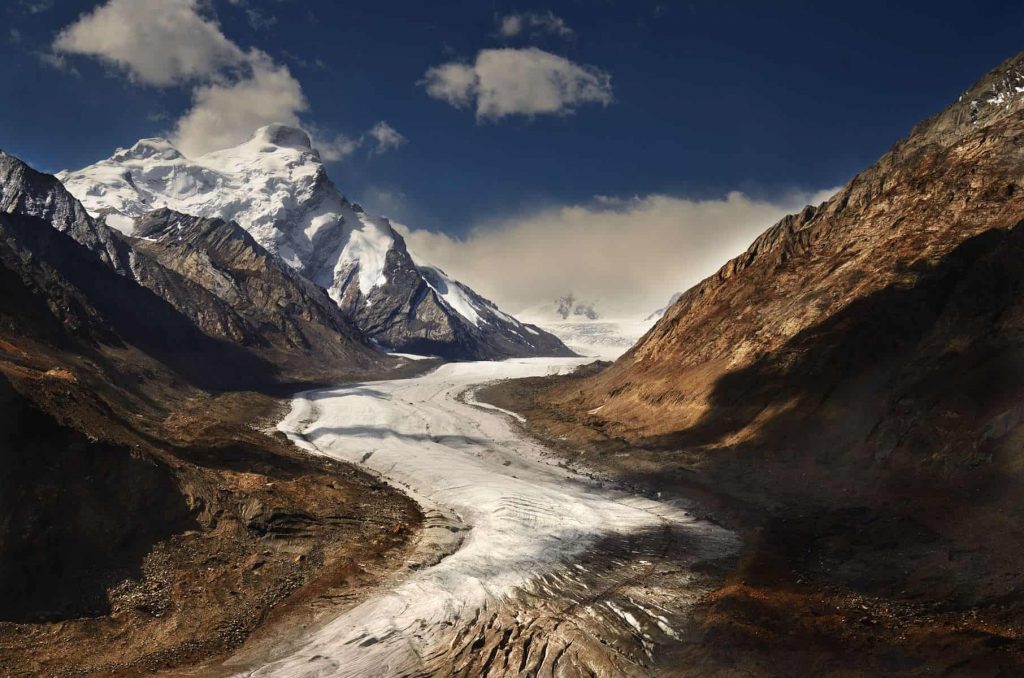
Sample Budget Breakdown for a 10-Day Zanskar Valley Trip
Here is a rough breakdown to give you a realistic picture of what a budget trip to Zanskar Valley costs in 2026. These numbers are for a group of 3 to 4 people sharing a car.
| Expense Category | Budget (per person) | Notes |
|---|---|---|
| Delhi to Srinagar/Manali (bus) | Rs 1,500 to Rs 2,500 | HRTC Volvo or semi-deluxe |
| Kargil to Padum private taxi (shared 4 ways) | Rs 3,500 to Rs 4,000 | One way. Return similar cost. |
| Local sightseeing taxis in Zanskar | Rs 1,500 to Rs 2,000 | Shared among group |
| Accommodation (10 nights) | Rs 4,000 to Rs 8,000 | Rs 400 to Rs 800/night at homestays |
| Food (10 days) | Rs 2,500 to Rs 4,000 | Rs 250 to Rs 400/day at dhabas |
| Fuel (if self-drive motorcycle) | Rs 3,500 to Rs 4,000 | Srinagar route, ~25 kmpl average |
| Miscellaneous (tips, snacks, medicines) | Rs 1,000 to Rs 1,500 | Carry cash, no ATMs beyond Kargil |
| Total (bus + shared taxi) | Rs 14,500 to Rs 22,000 | Per person for 10 days |
| Total (self-drive motorcycle) | Rs 16,500 to Rs 20,000 | Solo rider from Srinagar |
These are realistic budget-range numbers. If you camp instead of staying at guesthouses, you can bring the total down by Rs 3,000 to Rs 5,000 easily. For a detailed cost calculator, read my separate article on how to calculate the budget for a Zanskar Valley trip.
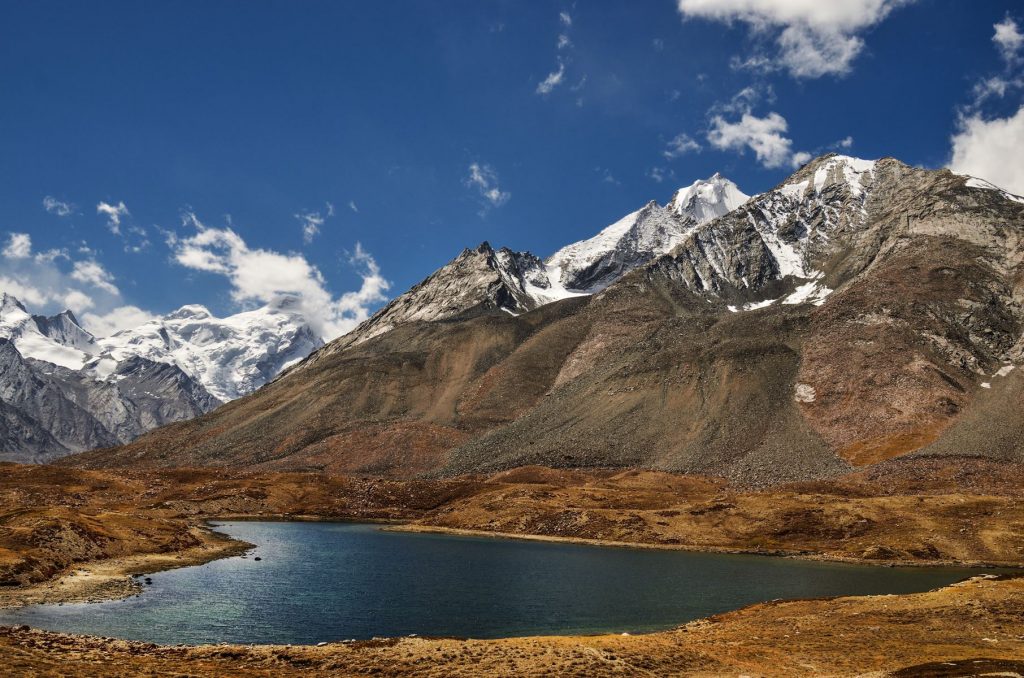
Quick Summary: 7 Budget Tips for Zanskar Valley
- Travel in shoulder season (May/June or September/October) for lower prices and better availability.
- Travel in a group of 3 to 5 to split taxi and fuel costs.
- Avoid advance bookings for stays. Walk-in negotiation gives better rates.
- Choose homestays over hotels. Rs 400 to Rs 800 per night including meals.
- Carry camping gear to skip accommodation costs entirely at many stops.
- Eat at dhabas and homestays. Rs 200 to Rs 400 per day for all meals.
- Find travel partners through travel communities to share every major expense.
Planning Your Budget Zanskar Trip
I hope these tips help you plan a budget trip to Zanskar Valley without sacrificing the experience. The beauty of Zanskar lies in its remoteness, and that same remoteness is what makes budget travel here both challenging and rewarding. With the right planning, the right group, and the willingness to go with the flow, you can explore this incredible valley for under Rs 20,000 from Delhi.
For complete planning resources, check out these related guides: how to plan a trip to Zanskar Valley, budget trip to Zanskar by public transport, 9-day Zanskar itinerary from Leh, and best time to visit Ladakh and Zanskar.
Do you have any questions about planning your budget trip to Zanskar Valley? Feel free to drop them in the comments section below or reach out to me on Instagram. If you found this guide helpful, please share it with anyone in your circle who is planning a Zanskar trip. Happy travels, my friend 🙂
All picture credits go to Sharada Hande who was kind enough to share these pictures with us in the DwD Travel Community. Do you want to feature your images in our articles too? Feel free to share them in the community to get featured.
Last Updated: March 2026
Frequently Asked Questions
How much does a budget trip to Zanskar Valley cost per person?
A budget trip to Zanskar Valley costs approximately Rs 14,500 to Rs 22,000 per person for 10 days when traveling by bus and shared taxi. This includes accommodation at homestays (Rs 400 to Rs 800 per night), food at local dhabas (Rs 200 to Rs 400 per day), and transport from Delhi. Self-drive on a motorcycle brings the total to Rs 16,500 to Rs 20,000.
Is there public transport to Zanskar Valley from Kargil?
Public transport to Zanskar is limited. A bus from Leh stops overnight at Kargil and continues to Padum on weekly schedule. From Kargil, local buses go to Sankoo and Panikhar, but there is no direct daily bus to Padum. Shared taxis are available but you may need to break the journey in stages. HRTC also runs a minibus on the Manali-Darcha-Shinku La-Padum route seasonally.
Do I need a permit to visit Zanskar Valley?
No permit is required for Indian nationals to visit Zanskar Valley. Foreign tourists need a Protected Area Permit (PAP) for restricted areas in Ladakh, which can be obtained in Leh. The standard Inner Line Permit (ILP) for Ladakh is not required for Zanskar specifically, but carry your ID proof at all times.
What is the best time to visit Zanskar Valley on a budget?
The best time for a budget trip to Zanskar is late May to early June or September to mid-October. These shoulder months offer lower accommodation prices, fewer tourists, and better bargaining power at homestays. Peak season (July to August) is the most expensive due to higher demand.
Can I camp for free in Zanskar Valley?
Yes, camping is very common and mostly free in Zanskar Valley. You can pitch your tent near villages, alongside rivers, or at open meadows. Many dhabas at places like Rangdum and Padum allow you to camp outside and provide food for a nominal charge. Carry a good quality sleeping bag rated for sub-zero temperatures, as nights are cold even in summer.
Is there mobile network in Zanskar Valley?
Mobile connectivity in Zanskar is extremely limited. BSNL postpaid is the only network with any coverage beyond Kargil. You may get intermittent signal in Padum, but the stretch between Rangdum and Padum has virtually no coverage. Carry a fully charged power bank and inform your family about expected no-contact periods. Read the detailed guide on mobile connectivity in Zanskar Valley.
How many days do I need for a Zanskar Valley trip?
You need a minimum of 8 to 10 days for a Zanskar Valley trip from Delhi by road. This allows 2 days each way for travel (Delhi to Kargil and back) and 4 to 6 days for exploring Zanskar. If you fly to Leh and take the Nimmu-Padum route, you can manage in 7 to 8 days. For the most complete experience including treks, plan for 12 to 14 days.
