


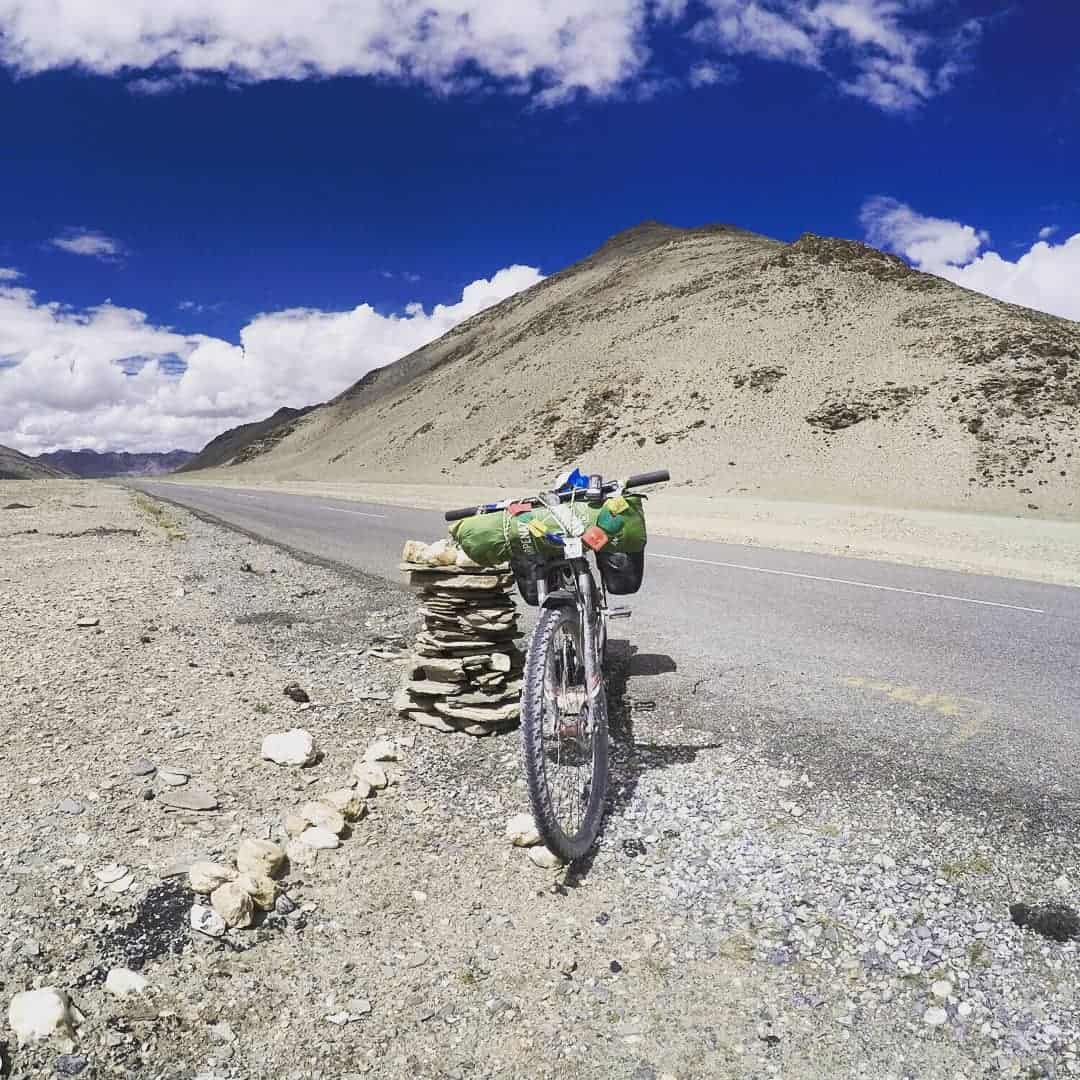
Almost every cyclist who loves adventure dreams of cycling on Manali Leh Highway one day. Many of them wonder about what will be the ideal Manali to Leh cycling itinerary for them. In this article, I will help you plan a bicycle trip on Manali Leh Highway in detail, updated with the latest route information for 2026 including the Atal Tunnel option.
In my last article, I talked about how to prepare yourself for a cycling trip from Manali to Leh. In this article, I will share a detailed day-wise plan along with some very important tips to consider for each day when you are cycling from Manali to Leh.
Distance: 430-475 km | Duration: 10-12 riding days + 1-2 acclimatization days
Best Time: June to September | Budget: Rs 15,000-25,000 (independent)
Highest Point: Tanglang La, 5,328 m | Passes: Rohtang, Baralacha, Nakee, Lachung, Tanglang La
Difficulty: Very challenging | Last Updated: September 2026
The journey on Manali Leh Highway can get tricky at times, and you must be aware of what this adventurous road to Ladakh is all about. Especially when cycling on Manali Leh Highway, you must know about how much distance is safe to travel, what challenges will you face on each day, where you will get the food, and where will you get the stay options.
Most of the Manali Leh Highway runs over an average altitude of 14,000 feet, which is high to very high altitude. Our bodies must acclimatize to perform at such high altitudes. Hence, like any other trip, a cycling trip on Manali Leh Highway requires much better acclimatization because your body is doing all the heavy-duty work, not your vehicle.
When I was preparing, I did not come across any useful Manali to Leh cycling blog and hence, I wanted to share this article as my experience so that you can learn from it.
I have broken this cycling trip from Manali to Leh in 10 days and have shared how much distance will you travel and how much altitude you will gain every day.
Hence, let’s start looking into this detailed Manali to Leh cycling itinerary.
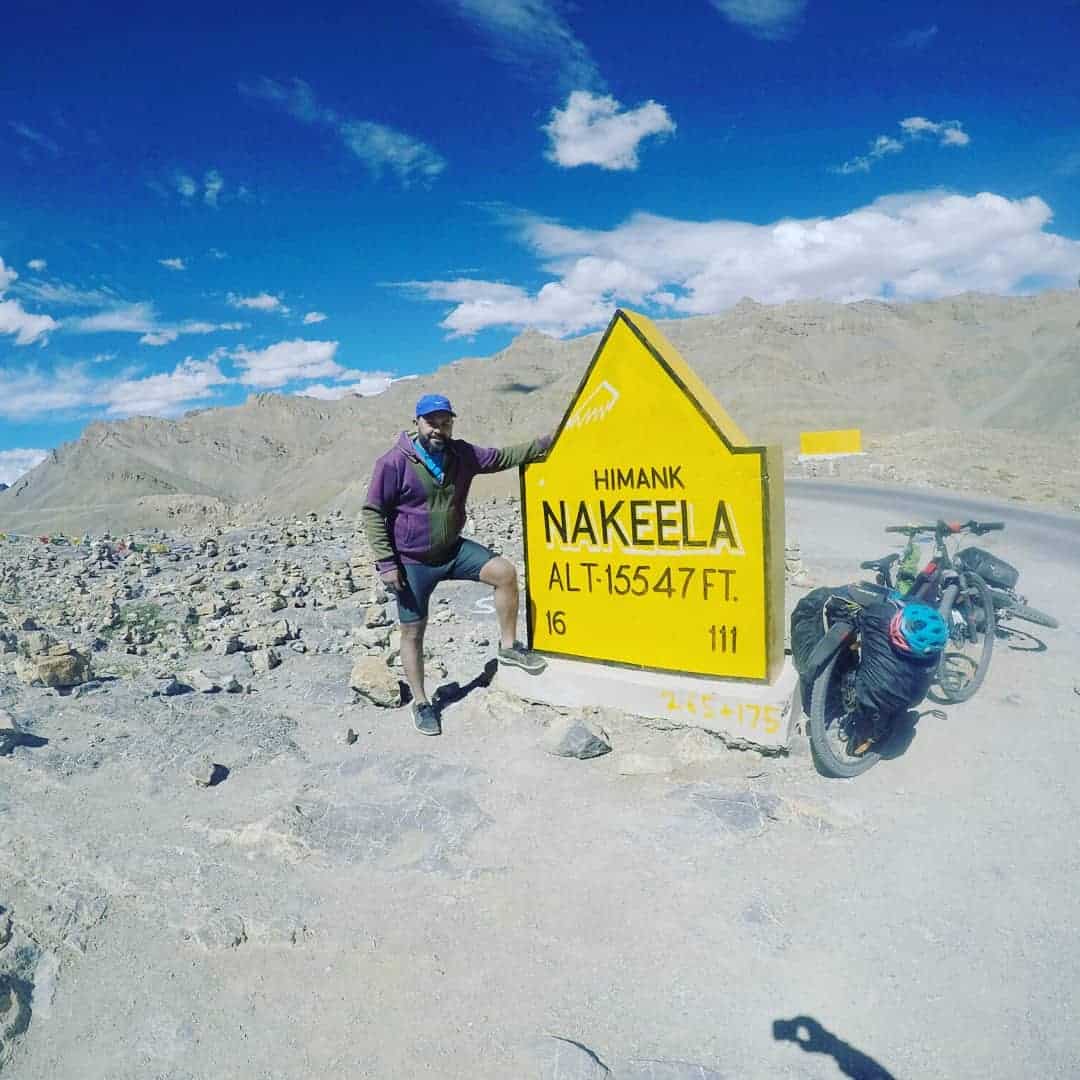
Let's quickly dive into the details:
Should You Take Rohtang Pass or the Atal Tunnel?
Quick answer: Take Rohtang Pass if this is your first Manali to Leh cycling trip, the climb is a rite of passage and the views are worth it. The Atal Tunnel (9.2 km, no permit needed) is a practical shortcut only if you are short on time.
The Atal Tunnel (opened October 2020) is a 9.2 km tunnel at 10,171 feet that bypasses Rohtang Pass entirely. It reduces the Manali-to-Keylong distance by about 45 km and saves you one full day. Bicycles are allowed through during daytime hours with no permit needed. However, keep in mind that cycling inside the tunnel means sharing the road with trucks and cars in a confined, noisy space for about 30-40 minutes.
My recommendation: If this is your first time, take the Rohtang Pass route. Climbing Rohtang on a bicycle is a rite of passage, and the views from the top are something the tunnel cannot replace. If you are short on time, the Atal Tunnel is a practical alternative. The itinerary below follows the classic Rohtang Pass route.
Day 0: Cycling in Manali or Solang Valley – Acclimatization Ride
Quick answer: Spend at least one extra day cycling around Manali or Solang Valley (14 km round trip) before starting the real climb. Skipping this acclimatization ride is one of the most common mistakes first-time Manali Leh cyclists make.
It is very important to stay in Manali or Solang Valley (preferably) for a day or two extra before you start the ride to Leh. It helps you acclimatize to the altitude and will be a lifesaver as you move forward to a higher altitude.
Cycling in Manali or around Solang Valley will help you acclimatize and be warmed up.
The day before the ride, we went to the Solang Valley (14 km from Manali) and returned to have the feel of the climbs, get acclimatized, and practice. It was worth every bit as it makes you mentally strong for the tough days ahead on the Manali Leh cycling journey.
Day 0 – Important Tips
- Get your bike thoroughly checked in Manali.
- Naveen (Firefox/Trek Store in New Manali) is of immense help in Manali for everything related to the bike, route, and ride. Conversation with him will also boost your confidence for the next 2 weeks.
- Stay in New Manali, avoid late nights and drinks.
- Pack your pannier bags and make your bike ready before you head for sleep on Day 0.
- You may consult your doctor for AMS prescribed medicine. Read my detailed guide on how to prevent AMS in Ladakh and Spiti before you start.
Day 1: Manali to Marhi
Quick answer: Day 1 is a 35 km, 1,600 m climb with 30+ hairpin bends. Start early, keep yourself hydrated, and expect the last 6-7 km before Marhi to be the toughest stretch of the day.
Distance: 35 km | Elevation Gain: 1,600 m
Day 1 is the most important day of the entire tour as everything that you have read, heard, or practiced in the last few months will come to reality before you. You will finally be starting your climb to get that ultimate Manali to Leh cycling experience.
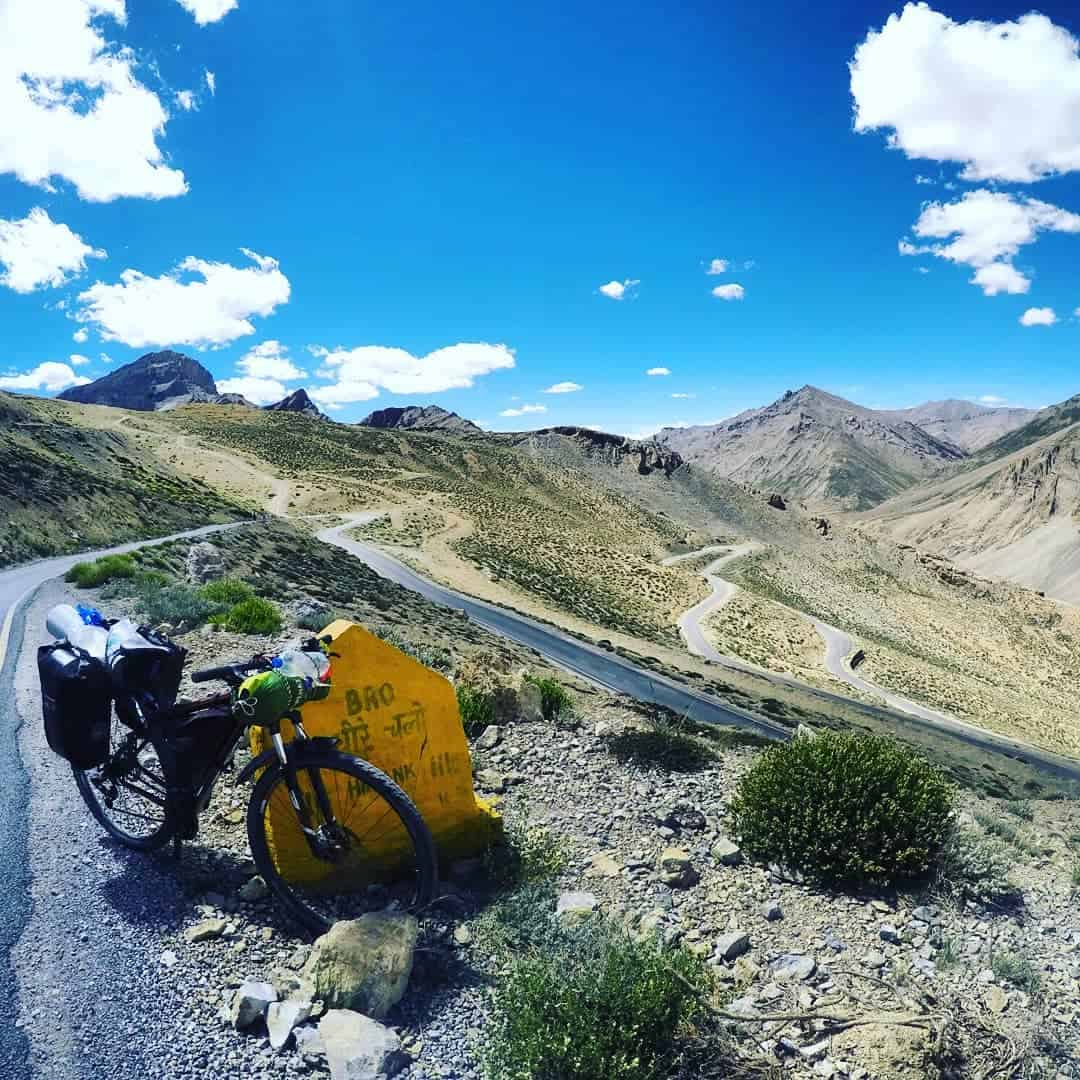
The road to Marhi is a constant climb for 35 km with lots of hairpin bends. I think we took over 30+ hairpin bends to climb 1,600 m to Marhi. The last 6-7 km will get on your nerve as the climb gets steeper, roads get bad, and it mostly rains in this stretch. But constant cadence, a hydrated body, and views around will keep you moving.
The valley here is always lush green, very misty, plenty of waterfalls on the sides and many dhabas along the way to cherish a hot cup of chai, some warm food, and conversations with locals as they are always excited to talk with you.
On reaching Marhi, we were filled with emotions of all kinds, a sense of achievement, some setbacks, and excited with the view of Rohtang Pass.
Also check the things to carry on a Ladakh trip and clothing guide for Manali Leh trips.


Day 1 – Important Tips
- Keep yourself regularly hydrated.
- The stretch has high traffic with some rash driving as well. Be cautious and keep yourself on the extreme left.
- Start as early as possible to beat the traffic and also to reach Marhi before the sun sets.
- There are plenty of dhabas with rooms and tents available for Rs 500 to Rs 1,000 per night (as of 2025-2026, verify locally for current rates).
Day 2: Marhi to Sissu via Rohtang Pass
Distance: 53 km | Elevation Gain: 900 m
After spending the night at Marhi, we started Day 2 with the steep climb of 900 m to Rohtang Pass on cycle covering 17 km of bad roads and heavy traffic. The rains only added to the chaos we already had.
However, once we started, we realized it is not as challenging up to the pass as we thought. Strong will power, persistence, and sticking to basics were all we needed to complete the climb. It was a sense of great achievement for me to reach my first pass at 4,000 m on my bicycle.
The downhill ride till Sissu was a bigger challenge for us due to bad roads and shooting stones on the road. The valley turned greener, glaciers became closer, water streams started crossing the roads, and more waterfalls were visible.
We stayed at the house of lovely Nina Dorza, whose hospitality was full of love and warmth. She fed us with some delicious home-cooked foods which helped us with a good night’s sleep instantly to get ready for the next day’s ride.
Day 2 – Important Tips
- Never get too excited after reaching the pass. It is not even midway, and you need to ride more before calling it a day.
- There are temporary toilets 500 m before the Rohtang Pass.
- Make sure you wear a helmet between the Rohtang Pass and Koksar. The shooting stones are real and scary.
- The police check post in Koksar will verify your documents.
- There is one shop which repairs tires right after the Koksar Bridge.
- Homestays in Sissu range between Rs 500 to Rs 1,500 per night (as of 2025-2026). Check the accommodation list for Manali Leh Highway.
- Atal Tunnel option: If you took the tunnel instead of Rohtang, you would reach Sissu by early afternoon, with the option to push ahead to Jispa.
- e-Aagman note: Motor vehicles entering Lahaul & Spiti (even via the tunnel) must register on the free e-Aagman e-pass (eaagman.hp.gov.in), with a Rs 200/car or Rs 50/two-wheeler SADA fee at Sissu. It is unclear if pedal cyclists fall under this, so carry your ID and check at the barrier to be safe.
This ends just the Day 2 of this Manali to Leh cycling itinerary and the journey has just begun 🙂 …
Day 3: Sissu to Darcha
Distance: 57 km | Elevation Gain: 900 m
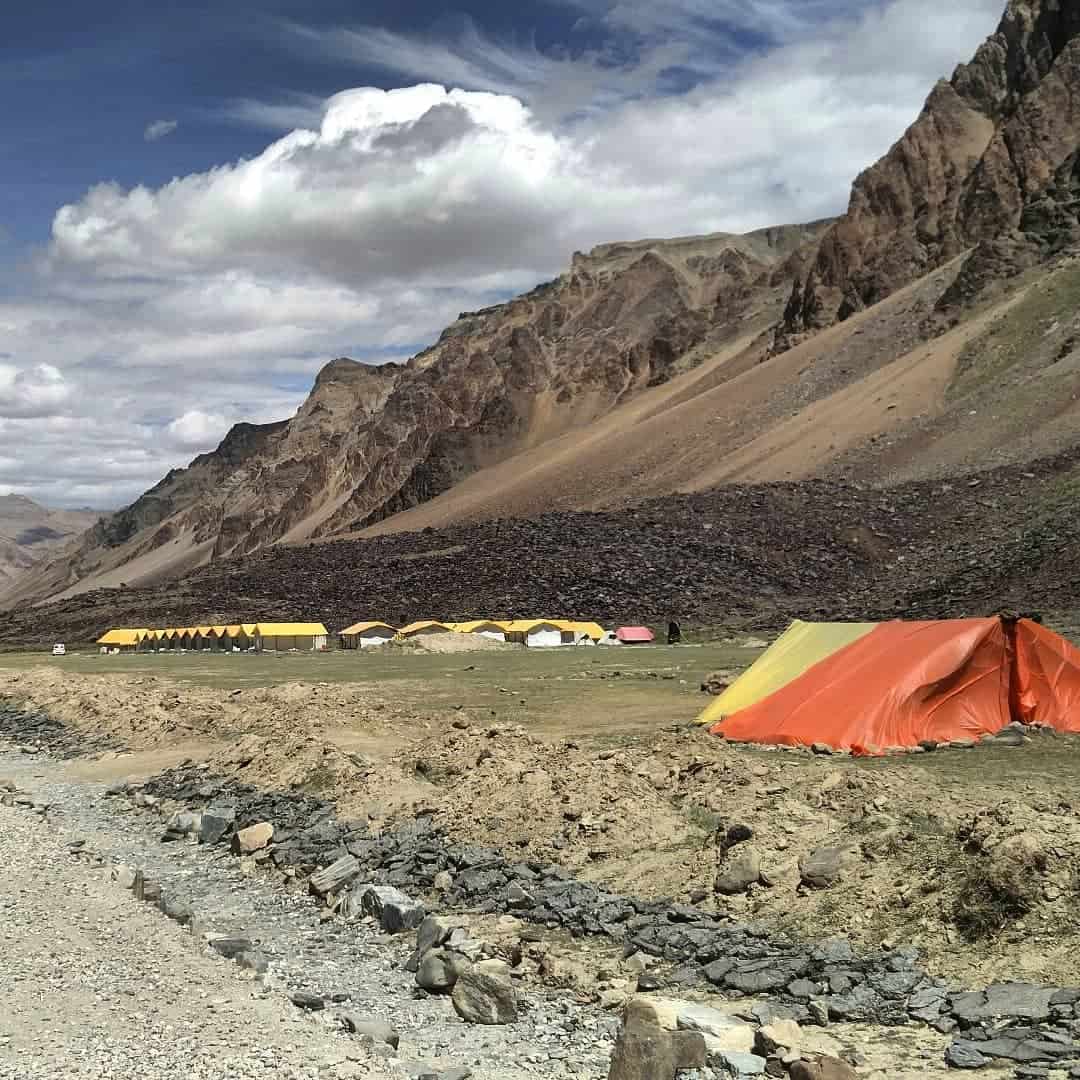
It was our first day to witness the transformation of the green valley into a cold desert. The glacier was getting closer, winds were getting stronger, and more rocks were visible than plantation as we moved forward. We originally planned to halt at Jispa, but since we managed to reach there early, we decided to ride a few more km ahead to Darcha.
Darcha is the last village on the route, and beyond this, we won’t find any settlements other than local dhabas which pop up during the travel season. We decided to camp here at Darcha next to an abandoned house with a view of the beautiful valley and river flowing by. We were even lucky to have a rainbow in our backdrop. Instead of buying food, we made some instant noodles and soup in a local’s house. Love the warmth and hospitality of locals and the way they welcome you in their life.
The ride to Darcha was among the easiest we had done till now with a great road, negligible climb, and a lot of action around. The bikers kept bowing down at us in respect which kept us moving forward, and locals would be up for every help we would seek.
Day 3 – Important Tips
- There is a bike mechanic who lives 7-8 km ahead of Sissu. You will recognize him with tires kept outside his house on the left side of the road.
- If you don’t feel like camping, it is advisable to stop at Jispa instead of Darcha as there are plenty of stay options at Jispa.
This ends Day 3 of my Manali to Leh cycling expedition and the main journey in the desert of Ladakh is about to begin.
Day 4: Darcha to Zing Zing Bar
Quick answer: A short but steep 30 km, 970 m climb where the air noticeably thins. Push on to Upper Zing Zing Bar rather than the lower dhabas, it gives you better stay options and an easier start the next morning.
Distance: 30 km | Elevation Gain: 970 m
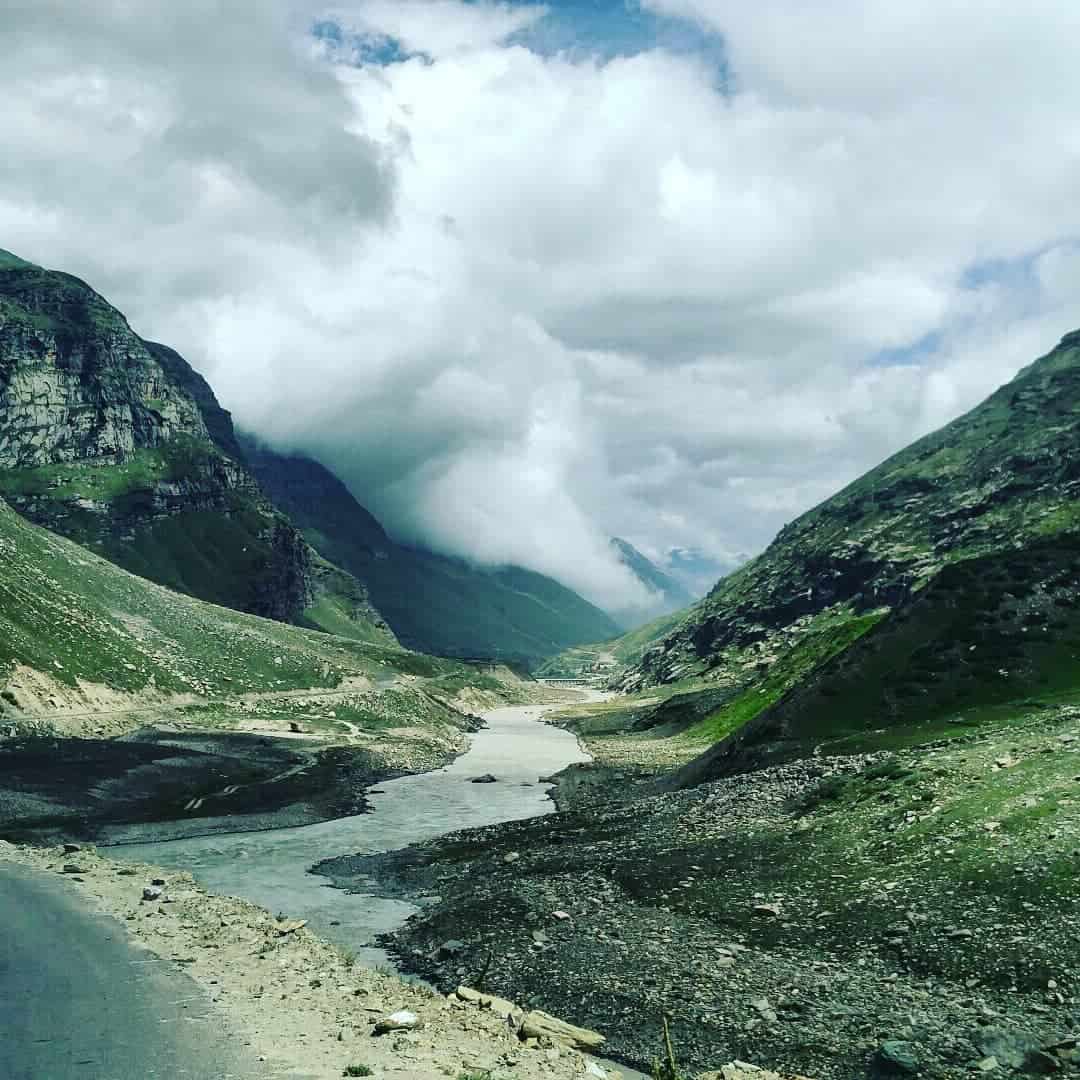
Today, we had to cover a short distance of 30 km, but it was a steep climb of 970 m to Zing Zing Bar. The ride starts with some bad roads on the climb but soon downhill starts with some great views, roads, and river crossings.
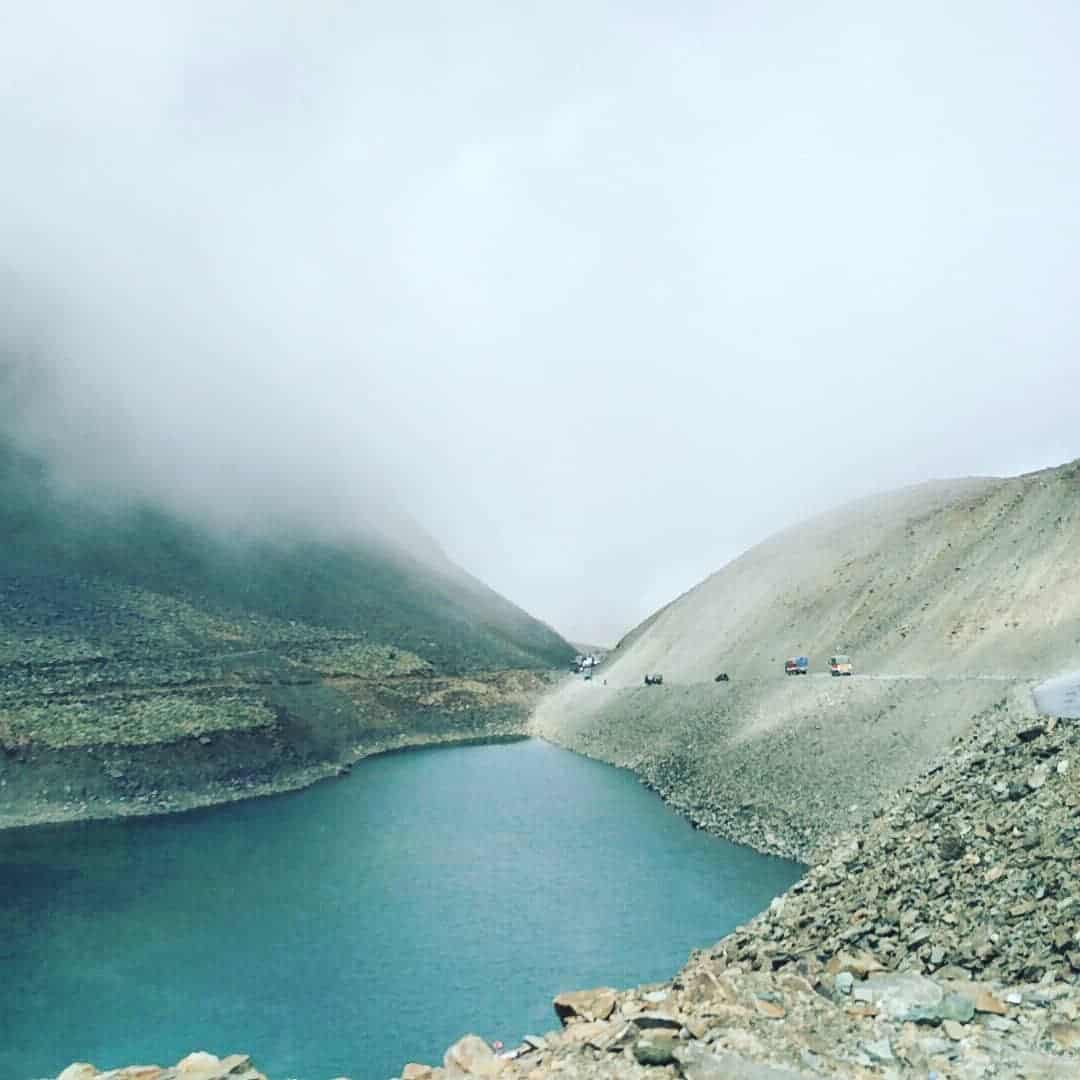
The valley was browner now, less vegetation, crisp and strong cold wind with less oxygen. Glaciers were closer and more rivers started crossing the roads. We came across our first mountain lake at Patseo and the pop-up mountain dhaba at Zing Zing Bar.
The ride was not easy at all. The climbs were knee-wrenching, and cold winds only added to our woes. However, a bunch of Indian Army people offering kheer outside the temple was such a delight. It made us relaxed and rejuvenated again for the ride ahead.
We had our food and rested for an hour at the lower Zing Zing Bar before heading ahead. The sunshine started looking like a myth, and we had to consume anything warm or savored instantly. I was at 4,200 m and had a slight headache, probably due to lower oxygen level and high altitude.
The night was spent at a dhaba where we met a big group of cyclists heading to Leh. Our friends from Bangladesh and Europe also joined us here. It was fun catching up with people here. We ended our day by cooking our first meal, which was Dalia and Dal. It was good enough to help us with the sleep and give us enough energy for the next day ride to mighty Baralacha La.
Day 4 – Important Tips
- 3 km ahead of lower Zing Zing Bar, you will find a motorcycle mechanic with a facility to repair flat tires.
- The oxygen level at Zing Zing Bar is very low, so please don’t get carried away with the name of the place. Respect the altitude here.
- It is preferred to ride up to Upper Zing Zing Bar as you have better options for stay and it makes your next day ride easier.
- Most dhabas at Zing Zing Bar have solar lights and the option to charge your phones and camera. So don’t waste time and get your gadgets charged.
- Beds are available here for Rs 300 to Rs 500 per night (as of 2025-2026, verify locally).
- They don’t make dinner before 8 PM, and that is why we had to make our food and sleep early.
It is not easy to cycle on Manali Leh Highway and reaching 4,200 m is no less a feat. You should embrace it and sleep on a high note.
Day 5: Zing Zing Bar to Baralacha La to Sarchu
Quick answer: Climb Baralacha La (4,850 m) in the cold morning air, then race to cross the Bharatpur river before noon, before the meltwater swells later in the day.
Distance: 45 km | Elevation Gain: 640 m
I started my day by repairing a flat tire and instantly getting out of breath. At 4,850 m, the climb to Baralacha La was going to be my first experience of being at such high altitude. The roads were misty, freezing weather, dry cold wind, and thin air. It took us under 4 hours to climb Baralacha La Pass, and it was a moment of celebration for us. We drank some hot tea that we took with us and just sat there for a few moments to savor it.
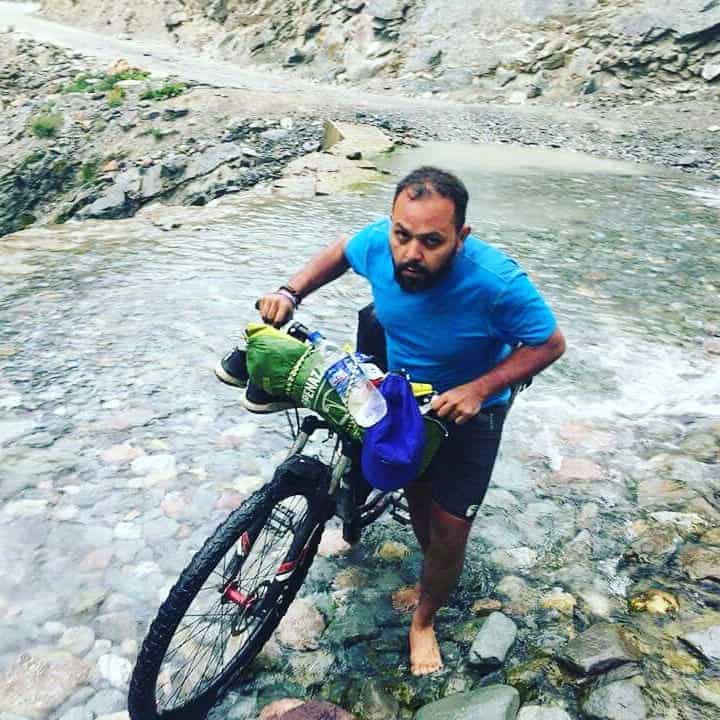
The next challenge was to cross the raging river which crosses the road in Bharatpur. We needed to reach the place at the earliest because the later you go, the more fiercely it gets, and even the water level rises. We were quick enough and managed to cross the river swiftly.
We took a break after crossing the river and before entering the Sarchu Valley, which is worth instant love. The mountains in the valley were all about different shades of coffee and cream. The beautiful rock formation, a dried-up river which probably flowed during the ice age, ice-capped mountains which looked like coffee topped with milk and more.
Day 5 – Important Tips
- The most important part of the ride is to reach Bharatpur before noon and cross the fierce river as soon as possible.
- Once you cross Bharatpur, the road gets really bad, so make sure your tire pressure is right and bags are well balanced.
- There are plenty of dhabas at regular intervals.
- Once you enter Sarchu, you will find camps on both sides costing Rs 1,500-3,000 per night (as of 2025-2026). For budget options, head 6-7 km ahead, cross the Himachal border, and find dhabas with beds for Rs 500-1,000 per night.
- Carry hot tea in a thermos with you as it gets really cold up in Baralacha La Pass and it works as a savior.
- Army Camp in Sarchu may allow you to make calls. BSNL may have intermittent signal here now.
- You can pitch your own camp in Ladakh.
- AMS warning: Sarchu is at 14,070 feet and notorious for altitude sickness. Read my guide on why Jispa is a safer halt than Sarchu.
As you have reached the halfway mark on this itinerary of Manali to Leh cycling trip, it will help you end your day on a high note and confidence.
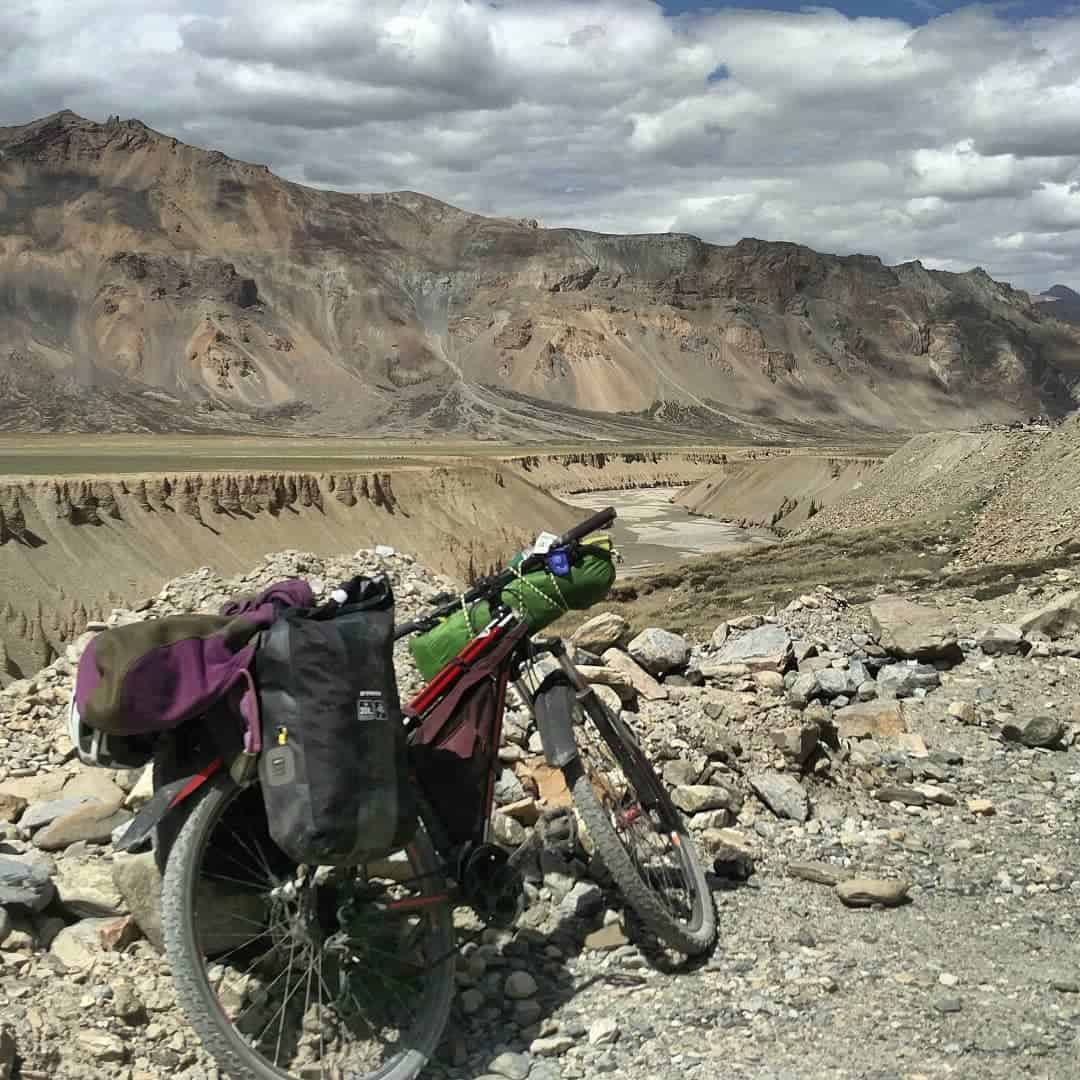
Day 6: Sarchu to Nakee La Pass to Whiskey Nallah
Distance: 54 km | Elevation Gain: 900 m
We started our day with some easy ride on the plains before reaching the treacherous Gata Loops. It is a series of 21 hairpin bends that lead to the top of one of the highest motorable passes in the Ladakh region. It took us a little less than 2 hours to reach the top of Gata Loops, but the heat, climb, and saddle sores were exhausting. I almost gave up on doing the further ride, but a quick rest and I was up again.
The next 10 km to Nakee La Pass was difficult, and I would stop every 5 minutes. But then I did complete the ride till the pass and celebrated with an apple we got from Manali 🙂 Some quick downhill herein and we reached the Whiskey Nallah, our home for tonight.
Day 6 – Important Tips
- Start early as the sun gets strong after crossing the Gata Loops.
- There is a small shade right after Gata Loops on the right side. Perfect for a quick power nap or rest.
- There is no place for food between Sarchu and Whiskey Nallah, so make sure you get some parathas packed at Sarchu before starting.
- Please don’t throw plastic bottles at Gata Loops thinking of the legends. It’s a myth and only leads to more trash. Practice responsible travel, my friend.
- There are 4-5 dhabas available here which charge Rs 300 to Rs 500 per night (as of 2025-2026, verify locally).
Your Manali Leh cycling preparation will surely come to the test on this day and the next day as you ride hard in the desert region of Ladakh.
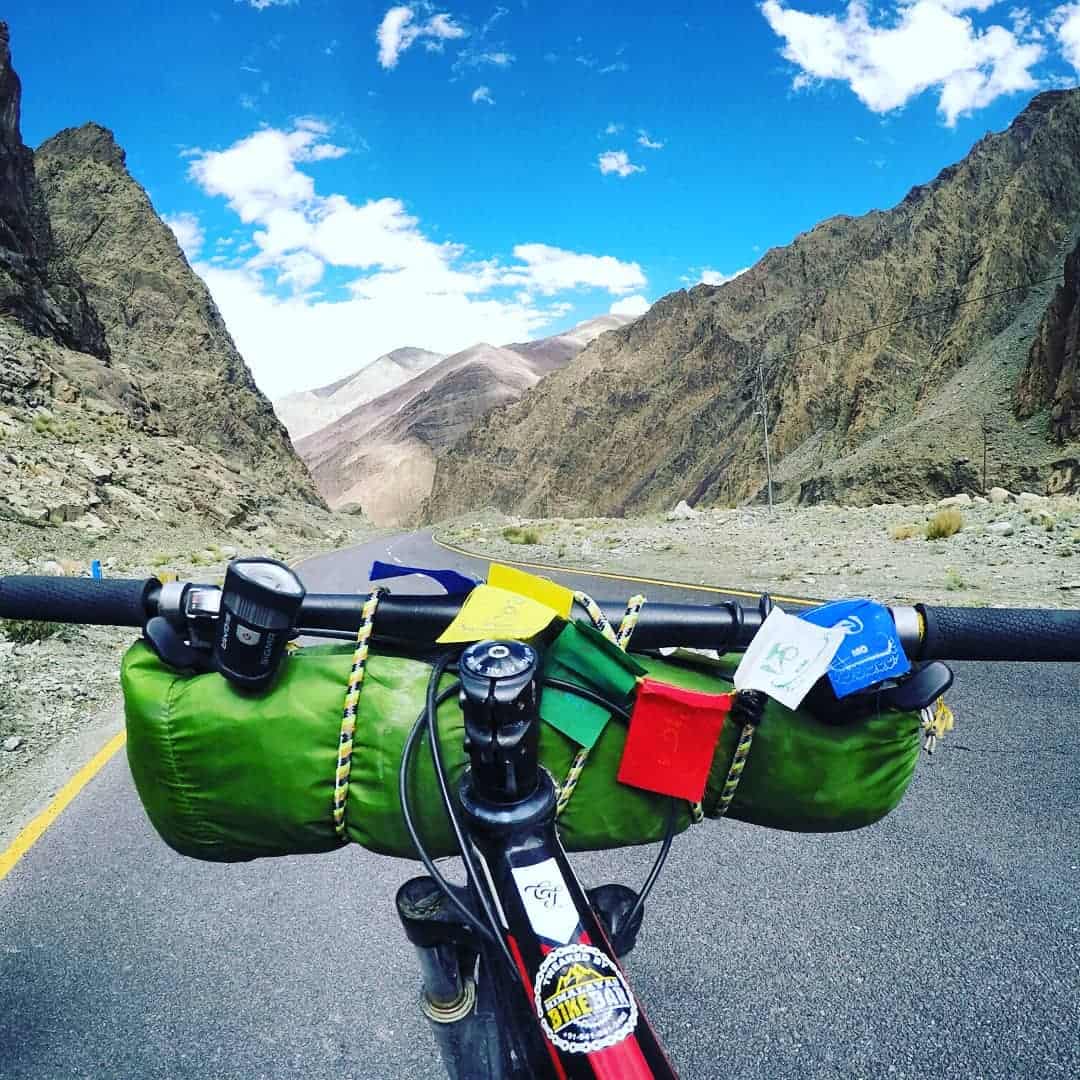
Day 7: Whiskey Nallah to Lachung La to Pang
Distance: 27 km | 300 m quick uphill, 600 m downhill

The climb to Lachung La was quick, and we completed it in no time. I was the first to reach the top this time, but today our challenge was to go downhill till Pang on a bad dirt track. The landscape looked amusing with sedimented rock formation along the stretch of desert.
The road kept on getting worse every mile we went ahead. And army trucks on the way only suffocated us with more dust on the route. We kept stopping randomly to take photos of the landscape in this part the most.
Day 7 – Important Tips
- Cover your face with some cloth after the pass to save yourself from dust and smoke.
- BRO has improved road conditions on this stretch since 2018, with many stretches now tarmacked. But conditions change every season.
- Pang has plenty of stays with dhabas available for Rs 500 to Rs 1,000 a night (as of 2025-2026).
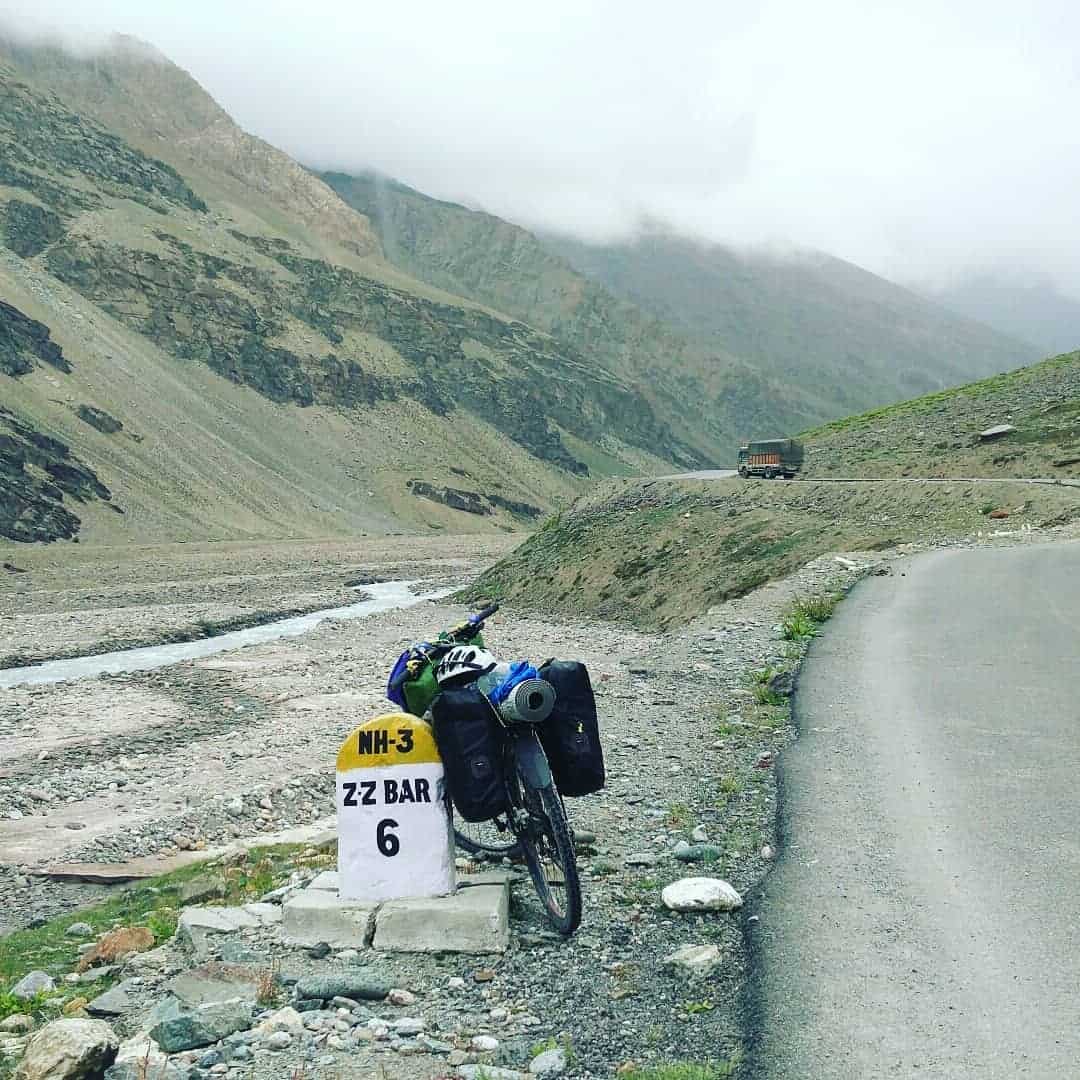
Day 8: Pang to Morey Plains to Debring
Quick answer: A relatively flat 47 km ride across the scenic Morey Plains at around 4,800 m, but headwinds are near constant. Finish before noon to avoid the evening sandstorms.
Distance: 47 km | Elevation Gain: 300 m
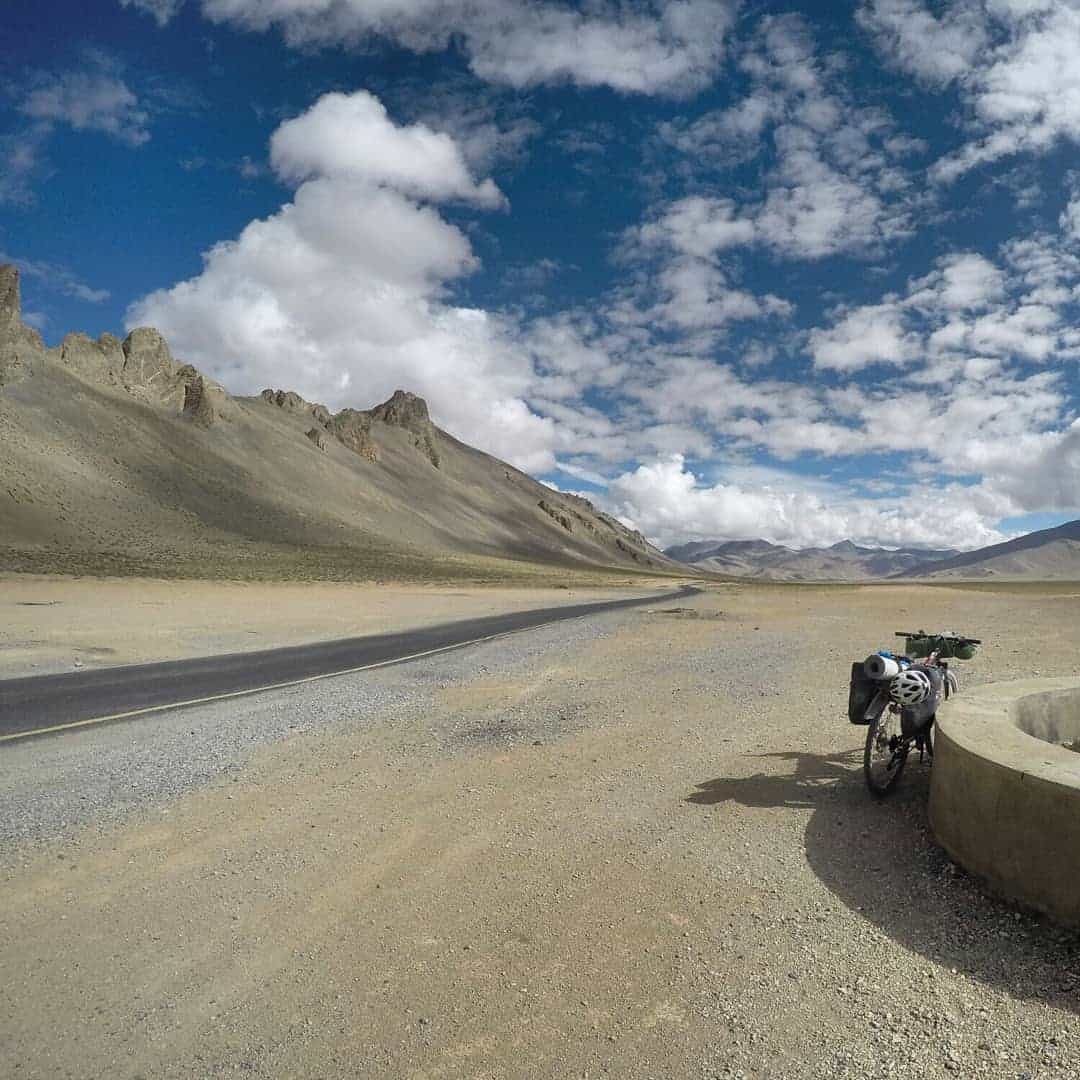
Pang is a small settlement with one of the highest army transit camps at 4,600 m. After spending the night here, we were ready for a fresh start and excited to ride on the Morey Plains. A quick climb for 4 km, and we were already in Morey Plains, a stretch of plains as long as you can see at an average elevation of 4,800 m. The stretch has some of the most amazing landscapes, flanking with beautiful mountains and rock formation on both sides.
However, a powerful headwind welcomed us for the entire stretch, and fighting them on a bicycle was not easy. We were ready for this challenge and continued biking. Today, even the heat did not stop us, and we reached our destination well before noon to avoid the sandstorm which starts in the evening.
The weather got terrible by evening, and all the mountain ranges around us started receiving heavy snowfall. We were now more worried about tomorrow’s ride as we get to do our final climb to Tanglang La Pass at 5,328 m.
Hoping for good weather the next day, we called it a day and stayed at Debring for the night.
Day 8 – Important Tips
- Once you reach Debring (dhaba on your right side), ride a couple of more kilometers to reach upper Debring (dhaba on your left side).
- It costs Rs 500 to Rs 800 per night in most dhabas over here (as of 2025-2026).
- Try and reach Debring before evening as the winds get really strong in this part.
- There are mountain dogs in this part which would chase cyclists for a long stretch and look scary. Keep riding slowly, try ignoring them, and they will gradually leave you.
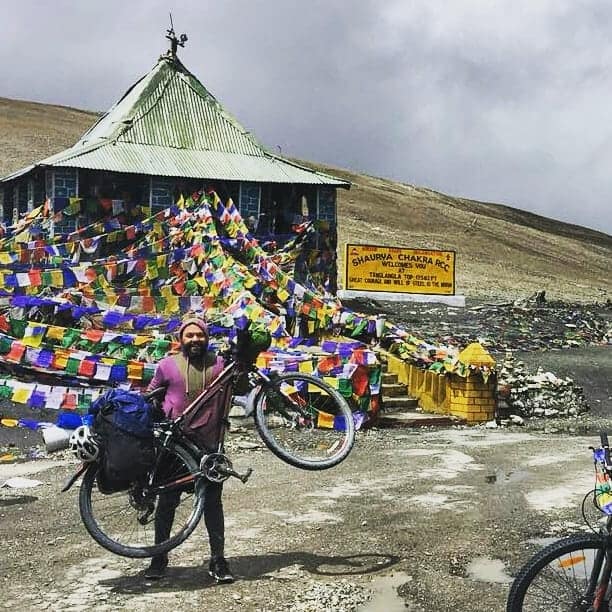
Day 9: Debring to Tanglang La to Upshi
Quick answer: The hardest day of the trip, an 81 km ride over Tanglang La (5,328 m) often in rain, hail, or snow, followed by a long 60 km descent into Ladakh’s greener terrain.
Distance: 81 km | Elevation Gain: 700 m
It was the day for the treacherous climb to Tanglang La, one of the highest motorable passes on this route. We woke up to bad weather and snowfall over Tanglang La with almost zero visibility. We waited for the sun to rise and the weather to get more clear before we started our ride to the pass.
At the very beginning, two fierce mountain dogs started chasing us. Generally, they are harmless, but these two were after our life. We kept shouting and rode as fast as we could till they left us in peace :). The first 12 km was easy. We were at a good pace, bikers kept cheering us up, and we kept getting amused with fresh snows around. But the next 8 km to the top was full of struggle.
First, it started raining, then hail storm which was followed by snowfall and cold weather. The road was not wide enough and had no shades where we could stand or rest under them. The only option was to continue riding ahead in our wet clothes, in hails which were hitting us hard, and in moments when our fingers swelled because of cold and we could not even bend them.
It was not the end of struggle when I ran out of water 3 km before the top. I shouted and cried in the middle of the road. Thanks to that happy soul who stopped by to give me some water, I calmed down and started riding again.
20 minutes later I was on top of Tanglang La Pass, and it felt incredible. I felt like I am on top of the world. It was an emotional moment for being able to climb all the high passes on this route. We stayed here for a bit, drank some tea, celebrated our moments, captured some in-camera, kept smiling endlessly, patted our own back, and felt immensely proud of ourselves for everything we did in the last nine days.
After spending 20 minutes on Tanglang La top and taking in our emotions, we started again for a long descend of 60 km to Upshi. We were all set to enter the land of stupas, monasteries, and happy people. The moment we entered the Ladakh region, we saw a distinct change in life and landscape. Village life and vegetation were back, more people were visible, and fascinating rock formation on both sides made the ride amazing for us.
Day 9 – Important Tips
- It is not tough in terms of a climb, but the harsh weather is all that matters. It plays with your mind constantly, and you will be thinking of giving up at several intervals. But constant cadence, believing in all you did in the last eight days, and some warm chai will keep you moving.
- There is a dhaba at the Tanglang La Pass which serves some basic food, instant noodle, and chai.
- On your ride downhill, keep control of your speed as there are plenty of hairpin bends.
- Upshi is a big village with plenty of homestays, food, restaurants, and more. Mobile phone networks (Jio and Airtel) start working reliably from Upshi onwards (as of 2026).
Reaching on top of Tanglang La is the most important milestone of your Manali to Leh cycling trip. You will feel like you have completed the journey.
Day 10: Upshi to Leh
Quick answer: A mostly flat 49 km ride into Leh past the Indus River and Thiksey Monastery. The final climb into town under the midday heat is the last real challenge of the trip.
Distance: 49 km | Mostly flat with gentle rise and descent
It was the last day of our ride, and we would finally be in Leh by the end of this day. The ride started with yet another flat tire, and while mending it, even the tube burst. But thankfully we had enough spare tubes to take us through.
Riding next to the Indus River and gorgeous Ladakh Valley was sheer bliss. Getting to see the magnificent Thiksey and Shey Monasteries was the bonus to our ride. It was a lazy and easy ride to Leh, but the closer we got, the heat started taking a toll on us.
It was a ride full of excitement. For being in the place I have always dreamt of coming to, it was magical. For making it all this way on my bicycle. For doing something that seemed impossible, every instance. For living through some of the most challenging moments of my life. And for millions of more things which are even difficult to put in words.
Day 10 – Important Tips
- The climb in the last 4-5 km of Leh is a killer. Especially because it will be noon by now and the sun at its peak.
- Ride up to the Fort Road in Leh where you have plenty of places to stay and eat.
- Mobile phones start working in Upshi. In Leh, Jio and Airtel 5G are available (as of 2026).
- Since 2021, there is no separate stamped Inner Line Permit for Indians in Ladakh. If you plan to continue to Khardung La, Nubra, or Pangong, register online for the Ladakh Environment and Development Fee (EDF) at lahdclehpermit.in, Rs 400 one-time plus Rs 20 per person per day, plus an optional Rs 50 Red Cross contribution (about Rs 590 for a 7-day trip). The receipt stays valid for 21 days and covers Nubra, Pangong, and Tso Moriri on one document.
Budget estimate (2026): Independent cyclists should budget Rs 15,000-25,000 total (accommodation Rs 300-1,000/night at dhabas, food Rs 300-500/day, repairs Rs 1,000-2,000). Guided tours cost Rs 25,000-45,000 per person. See my Ladakh trip cost guide for details.
Final Thoughts on the Manali to Leh Cycling Itinerary
Quick answer: The Manali to Leh cycling route rewards mental toughness more than raw fitness. Plan for 12-14 days total, train for high-altitude climbs for 3-4 months beforehand, and budget Rs 15,000-25,000 if riding independently.
I hope this itinerary of cycling from Manali to Leh helps you plan your bicycle adventure to Ladakh. As you see, it is more in mind than the actual fitness plus the way you plan your Leh Ladakh trip. Once you reach Leh, you can do cycling around Leh and Ladakh before climbing to Khardung La to end this adventure trip.
This article completes my series of Leh Ladakh cycling trip blogs. Feel free to give me a shoutout in case you need any help in preparing for a cycling trip on Manali Leh Highway. If you know friends or family who are planning a trip to Ladakh, do share this article with them. Drop any questions in the comments below. Happy cycling, my friend 🙂
Frequently Asked Questions
How many days does it take to cycle from Manali to Leh?
It takes 10-12 riding days plus 1-2 acclimatization days, so about 12-14 days total. Your fitness level and weather conditions will determine the exact duration.
What is the best time for Manali to Leh cycling?
Mid-June to September. July and August offer the most stable weather, though water crossings are more frequent. The highway typically opens in mid-May and closes by mid-October.
Can beginners attempt the Manali to Leh cycling trip?
Not without at least 3-4 months of dedicated cycling training. You should be comfortable doing 60-80 km rides with elevation gain before attempting this route. The altitude, remoteness, and extreme weather make it challenging even for experienced cyclists.
Do I need a permit for cycling from Manali to Leh?
No special permit is needed for the highway itself. Cyclists get free Rohtang Pass permits, and the Atal Tunnel requires no permit. If you want to continue to Nubra Valley, Pangong Lake, or Tso Moriri from Leh, there is no separate stamped Inner Line Permit anymore (that requirement ended in 2021). Instead, you register online for the Ladakh Environment and Development Fee (EDF) at lahdclehpermit.in, about Rs 590 for a 7-day trip, and the receipt covers all these restricted areas.
Should I use the Atal Tunnel or Rohtang Pass for cycling?
For the full experience, take Rohtang Pass. Climbing it on a bicycle is a rite of passage. The Atal Tunnel saves one day and 45 km but means cycling through a 9.2 km tunnel with traffic and poor ventilation. Use the tunnel only if short on time.
Is mobile network available on the Manali Leh cycling route?
Very limited. You will have connectivity in Manali, Keylong, and Leh only. Prepare to be disconnected for 7-8 days. Read my Ladakh mobile connectivity guide for details.
