


Padum is the heart of Zanskar Valley, and if you have made it this far, you already know the kind of effort it takes to reach here. But once you arrive, the question most travelers ask is simple. What do I see in Padum? How many days should I spend here? I have been to Padum multiple times, and every visit has given me something new to appreciate. In this guide, I will walk you through every place worth visiting in and around Padum, so you can plan your days in Zanskar properly.
If you are still planning your journey, I strongly recommend reading my detailed guide on how to plan a trip to Zanskar Valley first. It covers routes, permits, and everything you need to know before hitting the road. For a day-by-day breakdown, check the Zanskar Valley itinerary as well.
Let's quickly dive into the details:
Where is Padum and Why Does It Matter?
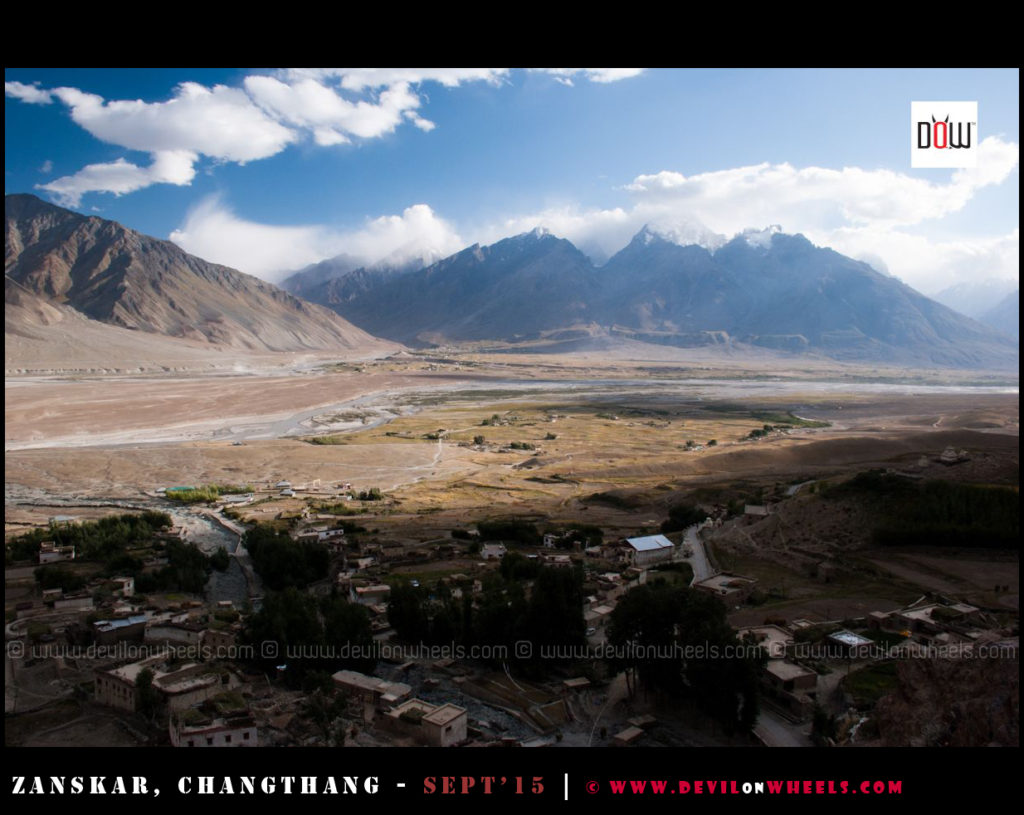
Padum sits at an altitude of 3,670 meters (12,040 ft) and serves as the administrative headquarters of Zanskar, a sub-district of Kargil in the Union Territory of Ladakh. It is roughly 240 km from Kargil via the Suru Valley and Pensi La route, and about 300 km from Manali via the newer Darcha-Shinkula Pass road that BRO has been developing. The town has around 800 houses with a mix of Buddhist and Muslim communities, making it culturally unique in the entire Ladakh region.
In ancient times, Padum was one of the two capitals of the kingdom of Zanskar. The other capital was Zangla, which still has the ruins of its royal palace. The name “Padum” is believed to come from Guru Padmasambhava, the 8th-century Buddhist saint who is credited with spreading Buddhism across the Himalayan regions.
Practical Info Box
| Detail | Information |
|---|---|
| Altitude | 3,670 m (12,040 ft) |
| Best Time to Visit | June to September (roads open, pleasant weather) |
| Distance from Kargil | 240 km via Pensi La (8-10 hours) |
| Distance from Manali | ~300 km via Darcha-Shinkula (12-14 hours when road is open) |
| Budget Stay | Rs 600-1,200/night (guesthouses, homestays) |
| Mid-Range Stay | Rs 1,500-3,000/night (hotels with attached bath) |
| Mobile Network | BSNL works in Padum, Jio/Airtel limited |
| ATM | Available in Padum (SBI), but carry cash as backup |
| Petrol Pump | 2 petrol pumps in Padum (as of 2025) |
| Days Needed | Minimum 3 nights to cover all sightseeing |
What Facilities Are Available in Padum?
Padum is the only place in Zanskar where you will find basic urban facilities. There is an SBI ATM, a government hospital, and BSNL mobile phone coverage including landline telephones. You will not find any of these amenities once you leave Padum and travel deeper into the valley, not even in any village of the Suru Valley on the way from Kargil.
For accommodation, you have options ranging from the government tourist bungalow (around Rs 600-700 per night) to private hotels and homestays in the Rs 1,000-3,000 range. Restaurants in Padum serve basic Indian and Tibetan food. Keep in mind that prices are higher than mainland India because everything has to be transported over difficult mountain roads.
What Are the Best Places to Visit in Padum Town?
Let me start with what you can explore within Padum town itself before we move to the surrounding monasteries and day trips.
Mud Palace of the Zanskar King
Right in Padum village, you can visit the old Mud Palace of the local Raja. It is not grand by any means. Think of it as a weathered, crumbling structure that tells the story of a kingdom that once ruled this isolated valley. Near the riverbank in Padum, there are also 8th-century rock carvings of the five Dhyani Buddhas, carved into a large boulder about 1 km from the main mosque towards the Tsarap road. These carvings are historically significant and worth a short walk.
Padum Mosque and Islamic Heritage
One thing that surprises many visitors is the presence of a mosque in the heart of Buddhist Zanskar. Padum has a small but significant Muslim community, believed to be descendants of the soldiers from Zorawar Singh’s army who invaded Zanskar in the early 19th century during his trans-Himalayan military campaign. The mosque stands as a reminder of this unique cultural blending, and seeing it alongside Buddhist prayer flags and mani walls makes Padum feel distinct from anywhere else in Ladakh.
Pibiting Village and Hilltop Gompa
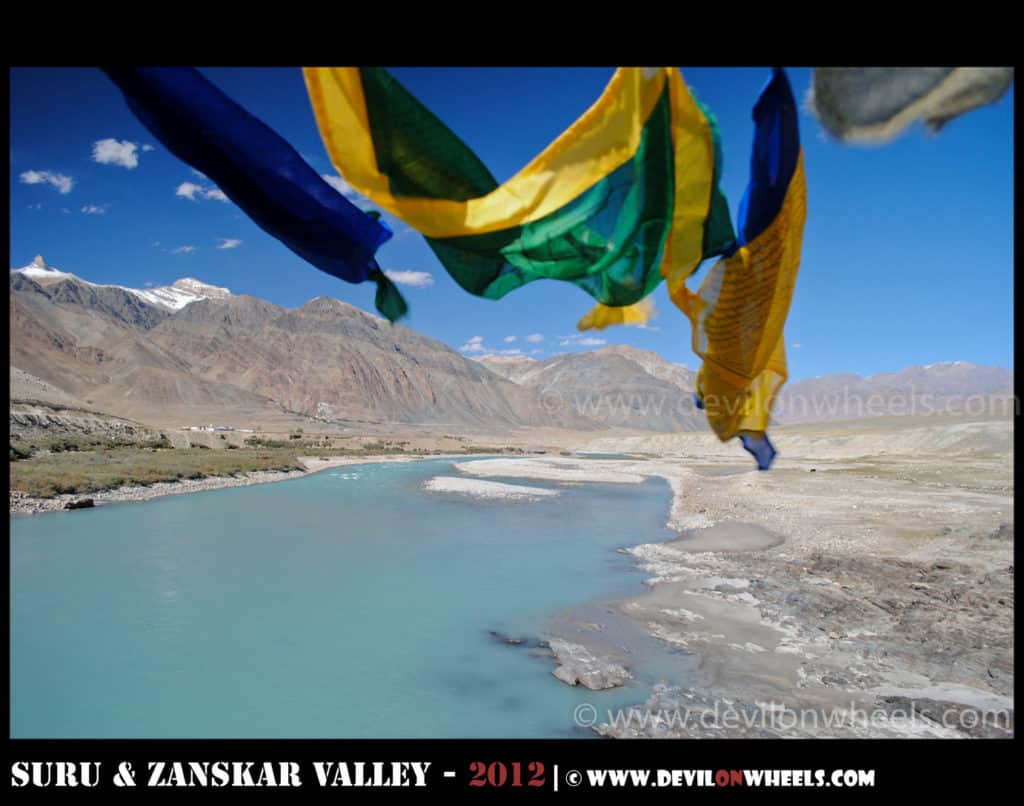
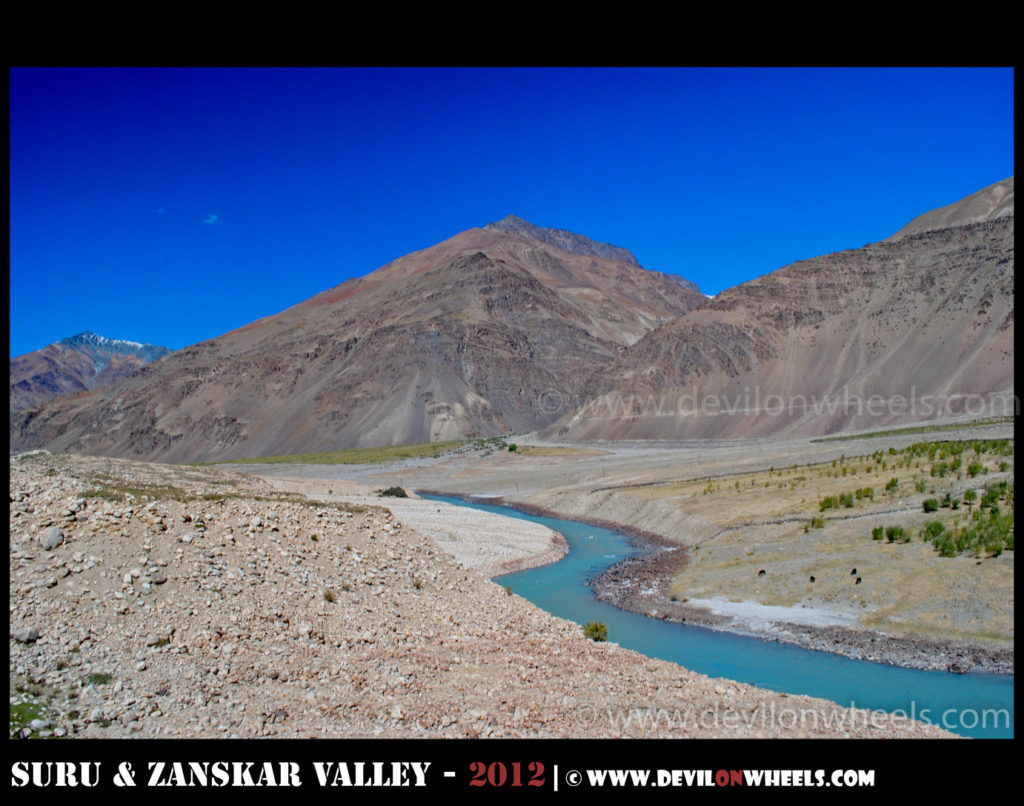
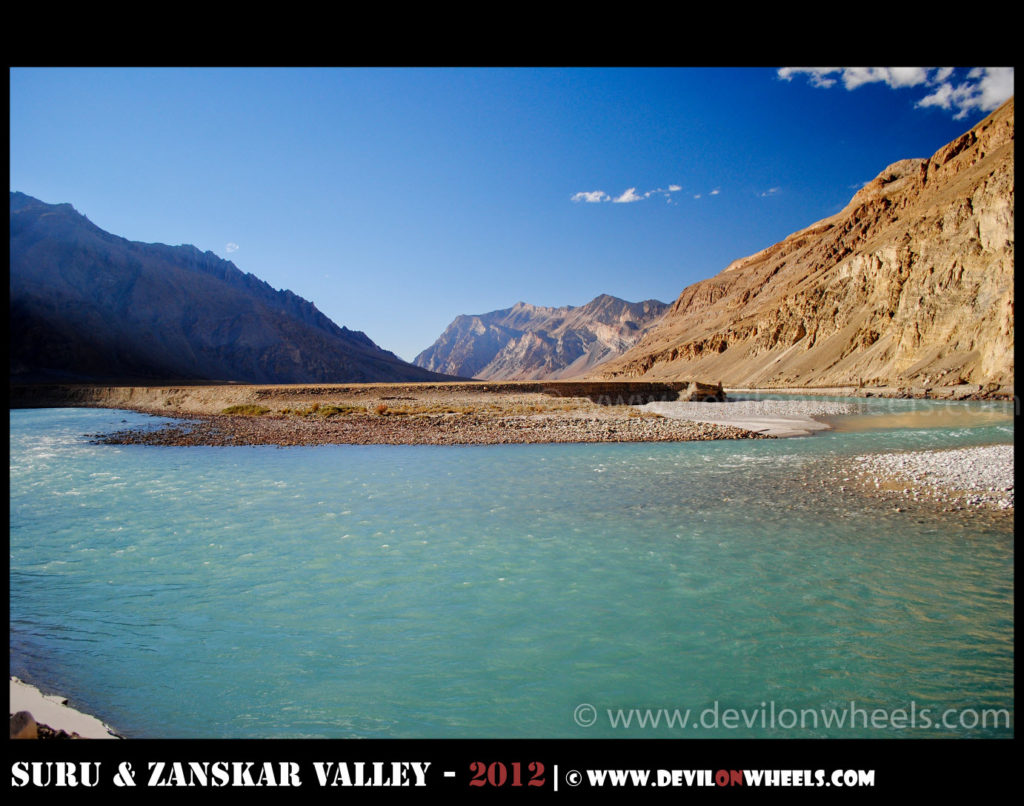
From almost any corner of Padum, you can spot the hilltop monastery of Pibiting village perched dramatically above the landscape. It is a short drive from Padum and well worth visiting. Pibiting is also where the Zanskar river merges into the Lungnak river before flowing southward towards Lungnak Valley in south-eastern Zanskar. The confluence point offers a lovely view, especially in the morning light.
Which Monasteries Should You Visit Near Padum?
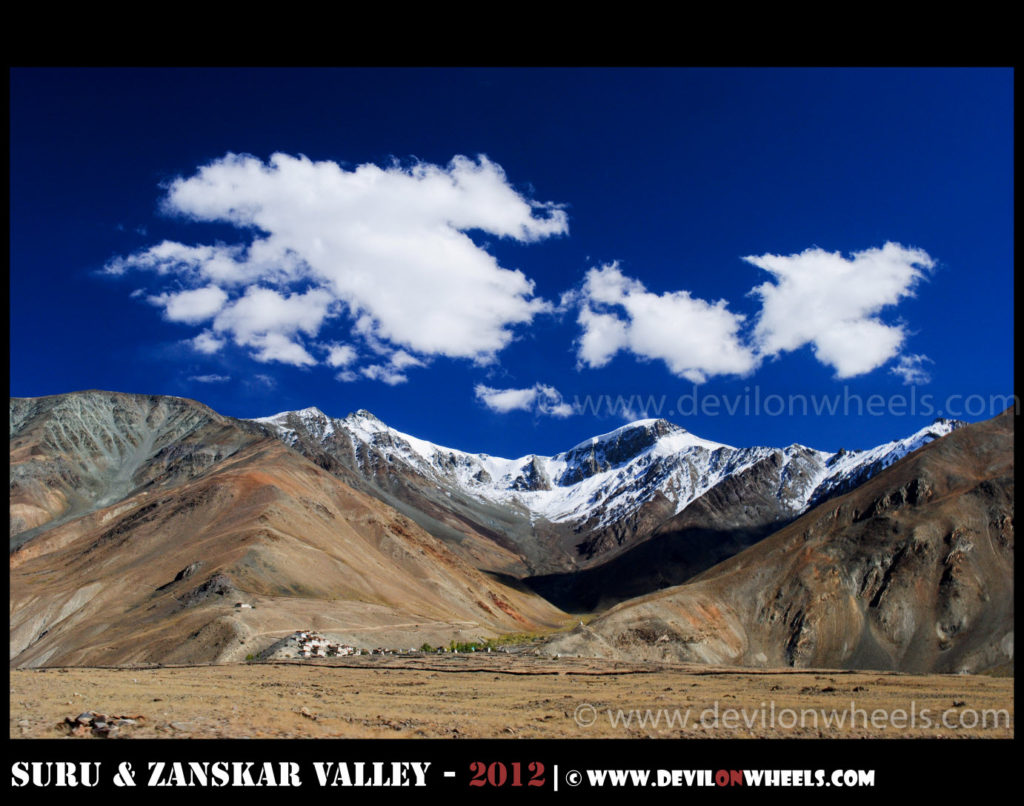
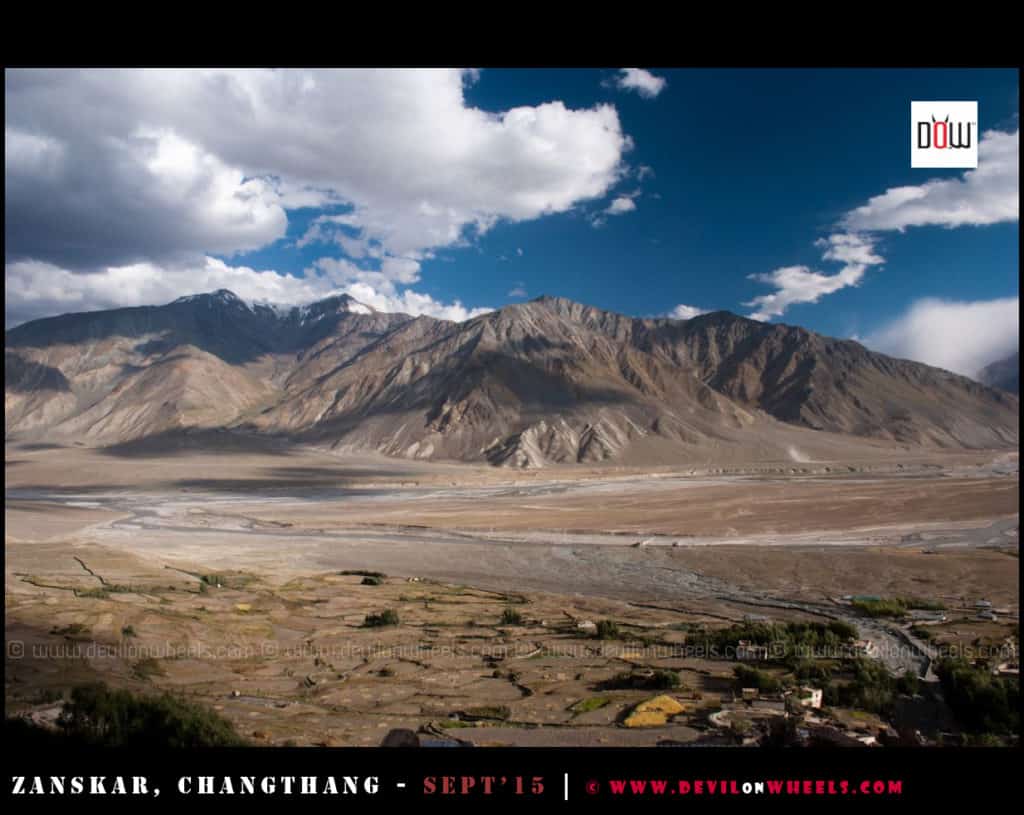
Most of the sightseeing around Padum revolves around its ancient monasteries. I know that might sound repetitive if you have already visited several gompas in Ladakh. But trust me, the monasteries in Zanskar are different. They sit in dramatic settings, offer panoramic valley views from their vantage points, and most of them are far less crowded than anything you will find in Leh or Hemis. Even if you are not particularly interested in Buddhist culture, the drives to these monasteries pass through some of the most scenic landscapes in Zanskar.
Karsha Monastery (14 km from Padum)
Karsha is the largest and most important monastery in the entire Zanskar region. It houses about 150 resident monks and belongs to the Gelugpa (Yellow Hat) order of Tibetan Buddhism. The monastery complex is so large that you can see it clearly from Padum, sprawling across the hillside like a small village.
Founded by the translator Phagspa Shesrab, Karsha has structures dating back to the era of Rinchen Zangpo (958-1055 AD). The oldest remaining structure is the Avalokiteshvara temple (Chuk-shik-jal) with ancient wall paintings. The Karsha Gustor festival, held in January with masked Cham dances, is one of the most important annual events in Zanskar.
The drive to Karsha village takes about 30-40 minutes from Padum. At the base of the monastery, Khurshan village also offers facilities for rafting in the Zanskar river. I would recommend visiting Karsha in the evening for the best views.


Travel Tip: If you are planning to travel Zanskar on a tight budget, do check my guide on how to visit Zanskar Valley using public transport.
Stongdey Monastery (21 km from Padum)
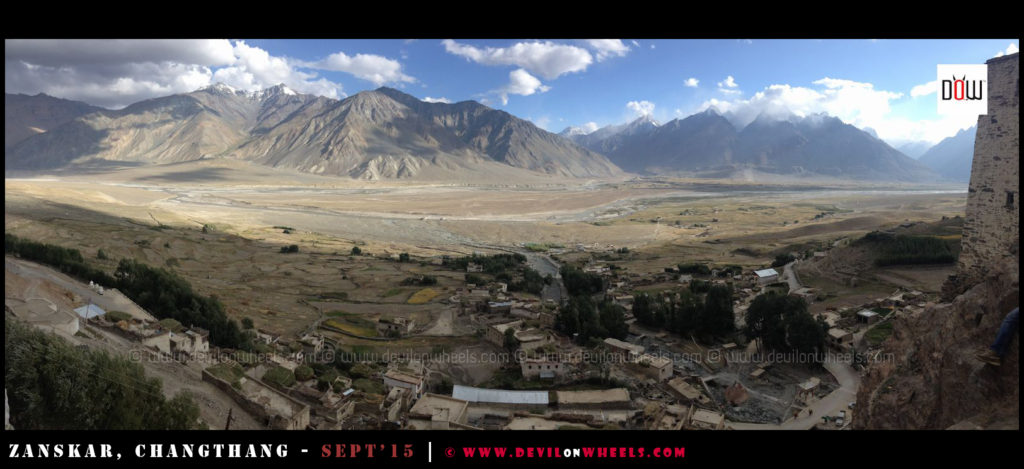
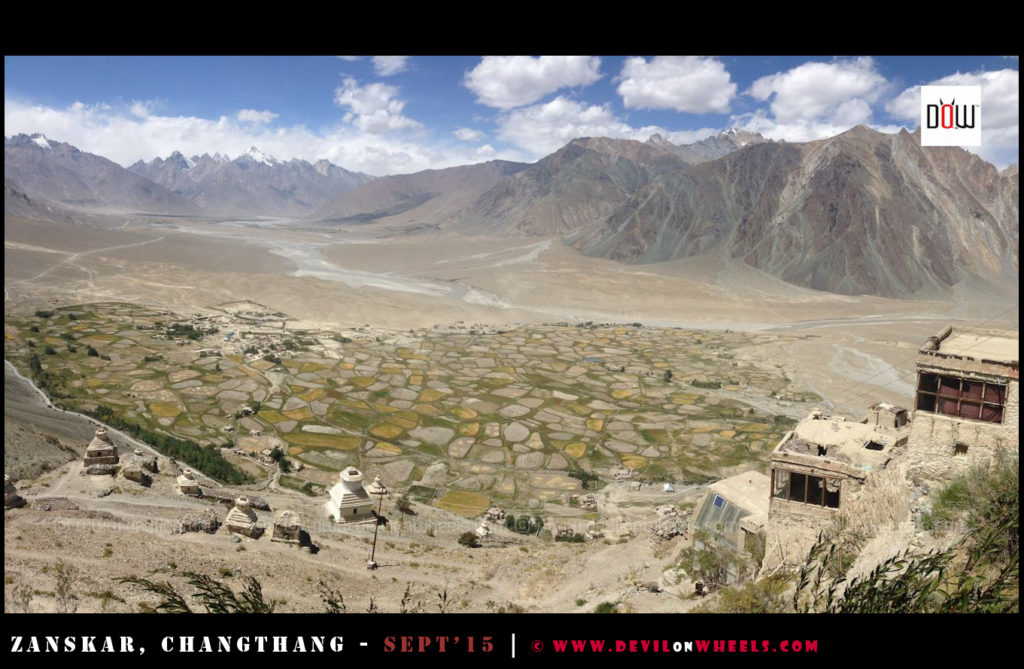
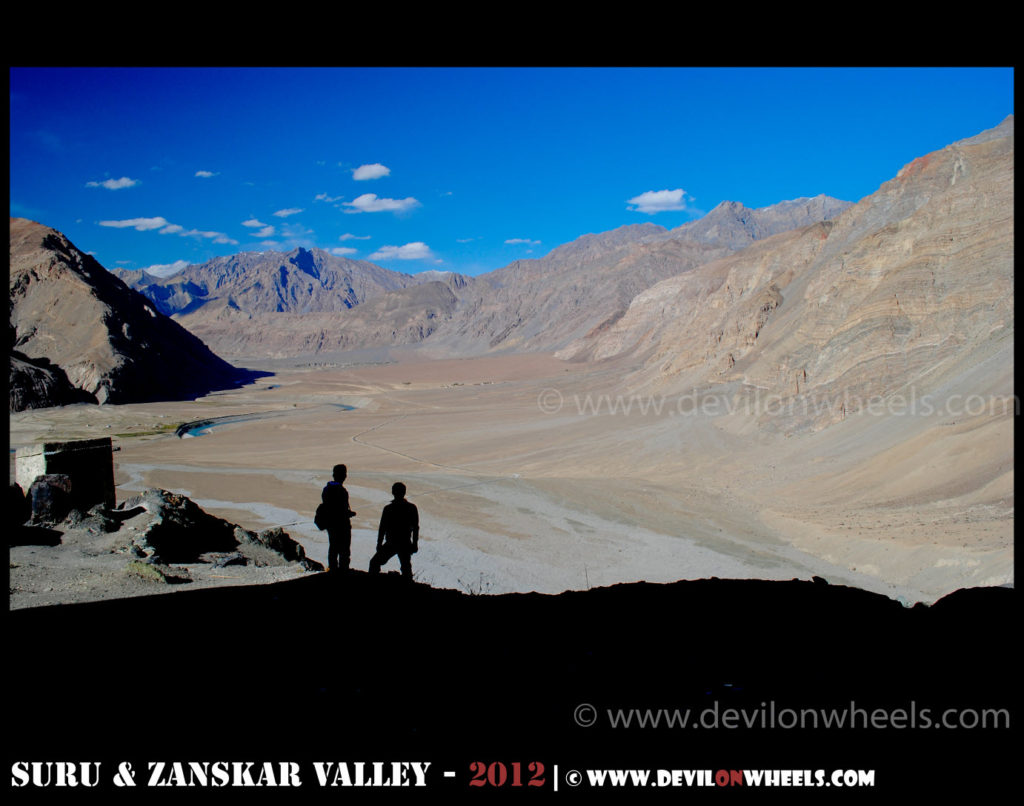
Stongdey is the second-largest monastery in Zanskar Valley, and honestly, it is one of my favorite places in the entire region. Founded in the 11th century by the great translator Rinchen Zangpo, it sits on a rocky hilltop overlooking the Stod Valley and belongs to the Gelugpa sect.
The main prayer hall houses a large statue of Maitreya (the future Buddha), along with a collection of ancient texts, thangkas, and intricate murals. But the real draw here is the view. From the top, you get a 180-degree panorama of the entire valley and the Zanskar range. I would recommend visiting Stongdey early in the morning when the light is best and the air is crystal clear.
Many travelers doing the Darcha to Padum trek also stop at Stongdey. The monastery has basic accommodation for visitors if you want to spend a night here.
Sani Monastery and Sani Lake (6 km from Padum)
Sani Monastery is one of the eight holiest Buddhist sites in the world, and it is just 6 km from Padum. It houses one of the 108 chortens constructed by Emperor Kanishka in the first century AD, making it historically very significant. Like Zongkhul, Sani belongs to the Drukpa school of Tibetan Buddhism.
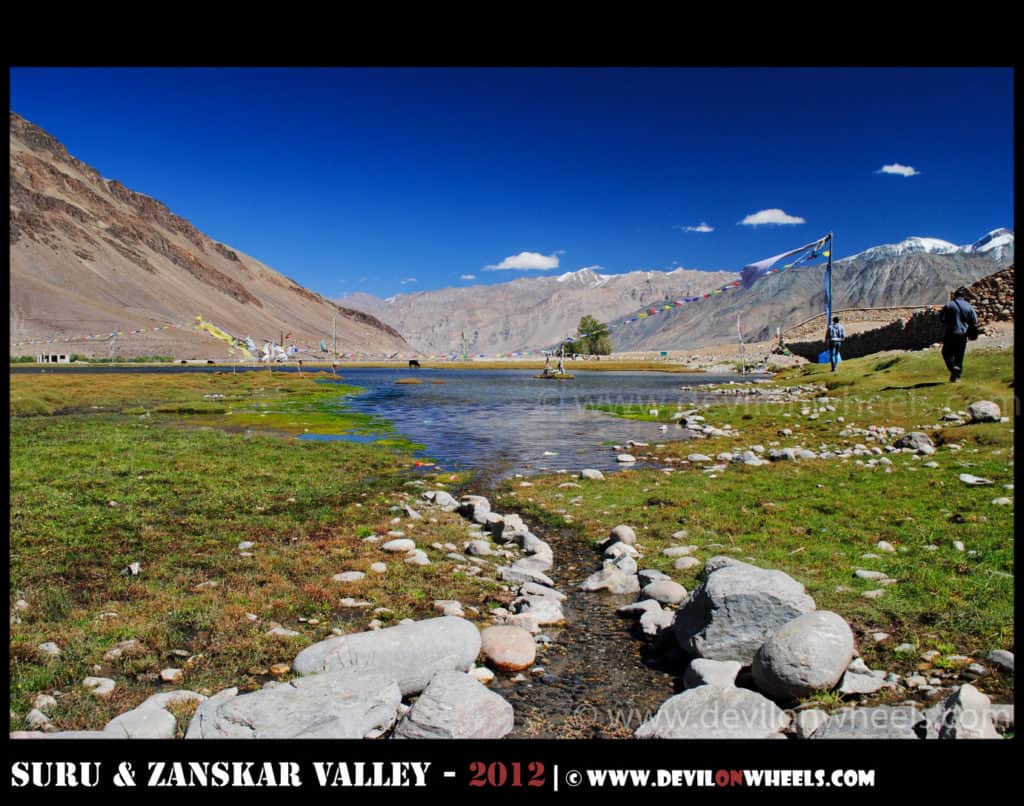
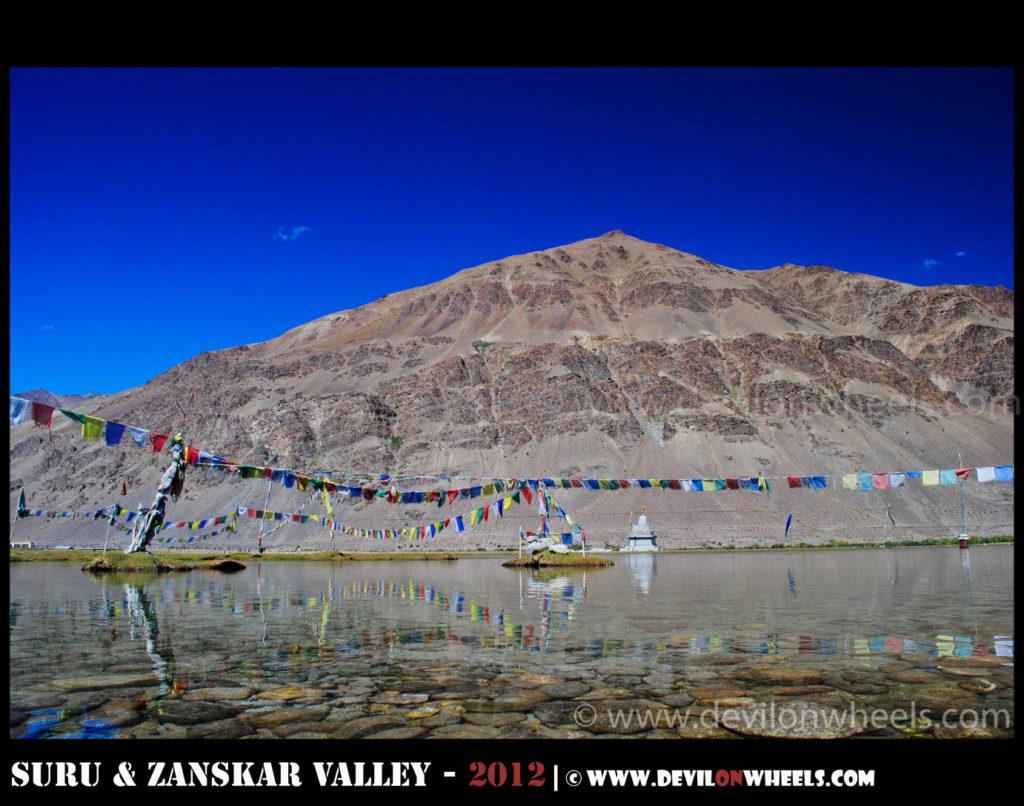
Right next to the monastery, Sani Lake is a peaceful spot to spend a sunny afternoon. The lake is not large, but the reflections of the surrounding mountains in its still waters make it one of the most calming places near Padum. If you only have time for one short trip from Padum, Sani should be your pick because of its proximity and the combination of historical and natural beauty it offers.
Zongkhul Monastery (37 km from Padum)
Zongkhul (also spelled Dzongkhul) monastery is built into a cave on a rock wall in the Stod Valley, about 37 km from Padum. It belongs to the Drukpa school of Tibetan Buddhism and lies on the old Padum to Kishtwar route, just before the ascent to Omasila Pass begins.
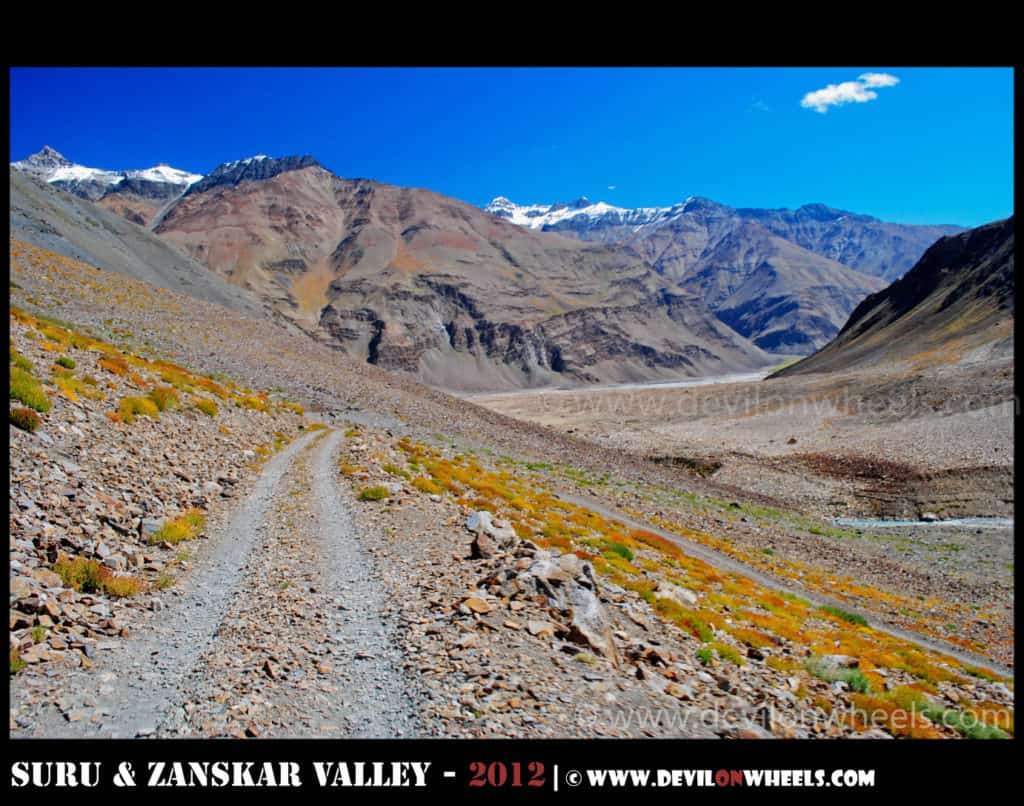
The roads to Zongkhul are rough, so expect the 37 km drive to take about 2 to 2.5 hours. While driving from Padum, you will reach the Tungri village bridge. Pass the bridge and continue straight until the road forks. Take the left road to reach Zongkhul.
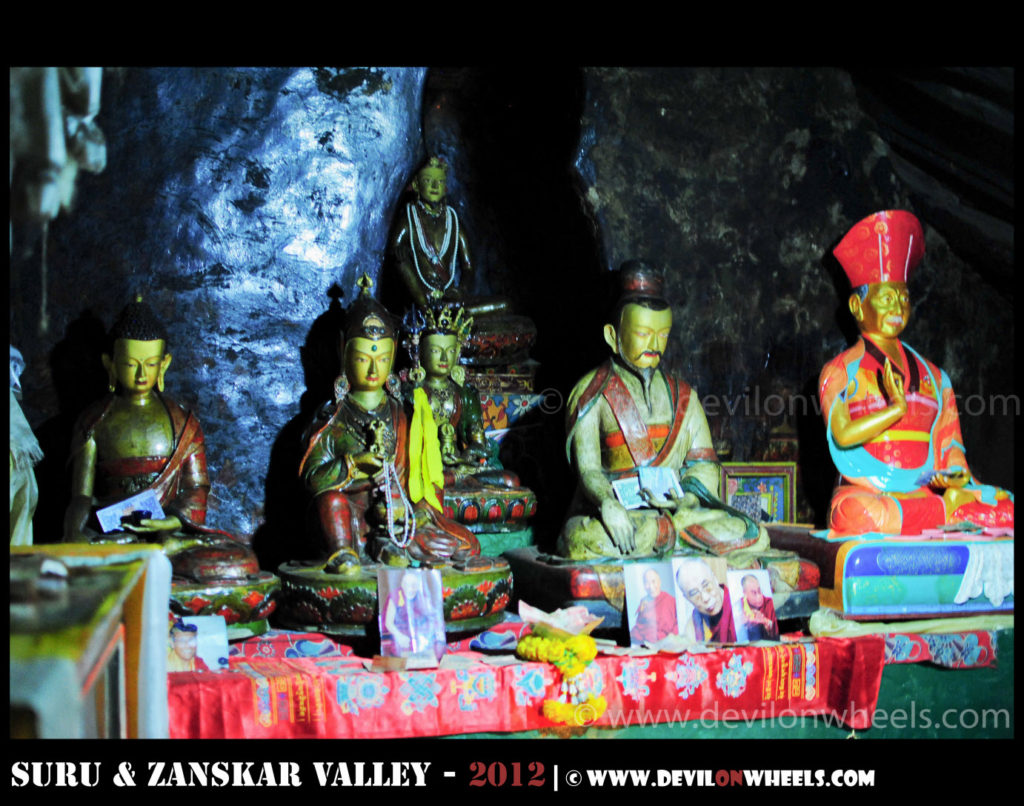
The monastery is associated with Naropa, the famous Indian Buddhist yogi who is said to have meditated in one of the two caves here. You can see his footprints in the rock near the entrance to the lower cave. The terrace offers excellent views of the surrounding valley. Hence, even if you are not deeply interested in Buddhist history, the setting alone makes the trip worthwhile.
What Day Trips Can You Take from Padum?
Beyond the monasteries within a 15-20 km radius, there are some excellent day trip options that will take you deeper into Zanskar. Plan for a full day for each of these.
Zangla Palace and Nunnery (35 km from Padum)
Zangla was the second capital of the ancient kingdom of Zanskar. The Zangla Fort, more than 700 years old, sits atop a hillock at the intersection of the Zanskar River and a smaller river that leads towards the Jhelum. This location was strategically important because it guarded an autumn trading route that avoided the high passes of Ladakh.
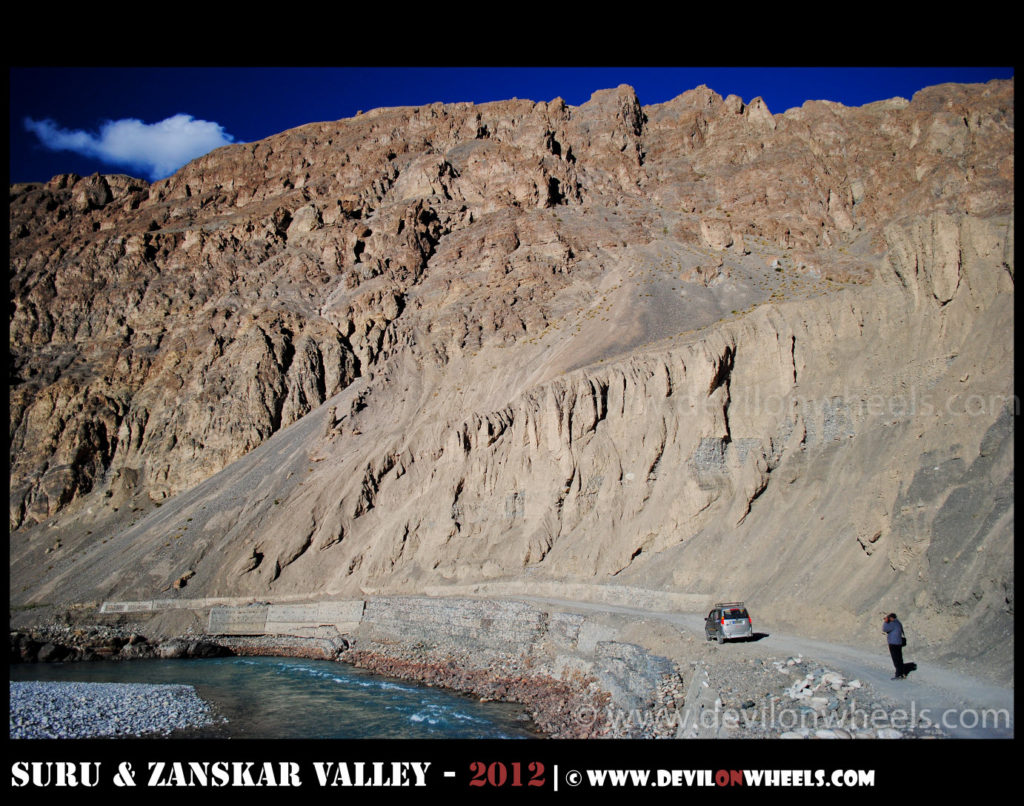
There is no monastery in Zangla, but there is a nunnery. Zangla is generally the last point that tourists visit as a day-long road trip from Padum. The drive itself is one of the highlights. You will pass the famous point where the Zanskar River bends in a dramatic U-turn, with eroded rock formations rising around it. Plan to reach Zangla early and catch the morning views from the palace ruins.
Travel Tip: Planning your budget? Do read my article on tips for saving money on a Zanskar Valley trip and also how to calculate the budget for a Zanskar road trip.
Bardan Gompa (12 km from Padum)
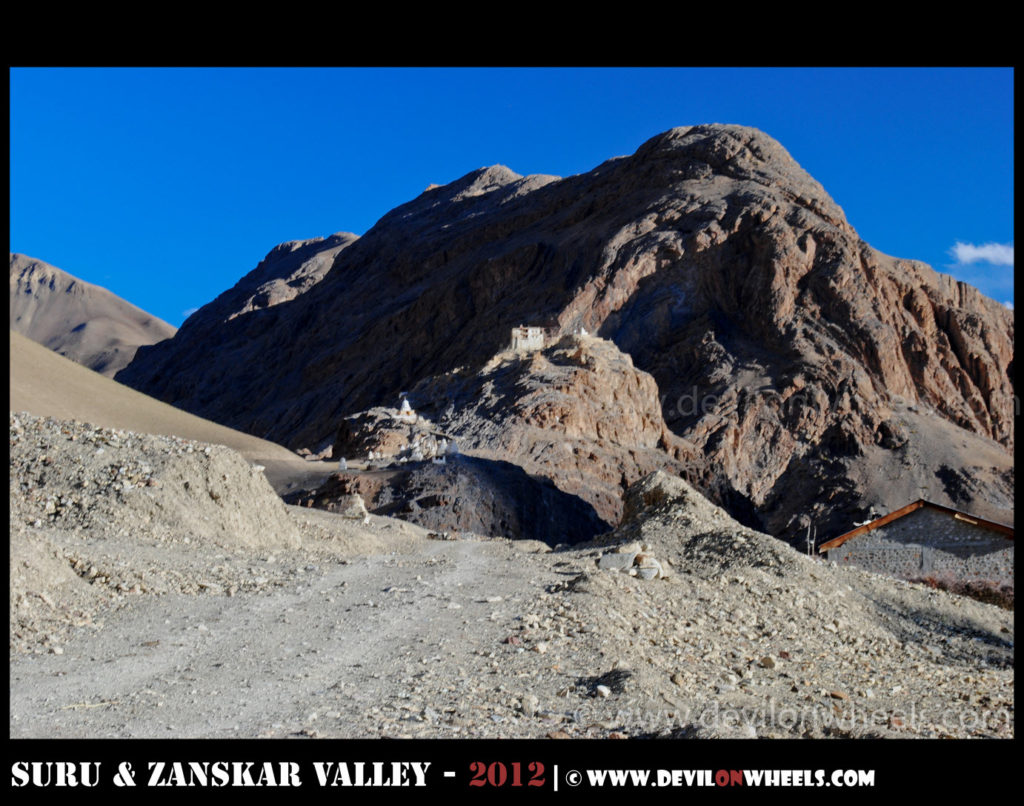
Bardan monastery sits about 12 km south of Padum on the opposite side of the Padum-Stongdey-Zangla-Karsha circuit. It is a 17th-century Buddhist monastery belonging to the Dugpa-Kargyud monastic order. If you are interested in monasteries and Buddhist culture, Bardan is a quieter alternative to Karsha. In case you are short on time, you can combine it with a visit to the Sheela waterfall on the same day since both are on the southern side.
Sheela Village Waterfall (8 km from Padum)
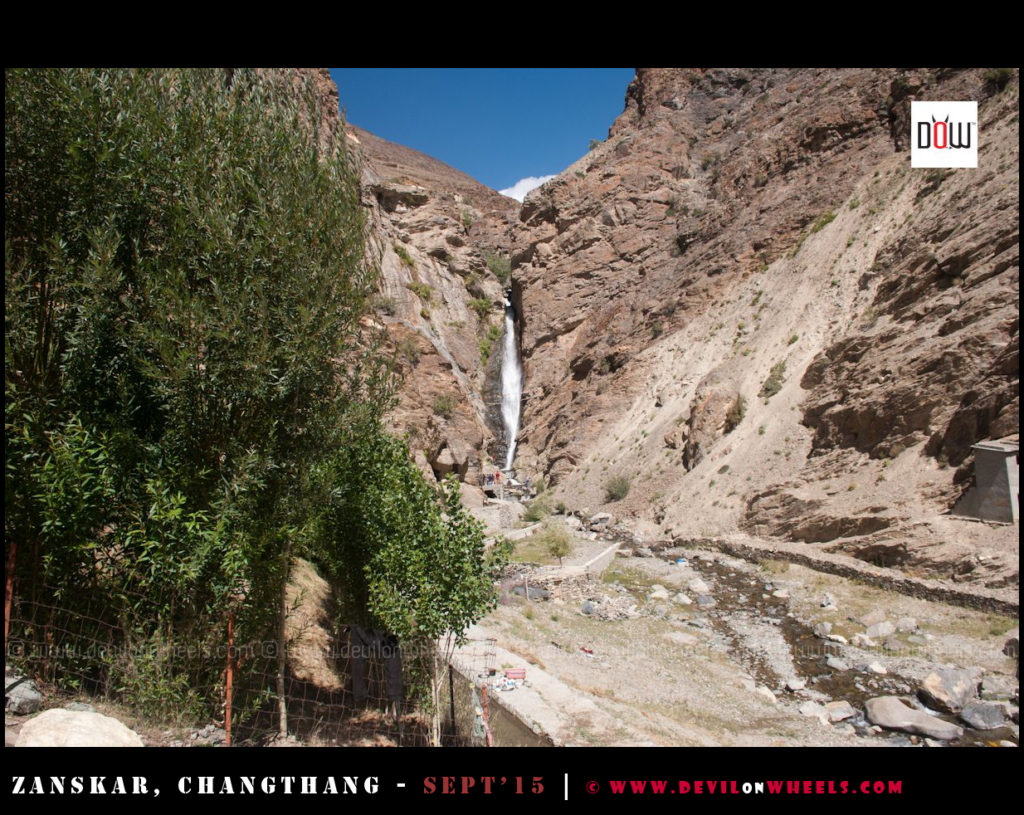
About 8 km from Padum on the road towards Darcha, there is a refreshing waterfall at Sheela (also called Sheel) village. In summers, it is a perfect spot to cool off and take a shower under the cascading water. In winters, the waterfall freezes into a beautiful ice formation, and I have seen foreigners actually climbing the frozen waterfall. The road from Padum towards Darcha via Shinkula Pass runs near this village, connecting Zanskar to Manali.
Phugtal Monastery Trek (from Padum)
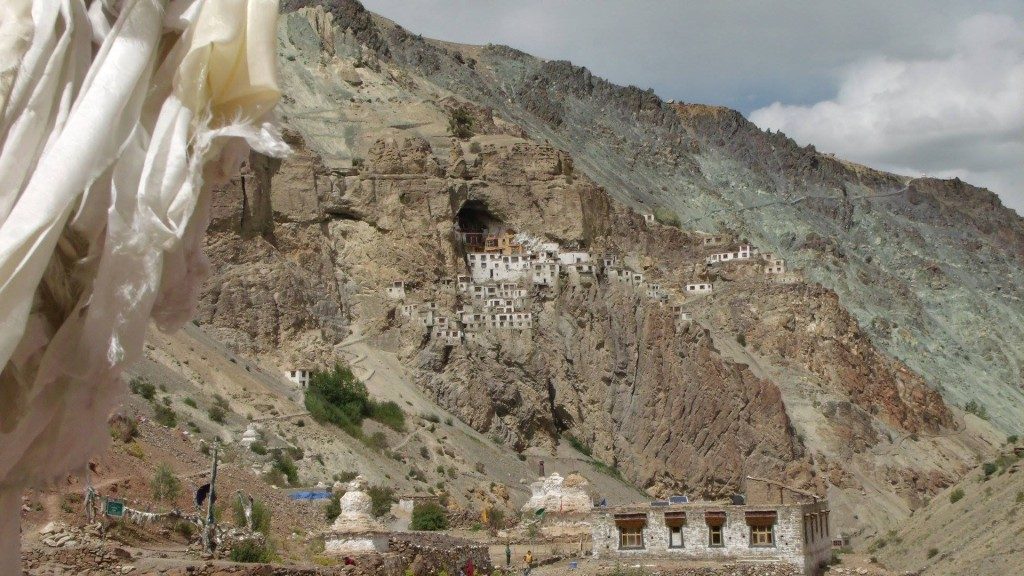
If there is one place that justifies the entire journey to Zanskar, it is Phugtal Monastery. Built into a natural cave on a cliffside in the remotest corner of Lungnak Valley, it looks like a honeycomb hanging from the rock face. This “cave monastery” is one of the most iconic Buddhist sites in all of Ladakh and Zanskar.
Phugtal requires a trek. You cannot drive there. The remoteness is exactly what gives it that deep sense of peace and solitude that no other monastery in the region can match. I have written a detailed guide on the Phugtal Monastery Trek covering the route, difficulty, and what to expect. Plan at least 2 extra days if you want to include Phugtal in your Padum sightseeing.
How to Plan a Padum Sightseeing Circuit?
Most of the sightseeing around Padum can be done as a circuit. Here is a suggested day-wise plan that works well.
Suggested 3-Day Padum Sightseeing Plan
Day 1: Padum Town + Sani Monastery Circuit. Walk through Padum village in the morning. Visit the Mud Palace, the rock carvings, and the Padum Mosque. After lunch, drive to Sani Monastery and Sani Lake (6 km). Return to Padum by evening.
Day 2: Stongdey-Zangla-Karsha Circuit. Start early and drive to Stongdey Monastery (21 km) for morning views. Continue to Zangla Palace (35 km) for the U-bend viewpoint. Return via Karsha Monastery (14 km from Padum) and catch the evening light. This is a full-day trip covering about 70 km.
Day 3: Zongkhul + Bardan + Sheela. Drive to Zongkhul Monastery (37 km, 2-2.5 hours one way). On the return, stop at Bardan Gompa (12 km from Padum) and then the Sheela waterfall (8 km from Padum).
Optional Day 4-5: Phugtal Monastery Trek. If you have 2 extra days, the trek to Phugtal is a must. Read the detailed Phugtal trek guide for planning.
How to Reach Padum in Zanskar Valley?
There are three routes to reach Padum, and the one you choose depends on where you are coming from and when you are traveling.
Route 1: Kargil to Padum via Suru Valley and Pensi La
This is the traditional and most popular route. It is 240 km long and takes 8-10 hours depending on road conditions. The road passes through the beautiful Suru Valley and crosses Pensi La (4,400 m / 14,436 ft). It typically opens by late June and closes by mid-October. You can read about the Suru Valley separately. Bus service operates between Kargil and Padum via J&K SRTC. Shared taxis from Kargil cost around Rs 1,500-2,200 per person.
Route 2: Manali to Padum via Darcha and Shinkula Pass
This is the newer route that BRO has been developing. It goes from Manali through Darcha and crosses Shinkula Pass (5,091 m / 16,703 ft). The total distance is approximately 300 km and takes 12-14 hours. Road conditions vary significantly. This route is typically open from mid-June to September, weather permitting. For the complete guide on this route, read the Manali to Leh via Zanskar (Shinkula Pass) guide.
Route 3: Leh to Padum via Nimmu-Padum-Darcha Road
The Nimmu-Padum-Darcha road, also called the Zanskar Highway, has been under construction for years and is gradually improving. This route via Wanla has significantly reduced the Leh to Zanskar distance by about 160 km compared to the Kargil route. Check current road status before attempting this route, as conditions change every season. For a full 9-day Leh to Zanskar itinerary, check my dedicated article.
What is the Best Time to Visit Padum?
The best time to visit Padum and Zanskar Valley is from June to September. This is when the roads are open, the weather is pleasant (daytime temperatures around 15-25 degrees Celsius), and all the monasteries and sightseeing spots are accessible. July and August see occasional rain, but Zanskar is largely in the rain shadow, so it does not get as wet as other Himalayan regions.
If you are interested in the frozen waterfall at Sheela or the famous Chadar Trek on the frozen Zanskar River, you will need to visit between January and February. But keep in mind that the roads to Padum are closed in winter, and the only way in is by trekking or flying to Leh and then trekking further. For a broader seasonal breakdown, read the best time to travel to Ladakh and Zanskar Valley.
How Much Does Padum Sightseeing Cost?
Here is a rough daily budget breakdown for sightseeing in Padum (per person, as of 2025). Verify locally for current rates as prices in Zanskar fluctuate with the season.
| Expense | Budget (Per Day) | Mid-Range (Per Day) |
|---|---|---|
| Accommodation | Rs 600-1,200 | Rs 1,500-3,000 |
| Meals (3 meals) | Rs 400-600 | Rs 800-1,200 |
| Local Taxi (sightseeing) | Rs 2,000-3,000 (shared) | Rs 4,000-6,000 (private) |
| Monastery Entry/Donations | Rs 50-100 | Rs 100-200 |
| Total Per Day | Rs 3,050-4,900 | Rs 6,400-10,400 |
For a complete cost breakdown including transport from Delhi, Manali, or Srinagar to Padum, check my detailed Zanskar Valley trip budget calculator.
Frequently Asked Questions
How many days are enough for sightseeing in Padum?
A minimum of 3 nights in Padum is recommended to cover the main sightseeing circuit comfortably. This gives you one day each for the Padum town and Sani circuit, the Stongdey-Zangla-Karsha loop, and the Zongkhul-Bardan-Sheela side. If you want to trek to Phugtal Monastery, add 2 more days.
Is Padum safe for solo travelers?
Yes, Padum is safe for solo travelers, including women. The locals in Zanskar are among the friendliest people you will meet in the Himalayas. Crime is practically non-existent. The main concern is isolation and medical emergencies, since the nearest serious medical facility is in Kargil (240 km away). Carry basic medicines and a first-aid kit.
Is there mobile network in Padum?
BSNL has the most reliable coverage in Padum. Jio and Airtel are expanding but still limited in Zanskar. Outside Padum, mobile coverage drops to almost zero in most of the valley. Read the full guide on mobile connectivity in Zanskar Valley for details.
Can I visit Padum by bus?
Yes. J&K SRTC operates a bus service between Kargil and Padum during the summer season (July to September). The bus takes about 10-12 hours for the 240 km journey. Shared taxis and jeeps are also available from Kargil. From Manali, there is no direct bus, but you can take a bus to Darcha and arrange onward transport.
What is the altitude of Padum?
Padum sits at 3,670 meters (12,040 feet) above sea level. AMS (Acute Mountain Sickness) can be a concern if you arrive directly without acclimatization. If coming from Kargil (2,676 m), you should be reasonably acclimatized. If coming from Manali via Shinkula Pass, take it slow as you cross 5,091 m before descending to Padum.
When does the road to Padum open?
The Kargil to Padum road via Pensi La typically opens by late June and closes by mid-October. The Manali to Padum route via Shinkula Pass opens slightly later, usually by mid-June to July, depending on snowfall. BRO clears the roads, but early and late season travel can be risky due to lingering snow and avalanche danger.
![What are tips for long-distance bike ride in Ladakh or Spiti? [10 Practical Tips]](https://discoverwithdheeraj.com/yt_vid_thumbs/ladakh/86.png)
Is there a petrol pump in Padum?
Yes, there are 2 petrol pumps in Padum as of 2025. However, fuel supply can be irregular during peak season or if the road is blocked due to landslides. Always carry extra fuel if you are on a motorcycle or driving your own vehicle. Read the guide on carrying extra fuel for tips.
I know that most of the Padum sightseeing revolves around monasteries and religious sites, and that might not appeal to everyone. But here is what I always tell people. Even if you are not interested in Buddhist culture, do not skip these places just because they are monasteries. Almost every gompa in Zanskar sits in a dramatic location and offers views that will stay with you long after the trip is over. The drives to these monasteries pass through some of the most raw, colorful landscapes in the entire Himalayas.
If you have been to Padum or are planning to visit, I would love to hear about your experience. Feel free to share your tips in the comments below or join the DwD Community to connect with fellow travelers who have explored Zanskar Valley. Safe travels, my friend. 🙂
Related Reading
- How to Plan a Trip to Zanskar Valley
- Zanskar Valley Itinerary
- Budget Calculator for Zanskar Trip
- Camping in Zanskar Valley
- Manali to Leh via Zanskar (Shinkula Pass)
Last Updated: March 2026
