


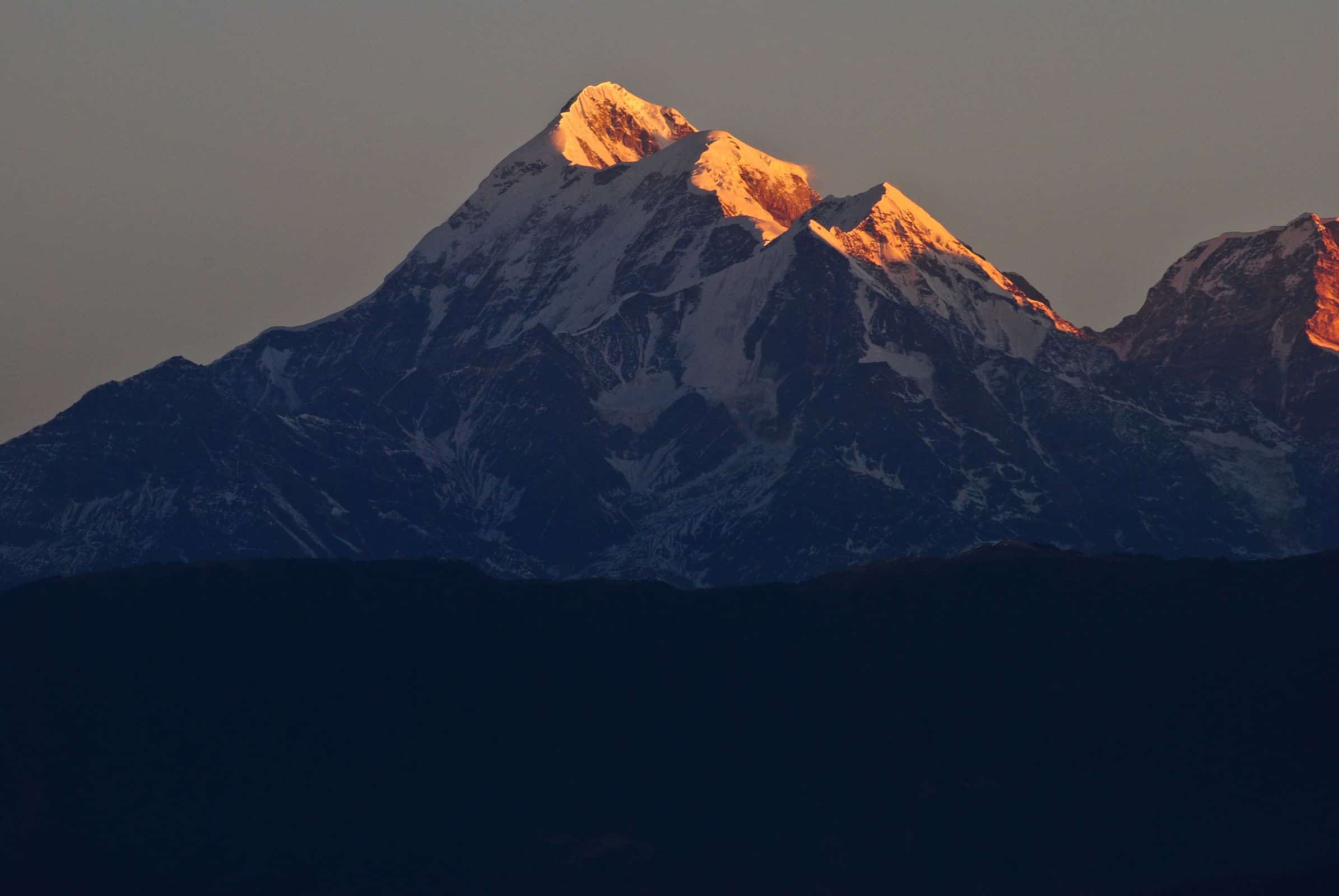
Gwaldam sits quietly at 1,700 meters, straddling the border between Garhwal and Kumaon, where two distinct mountain cultures blend into one small town. I first visited back in 2014 during a winter road trip through Kumaon, and what struck me immediately was the silence. Not the manufactured quiet of a resort, but the real, deep silence of a place that hasn’t yet been discovered by weekend crowds from Delhi.
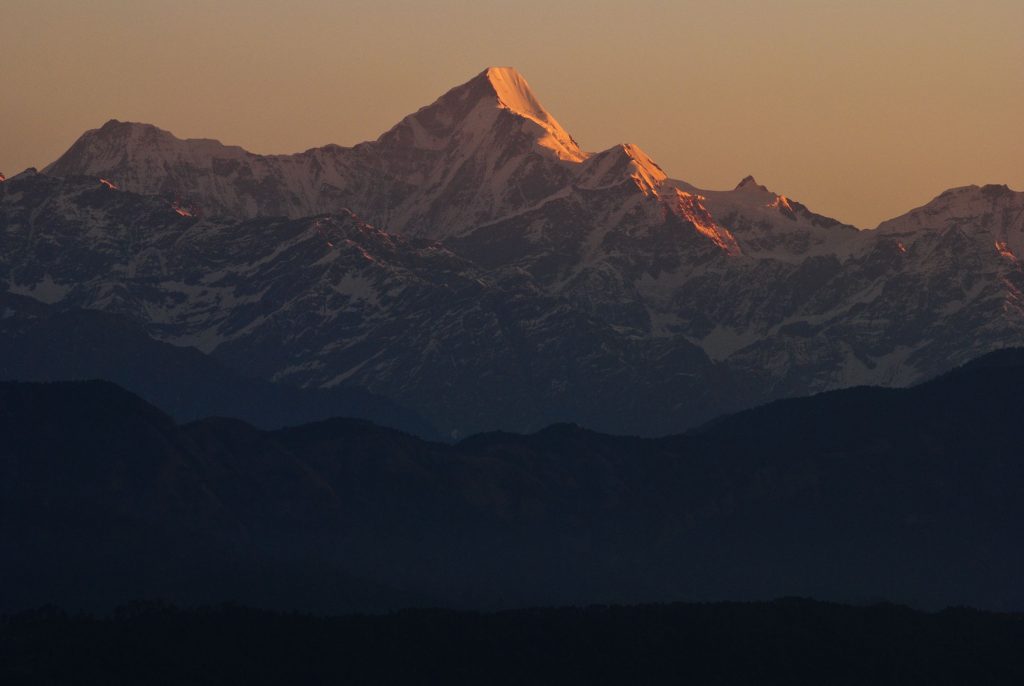
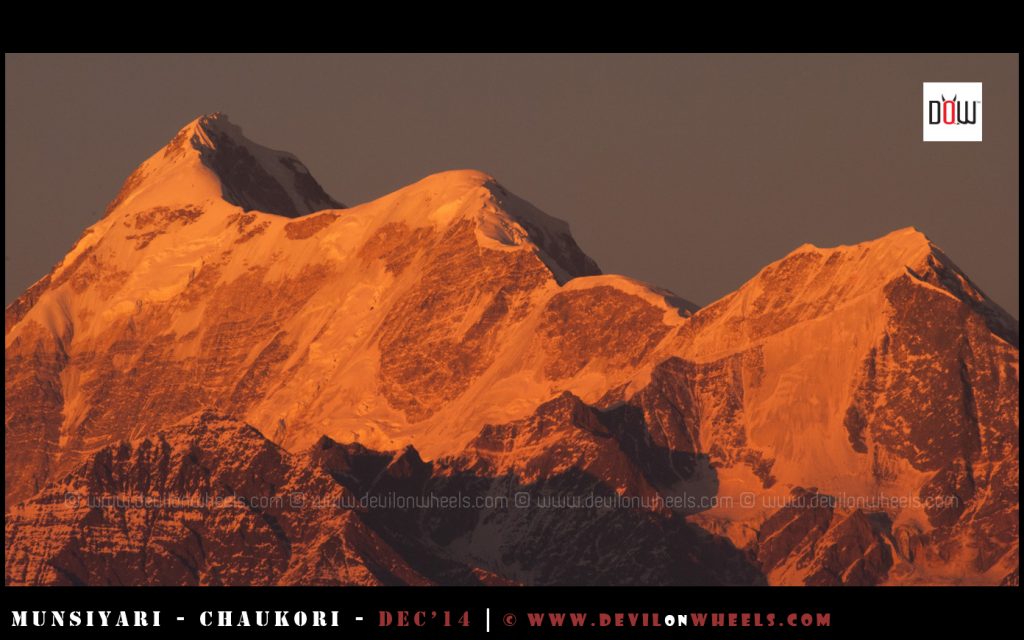
The town is surrounded by deodar forests and apple orchards, and when the sky is clear, you get unobstructed views of Nanda Devi (7,817m), Trishul (7,120m), and Nanda Ghunti (6,309m). But here’s what most travel blogs won’t tell you: Gwaldam is not about ticking off attractions. It’s about slowing down, walking through villages, talking to locals, and understanding what life looks like at this altitude.
This guide is for travelers looking to go beyond the usual Nainital-Kausani circuit and explore a place that still feels untouched. I’ll cover everything you need to know, from how to reach Gwaldam by road, rail, and air, to the best time to visit, places to see, where to stay, and how much it’ll cost you.
Last Updated: February 2026
Let's quickly dive into the details:
Gwaldam at a Glance (Quick Reference)
| Detail | Information |
|---|---|
| Altitude | 1,629 meters (5,344 feet) |
| District | Chamoli, Uttarakhand |
| Nearest Railway Station | Kathgodam (160 km, 5-6 hours) |
| Nearest Airport | Pantnagar (250 km, 6-7 hours) |
| Distance from Delhi | 385 km via NH9/NH109 (10-12 hours) |
| Best Time to Visit | March to June, September to November |
| Mobile Network | BSNL and Jio (reliable), Airtel (patchy) |
| ATM | Available but unreliable in peak season. Carry cash. |
| Petrol Pumps | 2 petrol pumps in Gwaldam (as of 2026) |
| Budget (3 days/2 nights) | INR 6,500-9,000 (budget) / INR 13,000-18,000 (mid-range) |
Why Gwaldam? What Makes It Different
Gwaldam is technically in the Chamoli district of Uttarakhand, but its real identity comes from being a border town. To the west lies Garhwal, to the east lies Kumaon. You’ll hear Garhwali spoken by one shopkeeper and Kumaoni by the next. The food is a mix, the architecture is a mix, even the festivals draw from both regions. If you’ve been looking for offbeat places in Uttarakhand that go beyond the typical tourist circuit, Gwaldam fits the bill perfectly.
What does this mean for you as a traveler? It means Gwaldam offers the best of both worlds. You get the rugged, trekking-heavy culture of Garhwal, with routes to Roopkund and Kuari Pass starting nearby. At the same time, you get the gentler, orchard-covered hills of Kumaon, with easy day trips to Kausani and Bageshwar.
The town itself is small. You can walk from one end to the other in 20 minutes. There’s one main market, a handful of guesthouses, two petrol pumps (added in the last few years, thankfully), and a post office. Mobile connectivity is decent on BSNL and Jio, though Airtel can be patchy. There are a couple of ATMs, but I always suggest carrying cash when you’re in the hills.
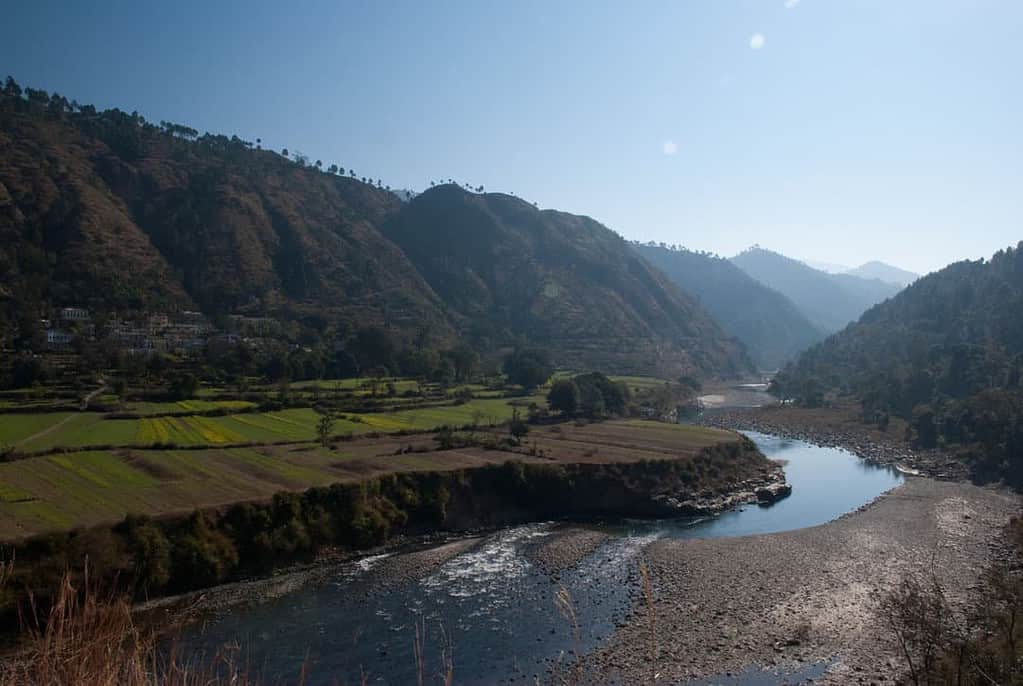
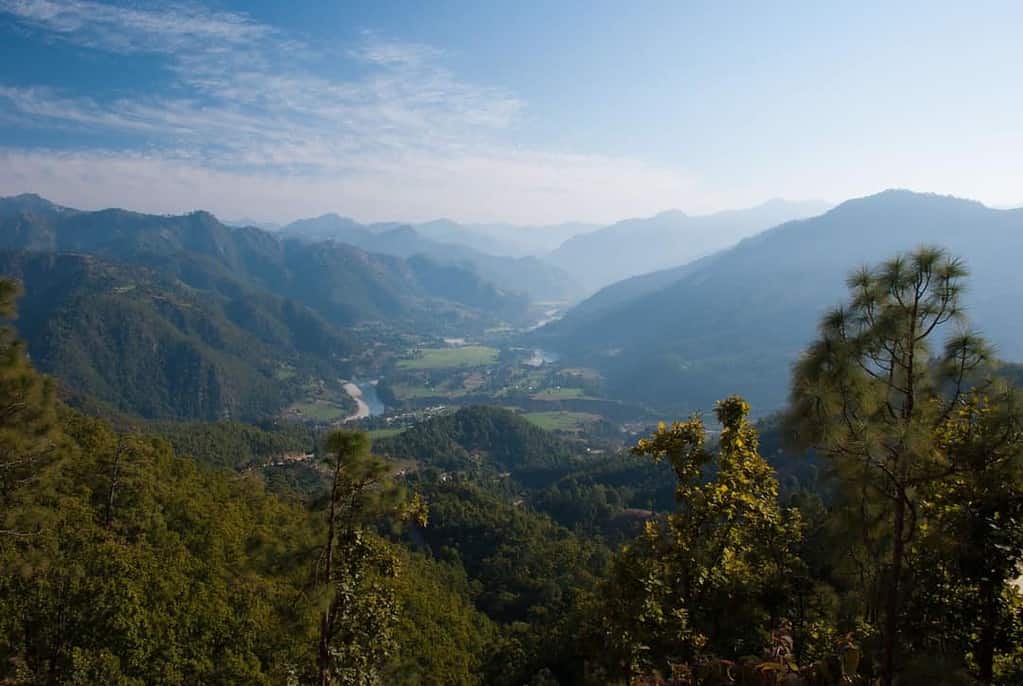
The River Pindari flows through the valley below, and on a quiet morning, you can hear it from the town. The entire area up to Talwari (3 km away) is full of apple orchards, and if you visit in May-June or September-October, you’ll see the orchards in full bloom or laden with fruit.
Location and Altitude
Gwaldam is located at an altitude of 1,629 meters (5,344 feet) above sea level. It’s not high enough to cause altitude sickness, but it’s high enough that you’ll feel the temperature drop, especially after sunset. In winter (December to February), temperatures can fall to 0-5°C at night, and daytime highs stay around 10-15°C. In summer (March to June), expect 15-22°C during the day.
A Bit of History
Gwaldam has always been strategically located. The region was part of the Garhwal kingdom, then came under the rule of the Chand Dynasty of Kumaon, followed by the Gorkhas, and finally the British after the Battle of Gwaldam in 1590 AD. This layered history is why you’ll see temples from different periods, architectural styles borrowed from both regions, and a population that identifies with both Garhwal and Kumaon.
How to Reach Gwaldam in 2026
Gwaldam is well-connected by road but requires a bit of planning if you’re coming by train or air. Let me break it down based on your starting point.
By Air: Pantnagar Airport (250 km, 6-7 hours)
The nearest airport is Pantnagar, about 250 km away. As of 2026, there are daily flights from Delhi to Pantnagar operated by IndiGo and Alliance Air, and the flight takes about 1 hour 15 minutes. From Pantnagar, you’ll need to hire a taxi to Gwaldam. Expect to pay around INR 5,000-6,500 for a one-way taxi, depending on the vehicle type. Shared taxis are rare on this route, so unless you find other travelers heading the same way, you’ll likely pay for the full cab.
The drive from Pantnagar to Gwaldam takes 6-7 hours and goes via Haldwani, Kathgodam, Nainital, and Almora. It’s a long drive, but the roads are paved and the scenery improves dramatically once you cross Nainital.
By Train: Kathgodam Railway Station (160 km, 5-6 hours)
Kathgodam is the nearest railway station, 160 km from Gwaldam. It’s the last broad-gauge railhead in Uttarakhand and is well-connected to Delhi, Lucknow, Howrah, and other major cities. Popular trains include the Ranikhet Express, Uttarakhand Sampark Kranti, and Bagh Express.
From Kathgodam railway station, taxis to Gwaldam cost around INR 4,000-5,500 for a sedan or INR 5,500-6,500 for an SUV (as of 2026). Shared taxis are occasionally available up to Kausani (which is 36 km from Gwaldam), and from Kausani, you can take another local taxi for INR 700-1,000. However, if you’re traveling with luggage or in a group, I suggest booking a direct taxi to avoid the hassle of switching vehicles.
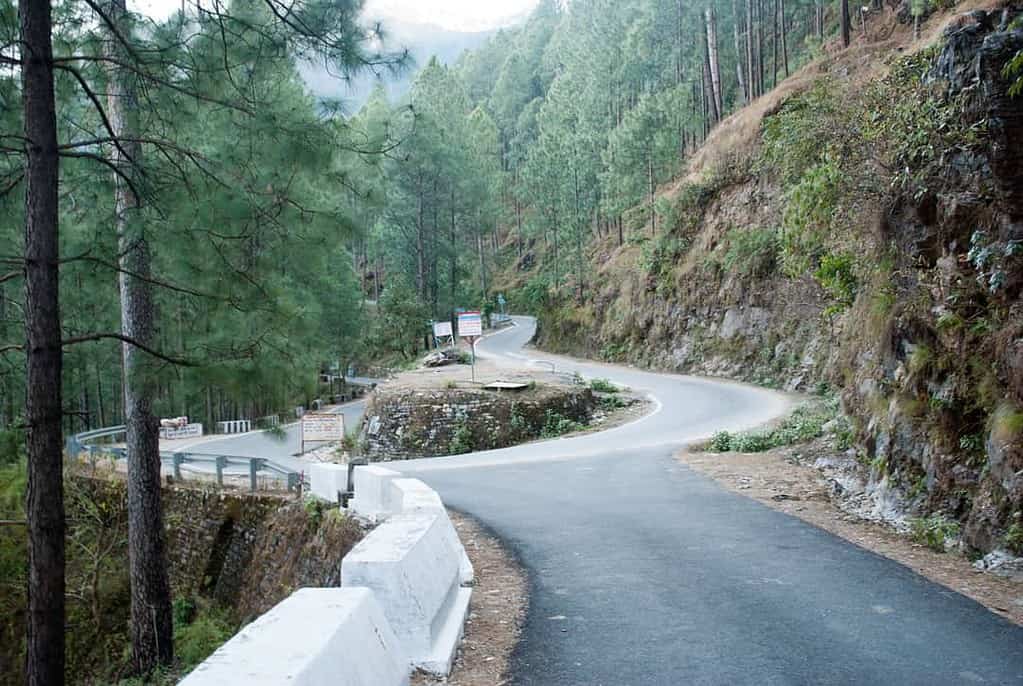
The drive from Kathgodam to Gwaldam takes 5-6 hours and goes via Almora, Kausani, or Ranikhet (depending on which route your driver takes). The roads are narrow in sections, especially after Almora, so keep in mind the journey time can stretch if there’s traffic or road work.
By Road: Self-Drive or Bus
If you’re driving from Delhi, the distance is approximately 385 km via NH9 and NH109, and the journey takes 10-12 hours depending on traffic and breaks. The route is: Delhi, Moradabad, Rampur, Haldwani, Nainital, Almora, Kausani, Gwaldam. The roads are mostly paved, though the mountain sections after Nainital are winding and require cautious driving. If you need tips on what to carry for hill trips, check my packing checklist for trips.
From Nainital, Gwaldam is 149 km away (4-5 hours). From Kausani, it’s just 36 km (1-1.5 hours). From Baijnath, it’s 22 km (45 minutes). From Bageshwar, it’s 45 km (1.5 hours). These shorter distances make Gwaldam an easy addition to a larger Kumaon itinerary.
Bus services to Gwaldam are limited. Uttarakhand Transport Corporation (UTC) runs buses from Haldwani and Almora to Gwaldam, but the schedules are irregular. I recommend checking with the Almora or Haldwani bus stand a day in advance if you’re planning to take the bus. As of 2026, bus fares from Haldwani to Gwaldam are around INR 200-250 per person, and the journey takes 7-8 hours with multiple stops. Buses from Kathgodam start as early as 4:30 AM, and the last shared vehicle departs around 10:45 PM. However, schedules may vary seasonally, so verify with the bus stand before travel.
When Is the Best Time to Visit Gwaldam?
Gwaldam is accessible year-round, but the experience varies dramatically by season. The best months are March to June for pleasant weather and trekking, and September to November for crystal-clear Himalayan views. Here’s what each season offers and what to keep in mind.
Summer (March to June)
This is the most popular time to visit. Temperatures range from 15°C to 22°C during the day, dropping to 8-12°C at night. The skies are usually clear, which means excellent views of the snow-covered peaks. Apple blossoms appear in April-May, and the orchards look stunning. This is also trekking season, so if you’re planning to do the Roopkund trek or Kuari Pass trek from Gwaldam, this is the best time.


However, keep in mind that summer is also wedding season in the hills, so guesthouses can get booked up, especially on weekends. If you’re visiting in May or June, I suggest booking accommodation at least a week in advance.
Monsoon (July to September)
Monsoon in Gwaldam is unpredictable. Some years, the rains are manageable, with intermittent showers and misty mornings. Other years, August brings heavy rainfall, and the roads become slippery and prone to landslides. I was stuck in Gwaldam for an extra two days in August 2015 because of a landslide between Almora and Kausani, so do keep this in mind if you’re visiting during monsoon.
That said, if you’re okay with rain and enjoy the sight of lush green hills and dramatic cloud cover, monsoon has its own charm. Temperatures stay between 15°C and 20°C, and the orchards are at their greenest. Just check the weather forecast before you travel and be prepared for delays.
Autumn (September to November)
This is my favorite time to visit Gwaldam. The monsoon has cleared, the skies are crystal clear, and the temperatures are perfect for walking and exploring. September sees occasional rain, but by October, the weather stabilizes completely. Daytime temperatures are around 15-20°C, and nights can drop to 5-8°C. The apple harvest happens in September-October, so you’ll see the orchards full of fruit, and if you’re lucky, you can buy fresh apples directly from the farmers.
This is also a great time for trekking, and the trails are less crowded than in summer. The views of the Himalayas are at their sharpest, especially in the early morning.
Winter (December to February)
Winter in Gwaldam is cold but manageable. Temperatures range from 0-5°C at night to 10-15°C during the day. Snowfall is possible, especially in January and February, but it’s not guaranteed every year. If it does snow, the town transforms into a postcard, but keep in mind that roads can become icy and difficult to drive on. If you enjoy snowfall near Delhi, Gwaldam is one of the lesser-known options worth considering.
Most guesthouses remain open in winter, but hot water may be limited, and heating is usually via wood-burning stoves. If you’re visiting in winter, pack warm clothes, including thermals, a good jacket, gloves, and a woolens cap. Winter is the quietest time in Gwaldam, and if you’re looking for complete solitude, this is when you’ll get it.
What to Do in Gwaldam (Beyond the Usual Tourist Circuit)
Gwaldam is not a checklist destination. There are no big monuments or adventure parks. What you do here is walk, explore small temples, talk to locals, and simply spend time in the mountains. Here are the main places and activities worth your time.
Gwalnaag (3 km from Gwaldam)
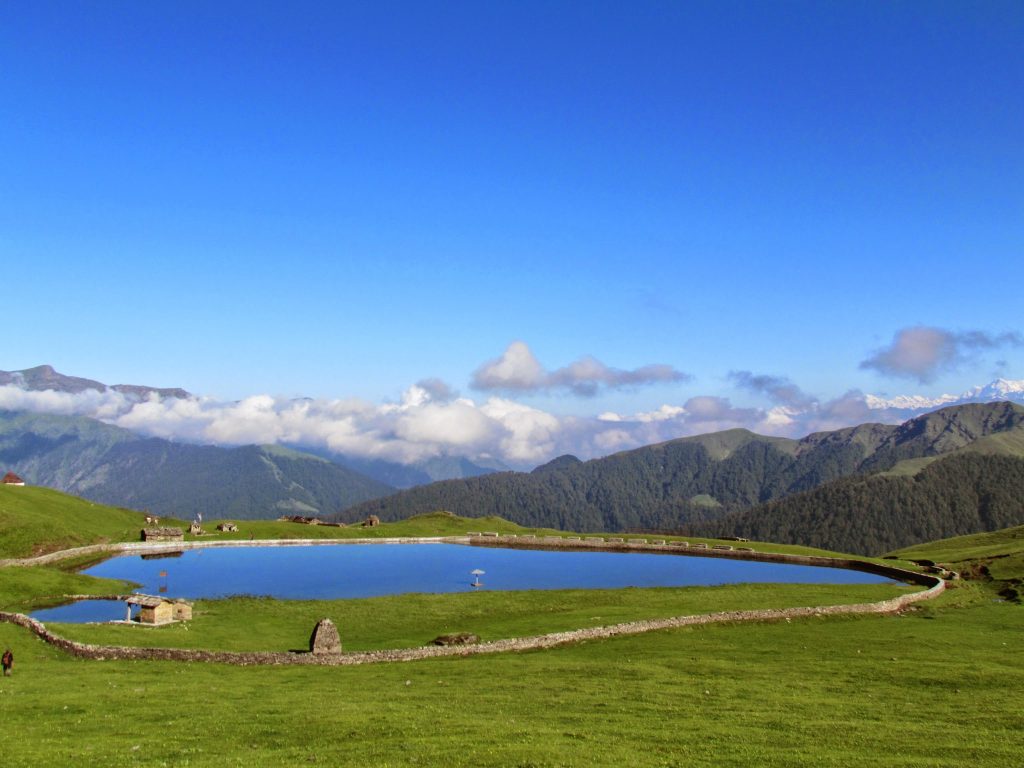
Gwalnaag is a small meadow located 3 km from Gwaldam on the Dhalua meadow. It offers unobstructed views of the snow-covered peaks and is a great spot for a short walk or picnic. The meadow is flat and wide, and in winter, the slopes become suitable for skiing (though there are no official ski facilities, so it’s mostly locals and adventurous travelers who try it).
About 2 km from Gwalnaag is Garud Valley, which resembles a bowl-shaped depression and offers even more dramatic views. The walk from Gwaldam to Gwalnaag takes about 45 minutes on foot, or you can drive if you have your own vehicle.
Buddhist Khamba Temple (1.5 km from Gwaldam)
This small Buddhist temple is located about 1.5 km from the main market and is one of the few Buddhist sites in this part of Uttarakhand. The temple is adorned with stone statues of Gautam Buddha and has a peaceful, meditative atmosphere. A small community of Buddhists lives in and around Gwaldam, and this temple serves as their primary place of worship.
The walk to the temple takes about 20-25 minutes from the market. You’ll pass through apple orchards and deodar forests, and on a clear day, you can see the peaks from the temple courtyard. The temple is usually open from sunrise to sunset, and there’s no entry fee, though donations are welcome.
Badhangarhi Temple (8 km from Gwaldam)
This is one of the most important temples in the region and is dedicated to Goddess Kali. The temple was built during the Katyuri dynasty (8th-12th century) and sits at an elevation of 2,260 meters on a narrow ridge. The views from Badhangarhi are spectacular. You can see Nanda Devi, Trishul, and Panchachuli peaks clearly on a good day.
The journey to Badhangarhi is part trek, part drive. You can drive or take a taxi up to Taal (4 km from Gwaldam), and from there, it’s a 4 km trek through forests and meadows. The trail is well-marked and relatively easy, though it does involve some uphill sections. The entire journey (one way) takes about 2-3 hours depending on your pace. If you enjoy short treks in Uttarakhand, also check out our list of easy treks for beginners.
The temple is especially crowded during Navratri and other festivals, but on regular days, you’ll find it quiet and peaceful. There’s a small ashram near the temple where you can rest and have tea. Carry water and snacks, as there are no shops on the way.
Macchi Tal (9 km from Gwaldam)
Macchi Tal is a small lake hidden along a calm creek, about 9 km from Gwaldam on the road to Debal. The lake was created in 1928 by the British, who intended to breed fish here for consumption. The name “Macchi Tal” literally means “Fish Lake.”
Today, the lake is more of a quiet picnic spot than a tourist attraction. It’s surrounded by pine and oak trees, and the water is crystal clear. It’s an ideal spot if you’re looking to spend a few hours away from the town, reading a book or just soaking in the silence. The drive from Gwaldam to Macchi Tal takes about 20-25 minutes, and the road is narrow but paved.
Angora Farm (1 km from Gwaldam)
This state-run farm is located about 1 km from the main bazaar and was established in 1987. The farm breeds Angora goats and German Angora rabbits, whose wool is used to make shawls, sweaters, and other woolen products. As of 2026, the farm houses about 60 rabbits and several goats.
You can visit the farm and learn about Angora wool cultivation, which is considered an alternative to traditional sheep rearing in the hills. The person in charge is usually happy to explain the breeding process and the wool extraction techniques. Entry is free, and the farm is open during daylight hours. If you’re traveling with kids, they’ll enjoy seeing the rabbits up close.
What Are the Best Places to Visit Near Gwaldam?
Gwaldam is surrounded by several well-known and lesser-known destinations that make for excellent day trips or extended excursions. Here are the main ones worth your time.
Kausani (36 km, 1-1.5 hours)
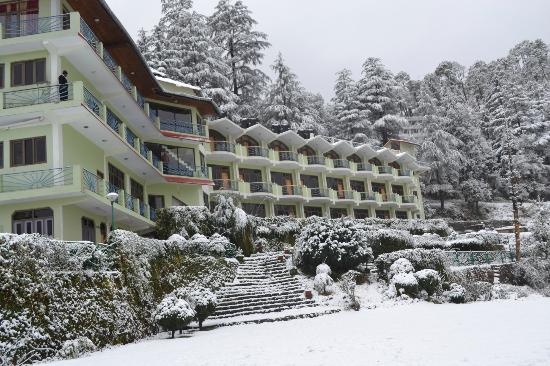
Located 36 km from Gwaldam, Kausani is a picturesque hamlet known for its panoramic views of the Nanda Devi range. Mahatma Gandhi stayed here for a few days in 1929, and the Anashakti Ashram was built in his memory. Kausani is more developed than Gwaldam, with more hotels, cafes, and tourist facilities. If you’re basing yourself in Gwaldam, a day trip to Kausani is highly recommended.
Baijnath (22 km, 45 minutes)
Baijnath is famous for its group of ancient temples built by the Katyuri rulers in the 13th century. The main temple is dedicated to Lord Shiva and is located on the banks of the Gomti River. It’s believed that Shiva and Parvati were married at this spot. The temples are architecturally significant and attract pilgrims and history enthusiasts alike. According to the Archaeological Survey of India, these temples are among the finest examples of Katyuri-era architecture in Uttarakhand. The drive from Gwaldam to Baijnath is scenic and takes about 45 minutes.
Bageshwar (45 km, 1.5 hours)
Bageshwar is an ancient pilgrimage town located at the confluence of the Gomti and Saryu rivers. It’s 45 km from Gwaldam and serves as the base for several treks, including Pindari Glacier, Kafni Glacier, and Sunder Dunga Glacier. If you’re interested in trekking or want to explore more of Kumaon’s spiritual side, Bageshwar is worth a visit.
Roopkund Trek (Base Camp 15 km from Gwaldam)
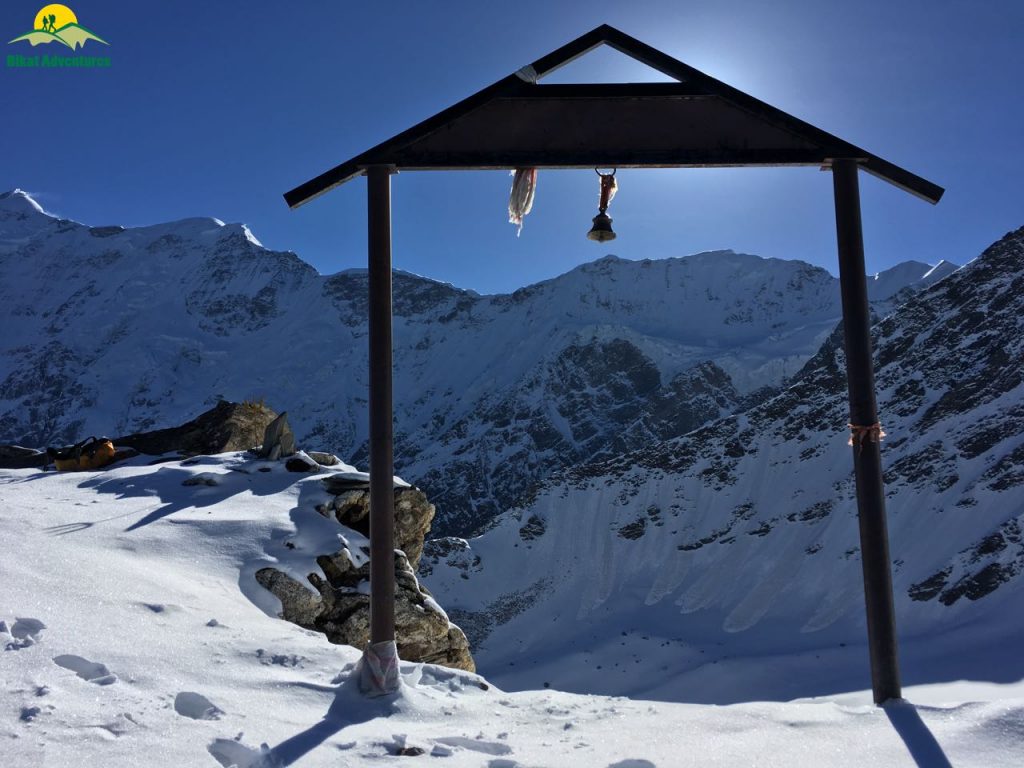
Gwaldam serves as one of the base camps for the famous Roopkund trek, also known as the “Skeleton Lake” trek. Roopkund is a high-altitude glacial lake (5,029 meters) famous for the hundreds of human skeletons found at its edge, believed to be from the 9th century. The trek passes through Ali Bugyal and Bedni Bugyal, two stunning high-altitude meadows.
The Roopkund trek is usually done between May and October and takes 6-8 days depending on the route and acclimatization stops. If you’re planning this trek, I suggest hiring a local guide in Gwaldam or booking through a trekking company. The views of Trishul, Nanda Ghunti, and Chaukhamba from the trail are absolutely worth it. Keep in mind that the Uttarakhand Tourism department requires trekkers to register before attempting high-altitude treks in the state.
Where to Stay in Gwaldam (Budget to Mid-Range Options)
Gwaldam has limited accommodation options, which is part of its charm. Don’t expect luxury resorts or five-star hotels. What you’ll find are simple guesthouses, government-run tourist bungalows, and a few homestays. Here’s what’s available as of 2026.

GMVN and KMVN Tourist Rest Houses
Both Garhwal Mandal Vikas Nigam (GMVN) and Kumaon Mandal Vikas Nigam (KMVN) operate tourist bungalows in Gwaldam. These are budget-friendly options with basic amenities. The GMVN property offers Deluxe rooms, Economy rooms, and a 10-bed dormitory. Rooms cost around INR 800-1,500 per night depending on the season and room type. The facilities include clean rooms, attached bathrooms, hot water (though it may not be 24/7), and basic meals on request.
GMVN and KMVN properties are reliable and safe, especially for solo travelers or families. You can book rooms in advance through their official websites or by calling the property directly. During peak season (May-June), these fill up quickly, so book at least 7-10 days in advance.
Homestays
Several locals in Gwaldam offer homestays, and this is by far the best way to experience the town. Homestays typically cost INR 800-1,200 per night per person, including meals. You’ll get home-cooked Garhwali or Kumaoni food, which is a huge plus. Popular homestay options include Green Stay Homestay, which has excellent views and friendly hosts.
Homestays don’t always have online booking systems, so I suggest calling ahead or asking locals in the market once you arrive. Most homestay owners speak Hindi and basic English.
Budget Hotels and Guesthouses
There are a handful of small hotels and guesthouses in Gwaldam, including Hotel Nature Retreat, Hotel Trishul, and Parashar Resort. These are slightly more expensive than GMVN/KMVN options, with rooms ranging from INR 1,500-2,500 per night. The rooms are basic but clean, and most offer hot water, room heaters in winter, and attached bathrooms.
Staying in Talwari or Kausani
If you’re looking for more upscale accommodation, consider staying in Talwari (3 km from Gwaldam) or Kausani (36 km from Gwaldam). Talwari has a few boutique properties like Saffron Stays, which offer more amenities and better views, though prices are higher (INR 4,000-8,000 per night). Kausani has many more hotels, ranging from budget to mid-range, and is well-connected to Gwaldam by road.
Where to Eat in Gwaldam (Local Food and Restaurants)
Gwaldam is not the place for fancy restaurants or multi-cuisine menus. What you’ll find are small dhabas, local eateries, and homestays serving authentic Garhwali and Kumaoni food. And honestly, that’s exactly what you should be eating when you’re here.
The main market has a few roadside stalls and small restaurants serving North Indian staples like dal-rice, roti sabzi, parathas, and chai. You’ll also find momos and Maggi at a few places (because no hill station in India is complete without Maggi). Expect to spend around INR 80-150 for a simple meal at a dhaba.
If you’re staying at a homestay or guesthouse, I strongly recommend eating there. You’ll get to try local dishes like Gahat Dal (a lentil soup made from horse gram), Sisunak Saag (a local green vegetable), Kappa (a buckwheat dish), and Chains (a black gram preparation). These dishes are not only delicious but also give you a real taste of hill cuisine.
Meals at homestays typically cost INR 300-500 per person per day (breakfast, lunch, and dinner included). The portions are generous, and the food is freshly cooked. Don’t expect elaborate plating or Instagram-worthy presentations. What you will get is honest, wholesome food made by people who’ve been cooking these recipes for generations.
How Much Does a Gwaldam Trip Cost? (2026 Budget Breakdown)
Here’s a realistic breakdown of how much a trip to Gwaldam will cost you, based on different travel styles. These are per-person estimates for a 3-day, 2-night trip as of 2026.
| Expense | Budget (per person) | Mid-Range (per person) |
|---|---|---|
| Transport (Delhi to Gwaldam return) | INR 2,500-3,500 (bus/shared taxi) | INR 6,000-8,000 (private taxi/self-drive fuel) |
| Accommodation (per night) | INR 800-1,200 (homestay/GMVN) | INR 1,500-2,500 (budget hotel) |
| Food (per day) | INR 300-500 (homestay meals) | INR 500-800 (dhaba/restaurant) |
| Local sightseeing (taxis) | INR 500-800 (shared) | INR 1,500-2,000 (private) |
| Miscellaneous (entry fees, snacks) | INR 200-300 | INR 500-700 |
| Total (3 days/2 nights) | INR 6,500-9,000 | INR 13,000-18,000 |
These are approximate figures for a solo traveler. If you’re traveling as a couple or group, you can split taxi costs and accommodation, bringing the per-person cost down significantly. Keep in mind that prices can vary depending on the season, availability, and whether you book in advance.
What Should You Keep in Mind When Visiting Gwaldam?
- Carry cash: There are ATMs in Gwaldam, but they run out of cash frequently, especially during peak season. Carry enough cash from Kathgodam or Nainital to cover your entire trip.
- Mobile network: BSNL and Jio work fairly well. Airtel and Vodafone can be patchy. If you need reliable connectivity for work, BSNL is your best bet.
- Fuel: There are two petrol pumps in Gwaldam as of 2026. However, if you’re planning a long drive or excursion, fill up your tank in advance. The next major fuel station is in Kausani or Almora.
- Weather: Even in summer, evenings can get cold. Carry a light jacket or sweater. In winter, pack heavy woolens, thermals, and a good quality jacket. You can check the India Meteorological Department (IMD) website for current weather forecasts before you travel.
- Medical facilities: Gwaldam has a small government health center, but for any serious medical issues, you’ll need to go to Kausani or Almora. Carry a basic first-aid kit and any personal medications you need.
- Trekking gear: If you’re planning to do short treks to Badhangarhi or longer treks to Roopkund, carry good trekking shoes, a water bottle, sunscreen, and a cap. The sun at this altitude can be harsh.
- Self-drive tip: The roads after Almora are narrow with sharp turns. If you’re driving, start early and avoid night driving on these sections. A sedan can handle the route, but an SUV gives you more confidence on the uphill stretches.
Suggested Itinerary for Gwaldam (3 Days / 2 Nights)
If you have 3 days, here is a simple itinerary that covers the best of Gwaldam and its surroundings.
Day 1: Arrive in Gwaldam from Delhi or Kathgodam. If you started early (by 5 AM from Delhi), you should reach by late afternoon. Check in to your homestay or GMVN guesthouse. In the evening, walk to the main market, grab chai, and catch the sunset views of Trishul and Nanda Devi from the town viewpoint.
Day 2: Morning walk to Buddhist Khamba Temple (1.5 km, 20 minutes) and Angora Farm (1 km). After breakfast, head to Badhangarhi Temple (8 km). The trek takes about 2-3 hours one way, so plan to return by late afternoon. Alternatively, drive to Macchi Tal (9 km) for a quiet lakeside lunch. In the evening, visit Gwalnaag meadow (3 km) for sunset views.
Day 3: Day trip to Kausani (36 km, 1 hour). Visit Anashakti Ashram, the tea gardens, and enjoy the panoramic Himalayan views from the ridge. Return to Gwaldam for lunch. If you plan to combine this with a larger Kumaon circuit, you can head towards Almora or Bageshwar instead of returning to Gwaldam.
A Request: Please Travel Responsibly
Gwaldam is still relatively untouched, and I’d love for it to stay that way. Please don’t litter. If you’re having a picnic by Macchi Tal or sitting by the roadside, carry your trash back with you and dispose of it properly. The hills don’t have the infrastructure for large-scale waste management, and every piece of plastic you leave behind makes life harder for the locals and the environment.
If you’re trekking, follow Leave No Trace principles. Don’t light fires in the forest, don’t pluck wildflowers, and don’t disturb wildlife. The Himalayas are fragile, and it’s on us as travelers to protect them. If you’d like to contribute positively, the DwD community runs cleanup drives and awareness campaigns. Feel free to check the DoW Travel Calendar for upcoming events.
Frequently Asked Questions About Gwaldam
Is Gwaldam safe for solo female travelers?
Yes, Gwaldam is generally safe for solo female travelers. The town is small, and the locals are friendly and helpful. Homestays and GMVN/KMVN guesthouses are safe accommodation options. As with any hill station, exercise normal caution, especially if you’re trekking alone. I suggest informing your homestay owner about your plans if you’re heading out on a trek.
Can I visit Gwaldam in winter?
Yes, Gwaldam is accessible in winter, though snowfall can occasionally block roads for a day or two. If you’re visiting in January or February, check weather conditions before you travel and carry tire chains if you’re driving. Winter is the quietest season, so it’s ideal if you want complete solitude.
How many days should I spend in Gwaldam?
Two to three days is ideal if you want to explore Gwaldam and nearby places like Kausani and Baijnath. If you’re planning to do the Roopkund trek or other longer treks, you’ll need at least 7-10 days.
Are there any trekking routes from Gwaldam?
Yes, Gwaldam serves as the base for several treks, including Roopkund, Kuari Pass, and Nanda Devi Yatra. The trek to Badhangarhi Temple (8 km) is also a popular short trek for beginners. For more options, check out our guide on easy treks in Uttarakhand for beginners.
Is mobile network available in Gwaldam?
Yes, BSNL and Jio networks work well in Gwaldam. Airtel and Vodafone can be unreliable. If you need consistent connectivity, get a BSNL or Jio SIM before you arrive.
What is the best route to reach Gwaldam from Delhi?
The most common route is Delhi to Moradabad to Haldwani to Nainital to Almora to Kausani to Gwaldam. The total distance is about 385 km, and the journey takes 10-12 hours by car. An alternative route goes via Ranikhet instead of Almora, which is slightly longer but less crowded.
Are there ATMs in Gwaldam?
Yes, there are a couple of ATMs in Gwaldam, but they often run out of cash during peak season. I always suggest carrying enough cash from Kathgodam, Haldwani, or Nainital to cover your expenses for the entire trip.
Can I do a day trip to Gwaldam from Nainital?
Technically yes, but it’s a long drive (149 km one way, 4-5 hours). I’d recommend staying at least one night in Gwaldam to make the trip worthwhile and to explore nearby places like Badhangarhi Temple and Kausani.
Final Thoughts
Gwaldam is not for everyone. If you’re looking for nightlife, shopping, or luxury resorts, go to Nainital or Mussoorie. But if you’re looking for a quiet place to disconnect, walk through apple orchards, watch the sunrise over Trishul Peak, and talk to locals about their way of life, Gwaldam is perfect.
I’ve been to Gwaldam three times now, and every time I leave, I feel a little calmer, a little more grounded. That’s what the mountains do when you slow down enough to listen.
Have a travel question?? You can subscribe to my YouTube channel and leave a comment to ask your travel questions about traveling to the Himalayas.
If you’re planning a trip to Gwaldam or have questions about routes, accommodation, or trekking options, feel free to drop a comment below or reach out through the DwD Community. I’ll be happy to help. And if you know someone planning a trip to offbeat places in Uttarakhand, do share this guide with them. You can also explore our detailed guides on Kausani, Manila in Kumaon, and Tungnath-Chandrashilla for more Uttarakhand travel ideas. Safe travels, my friend 🙂
