


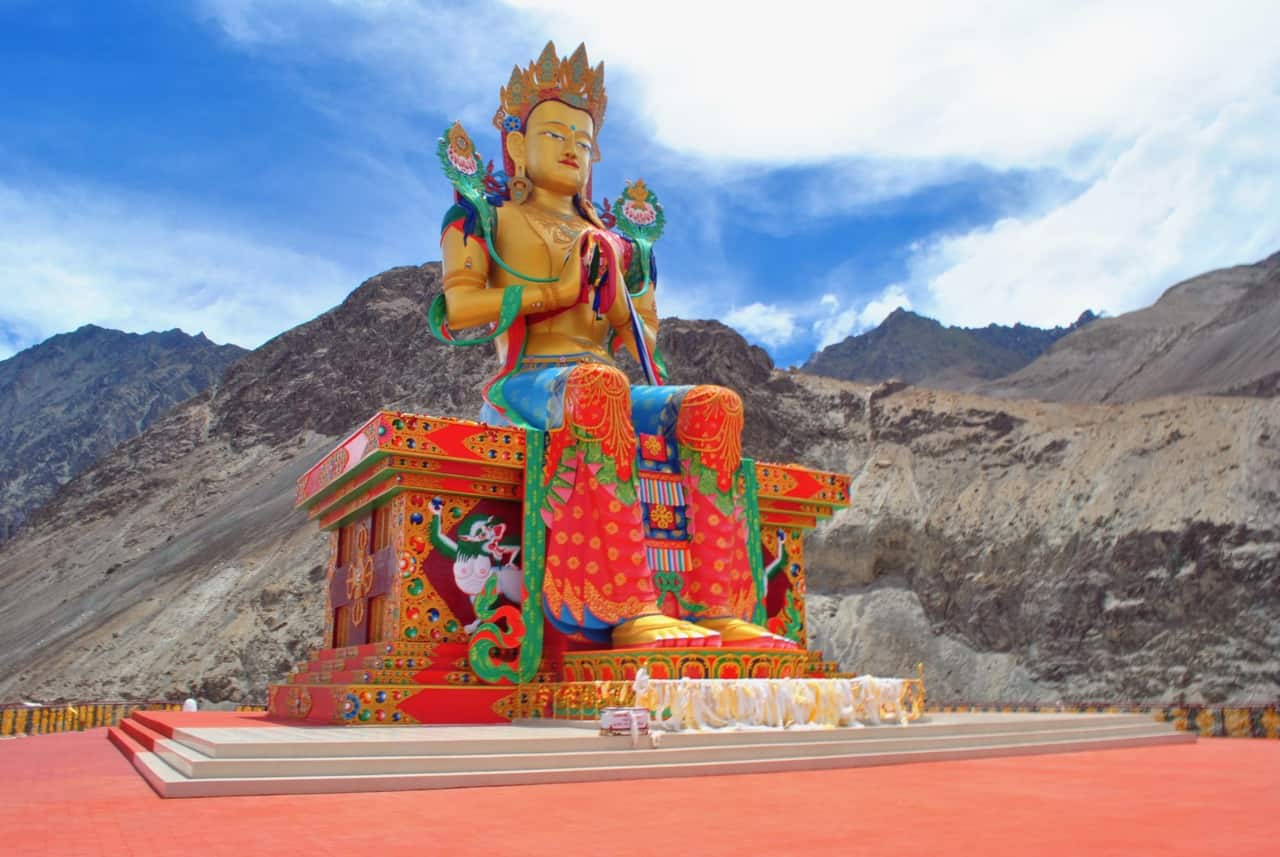
Ladakh, the land of high passes, knows how to celebrate. And by experiencing their festivals, you will realize they do so in major style. The best way to immerse yourself in the history and culture of a place is to partake in festivals and fairs.
Also, once you are in the Land of the Lamas, you need to be prepared to party. People here are happy, fun, and always down to celebrate. From Polo and archery to dances and history, when it comes to festivities, Ladakh has you covered.
While we have already covered an extensive list of festivals in the Spiti Valley region, read on for an extensive list of festivals celebrated in Ladakh and their significance. In case you are planning your upcoming Ladakh trip, use this calendar to time your visit with these vibrant celebrations.
Let's quickly dive into the details:
Quick Facts: Ladakh Festivals 2026-2027
📅 Festival Season: Year-round, with the busiest run of monastery festivals falling between June and August
🎭 Major Festivals: Hemis Tsechu (late June), Ladakh Festival (late September), Losar (December)
📍 Key Venues: Hemis, Lamayuru, Spituk, Thiksey, Diskit, and Korzok monasteries
🗓️ Next Up (as of September 2026): Ladakh Festival, Leh, 21-23 September 2026 (Ministry of Tourism; confirm locally)
✈️ How to Attend: Plan 2-3 extra days in your itinerary around the festival dates
💡 Best For First-Timers: Hemis Tsechu or the Ladakh Festival in September
📌 Important: Dates follow the Tibetan lunar calendar and shift every year, always confirm before you book
When Are the Major Festivals in Ladakh in 2026 and 2027?
Ladakhi festivals follow the Tibetan lunar calendar, not the Gregorian one, so the exact dates move every single year. This is the single most common mistake I see travelers make, they find a festival date from an old blog post or a two-year-old Google result and plan their entire trip around it, only to arrive and find the festival already happened weeks earlier. The table below is cross-checked against multiple current Ladakh tour-operator calendars for 2026 and 2027, but as always, keep in mind that a lunar calendar can shift by a day or two closer to the date, so please reconfirm with a Leh-based operator or the specific monastery 2-3 weeks before you travel.
Ladakh Festival Dates 2026-2027 (Verified)
| Festival Name | Where | 2026 Dates | 2027 Dates |
| Spituk Gustor | Spituk Monastery | 16-17 January | 05-06 January |
| Dosmochey Festival | Leh Palace, Likir, Diskit Monastery | 15-16 February | 04-05 February |
| Stok Guru Tsechu Festival | Stok Monastery | 25-26 February | 15-16 February |
| Matho Nagrang Festival | Matho Monastery | 02-03 March | 19-20 February |
| Saka Dawa Festival | All over Ladakh | 31 May | 18 June |
| Sindhu Darshan Festival | Shey Manla, banks of the Indus | approx. 22-27 June | June (exact dates confirmed closer to the date) |
| Yuru Kabgyat Festival | Lamayuru Monastery | 13-14 June | 01-02 July |
| Hemis Tsechu | Hemis Monastery | 24-25 June | 13-14 July |
| Shachukul Kabgyat | Shachukul Monastery, Changthang | 02-03 July | 20-21 July |
| Stongde Gustor | Stongde Monastery, Zanskar | 03-04 July | 21-22 July |
| Phyang Tsedup Festival | Phyang Monastery | 12-13 July | 31 July-01 August |
| Karsha Gustor | Karsha Monastery, Zanskar | 12-13 July | 31 July-01 August |
| Korzok Gustor | Korzok Monastery, near Tso Moriri | 17-18 July | 06-07 August |
| Takthok Tsechu | Takthok Monastery | 24-25 July | 11-12 August |
| Sani Naro Nasjal | Sani Monastery, Zanskar | 28-29 July | 16-17 August |
| Ladakh Festival | Leh | 21-23 September (Ministry of Tourism; confirm locally) | September (exact dates confirmed closer to the date) |
| Diskit Gustor | Diskit Monastery, Nubra | 08-09 October | 27-28 October |
| Thiksey Gustor | Thiksey Monastery | 28-29 October | 16-17 November |
| Chemday Wangchok Festival | Chemrey Monastery | 07-08 November | 26-27 November |
| Galdan Namchot Festival | All over Ladakh | 03 December | 22 December |
| Losar (Ladakhi New Year) | All over Ladakh | 09 December, 15-day celebration | 28 December, 15-day celebration |
The Ladakh Festival, Leh’s biggest cultural event, runs 21-23 September 2026 per the Ministry of Tourism’s Incredible India portal, though a few 2026 tour-operator listings show 19-24 September, so confirm exact days with Ladakh Tourism Department before booking. It is followed by Diskit Gustor in October, Thiksey Gustor and Chemday Wangchok in November, and Losar on 9 December.
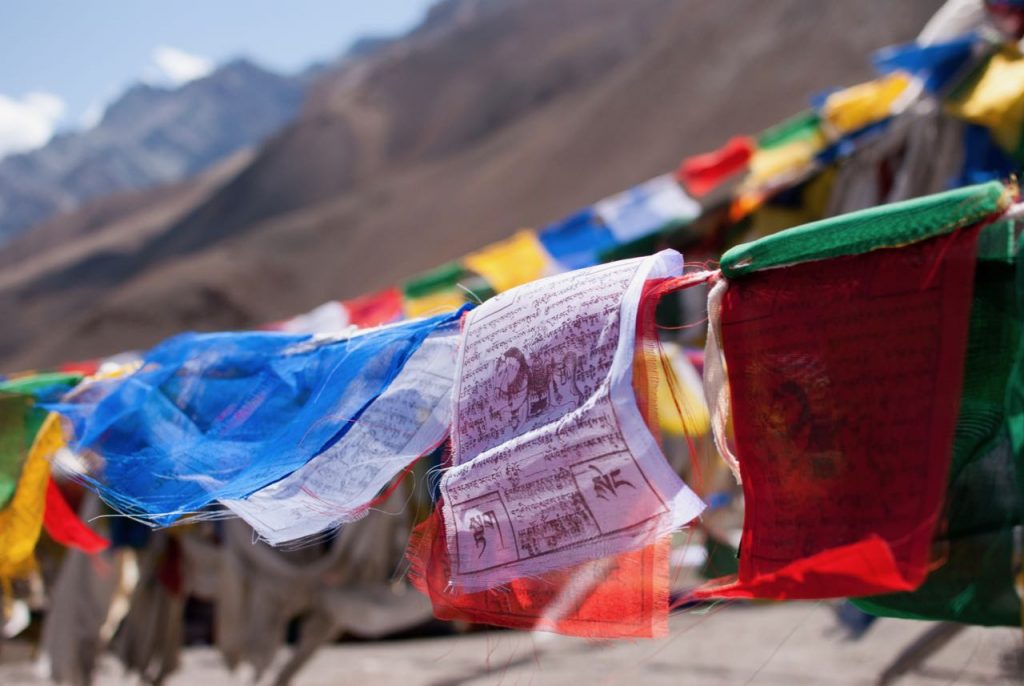
What Is Dosmochey Festival?
Dosmochey is observed in Lower Ladakh’s Likir, Leh Palace and the Diskit Monastery in Nubra. This festival is celebrated in the month of February (the 28th and 29th day of the twelfth month of the Tibetan calendar). It marks the last celebration associated with a particular year. Literally translating to the “Festival of Scapegoat”, Dosmochey is a popular Ladakhi prayer festival.
Started by the rulers of Ladakh in the 13th Century, the kingdom of King Lhachen Gongdup celebrated the Dosmochey festival for the first time. Leh Palace is the most popular location for this celebration, as this is where the celebrations initially began. The venue for the two-day festival is the courtyard of the palace. And of course, the monks and Lamas perform the chamm dance, which is rotated between various monasteries yearly.
On the 2nd day, the offerings from various monasteries, followers, and visitors are taken out and burnt in a procession while the locals whistle to ward away the evil spirits.
💡 Travel Tip: February is extreme winter in Ladakh with temperatures dropping to -15°C to -25°C. Road access is limited. If attending Dosmochey, fly into Leh and book heated accommodation well in advance. Check our winter Ladakh guide for detailed planning.
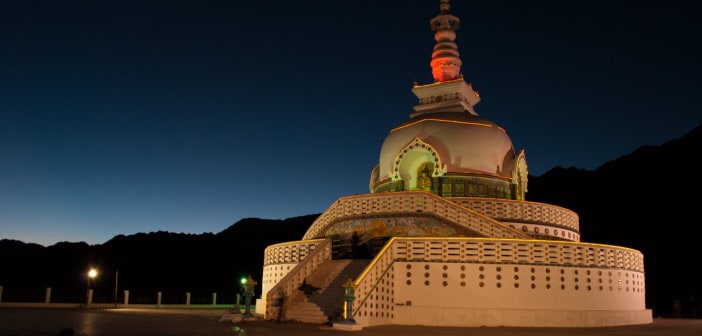
What Happens at Matho Nagrang Festival?
Matho Monastery near Leh celebrates the Matho Nagrang Festival, immediately after the Stok Guru Festival. The two-day Matho Nagrang festival falls on the 15th day of the first month of the Tibetan calendar. The lone Gompa of this monastery fervently represents the Sakya School of Tibetan Buddhism.
As is customary to Buddhism, monks wear colorful brocade and silk robes during the festival and perform masked dances. These masks are the depiction of Gods and Goddesses in Buddhism.
Similar to Stok Guru, there are also two oracles in attendance for the event. However, the oracles need to complete a month of meditation in the wilderness before the event. With extreme weather conditions in the winter months, this clearly shows the dedication and belief in the faith that people have.
The oracles provide words of wisdom and an insight into the future, presenting future predictions. Locals and villagers alike flock to the Monastery to understand ways of keeping evil at bay.
When Is Stok Guru Tsechu Festival Celebrated?
Third on the list of Ladakh Festivals is the Stok Guru Tsechu festival.
Falling in late February and commencing on the ninth day after the Tibetan New Year, Stok Guru Tsechu marks the 2-day celebration where monks of Spituk and Stok monasteries take part in festivities, performing mask dances. The biggest differentiator of this festival from other places of observance is that common men and villagers participate integrally in the festival.
Two common men from the nearby villages are assigned by the monks to be recipients of the spirit of the deities each year. The men are known as oracles, once the monks designate the locals. Both Oracles visit the monasteries, wherein they pass on integral messages from the Gods.
Key attractions include the different traditions followed here from other similar festivals, especially of commoners’ involvement in the festivities. Also, another major attraction during the festival is the masked dances, as is symbolic of most Buddhist festivals.
What Is the Significance of Saka Dawa Festival?
Next on the list of festivals in Ladakh is Saka Dawa Festival.
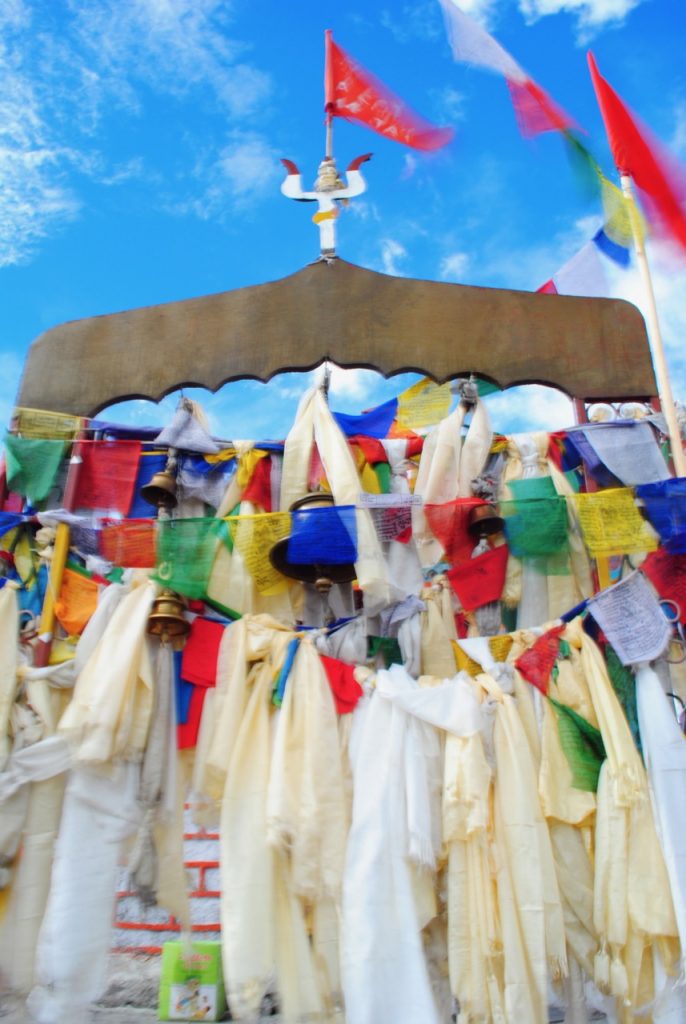
Saka translates to the “name of the closest star to earth”, which is clearly visible during the festival. Celebrated on the full moon of the 4th month of the Tibetan Calendar, Saka Dawa symbolizes the birth of Sakyamuni (Gautam Buddha), his enlightenment, and subsequently his Parinirvana.
On this holiest of days as per Tibetan Buddhism, the monks across Ladakh and other regions change the Tarboche flag pole, which lies to the South of the mountain, Kailash Kora. If the changed flag stays erect, it is considered very auspicious for the Tibetans. The most revered day for Buddhists, this is the day that marks the birth of their faith and the lifting of everyone’s life into spirituality.
Also, during this period, the region reveres the Buddha through the chanting of “Om Mani Padme Hum”. Also, usually, people refrain from killing and eating animals during the day. These ideologies are part of the eight Mahayana precepts. If you are in the region during this time, experiencing the reverence of Buddha and learning of His ideologies will make you more appreciative in life.
What Is Sindhu Darshan Festival About?
Held on the first full moon day in June, the Sindhu Darshan festival was first observed in October 1997 and has continued every season since. Truly representing unity and national pride, the festival is symbolically represented by way of its own name, Sindhu pays due respect to the Indus River. As the illustration of the birth of civilization in the region, the Indus River flows through communities. It nourishes all within reach in this difficult terrain.
However, over the years, this festival has morphed into an embrace of Indian diversity and heritage, while also paying respects to the protectors of our realm, our soldiers. The symbolic salute to our nation’s unsung heroes is marked with celebration, and artists of different castes, regions, and religions perform their traditional dances. The venue for the festival is 8 km from Leh, right on the banks of the Indus river at Shay Manla.
You can, of course, check our travel guide on the Indus – Zanskar Confluence.
Why Is Hemis Tsechu the Most Popular Festival in Ladakh?
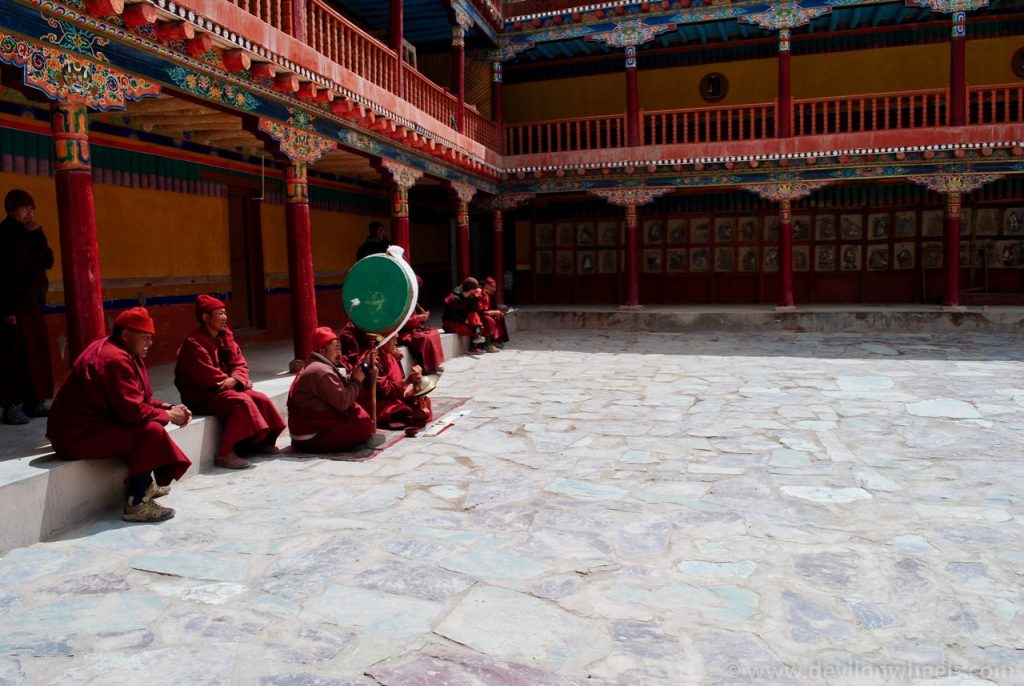
Commemorating the birth of Guru Padmasambhava, the founder of Tantric Buddhism in Tibet, Hemis is one of the most important festivals of the Ladakhi region and is celebrated in the largest monastery of Ladakh, Hemis. This festival in Ladakh is celebrated annually on the 10th day of the Tse-Chu, the lunar month of the Tibetan Calendar. Because that lunar date shifts against the regular calendar every year, so does Hemis Tsechu, in 2026 it fell on 24-25 June, while in 2027 it moves all the way to 13-14 July. Its popularity cannot be overshadowed by many festivals around the world and promises vibrancy and positivity throughout its two to three days.
Colorful clothing of monks and lamas is complemented by beautiful masked dances, synonymous with celebrations in the region. Of course, the sacred theatrical representation of the victory of good over evil is a tale to tell and will leave you mesmerized. What’s unique about the dance here is that it depicts the tale of Guru Padmasambhava’s life and his missions. The entire monastery is decked up most beautifully to showcase the spirit of festivity.
What Are the Traditions of the Hemis Festival?
During the Hemis festival each year, a giant, several-storeys-high thangka of Guru Padmasambhava is slung in the courtyard along with other precious thangkas. The festival also carries a lot of representation of the handicrafts and talents of the region.
Tradition dictates that monks and Lamas should wear long gowns, elaborate masks, and headgear. Every mask holds special significance and usually depicts forms of Gods and Goddesses. Villagers and natives dress up to the nines for Hemis Festival and gather around in the courtyard of the monastery.


The Head Lama, or ‘Rinpoche’, presides over the event and is responsible for ensuring the spirituality of the festival. Consumption of Chhaang, the local barley beer, is acceptable. The festivities end with the breaking up of the Storma and dispersing it in all directions. This custom indicates the cleansing of the soul after death. While celebrations happen annually, the monkey year as per the Tibetan calendar, which falls every 12 years, is a sight to behold.
Needless to say, the Hemis Festival is one of the most popular festivals in Ladakh.
💡 First-Timer Tip: Hemis Tsechu is THE best festival for first-time visitors. Roads are fully open, weather is pleasant, and the celebrations are the most elaborate. Book accommodation in Leh at least 2 months in advance, as hotels fill up fast. Hemis Monastery is 45 km from Leh, easily reachable on the same day. Keep in mind the 2026 edition (24-25 June) has already passed by the time most people are reading this update, so mark your calendar for 13-14 July 2027 instead.
What Is Special About Yuru Kabgyat Festival?
Lamayuru Monastery, situated 125 km from Leh, comes alive full of color during the two-day celebration of Yuru Kabgyat. Also, as is symbolic in Buddhist culture, all celebrations are accompanied by the traditional mask dances, folk music as well as other rituals to mark the riddance of evil while also offering prayers for peace.
What Is the Significance of Yuru Kabgyat Festival?
Given the keen significance of Yuru Kabgyat in Buddhist culture, celebrations are full of zeal and enthusiasm, with devotees attending from across the world. Heavy representation of folks and Lamas from Tibet, Japan, Korea, and China helps present a unique image of the amalgamation of Buddhist cultures.

Religiously, Yuru Kabgyat is devoted to the Lord of Death, Yama, and the Second Buddha or Lord of Wealth, Padmasambhava. The theatrical dance performed during the festival perfectly represents both Gods.
Since Lamas from various countries are present during the festivities, the clash of colors amps up the playfulness of the event. And of course, any Buddhist festival is incomplete without the Cham dance, wherein the monks dance in a circular motion, adorning gorgeous masks. The dance moves complement the sounds of cymbals, drums, and long pipes. At the end of the festival, sacrificial offerings are made and some sacred rituals are performed.
What Makes Ladakh Polo Festival Unique?
The Ladakh Polo Festival is one of the most unique and traditional experiences one can have when in Ladakh. With lots of music, tonnes of food and bags of celebrations, the Polo festival gives you ample opportunity to enjoy this heritage game.
The game was introduced to Ladakh in the 15th century CE when a princess from Baltistan, Singge Namgyal, visited the region. Gaining popularity through the decades and centuries that followed, Polo became an essential part of the Ladakhi DNA, so much so that it even shows up on other festive occasions, including the Buddhist and Muslim new years, Losar and Nowruz, respectively.
What Events Happen at the Polo Festival?
What’s interesting to observe is the difference in the Ladakhi adaptation of Polo from other regions of the world. Given the geographical topography, the game is played on highly arid land, making it far more demanding. Another interesting twist is the accompaniment of traditional folk music with each goal scored.
While Polo is the star attraction, there is a lot of activity ongoing during the week of festivities. Since this is primarily a display of tradition, you will get to experience a tonne, including archery, folk dances, and music.
A favorite amongst locals, and also a favorite of mine, is the local theatrical drama of Abi-Apo. One can even participate in a lot of games, or if you are anything like me, eat to your heart’s desire. The momos, Thukpa, and anything Tibetan are going to leave you drooling, so do indulge.
Lastly, no festival is ever complete without some shopping involved, and what is delightful about any Ladakhi festival is the handicrafts on display. Pattu, baskets, Thangka paintings, and of course, pashmina shawls are all available for your purchase.
So, do not miss this festival in Ladakh if you happen to be around.
When Is Phyang Tsedup Festival Celebrated?
The festival is celebrated at Phyang Monastery in July, on the 2nd and 3rd day of the 6th month as per the Tibetan Calendar. Phyang Monastery is 19 km from Leh and dedicated to the founder of the Drikung Kagyu Monastic order, Jigten Gonbo.
During the festival, a giant thangka of Jigten Gonbo is placed in the courtyard, and people worship it through the two days. Phyang Tsedup celebrates the triumph of good over evil, but the dance remains the center of attraction, with monks wearing vibrant silk costumes performing Chham and worshipping their deity.
This festival is especially applauded for its enthusiasm and energy. Visitors observe an abundance of messages of Lord Buddha displayed across the courtyard along with various exhibitions of Buddhist artifacts. Smiling Lamas in vibrant attire, portraying different characters of the dance, are surely a sight you won’t soon forget.
On the last day, some ritual offerings are burnt and the Storma is destroyed to conclude the procession.
What Happens at Takthok Tsechu Festival?
Takthok festival in Ladakh is a hit amongst the locals, and villagers from far-flung areas visit the cave Gompa at Takthok Monastery. The celebrations begin on the 10th day of the lunar Tibetan Calendar, and the locals and Lamas celebrate by way of Chham dances. While this dance form is usually known as the “death dance,” it is, however, very meditative and usually carries a message and teaching for those observing it.
Because of the spiritual significance of the festival, it is believed that people who witness it are bestowed with teachings and attain protection from the evils of the world. Also, given the warm place this festival holds in locals’ hearts, you’ll get to see the Ladakhis dressed to the nines for these days.
Which Lesser-Known Zanskar and Changthang Festivals Are Worth Knowing About?
The big-name festivals, Hemis, the Ladakh Festival, Losar, tend to get all the attention, and every travel blog lists them. But if you have already done a Ladakh trip and want something the crowds have not found yet, three smaller festivals are worth building an itinerary around. All three sit in the same July-August window as Hemis and the Gustors, so they are easy to combine with a broader Ladakh-Zanskar trip.
Shachukul Kabgyat is held at Shachukul Monastery in the Changthang region, usually in the first week of July. Being off the standard tourist circuit, it draws a mostly local crowd, so you get the mask dances and the community atmosphere without jostling for space with tour buses.
Korzok Gustor takes place at Korzok Monastery, right on the shore of Tso Moriri lake, in mid-to-late July. If you are already planning a trip to Tso Moriri, timing it around Korzok Gustor turns a scenic lake visit into a genuine cultural experience, and you get to see monks perform Chham with one of Ladakh’s most stunning high-altitude lakes as the backdrop.
Sani Naro Nasjal is celebrated at the ancient Sani Monastery in Zanskar, usually in the last week of July. Sani is one of the oldest religious sites in the entire Ladakh-Zanskar region, and this festival is a good reason to build in a Zanskar detour if you are planning a Zanskar Valley trip anyway.
💡 Keep in mind: None of these three are well covered online yet, so accommodation options near Shachukul, Korzok, and Sani are limited. Book your homestay or camp well in advance, and carry cash, ATMs are not reliable in any of these three locations.
Why Is Ladakh Festival Celebrated in September?
The Ladakh Festival, historically also called the Ladakh Harvest Festival, is one of merriment and delight. Held every year in Leh in the third week of September, in 2026 the Ministry of Tourism lists it as 21-23 September, though the exact day-span has varied by a day or two across recent 2026 listings so it is worth reconfirming, the entire region is in a joyous mood. Being a challenging terrain, with access cut off from the rest of the world for many portions of Ladakh, the harvest season, in particular, is an occasion to treasure.
Thus, the Ladakh Festival witnesses rich cultural displays including folk performances, mask dances, wedding ceremonies, archery, theatre, music, and polo, capping up with the main highlight, a carnival parade through Leh’s streets with everyone participating, climaxing at the Polo Grounds.
The extravaganza is an appreciation of agriculture and livelihood in Ladakhi folk culture, and there is due representation of the plethora of communities in the region, celebrating the blend of traditions. The finest display of color, talent, art, hard work and skill will leave you awe-struck. Unlike the lunar-calendar monastery festivals, the Ladakh Festival is anchored to the same September week every year, in 2026 that is 21-23 September per the Ministry of Tourism, which still makes it far easier to plan around than a festival that can move by weeks.
What Is Chemday Wangchok Festival?
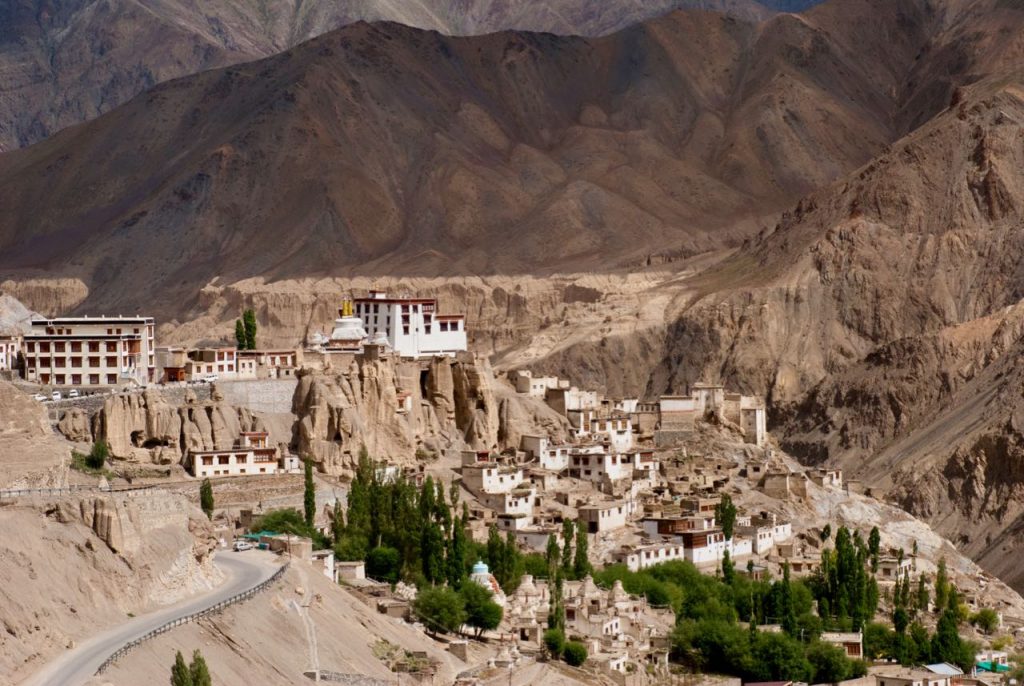
The 28th and 29th days of the ninth month of the Tibetan calendar mark the beginning of Chemday Wangchok. This festival is celebrated at the 370-year-old Chemrey Monastery, established by Buddhist Lama Taktsang Repa, situated 44 km from Leh. In keeping with Buddhist tradition, this festival marks the victory of good over evil.
You can visit Chemrey Monastery on your trip to Pangong Tso from Leh.
The festival is especially respected by the Drukpa sect of Tibetan Buddhists settled in Ladakh. True devotees of the festival, Drukpa folk are known to fully immerse themselves in the festivities. For this particular celebration, the monks of Chemrey Monastery meditate for a week before the beginning of the festivities to gain peace.
At the beginning of the merriment, these monks put up a soulful rendition of the masked dance, Chham, which continues for the two days. On the second day, a Mandal Puja is conducted on the premises of the monastery.
What Is the Significance of Galdan Namchot Festival?
Galdan Namchot has serious significance in Tibetan Buddhism, as it celebrates the birthday and Buddhahood of the Tibetan saint-scholar Tsongkhapa. It was under Tsongkhapa’s guidance that the Gelukpa School was founded, which formed the primary path for Tibetan Buddhism from the 14th Century onward.
During this festival, all the monasteries, along with public and residential buildings, are lit up to honor Tsongkhapa. Since Ladakhi culture is intertwined with Tibetan influences, this festival marks the beginning of the New Year celebrations, which continue through to the Losar festival.
Of course, food is an important part of the celebrations, and a lot of amazing Tibetan dishes are prepared and shared with loved ones. To mark the occasion, people present each other with a ‘Khatak’, a ceremonial scarf.
When Is Losar Festival Celebrated in Ladakh?
Losar is the biggest festivity in the harshest of climates, celebrated during the most unfriendly months, and it is a sight to see. Losar marks the New Year in Tibetan culture, and locals celebrate with delight across Ladakh. This festival follows Galdan Namchot and is celebrated as per the Tibetan calendar, in 2026 it begins 9 December, and in 2027 it moves to 28 December.
Predating even Buddhist timelines, Losar has its roots in the winter incense-burning custom of the Bon religion. It was during the reign of the Tibetan King Pude Gungyal in the 7th Century that this festival became an integral part of Tibetan and Buddhist culture.
Though earlier the dates of both Losar and Galdan Namchot were the same, in the first half of the 17th Century, King Jamyang Namgyal was planning an expedition against the Baltistan forces in the winter season. He thus decided that the festival would be celebrated later, and this has since become a tradition.
How Is Losar Festival Celebrated?
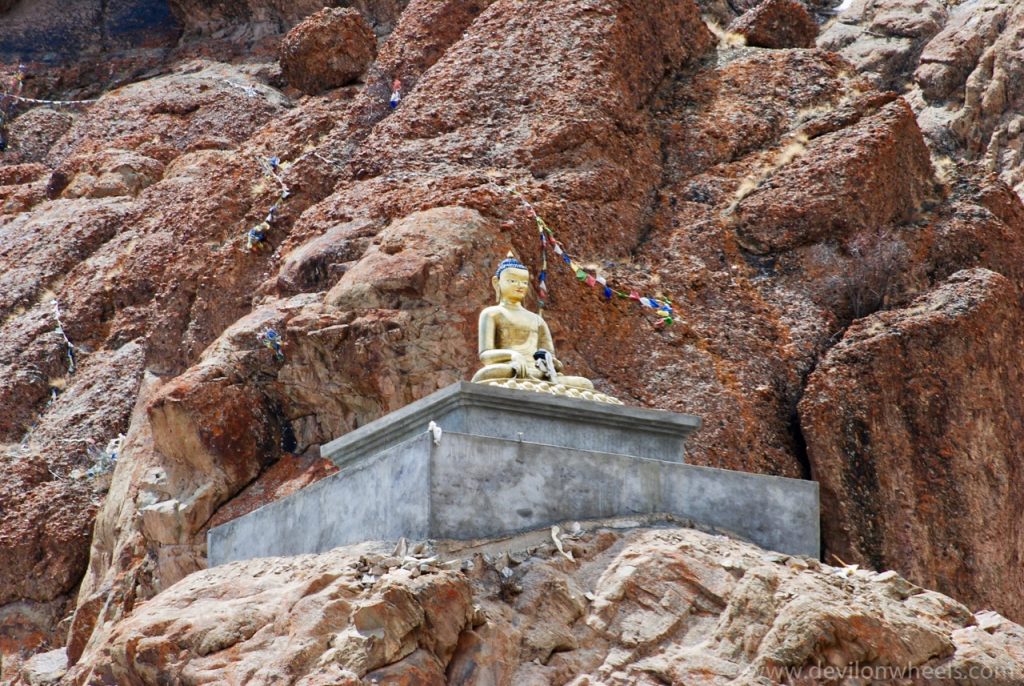
Celebrated for 15 days at a stretch, gods, ancestors as well as animals are well fed. On the first day, folks enjoy changkol (Tibetan barley beer). This event is followed by the King’s Losar and other holy celebrations throughout the period. At home, the walls of the kitchen are also decorated so that it can bring in prosperity in the New Year.
A procession of fire, Metho, is organized, during which slogans are chanted to chase away evil spirits. In some villages, locals make snow figures of older men and women to mark good luck. People of all age groups take part in Losar celebrations with full zeal.
What Are Gustor Festivals in Ladakh?
Gustor, literally meaning sacrifice on the 29th day, is celebrated to mark the victory of good over evil. These two-day celebrations represent progressive Buddhism and are observed through the year at various monasteries across Leh Ladakh and Zanskar Valley.
The most famous Gustors take place at Spituk, Thiksey, Karsha, Diskit, Stongde, and Korzok monasteries during different months of the year.
Of course, dance forms an integral part of the celebrations, with the dancers wearing masks that symbolize Gods and Goddesses as Protectors and Guardians. At the end of the two-day festivities, the climactic close includes the symbolic killing of evil by way of burning an effigy.
Let’s look at these festivals in various monasteries across the region.
When Is Spituk Gustor Celebrated?
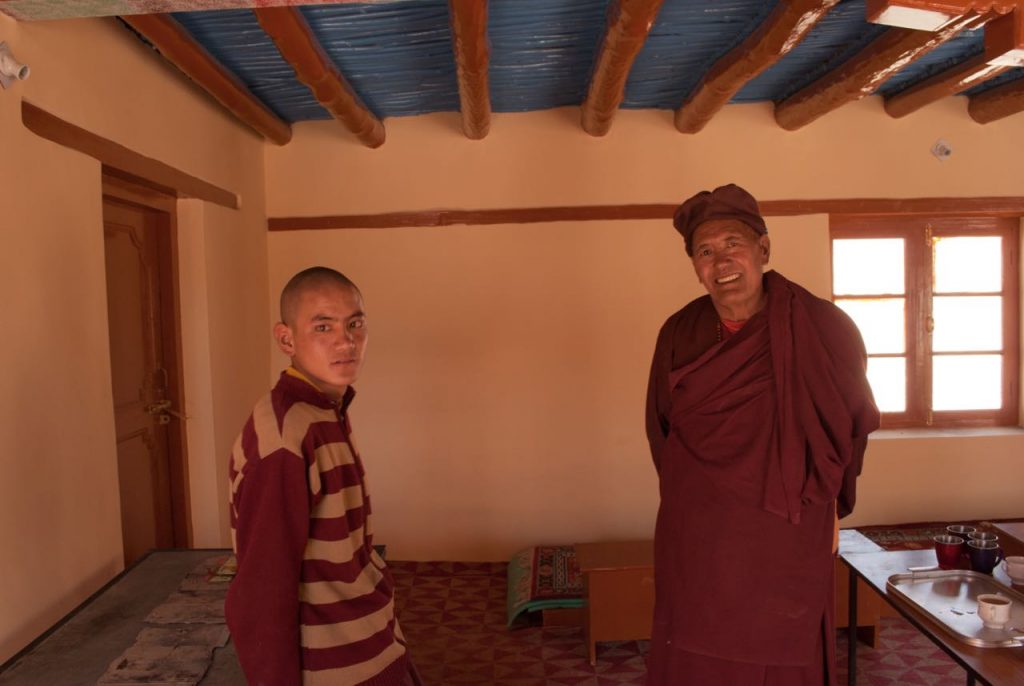
Spituk Gustor Festival is an annual winter celebration in Ladakh and is the perfect antidote for dealing with harsh winters. This traditional ritual, followed in monasteries of the reformist Geluk-pa order of Tibetan Buddhism, has been celebrated at Spituk Monastery since the 11th Century. Spituk Gustor symbolizes the victory of good over evil.
The main purpose of the festival is to pray for world peace, happiness, and the welfare of all beings. Prayers start seven days before the festival, but dances are performed only during the festival itself. Similar to other Gustors, effigies of evil forms are burnt, and Chham forms an integral part of the Spituk Gustor.
More drama and theatre than just dance, Chham represents guardian divinities (Dharmapalas) of the Buddhist pantheon and supporter divinities of the Geluk-pa order. The dance is accompanied by the harmonious melodies of longhorns, cymbals, conch shells, bells, and many other instruments.
Monks representing various monasteries of Stok, Sankar, Saboo and Spituk assemble here during the festival. The unique aspect of this particular Gustor is the uncovering of the protective amulet treasured at Spituk for the festival, where pilgrims come to take blessings.
What Happens at Karsha Gustor?
The largest Karsha Gustor celebration occurs at the Zanskar Karsha Monastery, 12 km from the capital of Zanskar, Padum. The festival begins with the preparation of the sacrificial cake, Storma, indicating an evil force.
The end of the festival is marked when a monk cuts the cake in two, ending the reign of evil. Karsha is one of the largest monasteries in the region, with over 100 resident Lamas, and the celebrations truly represent enthusiasm.
Karsha Monastery is known as the Yellow-Hat monastery, however, a Dharmapala black-hat dance is performed here too. Chham, of course, makes a cameo. The main purpose of observing Gustor is to seek protection for Buddhism and Buddhists.
When Does Stongde Gustor Take Place?
Held as per the Tibetan Calendar at Stongde Monastery in Zanskar, Stongde Gustor usually falls in the first week of July. Thanks to the pleasant weather and the peak tourist season, this festival, in particular, gets more visitors than most other Zanskar events. Of course, the famous Chham dance is performed, along with the burning of effigies to mark the end of evil.
What Makes Diskit Gustor Special?
The oldest and largest monastery of the Nubra Valley, Diskit Monastery was founded by Changzem Tserab Zangpo, a disciple of Tsong-Kha-Pa. Diskit Monastery has stunning views, overlooking the sleepy town of Diskit along the Shyok River. The Gompa of this monastery is associated with the Yellow Hat (Gelugpa) sect of Tibetan Buddhism.
Marking good over evil, the Gustor at Diskit monastery livens up the region with the burning of evil effigies, the Chham dance, and plenty of pomp and show. The music greatly complements the views, and you’ll soon be lost in a trance thanks to the peace and tranquility.
When Is Korzok Gustor Celebrated?
Korzok Gustor is held at Korzok Monastery, on the shore of Tso Moriri lake in the Changthang region, usually in the second half of July. What sets it apart from every other Gustor on this list is the setting, Korzok sits at over 4,500 metres, right on the edge of one of Ladakh’s highest and most beautiful lakes, so the Chham dance unfolds against a backdrop of turquoise water and snow-capped peaks. It is one of the least crowded Gustors, largely because Tso Moriri itself sees a fraction of the footfall that Pangong gets.
When Is Thiksey Gustor Held?
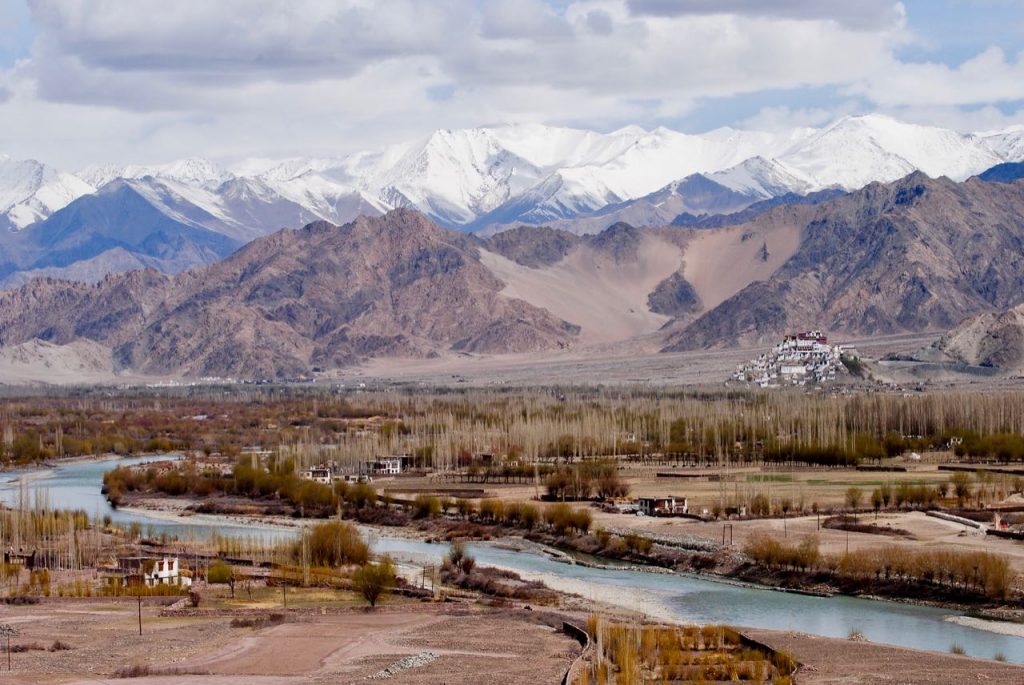
Similar to the Karsha Gustor, Thiksey Gustor is also a 2-day event that begins with the creation of the sacrificial cake (known here as the Torma) and later cutting the cake to mark the end and then distributing it among the worshippers. The unique aspect of the Thiksey Gustor is the re-enactment of the assassination of the traitor King Lang Darma of Tibet by a Buddhist monk during the mid-9th Century.
Did you know you can also check our travel guide on Stakna Monastery? It sits right on the way to Thiksey.
Which Festivals Should First-Time Visitors Attend?
If you are planning your first trip to Ladakh and want to time it with a festival, here are my recommendations based on accessibility, weather, and experience quality.
Best Overall: Hemis Tsechu. This is the most famous monastery festival in Ladakh, held in peak season when roads are fully open and weather is pleasant. Accommodation and transport are easily available, and the two to three day celebration is elaborate, colorful, and deeply spiritual. Hemis Monastery is just 45 km from Leh, so you can attend and return the same day. Note that 2026’s edition (24-25 June) has already passed, the next one falls on 13-14 July 2027.
Best for Cultural Immersion: Ladakh Festival (21-23 September 2026, per the Ministry of Tourism). If you want to see not just monastery rituals but also folk performances, archery, polo, music, and a grand parade through Leh’s streets, this is your festival. It’s accessible, vibrant, and happens right in Leh city, and its September-week timing makes it far easier to plan around than the lunar-calendar festivals.
Best for National Pride: Sindhu Darshan (roughly the last week of June each year). If you want to witness a uniquely Indian festival that blends spirituality with patriotism, this is it. The festival takes place on the banks of the Indus River, 8 km from Leh, and features performances from across India, honoring our soldiers and celebrating Indian diversity.
Avoid if First-Timer: Winter festivals like Dosmochey (February), Stok Guru Tsechu (February-March), and Spituk Gustor (January). These are beautiful and authentic, but winter road access is extremely limited, temperatures can drop to -25°C, and logistics are challenging. Save these for your second or third Ladakh trip.
How to Plan Your Trip Around Ladakh Festivals
Planning a Ladakh trip around festivals requires a bit more advance work than a regular trip. Here are practical tips based on my experience.
1. Book Accommodation Early: For major festivals like Hemis and the Ladakh Festival in September, hotels in Leh fill up 2-3 months in advance. If you are planning to attend, lock in your Leh accommodation as soon as you have confirmed travel dates.
2. Confirm Dates Closer to Travel: Since most of these festivals follow the Tibetan lunar calendar, exact Gregorian dates can shift by a day or two even within the same window we have listed above. The dates in this article are cross-checked against multiple current Ladakh tour-operator calendars as of August 2026, but confirm them 2-3 weeks before your trip by checking with a Leh-based operator or the specific monastery.
3. Add Buffer Days: If you are travelling specifically for a festival, add 1-2 buffer days on either side of the festival dates. Road closures, flight delays, and weather issues are common in Ladakh. A buffer ensures you don’t miss the festival due to travel delays.
4. Visit the Monastery a Day Early: For monastery festivals, visit the monastery a day before the main festival begins. You will see preparations, meet locals, and get a feel for the space without the tourist rush. On the festival day itself, arrive early morning to secure a good viewing spot in the monastery courtyard.
5. Respect Local Customs: Monastery festivals are deeply spiritual events, not tourist attractions. Dress modestly (cover shoulders and knees), remove your shoes before entering monastery premises, don’t interrupt monks during rituals, and ask permission before photographing people. Keep in mind that these are active religious ceremonies, and respectful behavior is non-negotiable.
6. Hire a Local Guide: If you want to truly understand the significance of the mask dances, chants, and rituals, hire a local Ladakhi guide who can explain the symbolism and stories behind each performance. The taxi drivers we recommend can also connect you with knowledgeable local guides.
Frequently Asked Questions About Ladakh Festivals
Which is the biggest festival in Ladakh?
Hemis Tsechu is the biggest and most popular monastery festival in Ladakh, celebrated at Hemis Monastery. It commemorates the birth of Guru Padmasambhava, the founder of Tantric Buddhism, and features elaborate mask dances, colorful thangkas, and thousands of devotees from across the world. Because it follows the Tibetan lunar calendar, the exact dates move each year, in 2026 it fell on 24-25 June, in 2027 it moves to 13-14 July.
When is the next major festival in Ladakh?
As of September 2026, the next major festival is the Ladakh Festival in Leh, held 21-23 September 2026 per the Ministry of Tourism (a few 2026 listings show slightly different dates, so confirm with Ladakh Tourism Department closer to your trip). It is followed by Diskit Gustor (8-9 October), Thiksey Gustor (28-29 October), Chemday Wangchok at Chemrey Monastery (7-8 November), Galdan Namchot (3 December), and Losar, the Ladakhi New Year, which begins 9 December 2026 and runs for 15 days.
Are Ladakh festivals open to tourists?
Yes, all major Ladakh festivals are open to tourists and visitors. Monastery festivals like Hemis, Lamayuru, and Spituk welcome travelers, though you are expected to follow monastery etiquette. Dress modestly, remove your shoes before entering courtyards, and be respectful during rituals. Photography is usually allowed but ask permission before photographing monks or locals.
When is the best time to visit Ladakh for festivals?
June to September is the best time to visit Ladakh for festivals. June-July brings Hemis Tsechu, Yuru Kabgyat, Phyang Tsedup, Takthok Tsechu, and the Zanskar/Changthang Gustors. September has the Ladakh Festival (21-23 September 2026). Roads are fully open during these months, weather is pleasant, and accommodation is easily available. Winter festivals (January-March) are more challenging due to extreme cold and limited road access.
Do I need permits to attend festivals in Ladakh?
For festivals within Leh city and nearby monasteries (Hemis, Thiksey, Spituk, Phyang, Matho, Stok), you do not need any special permit. If you are also visiting restricted inner-line areas for a festival, such as Diskit Gustor in Nubra Valley or Korzok Gustor near Tso Moriri, keep in mind that Indian nationals no longer need a stamped Inner Line Permit. Since 2021, that has been replaced by the online Ladakh Environment and Development Fee (EDF): Rs 400 per person one-time plus Rs 20 per person per day, with an optional Rs 50 one-time Red Cross Fund contribution, paid at lahdclehpermit.in. A week-long EDF receipt works out to around Rs 590 per person and covers Nubra, Pangong, Tso Moriri and other inner-line circuits on a single document. Zanskar festivals like Karsha Gustor and Sani Naro Nasjal do not need the EDF at all, since Zanskar itself is not an inner-line-restricted area. Foreign nationals still need a Protected Area Permit (PAP) through a registered Leh travel agent for any of these restricted circuits.
Can I attend multiple festivals in one trip?
Yes, if your trip timing aligns well. In July-August 2027, for example, Yuru Kabgyat (1-2 July), Shachukul Kabgyat (20-21 July), Stongde Gustor (21-22 July), Phyang Tsedup and Karsha Gustor (31 July-1 August), Korzok Gustor (6-7 August), Takthok Tsechu (11-12 August) and Sani Naro Nasjal (16-17 August) are spread across about six weeks. You can plan a 15-20 day trip covering 2-3 festivals along with regular Ladakh sightseeing. Just ensure you have enough buffer days between festivals for travel and acclimatization.
What is the Cham dance in Ladakh festivals?
Cham (also spelled Chaam or Chamm) is a sacred masked dance performed by monks during Buddhist festivals in Ladakh. Monks wear elaborate masks representing gods, goddesses, protectors, and demons from Tibetan Buddhist mythology. The dance tells stories of good triumphing over evil, and each mask, costume, and movement has deep symbolic meaning. Cham is accompanied by traditional instruments like longhorns, cymbals, drums, and conch shells.
What should I wear to Ladakh festivals?
Dress modestly and respectfully. Cover your shoulders and knees. Avoid shorts, short skirts, and sleeveless tops. Comfortable walking shoes are a must, as you will be standing for long hours in monastery courtyards. In June-September, weather is pleasant but carry a light jacket for evening temperatures. For winter festivals (January-March), you need serious cold-weather gear, with temperatures dropping to -25°C.
Is there an entry fee for Ladakh festivals?
No, there is no entry fee for monastery festivals like Hemis, Lamayuru, Phyang, Spituk, etc. These are religious events open to all. However, you may need to pay a small camera fee (Rs 50-100) if you wish to take photographs inside the monastery premises, verify locally as this varies by monastery. For government-organized events like Sindhu Darshan or the Ladakh Festival, there is no entry fee either.
Conclusion
I am sure you’d agree that the Land of High Passes, Ladakh, celebrates life in style. When you live in such harsh conditions, you start appreciating what is truly important, and for Buddhists, it is the precedence of good over evil.
Have a travel question?? You can subscribe to my YouTube channel and leave a comment to ask your travel questions about traveling to the Himalayas.
Culture is truly depicted through this myriad of festivities, and it is the best way to assimilate into the culture of the region. I hope this comprehensive list of festivals in Ladakh has taken you through the wonderland of Ladakh, and that the updated 2026-2027 dates save you from planning around a festival that has already happened, my friend.
If you are looking to plan your travels and need some guidance, do comment below. We have already prepared route guides for a beginner-level introduction and understanding, feel free to check our complete Manali-Leh via Zanskar route guide if you are planning to combine a festival visit with a road trip. Also, feel free to connect with the DwD community through our travel forum or join one of our DoW Mega Meets to experience these festivals with fellow travelers.
Happy holidays and celebrations, and see you at Hemis 🙂 …
Last Updated: September 2026
