


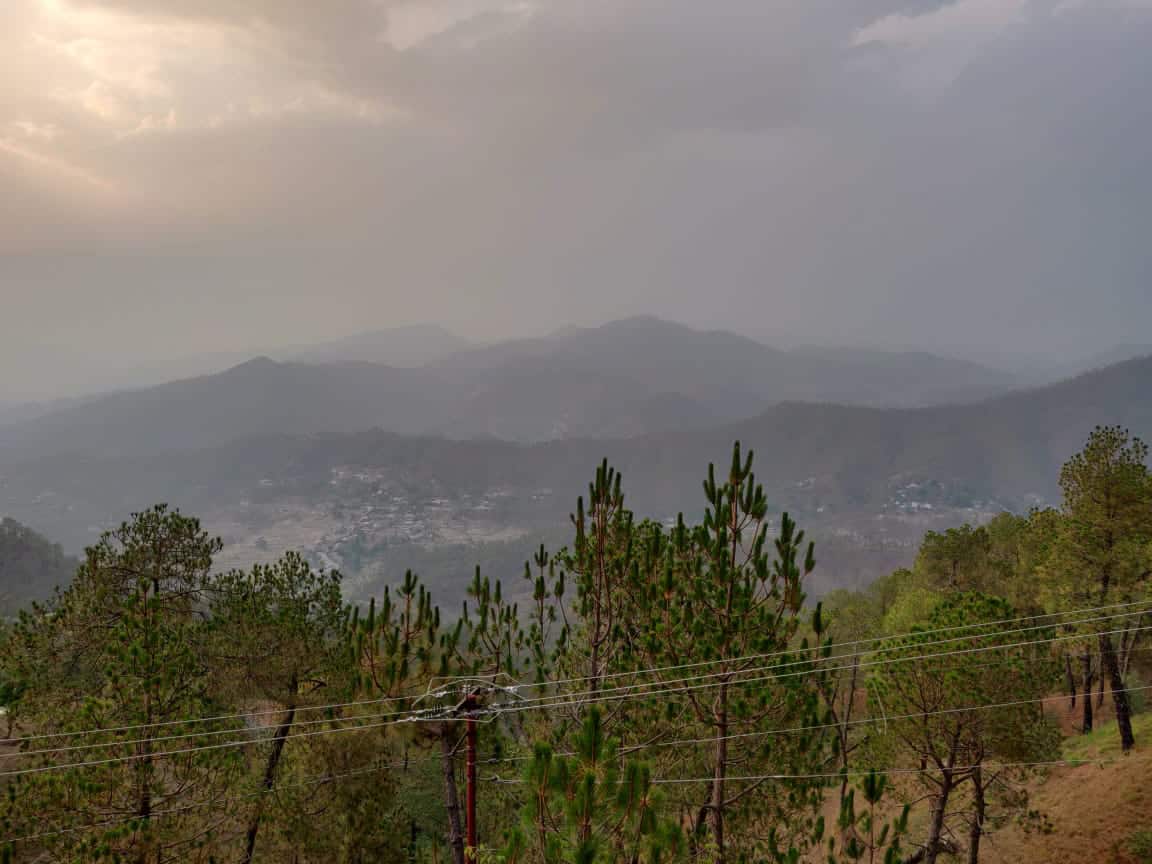
Binsar is one of those Kumaon hill stations that most people have never heard of, and honestly, that is exactly what makes it special. Tucked away at 2,420 meters (7,940 ft) on the Jhandi Hills of Almora district, this small hamlet inside the Binsar Wildlife Sanctuary offers some of the most stunning 360-degree Himalayan views you will find anywhere in Uttarakhand. If you are planning a trip to Binsar, this travel guide covers everything you need to know, from how to reach, best time to visit, where to stay, what to see, and a ready-to-use itinerary.
Let's quickly dive into the details:
What Makes Binsar Worth Visiting in 2026?
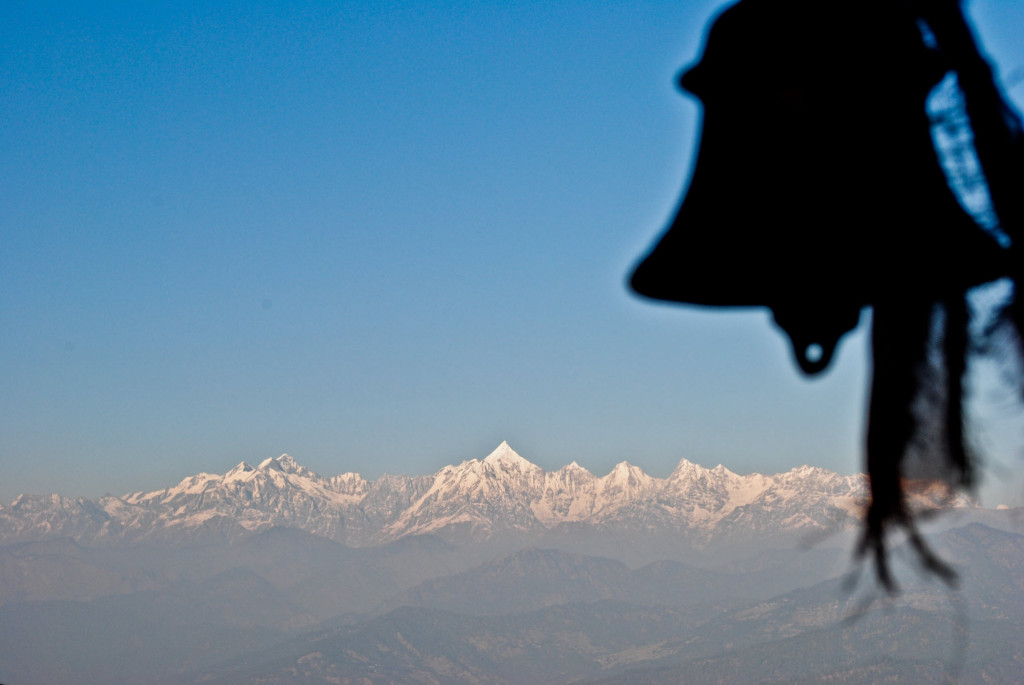
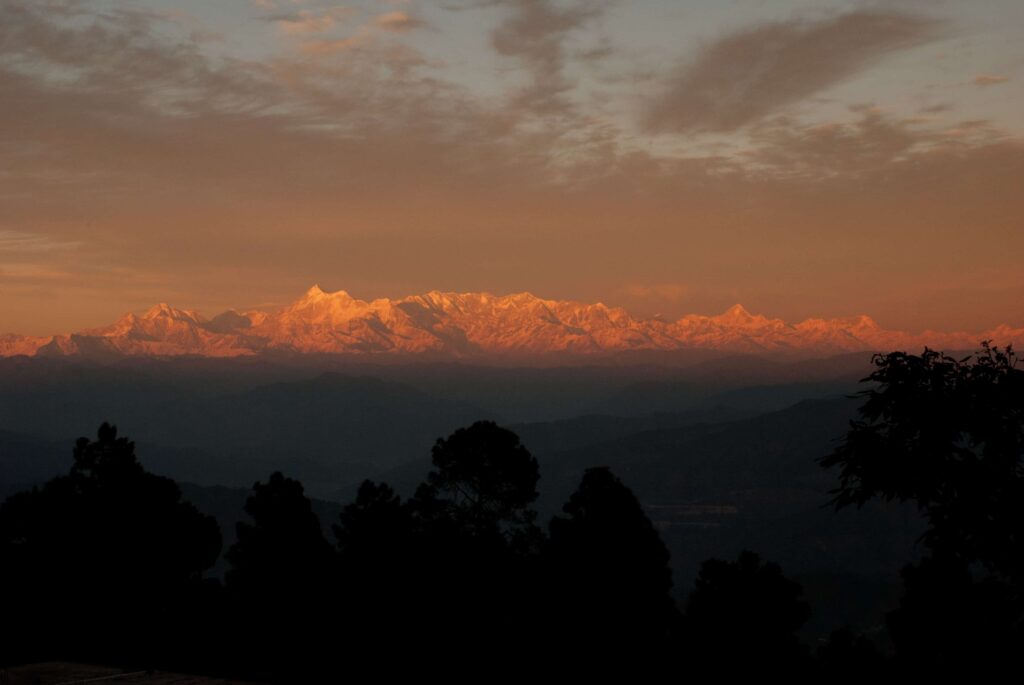
Binsar sits inside a protected wildlife sanctuary spread over 45 sq km of dense oak, rhododendron, and deodar forests. From the hilltop, you get unobstructed views of peaks like Chaukhamba (7,138 m), Nanda Devi (7,816 m), Nanda Kot (6,861 m), Panchachuli (6,904 m), Kedarnath (6,968 m), and Trishul (7,120 m). On a clear morning, the entire snow-capped range stretches across the horizon. I have long been an advocate of Uttarakhand as the next big thing when it comes to offbeat travel destinations, and Binsar is one of the prime examples as to why.
What sets Binsar apart from busier Kumaon destinations like Nainital or Almora is the solitude. There is no market here, no traffic jams, no honking. Just forests, birdsong, and those Himalayan views that change colour with every passing hour. For bird watchers, the sanctuary is home to over 200 species including Himalayan monal, koklass pheasant, and various woodpeckers. You may also spot barking deer, Himalayan black bear, leopard, and porcupine if you are lucky.
Where Is Binsar Located?
Binsar is located on the Jhandi Hills in Almora district of Kumaon, Uttarakhand. The nearest town is Almora, about 33 km away. Other popular Kumaon destinations like Nainital (95 km), Mukteshwar (70 km), and Chaukori (110 km) are all within a comfortable driving distance. This means you can easily club Binsar with a wider Kumaon circuit.
What Is the Best Time to Visit Binsar?
Binsar has pleasant weather for most of the year, making it a viable destination across seasons. Here is a month-by-month breakdown to help you decide.
April to June (Spring/Summer): This is the most popular window. Temperatures range from 15 to 30 degrees Celsius, skies are generally clear, and the forests are lush green. Great for trekking and bird watching. Book accommodation well in advance as this is peak season.
July to September (Monsoon): Heavy rainfall, leeches on trails, and risk of landslides. I would advise skipping this period unless you have experience driving in the hills during rains. The forests look their greenest, but the Himalayan views are mostly hidden behind clouds.
October to November (Autumn): My personal recommendation. Post-monsoon skies are the clearest, which means the best Himalayan views of the year. Temperatures are cool (5 to 20 degrees Celsius) and tourist crowds are thin. This is also the best time for photography.
December to March (Winter): Temperatures drop to 0 to 10 degrees Celsius. You may experience snowfall in December and January. Binsar is one of the places near Delhi where you can experience snowfall. Roads remain open, but carry warm layers and check conditions before starting.
Hence, the best time to visit Binsar is April to June and October to November. I also like to visit in late November or December when you find tourist rush everywhere else in Uttarakhand and Himachal, but Binsar remains peaceful.
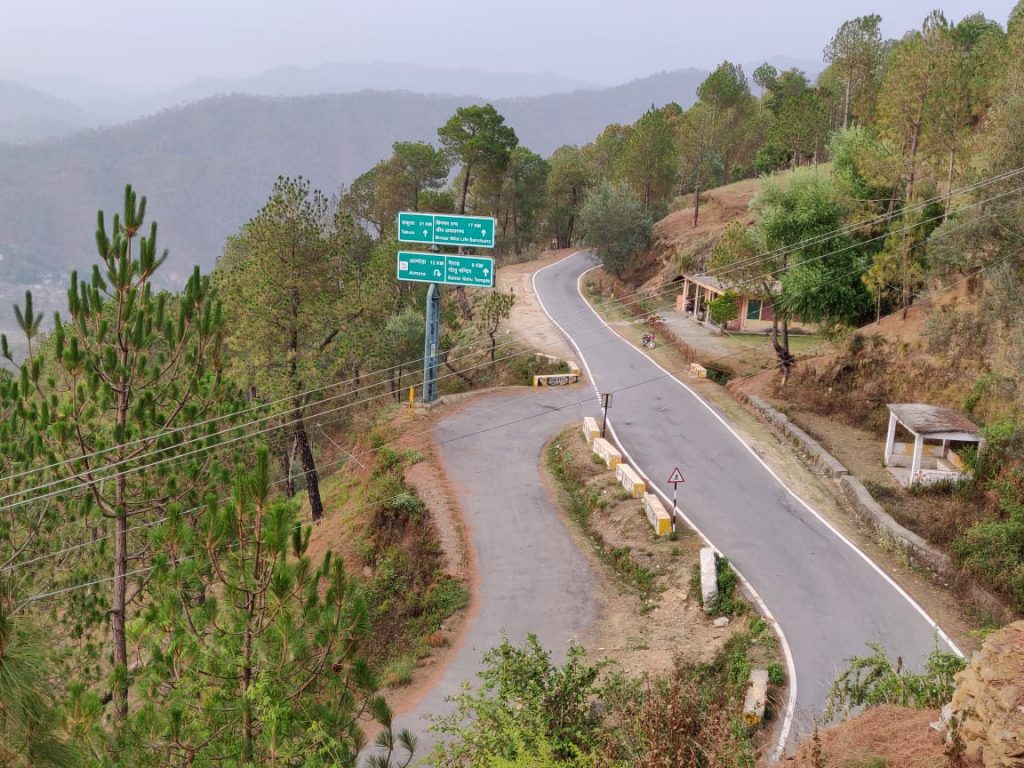
How to Reach Binsar from Delhi?
Binsar is about 380 km from Delhi and well connected by road. Here are your options for reaching Binsar depending on your mode of travel.
By Air
The nearest airport is Pantnagar (140 km from Binsar), with daily flights from Delhi. From Pantnagar, you can hire a taxi to Binsar, which takes about 5 hours. Expect to pay Rs 3,000 to Rs 4,000 for a one-way taxi.
By Train
The nearest railway station is Kathgodam (105 km from Binsar). Two daily trains connect Delhi to Kathgodam. The Ranikhet Express and Uttarakhand Sampark Kranti Express are the most popular options. From Kathgodam, shared taxis and UTC buses run to Almora (Rs 200 to Rs 300), and from Almora you can take a local taxi to Binsar (Rs 800 to Rs 1,200).


By Road (Self-Drive)
If you are driving from Delhi, the route is Delhi, Moradabad, Haldwani, Almora, Binsar. Total drive time is about 9 to 10 hours depending on traffic at Haldwani. Roads are well-maintained throughout. Any car, including sedans, can make this drive without any issues. You can also travel to Haldwani or Almora from Delhi by bus and then take a shared jeep or connecting bus to Binsar.
Keep in mind that there is no direct bus from Delhi to Binsar. You will need to take a bus to Almora (several UTC buses available from ISBT Anand Vihar, fare Rs 400 to Rs 600) and then arrange local transport to Binsar from there.
What Is the Best Itinerary for a Binsar Trip?
Quick Answer: A good Binsar itinerary runs 3 days from Delhi, built around the wildlife sanctuary and the Zero Point trek. Here is the day-by-day plan.

- Day 1, sanctuary and Zero Point: Arrive in Binsar, check in, and enter the Binsar Wildlife Sanctuary (entry Rs 150 per person, Rs 250 per vehicle). Trek the 2 km trail from the KMVN Tourist Rest House to Zero Point, starting by 3 PM to catch golden-hour light on the Himalayan range, then return for a bonfire evening.
- Day 2, sunrise plus one day trip: Trek back to Zero Point for sunrise, then visit the Bineshwar Mahadev Temple and the Pariyadeva Pashan megalithic site (1500 to 500 BC) inside the sanctuary. In the afternoon, add one option: Jageshwar’s 7th-century temple cluster (52 km, 2 hours) or the Chaukori loop via Sheraghat.
- Day 3, return or extend: Drive back to Delhi (9 to 10 hours) for a standard weekend trip. With 2 to 3 extra days, continue to Munsiyari (195 km, about 9 hours) via Birthi Waterfall instead.
- Book the rest house directly: For the KMVN Tourist Rest House inside the sanctuary, where the Zero Point trek starts, call the Binsar property directly at 8650002537 or 7579415101. This is the dedicated Binsar number on KMVN’s official rest-house contact list, not the general Nainital reservation desk.
Binsar is perfect for a long weekend getaway. Two full days are enough to explore the sanctuary, trek to Zero Point, and visit nearby attractions. Here is a suggested 3-day itinerary that works well.
Day 0: Overnight Drive from Delhi
Leave Delhi late at night (around 10 PM to 11 PM) so you arrive at Binsar by early morning. This gives you a full first day to explore. If you prefer a daytime drive, leave at dawn and reach by late afternoon.
Day 1: Binsar Wildlife Sanctuary and Zero Point
After reaching, check in to your hotel and freshen up. Then head out to explore the Binsar Wildlife Sanctuary. The sanctuary was established in 1988 and spread over 45 sq km of dense forests. Entry fee is Rs 150 per person and Rs 250 for your vehicle (as of 2025). A guide costs around Rs 300 for a short jungle walk and is recommended if you want to spot wildlife.
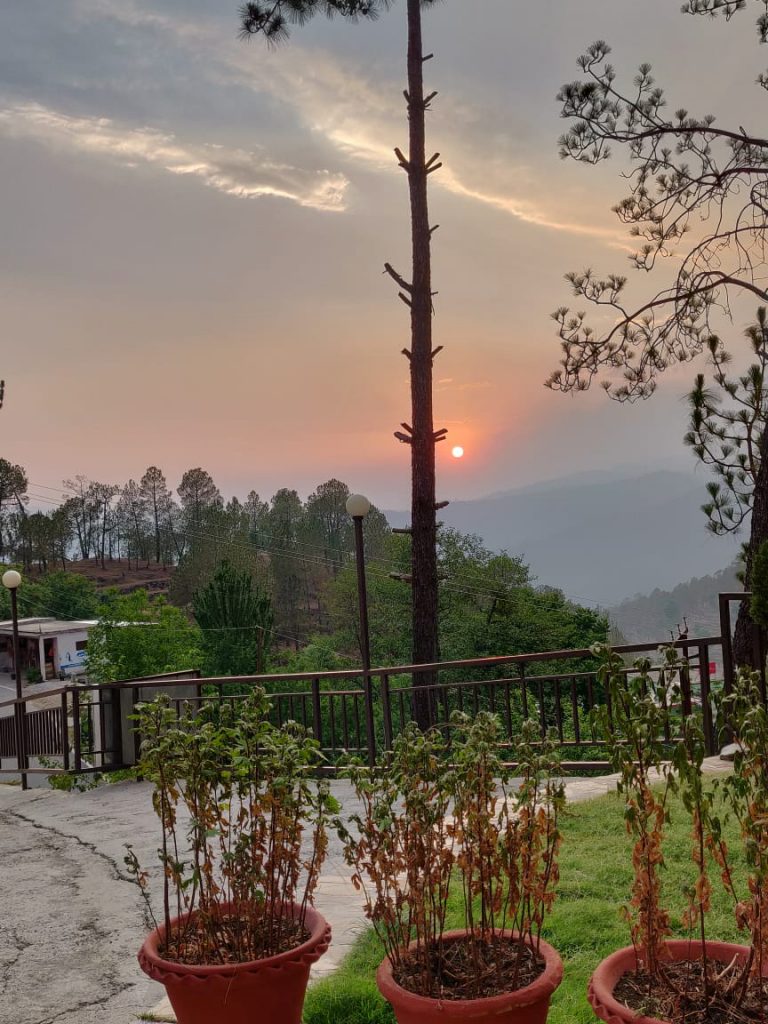
In the afternoon, trek to Zero Point. This is the highest vantage point in the sanctuary and offers a complete 360-degree panorama of the Himalayan range. The trek is about 2 km from the KMVN Tourist Rest House, mostly through dense forest. Start by 3 PM to catch the golden hour light on the peaks. Head back for a bonfire evening at your hotel.
Day 2: Local Sightseeing or Day Trip Options
You have three options for Day 2 depending on your interests.
Option A: Sunrise at Zero Point + Local Exploration. Wake up early and trek to Zero Point again for sunrise. The first light hitting Nanda Devi and Panchachuli is something you will remember. After breakfast, visit the Bineshwar Mahadev Temple (an ancient Shiva temple inside the sanctuary) and the Pariyadeva Pashan, a Megalithic-age site (1500 BC to 500 BC) on the Almora-Binsar road. You can also visit Kasar Devi Temple, about 20 km away, known for its spiritual significance and Bob Dylan-era hippie history.
Option B: Day trip to Jageshwar. Jageshwar Dham is about 52 km from Binsar (2 hours drive) and houses a cluster of over 100 ancient stone temples dating back to the 7th century, dedicated to Lord Shiva. The drive through dense deodar forests is beautiful. This is a half-day trip, and you can be back by late afternoon.
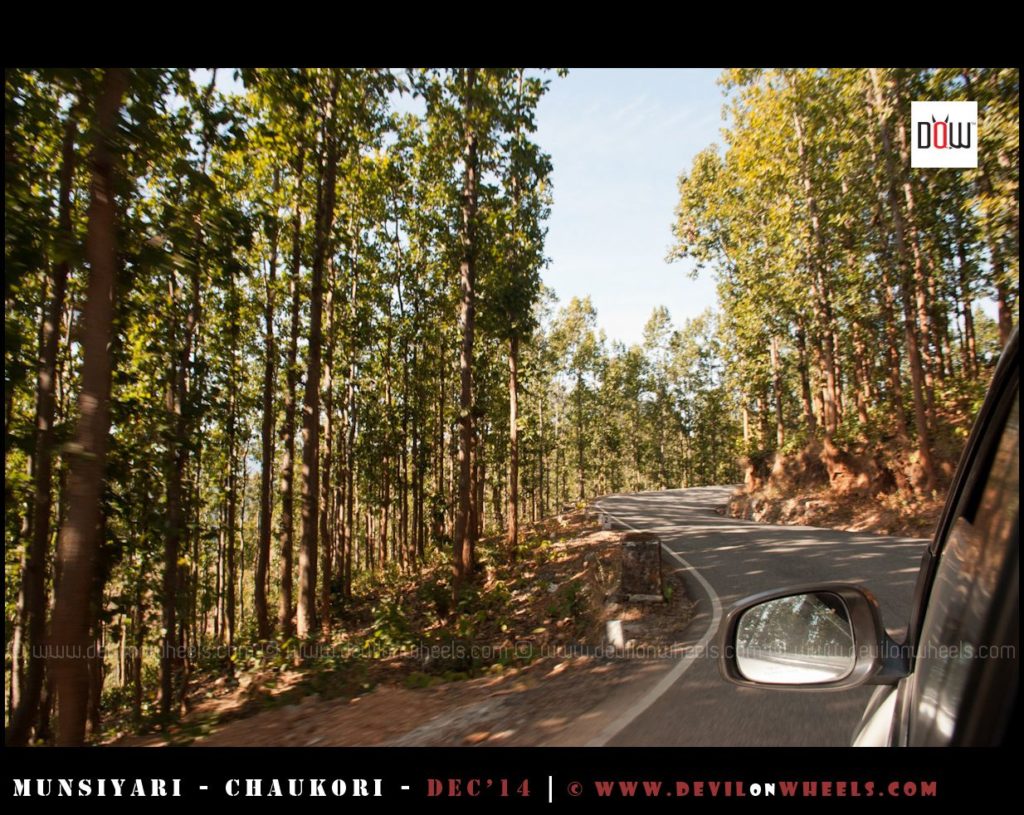
Option C: Day trip to Chaukori. If you are into road trips, plan the circuit of Binsar to Baijnath to Chaukori and back via the Sheraghat route. The Chaukori to Binsar stretch through Sheraghat forest is particularly scenic. Nothing beats spending a night at Chaukori to watch the famous sunrise and sunset over the Panchachuli range.
Option D: Day trip to Patal Bhuvaneshwar. This majestic limestone cave temple is about 109 km from Binsar (3.5 hour drive). The cave is 160 meters long and 90 feet deep from the entrance. If you are into mythology or geology, you will love it. Start early because this will be a 12-hour round trip. You can also stay overnight at Chaukori to cut the return drive.
Day 3: Return to Delhi or Continue to Munsiyari
Head back to Delhi, leaving early to reach at a comfortable time. The drive back takes 9 to 10 hours.
If you have 2 to 3 more days in hand, you can extend the trip to Munsiyari (195 km from Binsar, about 9 hours drive). Do not try a day trip to Munsiyari from Binsar, it will be too hectic. Stay at least one night there. On the way, stop at Birthi Waterfall. You can return via Kausani for a different route.
Where Should You Stay in Binsar?
Accommodation in Binsar is limited compared to commercial hill stations, which is part of its charm. Here are the main options.
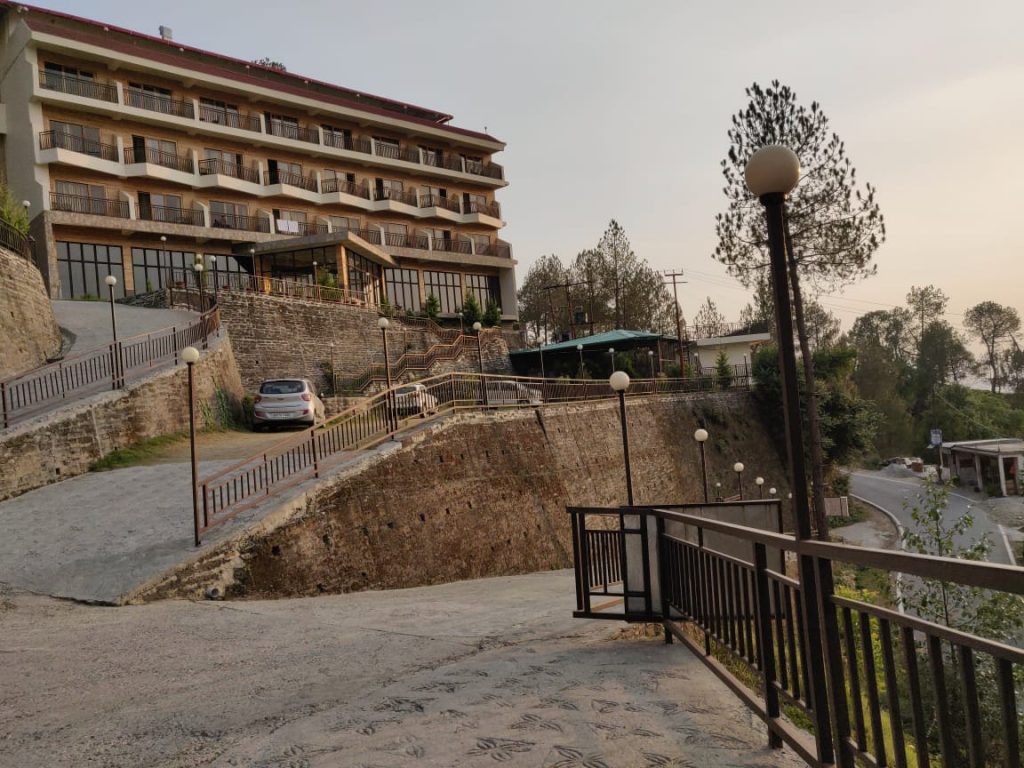
KMVN Tourist Rest House (Budget, Rs 1,500 to Rs 3,500/night): The KMVN Binsar property is the most convenient option, located right inside the sanctuary with the Zero Point trek starting from here. Rooms include Super Deluxe, Deluxe, Executive, and Standard categories. The building looks a bit dated, but the service is good and the views from the property are outstanding. As with most Kumaon locations, KMVN never disappoints.
Binsar Forest Retreat (Mid-Range to Premium, Rs 4,000 to Rs 8,000/night): Slightly more expensive, but the rooms, views, and service justify the price. A great option if you want a more comfortable stay.
The Kumaon (Luxury, Rs 10,000+/night): A boutique property with private terraces and stunning mountain views. Popular with couples and those looking for a premium experience.
Camping: Several operators offer camping experiences inside or near the sanctuary. This is a great option for groups and adventure lovers. Expect to pay Rs 1,500 to Rs 3,000 per person including meals.
If you cannot find availability in Binsar (common during peak season), head to Almora (33 km away) where there are plenty of budget and mid-range hotels.
What About Food in Binsar?
Given the secluded nature of Binsar, standalone restaurants are virtually non-existent. Your main options for food are the restaurant at KMVN (serves basic North Indian meals, Rs 150 to Rs 300 per thali), your hotel’s in-house dining, and a couple of small cafes like Anjana and Mohan’s near the sanctuary area. Roadside dhabas on the Almora-Binsar road also come in handy. If you are camping, meals are usually included in the package.
My advice: carry some snacks, biscuits, and instant noodles with you. There are no convenience stores inside the sanctuary, and the nearest market is in Almora.
What Can You Buy in Binsar?
Any Kumaon trip is incomplete without picking up some local products. Look for rhododendron juice (buransh, highly recommended, you will not find it elsewhere easily), local honey, hand-knitted woolen shawls, handmade soaps, and carved wooden items. The best shopping is in Almora, but small vendors near the sanctuary also sell these products.
How Much Does a Binsar Trip Cost in 2026?
Here is a rough budget breakdown for a 3-day trip to Binsar from Delhi for two people.
| Expense | Budget (Rs) | Mid-Range (Rs) |
|---|---|---|
| Fuel/Transport (Delhi return) | 3,000 to 4,000 | 3,000 to 4,000 |
| Accommodation (2 nights) | 3,000 to 5,000 | 8,000 to 16,000 |
| Food (3 days) | 1,500 to 2,000 | 3,000 to 5,000 |
| Sanctuary Entry + Guide | 600 to 800 | 600 to 800 |
| Miscellaneous | 500 to 1,000 | 1,000 to 2,000 |
| Total (2 people) | Rs 8,600 to Rs 12,800 | Rs 15,600 to Rs 27,800 |
Solo travelers on public transport can bring the cost down further. A bus from Delhi to Almora costs Rs 400 to Rs 600, and shared jeeps from Almora to Binsar area cost Rs 100 to Rs 200 per person.
What Are the Practical Tips for Visiting Binsar?
- Mobile network: Jio and BSNL work well in the Binsar area. Airtel coverage is patchy inside the sanctuary. Download offline maps before entering the forest area.
- ATM: The nearest ATM is in Almora. Carry sufficient cash as digital payments are unreliable in Binsar.
- Electricity: Power cuts happen, especially in summer. Most resorts have backup, but smaller guesthouses may face longer outages. Carry a power bank.
- Trekking in monsoon: Avoid trekking inside the sanctuary during heavy rain. Trails get slippery and leeches are common.
- Booking in advance: Binsar has very limited accommodation. During April to June peak season, hotels get booked months in advance. Do not leave it to the last minute.
- Nearby option, Manila: An even more offbeat hamlet near Almora. Check my travel guide for another hidden Kumaon gem.
- Berinag: At a distance of 95 km from Binsar, this small hamlet at 1,740 meters offers different perspectives on the snow-capped Himalayan peaks.
Also, do not forget to check my list of things to carry on Himalayan trips before you pack. And if you are heading here with someone who loves these trips, my Himalayan travel gift ideas guide has some practical suggestions too.
History and Mythology of Binsar
Binsar was the summer capital of the Chand Dynasty that ruled the Kumaon region for centuries. The ancient Bineshwar Mahadev Temple inside the sanctuary is a source of local pride and dates back several centuries.
The name Binsar translates to “Without a Head.” According to local legend, a battle took place between the King of Binsar and the local deity Golu Devta. In the battle, Golu Devta was beheaded. People believe his trunk fell at Gairad Dana Golu near Binsar National Park and his head at Kaparkahan near Binsar. Both places have ancient temples of Golu Devta that you can visit.
Frequently Asked Questions
Is Binsar worth visiting?
Yes, absolutely. If you are looking for a peaceful Kumaon getaway with stunning Himalayan views, rich birdlife, and dense forests without the tourist crowds of Nainital or Mussoorie, Binsar is an excellent choice. It is especially good for couples, families, and bird watchers.
How many days are enough for Binsar?
Two full days are enough to explore the Binsar Wildlife Sanctuary, trek to Zero Point, and visit nearby temples. If you want to add day trips to Jageshwar, Chaukori, or Patal Bhuvaneshwar, plan for 3 to 4 days.
What is the entry fee for Binsar Wildlife Sanctuary?
The entry fee is Rs 150 per person for Indian nationals and Rs 600 for foreigners (as of 2025). Vehicle entry costs Rs 250 for cars. A forest guide for a short trek costs around Rs 300.
Can I visit Binsar in winter?
Yes. Binsar is accessible throughout the year. In winter (December to February), temperatures drop to 0 to 5 degrees Celsius and there is a chance of snowfall. Roads remain open, but carry warm clothes and check weather conditions before starting.
Is Binsar safe for solo travelers?
Binsar is very safe for solo travelers. The area is peaceful, locals are friendly, and the sanctuary has forest guards on patrol. The only concern is limited accommodation, so book ahead. If you enjoy solo travel, feel free to check my guides on easy treks in Uttarakhand for more ideas.
What is the nearest petrol pump to Binsar?
The nearest petrol pump is in Almora, about 33 km from Binsar. Make sure you fuel up before entering the sanctuary area.
Can I visit Binsar and Jageshwar together?
Yes. Jageshwar is about 52 km from Binsar and makes for a comfortable half-day trip. You can visit the ancient temple complex and return to Binsar by evening. Many travelers also combine Binsar with a wider Kumaon circuit including Almora, Kausani, and Chaukori.
Wrapping Up
Binsar is one of those rare places in Uttarakhand that has managed to stay quiet despite having everything a Himalayan traveler could want. The views, the forests, the birdlife, and the sheer peace of the place make it worth the drive from Delhi. Whether you are planning a weekend escape or a longer Kumaon road trip, Binsar will not disappoint.
If you have visited Binsar before, do share your experience in the comments below. And if you have any questions about planning your trip, feel free to ask. The DwD community is always happy to help fellow travelers 🙂
Last Updated: April 2026
