


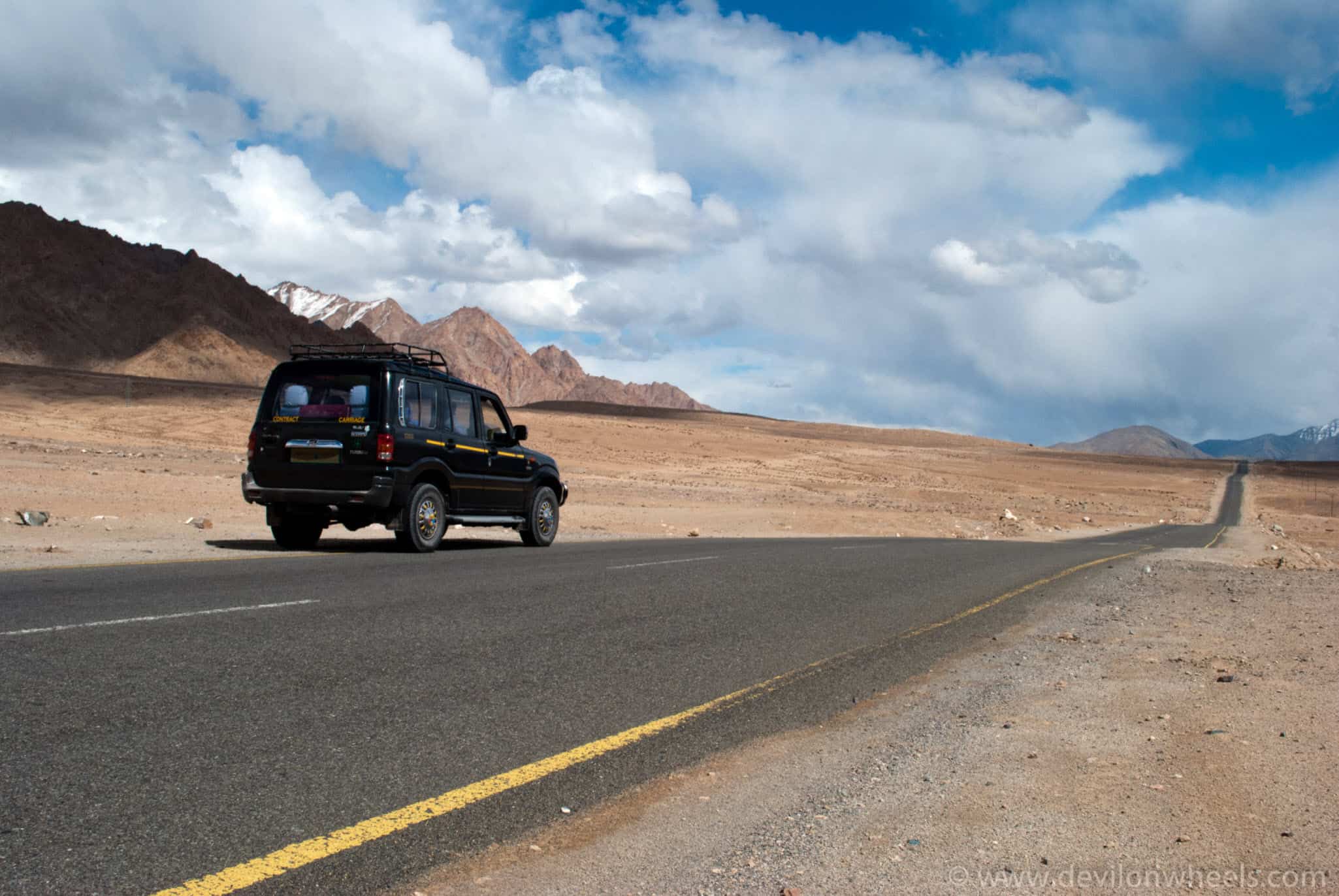
A self drive to Ladakh is one of the most thrilling road trips you can ever undertake. Every year, as the season kicks off between May and September, hundreds of travelers gear up to drive their own cars over some of the highest motorable passes in the world. They reach Leh via the Manali to Leh Highway or the scenic Srinagar to Leh Highway, and the experience stays with them for a lifetime.
I have been self-driving to Ladakh for over a decade now. I have taken my Santro, Swift, and Swift dZire to some of the most remote corners up there. Over the years, I have picked up lessons, some the easy way and some the hard way. In this guide, I am sharing everything I have learned about making a successful self drive trip to Leh Ladakh, including driving tips, route-wise road conditions for every car type, essential spares, permit requirements, and the most common mistakes people make.
Let's quickly dive into the details:
What Should You Know Before a Self Drive to Ladakh in 2026?
A self drive to Ladakh is not a regular highway drive. You will be crossing passes above 17,000 feet, navigating water crossings, handling loose gravel, and driving through sections where help can be hours away. The Manali to Leh Highway alone has five high altitude passes, and the road conditions change with every passing week during the season. Having the right preparation, the right mindset, and the right information can make the difference between a dream trip and a nightmare.
Here is a practical info snapshot for anyone planning a self drive to Ladakh in 2026.
| Detail | Info |
|---|---|
| Best Time | June to September (both highways open) |
| Routes | Manali-Leh Highway (474 km) or Srinagar-Leh Highway (434 km) |
| Permits Required | ILP for Nubra, Pangong, Tso Moriri, Hanle, Turtuk, Chusul |
| Environment Fee | Rs 400/person + Rs 20/person/day + Rs 10 Red Cross/day |
| Fuel Stations in Ladakh | Leh, Karu, Diskit (Nubra), Tangste (Pangong route) |
| Minimum Ground Clearance | 170-180 mm recommended |
| Key Passes (Manali-Leh) | Rohtang/Atal Tunnel, Baralacha La, Nakee La, Lachalung La, Tanglang La |
| Total Drive Days | 2 days minimum (Delhi to Leh), 3 recommended |
How Should You Prepare Your Car for a Ladakh Self Drive Trip?
Your car is your lifeline on a Ladakh road trip. Get it serviced at least 2-3 weeks before departure, not the day before. This gives time to identify and fix any issues that surface after the service. Here is what to focus on.
Engine and mechanical check: Get the engine oil, coolant, brake fluid, and power steering fluid topped up or replaced. Check the timing belt and all drive belts. If your car is due for a major service, get it done well in advance. A breakdown on the Manali-Leh Highway can leave you stranded for hours, sometimes days.
Tyres: This is the single most important thing. All four tyres should have at least 70-80% tread depth. Carry two spare tyres if possible, one is the absolute minimum. Check the spare tyre for punctures before leaving. Many people discover their spare is flat only when they need it at 15,000 feet.
Brakes: Get brake pads checked and replaced if they are even slightly worn. The descents from Khardung La, Chang La, and Baralacha La are steep and long. Faulty brakes on these stretches can be fatal.
Air filter: Ladakh roads are incredibly dusty. A clean air filter ensures better engine performance and fuel efficiency at altitude. Replace it before the trip.
Underbody protection: If your car has low ground clearance, consider getting an engine sump guard installed. The oil sump is the most vulnerable part of the underbelly, and a single rock hit can crack it, draining all your engine oil in the middle of nowhere.
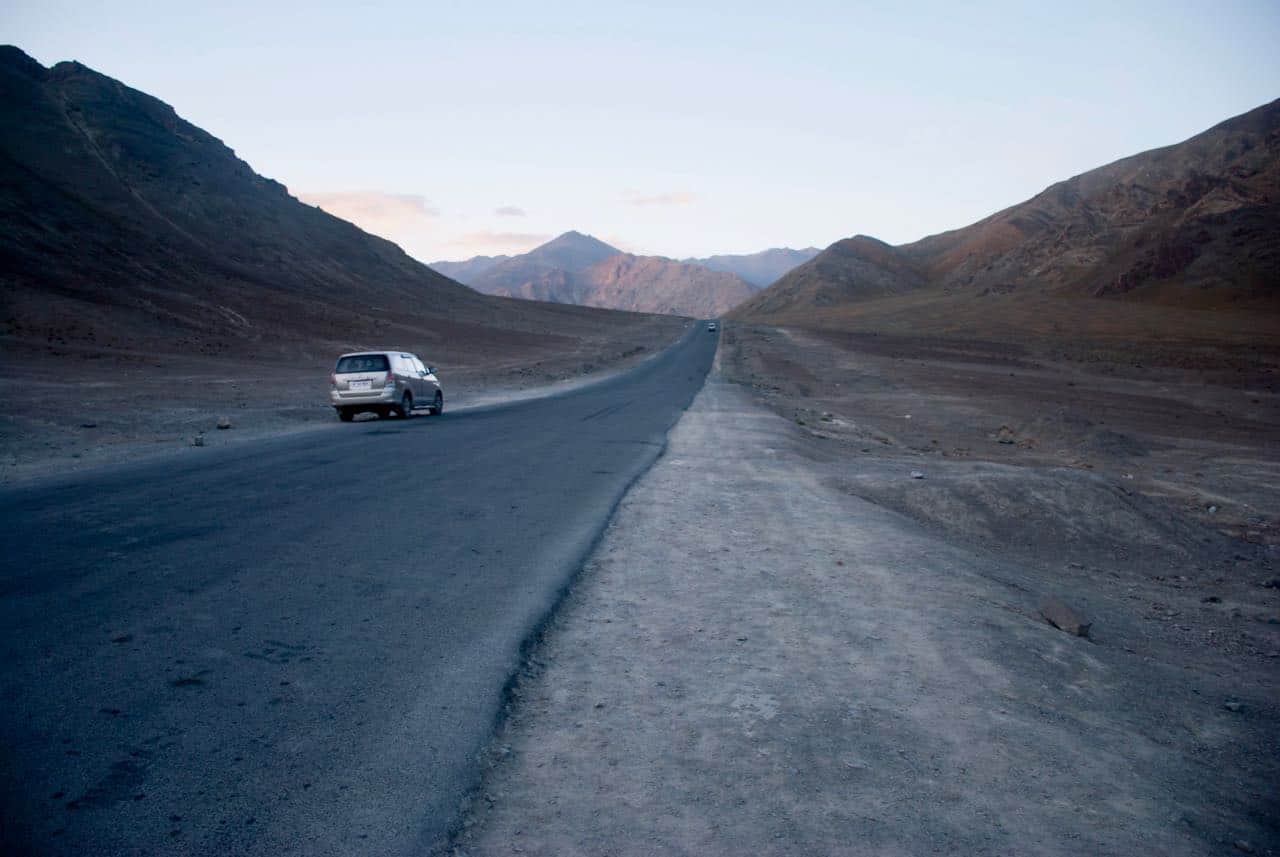
What Are the Most Important Driving Tips for Ladakh?
I have compiled these tips from my own experience driving to Ladakh multiple times. Some of these I learned from mistakes, and I would rather you not repeat them. Keep in mind, these are not optional suggestions. Following them seriously can save your car, your trip, and possibly your life.
1. Leave Overconfidence at Home
Never be overconfident that you are a master driver, that you have done Rohtang Pass multiple times, or that you drive well in the plains. Driving to Ladakh via the Manali-Leh Highway is unlike any driving you will have done before.
Even the smoothest roads that look like freshly laid tarmac can have sudden craters, washed-out sections, or hidden rocks. If you see a large rock lying in the middle of the road, especially on loose gravel sections, it is always better to step out and move it aside rather than trying to straddle it. One wrong judgment and the rock hits your oil sump.
Hence, when you make a Leh Ladakh road trip by car, remember to leave the overconfidence at home. Being cautious is not being slow. It is being smart.
2. Never Rush Through Tricky Road Sections
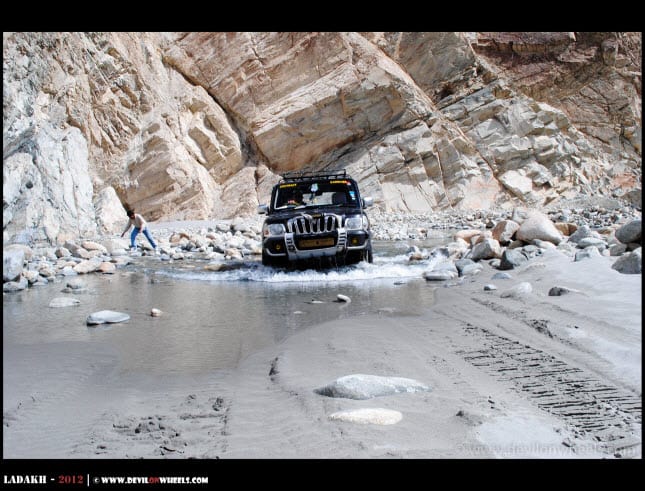
Whenever you encounter a rough section, a landslide area, a water crossing, or a badly damaged stretch, never rush through it. Park your car aside, step out, and assess the situation on foot.
Watch how other vehicles are crossing that section. If it is a water crossing, check the depth and flow with a stick before attempting it. Cross water crossings before noon whenever possible, as glacial melt raises water levels significantly in the afternoon.
Rushing through tricky sections can end badly. Sharp stones beneath loose gravel can cut tyres or puncture the engine sump. A moment of patience can save you from being stuck for hours.
Pro Tip: If you are planning a self drive to Ladakh, make sure to check our guide on 40 must-have things to carry on a self drive trip to Ladakh.
3. Know Your Car Inside Out
It is essential to know your vehicle well because some road sections on the Ladakh drive are simply not possible to cross without scraping the underbelly, especially with hatchbacks and sedans that have low ground clearance.


You need to know which parts of the underbelly you absolutely must protect (the oil sump, always) and which parts can take a scrape without causing damage. You should also know your car’s turning radius, its behavior in low gear on steep inclines, and how it handles at altitude where engine power drops by 20-30%.
Hence, knowing your car will help you make the right choices in tricky situations on any Leh Ladakh road trip by car.
4. Avoid Using Car Heaters at High Altitude
Using heaters should be avoided at all costs at high altitude places on the Manali-Leh Highway and in Ladakh. The heater recirculates cabin air, reducing the already low oxygen content inside the car. This can make breathing difficult and aggravate Acute Mountain Sickness (AMS) symptoms.
Instead, let outside air flow into the car for proper ventilation. Yes, it will be cold, especially at passes above 16,000 feet. But cold air with oxygen is far better than warm air without it. Wear warm layers instead. Avoiding AMS is one of the key factors in making a successful self drive Leh Ladakh trip.
5. Never Drink and Drive in the Himalayas
This should go without saying, but I still see people doing it. Please do not consume alcohol while driving in the Himalayas, especially when driving from Delhi to Leh by road via Manali, which runs above 14,000 feet for the major portion.
Drinking means you will have real trouble getting acclimatized with alcohol in your system 🙂 and it creates a dangerous lapse in concentration while driving. You already know the legal and safety consequences of drunk driving. So please, do not mix drinks with your self drive road trip to Leh Ladakh.
6. Always Help Others on the Road
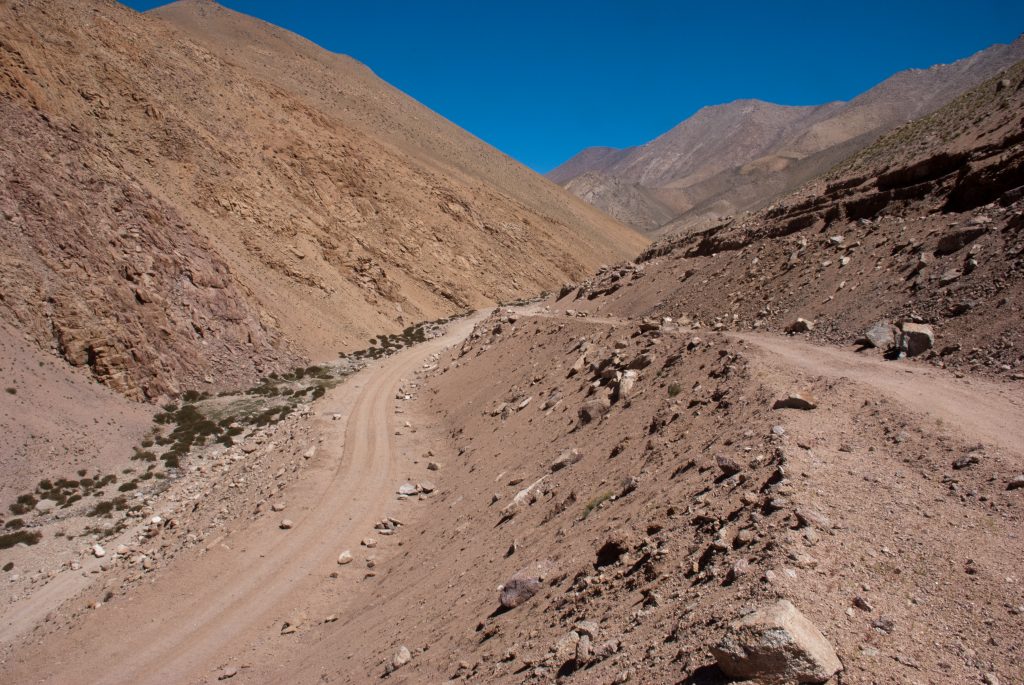
While traveling in the Himalayas, you must always help other people stuck on their way, be it a lift, a push, spare fuel, a tow rope, or simply moral support. Help is always hard to find at places like the Manali-Leh Highway, the Nubra to Pangong Tso route, or the Changthang region.
Do not forget, this can happen to you at the very next turn. And it does not feel good when someone drives past without offering help. Helping others defines the spirit of a traveler 🙂
7. Carry Essential Spares and Tools
On a self drive to Ladakh, you should always carry these essentials with you. For the complete checklist, our 40 things to carry on a Ladakh self-drive guide lists everything in one place.
- Basic toolkit including jack and spanner
- Air compressor and foot pump
- Hydraulic jack (factory jack is often not strong enough)
- Spare tyre (check for puncture before leaving)
- Puncture repair kit
- Screwdriver set
- Torchlight (preferably a headlamp)
- Jump start cables
- Spare bulbs and fuses
- Tow rope (3-6 ton capacity)
- 1-2 jerry cans for spare fuel
- Funnel
- Spare coolant and engine oil
- A long stick or rod (for checking water crossing depth)
- A shovel and a hammer
- 2-3 packs of M-Seal and quick fix adhesive
- Plenty of drinking water and snacks
- A reusable water bottle to refill and save the environment
Apart from this driving-related list, I follow my complete list of things to carry whenever I travel to Leh Ladakh. Also, do not forget to get your vehicle serviced 2-3 weeks before your self drive to Ladakh.
What Are the Permits and Fees Required for a Ladakh Self Drive?
Since 2021, Indian domestic tourists no longer need a traditional Inner Line Permit (ILP) for Ladakh. Instead, you need to pay the Environment/Development Fee (EDF) and carry the receipt. The fee structure as of 2026 is Rs 400 per person (one-time) + Rs 20 per person per day + Rs 10 per person per day (Red Cross). You can apply and pay online through the LAHDC Leh Permit Portal.
For detailed step-by-step instructions on how to get your permits online, you can read our dedicated guide on Ladakh Inner Line Permits. Keep 5-6 photocopies of your permit receipt. You will need to show them at multiple army checkpoints.
Foreign nationals still need a Protected Area Permit (PAP) and must travel in groups of two or more with a registered travel agent. Our guide on Protected Area Permits for foreigners covers this in detail.
Where Can You Get Fuel in Ladakh?
Fuel availability is one of the biggest concerns for anyone doing a self drive to Ladakh. Here is the current status of fuel stations as of 2026.
On Manali-Leh Highway: The last fuel pump before Leh is at Tandi (32-35 km before Jispa). After Tandi, there is no fuel station for approximately 365 km until you reach Leh. Always fill up at Tandi and carry 10-20 litres of extra fuel in jerry cans.
In Leh: Multiple fuel stations available in Leh town. Fill up fully before heading out for sightseeing.
Within Ladakh: Karu (45 km from Leh on the Manali-Leh Highway), Diskit in Nubra Valley, and a relatively new IndianOil pump at Tangste (34 km before Pangong, opened 2023). For a comprehensive guide, read our article on fuel availability in Leh Ladakh.
If you are planning the longer circuits like Leh-Nubra-Pangong-Tso Moriri-Leh (600+ km), you will need to carry extra fuel. Our guide on how to carry extra fuel safely covers this in detail.
What Are the Road Conditions on Each Ladakh Route?
One of the most common questions I get from people planning a self drive road trip to Leh Ladakh is about road conditions. Which routes are manageable in a sedan? Where do you absolutely need an SUV? I have driven most of these routes myself, so here is a route-wise breakdown with difficulty ratings for different car types.
For each route section below, I am rating the difficulty as Easy, Manageable, Tough, Very Tough, or Car Killer. Keep in mind, even if a route is rated “Manageable” for sedans, you still need to drive with extreme caution and care.
Important: Do not take these ratings literally, especially if you are taking a small car to Ladakh. Even manageable routes require careful driving. The seven tips mentioned above will help you on every stretch of your Leh Ladakh road trip by car.
Leh Local Sightseeing and Sham Valley
Most roads around Leh town and Sham Valley are in good condition throughout the season. Only a few sections have running water damage. Sham Valley includes Alchi, Likir, Basgo Palace, Magnetic Hills, Nimmu Confluence, and Gurudwara Pathar Sahib. Leh local sightseeing covers Namgyal Gompa, Leh Palace, Shanti Stupa, Shankar Gompa, Hall of Fame, and Spituk Gompa.
- Sedans/Hatchbacks = Easy
- High Ground Clearance SUVs (4×2) = Easy
- High Ground Clearance SUVs (4×4) = Easy
Leh to Nubra Valley via Khardung La
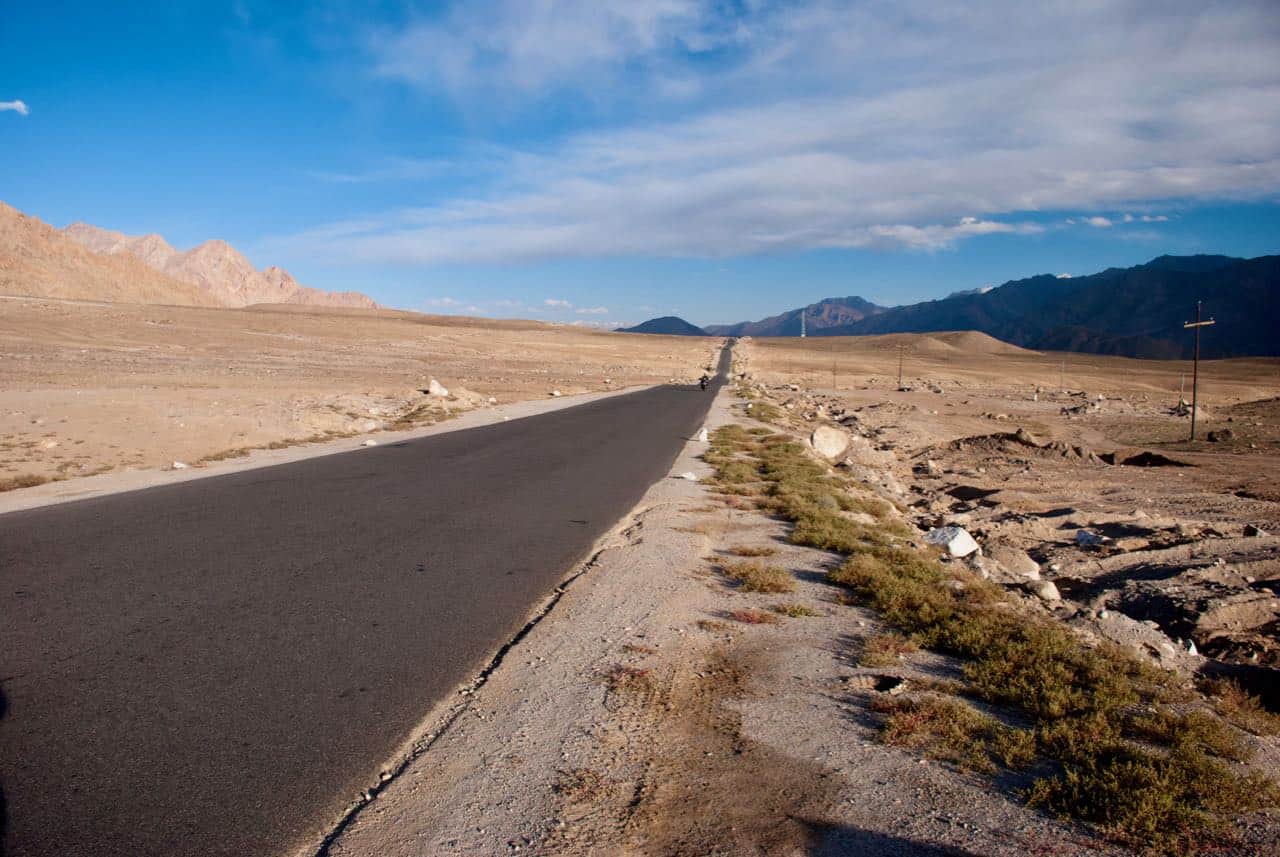
The roads within Nubra Valley are very good, but the stretch from South Pullu to Khardung La (17,582 ft) and the descent towards North Pullu has major sections in poor condition. In early season (April-May), snow makes this section extremely difficult. Once you are in Nubra Valley, most roads are in excellent condition, including towards Turtuk and Panamik.
- Sedans/Hatchbacks = Easy (Nubra Valley), Manageable (Khardung La stretch), Very Tough in early season
- High Ground Clearance SUVs (4×2) = Easy to Manageable, Tough in early season
- High Ground Clearance SUVs (4×4) = Easy to Manageable
Leh to Pangong Tso via Chang La
The road to Pangong Tso is a mix of conditions. Leh to Shakti is decent. The ascent from Shakti to Chang La (17,585 ft) is treacherous with bad road conditions. The descent towards Durbuk is also in poor shape. From Durbuk to Tangste to Lukung, roads have improved significantly thanks to BRO work. From Lukung to Spangmik, expect a dirt track.
- Sedans/Hatchbacks = Easy to Manageable (Chang La climb and Lukung-Spangmik are the tough parts)
- High Ground Clearance SUVs (4×2) = Easy to Manageable, Tough in early season
- High Ground Clearance SUVs (4×4) = Easy to Manageable
Leh to Tso Moriri via Chumathang
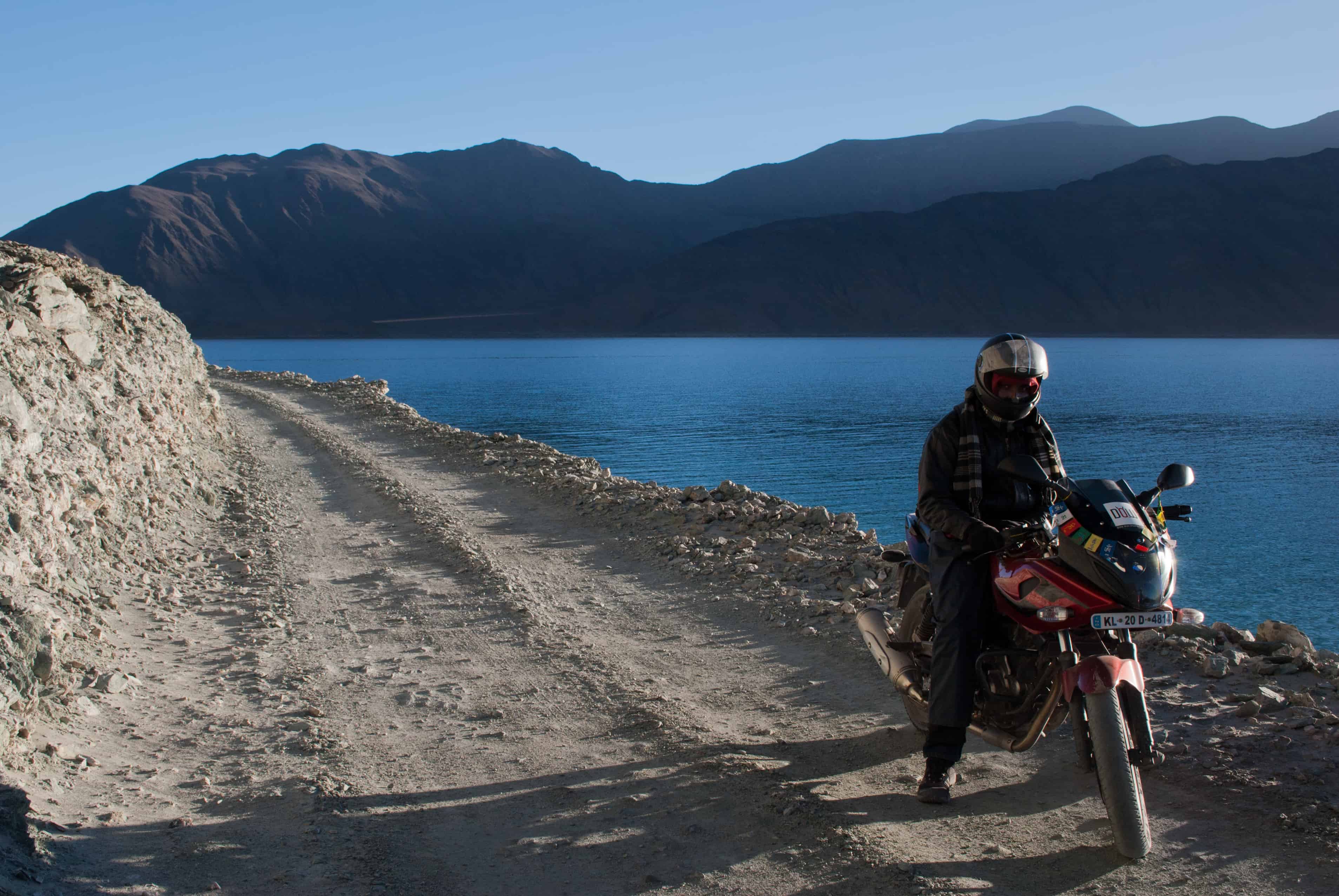
The road to Tso Moriri goes via Upshi, Chumathang, Mahe, and Sumdo. Roads from Leh to Mahe are decent. After crossing Kiagar Tso ahead of Sumdo, expect about 30 km of dirt road. In early season or after rain, slush can form on these sections making them difficult to manage.
- Sedans/Hatchbacks = Easy to Manageable, can be Tough in early season
- High Ground Clearance SUVs (4×2) = Mostly Easy
- High Ground Clearance SUVs (4×4) = Mostly Easy
Pangong Tso to Tso Moriri via Changthang (Direct Route)
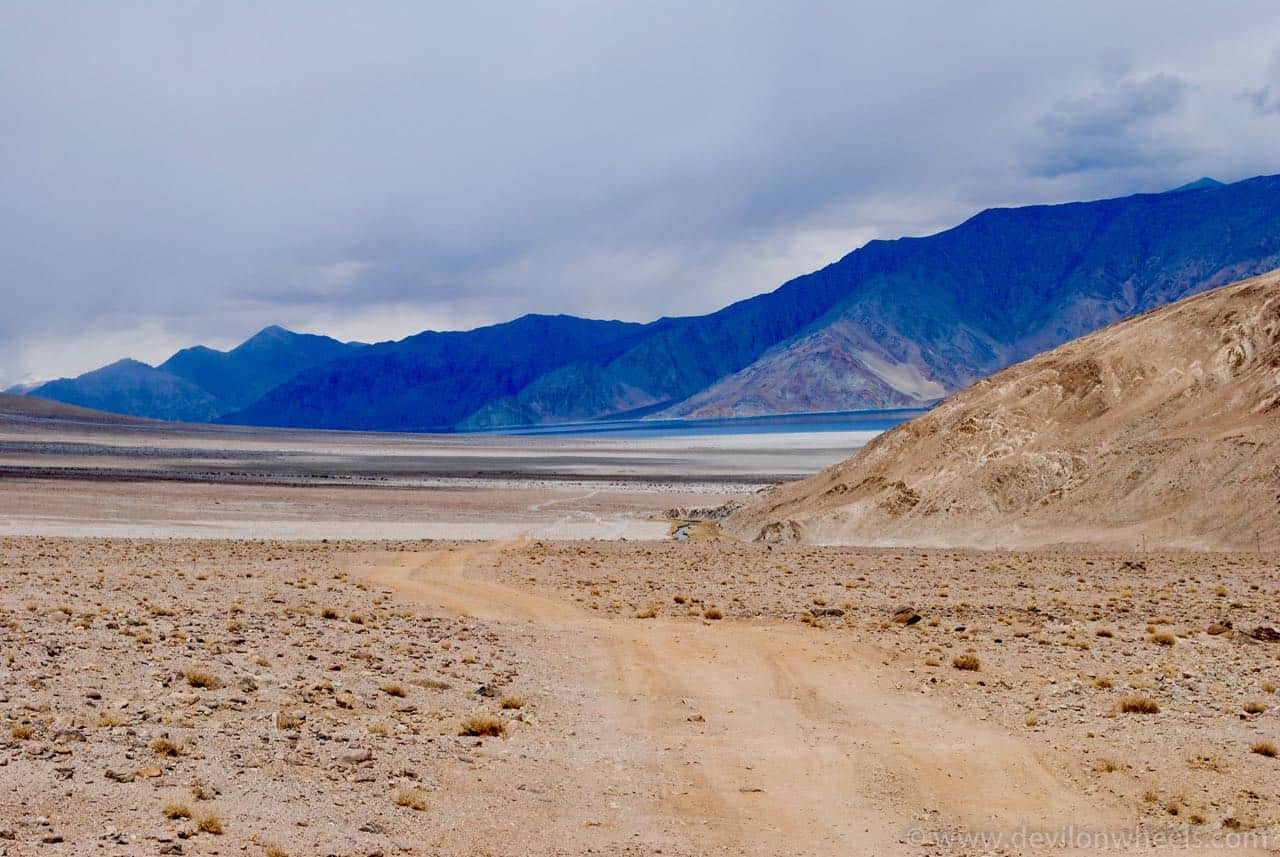
This is the most remote and beautiful route in Ladakh, running through the Changthang region. The stretch from Lukung through Spangmik, Man, Merak, Chusul, to Tsaga has no proper road at all. Expect terrible sections with loose sand, water crossings, and very difficult terrain, especially before Chusul. After Tsaga, roads towards Loma, Nyoma, and Mahe are tarmac. The road to Hanle from Loma is also in very good condition.
- Sedans/Hatchbacks = Mostly Tough from Spangmik to Tsaga La. High chances of getting stuck. Easy to Manageable after Tsaga.
- High Ground Clearance SUVs (4×2) = Manageable to Tough at sections with slush and ice
- High Ground Clearance SUVs (4×4) = Manageable
Hence, if you are self driving to Ladakh in a small car, the direct route from Pangong Tso to Tso Moriri will be tough for you.
Nubra Valley to Pangong Tso via Wari La
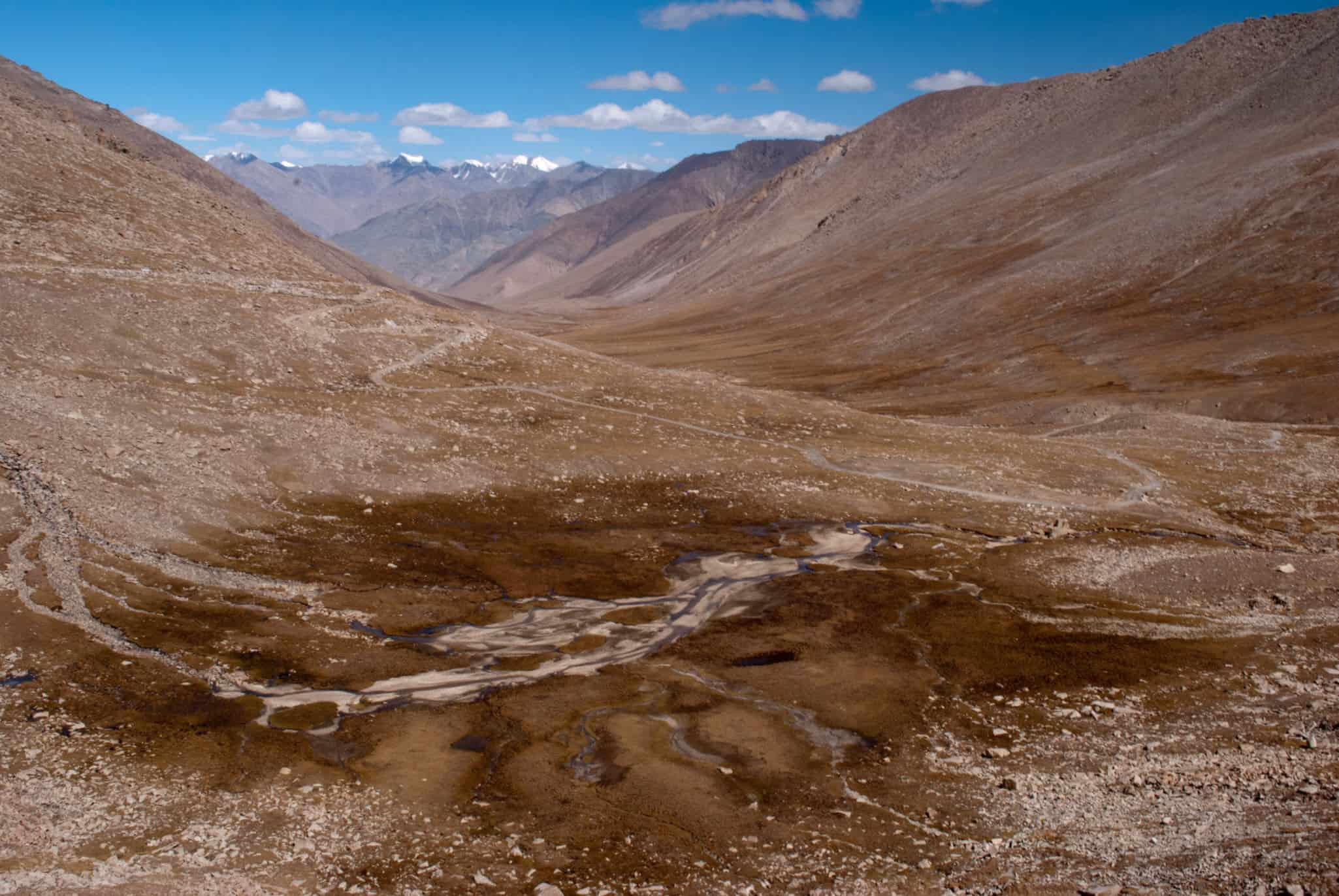
This route goes from Nubra Valley via Agham and Wari La (17,352 ft) to reach Pangong Tso. The ascent and descent around Wari La from Agham Village is tough, with roads that are a mix of average and bad. You will rarely spot another vehicle on this route. In case of an emergency, help will be very hard to find.
- Sedans/Hatchbacks = Tough (Wari La climb/descent). Very Tough and not recommended in early season.
- High Ground Clearance SUVs (4×2) = Manageable, Tough in early season
- High Ground Clearance SUVs (4×4) = Manageable
The direct route from Nubra Valley to Pangong Tso via Wari La is a tough route in a small car.
Nubra Valley to Pangong Tso via Shyok (Direct Route)
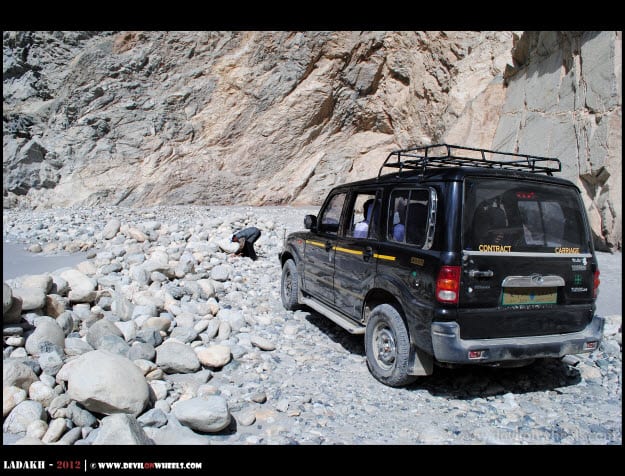
This is the more commonly used direct route from Nubra Valley to Pangong Tso. The stretch between Agham and Shyok villages is extremely difficult for small cars. It is landslide-prone and will get your heart in your mouth. On a bad day, expect water crossings (some nasty ones), loose rocks, sharp stones, and standing water.
Always inquire about road conditions at Agham or Khalsar village before attempting this route from the Nubra side. From the Durbuk side, ask at Shyok village or at a BRO (GREF) hut after Shyok village. BRO has improved this route significantly since 2016, with most sections now tarred, but the Agham-Shyok section remains landslide-prone during July-August.
- Sedans/Hatchbacks = Tough to Very Tough, sometimes Car Killer
- High Ground Clearance SUVs (4×2) = Tough, potentially Car Killer when water flows heavily in July-August
- High Ground Clearance SUVs (4×4) = Manageable to Tough even with 4×4 in some sections
My recommendation is to attempt this route on your self drive trip to Leh Ladakh only in a high ground clearance vehicle. In a small car, you may end up in serious trouble.
Hanle to Tso Moriri via Chumur (Remote Route)
This remote route through Changthang runs on a dirt track with no proper road. There is one very nasty water crossing near Charchaghan La that is extremely difficult to cross, especially after noon. Loma to Hanle is in excellent condition. This route is not suggested for your Leh Ladakh self drive, especially in a small car.
Which Car Is Best for a Self Drive to Ladakh?
This is probably the most common question I get. The honest answer is that there is no single “best” car for a Ladakh trip. A lot depends on your driving skills, the routes you plan to cover, and the time of season. The driver behind the wheel matters more than the car itself.
That said, here is what I recommend based on my experience.
SUVs with 4×4 (like Mahindra Thar, Toyota Fortuner, Scorpio 4×4): Best choice overall. High ground clearance handles all terrain. 4×4 gives you confidence in slush, sand, and steep inclines. Diesel engines perform better at altitude than petrol.
SUVs without 4×4 (like Hyundai Creta, Kia Seltos, Maruti Brezza): Very capable for most Ladakh routes. High ground clearance is the key advantage. You can cover 90% of Ladakh routes comfortably.
Sedans and Hatchbacks (like Swift, Baleno, Honda City): Can they do it? Yes. I have personally driven my Santro, Swift, and Swift dZire through remote Himalayan roads. I have seen a Tata Nano make it to Leh. But it requires significantly more skill, patience, and caution. Expect underbelly hits, and some routes (Changthang, Shyok) may be too risky.
Can You Rent a Self Drive Car for Ladakh?
This is another question that comes up a lot. The situation is a bit tricky. You can rent self-drive cars from platforms like Zoomcar or MyChoize in cities like Delhi, Chandigarh, or Manali. These cars can technically be used to reach Leh via Manali-Leh Highway or Srinagar-Leh Highway.
However, here is the catch. Outside-Ladakh registered vehicles are not allowed for sightseeing within Ladakh. This means your rented car cannot visit Nubra Valley, Pangong Tso, Tso Moriri, or Hanle. You would need to rent a local taxi in Leh for sightseeing. For the latest information on this, check our article on self drive car rental restrictions in Ladakh.
There is no option to rent a self-drive car within Leh, Manali, or Srinagar. If you need a vehicle in Leh, you will have to hire a local taxi driver from our directory.
Self Drive to Ladakh Infographic
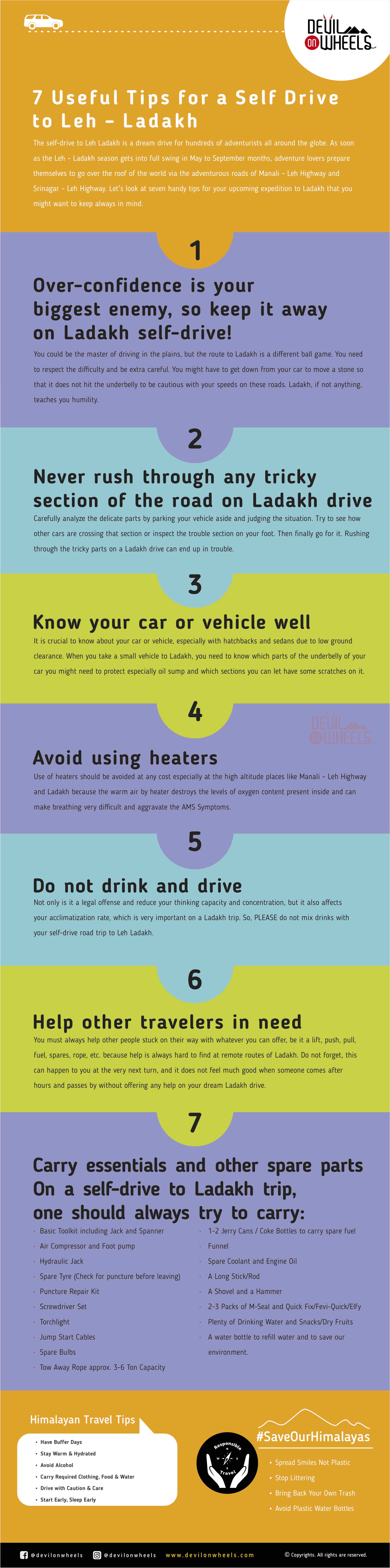
Download your FREE high-resolution PDF copy of this infographic guide. If you found it helpful, please feel free to share it with your family and friends.
Conclusion
A self drive to Ladakh is one of those experiences that changes you. The landscapes are raw, the roads test your limits, and the silence at 17,000 feet is something you will never forget. But it demands respect. Respect the altitude, respect the terrain, and respect your vehicle’s limitations.
I hope these tips and the route-wise road condition breakdown help you plan a safe and memorable self drive trip to Leh Ladakh. If you know friends or family planning a road trip to Ladakh, share this article with them. It might save them from some costly mistakes.
In case you need help planning your itinerary, check out our complete Leh Ladakh itinerary guide or the Ladakh itinerary by air for those flying in.
Have a travel question?? You can subscribe to my YouTube channel and leave a comment to ask your travel questions about traveling to the Himalayas.
If you have been on a self drive to Ladakh before, feel free to share your experience and tips in the comments below. Your insights could help fellow travelers in the DwD community plan a better trip.
Last Updated: March 2026
Frequently Asked Questions
Which car is best for a Ladakh trip?
There is no single “best” car for a Leh Ladakh trip. The driver matters more than the vehicle. That said, an SUV with high ground clearance (at least 180 mm), spacious enough to carry luggage, comfortable for long drives, and in good mechanical condition is ideal. Diesel engines perform better at altitude. Popular choices include Mahindra Thar, Scorpio, Toyota Fortuner, and Hyundai Creta.
Can I take a small car like a hatchback or sedan to Ladakh?
Yes, you can take a hatchback or sedan to Ladakh, but it comes with challenges. I have personally driven my Santro, Swift, and Swift dZire to remote corners of the Himalayas. I have seen a Tata Nano make it too. It depends on your driving skills and how carefully you drive. Expect underbelly scrapes and avoid remote routes like Changthang and the Shyok route in a small car.
Can I take a Zoomcar or rented self-drive car to Leh Ladakh?
You can use a rented self-drive car from platforms like Zoomcar to reach Leh via Srinagar-Leh Highway or Manali-Leh Highway. However, outside-Ladakh vehicles are not allowed for sightseeing within Ladakh, including Nubra Valley, Pangong Tso, and Tso Moriri. You will need to hire a local taxi in Leh for sightseeing.
Can I rent a self-drive car in Leh?
No, there is no option to rent a self-drive car in Leh. You can hire a local taxi with a driver from Leh for sightseeing. You may request the driver to let you drive on some stretches if they are comfortable with it. Check our list of verified taxi drivers for Ladakh.
What permits do I need for a self drive to Ladakh in 2026?
Indian domestic tourists need to pay the Environment/Development Fee (EDF) of Rs 400 per person plus Rs 20 per person per day plus Rs 10 Red Cross per day. This can be done online at the LAHDC Leh Permit Portal. The receipt serves as your permit. Keep 5-6 photocopies for army checkpoints. Foreign nationals need a Protected Area Permit (PAP).
Where are the fuel stations on the Manali-Leh Highway?
The last fuel station before Leh on the Manali side is at Tandi, approximately 365 km before Leh. After Tandi, there is no fuel station until Leh. Always fill up at Tandi and carry 10-20 litres of extra fuel. Within Ladakh, fuel stations are available at Leh, Karu (45 km from Leh), Diskit (Nubra Valley), and Tangste (on the Pangong route).
Is a 4×4 vehicle mandatory for a Ladakh self drive?
No, a 4×4 is not mandatory. Most of Ladakh’s main routes (Leh local, Nubra Valley, Pangong Tso, Tso Moriri) can be covered in a 2WD vehicle with high ground clearance. However, 4×4 becomes very useful on remote routes like Changthang, the Shyok route, and during early season when snow and slush are present on the passes.
Should I use car heaters while driving in Ladakh?
No, avoid using car heaters at high altitude in Ladakh. The heater recirculates cabin air, reducing the already low oxygen content and worsening Acute Mountain Sickness (AMS) symptoms. Wear warm layers instead and let fresh outside air circulate through the car for proper ventilation.
