


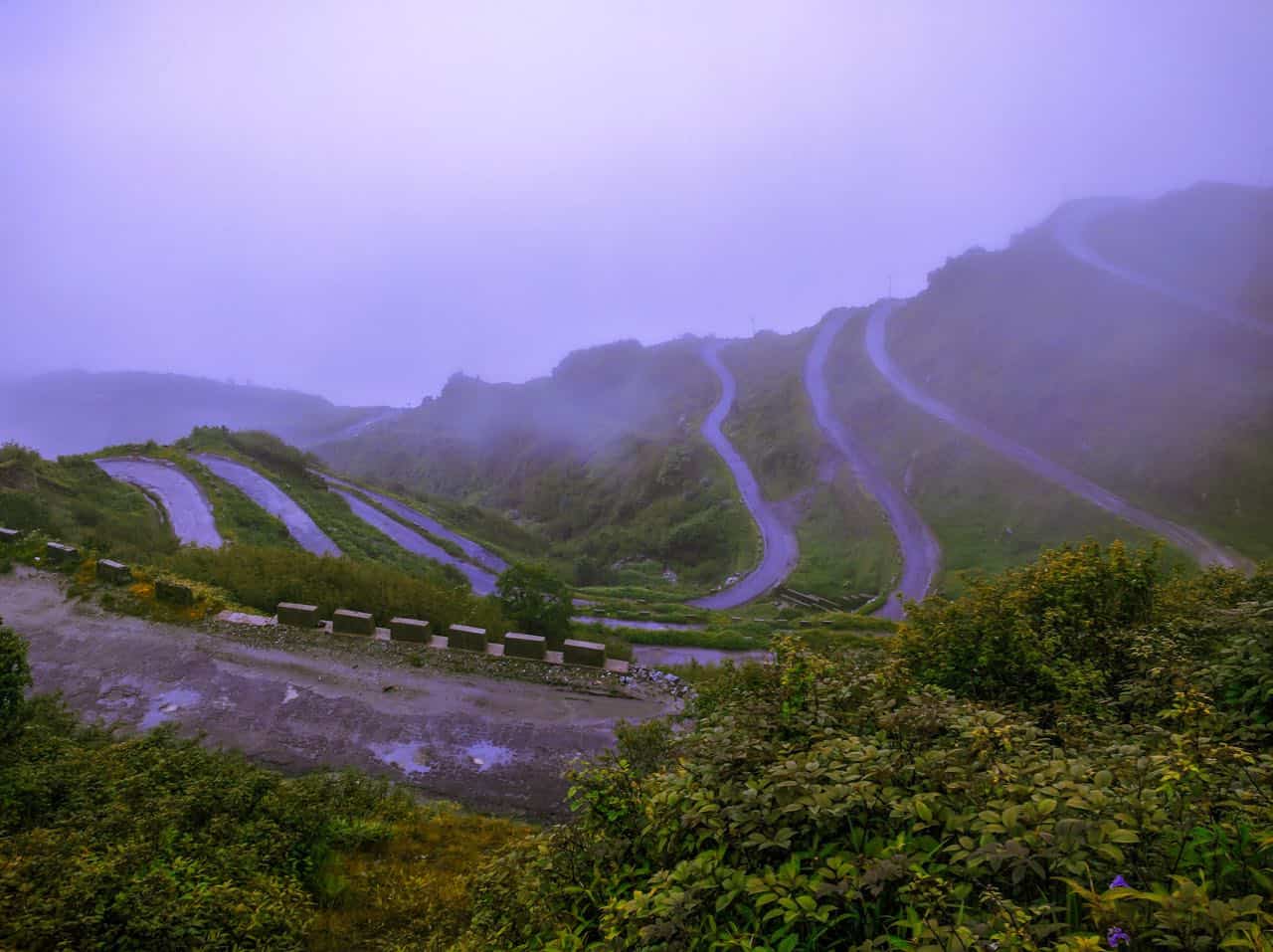
Sikkim is one of those states that quietly pulls you in. The mountains here are not loud or dramatic in the way Ladakh can be. They are green, layered, and deeply peaceful. But with places like Gangtok, Tsomgo Lake, and Nathula Pass drawing massive crowds every season, finding that peace has become harder. That is where Zuluk comes in.
Zuluk (also spelled Dzuluk) is a small village on the Old Silk Route in East Sikkim, sitting at an altitude of 10,100 feet. It is one of those rare Himalayan destinations where the road itself is the main attraction. The 32 hairpin bends leading up to Thambi View Point, the views of Mt. Kanchenjunga at sunrise, the silence of Nathang Valley. If you are looking for an offbeat trip in Sikkim where you can actually slow down and breathe, Zuluk is the place. I visited Zuluk in 2016 and it remains one of the most memorable parts of my Sikkim travels.
What Makes Zuluk Special on the Old Silk Route?
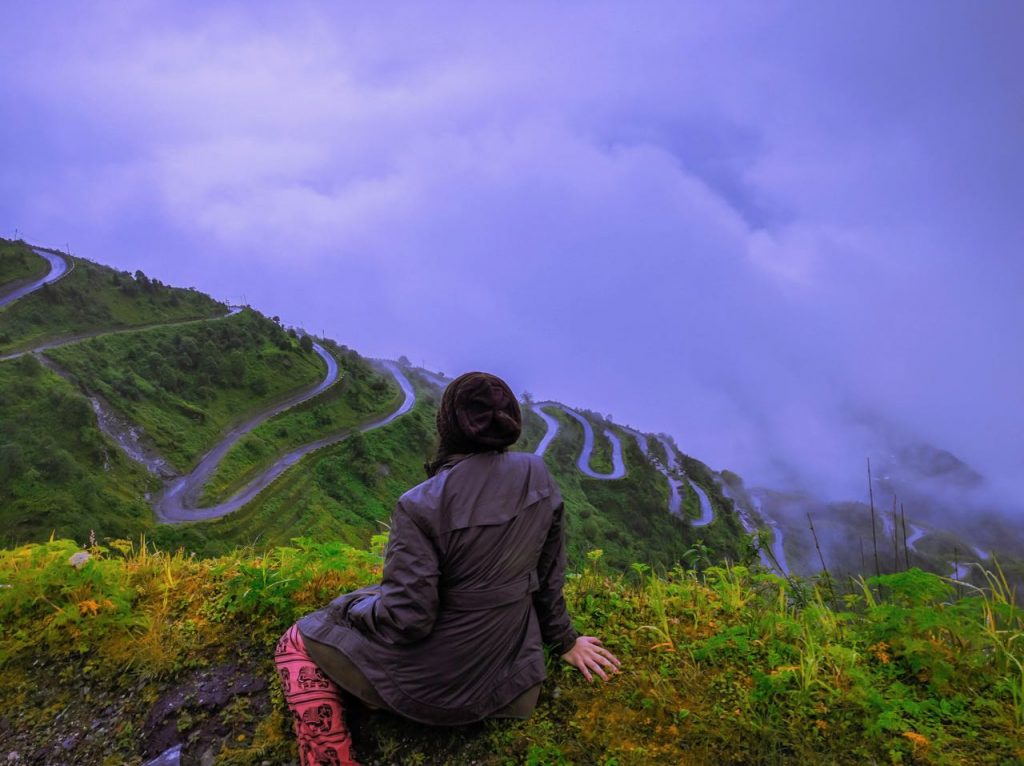
Zuluk is historically significant because it was a transit point on the ancient trade route between India and Tibet. Goods, mules, and traders passed through this village for centuries. Today, the trade has stopped, but the road remains, and it is spectacular. When you stand at Thambi View Point and look down, you see a single road snaking through 32 hairpin turns over a distance of about 14 km. During winter, when snow covers the slopes, those loops glow white against the mountainside. In summer and monsoon, the entire valley turns a deep, lush green.
Keep in mind that Zuluk is located very close to the China border. This means several areas around it are restricted and require a Protected Area Permit. The village is also usually closed during heavy winter snowfall (December to February), so plan accordingly.
How to Get the Zuluk Protected Area Permit in 2026?
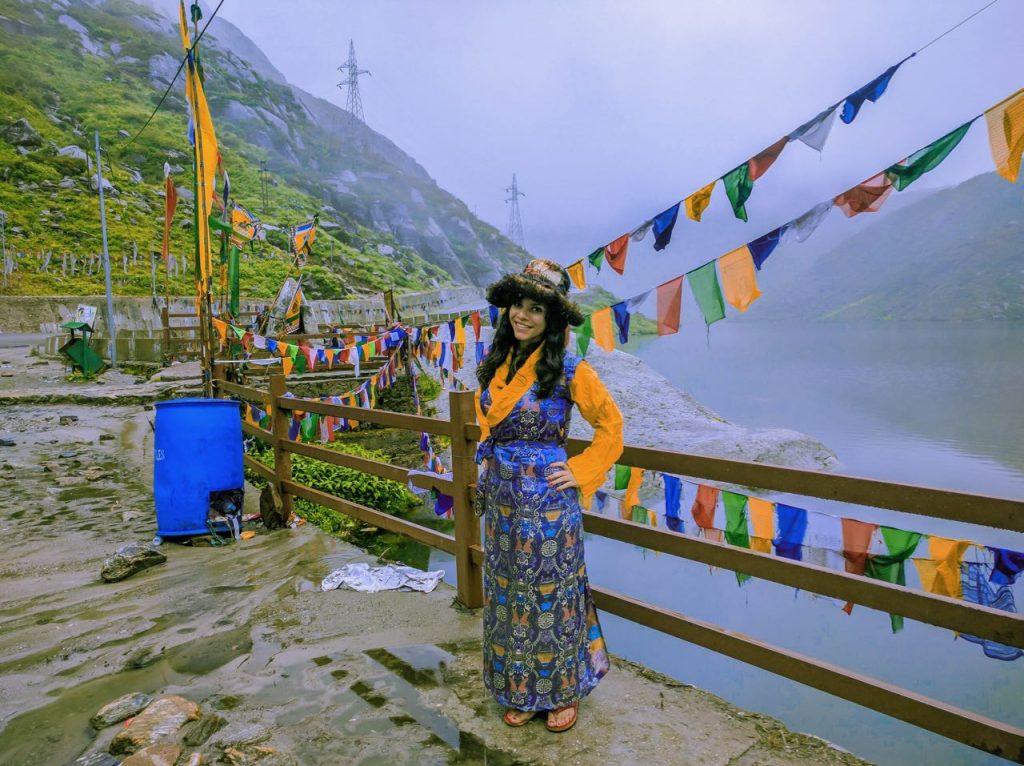
Since Zuluk lies in a restricted zone near the Indo-China border, a Protected Area Permit (PAP) is mandatory for all Indian visitors. Foreigners are currently not allowed to visit Zuluk. Here is everything you need to know about the permit process.
Permit for Indian Nationals
Indians do not need a special permit to enter Sikkim state, but they do need a PAP specifically for Zuluk, Tsomgo Lake, Nathula Pass, and Baba Mandir. Here is how to get it:
- Where to apply: Tourism agencies on MG Marg (Mall Road) in Gangtok, or at the Rongli Bazaar SDPO office, or 3rd Mile Police Check Post in Gangtok.
- Documents needed: Two passport-size photos and a photocopy of your ID proof (Aadhaar, Voter ID, or Passport).
- Cost: The permit fee is around Rs 200 per person when arranged through an agency. Some agencies may charge Rs 500-700 including processing.
- Processing time: Apply at least one day before your travel date. Permits are processed in the morning hours, so applying on the same day means you lose half your day waiting.
- Tip from experience: Ask your hotel staff in Gangtok to arrange the permit for you. They know the current policies and can often get it done faster than you walking around MG Marg yourself.
Can Foreigners Visit Zuluk?
Foreign nationals need a Restricted Area Permit (RAP) to enter Sikkim. However, even with a RAP, Zuluk and other Silk Route areas are off-limits for foreigners as of 2026. Citizens of Pakistan, China, Myanmar, and Bangladesh face additional restrictions and must apply through the Ministry of Home Affairs in New Delhi.
If you are planning your first trip to the state, do read this comprehensive guide on making a trip to North Sikkim. It covers permit details, routes, and practical tips that apply to most of Sikkim.
What Are the Best Places to Visit Near Zuluk?
The Zuluk Silk Route circuit has several viewpoints, lakes, and valleys that you can cover in a 2-3 day trip. Here are the main attractions, listed roughly in the order you will encounter them on the route.
Zuluk Loop (The 32 Hairpin Bends)
This is the star attraction. The road from Zuluk climbs through 32 hairpin turns over 14 km, famously called the zigzag road. You can see the entire stretch from multiple vantage points on the mountain slopes above. The best views come from Thambi View Point. During monsoon season, the waterfalls along this stretch make it even more dramatic.
If you are into offbeat places in the North East, Lava and Aritar make another excellent offbeat trip that you can combine with this one.
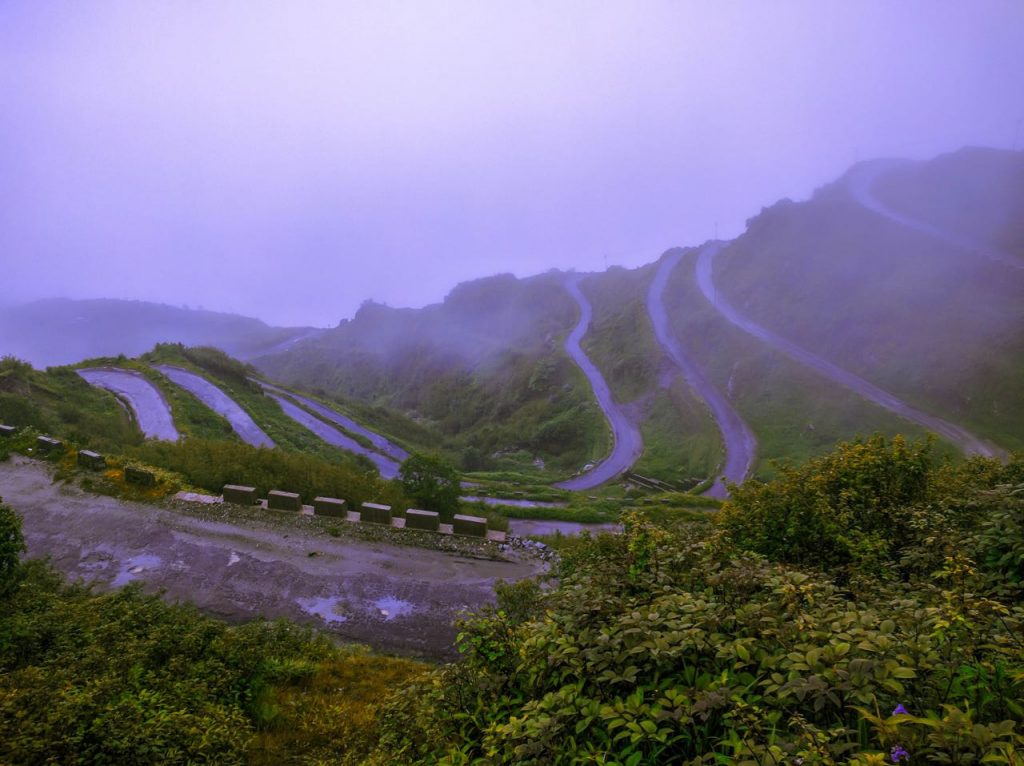
Thambi View Point (11,200 Feet)
Located about 4 km from Zuluk village at 11,200 feet, Thambi View Point gives you an unobstructed view of the entire Silk Route zigzag road and the valley below. All 32 hairpin bends are visible from here. It is also one of the best sunrise spots in East Sikkim, with the Kanchenjunga range visible on clear mornings.
Lungthung (12,500 – 13,000 Feet)
Go slightly ahead of Thambi View Point and you reach Lungthung, also known as Dhupidhara. Sitting between 12,500 and 13,000 feet, this spot gives you a clearer, closer view of the Mt. Kanchenjunga range. The rhododendron forests around Lungthung bloom spectacularly between March and May, making it a paradise for nature lovers and birdwatchers. It is also a good alternative sunrise viewpoint.


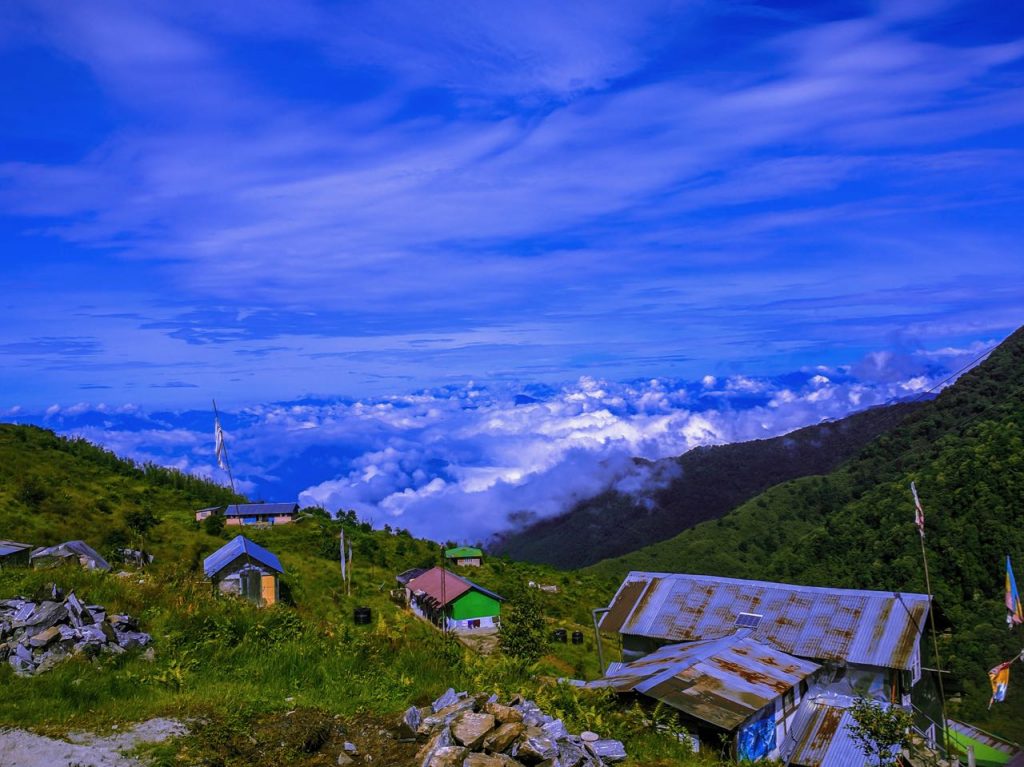
Old Baba Mandir
This is the original shrine built in memory of Sepoy Harbhajan Singh of the Indian Army. You have to climb a few stairs to reach the bunker where he was stationed. Many people believe his spirit still guards the Indo-China border at night. Do not confuse this with the more popular “Baba Mandir” which is located about 10 km away and sees heavy tourist traffic. The Old Baba Mandir is quieter and more atmospheric.
Memenchu Lake
About 4 km from Old Baba Mandir, Memenchu Lake is one of the most striking lakes in Sikkim. Surrounded by deep slopes and pine forests, locals say the lake changes color every few minutes depending on the light. The lake stays frozen from January through May, so plan your visit after that if you want to see the water. It comes on the way to Zuluk from the Nathula side.
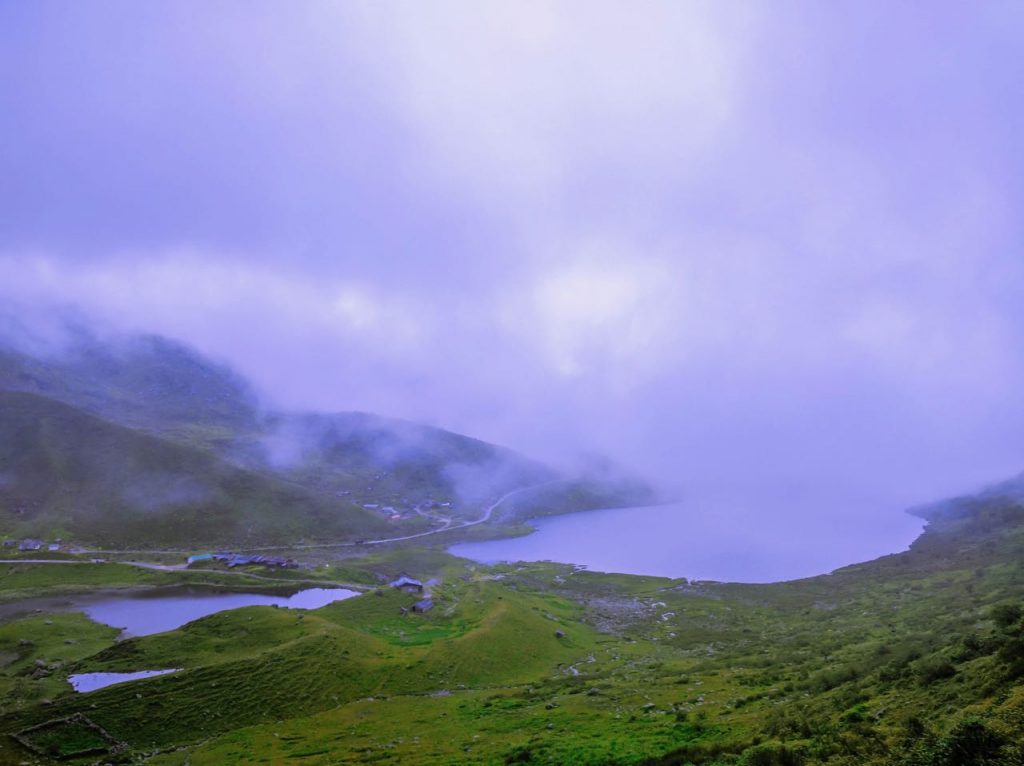
Nathang Valley (13,500 Feet)
About 8 km ahead of Thambi View Point, Nathang Valley (also written as Gnathang) sits at 13,500 feet and is often called the “Ladakh of the East.” The valley is mostly covered in snow for a large part of the year. In summer, it transforms into a vast grassland where Tibetan yak herders once grazed their animals. You will find a small monastery here and several streams flowing through the valley. The landscape is stark, open, and genuinely feels like a different world compared to the green forests below.
Ganek Sunrise Point (10,600 Feet)
If you are a sunrise person, wake up at 4 AM and head to Ganek. From here, you can watch the sun rise behind Mt. Kanchenjunga, casting golden light across the entire Bhutan Valley and parts of China. On a clear morning, this is easily one of the most rewarding sunrise views in the entire North East.
Kupup Lake (Elephant Lake, 13,066 Feet)
Kupup is the highest point in the Zuluk circuit and is home to what is claimed to be one of the highest golf courses in the world. Kupup Lake, shaped like an elephant (hence the name Elephant Lake), is a sacred lake of Sikkim, surrounded by high mountains. The area is heavily restricted due to its proximity to the border, so your movements here depend entirely on your permit and the army’s clearance on that day.
What Is the Best Itinerary for Zuluk Silk Route?
Here is a practical 3-day itinerary that covers the main highlights. This is the route I followed during my trip, and it worked well.
Day 0: Arrive in Gangtok and Arrange Permits
Travel to Gangtok and get your permit arranged. Submit photocopies of your ID at a tourism agency on MG Marg or ask your hotel to handle it. Also hire your taxi or book your package on this day, since private vehicles are not allowed on the Silk Route.
Day 1: Gangtok to Zuluk via Tsomgo Lake, Nathula, and Baba Mandir
Leave Gangtok by 8 AM. Stop at Tsomgo Lake first, then continue to Nathula Pass (if your permit covers it). On the way down, visit Baba Mandir and Old Baba Mandir. Stop at Memenchu Lake. Reach Zuluk by evening and settle into your homestay. The drive takes the better part of the day with all the stops.
Day 2: Sunrise at Ganek, Explore Thambi View Point, Nathang Valley, and Return
Wake up at 4 AM for the sunrise at Ganek. After breakfast, drive up to Thambi View Point and Lungthung for views of the zigzag road and Kanchenjunga. Continue to Nathang Valley if time and permit allow. Head back to Zuluk and then drive to Gangtok. You should reach Gangtok by evening. Spend some time at MG Marg before calling it a day.
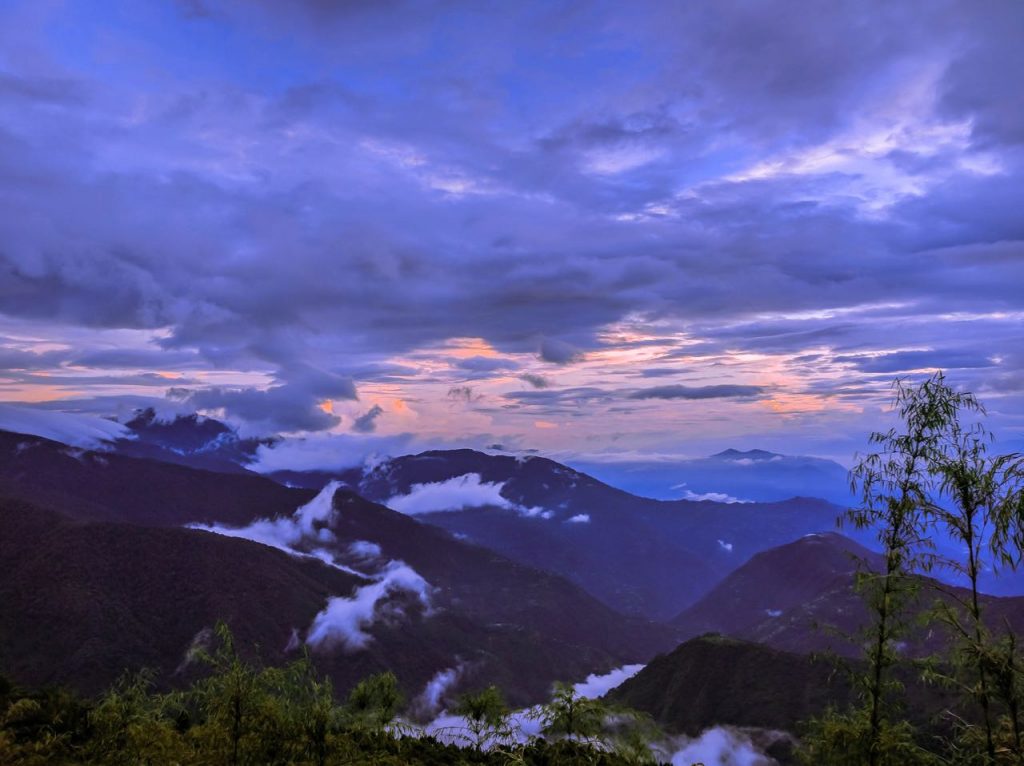
When Is the Best Time to Visit Zuluk?
Zuluk looks different in every season, and honestly, each has its own charm. Here is a month-by-month breakdown to help you decide.
- March to May (Spring): Rhododendrons bloom across the slopes. Weather is pleasant (10-20°C). Snow may still be present at higher points like Nathang and Kupup. Roads are mostly open. This is the best time for photography.
- June to August (Monsoon): Heavy rainfall, landslides possible, waterfalls at their best. The valley turns a deep lush green. Permits may be restricted if roads are blocked. Not ideal for first-timers due to road conditions.
- September to November (Autumn): My personal pick. The monsoon recedes, skies clear up, and you get the best views of Kanchenjunga. Weather is cool and comfortable. October and November offer the clearest visibility.
- December to February (Winter): The entire stretch is covered in snow. The hairpin bends look stunning in white, but roads may be closed and permits may not be issued. Only attempt this if you have confirmed the route is open.
Dzongu is another interesting yet offbeat place in the North East that you can consider if you have extra days.
How to Reach Zuluk from Gangtok, NJP, and Bagdogra?
Getting to Zuluk requires some planning because private vehicles and self-drive are not allowed on this route. Only Sikkim-registered vehicles can take you there. Here are the main approach routes.
From Gangtok (90 km, 3-4 hours)
The standard route is Gangtok to Tsomgo Lake to Nathula to Zuluk, or Gangtok to Rongli to Zuluk (the direct route via Padamchen). Most tourists take the Nathula route to cover more sightseeing on Day 1. You will need to hire a private taxi or book a package from Gangtok. There are no shared cabs or buses on the Zuluk route due to the restricted border area.
From NJP/Siliguri or Bagdogra Airport
If you are flying into Bagdogra or arriving at NJP by train, you first need to reach Gangtok (about 125 km, 4-5 hours). From Gangtok, follow the route above. Some tour operators in Siliguri also offer direct Silk Route packages. Alternatively, you can travel from Siliguri to Rongli (the Sikkim entry point) and get your permit there before heading to Zuluk.
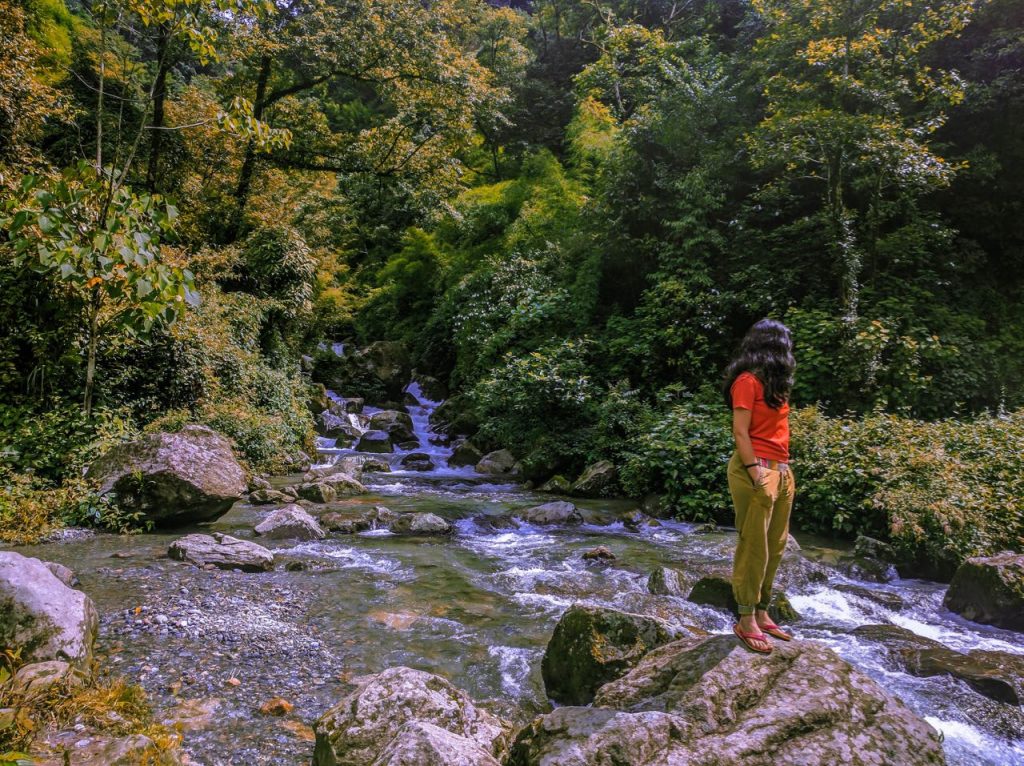
How Much Does a Zuluk Trip Cost in 2026?
Zuluk is a budget-friendly destination compared to North Sikkim or popular circuits. Here is a rough breakdown of costs for 2026.
| Expense | Budget (Per Person) | Mid-Range (Per Person) |
|---|---|---|
| Taxi from Gangtok (shared 4-pax) | Rs 1,500-2,000 | Rs 2,500-3,500 |
| Homestay per night (with meals) | Rs 800-1,500 | Rs 2,000-3,500 |
| Permit fee | Rs 200-300 | Rs 500-700 (agency) |
| Meals (outside homestay) | Rs 200-400/day | Rs 400-700/day |
| Miscellaneous | Rs 200-300 | Rs 300-500 |
| Total for 2 nights/3 days | Rs 5,000-8,000 | Rs 10,000-16,000 |
A full Silk Route package (4 nights/5 days from Gangtok) costs around Rs 9,500-14,000 per person depending on the season and group size. Hence, if you are traveling in a group of 4, the per-person cost drops significantly.
![Why avoid traveling on Manali Leh Highway in October for Ladakh trip? [5 Safety Reasons]](https://discoverwithdheeraj.com/yt_vid_thumbs/ladakh/104.png)
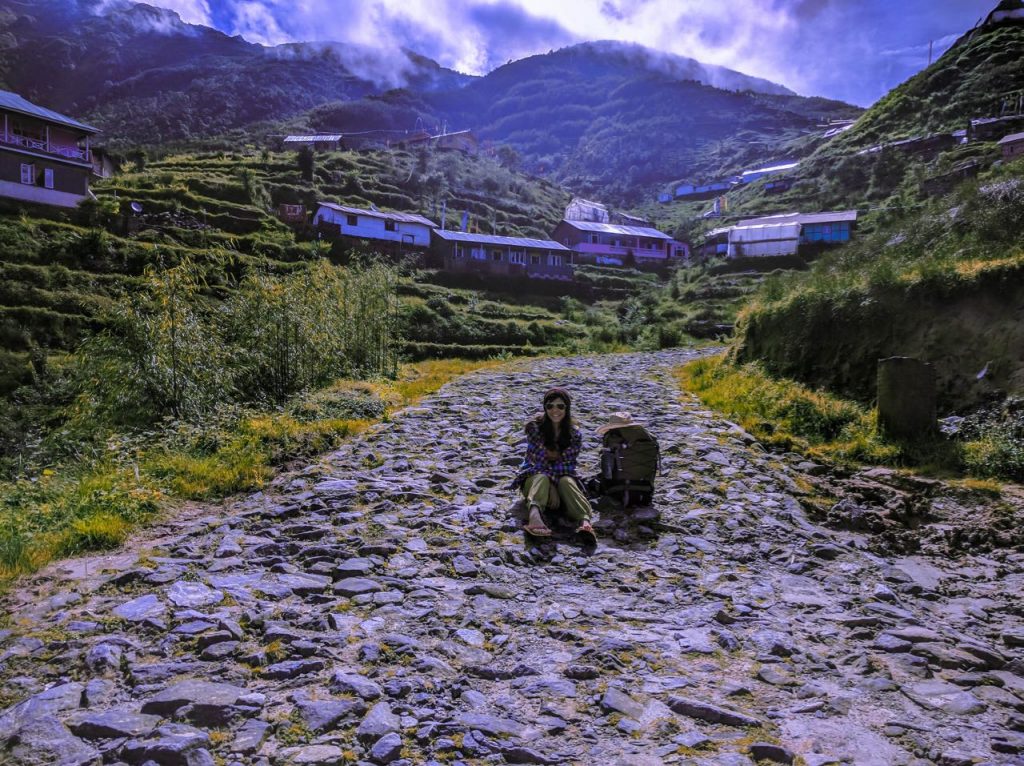
Where to Stay in Zuluk? Homestays and Accommodation
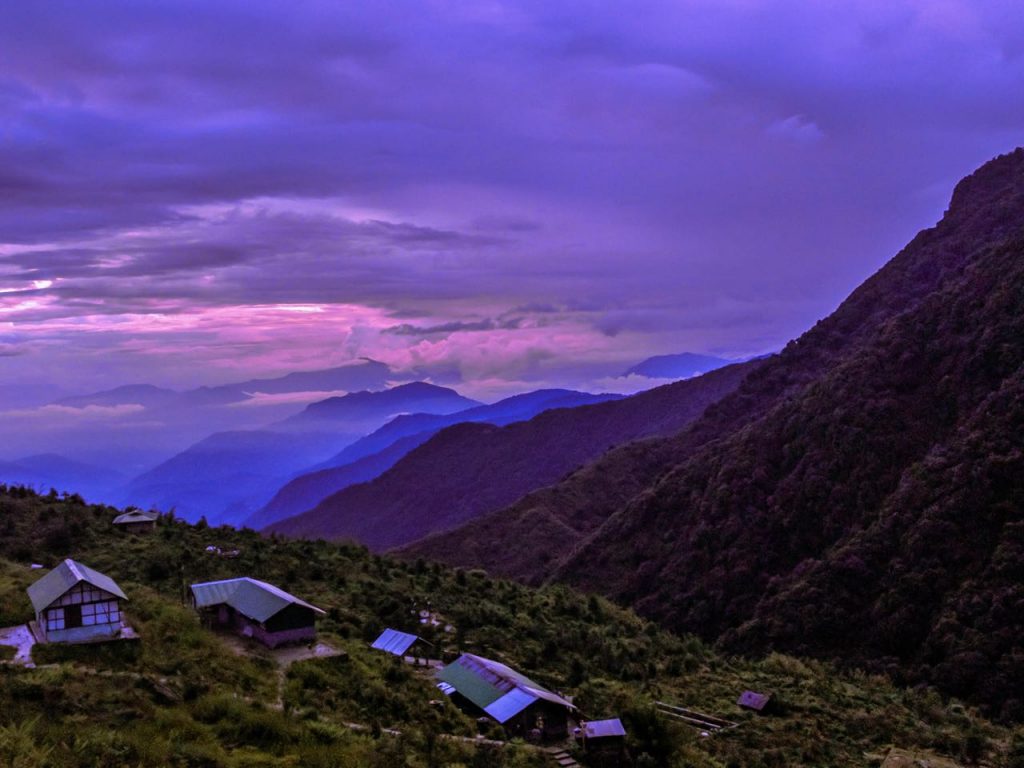
There are no hotels in Zuluk. The village has around 36 homestays, and that is your only option. The good news is that these homestays are well-maintained, clean, and the hosts are genuinely warm. Most homestays include meals (dinner and breakfast) in the price, which keeps things simple.
Expect to pay Rs 800-1,500 per night for budget homestays and Rs 2,000-3,500 per night for better rooms with attached bathrooms. You can book in advance through your tour operator or find a room on arrival. During peak season (October-November), it is better to book ahead. In Nathang Valley, homestay prices are slightly higher (Rs 1,800-2,500 per person) due to the altitude and supply costs.
What About ATMs, Mobile Network, and Other Practical Details?
Here are some important practical details that will save you trouble on the ground.
ATM and Cash
There are no ATMs in Zuluk or anywhere on the Silk Route. Withdraw enough cash in Gangtok or Siliguri before you leave. UPI and card payments do not work here, so carry enough cash for your entire trip, including the taxi fare.
Mobile Network
Mobile connectivity in Zuluk is very limited. BSNL has the widest (but still intermittent) coverage. Airtel may work in patches. Jio and Vi are essentially useless here. If you absolutely need some connectivity, carry a BSNL postpaid SIM. But honestly, treat this as a digital detox. You are in one of the quietest corners of the Indian Himalayas, so enjoy the silence.
Private Vehicles Not Allowed
This is important. You cannot drive your own vehicle to Zuluk. Only Sikkim-registered vehicles are permitted on this route due to the restricted border zone. If you are planning a road trip, you will need to park your vehicle in Gangtok or Rongli and hire a local taxi or join a tour package. This applies to both cars and motorcycles.
If you are traveling from Darjeeling, Pelling, or NJP/Bagdogra, you need to first reach Rongli (the Sikkim entry point) to get your permit, and then take a Sikkim taxi from there.
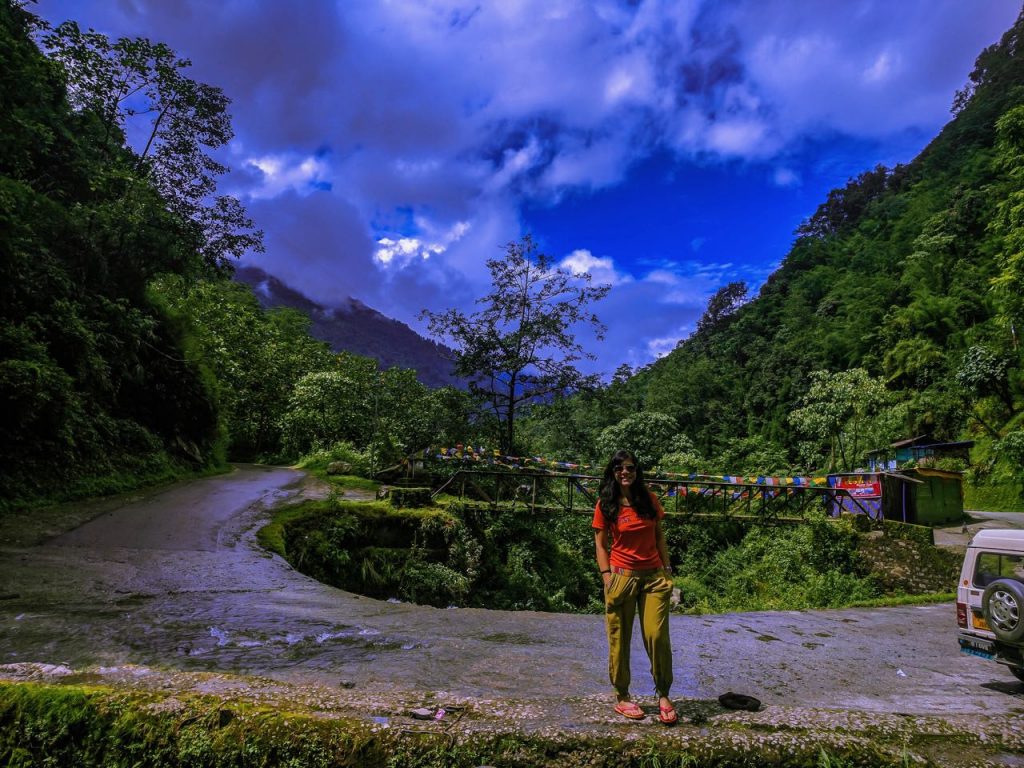
What to Pack for Zuluk
Even in summer, temperatures at Zuluk (10,100 ft) and above can drop to 5-10°C at night. At Nathang Valley (13,500 ft) and Lungthung (12,500+ ft), it gets even colder. Pack warm layers, a windproof jacket, thermal innerwear, and good trekking shoes. Carry a torch/headlamp for the early morning sunrise drive. Sunscreen and sunglasses are essential at these altitudes.
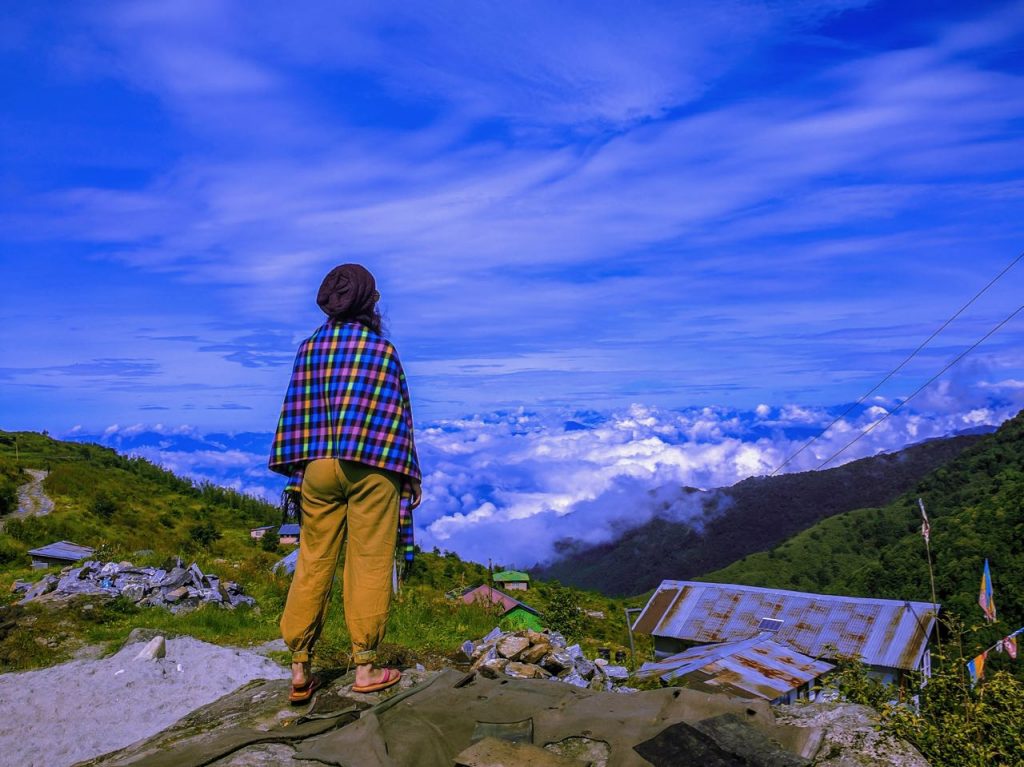
Pangolakha Wildlife Sanctuary and Birdwatching Near Zuluk
One thing most travel guides miss about Zuluk is the Pangolakha Wildlife Sanctuary that surrounds the area. If you are a birdwatcher or nature enthusiast, this is a major draw. The sanctuary is home to red pandas, Himalayan black bears, blood pheasants, and several rare rhododendron species. The trail from Lungthung to Dhupidhara passes through rich biodiversity, with rhododendron forests blooming between March and May. Based on research, over 250 species of birds have been recorded in this area, making it one of the best birdwatching destinations in the Eastern Himalayas.
Related Reading: More Offbeat Destinations in Sikkim and the North East
If you enjoyed this guide, here are some other offbeat places I have covered that pair well with a Zuluk trip:
- Pelling Travel Guide – Another offbeat gem in West Sikkim with Kanchenjunga views
- East Sikkim and the Old Silk Route – A broader overview of the entire Silk Route circuit
- North Sikkim Travel Guide – Covering Lachen, Lachung, Gurudongmar, and Yumthang
- Gangtok Weekend Trip Guide – For planning your base in Gangtok
- Dzongu, the Hidden Paradise of the Lepchas – One of the most offbeat places in Sikkim
- Lava and Aritar Travel Guide – A quiet alternative in East Sikkim
Frequently Asked Questions
Is Zuluk open for foreigners?
No. As of 2026, Zuluk and the Old Silk Route in East Sikkim are not open for foreign nationals. The area is a restricted border zone, and only Indian citizens with a valid Protected Area Permit (PAP) can visit.
How many days are needed for a Zuluk trip?
A minimum of 2 nights and 3 days is recommended. Day 0 for reaching Gangtok and arranging permits, Day 1 for traveling to Zuluk via Tsomgo and Nathula, and Day 2 for exploring the sunrise points and returning to Gangtok. If you have more time, a 4 night/5 day Silk Route package covers more ground.
Can I drive my own car or bike to Zuluk?
No. Private vehicles from outside Sikkim are not allowed on the Zuluk route. Only Sikkim-registered vehicles can enter the restricted zone. You must hire a local taxi or book a tour package from Gangtok or Siliguri.
Is Zuluk safe for solo travelers?
Yes, Zuluk is safe for solo travelers. However, since you need a permit and a Sikkim-registered vehicle, you will likely join a small group or hire a taxi. The homestay hosts are very friendly, and the area has an army presence which adds to safety. Carry enough cash since there are no ATMs.
What is the altitude of Zuluk and does AMS happen here?
Zuluk village is at 10,100 feet. Thambi View Point is at 11,200 feet, Lungthung at 12,500-13,000 feet, Nathang Valley at 13,500 feet, and Kupup at 13,066 feet. Mild altitude sickness symptoms (headache, nausea) can occur at the higher points, especially if you drive up quickly from Gangtok. Stay hydrated, avoid alcohol, and do not exert yourself too much on the first day.
Is there snowfall in Zuluk?
Yes. Zuluk and especially the higher points like Nathang Valley and Kupup receive heavy snowfall from December to February. The 32 hairpin bends look stunning covered in snow, but the road may be closed during this period and permits may not be issued. November and early December offer the best chance to see some snow while the road is still open.
![How to prepare for cold weather motorcycle ride in Ladakh or Spiti Valley? [13 Important Tips]](https://discoverwithdheeraj.com/yt_vid_thumbs/ladakh/83.png)
What is the best time to visit Zuluk for the Silk Route?
September to November is the best time. The monsoon rains stop, skies are clear, and you get the best views of Kanchenjunga and the surrounding valleys. March to May is also excellent, with rhododendrons in bloom. Avoid the peak monsoon months of July and August due to landslide risks.
In the end, Zuluk is the kind of place that stays with you long after you leave. The silence, the scale of those hairpin bends seen from above, the gold light on Kanchenjunga at sunrise. It is Sikkim at its most raw and untouched. If you have any questions about planning your trip to Zuluk, feel free to leave a comment below or connect with me on Instagram. You can also join the Discover With Dheeraj community on Facebook where fellow travelers are always happy to help with the latest updates 🙂
Last Updated: March 2026

2 Comments
Comments section gets closed in 90 days. To ask your travel questions, you can follow my YouTube Channel for a faster reply or for a much slower reply follow me on Instagram. :)
I want to travel shilari gaon, zuluk, nathan, nathula and Gangtok with my family in the middle of April of this year for 5 nights 6 days. Please guide me whether we will start our trip from njp to zuluk and from zuluk to gangtok or we will start our trip from njp to Gangtok and after Gangtok to muluk.
After going through the article,I fell great interests in the said route;I would like to know about some good accommodations about Lungthung Dhupidara…Would u plz…