


Are you looking for a hill station in Uttarakhand where time actually slows down, the Himalayan peaks feel close enough to touch, and the air smells of pine and fresh tea leaves? You have probably heard of Kausani. Mahatma Gandhi stayed here for 14 days in 1929, wrote a book, and called it the Switzerland of India. And honestly, that comparison has held up surprisingly well. I have been watching Kausani grow from a quiet ridgeline village into one of Kumaon’s most loved hill stations, and in this guide I am going to cover everything you need to plan your trip here the right way.
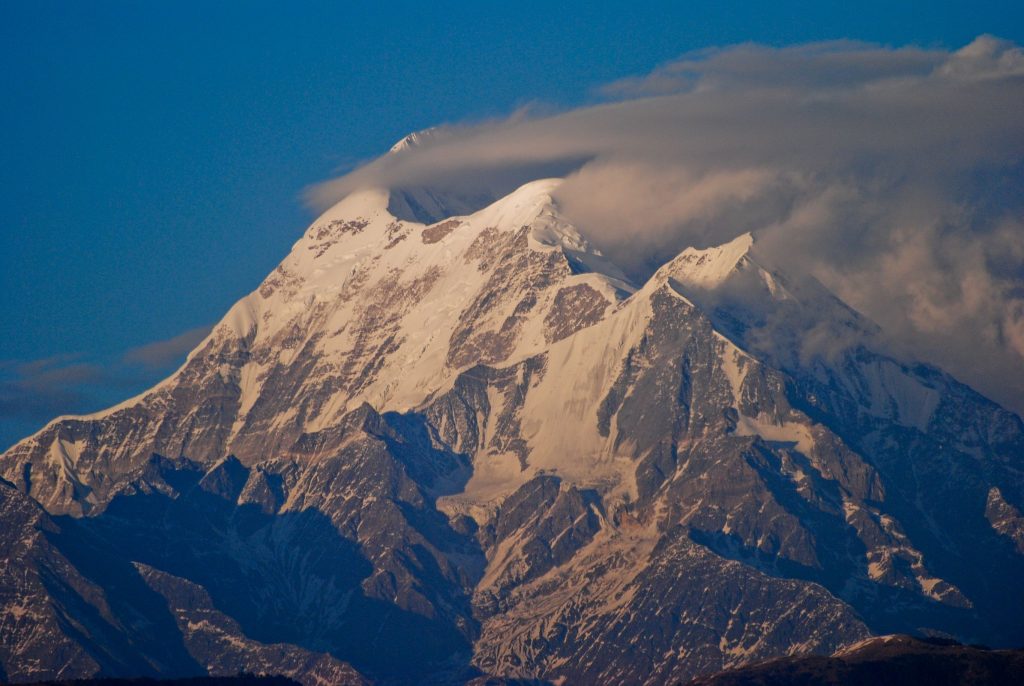
Kausani sits at 1,890 meters above sea level in the Bageshwar district of Kumaon, Uttarakhand. From the right vantage point, you get an almost uninterrupted 300-degree panoramic view of the Trishul (7,120 m), Nanda Devi (7,816 m), Nandakot, and Panchchuli peaks. Very few hill stations in India can offer that kind of Himalayan theatre from within the main town itself. That alone makes Kausani worth the drive from Delhi.
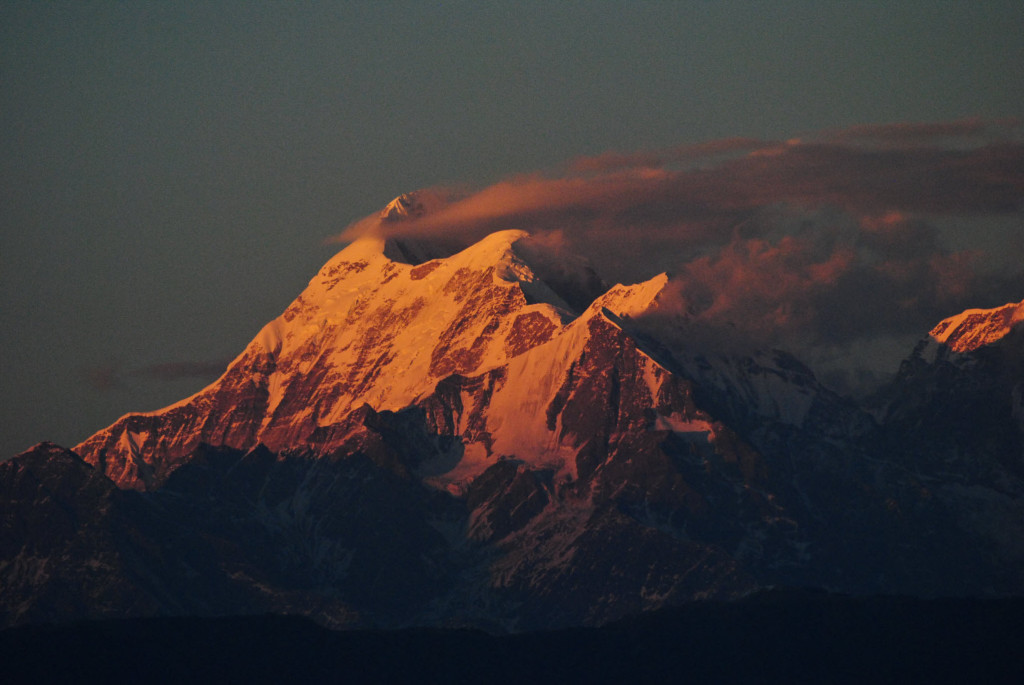
Let's quickly dive into the details:
What Makes Kausani Special — A Quick Overview
Kausani is a small ridge village spread across about 5.2 sq. km in the Kumaon Himalayas, about 51 km north of Almora. It is perched above the Someshwar Valley, the Garur Valley, and the Katyuri Valley, with dense pine forests on all sides. The village is famous for three things: the Himalayan peak views (genuinely outstanding), the tea estate (one of the finest in Uttarakhand), and the Anasakti Ashram (where Gandhi stayed and wrote). Beyond these, there is a strong sense of calm here that is hard to find at more crowded hill stations like Nainital or Mussoorie. I have written about an earlier candid account of Kausani if you want a feel for what the town is really like day-to-day.
Kausani is also the birthplace of famous Hindi poet Sumitranandan Pant, whose poems pay tribute to the beauty of Kumaon. Hence, the town carries a certain literary and cultural weight that adds another layer of interest for those who like their travel to have some depth beyond just scenery.
When Is the Best Time to Visit Kausani?
The short answer: April to June and October to February. But let me break it down season by season so you can pick what works best for you.
Summer (April to June) — Clear Views and Pleasant Days
This is the most popular time to visit, and for good reason. Temperatures stay between 15 and 26 degrees Celsius during the day. The skies are generally clear in the mornings, giving you those postcard-perfect views of the Himalayan peaks before afternoon clouds roll in. If you are coming from Delhi or the plains and want to escape the summer heat, Kausani in April or May is ideal. Keep in mind that roads can get a little busy during school holidays in May, so book accommodation in advance if you are visiting around that time.
Monsoon (July to September) — Difficult but Beautiful
The hills are their most lush green during monsoon, but the tradeoffs are significant. Landslides are common on the mountain roads leading to Kausani, especially on the stretch after Almora. Visibility is poor, and the Himalayan peaks stay hidden behind clouds for most of your stay. I would not recommend planning your first visit to Kausani during monsoon. However, if you have been here before and just want the green forests without the peak views, a short 2-day visit in September (when the rains start easing) can be quite lovely.
Winter (October to February) — Best for Peak Views and Snow
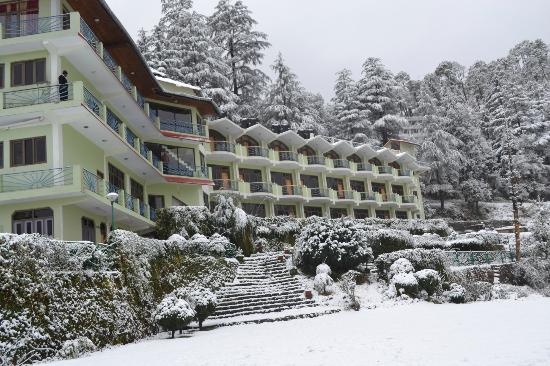
This is my personal recommendation for the best time to visit Kausani. The skies are crystal clear, and the Himalayan peaks look stunning against the blue sky. October and November bring crisp weather and excellent visibility. December to February brings cold nights (temperatures drop to 0-4 degrees Celsius) and the possibility of snowfall in January and February. If you want to ring in the New Year with snow-covered peaks around you, Kausani is one of the best places in Kumaon to do that. Just pack well: heavy woolens, gloves, and proper footwear are non-negotiable. If you are specifically planning a snow trip from Delhi, the snowfall near Delhi guide covering 10 Uttarakhand destinations is a useful reference for comparing options.
How to Reach Kausani
Kausani is about 406 km from Delhi by road. It is well connected by road but does not have its own railway station or airport. Here is how to plan your journey.
By Air — Pantnagar Airport (177 km)
The nearest airport is Pantnagar (PTB), which is about 177 km from Kausani. IndiGo and Air India operate regular flights from Delhi to Pantnagar. From the airport, hire a taxi to Kausani, which takes around 4 to 5 hours depending on traffic and road conditions. Alternatively, buses are available from Haldwani and Kathgodam (both near Pantnagar) that connect to Kausani, though they involve multiple changes. Most travelers visiting Kausani prefer road travel from Delhi directly, as it is more convenient given the distance from the airport.
By Rail — Kathgodam Railway Station (141 km)
Kathgodam is the railhead for Kumaon and is at about 141 km from Kausani. It has good connections from Delhi (Ranikhet Express, Uttarakhand Sampark Kranti, Kathgodam Express). From Kathgodam, shared taxis and buses go to Almora and onward to Kausani. The road journey from Kathgodam to Kausani takes about 3.5 to 4.5 hours. This is a popular route for budget travelers who book a sleeper train from Delhi and then take shared transport from Kathgodam in the morning.
By Road from Delhi — Two Main Routes
Most visitors drive from Delhi, and there are two good routes. Both are roughly similar in road quality, but different in what you see along the way.
Route 1 (via Corbett): Delhi – Hapur – Moradabad – Ramnagar (Corbett National Park) – Ranikhet – Kausani. Total distance: approximately 406 km, taking 9 to 11 hours including stops. I personally prefer this route because you can spend a day or two at Corbett en route, which makes for a great combined trip.
Route 2 (via Almora): Delhi – Hapur – Moradabad – Rampur – Haldwani – Kathgodam – Bhimtaal – Bhowali – Almora – Kausani. Distance is similar, around 410 km, taking about 10 to 11 hours. This route goes through Almora, which is itself a lovely town worth a brief stop.
In case you are traveling by bus, Uttarakhand Roadways (UTC) and KMOU (Kumaon Motor Owners Union) both operate services from Delhi’s ISBT Anand Vihar to Almora, from where you can take a local bus or shared taxi to Kausani. Verify current schedules and fares at the UTC website (utconline.uk.gov.in) or directly at the bus stand, as timings change seasonally.
Distance reference from nearby towns:
| From | Distance | Approx. Drive Time |
|---|---|---|
| Delhi | ~406 km | 9-11 hours |
| Almora | 51 km | 1.5-2 hours |
| Ranikhet | 60 km | 2-2.5 hours |
| Kathgodam | 141 km | 3.5-4.5 hours |
| Nainital | 117 km | 3-4 hours |
| Gwaldam | 39 km | 1-1.5 hours |
| Bageshwar | 40 km | 1-1.5 hours |
| Pithoragarh | 107 km | 3-4 hours |
Things to Do in Kausani — What Should You Not Miss?
Kausani is not a place for high-octane adventure tourism. This is a destination for people who want to slow down, breathe clean air, watch a sunrise over the Himalayas, and walk through pine forests at their own pace. That said, there are plenty of specific experiences worth planning for.


Sunrise and Sunset Views from the Ridge
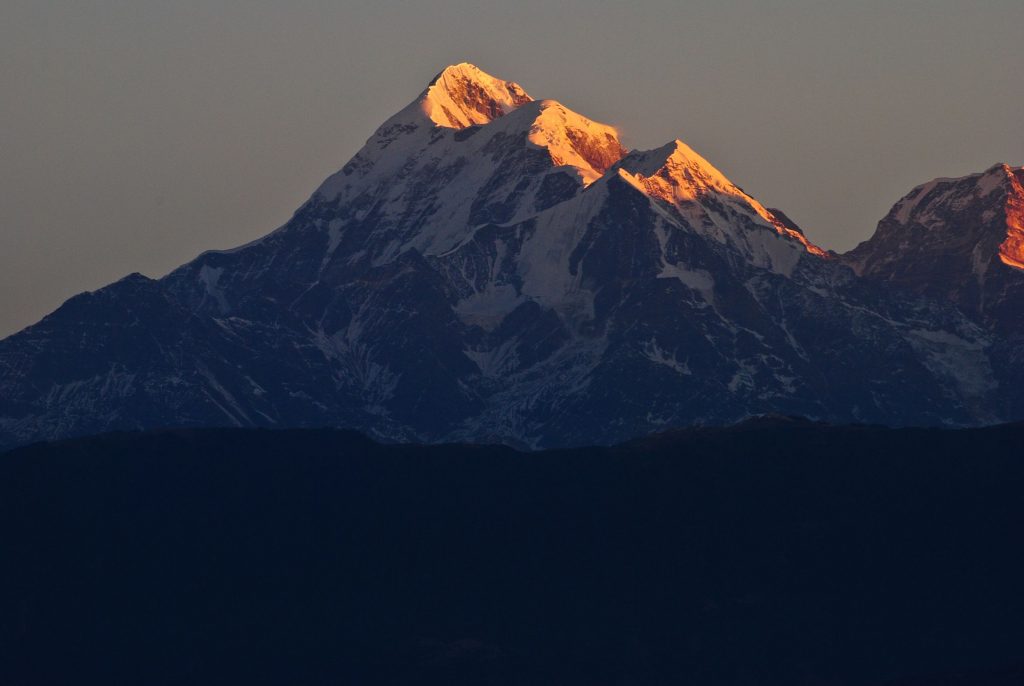
This is the top reason people come to Kausani and you should not skip it even for a single morning. The sunrise over the Trishul and Nanda Devi peaks is genuinely spectacular. Most hotels in Kausani have terraces or gardens with unobstructed views. Wake up before 6 AM, make yourself a cup of tea (Kausani tea if you can), and watch the peaks turn from deep blue to gold. The view changes dramatically within 15-20 minutes and it is worth setting an alarm for.
Anasakti Ashram
This ashram is dedicated to Mahatma Gandhi, who stayed here for 14 days in 1929 and wrote his commentary on the Bhagavad Gita titled “Anasakti Yoga.” Gandhi’s spinning wheel (Charkha) and personal memorabilia are kept here. The ashram also has a small study with a library of books on Gandhian philosophy. It can accommodate up to 300 people. Every evening, a prayer is conducted in the main hall. Entry is free. The ashram itself has excellent views of the Himalayan peaks, making it one of the best sunrise and sunset spots in Kausani.
Kausani Tea Estate
The Kausani Tea Estate is situated about 5 km from the main town and spreads across approximately 208 hectares. It is one of the highest-altitude tea estates in North India and produces Uttarakhand’s signature green and orthodox teas. You can walk through the tea gardens, watch the plucking and processing, and buy fresh tea from the factory shop. The entry fee is nominal (around Rs 25 per person as of recent visits, verify locally). The garden is open during daylight hours, roughly 8 AM to 5 PM. This is a must-visit, especially if you want to bring back something genuinely special from Kausani.

Sumitranandan Pant Museum
Dedicated to famous Hindi poet Sumitranandan Pant, who was born in Kausani in 1900, this museum displays articles from his daily life, drafts of his poems, letters, awards, and photographs. Pant went on to win the Jnanpith Award, which is India’s highest literary honor. The museum is located close to the Kausani bus terminal, making it easy to visit. Entry fee is minimal. If you are interested in Hindi literature or want to understand why Kausani has attracted poets and thinkers for a century, this is worth 30-45 minutes of your time.
Rudradhari Falls and Caves
Rudradhari Falls is about 12 km from Kausani by road, followed by a 1.5 to 2 km trek through dense forest. The waterfall drops from a significant height and is surrounded by lush green forest. At the base, there are ancient caves with religious significance. The trek is easy to moderate in difficulty and takes about 45 minutes one way. The best time to visit is between October and June when the forest is either in full bloom or wearing autumn colors. During monsoon, the trail can get slippery and risky. Guides are available locally for around Rs 200 to 300 if you prefer company on the trek.
Pinnath Temple Trek
Pinnath is a sacred temple dedicated to Bhairon (a form of Lord Shiva) at an altitude of 2,750 meters above sea level. The trek from Kausani covers about 5 km one way and takes 2 to 3 hours depending on your pace. The trail winds through mixed forest and offers outstanding views of the surrounding valleys and peaks. The temple hosts an annual fair in October, which draws pilgrims from across Kumaon. Even outside the fair season, the trek is a good half-day activity. Start early to avoid afternoon clouds and carry water and a light snack.
Kumaon Shawl Emporium
If you enjoy picking up something locally made as a souvenir, the Kumaon Shawl Emporium in Kausani is the place to go. Local weavers produce high-quality woolen shawls, pashminas, and other handicrafts. The quality here is generally better than what you find at generic tourist shops in bigger towns. Prices are reasonable for handmade woolen goods. This is also a good opportunity to support local artisans directly.
Starscapes Observatory
This is a relatively newer addition to Kausani’s attractions. Starscapes operates an astronomy observatory where you can observe celestial objects including planets, star clusters, constellations, nebulas, and distant galaxies through telescopes. Given Kausani’s altitude and low light pollution, the night sky quality is quite good. Sessions are typically held in the evenings. Check their website or contact locally for current session timings and fees, as these tend to change with seasons.
Nearby Places Worth Visiting
Kausani is a great base for exploring the Kumaon region. If you have extra time, these nearby places are well worth the drive.
Baijnath (19 km)
Baijnath is considered one of the most historically significant places in Uttarakhand. Situated at 1,126 meters above sea level near the Gomti River, it houses a group of ancient Katyuri temples dating back to the 12th century. The main Baijnath temple is dedicated to Lord Shiva and is architecturally impressive. The drive from Kausani to Baijnath is scenic and takes about 30-40 minutes. This is easy to combine with a Kausani trip as a morning or afternoon excursion.
Bageshwar (40 km)
Bageshwar sits at the confluence of the Saryu and Gomti rivers and is an important pilgrimage site for Lord Shiva. The town is also the administrative headquarters of Bageshwar district. Apart from its religious significance, Bageshwar is the starting point for treks to the Pindari, Sunderdunga, and Kafni glaciers. If you are planning a glacier trek, factor Bageshwar into your itinerary. The drive from Kausani takes about 1 to 1.5 hours.
Lakhudiyar Caves (via Almora, ~75 km)
The Lakhudiyar Caves are located near Barechhina village on the banks of the Suyal River in the Almora district. These caves contain ancient rock paintings created in black, red, and white, depicting animals, humans, and geometric patterns. The name “Lakhudiyar” literally means “one lakh caves.” These are some of the most significant prehistoric rock art sites in Uttarakhand and are worth a visit if you are driving back toward Almora or Kathgodam.
Chaukori (87 km)
Chaukori is a wonderful and relatively quieter hill station near the Indo-Nepal border, about 87 km from Kausani. It offers stunning views of the Panchchuli peaks and the broader Kumaon Himalayas. If you want to combine Kausani with another offbeat destination, Chaukori makes for an excellent addition to your itinerary. You can read more about Chaukori in full detail here, including how to reach it and what to see.
Gwaldam (39 km)
Gwaldam is a small and largely offbeat town at 1,708 meters, about 39 km from Kausani. It sits at the gateway to the Garhwal region and offers views of the Trishul peak. It is quieter than Kausani and sees far fewer tourists, which is both its charm and its limitation in terms of facilities. For travelers planning a trip to Gwaldam, it can be combined with Kausani into a single Kumaon loop itinerary.
How Many Days Do You Need in Kausani?
For most travelers, 2 to 3 days is the right amount of time to explore Kausani properly. Here is how I would plan it:
Day 1: Arrive in the afternoon, settle in, and catch the sunset from your hotel terrace or the Gandhi Ashram. Evening walk through the market area.
Day 2: Early morning sunrise watch (essential). After breakfast, visit the Anasakti Ashram and Pant Museum. After lunch, drive to the Tea Estate for a walkthrough and tea purchase. Evening back at the hotel.
Day 3: Morning trek to Pinnath (start by 7 AM for the best experience). After returning, drive to Baijnath for the ancient temples and back. Depart by late afternoon if you need to reach Delhi by night.
If you have more time, add a day trip to Bageshwar (Day 4) or extend to Chaukori for a night or two. The Kumaon itinerary guide covers the full Kumaon circuit if you want to plan a longer trip combining Kausani with Ranikhet, Mukteshwar, and Almora.
Where to Stay in Kausani
Kausani has a decent range of accommodation options, from budget guesthouses to mid-range hotels and a few resorts with outstanding views. The better hotels (those with Himalayan peak views) are clustered near the Gandhi Ashram area uphill, while budget options are found around the local market. Keep in mind that the best rooms in Kausani are the ones with a terrace or balcony facing the Himalayan range. Always ask specifically about the view before booking.
As of 2025-2026, budget guesthouses in Kausani start from around Rs 800 to Rs 1,500 per night for a basic room. Mid-range hotels with views typically run between Rs 2,000 and Rs 4,000 per night. Heritage resorts and the more well-known properties like The Heritage Resort can go up to Rs 6,000 or more during peak season (November to January). I suggest booking well in advance if you are visiting during winter (November-January) or the May long weekend period, as good-view rooms sell out fast. Verify current rates directly with the property, as prices vary significantly by season.
Where to Eat in Kausani
Food options in Kausani are simple, which is part of its charm. Do not come expecting a wide restaurant scene. The town has a few roadside dhabas and in-house hotel restaurants that serve standard North Indian, Kumaoni, and Chinese (Maggi, momos) fare. If you want to try local Kumaoni food, look for places that serve Aloo ke Gutke (spiced local potatoes), Bhatt ki Churkani (black bean curry), and Gahat Dal (horse gram lentil). These dishes are earthy and delicious and you will not find them on every menu in bigger cities.

Most travelers end up eating at their hotel restaurant, which is perfectly fine since the kitchen food at most mid-range hotels in Kausani is reliable and freshly cooked. There are no large restaurant chains here. The local market area has small eateries and chai shops where a cup of tea costs Rs 20 to 30. Pick up fresh Kausani tea from the Tea Estate or the local market before you leave. It keeps well and makes a wonderful gift.
Budget Breakdown for a Kausani Trip (Per Person)
Here is a rough cost breakdown to help you plan. These figures are based on 2025-2026 rates. Costs will vary depending on group size, vehicle choice, and accommodation preferences.
| Expense | Budget (Rs) | Mid-Range (Rs) |
|---|---|---|
| Accommodation (per night) | 800-1,500 | 2,000-4,000 |
| Food (per day, 3 meals) | 300-500 | 500-800 |
| Local transport (taxi/auto) | 200-400 | 400-800 |
| Entry fees (Ashram, Museum, Tea Estate) | 50-100 total | 50-100 total |
| Trek guide (Rudradhari, optional) | 200-300 | 200-300 |
| Fuel Delhi-Kausani return (by car, split 4 ways) | ~1,500 per person | ~1,500 per person |
For a 3-day trip from Delhi by own vehicle (group of 4), budget travelers can manage at around Rs 5,000 to Rs 7,000 per person inclusive of accommodation, food, fuel, and activities. A comfortable mid-range trip works out to Rs 8,000 to Rs 12,000 per person for 3 days. These are rough estimates. Do the math for your own group size and hotel preferences.
Practical Information and Travel Tips
Mobile network coverage: Major networks (Jio, Airtel, BSNL) have coverage in Kausani town. BSNL tends to be most reliable in the remoter surrounding areas. Do not expect 4G speeds for video streaming, but calls and WhatsApp work fine in town.
ATMs: There are ATMs in Kausani town, but carry enough cash as they can run out during peak tourist periods. Almora (51 km) has better banking facilities if you need a larger withdrawal.
Fuel: There are petrol pumps in Kausani. Fill up before heading to Bageshwar or Chaukori as remote stretches have limited fuel availability.
Medical: A government hospital is present in the Bageshwar district. For serious emergencies, Almora has better-equipped facilities. Carry a basic first aid kit and any prescription medication you need.
Best sunrise spot: The Anasakti Ashram terrace and the forest guest house viewpoint near the ridge are both excellent. Many hotels also have terraces facing the peaks. Ask your hotel which direction gives the best morning view and position your room accordingly.
Responsible travel: Kausani is a small village. Keep the forests and viewpoints clean. Do not litter on treks. If you are trekking to Pinnath or Rudradhari, carry out everything you carry in. The DwD community has a long-standing practice of responsible travel, and Uttarakhand’s mountain towns deserve the same care we give to the better-known Himalayan destinations.
History of Kausani: From Valna to Switzerland of India
If you are exploring beyond Kausani and want ideas for other Uttarakhand destinations, the Tungnath and Chandrashilla travel guide covers one of the best high-altitude temple treks in Garhwal, which pairs well with a Kausani trip if you have 7-8 days. You can also check the Gwaldam – Munsiyari – Dharchula – Chaukori itinerary if you want to extend deeper into Kumaon from Kausani.
Kausani’s recorded history goes back several centuries. The region was part of the prosperous Katyuri Kingdom, which ruled Kumaon from roughly the 7th to the 11th century. The town was historically called “Valna” in some ancient records. The Katyuri kings left behind temples and architectural legacies across the region, including the famous temples at Baijnath nearby.
In more recent history, Kausani owes much of its fame to two individuals. Sumitranandan Pant, one of the most celebrated Hindi poets of the 20th century, was born here in 1900. His poetry drew heavily on the natural beauty of Kumaon and brought Kausani’s name into literary circles across India. And then there was Gandhi’s 1929 visit, during which he wrote “Anasakti Yoga” and coined the phrase “Switzerland of India” for Kausani. That description stuck, and the town has been trading on it ever since, though in the best possible way.
Have a travel question?? You can subscribe to my YouTube channel and leave a comment to ask your travel questions about traveling to the Himalayas.
Frequently Asked Questions About Kausani
Is Kausani worth visiting?
Yes, absolutely. Kausani offers one of the best panoramic Himalayan peak views in all of Kumaon, including unobstructed sightlines to Trishul, Nanda Devi, and Panchchuli. It is a calm, walkable ridgeline town that is very different from busy hill stations like Nainital or Mussoorie. If you are looking for a quiet escape with genuine mountain scenery, Kausani delivers.
How many days are enough for Kausani?
2 to 3 days is sufficient to see the main attractions in Kausani itself. If you want to include nearby places like Baijnath, Bageshwar, and Chaukori, plan for 4 to 5 days total. A 2-day trip from Delhi over a long weekend is doable but you will need to drive through the night or leave very early on Day 1.
What is the best time to visit Kausani for snow?
January and February have the highest probability of snowfall in Kausani. The town itself may see light to moderate snowfall during these months, and the surrounding peaks are covered in thick snow. Pack heavy woolens, gloves, and thermal inner layers. Roads can occasionally get blocked briefly after heavy snowfall, so check conditions before travelling in mid-January to mid-February.
Can I visit Kausani in monsoon (July-August)?
Technically yes, but the experience is limited. Peak views are hidden behind clouds for most of your visit, and landslide risk on the mountain roads increases during heavy rain. If you must visit in monsoon, September is a better option as rains begin to ease and the forests are lush. I would avoid July and August for a first visit.
What is Kausani famous for?
Kausani is famous for three things primarily: the 300-degree panoramic view of Himalayan peaks (Trishul, Nanda Devi, Nandakot, Panchchuli), the Anasakti Ashram where Mahatma Gandhi stayed in 1929, and the Kausani Tea Estate which produces some of the finest Uttarakhand teas. The town is also the birthplace of Hindi poet Sumitranandan Pant.
Is Kausani safe for solo travelers?
Yes, Kausani is generally safe for solo travelers including solo women. It is a small, compact town where everyone knows everyone. Keep basic safety precautions in mind: inform your hotel about your trek plans, do not go on long treks alone without telling someone, and carry a fully charged phone. Mobile network works in the town area. BSNL is most reliable if you are venturing outside the main town.
What is the best hotel in Kausani with mountain views?
Several properties in Kausani are well known for views. The Heritage Resort is one of the older and most cited properties, with 14 rooms and outstanding sunrise views. Aashritha is a smaller boutique guesthouse managed by Col. Narendra Singh Mahara with excellent cleanliness and views. For a more budget-friendly option, many smaller guesthouses in the Gandhi Ashram area also have usable mountain-view terraces. Always ask about the view direction before confirming your booking.
Are there any treks from Kausani?
Yes. The main treks from Kausani are: Pinnath Temple Trek (5 km one way, easy to moderate, 2-3 hours, altitude 2,750 m), Rudradhari Falls Trek (12 km by road + 1.5-2 km trek, moderate, waterfall + caves), and Burapinnath Trek (5.5 km, more demanding than Pinnath). There is also a 12 km trek to Bhatkot for experienced trekkers. For beginners, Pinnath is the best starting point.
Conclusion
Kausani is one of those hill stations in Uttarakhand that rewards visitors who take their time here rather than rushing through. The Himalayan views are genuinely among the best in Kumaon, the Anasakti Ashram has real historical weight, and the tea estate gives you something tangible to bring home. It is not a destination for people looking for nightlife, theme parks, or back-to-back adventure activities. It is for travelers who want clean air, a slow morning with tea and a mountain view, and the feeling of being somewhere that history has actually touched.
If you are in northern India and have not been to Kausani yet, I would say put it on your plan for this year. It is accessible from Delhi over a long weekend (though 3 nights is better than 2) and easy to combine with Almora, Ranikhet, or Chaukori for a longer Kumaon loop. Check out the offbeat places in Uttarakhand guide if you want inspiration for other hidden gems in Garhwal and Kumaon that most travelers skip.
Feel free to ask any questions about Kausani in the comments section below. If you have visited recently and want to share your experience or tips for fellow travelers, I will be happy to hear from you. And if you know friends or family who are planning a Kumaon trip, do share this guide with them 🙂 …
Last Updated: February 2026
