


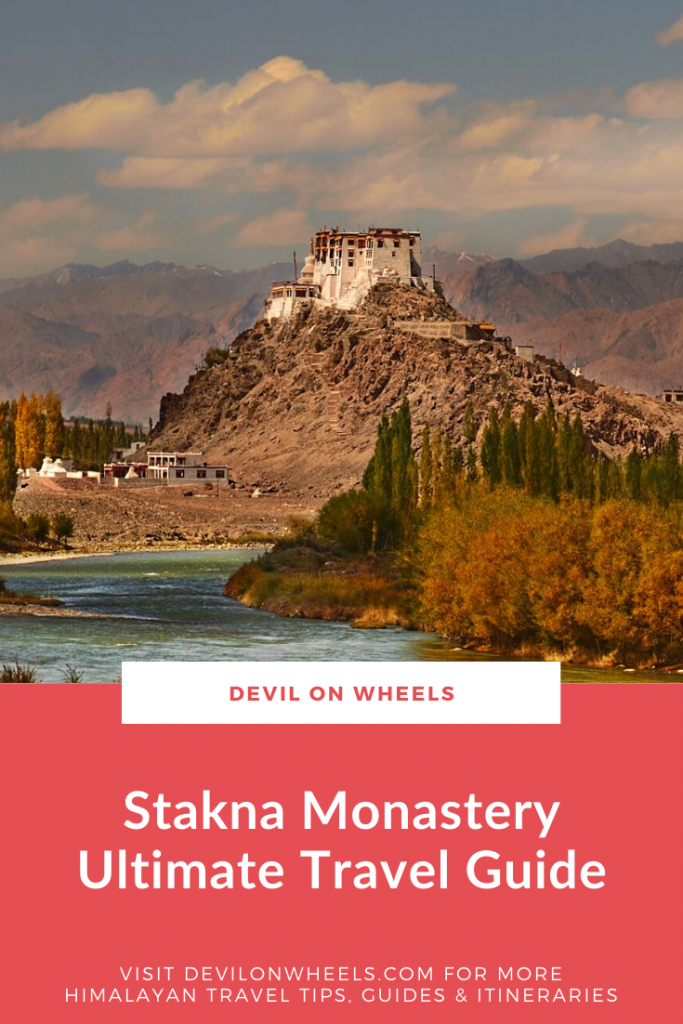
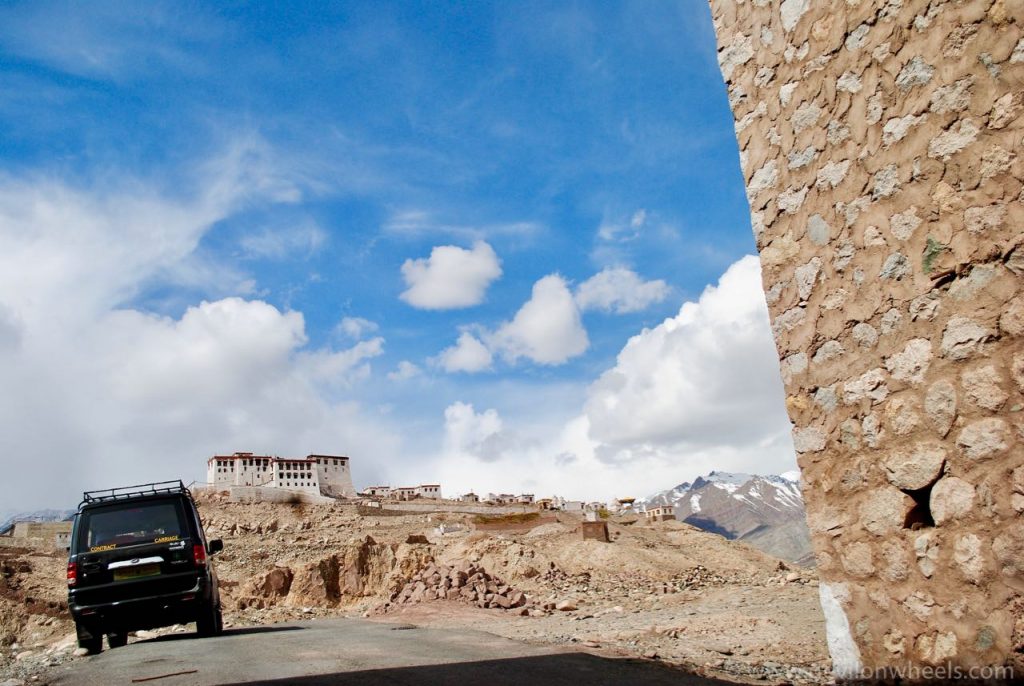
Stakna Monastery sits on a hilltop shaped like a tiger’s nose, roughly 25 km southeast of Leh on the banks of the Indus River. The name “Stakna” literally translates to “tiger’s nose” in the local language, and once you see the profile of the hill from the highway, the resemblance becomes obvious. This 16th-century Drukpa Kagyu monastery is one of the quieter stops on the popular Indus Valley monastery circuit, and that is exactly what makes it worth visiting.
I first visited Stakna during my early trips to Ladakh, and it quickly became one of my favorite monastery stops near Leh. Unlike Thiksey or Hemis, which see large tour groups throughout the day, Stakna feels personal. You climb the steps, walk through the courtyard, and often find yourself alone with the murals, the chortens, and the panoramic view of the Indus Valley below. If you are planning a monastery day trip from Leh, this guide covers everything you need to know about Stakna Monastery, from its history and what you will see inside, to how to reach it, entry fees, timings, and practical tips for 2026.
Let's quickly dive into the details:
Stakna Monastery Quick Practical Information
| Location | 25 km southeast of Leh, on Leh-Manali Highway near Karu |
| Altitude | 11,800 ft (3,600 m) |
| Founded | 16th century by Chosje Jamyang Palkar (Bhutanese scholar) |
| Buddhist Order | Drukpa Kagyu (Bhutanese lineage) |
| Monks | ~30 resident monks |
| Entry Fee | Rs 30 per person |
| Timings | 7:00 AM to 6:00 PM daily (closed 1:00-2:00 PM for lunch) |
| Time Required | 45 minutes to 1 hour |
| Best Time to Visit | May to September |
| ILP / EDF | No stamped ILP needed (ended 2021). Standard Ladakh EDF applies, ~Rs 590 for 7 days |
| Nearest Fuel | Leh (25 km) or Karu (5 km) |
| Mobile Network | Jio, Airtel, BSNL all work (close to Leh) |
Last Updated: September 2026
What Is the History of Stakna Monastery?
Quick answer: Stakna Monastery was founded in the late 16th century by the Bhutanese scholar Chosje Jamyang Palkar, making it the only Drukpa Kagyu monastery in Ladakh led by a Bhutanese-origin lama (the Stakna Rinpoche). You can spot the lineage instantly from the elephant tusks flanking the main altar, a Drukpa signature you will not find at any other monastery in the Indus Valley.
Stakna Monastery was founded in the late 16th century by Chosje Jamyang Palkar, a Bhutanese saint and scholar who played a key role in spreading the Drukpa Kagyu tradition of Tibetan Buddhism across Ladakh. What makes Stakna unique among Ladakh’s monasteries is its direct Bhutanese connection. While most other Drukpa monasteries in Ladakh, including the much larger Hemis Monastery, follow the Gyalwang Drukpa lineage, Stakna is the only one headed by a Bhutanese lama known as the Stakna Rinpoche.
The monastery belongs to the Drukpa Kagyu order of Tibetan Buddhism, which you can identify from the elephant tusks placed on either side of the main altar. This is a signature element of the Drukpa tradition. The lineage has been carried forward by successive monastic heads and the roughly 30 monks who reside here today.
Over the centuries, Stakna Gompa has served as both a spiritual center and a guardian of religious art. The assembly hall (Dukhang) is decorated with murals and thangka paintings depicting Sakyamuni Buddha, Padma Sambhava, and various Bodhisattvas. In the heart of the monastery sits a marble statue of Avalokitesvara (Chenrezig), which locals believe was brought all the way from Kamrup in Assam. Keep in mind, photography is not allowed inside the prayer hall, so take your time to observe the artwork with your eyes instead of through a lens.
What Can You See Inside Stakna Monastery?
Quick answer: Inside Stakna, look for the 7-foot silver-gilded chorten in the courtyard, centuries-old murals of Padma Sambhava and Bodhisattvas inside the Dukhang, a stuffed Lhasa Apso preserved in a glass case, and a rooftop that opens up to a full panoramic view of the Indus Valley.
When you climb up the monastery steps and enter the courtyard, the first thing you will notice is the 7-foot-tall silver-gilded chorten (stupa) on the right side. This is one of the most prominent features of the monastery and is in excellent condition despite being centuries old.
The main Dukhang (assembly hall) is where the monks gather for daily prayers. The walls are lined with stunning murals and paintings of Buddhist gurus, including Padma Sambhava (Guru Rinpoche) and various Bodhisattvas. These paintings run parallel to the main hallway and are some of the finest examples of traditional Tibetan Buddhist art in the Indus Valley.
At the center of the courtyard, there is an unusual sight: a stuffed Lhasa Apso dog in a glass case. Locals say this was the beloved pet of the head lama many generations ago, and it was preserved as a mark of respect. It is a quirky detail that you will not find in any other monastery in Ladakh.
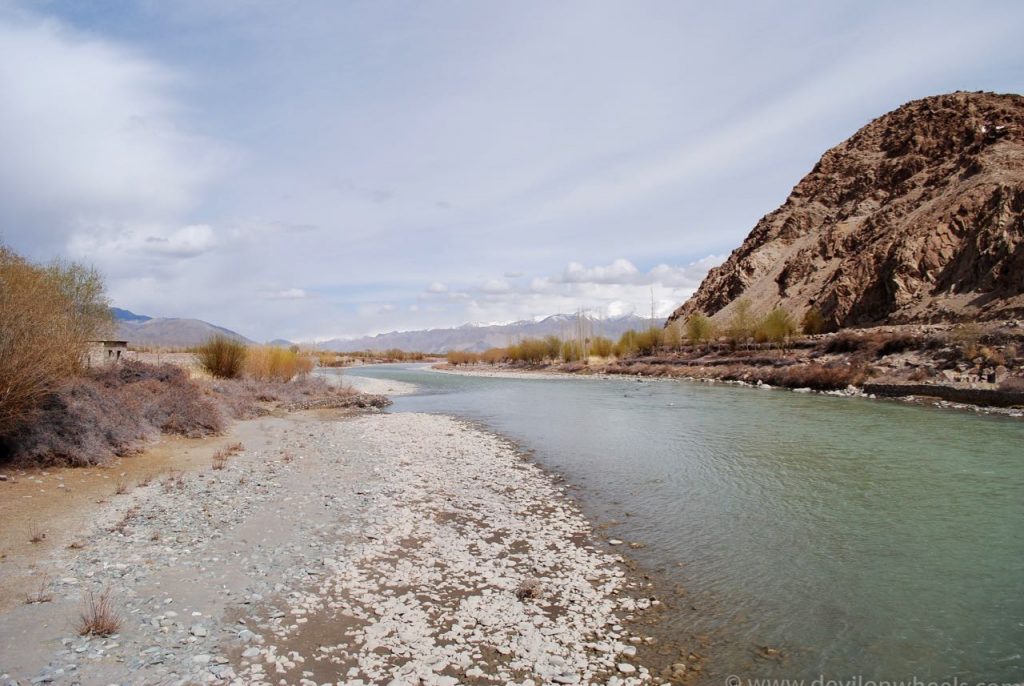
But the real highlight, in my opinion, is the view from the rooftop. Once you climb to the top level of the monastery, you get a 360-degree panorama of the Indus Valley with the turquoise Indus River meandering below, the Stok Range on one side, and Thiksey Monastery visible in the distance. On a clear day, this view alone justifies the visit.
What Is the Stakna Tsechu Festival?
Quick answer: The Stakna Tsechu is a masked Cham dance festival honoring Guru Rinpoche, usually held in February or March per the Tibetan lunar calendar. We were not able to independently confirm an exact 2026 date from an official source, so please cross-check our Ladakh festivals calendar closer to the date before you plan a winter trip around it.
The Stakna Tsechu is the monastery’s annual festival, held in honor of Guru Rinpoche (Padma Sambhava). During the festival, monks perform sacred Cham dances wearing elaborate costumes and ornate masks. These are not performances for tourists. They are deeply spiritual rituals representing the triumph of good over evil and the Buddhist path to enlightenment.
The exact dates of the Stakna Tsechu change each year because they follow the Tibetan lunar calendar. The festival usually falls between February and March, which is the off-season for most tourists. If you happen to be in Leh during winter (accessible by flight), attending the Stakna Tsechu is a rare and memorable experience. You can check our Ladakh festivals calendar for confirmed dates each year.
What Else Can You Visit Near Stakna Monastery?
Quick answer: Stakna sits on the same stretch of highway as the Druk White Lotus School (the “3 Idiots” school), Takthok cave monastery, and the Thiksey-Shey-Hemis trio, plus a stretch of the Indus popular for river rafting. Most travelers cover several of these together in a single day trip from Leh.
Stakna Monastery is rarely visited in isolation. Most travelers combine it with other monasteries and historical sites on the Leh-Karu-Hemis route. Here are the main stops you should not miss.
Druk White Lotus School (Rancho School from 3 Idiots)
Between Stakna and Shey Monastery, at Shey village, you will find the Druk White Lotus School, which shot to fame after Aamir Khan’s “3 Idiots” was partially filmed here. The school was designed by Arup Associates and is built to withstand seismic activity while staying true to traditional Ladakhi building techniques. Local guides at the entrance can take you to the filming locations. It is a quick 15-20 minute stop and free to visit, though donations are welcome.
Takthok Monastery
Takthok Monastery is about 6 km from the Leh-Manali Highway turnoff, near Sakti village. This is the cave monastery where Buddhist guru Padma Sambhava is believed to have meditated. The cave ceiling is blackened from centuries of butter lamp smoke. The annual Takthok festival takes place in August with Cham dances and is less crowded than the Hemis festival.
Thiksey, Shey, and Hemis Monasteries
These three form the core of the Indus Valley monastery circuit. Thiksey Monastery is often called “Mini Potala” because it resembles the Potala Palace in Lhasa. Shey Palace has a 12-meter copper Buddha statue gilded in gold. Hemis is the largest and wealthiest monastery in Ladakh, famous for its annual Hemis Tsechu festival in June/July. All three lie on the same road as Stakna and can be covered in a single day trip from Leh.


Can You Go River Rafting Near Stakna Monastery?
Not many visitors realize this, but Stakna also sits on one of Ladakh’s popular Indus river rafting stretches. Operators run trips on the calmer Hemis-to-Choglamsar section of the Indus, which passes right by Stakna, Shey, and Thiksey, typically a 2-3 hour float through Grade I-II water that is suitable for beginners and families. Ladakh’s standard Indus rafting routes generally cost Rs 800-1,500 per person, including gear and transport, but the Stakna stretch specifically is run by only a handful of Leh-based operators, so call ahead and confirm current rates and availability locally before you plan a day around it. Rafting season runs from June to late August, when the water levels are highest.
Pro Tip: Start early (by 8 AM) and visit Hemis first (farthest), then work your way back toward Leh via Stakna, Thiksey, and Shey. This way, you avoid the tour bus crowds who typically start from the closest monastery and work outward.
How to Reach Stakna Monastery from Leh?
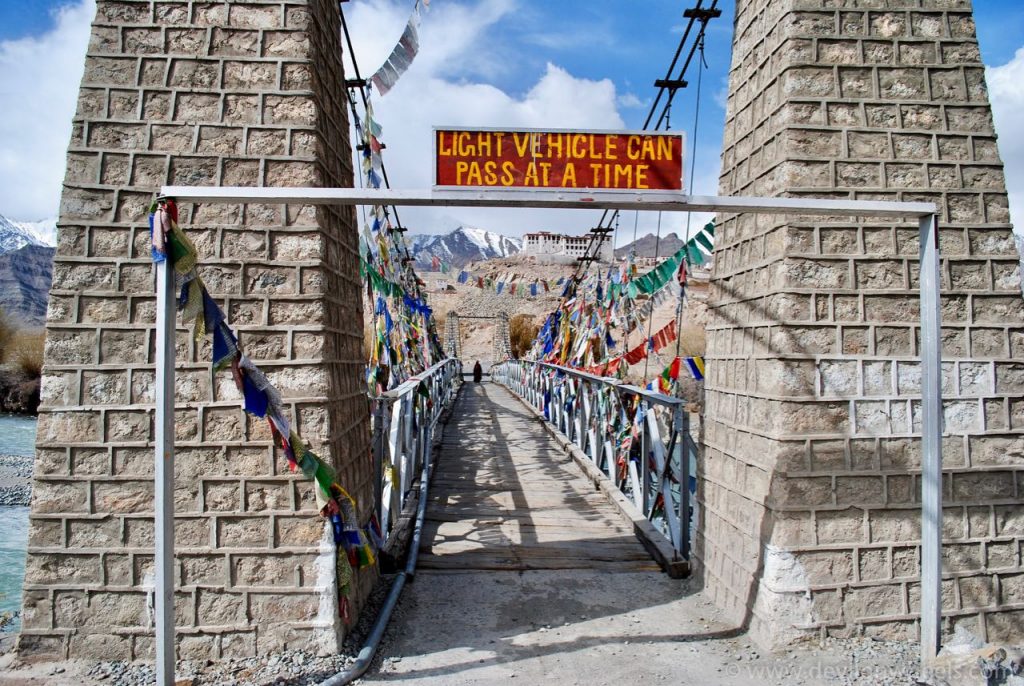
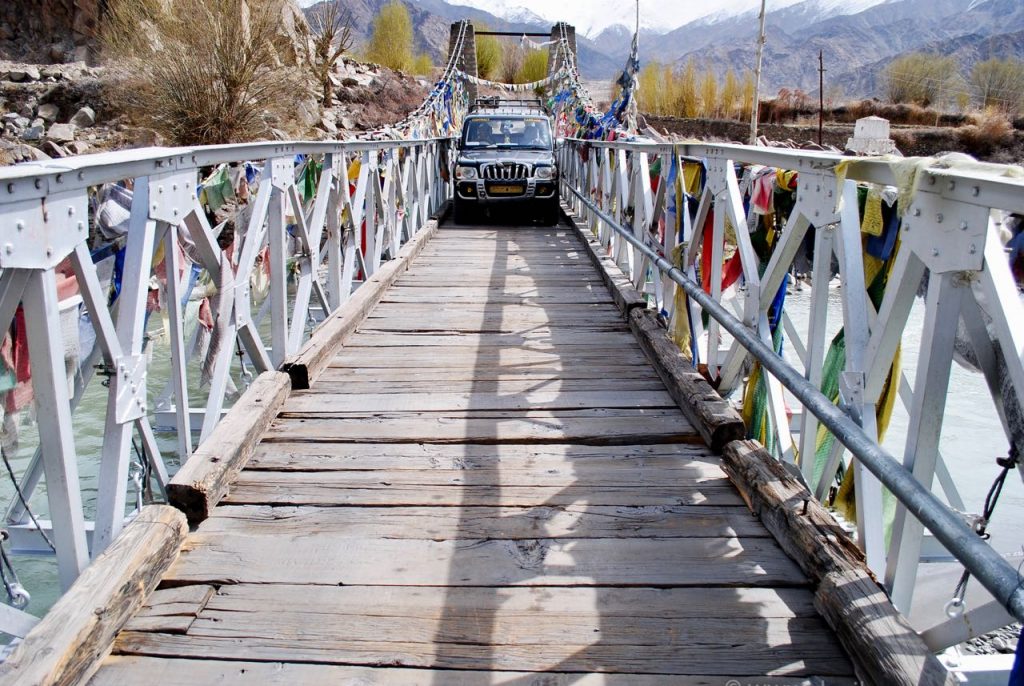
Quick answer: Stakna Monastery is 25 km southeast of Leh on the Leh-Manali Highway near Karu, about a 35-40 minute drive. You will cross a narrow, one-vehicle-at-a-time suspension bridge over the Indus, then walk or drive roughly 800 meters to the base of the hill before the climb up the stone steps.
![Why avoid traveling on Manali Leh Highway in October for Ladakh trip? [5 Safety Reasons]](https://discoverwithdheeraj.com/yt_vid_thumbs/ladakh/104.png)
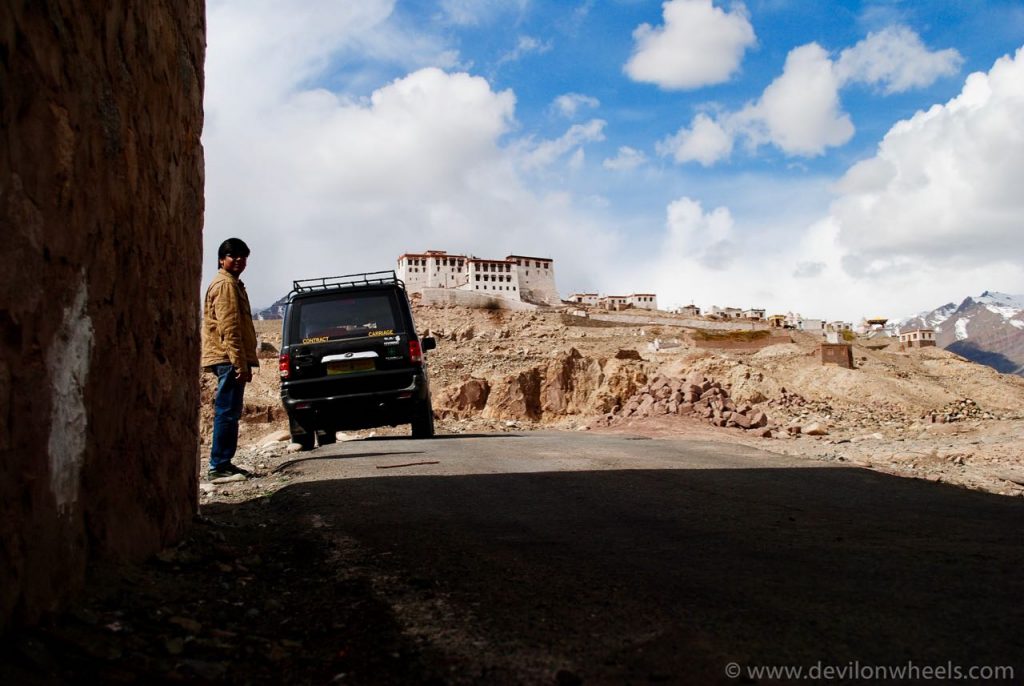
Stakna Monastery is located on the Leh-Manali Highway, about 25 km southeast of Leh near Karu. The road from Leh to Stakna is fully paved, well-maintained, and open throughout the year. The drive takes about 35-40 minutes from Leh town. You will pass Shey Palace and Thiksey Monastery on the way.
Once you reach the Stakna turnoff on the highway, you need to cross a narrow suspension bridge over the Indus River. Only one light vehicle is allowed on this bridge at a time, so there can be a short wait during peak hours. From the bridge, it is about an 800-meter walk (or drive, if you have a car or bike) to reach the base of the monastery. From there, a short climb up the stone steps brings you to the entrance.
By Taxi or Private Vehicle
The easiest way to visit Stakna is by hiring a taxi from Leh for a full-day monastery circuit. The standard Indus Valley monastery tour (covering Shey, Thiksey, Hemis, and Stakna) costs approximately Rs 3,500-5,000 depending on the vehicle type (Xylo, Innova, or Scorpio). You can check the latest rates on our Leh Ladakh taxi rates page. If you are riding a rented bike from Leh, you can take your bike right up to the monastery base.
By Local Bus
The JKSRTC (now LASRTC) operates local bus services from Leh to Karu, Sakti, and other nearby villages along the Leh-Manali Highway. You can board a bus heading toward Karu or Hemis, get off at the Stakna bridge turnoff, and walk the remaining 800 meters. The bus fare is roughly Rs 50-80. Buses are not very frequent, so plan your return trip in advance or be prepared to hitchhike back (which is common and safe in Ladakh).
By Air (Reaching Leh)
Kushok Bakula Rimpochee Airport in Leh is the nearest airport, well connected to Delhi, Mumbai, Srinagar, and Chandigarh by direct flights. From the airport, you can take a pre-paid taxi to your hotel in Leh (Rs 600-800) and plan the monastery day trip for a later day after acclimatization. In case you are flying in, spend at least the first full day resting in Leh to adjust to the altitude before heading out.
By Road from Manali or Srinagar
If you are driving to Ladakh, you will reach Leh via either the Manali-Leh Highway or the Srinagar-Leh Highway. Both highways are open from approximately May/June to September/October. Once in Leh, Stakna is a straightforward day trip on the same Manali-Leh Highway heading south toward Karu.
By Train (Nearest Railway Station)
The nearest major railway station is Jammu Tawi (812 km from Leh). From Jammu, you would need to take a taxi or bus to Srinagar and then onward to Leh via the Srinagar-Leh Highway, which is a 2-3 day journey with overnight stops. Joginder Nagar is closer at 635 km (via Manali) but is a narrow gauge station with limited connectivity.
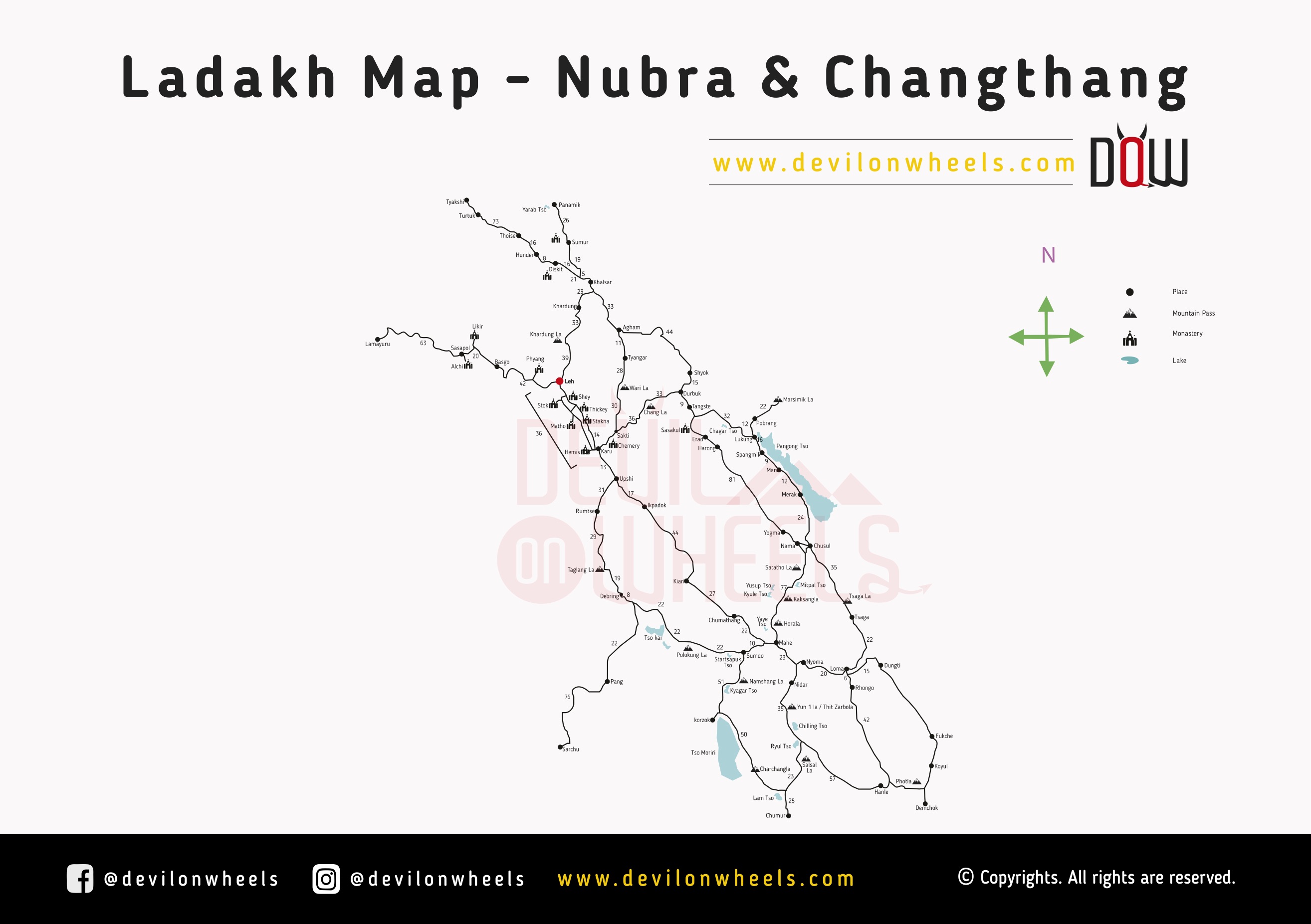
Download your FREE high-resolution version pdf copy of this maps of Leh Ladakh covering Nubra Valley and Changthang region. If, you liked it and found it helpful, please feel free to share it with your family and friends to help them too.
When Is the Best Time to Visit Stakna Monastery?
Quick answer: May to September is the best window for road trippers, when both highways are open and Ladakh’s weather is pleasant. If you are flying in during winter, Stakna stays accessible year-round on the Leh-Karu road, though temperatures can drop to -15 to -20 degrees Celsius.
The best time to visit Stakna Monastery is from May to September, when the weather in Ladakh is pleasant and both the Manali-Leh and Srinagar-Leh highways are open. July and August bring occasional rain (the “Ladakh monsoon” has been increasing in recent years), but mornings are usually clear and perfect for sightseeing.
If you are flying into Leh, you can technically visit Stakna year-round since the road from Leh to Karu stays open even in winter. However, winter temperatures drop to -15 to -20 degrees Celsius, and the monastery visit will be a cold affair. The upside of a winter visit is that you may catch the Stakna Tsechu festival (usually February-March) and have the monastery entirely to yourself.
Hence, the best time to visit Stakna is the same as the best time to visit Leh Ladakh overall. May to September for road trippers, and December to February for winter flyers who want a quieter, more authentic experience.
Where Should You Stay When Visiting Stakna?
Quick answer: There is no accommodation at Stakna itself, and you don’t need any. It is a half-day stop on the Indus Valley monastery circuit, so base yourself in Leh (roughly Rs 800-4,000 per night depending on category) and return by evening.
There is no accommodation at Stakna Monastery itself, and honestly, there is no reason to stay here overnight. The monastery is a day trip from Leh, and you should plan to return to Leh by evening. Most travelers cover Stakna along with Thiksey, Hemis, and Shey in a single day, leaving Leh by 8 AM and returning by 4-5 PM.
For budget travelers, Leh has plenty of guesthouses starting from Rs 800-1,500 per night in areas like Changspa and Fort Road. Mid-range hotels run Rs 2,500-4,000 per night. If you want to stay near a monastery, both Thiksey Monastery and Hemis Monastery offer basic guesthouse accommodation. You can always refer to our list of good hotels and guest houses in Leh for specific recommendations.
Where Can You Eat Near Stakna Monastery?
Quick answer: There are no proper restaurants at Stakna, just basic roadside chai-and-maggi shacks near the bridge. Eat a solid breakfast in Leh before you leave, carry snacks and water, and stop at Karu (5 km) or Upshi (50 km) if you need a real meal.
There are no restaurants or cafes at Stakna itself. A couple of small roadside shacks on the highway near the Stakna bridge serve basic chai and maggi, but nothing substantial. Your best options are either to carry snacks and water from Leh or to eat at Karu (5 km ahead), where you will find a few dhabas serving dal-rice, noodles, and thukpa. Upshi (about 50 km from Leh on the same highway) has more established dhabas with decent Tibetan and Indian food.
My recommendation is simple: eat a good breakfast in Leh before you start the monastery day trip, carry some dry snacks and water bottles, and plan a proper lunch at one of the restaurants in Leh after you return. The dhabas along the way serve authentic Tibetan food like thukpa and momos that are worth trying if you get hungry.
You should always carry your water bottle and refill it as many times as you need water. It will not only keep you hydrated always, but you will also help in saving the Himalayas from plastic garbage. Remember, every tiny step counts and your step in this direction can help save the Himalayas too !! 🙂 🙂
How Much Does a Day Trip to Stakna Monastery Cost?
Quick answer: A full Indus Valley monastery day trip (Stakna, Shey, Thiksey, Hemis) costs roughly Rs 1,250-2,550 per person by shared taxi, or as little as Rs 500-800 if you’re doing it solo on a rented bike, covering fuel, entry fees, and food for the day.
A monastery day trip from Leh covering Stakna, Shey, Thiksey, and Hemis is one of the most affordable sightseeing options in Ladakh. Here is a rough breakdown for 2026.
| Expense | Budget (per person) | Mid-Range (per person) |
| Taxi (full day, shared among 4) | Rs 900-1,250 | Rs 1,250-1,600 |
| Entry Fees (all 4 monasteries) | Rs 100-150 | Rs 100-150 |
| Lunch/Snacks | Rs 200-300 | Rs 400-600 |
| Rancho School Guide Tip | Rs 50-100 | Rs 100-200 |
| Total per person | Rs 1,250-1,800 | Rs 1,850-2,550 |
If you are traveling solo on a rented bike, your fuel cost for the 100 km round trip (Leh to Hemis and back via Stakna) will be around Rs 250-350. Add entry fees and food, and the total comes to roughly Rs 500-800 for the day. This makes the Indus Valley monastery circuit one of the best value-for-money day trips in all of Ladakh. These figures are approximate 2026 estimates. Please verify current taxi and fuel rates locally before you go, since prices do shift through the season.
What Are the Important Tips for Visiting Stakna Monastery?
Quick answer: No photography inside the prayer hall, dress modestly, carry a jacket even in summer, and don’t rush out to Stakna on your first day in Leh. At 11,800 ft, it is roughly the same altitude as Leh town, so acclimatize before you climb the steps.
Respect the Monastery Rules
Photography is strictly not allowed inside the prayer hall of the monastery. Please follow this rule. Also, ask before photographing any monk, and do not step over or touch statues or religious objects. Remove your shoes before entering the prayer hall. These are basic courtesies that apply to all monasteries in Ladakh, not just Stakna.
Take Acute Mountain Sickness (AMS) Seriously
Stakna sits at 11,800 ft, which is roughly the same altitude as Leh itself. If you have just arrived in Leh (especially by flight), do not rush out to visit monasteries on Day 1. Spend at least your first full day in Leh resting and hydrating. AMS can affect anyone regardless of fitness level. Symptoms include headache, nausea, dizziness, and breathlessness. If you experience these, return to your hotel, rest, and consult a doctor if symptoms persist. For a detailed guide on AMS and how to prepare for altitude, check our Leh Ladakh itinerary guide which covers acclimatization day-by-day.
Fuel Availability
Both the Leh petrol pump and the Karu petrol pump remain operational year-round, including in winter. Since Stakna is only 25 km from Leh, fuel is not a concern for this trip. You can also check our detailed guide on fuel availability in Leh Ladakh if you are planning a longer road trip from here.
Mobile Network and Connectivity
Since Stakna is just 25 km from Leh, you will have good mobile connectivity here. Jio and Airtel (including 5G in Leh town) work well, and BSNL has the widest coverage across Ladakh. Only postpaid SIMs from outside Jammu and Kashmir/Ladakh work here. Prepaid SIMs from other states do not get signal. For detailed network information across all of Ladakh, check our mobile connectivity guide.
What to Wear and Carry
Dress modestly when visiting the monastery. Shorts and sleeveless tops are technically allowed but not ideal. Carry a light jacket even in summer because the altitude keeps the temperature cool, and it can get breezy on the monastery rooftop. Sunscreen and sunglasses are essential at this altitude. Carry a water bottle, as the climb up can leave you mildly dehydrated at high altitude.
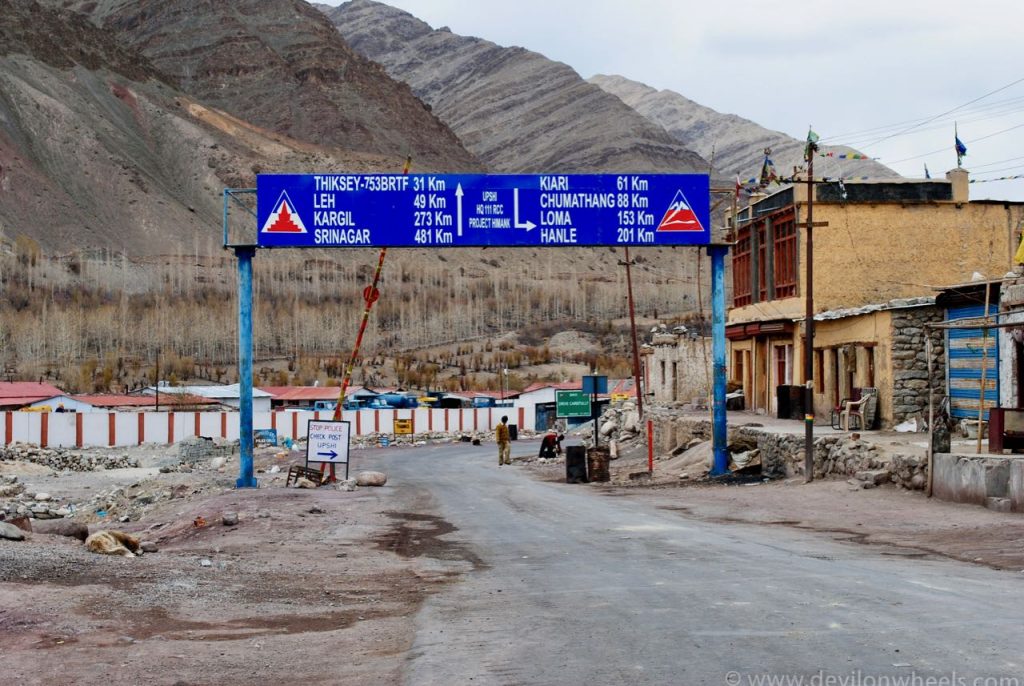
How to Plan a One-Day Monastery Tour from Leh?
Quick answer: Start at 8 AM and visit Hemis first (farthest at 45 km), then work backward through Stakna, the Druk White Lotus School, Thiksey, and Shey, aiming to be back in Leh by mid-afternoon. This order helps you beat the tour-bus crowds at every stop.
The Indus Valley monastery circuit is one of the most popular day trips in Ladakh, and Stakna fits naturally into this itinerary. Here is a suggested schedule that I recommend to travelers.
| Time | Stop | Distance from Leh | Duration |
| 8:00 AM | Leave Leh | – | – |
| 8:45 AM | Hemis Monastery | 45 km | 1 hour |
| 10:15 AM | Stakna Monastery | 25 km | 45 min |
| 11:30 AM | Druk White Lotus School | 21 km | 20 min |
| 12:00 PM | Thiksey Monastery | 19 km | 1 hour |
| 1:30 PM | Lunch break (Thiksey/Karu area) | – | 30 min |
| 2:30 PM | Shey Palace | 15 km | 30 min |
| 3:30 PM | Return to Leh | – | – |
This itinerary works well because it starts with the farthest point (Hemis) and works backward toward Leh. You avoid fighting traffic and tour buses at every stop. If you have extra time, you can add Matho Monastery or Takthok Monastery to this circuit, though that will extend the day by 2-3 hours.
For the complete monastery and sightseeing options in and around Leh, including the Sham Valley circuit (Likir, Alchi, Lamayuru), check the linked guide.
How Does Stakna Compare to Other Monasteries Near Leh?
Quick answer: If you only have time for two or three monasteries, prioritize Thiksey and Hemis for scale and history. But do not skip Stakna if you want a quieter, more personal experience with fewer crowds and a genuinely different Bhutanese Drukpa Kagyu lineage.
If you are short on time and wondering which monasteries to prioritize, here is an honest comparison based on my personal experience.
| Monastery | Best For | Crowd Level | Must Visit? |
| Thiksey | Architecture, sunrise views, “Mini Potala” | High | Yes |
| Hemis | Museum, festivals, Ladakh’s largest | High | Yes |
| Shey Palace | Giant Buddha statue, historical significance | Medium | Yes |
| Stakna | Peaceful atmosphere, Indus Valley views, Bhutanese connection | Low | Yes (if doing the circuit) |
| Lamayuru | Moonland landscape, oldest monastery | Medium | If going to Kargil/Srinagar |
| Alchi | Ancient murals (1000+ years), unique flat design | Low | If visiting Sham Valley |
| Diskit | Giant Maitreya statue, Nubra Valley views | Medium | If visiting Nubra |
Stakna is not the grandest or the most famous, but it has something that the popular monasteries lack: solitude. If you are tired of jostling with selfie crowds at Thiksey and want a quieter, more meditative monastery experience, Stakna delivers. The Bhutanese Drukpa Kagyu connection also makes it historically distinct from every other monastery in Ladakh.
Permits Required for Visiting Stakna Monastery
Quick answer: No permit is required to visit Stakna itself since it falls within Leh district limits. Every visitor to Ladakh pays the Ladakh Environment and Development Fee (EDF), Rs 400 one-time plus Rs 20 per person per day, online via lahdclehpermit.in. There is no stamped Inner Line Permit anymore. That requirement ended in 2021.
No special permit is required to visit Stakna Monastery itself since it falls within the Leh district limits, and Indian nationals have not needed a stamped Inner Line Permit (ILP) anywhere in Ladakh since 2021. What you do need, like every visitor entering Ladakh, is the online Ladakh Environment and Development Fee (EDF): Rs 400 per person as a one-time environment fee, plus Rs 20 per person per day as a wildlife fee, plus an optional one-time Rs 50 contribution to the Red Cross Fund. That works out to roughly Rs 590 for a 7-day trip. You pay this through the official Ladakh EDF portal guide (lahdclehpermit.in), and the receipt stays valid for 21 days, covering Nubra Valley, Pangong Tso, and Tso Moriri on the same receipt if you continue beyond Karu on the same trip.
Conclusion
Stakna Monastery is one of those places in Ladakh that rewards you for stepping slightly off the beaten path. It is right there on the highway, just 25 km from Leh, but because most tour packages skip it in favor of the more famous Thiksey and Hemis, you get a monastery experience that feels authentic and unhurried. The Indus Valley views from the rooftop, the centuries-old murals, the quirky stuffed Lhasa Apso, and the unique Bhutanese Drukpa Kagyu heritage make it a worthy addition to any Ladakh itinerary.
Have a travel question?? You can subscribe to my YouTube channel and leave a comment to ask your travel questions about traveling to the Himalayas.
I hope this travel guide for visiting Stakna Monastery helps you plan a meaningful day trip from Leh. If your friends or family are planning a trip to Leh Ladakh, feel free to share this article with them. And if you have already visited Stakna or have any questions about the monastery circuit, drop a comment below or reach out through the DwD Community. We are always happy to help fellow travelers plan better trips 🙂
Frequently Asked Questions About Stakna Monastery
What is the entry fee for Stakna Monastery?
The entry fee for Stakna Monastery is Rs 30 per person. The monastery is open daily from 7:00 AM to 6:00 PM, with a lunch break from 1:00 PM to 2:00 PM when visitors are not allowed inside.
How far is Stakna Monastery from Leh?
Stakna Monastery is approximately 25 km from Leh town, located on the Leh-Manali Highway near Karu. The drive takes about 35-40 minutes by car or taxi. You need to cross a narrow suspension bridge over the Indus River to reach the monastery.
Is Stakna Monastery worth visiting?
Yes, especially if you are doing the Indus Valley monastery circuit from Leh. Stakna is less crowded than Thiksey or Hemis, offers excellent views of the Indus Valley, and has a unique Bhutanese Drukpa Kagyu heritage that no other monastery in Ladakh shares. It takes about 45 minutes to visit, and it fits easily into a day trip that includes Shey, Thiksey, and Hemis.
What is the altitude of Stakna Monastery?
Stakna Monastery sits at an altitude of approximately 11,800 feet (3,600 meters), which is roughly the same as Leh town. If you have acclimatized to Leh’s altitude, you should have no additional problems at Stakna. However, the climb up the stone steps can feel strenuous at this elevation, so take it slow.
Can I visit Stakna Monastery in winter?
Yes, the road from Leh to Stakna remains open year-round, and the monastery is accessible even in winter (December to February). However, you can only reach Leh by flight during winter since both highways are closed due to snow. Winter temperatures drop to -15 to -20 degrees Celsius. The upside is the Stakna Tsechu festival, which usually falls in February-March.
Do I need an Inner Line Permit (ILP) for Stakna Monastery?
No stamped Inner Line Permit is required. That requirement for Indian nationals ended in 2021. However, every visitor to Ladakh needs to pay the online Ladakh Environment and Development Fee (EDF), Rs 400 one-time plus Rs 20 per person per day, via lahdclehpermit.in. The receipt is valid for 21 days and covers Nubra Valley, Pangong Tso, and Tso Moriri on the same receipt if you continue beyond Karu.
Which monasteries can I visit along with Stakna in one day?
Stakna Monastery is best combined with Shey Palace (15 km from Leh), Thiksey Monastery (19 km), and Hemis Monastery (45 km) in a single-day Indus Valley monastery circuit. You can also add the Druk White Lotus School (Rancho School) and Matho or Takthok monasteries if time permits. A full-day taxi for this circuit costs Rs 3,500-5,000 from Leh.
Is photography allowed inside Stakna Monastery?
Photography is not allowed inside the prayer hall (Dukhang) of the monastery. You can take photos in the courtyard, on the rooftop, and from the exterior. Always ask permission before photographing monks. The views of the Indus Valley from the monastery rooftop are excellent for photography.
Can I go river rafting near Stakna Monastery?
Yes, Stakna lies on the Hemis-to-Choglamsar stretch of the Indus River, a calm Grade I-II run popular with beginners and families. Ladakh’s standard rafting routes cost roughly Rs 800-1,500 per person including gear and transport, though you should confirm current rates and availability with a Leh-based operator directly, since the season runs only from June to late August.
