


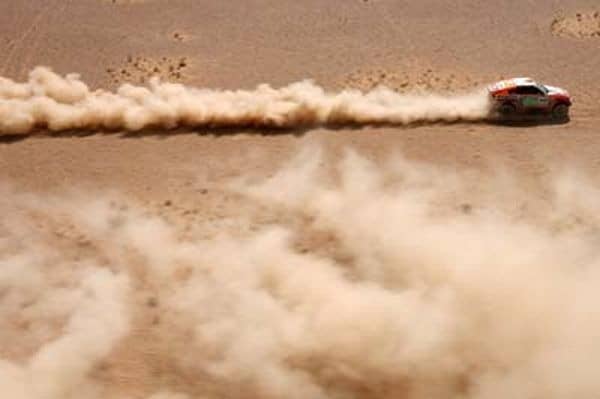
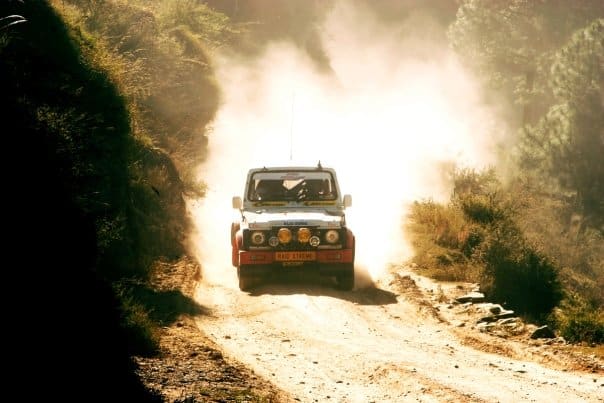
I was traveling through Spiti Valley a few years ago when something happened that changed how I look at motor rallies in the Himalayas forever. As we were driving back at night, a few vehicles came tearing past us around a blind corner at terrifying speed. No horns, no dippers. The sound from their exhaust pipes was enough to tell us that something dangerous was approaching, so we had no choice but to pull aside toward the gorge and hope for the best. The car headlights were blazing with high beams and cosmetic lights, leaving me completely blind for a few seconds. Two or three vehicles flew past us, and after a sigh of relief, I started driving again with much more caution, waiting for the black smoke they left behind to settle down.
The next morning, I recalled seeing similar cars during the day with identical cosmetic modifications and banners of a well-known motor rally plastered on them. Down the road, a few more were parked at a tea stall with the same markings. It did not take long to connect the dots. These were participants of one of those “prestigious” annual motor rallies conducted on the roof of the world. I had always held great respect for such events and the skill of the drivers. However, after hearing what the local villagers had to say and witnessing a few things myself, I started feeling strongly that these rallies are more of a gimmick that ends up cursing the very nature they claim to celebrate.
Why Are Motor Rallies a Problem in the Himalayas?
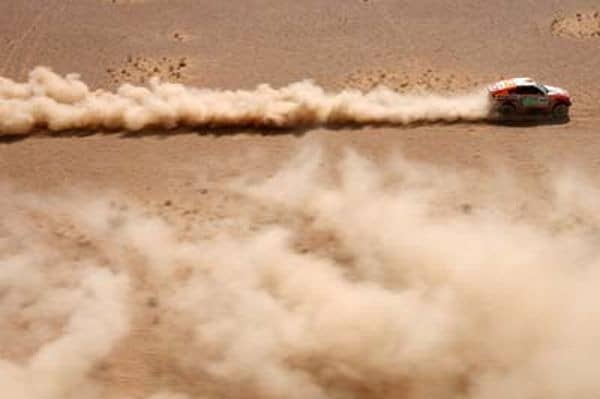
Motor rallies like the Raid de Himalaya, Rally of Himalayas, and similar events have been running through the high-altitude regions of Himachal Pradesh, Ladakh, and Jammu & Kashmir since 1999. While the organizers promote these as adventure sports that boost tourism, the reality on the ground tells a very different story. The Himalayas are one of the most fragile ecosystems on the planet, and sending 80-250 high-powered vehicles roaring through remote villages, wildlife habitats, and cold desert biospheres at high speed causes damage that takes years to recover from.
With due respect to the skills of these passionate drivers, I feel that motor rallies are actively participating in the depletion of the Himalayan environment, no matter what the organizers boast about their guidelines and adherence to international standards. Practically speaking, they upset the lives of both flora and fauna, and the villagers who call these mountains home. Let me walk you through the specific problems, one by one.
How Do Motor Rallies Affect Himalayan Air Quality?
At high altitudes, there is less oxygen available for combustion. This means vehicles produce more black carbon aerosols due to incomplete burning of petrol and diesel. According to Dr. JC Kuniyal, a senior scientist at the GB Pant Institute of Himalayan Environment and Development, these black carbon particles are heat-absorbing. They stay in the atmosphere for weeks and eventually settle on glaciers, speeding up the melting process. The particulate matter (below 10 micrograms and finer particles of 2.5 micrograms) also gets deposited on herbs, shrubs, and plants, stunting their growth. When 80+ rally vehicles zoom through a stretch at high speed, they create what scientists describe as “cyclonic localised activity” that kicks up massive amounts of dust and deposits these harmful aerosols across the landscape.
Keep in mind that the areas these rallies pass through, like the stretch from Bara Lacha La to Sarchu, fall within the buffer zone of India’s only cold desert biosphere reserve. This biosphere was notified by the Ministry of Environment and Forests on August 28, 2009, specifically to protect highly endangered species. Adding black carbon and dust pollution to this delicate ecosystem is not just irresponsible. It is dangerous.
What About Noise Pollution from Rally Vehicles?
This is something I experienced firsthand. Rally vehicles often have modified or disabled silencers, which means the noise levels easily exceed 90 decibels. For context, the High Court of Himachal Pradesh has ruled that no noise level over 72 decibels is permitted after 10 PM till 6 AM. Yet rally vehicles regularly pass through villages at 3 AM, waking up families from sleep in a state of panic.
In one well-documented incident during the 2011 Raid de Himalaya, villagers in Vashisht, Nehru Kund, Palchan, and Kothi were woken up at 3 AM by the roar of 80+ rally vehicles. Radha Devi and Ved Ram of the Palchan-Kothi area told reporters, “We thought somebody had attacked the village.” Further up the highway, villagers at Koksar, Talining, Sissu, and Shashan were jolted awake at 5 AM as the rally convoy barreled through. Prem Lal, a villager on the Tailing-Gondla-Tandi-Keylong stretch, said the vehicles sprayed heaps of dust and half-burnt carbon aerosols on patches of snow and houses.
The native people, wild animals, and birds living in these areas are not accustomed to such extreme noise levels. For many of them, it comes as a shock. This is not adventure. This is an invasion of their peaceful lives.


How Do Rallies Affect Himalayan Wildlife?
The rally routes often pass through or near habitats of some of the most endangered species in India. The cold desert biosphere reserve, with altitudes ranging from 3,300 m to 6,600 m, is home to the snow leopard, Tibetan wild ass (kiang), Siberian ibex, blue sheep (bharal), Himalayan brown bear, over 20 species of high-altitude rare birds and butterflies, and over 100 species of rare medicinal plants and herbs. According to Dr. SS Samant, a scientist who has studied the region, this is the country’s only cold desert biosphere, and it needs strict protection.
In 2018, conservationists raised serious concerns when a rally route was planned near Tsokar Lake in Ladakh, a Ramsar wetland site that serves as a breeding ground for the globally threatened black-necked crane. Community protests, led by the Snow Leopard Conservancy and local wildlife groups, forced the rally organizers to change their route and agree not to go off-road in eco-sensitive areas. The fact that it took public protests to achieve this basic level of responsibility says everything about the organizers’ priorities.
Think about it. Grazing blue sheep, Tibetan ibex, and the extremely shy snow leopard were forced to run for cover in the snow-bound Lahaul Valley when the rally vehicles thundered through. These animals survive in one of the harshest environments on earth. The last thing they need is 80 vehicles with 90+ decibel exhaust noise roaring through their habitat at 3 AM.
What Do the Organizers Claim vs. What Actually Happens?
The Raid de Himalaya and similar events claim to adhere to pollution norms prescribed by the Association Internationale des Automobiles (FIA), the global body governing motor sports. They paste stickers like “Save Water, Save Environment” and “Save Environment, Save Wildlife” on their vehicles. However, scientists who have studied the ground reality have roundly rejected these claims.
Dr. JC Kuniyal’s research at the GB Pant Institute directly contradicts the organizers’ green claims. The pollution data from the Palchan-Kothi area, where the GB Pant Institute has monitoring stations, has recorded tourist traffic pollution hitting a staggering 264 micrograms per cubic metre. That is several times above safe limits. In such a context, adding dozens of high-powered rally vehicles to the mix is adding fuel to an already burning fire.
Ironically, some rally organizers did not even bother paying the green tax imposed by the Himachal Pradesh High Court on non-Himachali vehicles entering the state. During one edition, the Manali Nagar Panchayat and the District Tourism Officer expressed complete ignorance about the rally even as the Chief Minister had officially flagged off the event from Shimla. The organizers had not taken an NOC from the local panchayat. Most vehicles entered Manali via the Kullu-Naggar road on the left bank of the Beas, bypassing the main green tax barrier on NH-21 entirely. In case you are wondering, there was nobody at the left bank entry point to charge the tax.
I find it deeply ironic that vehicles carrying “Save Environment” stickers were simultaneously violating green tax laws, noise pollution norms, and driving through a protected biosphere reserve without permission from the cold desert biosphere authorities under the Ministry of Environment and Forests.
Has Anything Changed Since Then?
To be fair, there has been some progress over the years. After the 2018 community protests in Ladakh, rally organizers agreed to certain route modifications and committed to avoiding off-road driving in eco-sensitive areas. The National Green Tribunal (NGT) has also taken suo motu cognizance of the broader issue of unregulated tourism activities damaging the environment in eco-sensitive Himalayan states. However, the fundamental problem remains. You cannot send dozens of high-powered vehicles racing through fragile high-altitude ecosystems without causing significant damage, no matter how many green stickers you paste on the hood.
The Raid de Himalaya now claims to promote “low speed, low sound rallying for tourism” and opposes off-road rallying. Whether this is actually enforced on the ground is a different question. The Rally of Himalayas, a newer event, held its fifth edition in October 2025 covering approximately 800 km with 6 competitive stages from Manali. The cycle of rally events in the Himalayas continues, and so do the concerns.
What Can We Do as Responsible Travelers?
I am not saying that motor sports have no place in India. The skill and passion of rally drivers is real, and I respect it. However, I strongly believe that these events should not be conducted in ecologically sensitive Himalayan regions. There are plenty of terrains in India where motor rallies can be organized without threatening endangered wildlife, disturbing sleeping villagers at 3 AM, or depositing black carbon on glaciers.
As travelers who love the Himalayas, here is what we can do.
- Speak up. If you witness motor rally vehicles driving recklessly, violating noise norms, or going off-road in protected areas, report it. The NGT accepts environmental complaints, and local district authorities should be informed.
- Support local communities. When villagers protest against rallies that disrupt their lives, support their voice. These are the people who live in the mountains year-round, not just drive through them once a year for a trophy.
- Practice responsible travel. If we expect rally organizers to be responsible, we should hold ourselves to the same standard. Drive within speed limits, do not honk unnecessarily, carry your garbage back, and respect the silence of mountain villages. You can read more about this in my article on Tips on Responsible Travel in the Himalayas.
- Demand accountability. Rally organizers should be required to get NOCs from local panchayats, pay green taxes, obtain permissions from biosphere reserve authorities, and undergo independent environmental audits. If they claim to be “green,” let independent scientists verify those claims.
- Share awareness. Many people do not know about the environmental damage caused by these rallies. Share articles like this one with your friends and family so the issue gets the attention it deserves.
What About the NGT and Government Regulations?
The National Green Tribunal has been increasingly active in regulating tourism activities in eco-sensitive Himalayan zones. The NGT has issued orders regarding vehicle caps on routes like Rohtang Pass, pollution monitoring in tourist areas, and environmental compliance for large events. However, enforcement remains a challenge, especially in remote areas where monitoring is difficult.
The Himachal Pradesh High Court’s green tax on non-Himachali vehicles was a step in the right direction, but as we saw, rally organizers managed to bypass it entirely. The cold desert biosphere reserve authorities were not even informed about rallies passing through their jurisdiction. This is a systemic failure, not just an organizer problem. The government needs to create clear, enforceable guidelines specifically for motor sports events in ecologically sensitive zones, with mandatory environmental impact assessments before any route is approved.
If you are traveling to Ladakh and want to understand the environmental challenges the region faces, I suggest reading my post on Ladakh: An Environmental Disaster in the Making? and the piece on Environmental Relief for Pangong Lake. These will give you a deeper picture of why every small action matters in these fragile ecosystems.
The Bigger Picture: Tourism vs. Conservation in the Himalayas
Motor rallies are just one piece of a larger puzzle. The Himalayas are under pressure from overtourism, unregulated construction, garbage dumping, and climate change. The GB Pant Institute of Himalayan Environment and Development has been documenting rising pollution levels in tourist corridors like Rohtang Pass, where particulate matter has reached alarming levels during peak season.
However, I want to be clear about something. Tourism itself is not the enemy. Tourism supports local economies, creates livelihoods, and gives villagers a reason to protect their natural heritage. The problem is irresponsible tourism, and motor rallies that tear through protected areas at 3 AM are the most extreme form of it. We can have adventure, we can have motor sports, and we can have tourism in the Himalayas. But we need to do it with respect for the land, the people, and the wildlife that call these mountains home.
Those of you planning trips to the regions affected by these rallies can check my travel guides for Lahaul Valley, Best Time to Visit Spiti Valley, and the Complete Travel Guide for Manali – Leh Highway. These will help you plan your trip responsibly while supporting local communities.
Frequently Asked Questions
Are motor rallies banned in the Himalayas?
No, motor rallies are not completely banned in the Himalayas as of 2026. However, the National Green Tribunal (NGT) has been increasingly strict about unregulated tourism activities in eco-sensitive Himalayan regions. After community protests in 2018, some rally routes were modified to avoid eco-sensitive areas like Tsokar Lake and Himalayan brown bear habitats. Organizers are now expected to avoid off-road driving in protected zones, but enforcement remains inconsistent.
What is the Raid de Himalaya rally?
The Raid de Himalaya is a motorsport event that has been running since 1999, organized by the Himalayan Motorsport Association. It is considered one of the world’s highest rally raids, with routes passing through Himachal Pradesh, Ladakh, and Jammu & Kashmir at altitudes above 3,300 meters. It typically involves 80-250 vehicles covering hundreds of kilometers through high-altitude mountain roads and passes.
How do motor rallies damage the Himalayan environment?
Motor rallies cause damage through multiple channels. Black carbon aerosols from incomplete fuel combustion at high altitudes settle on glaciers and speed up melting. Dust kicked up by high-speed vehicles damages vegetation. Noise levels exceeding 90 decibels disturb wildlife (including endangered snow leopards, Tibetan ibex, and black-necked cranes) and panic villagers. Vehicles running on wet pasture lands of the cold desert biosphere damage fragile alpine ecosystems that take years to recover.
What is the cold desert biosphere reserve?
The cold desert biosphere reserve is India’s only cold desert ecosystem, spanning altitudes from 3,300 m to 6,600 m in the trans-Himalayan region. It was notified by the Ministry of Environment and Forests on August 28, 2009, to protect highly endangered species including the snow leopard, Tibetan wild ass, Siberian ibex, over 20 species of rare high-altitude birds and butterflies, and over 100 species of rare medicinal plants. The buffer zone of this biosphere, from Bara Lacha La to Sarchu, has been used as a rally route.
What can travelers do about motor rally pollution in the Himalayas?
Travelers can help by practicing responsible travel themselves, supporting local communities who raise concerns about rally events, reporting environmental violations to the NGT or local authorities, and spreading awareness about the issue. Supporting eco-friendly adventure sports over motorsport events in sensitive zones also sends a strong market signal. You can also join community initiatives like the DwD responsible travel drives that focus on cleanliness, supporting local schools, and minimizing environmental impact.
Do rally organizers follow environmental guidelines?
Rally organizers like the Raid de Himalaya claim to follow pollution norms set by the FIA (Federation Internationale de l’Automobile). However, scientists from the GB Pant Institute of Himalayan Environment and Development have rejected these claims, pointing to documented evidence of high particulate matter, black carbon deposition, and noise norm violations. In some cases, organizers have bypassed green tax requirements and operated without permissions from biosphere reserve authorities. While some improvements have been made since 2018, independent verification of environmental compliance remains limited.
I hope this article gives you a clearer picture of what motor rallies actually do to the Himalayan environment. This is not about being against motorsports or against adventure. This is about being responsible toward a fragile ecosystem that millions of Indians depend on for water, livelihoods, and spiritual connection. The Himalayas deserve better than being treated as a racecourse.
If you have witnessed motor rally activities during your Himalayan travels, or if you have thoughts on how we can balance adventure sports with conservation, I would love to hear from you in the comments section below. Feel free to share this article with your friends and family who travel to the mountains. The more people who know about this issue, the better chance we have of making a difference 🙂 …
Last Updated: March 2026

4 Comments
Comments section gets closed in 90 days. To ask your travel questions, you can follow my YouTube Channel for a faster reply or for a much slower reply follow me on Instagram. :)
I am a beautiful day of my life and car
I love car
did you have any knowledge about the mughal road route? from where did we start? month back we completed the trip of manali leh srinagar.. now we r planning to cover the entire route of mughal road.. pls rply in this regard. thank u
Sorry Gurjeet, I have never been to Mughal road, so not much idea about that route.
Regards
Dheeraj