


Everything has a start, and so does the arduous journey to Spiti Valley over the Hindustan-Tibet Road. Like all other journeys to the Himalayas, the road to Spiti Valley is full of adventure. It is popularly known as one of the most treacherous roads in the world, yet it remains a gateway to one of India’s most stunning cold deserts.
However, before we get to know why this road earns its reputation, let me introduce you to the Hindustan-Tibet Highway, officially designated as National Highway 5 or NH-05 (earlier called NH-22). If you are planning a trip to Spiti Valley from the Shimla – Kinnaur side, understanding this route is essential for a safe and well-planned journey. I have been traveling this road for over a decade now, and there are a few things every first-timer must know before hitting the road.
Quick Info (As of 2026): The Hindustan-Tibet Road runs from Shimla to Shipki La (Sino-Indian border). NH-5 runs from Firozpur (Punjab) to Shipki La. The Shimla – Kinnaur – Spiti route via this road is open year-round, unlike the Manali – Kaza route which closes for 7-8 months. Total distance from Shimla to Kaza is approximately 412 km, taking 2-3 days of comfortable driving. HRTC bus fare from Shimla to Kaza is approximately Rs 600-900 per person (as of 2026).
Let's quickly dive into the details:
What is the Hindustan-Tibet Road and Why Does It Matter?
The Hindustan-Tibet Road is a historic highway commissioned by Lord Dalhousie in 1850, connecting Shimla to the Sino-Indian border at Shipki La. For Spiti Valley travelers, it is the lifeline route from the Shimla – Kinnaur side and remains open throughout the year.
After writing extensively about Leh Ladakh itineraries and covering most parts of the Trans-Himalayan region to help fellow travelers plan their trips, it is finally time to turn attention to another spectacular cold desert in India: Spiti Valley.
Spiti Valley is situated in Himachal Pradesh and is sometimes termed as “Little Ladakh.” It is extremely difficult to say which one is better than the other. Personally, I feel Spiti Valley offers almost everything Ladakh has to offer, but smaller in size and equally mesmerizing. Just like Leh – Ladakh, Spiti Valley is a heavenly place where people can lose their souls easily in the magical vistas spanning hundreds of miles in the Trans-Himalayan region.
In my earlier article on the most common itinerary for Spiti Valley, I shared a practical day-by-day plan. Now, let us begin the detailed dissection of the trip to Spiti Valley via Kinnaur with an introduction to the Hindustan-Tibet Road. For understanding the best time to visit Spiti Valley, do check my month-by-month guide as well.
How Were the Highway Names Changed After 2017?
Several highways in Himachal Pradesh were renamed in December 2017 and onwards, and this is a common source of confusion among travelers planning a trip to Spiti Valley.
Important Update (December 2017 onwards): National Highway 22 (NH-22) was renamed to National Highway 5 (NH-05) as mentioned in the Wikipedia source. Now, NH-5 connects Firozpur in Punjab to Shipki La pass at the Sino-Indian border in Himachal Pradesh. Similarly, the road connecting Kaza to Tabo from Sumdo is now called NH-505 instead of State Highway-30 (SH-30). As of 2026, these are the official designations you will see on signboards and government documents.
What is the Difference Between Hindustan-Tibet Road and NH-5?
This is a common point of confusion for many travelers, and also one of the most asked questions on the DwD Community. The Hindustan-Tibet Road and NH-5 are related but not identical. Let me clarify the difference based on my experience and discussions with experienced travelers over the years.
The Hindustan-Tibet Road is historically and popularly known as one of the most adventurous and deadliest roads in the world, overlapping the majority of the traditional silk routes and running alongside National Highway 5 (NH-05). The ride or self-drive over the Hindustan-Tibet Road, running through some of the remotest and magnificent vistas, is something hard to ever forget in your life.
However, a lot of people confuse the Hindustan-Tibet Road with NH-5. Hence, let us first see in this section what exactly is the difference between both of them, and then we will look at the major attractions or places on this route in my next article.
NH-5 Starts at Firozpur in Punjab
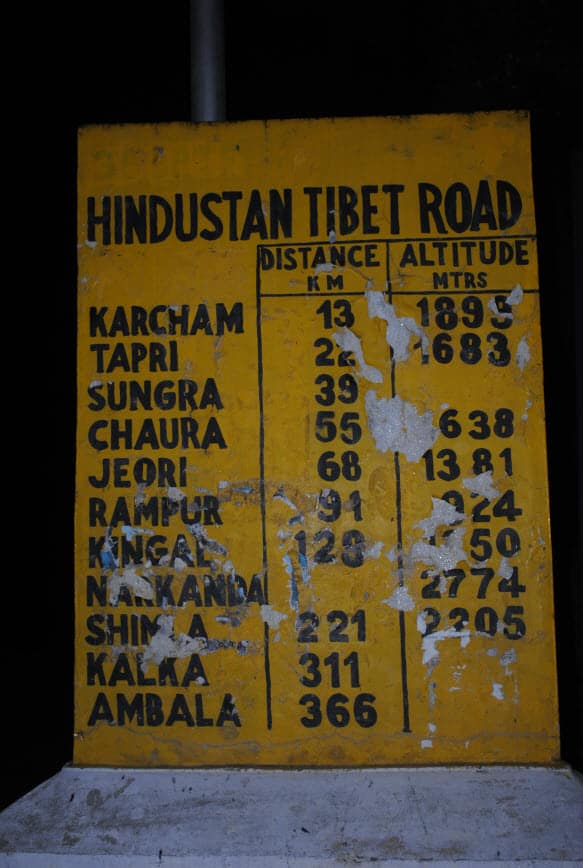
NH-5 starts at Firozpur in Punjab and runs through Moga, Ludhiana, Kharar, Kalka, Solan, Shimla, and continues all the way to Shipki La border. In contrast, the historic Hindustan-Tibet Road starts at Shimla, not Firozpur. Both routes are not aligned together for the majority of the sections. The common sections where they overlap are only Shimla to Rampur, Wangtu to Tapri, and Puh to Khab.
Hence, when you are driving from Shimla towards Kinnaur and Spiti, you will technically be on both NH-5 and the historic Hindustan-Tibet Road for certain stretches, but not the entire route.
NH-5 Officially Ends at Kaurik (Near Shipki La)
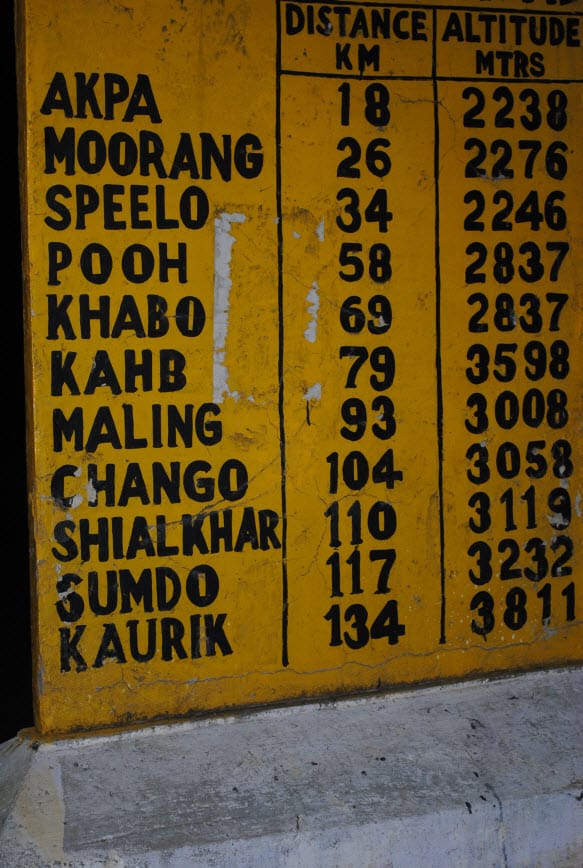
As per signboards, NH-5 ends at Kaurik, but officially and legally, it ends near Shipki La, as confirmed by Wikipedia and other official sources. Kaurik as a village might not exist anymore, but there should be a border post for sure up there. Shipki La sits at an altitude of approximately 14,300 feet and marks the Sino-Indian border.
Hindustan-Tibet Road Ends at Shipki La and Beyond
The historic Hindustan-Tibet Road ends at Shipki La from the Indian side but may extend further towards Shipki village and beyond into Tibet. The complete traditional route is: Shimla – Narkanda – Rampur – Gaura – Sarahan – Nichar – Wangtu – Tapri – Urni – Roghi – Kalpa – Pangi – Jangi – Labrang – Puh – Khab – Namgya – Shipki La – Shipki Village (Tibet) and possibly beyond.
In case you are wondering, there is no “old” and “new” Hindustan-Tibet Road. There is only one Hindustan-Tibet Road, which is the historic one. The confusion often arises with the renaming of NH-22 to NH-5.
State Highway-30 (SH-30) is Now NH-505
From Sumdo police post, which marks the official starting point of Spiti Valley, the road designation changes. State Highway-30 (SH-30), now renamed as NH-505, leads you all the way from Sumdo to Tabo and then onwards to Kaza, the administrative headquarters of Spiti Valley.
At Sumdo, there is a Y-fork. NH-5 runs right uphill from the fork, leading you towards Kaurik and the Shipki La border. The left road, which is NH-505, leads you towards Tabo and Kaza, deep into the Spiti Valley.


Inner Line Permits and Registration at Sumdo
At Sumdo, you need to register yourself at the police checkpost because the region falls under the Inner Line Permit zone, near the Line of Actual Control (LAC) with China. As of 2026, Indian nationals do not need permits for most parts of Spiti Valley, but foreigners still need to submit their permit copies at Sumdo. Keep in mind that permit requirements can change, so always check the latest regulations before your trip. For complete details, refer to my guide on inner line permits for Spiti Valley and Kinnaur Valley.
To summarize: The Hindustan-Tibet Highway cuts off at Khab towards the Namgya – Shipki La route and ends within Kinnaur Valley only. Meanwhile, NH-5 takes you to Kaurik ahead of Sumdo (at least by the markings), hence just to the entrance of Spiti Valley. After the Kaurik Y-fork, it is State Highway-30 (NH-505) that takes you deep into Spiti Valley towards Tabo and Kaza.
Thanks a lot to my dear friend Vinci and other experienced travelers on the DwD Community for their valuable inputs on some of the points above.
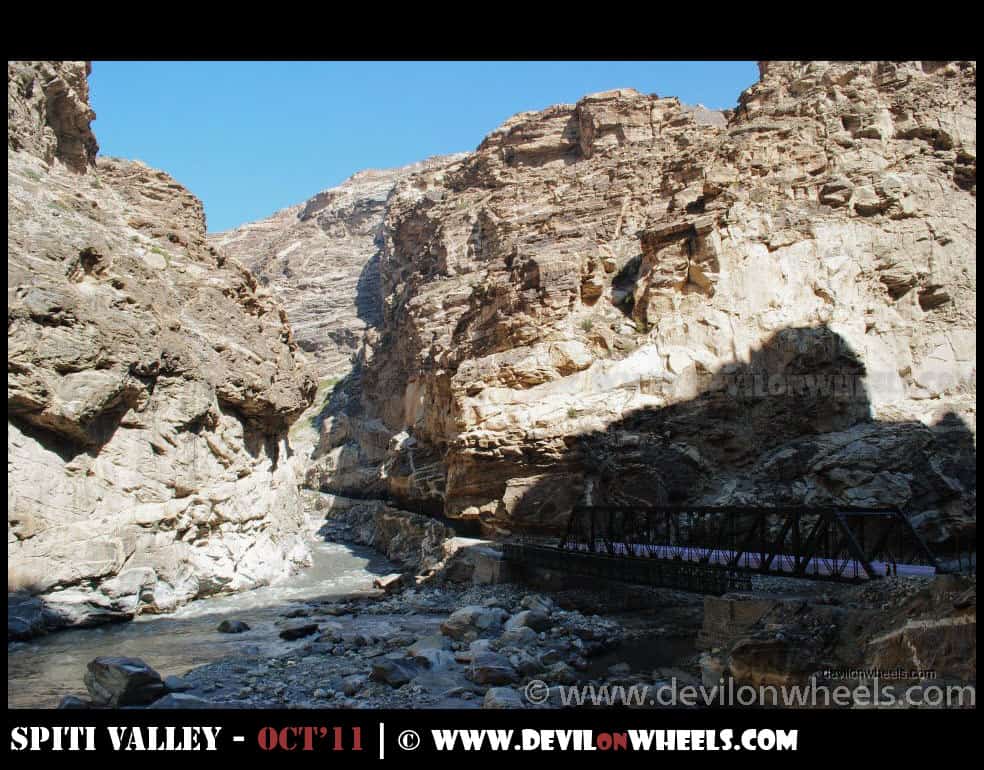
What Are the Key Distances on the Hindustan-Tibet Road?
One of the most practical things you need before hitting the road is a clear picture of distances and driving times. Here is a breakdown of the major stops on the Hindustan-Tibet Road from Shimla to Kaza.

| Stretch | Distance (km) | Approx. Time | Road Condition |
|---|---|---|---|
| Shimla to Narkanda | 64 | 2-2.5 hrs | Good (NH-5) |
| Narkanda to Rampur Bushahr | 70 | 2.5-3 hrs | Good to Fair |
| Rampur to Jeori (Sarahan turnoff) | 38 | 1-1.5 hrs | Good |
| Jeori to Wangtu | 25 | 1 hr | Fair |
| Wangtu to Reckong Peo | 55 | 2-2.5 hrs | Fair (landslide-prone) |
| Reckong Peo to Pooh | 58 | 2-2.5 hrs | Fair to Bad patches |
| Pooh to Sumdo | 32 | 1-1.5 hrs | Fair |
| Sumdo to Tabo | 48 | 1.5-2 hrs | Fair (NH-505) |
| Tabo to Kaza | 48 | 1.5-2 hrs | Good (NH-505) |
| Total: Shimla to Kaza | ~412 km | 2-3 days |
Keep in mind: These driving times assume no major roadblocks or landslide delays. During monsoon months (July to September), the same stretches can take double or triple the time. I always suggest keeping at least one buffer day in your itinerary, especially if traveling between June and September.
What Are the Current Road Conditions on the Hindustan-Tibet Road in 2026?
As of 2026, the road conditions on the Hindustan-Tibet Road have improved significantly over the years, but challenges remain. Here is a section-by-section breakdown based on recent reports and my own travels.
The stretch from Shimla to Reckong Peo on NH-5 is reasonably well maintained, although there are bad patches between Powari and Khab, and again near Sumdo. However, these sections are nothing that a regular sedan or SUV cannot handle with cautious driving.
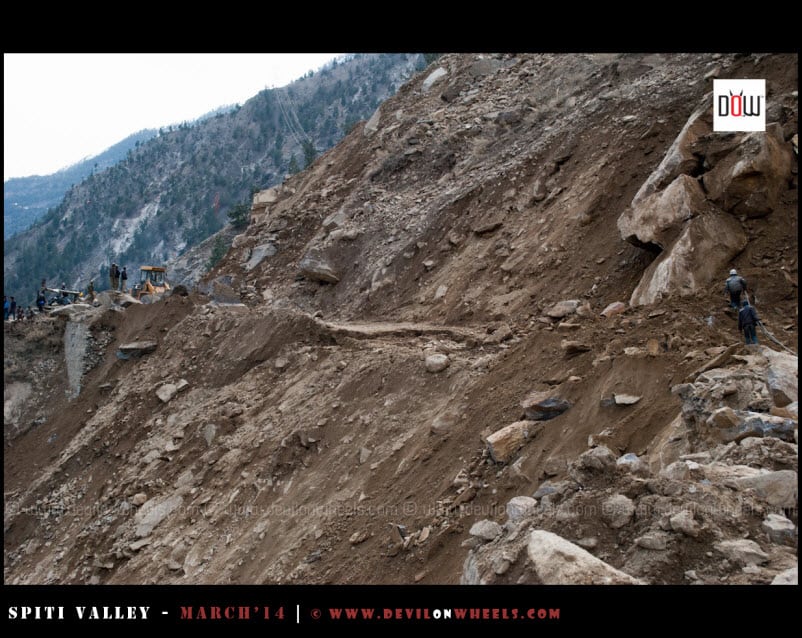
The roads at Nako, Malling, Sumdo, Tabo, and Shichiling are often broken due to frequent landslides and falling stones. The stretch between Nako and Malling has some landslide-prone patches, and as you near Sumdo, there are areas where shooting stones are a regular occurrence, especially during the monsoon months from July to September. For the latest road conditions, check my Delhi – Kinnaur – Spiti Valley road status page which I update regularly.
In 2025, the National Highways Authority of India (NHAI) completed a 1.295 km tunnel on the Kaithlighat – Shakral section, facilitating smoother traffic flow in the Shimla district. However, in August 2025, a landslide in the Chalaunthi area near Shimla caused debris to seal the entrance of an under-construction tunnel on the Parwanoo – Shimla four-lane project (Kaithlighat to Dhalli section). As of January 2026, the Shimla administration lifted the ban on this road work after clearance from the Geological Survey of India, so the project is moving forward again.
Pro Tip: If you are planning a trip in the monsoon season (July to September), keep extra time in your itinerary for potential road blockages due to landslides. I have covered monsoon-specific advice in my guide on 10 tips for a trip to Spiti Valley in monsoons. The road to Spiti Valley from the Shimla – Kinnaur side remains open all year round, including winter months, because there is no high mountain pass that gets closed on this route (unlike the Manali – Kaza route, which is closed for 7-8 months every year). For section-by-section road conditions, current toll details, and driving tips specific to NH-5, my NH-5 Kinnaur driving guide covers everything you need before hitting the road.
Is There a Toll on the Hindustan-Tibet Road (NH-5)?
Yes, but the scope has changed since it was first introduced, so read this carefully before you assume it applies to you. A toll barrier operates just before the Chaura Police Checkpost on NH-5, run by the Special Area Development Authority (SADA), Reckong Peo, under Notification No. SDK(SADA)-Fee Barrier/2025-157 dated June 6, 2025.
Here is the part most articles get wrong: the original June 2025 notification applied to all vehicles registered outside Himachal Pradesh, but a follow-up notification (SDK(SADA)-Fee Barrier/2025-228, dated July 7, 2025) narrowed this down. As per the district administration’s own public clarification, the charges now apply to commercial vehicles registered in Himachal Pradesh, with commercial vehicles registered in Kinnaur district itself exempt. In case you are self-driving a personal (non-commercial) car or riding your own bike, this toll should not apply to you under the revised rules, but I suggest confirming this at the barrier itself since ground-level enforcement can sometimes lag official notifications. The exact fee schedule was not published in the public notice I could verify, so please check with the Kinnaur district administration or SADA Reckong Peo (hpkinnaur.nic.in) for the current rates that apply to your vehicle type before your trip. Keep some cash handy at this checkpoint as UPI or card payment may not be available.
Why is the Hindustan-Tibet Road Called One of the Most Dangerous Roads?
The Hindustan-Tibet Road earns its fearsome reputation for several reasons, and I can vouch for most of them from personal experience over the years.
First, it runs through the infamous “land of landslides” in Kinnaur Valley, especially along the Sutlej River gorge. The combination of steep cliffs, narrow roads carved into mountainsides, frequent landslides, and shooting stones makes this one of the most challenging drives in India.
Second, the road passes through extremely remote terrain where help can be hours away. Mobile phone connectivity is patchy at best, and fuel pumps are few and far between. A breakdown in the wrong section can leave you stranded for hours or even days, depending on the severity of landslides or weather conditions.
Third, the road requires constant attention. Unlike highways in the plains, you cannot afford to be distracted even for a moment. Sharp turns, blind corners, vehicles coming from the opposite direction on single-lane stretches, and the ever-present risk of falling stones demand full concentration from the driver.
However, let me also tell you this, my friend. Despite its reputation, thousands of travelers complete this journey every year without major incidents. With cautious driving, proper vehicle maintenance, and respect for the mountain environment, the Hindustan-Tibet Road is absolutely doable. In fact, it is one of the most rewarding drives you will ever experience in your life.
What is the Best Time to Travel on the Hindustan-Tibet Road?
The Hindustan-Tibet Road via Shimla – Kinnaur – Spiti is accessible throughout the year, making it a unique advantage over the Manali – Kaza route. However, the best time depends on what you want to experience. For a detailed month-by-month breakdown, check my guide on the best time to visit Spiti Valley.
April to June (Summer): This is the peak travel season. The weather is pleasant, with temperatures ranging from 10 degrees C to 25 degrees C during the day. Snow has mostly melted except at higher altitudes, and all roads are in the best possible condition. However, this also means higher tourist footfall and higher accommodation costs.
July to September (Monsoon): This is the riskiest time to travel due to frequent landslides and road blockages. I would not recommend this period unless you have no other option and are prepared for delays. The roads at Wangtu, Akpa, Roghi, and near Khab are particularly vulnerable during monsoon.
October to November (Autumn): This is my personal favorite time to travel to Spiti. The crowds have thinned out, the weather is crisp and clear, and the landscape takes on stunning autumn colors. Temperatures range from 0 degrees C to 15 degrees C. Accommodation is also more affordable during this period.
December to March (Winter): Winter travel on this route is possible but challenging. Spiti Valley experiences heavy snowfall, and temperatures can drop to -20 degrees C or lower in Kaza. Only experienced winter travelers should attempt this. However, the stark beauty of snow-covered Spiti is unmatched, and you will have the valley almost entirely to yourself.
Which Vehicle is Best for the Hindustan-Tibet Road?
One of the most common questions I receive is: “What type of vehicle do I need for the Hindustan-Tibet Road?” Let me break it down based on my experience and observations over the years.
Sedans and Hatchbacks: As of 2026, a regular sedan or hatchback can complete the journey from Shimla to Kaza via the Hindustan-Tibet Road without major issues. The road quality has improved significantly over the past few years. However, you must drive cautiously, especially on broken patches. Ground clearance can be an issue in some sections, so avoid low-slung sports sedans.
SUVs and 4×4 Vehicles: I would highly recommend a SUV or 4×4 for this journey. The higher ground clearance gives you peace of mind on bad patches, and the sturdier suspension handles rough roads better. SUVs also provide better stability on narrow mountain roads with steep drop-offs.
Motorcycles: The Hindustan-Tibet Road is a popular route for motorcycle enthusiasts. Royal Enfield motorcycles are the most common choice, and you will find several mechanics along the route who specialize in Enfield repairs. Bikes give you flexibility in navigating landslide debris and narrow sections. However, be prepared for long hours in the saddle and exposure to cold winds and dust. For detailed biking tips, check my guide on 11 tips for a bike ride to Spiti Valley.

My Advice: If it is your first time on a Himalayan road trip, rent a sturdy SUV rather than risking your personal sedan. The peace of mind is worth the extra cost. For vehicle options and taxi booking, check my post on list of taxi drivers for Spiti Valley and Kinnaur Valley.
How Do I Reach Spiti Valley by Bus on the Hindustan-Tibet Road?
If you are a budget traveler or do not have your own vehicle, HRTC (Himachal Road Transport Corporation) buses are the most affordable way to travel the Hindustan-Tibet Road to Spiti Valley. Here is what you need to know as of 2025-2026.
Shimla to Reckong Peo: Multiple daily HRTC buses run from Shimla ISBT to Reckong Peo. The journey normally takes about 8-9 hours in good conditions, though it can stretch to 10-12 hours if there are landslide delays, and the fare is approximately Rs 400-600 per person depending on the bus type (ordinary vs semi-deluxe). Buses typically depart early morning.
Reckong Peo to Kaza: HRTC operates a daily bus from Reckong Peo to Kaza via Pooh and Sumdo. The fare is approximately Rs 400-700 per person and the journey takes 8-10 hours. This bus usually departs early morning from Reckong Peo. Keep in mind that HRTC schedules on this stretch change seasonally, so it is always worth a quick call to the Reckong Peo bus stand to confirm before you plan your day around it.
Delhi to Reckong Peo: You can also catch an overnight HRTC Volvo or semi-deluxe from Delhi ISBT to Shimla or Rampur and then connect to Reckong Peo. The total fare from Delhi to Kaza via bus comes to approximately Rs 1,500-1,700 per person.
Keep in mind: HRTC bus schedules change seasonally, and services may be reduced or disrupted during monsoon and winter months. In May 2025, HRTC increased fares by approximately 15% in hilly regions (from Rs 2.19 to Rs 2.50 per km). I suggest checking the official HRTC website or calling the Shimla ISBT for the latest schedules before your trip. For a complete guide on traveling by bus, check my post on budget trip to Spiti Valley by public transport.
What Will a Trip on the Hindustan-Tibet Road Cost in 2026?
Budget planning is one of the most important parts of any Himalayan trip. Here is a rough breakdown of costs for the Hindustan-Tibet Road to Spiti Valley in 2026, per person, assuming a group of 2-4 people sharing a vehicle.
| Expense Category | Budget (per person) | Mid-Range (per person) |
|---|---|---|
| Fuel (self-drive, shared by 4) | Rs 3,000-4,000 | Rs 3,500-4,500 |
| OR HRTC Bus fare (one way) | Rs 600-900 | – |
| Accommodation (per night) | Rs 500-800 (homestay) | Rs 1,500-2,500 (hotel) |
| Food (per day) | Rs 400-600 (dhabas) | Rs 700-1,000 (restaurants) |
| Monastery/Entry Fees | Rs 100-300 | Rs 100-300 |
| Total for 7-day trip | Rs 8,000-12,000 | Rs 18,000-28,000 |
These are approximate numbers based on 2025-2026 conditions. Fuel prices, accommodation rates, and food costs can vary depending on the season and your specific route. For more detailed budget tips, check my guide on 6 tips for a budget trip to Spiti Valley.
What Are the Essential Safety Tips for the Hindustan-Tibet Road?
Safety is paramount on this route, and I cannot stress this enough. Here are some essential tips based on years of experience traveling and guiding travelers on this road.
- Start early, sleep early: Mountain driving is exhausting. Start your day by 6-7 AM to avoid driving in the dark. I have covered why this is critical in my article on why you should start early and sleep early on a Spiti trip.
- Carry spare fuel: Fuel pumps are available at Shimla, Rampur, Powari, Reckong Peo, and Kaza, but the distances are long. Always keep your tank above half.
- Keep cash handy: ATMs are available only in Shimla, Rampur, Reckong Peo, and Kaza. Carry sufficient cash for dhabas, tolls, and emergency repairs. UPI works intermittently in these areas.
- Check vehicle brakes and tires: Before starting your journey, get your vehicle thoroughly checked. Brake failure on a mountain road can be fatal.
- Respect landslide zones: If you see fresh debris on the road or hear rumbling sounds, do not stop to take photos. Get past the zone as quickly and safely as possible.
- Carry emergency supplies: Basic medicines, water, dry snacks, torch, power bank, and a basic toolkit are non-negotiables.
- Drive in daylight only: I cannot stress this enough. Do not attempt night driving on the Hindustan-Tibet Road. If you get delayed, stay overnight at the nearest village rather than risking a night drive.
- Carry warm clothing even in summer: Temperatures drop sharply in the evenings at higher altitudes. For packing guidance, check my post on tips for carrying clothes for a Spiti Valley trip.
For a complete checklist, refer to my post on 40 must-have things to carry on a Himalayan self-drive trip.
Where Are the Fuel Pumps and ATMs on This Route?
Fuel and cash availability is a genuine concern on the Hindustan-Tibet Road, and I always recommend planning your stops around these points.
Fuel pumps on the route (as of 2026): Shimla, Theog, Narkanda (seasonal), Rampur Bushahr, Powari, Reckong Peo, and Kaza. The longest gap between fuel pumps is between Reckong Peo and Kaza (about 150 km via Sumdo). Always fill up at Reckong Peo because you will not find another pump until Kaza.
ATMs on the route: Shimla (multiple), Narkanda, Rampur Bushahr, Reckong Peo, and Kaza. Between Reckong Peo and Kaza, there are no ATMs. I suggest carrying at least Rs 5,000-8,000 in cash beyond Reckong Peo to cover accommodation, food, and any emergency repairs.
What Are the Major Places and Attractions Along the Hindustan-Tibet Road?
The Hindustan-Tibet Road is not just a route to reach Spiti Valley. It is an experience in itself. Along the way, you will pass through some stunning villages, monasteries, and viewpoints. Here is a quick overview, and I have covered each in detail in my article on Hindustan-Tibet Road attractions and interesting places.
- Narkanda: A picturesque hill station known for apple orchards and skiing in winter. Located about 64 km from Shimla.
- Rampur Bushahr: An important town on the banks of the Sutlej River. Fuel, ATM, and food available here.
- Sarahan: Home to the famous Bhimakali Temple, one of the 51 Shakti Peethas. A must-visit for culture and spirituality enthusiasts. Check my detailed Sarahan travel guide.
- Kalpa: A stunning village with views of the Kinnaur Kailash range. Perfect for a day or two of rest. Read my Kalpa travel guide.
- Nako: A high-altitude village with a beautiful lake and ancient monastery. Often overlooked but absolutely worth a visit. See my Nako village guide.
- Tabo: Home to the 1000-year-old Tabo Monastery, a UNESCO World Heritage Site. One of the most important spiritual centers in Spiti.
- Kaza: The administrative headquarters of Spiti Valley and your base for exploring Key Monastery, Kibber, Langza, and other Spiti gems.
What About Mobile Network and Connectivity?
Mobile network coverage is patchy on the Hindustan-Tibet Road, and this is something you should prepare for. BSNL and Jio have the best coverage in Himachal Pradesh’s remote areas. You will get network in major towns like Shimla, Rampur, Reckong Peo, Tabo, and Kaza. However, expect no network for long stretches between towns, especially between Reckong Peo and Sumdo, and between Sumdo and Tabo.
I suggest purchasing a BSNL or Jio SIM before starting your trip for better connectivity. Airtel works in some sections but is less reliable than BSNL in this region. For detailed network information, check my guide on mobile phone connectivity in Spiti Valley.
Frequently Asked Questions
Is the Hindustan-Tibet Road open in winter?
Yes, the Hindustan-Tibet Road via Shimla – Kinnaur – Spiti is open throughout the year, including winter. However, road closures for a few days to weeks are common during heavy snowfall, particularly in January and February. Unlike the Manali – Kaza route, which closes for 7-8 months due to high mountain passes, this route has no such passes and remains accessible year-round with occasional weather-related delays.
What is the difference between NH-5 and NH-505?
NH-5 (formerly NH-22) runs from Firozpur in Punjab to Shipki La at the Sino-Indian border, passing through Shimla, Kinnaur, and up to Sumdo (the entrance to Spiti). NH-505 (formerly State Highway-30) starts from Sumdo and runs through Tabo and Kaza, deep into Spiti Valley. So, NH-5 takes you to the entrance of Spiti, and NH-505 takes you inside Spiti.
Can I drive a sedan on the Hindustan-Tibet Road?
Yes, as of 2026, a regular sedan can complete the journey from Shimla to Kaza via the Hindustan-Tibet Road. The road quality has improved over the years. However, you must drive cautiously on broken patches, and an SUV or 4×4 is still recommended for better ground clearance and stability on rough sections.
Do I need permits for the Hindustan-Tibet Road in 2026?
As of 2026, Indian nationals do not need inner line permits for most parts of Spiti Valley and Kinnaur Valley. However, you must register at the police checkpost at Sumdo. Foreign nationals still require permits, which must be submitted at Sumdo. Permit rules can change, so always verify the latest requirements before your trip. Read my guide on inner line permits for complete details.
How many days do I need for a Spiti Valley trip via the Hindustan-Tibet Road?
A minimum of 6-7 days is recommended for a comfortable Spiti Valley trip via the Shimla – Kinnaur route. A typical itinerary would be: Day 1 (Shimla to Kalpa), Day 2 (Kalpa to Tabo), Day 3 (Tabo to Kaza), Day 4 (Kaza local sightseeing), Day 5 (Kaza to Kalpa or Nako), Day 6 (Kalpa to Shimla). For a more detailed plan, check my Spiti Valley itinerary guide.
What is the best time to travel on the Hindustan-Tibet Road?
The best time to travel is from April to June (summer) and October to November (autumn). Summer offers pleasant weather and clear roads, while autumn provides stunning landscapes with fewer crowds. Avoid the monsoon season (July to September) due to frequent landslides. Winter travel (December to March) is possible but challenging due to snow and freezing temperatures.
How much does it cost to travel the Hindustan-Tibet Road to Spiti?
A budget trip to Spiti Valley via the Hindustan-Tibet Road costs approximately Rs 8,000-12,000 per person for 7 days, staying in homestays and eating at dhabas. A mid-range trip with hotels and restaurant meals runs Rs 18,000-28,000 per person. Bus travelers can do it for even less, as HRTC bus fares from Shimla to Kaza total approximately Rs 600-900 one way (as of 2026).
Where can I find fuel pumps on the Hindustan-Tibet Road?
Fuel pumps are available at Shimla, Theog, Narkanda (seasonal), Rampur Bushahr, Powari, Reckong Peo, and Kaza. The longest gap is between Reckong Peo and Kaza (about 150 km via Sumdo). Always refuel at Reckong Peo because there is no pump between there and Kaza.
Conclusion
The bottom line is that you will be partially running over the historic Hindustan-Tibet Road and partially over NH-5 to travel to Spiti Valley from the Shimla side. Once you cross Sumdo, you will be on NH-505, which takes you deep into Spiti Valley towards Tabo and Kaza. Now that we have covered the background, distances, road conditions, bus routes, budget, and differences between NH-5 and the Hindustan-Tibet Road, you should have a clear understanding of the route.

In my next article, I talk in detail about the main attractions and places on the Hindustan-Tibet Road which most travelers can enjoy on the way to Spiti Valley. Read the updated article here: Hindustan-Tibet Road and NH-5 | Interesting Places.
Have a travel question?? You can subscribe to my YouTube channel and leave a comment to ask your travel questions about traveling to the Himalayas.
I hope this detailed introduction to the Hindustan-Tibet Road will be useful for travelers planning their trip to Spiti Valley in 2026 and beyond. If you have any information, experiences, or tips about the differences between the Hindustan-Tibet Road and NH-5, please do share with me in the comments section so that it proves helpful for other fellow travelers. Also, if you know your friends or family are planning a trip to Spiti Valley, feel free to share this article with them to help them make a memorable Spiti trip.
For other travel tips, discussions, finding travel partners, and planning your Himalayan adventures, please check the DwD Community and the DoW Travel Calendar from the Main Menu of the website. I look forward to hearing from you 🙂 …
Last Updated: August 2026

57 Comments
Comments section gets closed in 90 days. To ask your travel questions, you can follow my YouTube Channel for a faster reply or for a much slower reply follow me on Instagram. :)
Hi Dheeraj,
Confusion confusion 🙂
when I check route from shimla to kaza,there is only one on google maps that is NH 5 from shimla to khab and then NH 505 from Khab to kaza.Is the highways you mentioned are renamed or I am checking incorrectly.It would be helpful if you put map of the both routes differently.
I have checked here maps as well,there atleast it shows NH-22 but on same route it is also showing NH-5.
and Is there any article for spiti trip cost like Leh one?
/Manoj
Yes, Manoj, it was on my TODO list to update the articles in January !! Glad you bring up the point so that I can push it up on the priority 😀 .. The highway NH-22 has been renamed to NH-5 and the other one from the state highway to NH-505, kind of extension to NH-5.
Yes, there is an article: How to calculate cost or budget for Spiti Valley trip?
Thanks and I will update them 🙂
thanks for quick reply.
Two things are clear now but the third one(what is the route map for HTR if it is not aligned with NH-5 mostly):
Google doesnt show two routes: https://goo.gl/maps/2BwEuaecPrK2.All the places which are there in images in the post are on NH-5 as well(except when we divert to Chitkul to explore Kinnaur Valley).NH-5 runs to the right of sutlej river till wangtu and there after mostly to the left of the river.I checked the map zooming in but there is no parallel route.it is there in some places but discontinued after some distance.
This route is not shown on the map due to lack of pakka roads in some stretches?
Can you share route map via Hindustan-tibet road?
/Manoj
Hey Manoj,
As mentioned in the linked article of Indiamike, there are other places which have been disconnected from end to end traversing of route due to landslides and all. So, you can mostly do the NH-5 version of Hindustan Tibet road. If still interested you can try like Shimla – Narkanda – Rampur – Gaura – Sarahan – Nichar – Wangtu – Tapri – Urni – Roghi – Kalpa – Pangi – Jangi – Labrang – Puh – Khab – Namgya – Shipki La – Shipki Village (Tibet) and maybe beyond.
we are planning to trip to spiti valley via shimla in the first week of august…would that be a good time to travel through this route?
Archna, Kinnaur with its fragile roads is not a good time to be in monsoons or rains.
Hey! Dheeraj…..I have read a lot of your articles that you have put up and must thank you as they are super informative and am sure will be very helpful during our trip.I just want to give you a brief Itinerary and want to know if its planed all right & if you can give me realistic travel time from one destination to the next.
Day- 1 Delhi – Narkanda
Day-2 Narkanda – Kalpa
Day-3 Kalpa-Tabo
Day-4 Tabo-Kaza
Day -5 Kaza-Losar-Chandrataal Lake
Day-6 Manali
Day-7 Manali-Delhi
We are two girls travelling alone ,so how safe is it for women traveller’s and if there is any one else you know who is traveling during the same time,maybe we can connect with them . Safety in numbers I guess!
Thanks……
Hi Rati,
Yes, given the time or days in hands with you I feel this is the best you will be able to do, though as you see you will be packing your bags every day to reach the other destination.
That region is completely safe top travel, no worries on that front. Regarding connecting with others, it will be better if you explore the DoW Travel Calendar and filter the entries based on your interest from it
Regards
Dheeraj
Hey !Dheeraj,
Thanks, seems its going to be too rushed…..but just don’t have more days .Will look up the DoW calender….thank you for your time and advice.
Thanks
Rati
Rati, in that case you can opt to go from Manali side and return from Manali side. This way it will save a lot and lot of travel and you can only focus on just Spiti Valley with ease. Sounds like a plan?
Hi
I am reaching manali on 18th July morning and we r heading for trip to spiti valley. Out return journey to manali will be 29th.
Can I get some references for bike rentals and also can you give me some itinerary and some must visit places. We intend to keep it a low budget trip and also a very close to nature trip. Sleeping under the sky in the tents and may be a 1 day trek.
Tips and itinerary pls
Nilesh, sorry on the front of bike rentals but You can check a very balanced and most common itinerary for Spiti Valley followed by many travellers including me at the link here for 10-11 days: Most Common Itinerary for Spiti Valley.
Ready for a quick packup??? I with my wife planned and will b reaching narkanda for covering same destinations on Tuesday. If interested u can join…
Your advice is welcommed for the following issue;
Is 4 wheel drive vehicle must for self driving to Spiti or Laddakh. Is Somo Gold (2956 CC 3.0CR4, MaxPower 60-62 kw @3000 rpm, Max Torque 250 Nm @ 1000 – 2000 rpm 180 mm Ground clearence) or Mahindra Balero (2523 CC m2DiCR, Max Power 46.3 kW @ 3200rpm, Torque 195 NM @ 1400-2200RPM) is a better choice. you may suggest another choice in the price range of Rs. 7 to 8 lakhs.
Deepsh, no need of 4wd, you just need a High GC vehicle with some comfort and good suspensions. A lot of Sumos run in that terrain and Boleros too.
Dheeraj ,
What is the cheap option to stay in Jispa ? I visited the website of Padma Lodge but it seems quite costly as I saw the double bed charges are more than Rs 2000/- per day. I thought this lodge would be cheap. What is the price in PWD ? can I book PWD in advance ?
Yes, try and book PWD Rest House in that case and also you can walkin to Padma Lodge for better rates.
Dheeraj ,
Is it ok to take my 3 yr old son for Spiti trip from Manali to Kaza over Kunzum la. Do you know people go there with their kids ?
3 Years is a personal choice. If you are well acclimatized then it is OK fine with such age but still decision is best personal. I recommend reading: Traveling to Ladakh with Kids or Babies
What do you think about taking my 3 yr old son to Leh over Manali-Leh Highway ?I think children are less affected by AMS than we people. Children lungs are stronger than ours. Do you know any incidence where children are affected by AMS ?
It depends on person to person to take the children of such age group because AMS do not matter with respect to age or sex or any physical health condition. It can happen to anyone of any age or sex or fitness I shall say :D… The issue with children is that they tend to exert the body considering it the same kind of place they belong to and this elevates the chances of getting struck with AMS. Secondly, they are not much expressive about their uneasy feelings, so it is parents who need to watch out and take care that the child is not suffering from uneasy feelings, headache or nausea and is behaving properly. With 2+ year child, I think he/she will also be NOT able to convey the uneasiness she may feel. You have to be vigilant and if you notice any such feeling or he/she tells you about such a feeling then please do not ascend anywhere, either descend to lower altitude or stay at the same place to watch things overnight and if symptom increase then start descending immediately. Same is applicable for any adult as well. And yes, do keep the body adequately hydrated!!
Also, PLEASE read the article: Traveling to Ladakh with Kids or Babies. This article covers this topic in complete detail.
Dheeraj ,
Many thanks for the information. You shared with me earlier the link where I can get the taxi driver list for spiti trip. Similarly I need taxi driver list for Manali Leh drive. Can you please send me the link ?
Here you go: List of Taxi Drivers for Ladakh – Srinagar – Leh – Manali
Dheeraj ,
I have finalized for Manali Leh trip next year. I want to see lots of snow on the trail so what time you think would be good ? In 2013 it opened in May but in 2014 it opened on 8th June. So initially I thought of having the trip may end but now it seems to be doable not before 10th June. What time you think would be correct that the highway would be open to tourists for sure. Mid of June ? It would be better if we could do that in 1st week of june because that time it doesn’t rain much but all it depends on when the highway is opened by BRO.
Nilavra, I will not suggest anything before 15th June. Post that you should be good if you are pre-planning. It is good to drive the frozen highway as soon as it gets open but that means adhoc plan.
Dheeraj ,
What would be the cost of a small car (Four seater is enough for 2 people only) for Chandigarh to Manali drop ?
Should be around 6-7K from Chandigarh to Manali I think for a small car.
Dheeraj ,
Can I get private taxi from Chandigarh railway station to Manali ? If not then which taxi stand in Chandigarh I have to go to catch the car ? Also which bus stand in Chandigarh the bus leave for Manali ? How much time it takes in bus ?
You can get connected directly to some drivers in Spiti Valley or Kinnaur Valley at the link: List of Taxi Drivers for Spiti Valley & Kinnaur Valley. These drivers can come and pick you up from Manali & Shimla too.
Hi Dheeraj ,
Need one more information. Is there a motorable road up to Chandratal or I heard that you have to trek some 3 kms because the cars don’t go all the way to the lake. I understand Manali to Chandratal to Kaza or kaza to Chandrataal to manali may not be possible in a single day so what would be the best place to stay after visiting chandratal ? I do not want to camp at the lake
Hi Nilavra,
We are just back from spiti yesterday itself,vehicles can go to till chandratal lake you just have to trek for around 700M.
If you don’t want to stay in the camps at the base camp then you have to start early in the morning.
Nilavra, I think it has been answered. The vehicles goes upto almost 13 KMs with last 700-800 Mtrs remaining to be trekked, which is just a kind of walk. Nilavra, best is to stay overnight at Chandratal and do Chandratal to Manali next day. Else stay at Sissu or Khoksar too while going from Manali as it will help in acclimatization too. Also, Chandratal – Kaza is about 3 Hrs, so people do Kaza to Chandratal to Manali as well but as you understand it becomes hectic.
Dheeraj ,
Thanks for the information. What would be the car cost per day from manali for spiti tour by a 10 seater ? I think a small car won’t go there right ? we are 4 people
You can get connected directly to some drivers in Spiti Valley or Kinnaur Valley at the link: List of Taxi Drivers for Spiti Valley & Kinnaur Valley. These drivers can come and pick you up from Manali & Shimla too.
The rates of the taxis are about Rs 3000-3500 per day depending upon the number of days you plan to travel, more the days, less the price.
Otherwise, taxis in general are also available on the spot from Shimla or Manali from respective taxi stands
Dheeraj ,
Thanks for the information. Does it rain much in Spiti in July ?
Not much in the early phase of July !! In any case Spiti Valley is under rain shadow region 🙂
Dheeraj ,
Which month and what time this year the road from Kargil to Padum via Penzila opened ?
Kargil to Padum opened in June this year.
Thanks Dheeraj. Do you have any link where I can find 2014 taxi rates from Kargil to padum ? If you don’t have any such link then please let me know what would be the approx. cost by a taxi from Kargil to Padum one way and also return ? Suppose I spect 2 days at Padum so the taxi has to stand idle in padum. What would they charge per day in that case ?
Nilavra, why not call up drivers of Padum as well as Kargil mentioned here and ask the rates.
When I did the trip, I paid 13K for a drop to Padum from Kargil with overnight halt at Rangdum and same for return. The Kargil taxi cannot take you back and is meant for just drop to Padum from Kargil. There is no charge per day rather they charged fixed amount destination wise. The Padum taxi will do local sightseeing and drop you back to Kargil only.
Dheeraj ,
13K for one way from kargil to Padum!!! and the same for return. It’s huge cost. 26K for a round trip.
O yes, unfortunately, that is how the taxi rates are in Zanskar and Ladakh 🙂
Hi Dheeraj ,
Need one information. What date this year the road from manali to Kaza via Kunzum la opened this year ? I am planning for the trip next year so really want to know which date in June or July would be safe ? Want to see some good snow on the way.
Nilavra, it opened in last week of June, if I remember correctly and last year opened in thrid week of June. For the complete circuit, June end or July should be good.
Hi,
Just over a year ago I was in the HT Highway region but too early to take on the route. As I hope to return next year on a 500cc Bullet what would be the best months to complete the circuit? I have plenty of time so am in no rush.
Thanks.
Mike
Mike, if you are in no hurry and not much fond of snow then, no other month better than September to visit this amazing belt of Himalayas. The colors are unmatched to any other month and weather is just fine with less tourist and traffic too. Also, rains settle down, so roads conditions are much better than any other month. Read the article: Best Season to Travel on Road to Spiti Valley
Hey dheeraj
We are three friends planning a trip to spiti in may first or second week. Firstly would like to knw what kind of road conditions exist during may. We look to do the whole circuit starting from manali n coming back from shimla. What I am wondering is whether there are chances of having the rohtang n other passes beyond that opening by then .
Also would like to knw if there is any road connecting tso moriri to spiti. We really want to see that since we missed it 2 years back when we made an expedition to Ladakh.
Is the spiti route doable in a hatchback ? What would be your advise in terms of route so that we do find a lot of snow on the way.
Regards
Ujjwal
Hi Ujjwal,
Road conditions are OK to travel in May. Whole circuit will not be possible as the Kunzum Pass will not open in May. Even Rohtang can open but no chances of Kunzum Pass. There is no road yet connecting Tso Moriri to Spiti, it has just been passed on papers 🙂 … Spiti Valley is doable in hatchback provided you drive with care and caution and ready to accept some bruises underbelly.
Regard
Dheeraj
Interesting and informative description. I think the NH22 is from Ambala to Khab only.
O yes, that’s what the confusion is. There are so many complications but after discussions in the referenced forum, I think I have tried to outline the crux above 😉
Not only wiki as a source but its mentioned on the NHAI’s website as well (NH22). Also, I feel that HT road started from Theog.
Satyender, this thread at IndiaMike linked here is a great source by various like minded travelers. But, I feel I even say a side mark on road near Sumdo with marking as NH-22 and you must have noticed that you see Kaurik signage at many places throughout the route. I am going there on 4th May again, will try to get snapshot too. also, will try to talk with people over there to get the knowledge about these confusions 😉
Sure Dheeraj…thanks.
एक दिन आयेगा, जब अपनी बाइक इन खूबसूरत सड़कों से होकर जायेगी। बहुत जल्द……..
Sandeep bhai, zarur jana is road par… It can be one of the most memorable journey of life 🙂
Very useful information. This is one part of the country I am yet to do on road…thanks.
Thanks alot. Yeah, do check out this road sooner or later as it is one of the experience not to be missed out on 🙂 … Do let me know in case you need any inputs on planning the trip to Spiti Valley.
Regards
Dheeraj Sharma