


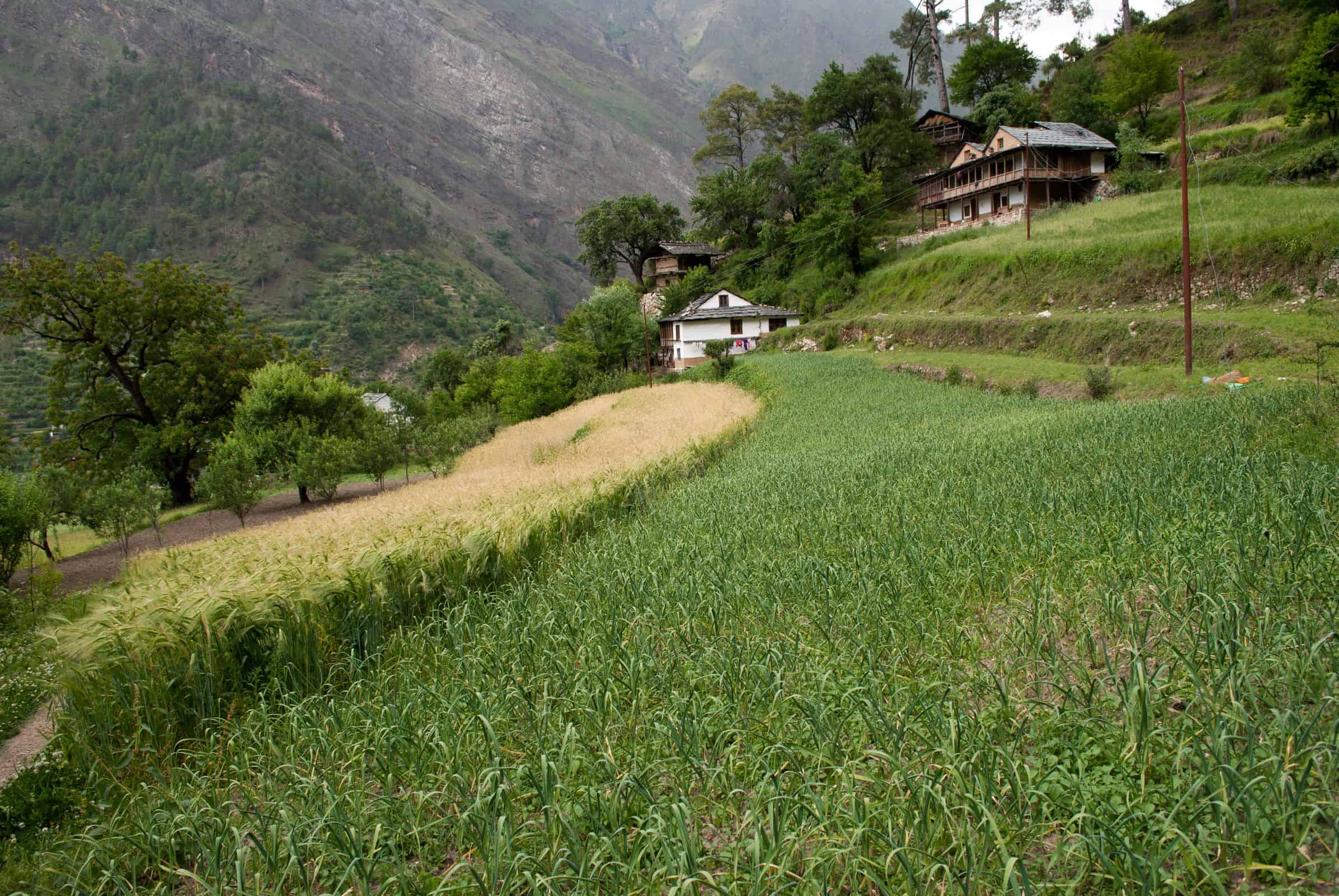
If you have been looking for a quiet, offbeat getaway in Himachal Pradesh that does not involve fighting crowds at Manali or Shimla, Gushaini in Tirthan Valley should be right at the top of your list. Sitting at an elevation of about 4,500 ft on the banks of the crystal-clear Tirthan River, this small village is the gateway to the Great Himalayan National Park (GHNP), a UNESCO World Heritage Site. I have visited this region multiple times, and every trip has left me calmer and happier than the last.
In this Gushaini travel guide, I will cover everything you need to plan your trip in 2026. How to reach, where to stay, things to do, treks, budget, permits, and practical tips. One thing to clear up right away: Gushaini itself needs no permit at all. That confusion only applies to the GHNP core zone, and I will explain exactly where that line is. Let us get started.
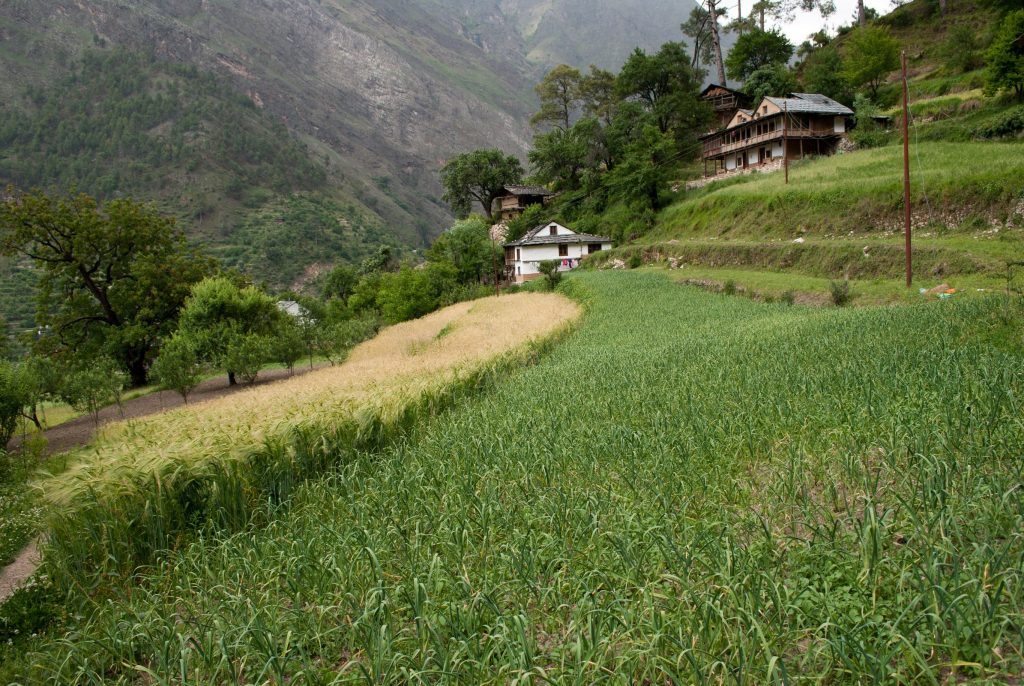
Gushaini sits on the Tirthan River in Himachal Pradesh at about 4,500 ft, the largest village on the river and the main gateway to the Great Himalayan National Park, a UNESCO World Heritage Site. Jio, Airtel, and BSNL all carry signal in the village itself, though coverage drops within a few kilometres of the GHNP boundary.
Gushaini at a Glance (2026 Practical Info)
| Detail | Information |
|---|---|
| Elevation | About 4,500 ft, on the banks of the Tirthan River |
| Distance | 500 km / 10-12 hrs from Delhi, 250 km / 6-7 hrs from Chandigarh, 150 km / 6-7 hrs from Shimla (via Jalori Pass, summer only) |
| Best time | April-June and September-November for trekking; December-February for snow |
| Permit for the valley | None. Only the GHNP core zone (via Rolla) requires one |
| GHNP core zone fee (2026) | Rs 100/day for Indians, Rs 400/day for foreigners (source: official GHNP site) |
| Trout fishing licence | Rs 300/day per rod, season March 1 to October 31 |
| Budget (per day) | Rs 1,500-2,000 for solo backpackers on public transport and homestays |
| Mobile network | Jio, Airtel, BSNL work in Gushaini village; signal drops near GHNP and higher villages |
What Makes Gushaini Special?
Quick answer: Gushaini is the largest village on the Tirthan River and the calmest base for the Great Himalayan National Park, a UNESCO World Heritage Site. It trades Kasol’s crowds and Jibhi’s cafes for riverside solitude, trout fishing, and genuine village life.
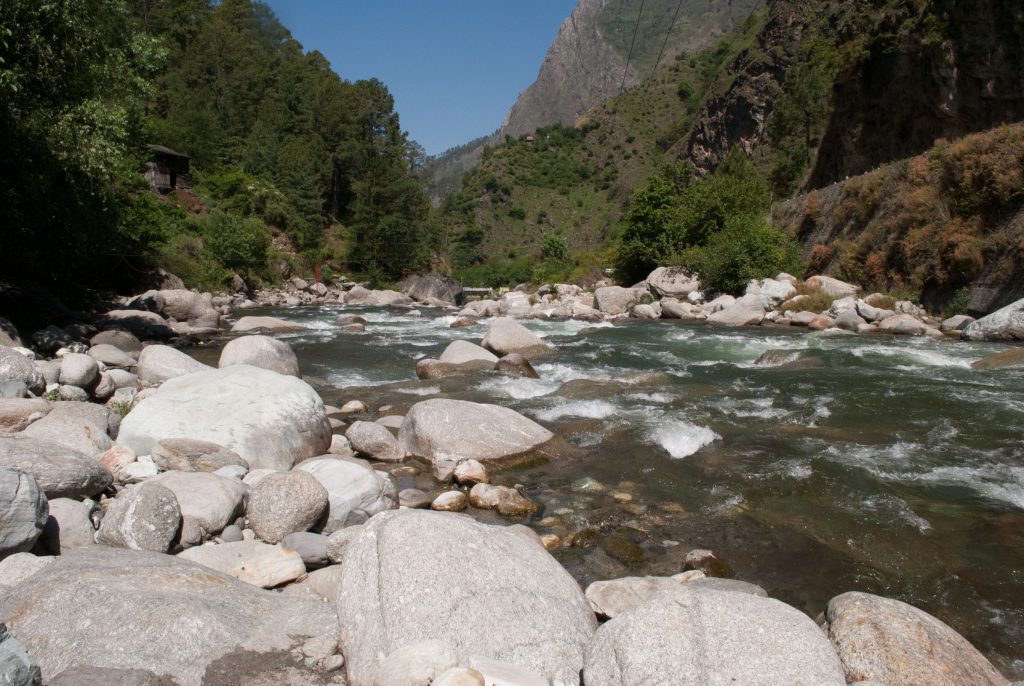
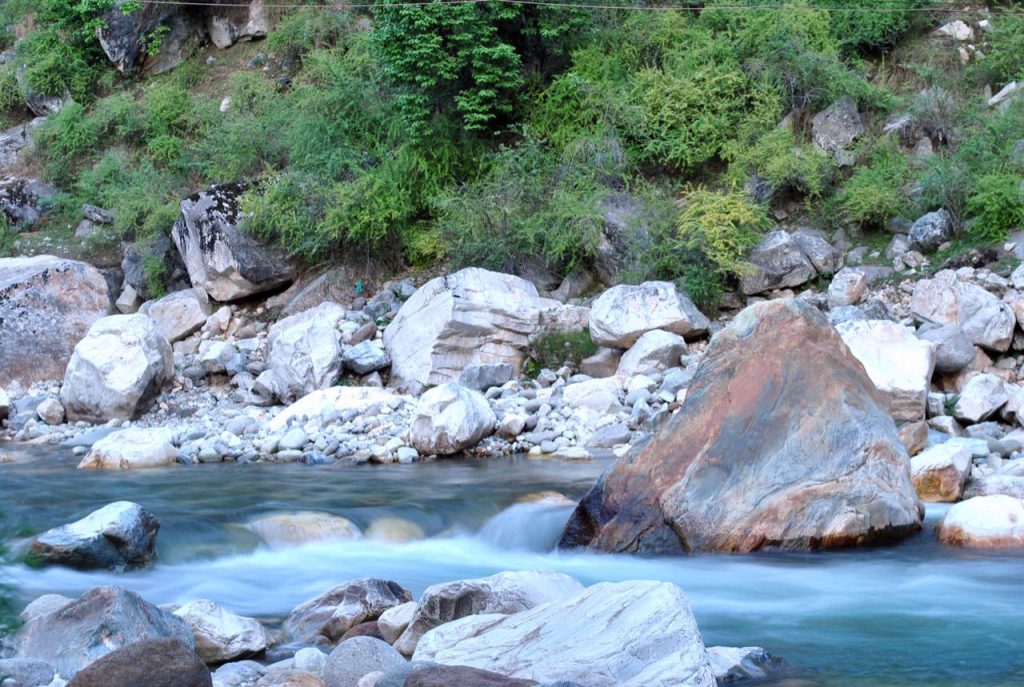
Gushaini is the largest settlement along the Tirthan River and sits barely 10 km from the official entry point of the Great Himalayan National Park. The village itself is quiet, green, and surrounded by dense forests of pine, deodar, and oak. The Tirthan River, known for its population of Himalayan brown trout, runs right through the village, and you can hear it from almost every guesthouse.
If Parvati Valley is famous for its energetic, backpacker-heavy vibe, Tirthan Valley is the exact opposite. It is calm, collected, and unhurried. The river is quieter, the forests thicker, and the crowds far fewer. People who come here tend to slow down naturally. You will find yourself sitting by the river for hours, watching trout dart between rocks, without any urge to check your phone. That, my friend, is the real magic of Gushaini.
The village is also a base for several day hikes and multi-day treks into the GHNP. Whether you are a trekker, an angler, a birdwatcher, or someone who just wants to sit and do absolutely nothing for a few days, Gushaini has something for you.
What Is the Best Time to Visit Gushaini?
Quick answer: April to June and September to November are the best months for trekking and clear views. Visit December to February for snow. Avoid July to mid-September, when monsoon rain brings leeches and landslide risk on the approach roads.
Gushaini is one of those rare Himalayan destinations that works well in almost every season. Here is a month-wise breakdown to help you decide.
| Season | Months | Weather | Best For |
|---|---|---|---|
| Spring | March to May | 15-25°C days, cool nights | Trekking, trout fishing, wildflowers |
| Summer | June | 20-30°C, warm and pleasant | River activities, village walks |
| Monsoon | July to mid-September | Heavy rain, leeches on trails | Avoid. Landslide risk on roads. |
| Autumn | Mid-September to November | 10-20°C, clear skies | Best views, photography, trekking |
| Winter | December to February | -2 to 10°C, snowfall possible | Snow lovers, quiet retreat |
The best months for sightseeing and trekking are April to June and September to November. If you want snowfall, visit between December and February. Keep in mind that the Jalori Pass route (from the Shimla side) closes in winter due to snow, so you can only reach Gushaini via Mandi during those months.
How to Reach Gushaini from Delhi, Chandigarh, and Shimla?
Quick answer: Drive via Chandigarh-Mandi-Aut-Larji, about 500 km / 10-12 hrs from Delhi. From Shimla, take the Narkanda-Jalori Pass route (open only in summer). HRTC buses run to Aut, then local buses connect to Banjar and Gushaini. The nearest airport is Bhuntar, though flying into Chandigarh is more reliable.
Gushaini is well connected by road. The most common approach is via the Delhi-Manali highway, taking a diversion at Aut. Here are all the routes.
By Road from Delhi (Recommended Route)
Delhi → Sonipat → Karnal → Chandigarh → Swarghat → Bilaspur → Sundernagar → Mandi → Larji → Banjar → Gushaini
The total distance is about 500 km from Delhi and takes roughly 10-12 hours. The route is the same as the Delhi to Manali highway up to Mandi. After Mandi, instead of entering the Aut Tunnel towards Manali, you take the left turn at Larji and follow the road along the Tirthan River. From Larji, Gushaini is about 30 km, and the drive is scenic, following the river the entire way.
By Road from Shimla (via Jalori Pass)
If you are coming from the Shimla side, the route goes via Narkanda and Jalori Pass. The distance from Shimla is roughly 150 km, but the narrow mountain roads make it a 6-7 hour drive. You can break the journey at Narkanda, which is about 65 km from Shimla, and continue to Gushaini the next morning. From Narkanda, Gushaini is approximately 73 km and takes about 2.5-3 hours.
Keep in mind that the Jalori Pass (10,800 ft) remains closed in winter months (December to March) due to snow. In winter, the only way to reach Gushaini is via the Mandi route.
By Bus (Budget Option)
HRTC runs direct overnight buses from Delhi ISBT to Aut. An ordinary bus costs around Rs 725-750, while a Volvo or semi-deluxe is about Rs 1,400-1,500. The journey takes 10-12 hours. Fares vary a bit by bus type and season, so it is worth checking hrtchp.com or a booking aggregator before you travel. From Aut, you can catch a local bus to Banjar (Rs 30-50, about 1-1.5 hours). Buses from Banjar to Gushaini run throughout the day and cost Rs 20-30.
If you are coming from Chandigarh, take any Manali-bound bus and get off at Aut. The fare is around Rs 400-500 for an ordinary bus.
By Air
The nearest airport is Bhuntar (Kullu-Manali Airport), about 50 km from Gushaini. However, Bhuntar has limited connectivity and flights are often cancelled due to weather. I suggest flying to Chandigarh instead, which is well connected from most Indian cities, and then taking a bus or taxi from there. The road journey from Chandigarh to Gushaini is about 250 km and takes 6-7 hours.


By Rail
Chandigarh is the closest major railway station at about 250 km. From Chandigarh, you can hire a taxi or take an HRTC bus towards Aut/Banjar.
Where to Stay in Gushaini?
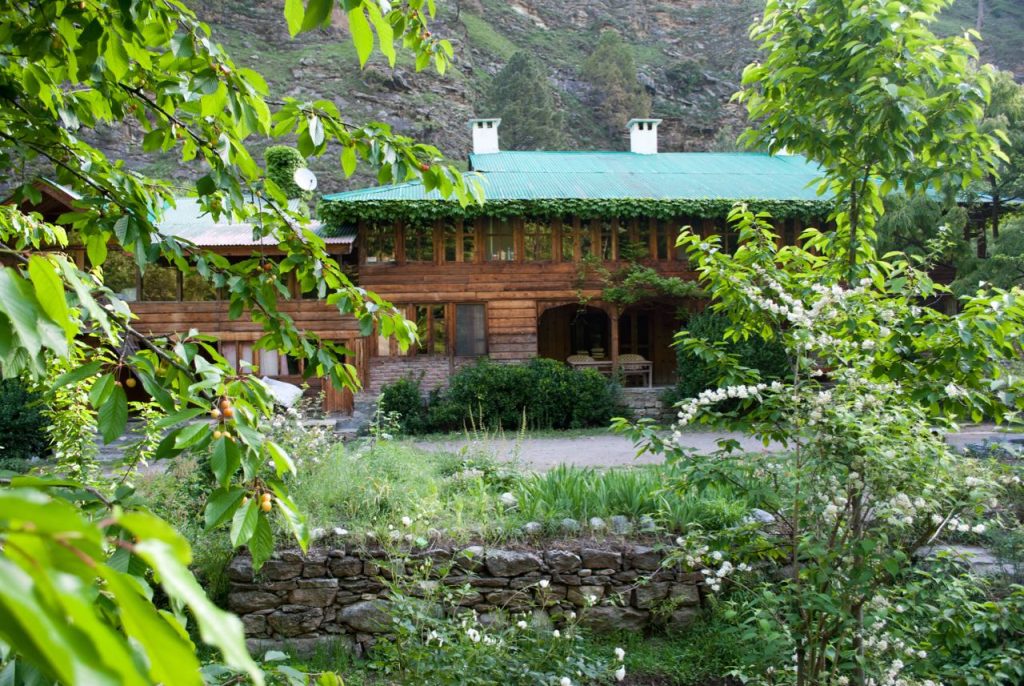
Quick answer: Budget homestays run Rs 800-1,500/night, mid-range riverside cottages Rs 2,000-4,000, and a few eco-lodges go up to Rs 10,000. Raju’s Cottage is the most famous name in the village, but the whole belt along the river is dotted with family-run homestays.
Gushaini has a good range of accommodation options, from basic homestays to riverside cottages and eco-lodges. Here is what you can expect.
| Category | Price Range (per night) | What to Expect |
|---|---|---|
| Budget Homestays | Rs 800-1,500 | Basic rooms, home-cooked meals, river views |
| Mid-Range Cottages | Rs 2,000-4,000 | Attached bathrooms, hot water, riverside location |
| Eco-Lodges / Luxury | Rs 5,000-10,000 | Modern amenities, curated stays, trout fishing arranged on-site |
Raju’s Cottage is probably the most famous homestay in Gushaini. The food is exceptional, especially the trout preparations and Himachali siddu. Bookings can be tough during peak season, so plan ahead. Other good options include Sunshine Himalayan Cottages, Tirthan River Trail, and several family-run homestays along the river. Most of these are run by local families in the villages around Gushaini and Nagini, which is part of what keeps the tourism footprint here light even during peak season.

Most homestays include meals in their tariff. If not, expect to pay Rs 150-300 per meal for home-cooked food. In case you prefer booking online, many properties are now listed on Airbnb and Google Maps.
What Are the Top Things to Do in Gushaini?
Quick answer: Trout fishing on the Tirthan River, a day hike to Chhoie Waterfall, village hopping through Batahad, Galingcha, Nagini and Pekhri, and a visit to the medieval Chehni Kothi tower are the top things to do around Gushaini.
Gushaini is not a place where you tick off tourist attractions from a checklist. It is a place where you slow down, explore on foot, and let the valley surprise you. That said, here are the best activities and nearby places worth visiting.
Trout Fishing in the Tirthan River
The Tirthan River is famous across Himachal Pradesh for Himalayan brown trout, and Gushaini is one of the best spots for catch-and-release angling. You will need a fishing permit from the Himachal Pradesh Fisheries Department, which costs Rs 300 per day. The permit allows you to fish in a 45 km stretch of the Tirthan River. The fishing season runs from March 1 to October 31. You are allowed a maximum of 6 fish per day, with a minimum size of 25 cm. Most guesthouses can arrange equipment and guides.
Chhoie Waterfall (via Nagini Village)
Located a few km from Gushaini towards Sai Ropa, this waterfall requires a short 45-minute hike from Nagini village. The trail passes through dense forests and the waterfall itself is quite photogenic. This is one of the more popular spots in the area, so expect to see other visitors, especially on weekends.
Batahad and Phalachan Valley
Batahad is a quiet village about 10 km from Gushaini, sitting at the entrance to Phalachan Valley, a sub-valley of Tirthan Valley. It is also the starting point for the Bashleo Pass Trek. The village is scenic, the locals are welcoming, and the entire area feels like a world removed from city life.
Galingcha Village
About 4 km further up from Batahad, Galingcha is another small settlement with excellent views of the surrounding peaks. You can reach it by a motorable road or, if you prefer, through a short but steep hike. The walk is worth it for the panoramic views alone.
Chehni Kothi
This medieval wooden tower, located in a village of the same name between Jibhi and Banjar, is one of the most photographed structures in the Tirthan-Banjar region. The tower is several stories tall and built entirely of wood and stone in traditional Himachali style. It requires a short 30-minute hike from the road. Absolutely worth a visit if you are in the area.
Village Hopping
One of the most enjoyable things to do around Gushaini is simply walking from village to village. Nagini, Chalogi, Mungla, Pekhri, and several other tiny hamlets are scattered across the valley, each with its own character. You do not need a guide for these walks. Just follow the trails, talk to locals, and let the valley unfold at its own pace.
What Are the Best Treks Near Gushaini?
Quick answer: The Rolla day trek to the GHNP gate (8 km, no permit needed) is the easiest. For multi-day treks, Bashleo Pass, Pekhri to Rangthar Top, and Jalori Pass to Serolsar Lake are the most rewarding. Any trek that enters the GHNP core zone requires a permit and a certified guide.
Being right at the doorstep of the Great Himalayan National Park, Gushaini is a trekker’s paradise. Here are the most popular treks, ranging from easy day hikes to multi-day expeditions.
GHNP Gate / Rolla (Day Trek, 8 km one way)
From Gushaini, it is about 8 km to the official entry gate of the Great Himalayan National Park at Rolla. The trail follows the Tirthan River, and the water stays crystal clear throughout. You do not need a permit for this day trek as long as you do not enter the park’s core zone. If you plan to camp inside the park, you will need a permit from the Sai Ropa office. This is one of the easiest and most rewarding walks in the area.
Bashleo Pass Trek (1 Day if You Start Early)
Starting from Batahad village (10 km from Gushaini), this trek covers about 10 km to the Bashleo Pass at approximately 10,800 ft. The pass connects Tirthan Valley to Kullu’s Sarahan (not Kinnaur’s Sarahan). If you start early, you can complete it in one day and return to Gushaini. However, if you get a late start, you may need to cross over and stay at Kullu Sarahan for the night.
Pekhri to Rangthar Top (2-3 Days)
This trek takes you from Pekhri village up to the Rangthar meadow, a high-altitude bugyal with stunning views of the surrounding Himalayan ranges. The trek is moderate in difficulty and rewards you with some of the best open meadow views in this part of Himachal. Budget 2-3 days for a comfortable pace.
Sarchi to Lambhari Top to Serolsar Lake (2-4 Days)
Starting from Jalori Pass, this trek takes you through dense forests, past crystal caves (where you can find interesting quartz formations), up to Lambhari Top, and eventually to Serolsar Lake. The lake is considered sacred and is surrounded by thick forest. A local guide is recommended for this route, especially if you are doing the full multi-day version. The trail passes through some of the richest biodiversity zones in the western Himalayas.
Treks Inside GHNP (Permit Required)
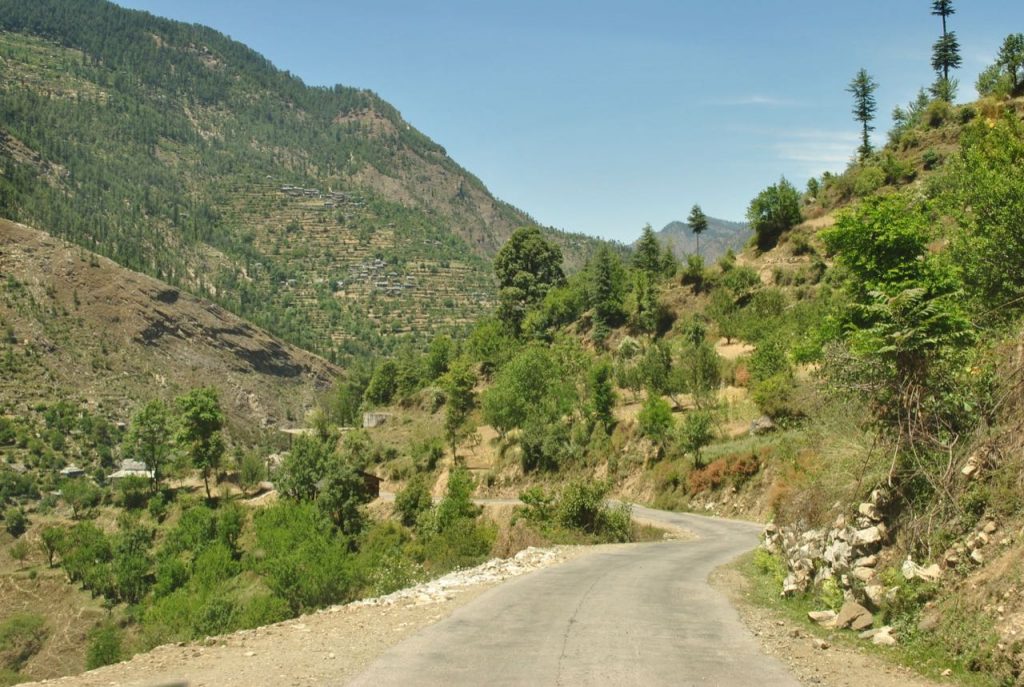
For those who want to go deeper, the GHNP offers multi-day treks into the park’s core zone. The Tirthan Valley entry (via Rolla) is the most popular access point. You will need a permit from the Sai Ropa office, a certified GHNP guide (mandatory), and a porter if carrying heavy gear. As per the official GHNP fee schedule, the core zone entry fee for 2026 is Rs 100 per day for Indian nationals and Rs 400 per day for foreign nationals. These treks range from 3 to 7 days and take you into some of the most pristine wilderness in India.
What Should You Eat in Gushaini?
Quick answer: Fresh trout, Himachali siddu, and Chha Gosht are the local specialties, all served at homestays for Rs 150-300 per meal (trout charged separately, Rs 300-500 a plate).
Food in Gushaini is simple, fresh, and delicious. Most homestays serve home-cooked meals, and the flavors are distinctly Himachali. Here is what you should not miss.
Trout fish is the star dish of Tirthan Valley. Whether fried, grilled, or cooked in a simple masala, the freshness of locally caught trout is hard to beat anywhere in India. Siddu, a steamed Himachali bread stuffed with poppy seeds or walnuts and served with ghee, is another must-try. Non-vegetarians should ask for Chha Gosht, a traditional Himachali lamb preparation cooked in gram flour gravy. And of course, no Himalayan trip is complete without the ever-reliable Maggi and chai combination.
A meal at a homestay typically costs Rs 150-300 per person. Trout fish preparations are usually charged separately, around Rs 300-500 per plate depending on the season and availability.
How Much Does a Gushaini Trip Cost in 2026?
Quick answer: Budget around Rs 5,100-8,400 per person for a 3-night trip on public transport and homestays, or Rs 12,000-21,500 for a mid-range trip with private transport and cottages. Solo backpackers can manage on Rs 1,500-2,000/day.
Gushaini is one of the more affordable Himalayan destinations, especially if you stay at homestays and use public transport. Here is a rough budget breakdown for a 3-night trip.

| Expense | Budget (per person) | Mid-Range (per person) |
|---|---|---|
| Transport (Delhi return, bus) | Rs 1,300-1,500 | Rs 3,000-4,000 (Volvo/taxi share) |
| Accommodation (3 nights) | Rs 2,400-4,500 | Rs 6,000-12,000 |
| Meals (3 days) | Rs 900-1,500 | Rs 1,500-2,500 |
| Activities (fishing, treks) | Rs 300-500 | Rs 1,000-2,000 |
| Local transport | Rs 200-400 | Rs 500-1,000 |
| Total (3 nights) | Rs 5,100-8,400 | Rs 12,000-21,500 |
If you are a solo backpacker using public transport and staying at budget homestays, you can comfortably manage at Rs 1,500-2,000 per day. Groups of 2-4 can split taxi costs and bring it down further.
What Are the Practical Things to Know Before Visiting Gushaini?
Quick answer: Decent mobile network in the village, one unreliable ATM (carry cash), fuel up at Mandi, basic medical care only, and no permit needed for the valley, only for the GHNP core zone.
Here are some important practical details that will make your trip smoother.
Mobile Network: You will have decent mobile connectivity in Gushaini town itself. BSNL, Jio, and Airtel all work in the main village area. However, once you move towards the GHNP or higher villages, signals drop off quickly. Download offline maps before you go.
ATM: There is an ATM in Gushaini, but it may not always have cash. The nearest reliable ATMs are at Banjar (14 km) or Aut (about 30 km). Carry enough cash for your entire trip, especially if you plan to stay at homestays that do not accept UPI.
Fuel: Fill up at Mandi if you are driving. There are a couple of petrol pumps on the route between Aut and Banjar, but the Mandi pump is the most reliable.
Medical: Gushaini has a basic health center for minor issues. For anything serious, you will need to travel to Mandi (about 65 km) or Kullu (about 60 km via Aut). Carry a basic first-aid kit, especially if you plan to trek.
Road Conditions: The road from Aut to Gushaini is narrow but well-maintained. The width is limited in several stretches, so be careful with oncoming traffic. In monsoon, landslides can block the road temporarily.
Permits: You do not need any permit to visit Gushaini or the surrounding villages. Almost everything travelers actually do here, the homestay belt, the buffer trails, the walk to the Rolla gate, falls inside the free ecozone. A permit is only required if you enter the core zone of the Great Himalayan National Park for a multi-day trek. As per the official GHNP fee schedule, that costs Rs 100 per day for Indian citizens and Rs 400 per day for foreign nationals in 2026, obtained at the Sai Ropa office. A certified GHNP guide is mandatory for park treks.
How Is Gushaini Different from Jibhi and Kasol?
Quick answer: Jibhi has cafes and Instagram spots, Kasol is Himachal’s backpacker party capital, and Gushaini has neither. It is the quietest of the three, built around trout fishing, treks, and genuine village life.
This is a common question, so let me break it down simply.
Jibhi is in the same general area (Banjar Valley) and has become quite popular in recent years with cafes, Instagram-worthy spots, and a growing tourist infrastructure. It is livelier and more commercialized than Gushaini. If you want a social, cafe-hopping experience, Jibhi works better.
Kasol, in Parvati Valley, is the backpacker capital of Himachal. It has a very different energy. Louder, more crowded, more party-oriented. Great in its own way, but nothing like Gushaini.
Gushaini is for those who want peace, nature, and genuine village life without the tourist infrastructure (or crowds) of Jibhi and Kasol. If you want trout fishing, serious trekking, and riverside solitude, Gushaini is your place.
Suggested Itinerary for Gushaini (3 Nights / 4 Days)
Quick answer: Day 1 arrival and riverside evening, Day 2 Rolla gate trek and trout fishing, Day 3 village hopping to Batahad, Galingcha and Chhoie Waterfall, Day 4 return journey. Extend with Sainj Valley or Jibhi if you have more time.
Day 1: Arrive from Delhi/Chandigarh. Check into your homestay. Spend the evening by the Tirthan River. Enjoy a home-cooked dinner with trout fish.
Day 2: Morning trek to the GHNP gate at Rolla (8 km one way). Return by afternoon. Afternoon at leisure, try trout fishing if you have a permit. Evening bonfire at the homestay.
Day 3: Visit Batahad and Phalachan Valley. Explore Galingcha village. If time permits, hike to Chhoie Waterfall via Nagini. Return for dinner.
Day 4: Morning walk along the river. Head back to Delhi/Chandigarh. If driving via Shimla side (summer only), stop at Jalori Pass for views.
If you have more time, add a day trip to Sainj Valley and Shangarh, which is about 30 km from Gushaini and equally stunning. You can also extend with a visit to Jibhi, which is only about 10 km from Banjar, or with the Kheerganga Trek in neighboring Parvati Valley if you have an extra 2-3 days and want a proper high-altitude trek.
Related Reading
- Tirthan Valley Travel Guide for a broader overview of the entire valley
- Sainj Valley and Shangarh Guide for the neighboring valley with equally beautiful meadows
- Jibhi and Banjar Valley for cafe culture and shorter weekend trips
- Tirthan Valley with Family if you are planning a family trip to this region
- Offbeat Places in Himachal Pradesh for more hidden gems like Gushaini
- Kheerganga Trek Guide if you want a proper high-altitude trek in the same Kullu region
Frequently Asked Questions
Is Gushaini safe for solo travelers and women?
Yes, Gushaini is very safe. The village is small, the locals are friendly, and crime is practically non-existent. Solo travelers, including women, regularly visit without issues. Just exercise the standard caution you would anywhere in the mountains, especially on isolated trails.
Do I need a permit to visit Gushaini?
No, you do not need any permit to visit Gushaini or the surrounding villages in Tirthan Valley. Permits are only required if you want to enter the core zone of the Great Himalayan National Park for a multi-day trek. These can be obtained at the Sai Ropa office near Gushaini, and cost Rs 100/day for Indians and Rs 400/day for foreigners as of 2026.
Is Gushaini good for a winter trip?
Absolutely. Gushaini receives snowfall between December and February, and the valley looks magical in white. The Jalori Pass route closes in winter, so you must come via the Mandi-Aut-Banjar route. Many homestays remain open year-round. Carry warm layers as temperatures can drop below zero at night.
How far is Gushaini from Jibhi?
Gushaini is about 25 km from Jibhi. The drive takes around 45 minutes to 1 hour via Banjar. Many travelers combine both destinations in a single trip.
Can I do a day trek to the GHNP gate from Gushaini?
Yes. The GHNP gate at Rolla is about 8 km from Gushaini, and you can complete the round trip in 5-6 hours at a comfortable pace. No permit is needed for the day trek to the gate. You only need a permit if you enter the park’s core zone.

Is there an ATM in Gushaini?
There is one ATM in Gushaini, but it is not always functional or stocked with cash. Carry sufficient cash from Chandigarh, Mandi, or Aut. The nearest reliable ATMs are at Banjar (14 km) and Aut (30 km).
What is the best month for trout fishing in Gushaini?
The trout fishing season runs from March 1 to October 31. The best months are generally April, May, and early October when the water is clear and fish are most active. You need a fishing permit (Rs 300/day) from the Himachal Pradesh Fisheries Department. Most guesthouses can help arrange this.
What is the GHNP core zone permit fee in 2026?
As per the official GHNP fee schedule, the core zone entry fee is Rs 100 per day for Indian nationals and Rs 400 per day for foreign nationals in 2026. This only applies if you trek into the core zone from Rolla. Visiting the valley, the homestay belt, and the buffer trails around Gushaini itself remains free and permit-free.
Gushaini is one of those rare places in the Himalayas where you can truly disconnect and recharge. No rush, no crowds, just the sound of the Tirthan River and the forest all around you. If you have been to the usual Himachal destinations and want something quieter, give Gushaini a chance. It will not disappoint. Feel free to drop your questions in the comments below, or connect with the Discover with Dheeraj community for real-time travel updates. Happy travelling, my friend 🙂
Last Updated: August 2026
