


Last Updated: March 2026
Gangtok sits at an altitude of 5,410 Ft in the eastern Himalayas and serves as the capital of Sikkim, India’s smallest state. Despite its compact size, this city packs in monasteries, viewpoints, waterfalls, a ropeway, and a vibrant food scene that can keep you busy for a solid 3 days. If you are planning a quick weekend getaway or a short break from Kolkata, Siliguri, or even Delhi, Gangtok is one of the most rewarding destinations in the northeast.
I visited Gangtok in October 2016 and spent a few days exploring the town and its surroundings. The weather was crisp and clear, the skies were generous, and Mt. Kanchenjunga made an appearance almost every morning. What struck me most was how green everything was, even in late autumn. Mists and fog were our constant companions, adding beauty to the rolling mountains while also threatening to engulf the entire landscape in front of us. It only made us relish such moments which might be gone too soon.
In this guide, I will cover everything you need to plan your Gangtok trip in 2026, including how to reach, places to visit, monasteries, a suggested 3-day itinerary, where to eat, accommodation options, and a realistic budget breakdown. If you are looking for a more comprehensive Sikkim trip, do check out our travel guide for North Sikkim as well.
How to Reach Gangtok in 2026?
Gangtok does not have a functional commercial airport or railway station at the moment, so you will need to travel via Bagdogra Airport or New Jalpaiguri (NJP) Railway Station. Both are located in the Siliguri corridor of West Bengal and are well connected to major Indian cities. Here is a quick breakdown of your options.
- By Air: Bagdogra (IXB) is the nearest operational airport, about 124 km from Gangtok. The drive takes approximately 4 hours depending on traffic and road conditions. Airlines like IndiGo, SpiceJet, and Air India operate regular flights from Delhi, Mumbai, Kolkata, and Bangalore. A private taxi from Bagdogra to Gangtok costs Rs 3,500 to Rs 5,000 for a sedan and Rs 4,500 to Rs 5,500 for an SUV (Innova/Scorpio). Shared cabs cost Rs 400 to Rs 600 per person from the airport parking area. SNT buses are also available for around Rs 300 to Rs 400 per person.
- By Train: New Jalpaiguri (NJP) is the nearest major railway station, about 118 km from Gangtok. It is well connected to Delhi, Kolkata, Mumbai, and other cities via Rajdhani and Shatabdi services. The drive from NJP to Gangtok takes about 4 hours. Shared taxis leave from Siliguri SNT Stand and cost Rs 400 to Rs 600 per person. You can also book a private taxi for Rs 3,500 to Rs 4,000.
- By Road: If you are driving from Siliguri, take NH10 via Rangpo and Singtam. The road is well-maintained for most of the stretch, though you may encounter some construction zones. From Kolkata, the total drive is about 600 km (12 to 14 hours). From Delhi, it is approximately 1,500 km and best done with a flight to Bagdogra instead.
A note on Pakyong Airport: Sikkim has its own airport at Pakyong, about 35 km from Gangtok. However, as of early 2026, commercial flights are not operational here due to technical and weather-related challenges. The government and airlines are in discussion to resume services, but there is no confirmed timeline yet. For now, plan your arrival via Bagdogra or NJP.
Do You Need a Permit to Visit Gangtok?
Indian citizens do not need any permit to visit Gangtok or general areas of Sikkim. You can enter freely with a valid government-issued photo ID (Aadhaar, Voter ID, or Passport). However, for protected areas like Tsomgo Lake, Nathula Pass, and North Sikkim (Lachen, Lachung, Gurudongmar Lake), you will need a Protected Area Permit (PAP). These permits are issued through registered tour operators in Gangtok and typically cost Rs 200 per person.
Keep in mind that you cannot visit these protected areas in a private vehicle or a regular city taxi. The trip must be organized through a government-registered travel agency who will arrange the permit, vehicle, and driver. Foreign nationals need an Inner Line Permit (ILP) to enter Sikkim, which can be obtained at the Rangpo check post or through Sikkim Tourism offices in Delhi, Kolkata, and Siliguri.
What Are the Best Places to Visit in Gangtok?
Gangtok has a surprisingly diverse set of attractions for a small hill town. From viewpoints and waterfalls to a zoological park and a ropeway, there is enough to fill 2 to 3 days comfortably. Here are the spots I would recommend covering during your visit.
Himalayan Zoological Park
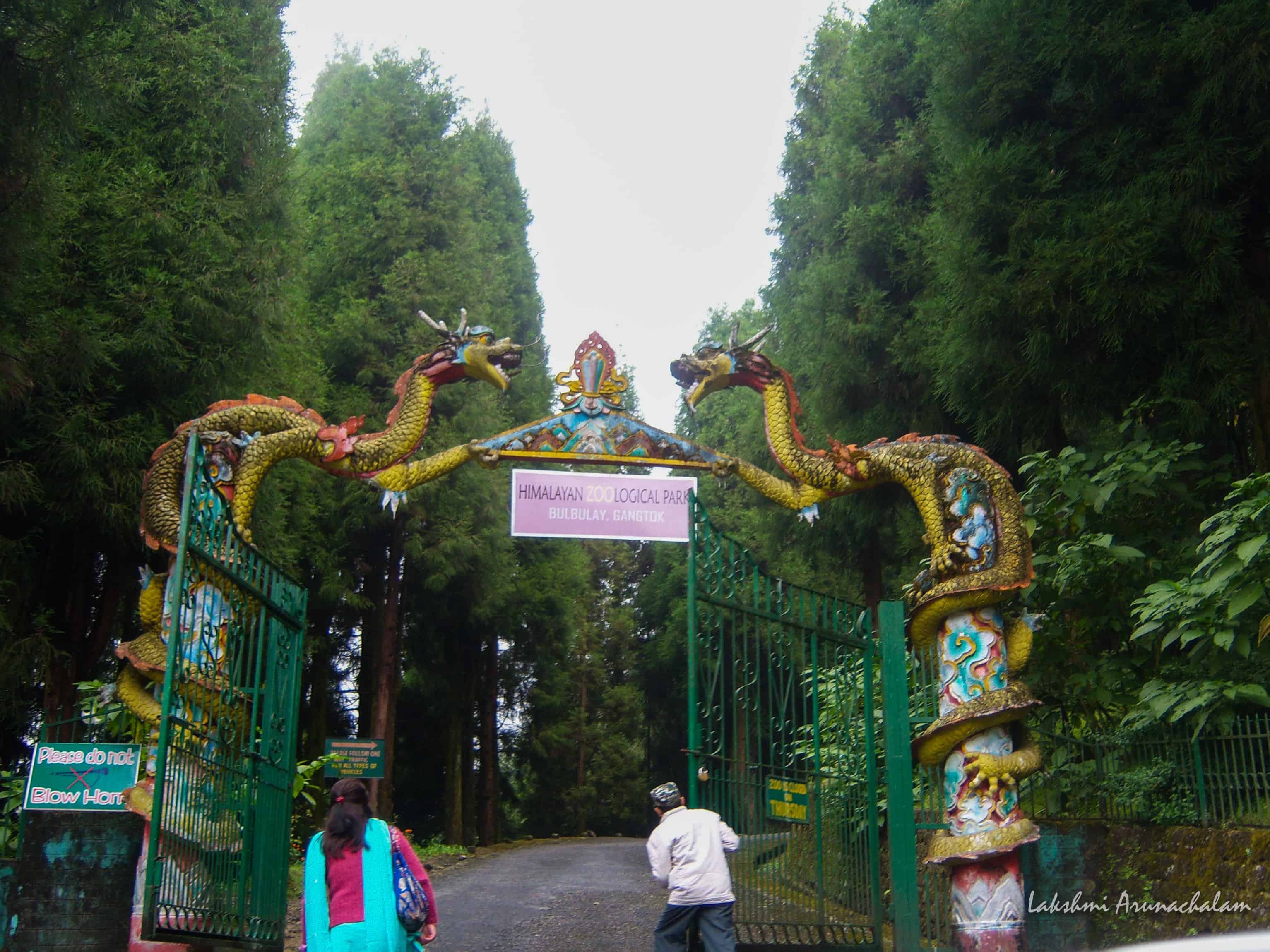
This is not your typical zoo with caged animals. The Himalayan Zoological Park is a large forested area about 6 km from Gangtok town where animals live in near-natural habitats. You can spot Red Pandas (Sikkim’s state animal), Himalayan Black Bears, Tibetan Wolves, Snow Leopards (if you are lucky), and Himalayan Palm Civets. The park also has good birdwatching opportunities. There are walking trails at various altitudes inside the park, so wear comfortable shoes. The park is open from 9 AM to 4 PM, closed on Thursdays. Entry fee is Rs 25 for Indian adults and Rs 50 for foreigners.
Ganesh Tok and Hanuman Tok
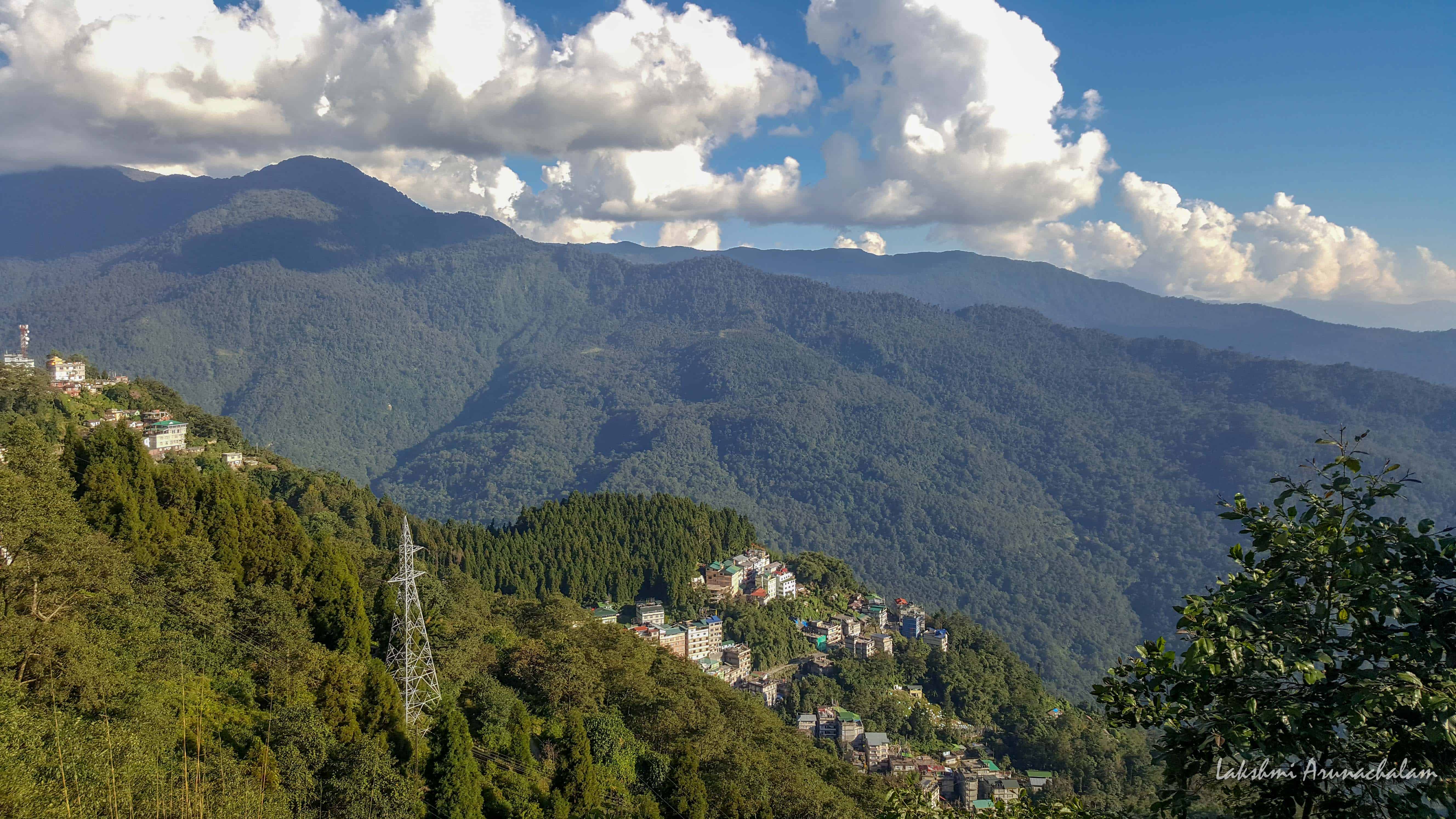
These are two small temples perched on ridges above Gangtok that double as excellent viewpoints. Ganesh Tok is right opposite the Himalayan Zoo, and you need to climb a short flight of stairs to reach the gallery area. From the top, you get a panoramic view of Gangtok town, the surrounding mountains, and on clear days, the Kanchenjunga range. Hanuman Tok is about 3 km further and offers even wider views with a well-maintained garden area. Both are free to visit and best enjoyed in the early morning when the sky is clear.
Plant Conservatory (Flower Show Venue)
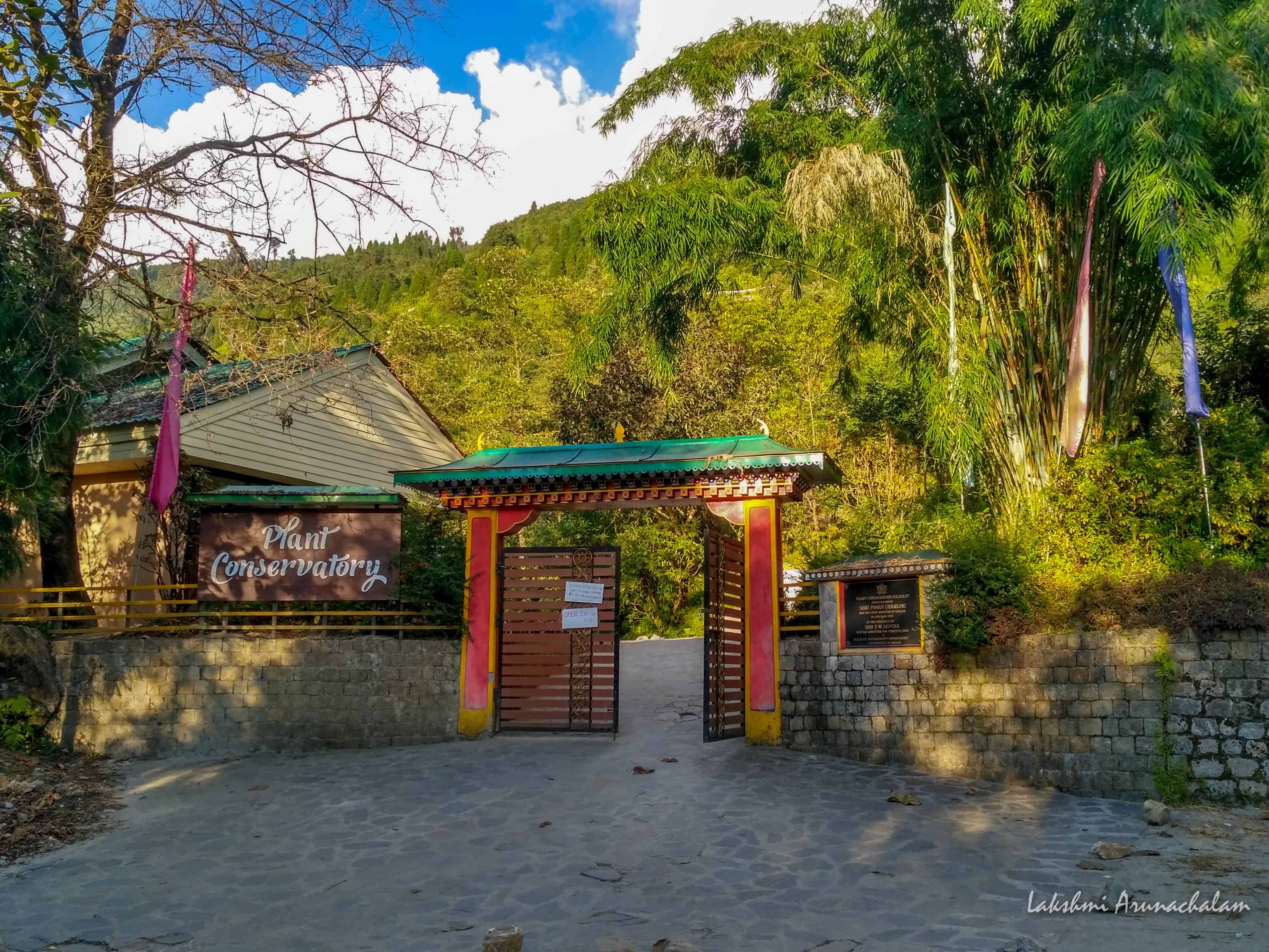
Located about 3 km from Ganesh Tok, this conservatory has well-laid paths leading through gardens of orchids, rhododendrons, and other Himalayan flowers. It is a peaceful spot to take a break, sit on a bench, and just soak in the quiet. If you visit during spring (March to May), the annual International Flower Show is a major attraction with hundreds of orchid species on display. Entry is minimal, around Rs 10 to Rs 20.
Tashi Viewpoint
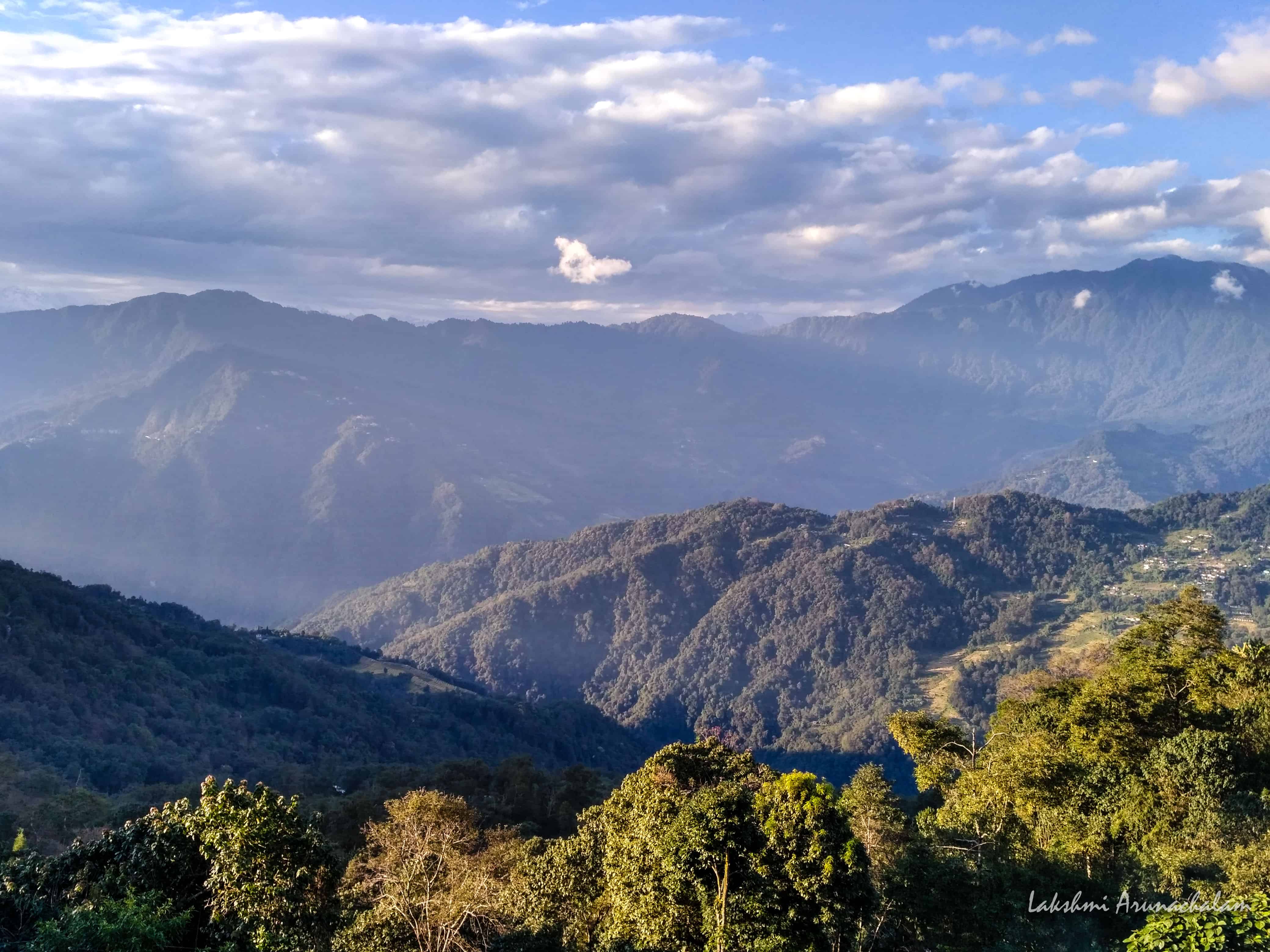
About 8 km from Gangtok, near Ganesh Tok and Bakthang Waterfalls. On a clear day, this viewpoint offers one of the best views of the Kanchenjunga range. If you are visiting during winter (October to December), your chances of getting a clear view are highest. I would suggest reaching here by 7 AM if possible, because clouds tend to build up by mid-morning.
Bakthang Waterfalls
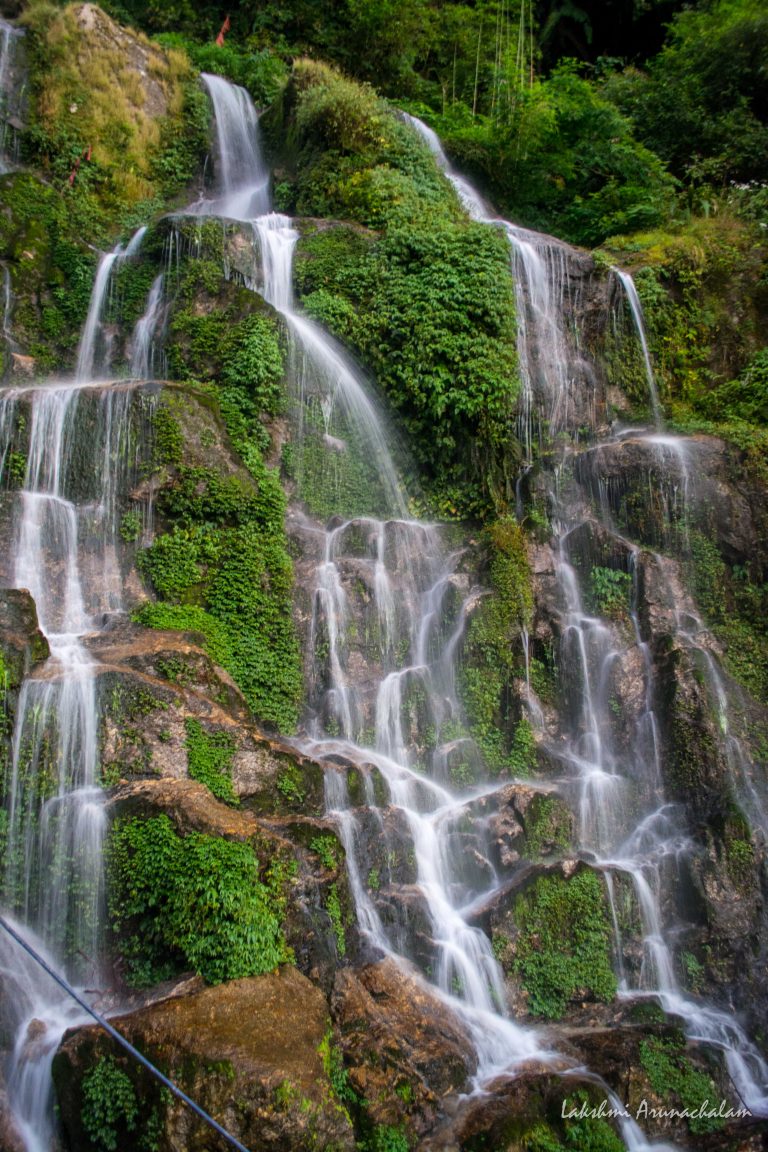
This wide, cascading waterfall is on the way to Tashi Viewpoint. The water is ice-cold even in summer. Recently, rappelling activities have been introduced here for a short stretch, which is a fun addition if you are into adventure sports. There is no entry fee for the waterfall itself, but the rappelling activity is charged separately (around Rs 500 to Rs 800 per person).
MG Marg (MG Road)
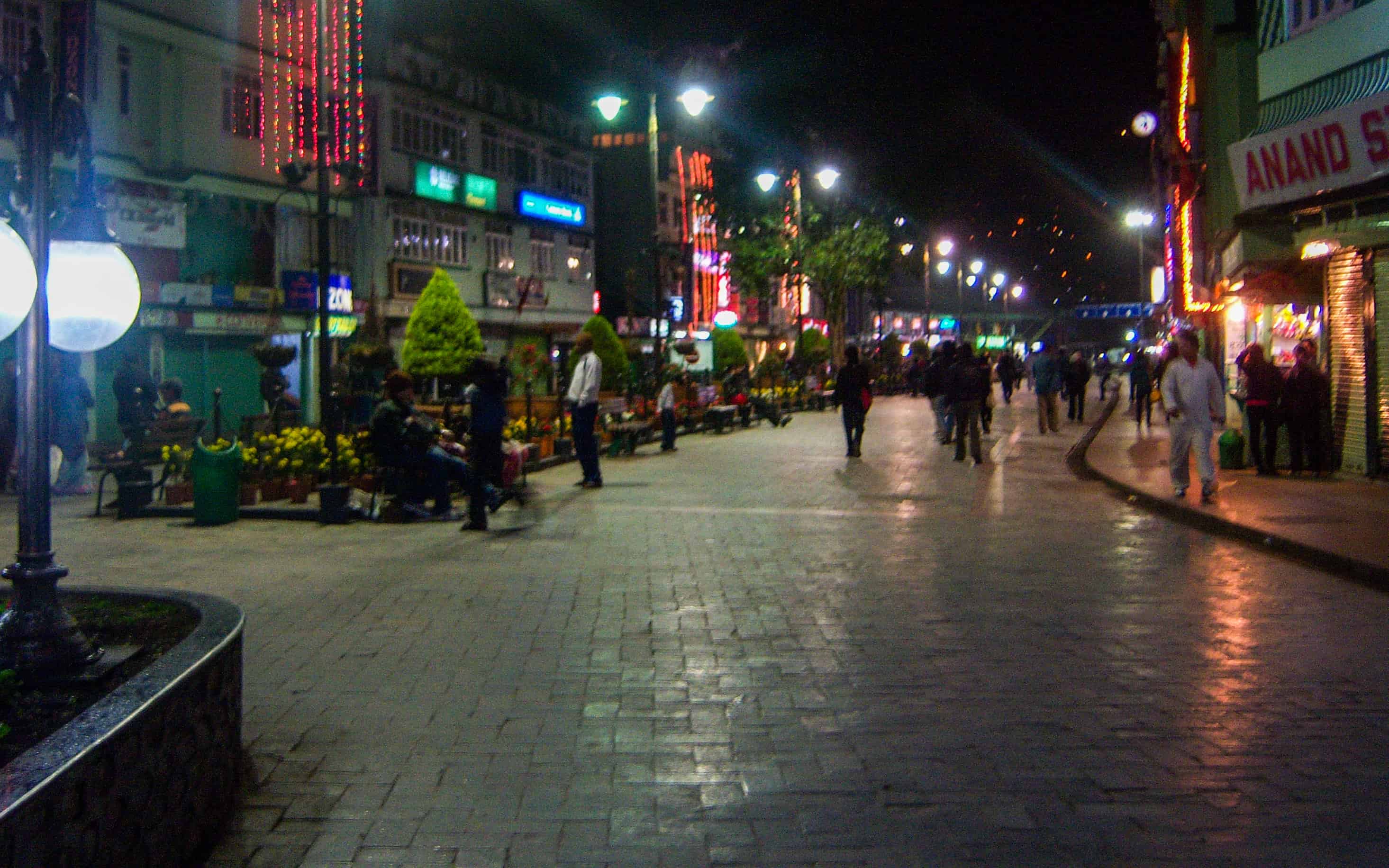
This pedestrian-only cobbled road is the heart of Gangtok’s social life. It comes alive in the evenings with cafes, restaurants, souvenir shops, and street performers. It is a smoke-free and litter-free zone, which keeps it pleasant for a stroll. You will find everything from momos to thukpa to continental food here. I would recommend spending at least one evening here, just walking around and soaking in the vibe. Try the local Sikkimese thali if you can find one, and pick up some Sikkim tea or local handicrafts as souvenirs.


Gangtok Ropeway (Cable Car)
If you want a bird’s eye view of Gangtok, the ropeway at Deorali is worth a ride. It is just about 1 km from MG Marg and has three stations: Deorali, Namnang, and Tashiling. A round-trip takes about 15 to 20 minutes and offers views of the town, the valley below, and the surrounding mountains. Ticket price is around Rs 170 per adult (including GST) as of 2025. The ropeway operates from 9:30 AM to 4:30 PM daily, weather permitting, and is mostly closed during monsoon season. Each cable car can carry up to 24 passengers.
Do-Drul Chorten and Namgyal Institute of Tibetology
Do-Drul Chorten is one of the most important Buddhist stupas in Sikkim, located about 2 km from central Gangtok. It was built in 1945 by Trulshik Rinpoche and contains a complete set of Buddhist holy books and relics. The stupa is surrounded by 108 prayer wheels. A short uphill walk takes you to the stupa, and the Namgyal Institute of Tibetology is right nearby. The Institute houses a rare collection of Tibetan manuscripts, thangkas, and Buddhist artifacts. Both can be covered together in about an hour and make for a peaceful mid-day visit.
Ban Jhakri Falls and Energy Park
Located about 7 km from Gangtok town, Ban Jhakri Falls is a man-made park built around a natural waterfall. The park has walking trails, a small lake, sculptures of shamanic figures from Sikkimese folklore, and landscaped gardens. It is a good place to spend an hour, especially if you are traveling with kids. Entry fee is Rs 50 for Indian adults. The park is open from 9 AM to 5 PM.
Which Monasteries Should You Visit in Gangtok?
Gangtok is a center of Buddhist culture in Sikkim, and a trip here would be incomplete without visiting at least a couple of monasteries. Here are the ones I recommend, starting with the ones closest to the city center.
Enchey Monastery
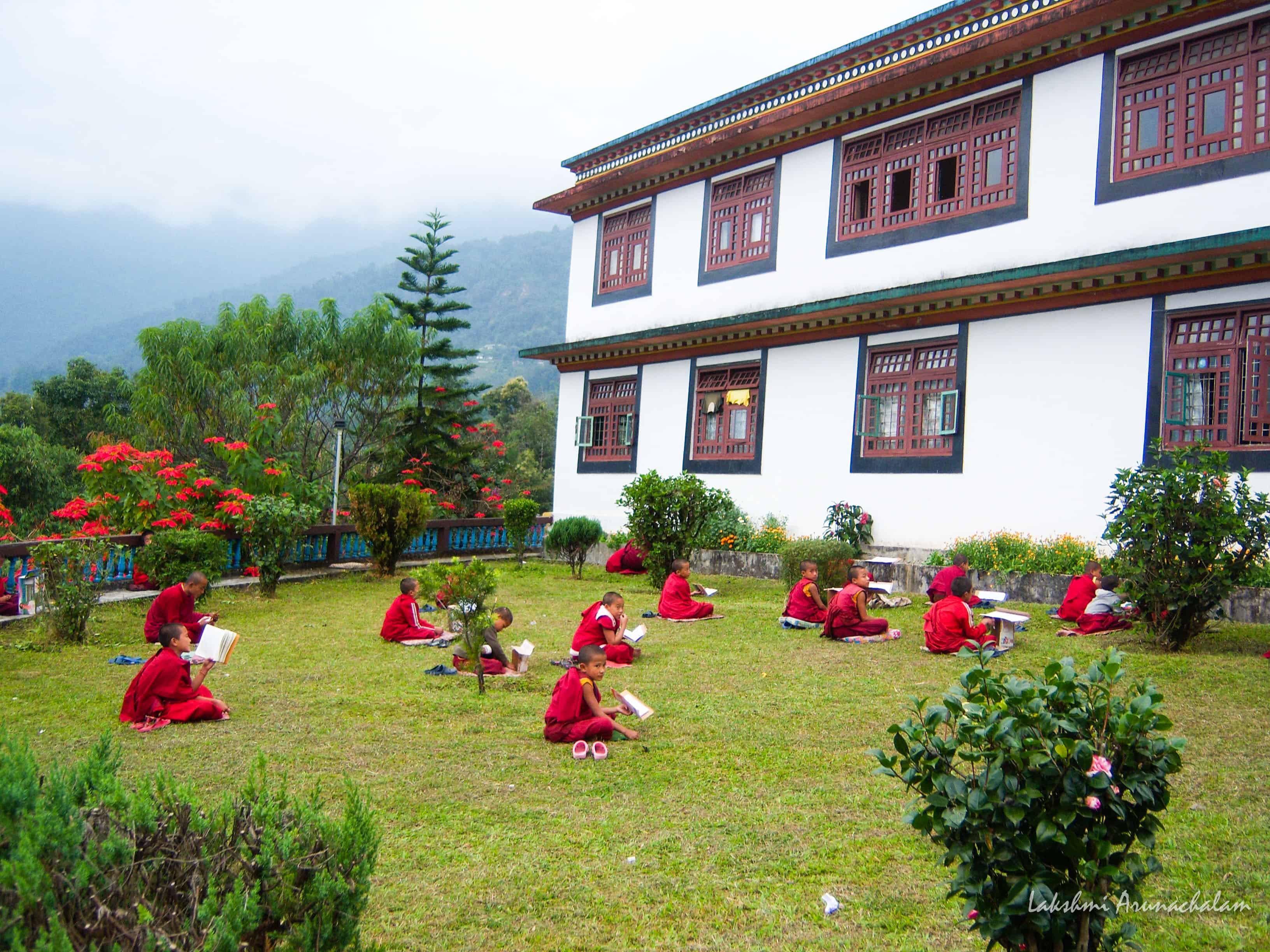
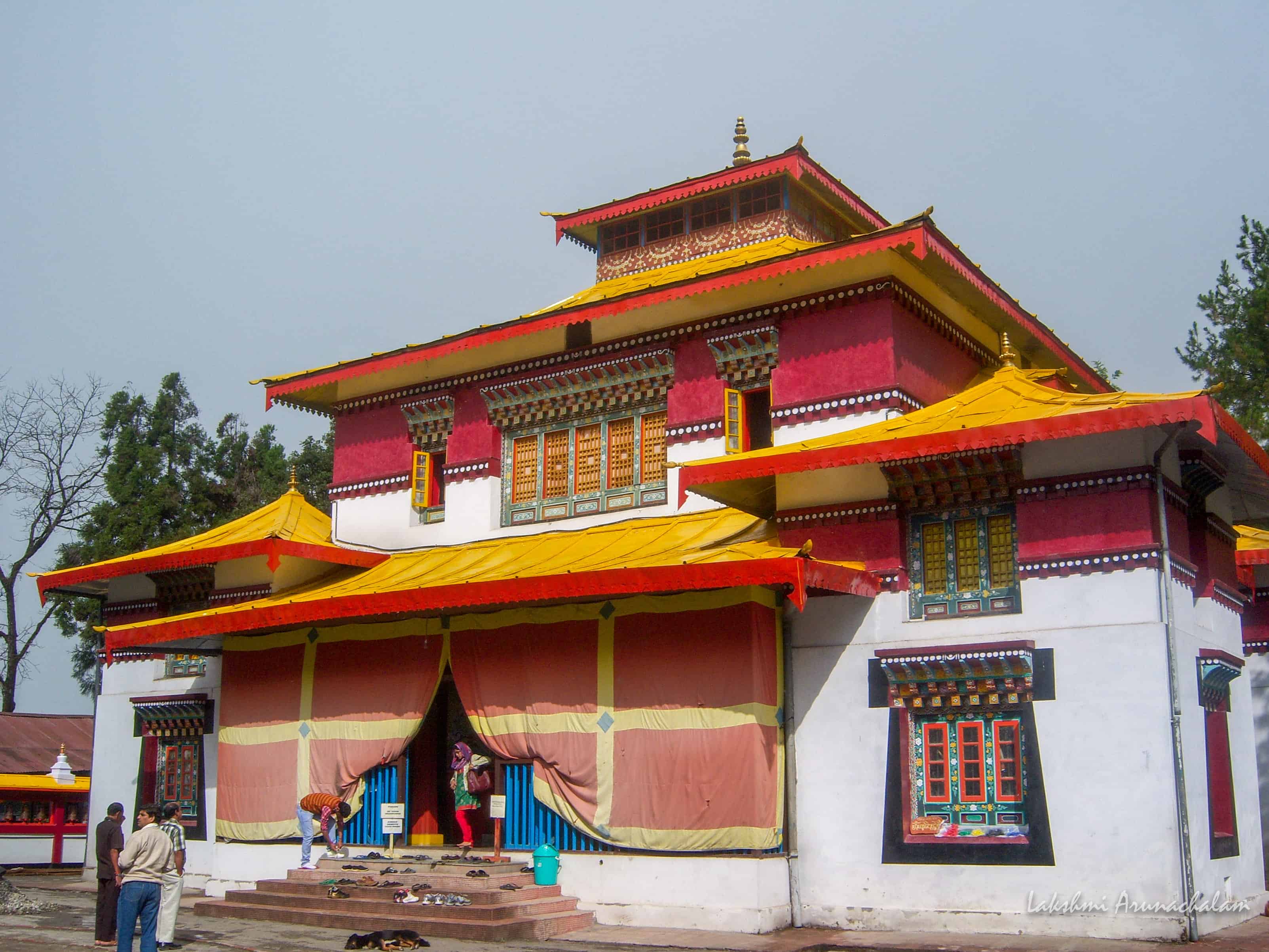
About 3 km from Gangtok, this 200-year-old Gompa belongs to the Nyingmapa order of Tibetan Buddhism. It is open for visitors from 9 AM to 5 PM with no entry fee. The monastery sits on a hilltop and offers good views of the surrounding forests. If you are visiting in January, you can witness the annual Cham dance (masked dance festival), which is the highlight of the monastery’s calendar. You can read more about Enchey Monastery on Wikipedia.
Lingdum Monastery (Ranka Gompa)
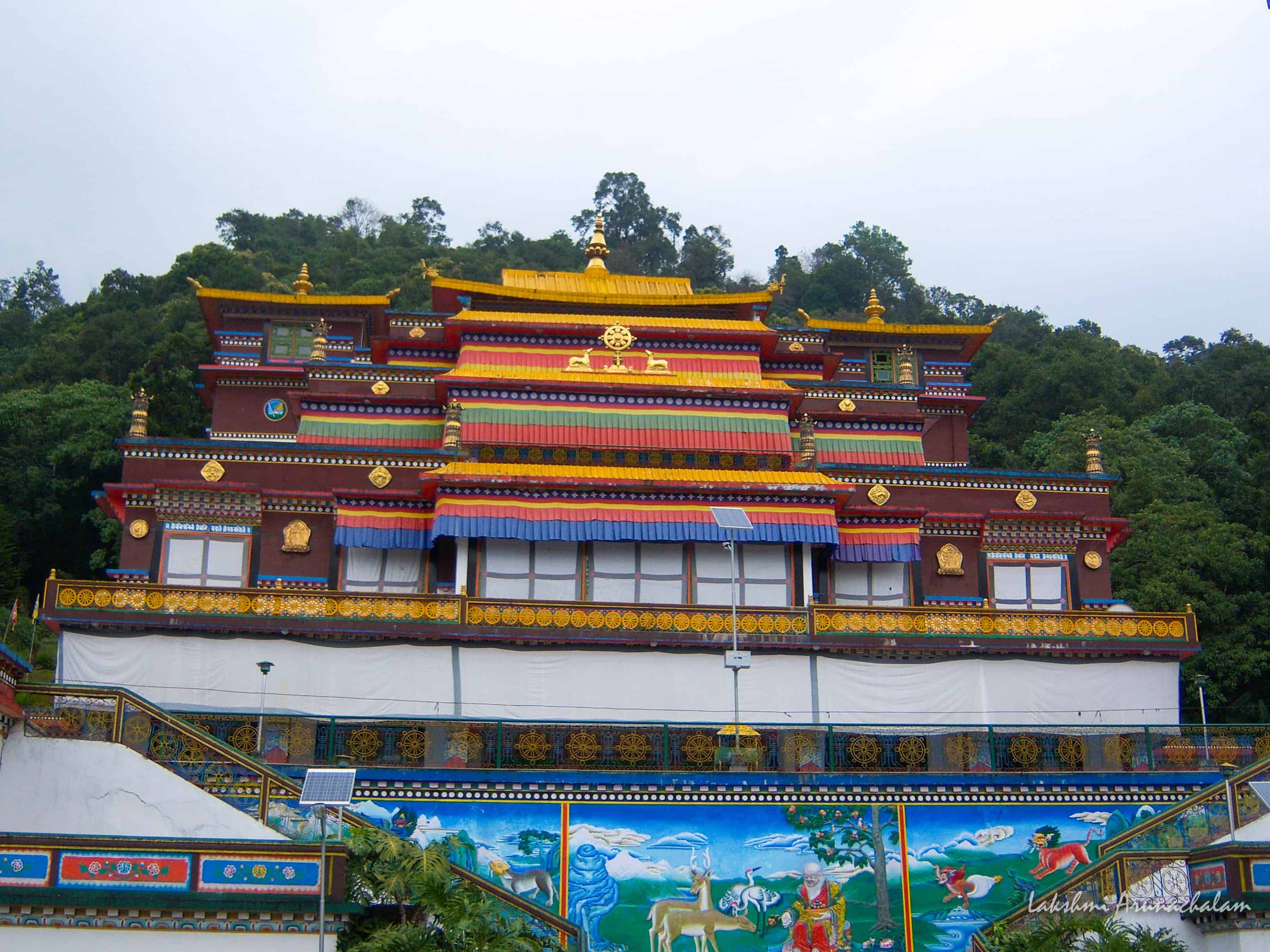
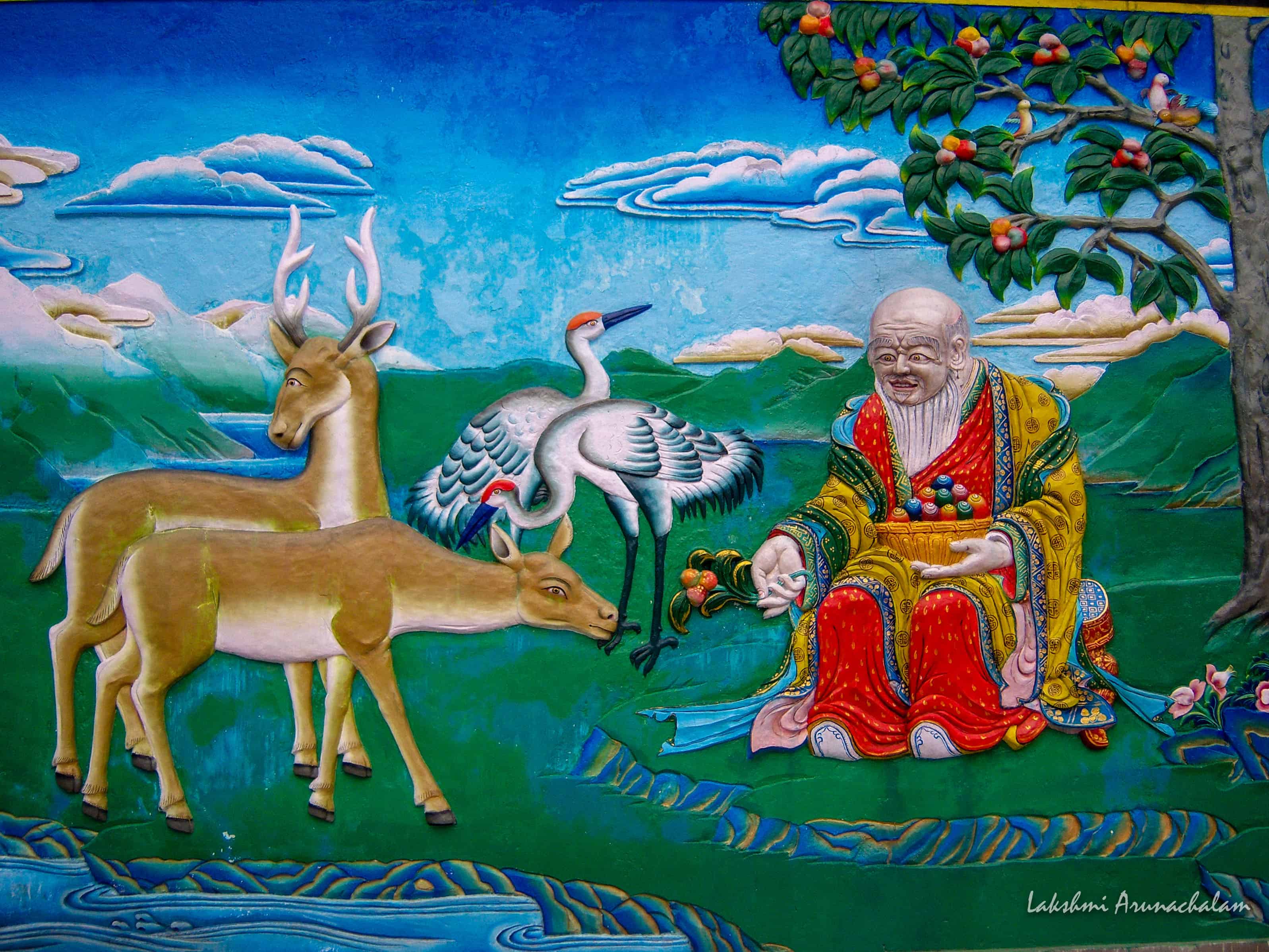
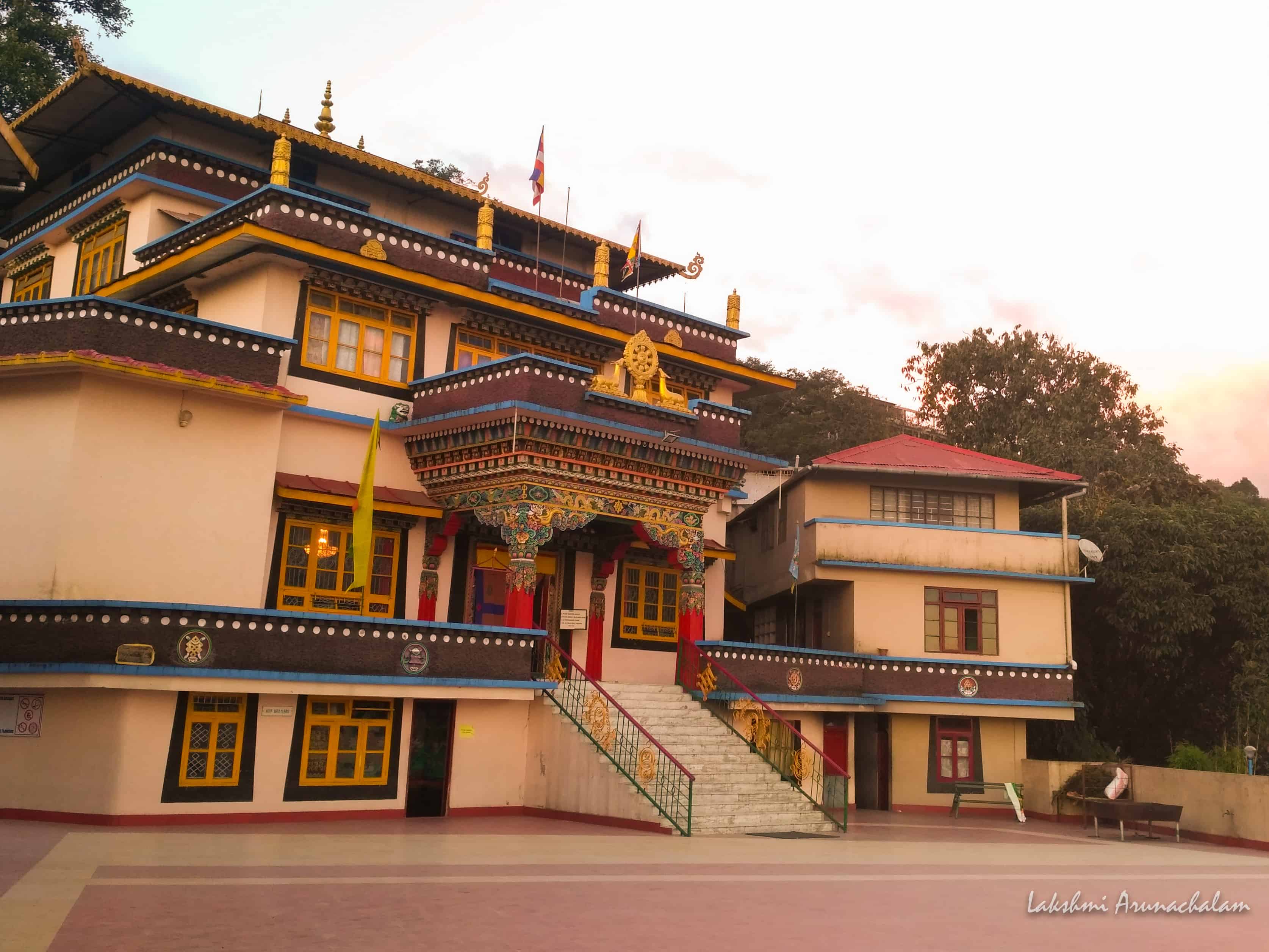
About 15 km from Gangtok, Lingdum Monastery is relatively newer but architecturally one of the most impressive in Sikkim. The multi-story building houses beautiful murals, intricate woodwork, and Buddhist artwork. It belongs to the Zurmang Kagyu tradition and is surrounded by dense forests that make the drive itself scenic. The drive to Lingdum passes through winding mountain roads, and you can combine this visit with Rumtek Monastery which is further ahead on the same route. No entry fee.
Rumtek Monastery
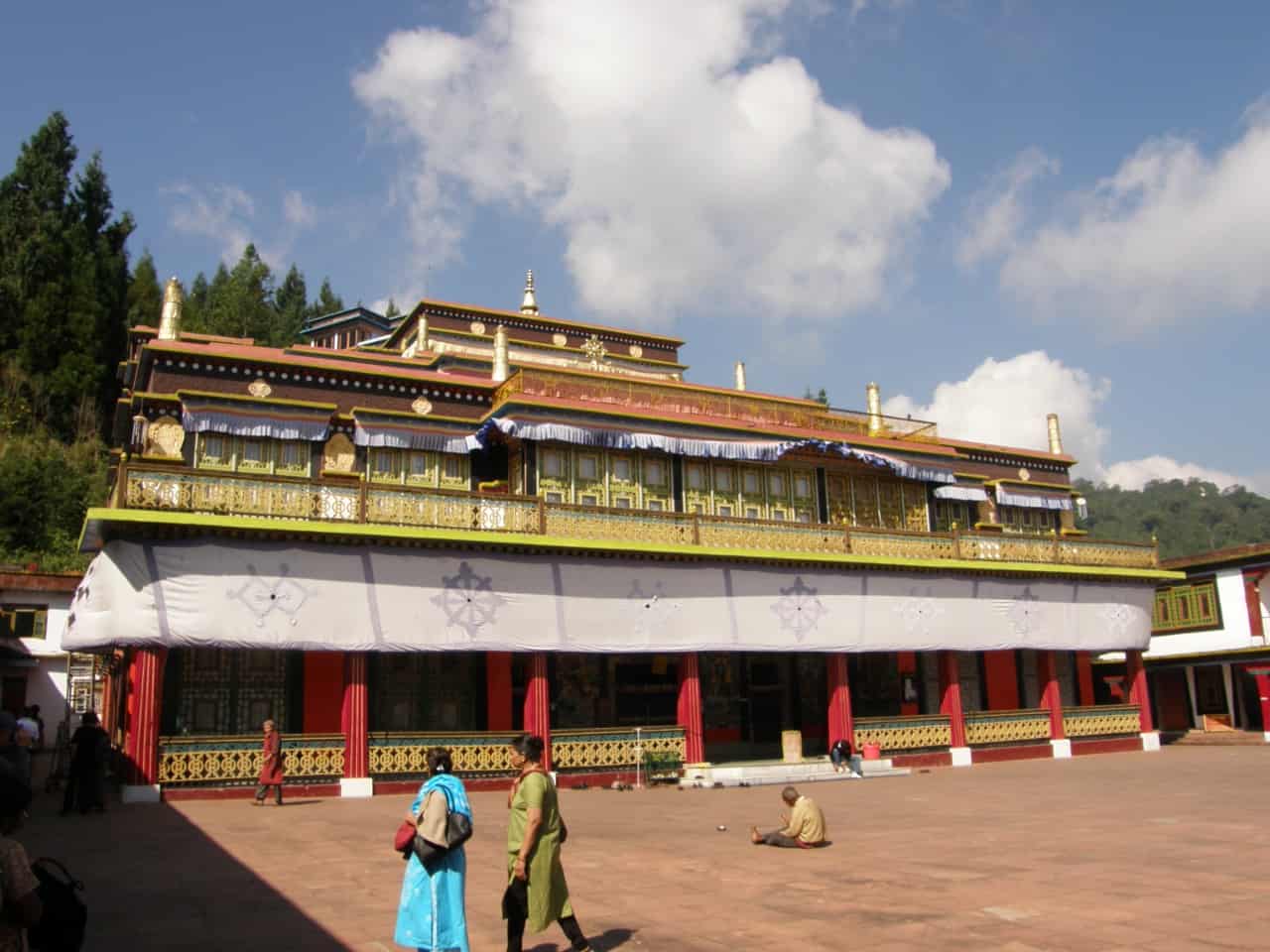
The largest monastery near Gangtok, about 26 km from the city center. Rumtek is the seat of the Karmapa (head of the Kagyu lineage of Tibetan Buddhism) and houses a golden stupa, rare Buddhist scriptures, and impressive sculptures. The monastery complex includes the main gompa, a Dharma Chakra Centre, and the Nalanda Institute of Higher Buddhist Studies. From the complex, you get a panoramic view of the entire Gangtok valley. Allow at least 2 hours here, including the 15-minute uphill walk to the main gompa. There is a nominal entry fee of Rs 10 to Rs 20.
Tsuglakhang Palace Monastery
This is the Royal Monastery of Sikkim, located inside the Tsuglakhang Palace complex near MG Marg. It has seen monarchs coronated and royal marriages celebrated. The ornate floors and architecture reflect the rich history of the Chogyal dynasty. The monastery is open to visitors during specific hours, and photography restrictions may apply inside. Since it is close to MG Marg, you can easily include it in your city walking itinerary.
Gonjang Monastery is one of the newer Gompas in Gangtok, located near Tashi Viewpoint. If you are covering the viewpoint circuit, you can easily include a 30-minute stop here.
What Is the Best Itinerary for Gangtok in 3 Days?
Here is a practical 3-day itinerary that covers all the major sights without feeling rushed. You can adjust based on your arrival time and energy levels.
Day 1: Arrive + Viewpoints Circuit
Reach Gangtok via NJP or Bagdogra. Check into your hotel and freshen up. In the afternoon, cover Plant Conservatory, Tashi Viewpoint, Bakthang Waterfalls, and Gonjang Monastery. If time permits, take a ride on the Gangtok Ropeway at Deorali (15 to 20 minutes). End the evening with a stroll and dinner at MG Marg.
Day 2: Temples, Zoo, and City Sights
Start early with Enchey Monastery (9 AM opening). Then cover Ganesh Tok, Hanuman Tok, Himalayan Zoological Park, Ban Jhakri Falls, Do-Drul Chorten, Namgyal Institute of Tibetology, and Tsuglakhang Palace Monastery. This is a packed day, so start by 8 AM and carry snacks.
Day 3: Lingdum + Rumtek or Tsomgo Lake
Option A: Drive to Lingdum Monastery and then Rumtek Monastery. Return to Gangtok by afternoon and head to NJP/Bagdogra for your departure.
Option B: If you have arranged permits through a tour operator, do the Tsomgo Lake and Baba Mandir day trip instead (shared vehicle Rs 800 to Rs 1,000 per person including permits). Nathula Pass can be added for an extra Rs 200 per person (open Wednesday, Thursday, Saturday, Sunday only, closed on Mondays, Tuesdays, and during heavy snowfall).
If you have a 4th day, I would highly recommend adding a day trip to Ban Jhakri Falls and the Cottage Industry & Handicraft Centre, or exploring the Ranka viewpoint area at a leisurely pace.
What Should You Eat in Gangtok?
The food scene in Gangtok is one of its highlights. The town has a strong Tibetan and Nepali culinary influence, mixed with standard North Indian and some continental options. Here are the dishes and places worth trying.
Must-try dishes: Momos (steamed or fried dumplings, available everywhere), thukpa (noodle soup, perfect for cold evenings), phagshapa (Sikkimese pork cooked with radish and dried chilies), gundruk (fermented leafy greens, a Nepali specialty), chhurpi (dried yak cheese, hard and chewy), and Sikkimese thali which gives you a sampler of multiple local preparations.
Where to eat: MG Marg has the highest concentration of restaurants. Baker’s Cafe is good for coffee and continental food. Taste of Tibet serves solid Tibetan fare. The Roll House near MG Marg is popular for quick bites. For budget meals, the local eateries in the main market area behind MG Marg serve thalis and momos starting from Rs 100 to Rs 200 per plate. A typical meal for two at a mid-range restaurant costs Rs 500 to Rs 800.
Also try the local Sikkim tea and Tongba (millet beer served in a bamboo mug) if you are open to it. Tongba is a traditional drink from the region and you will find it at several local restaurants and bars.
Where to Stay in Gangtok?
Gangtok has plenty of accommodation options across all budgets. Here is a rough breakdown of what to expect in 2026.
- Budget (Rs 800 to Rs 1,500/night): Guesthouses and hostels near MG Road and the main market area. Cherry Guest House is a good budget option with views of the valley and a small garden. You can hear a water stream running behind the property. Hostels like Tag Along Backpackers offer dorm beds in the Rs 400 to Rs 700 range.
- Mid-range (Rs 1,500 to Rs 3,500/night): Hotels with clean rooms, hot water, and mountain views. Hotel Royal Residency and Hotel Tibet fall in this range. Most mid-range hotels are within walking distance of MG Marg, which is convenient for evening walks and dining.
- Premium (Rs 4,000 to Rs 8,000/night): Boutique hotels and resorts with Kanchenjunga views, room service, and better amenities. Mayfair Spa Resort and Elgin Nor-Khill are popular choices in this segment.
I would suggest staying near MG Marg or the main market area for convenience. Most sightseeing taxis pick up from this zone, and you will have easy access to restaurants and shops. During peak season (October, March to May), book at least 2 weeks in advance as the good mid-range properties fill up quickly.
What Is the Best Time to Visit Gangtok?
Each season offers a different experience in Gangtok. Here is what to expect through the year so you can pick the window that suits your preferences.
- October to December (Autumn/Early Winter): This is when you get the clearest views of Kanchenjunga and the surrounding peaks. The sky is clean, temperatures drop to 4 to 10 degrees Celsius, and the crowds are thinner. I visited in October and the visibility was excellent. This is the best time for photography and clear mountain views.
- March to May (Spring): Flowers are at peak bloom, especially rhododendrons and orchids. The weather is pleasant (10 to 20 degrees Celsius), making it ideal for walking around the city. This is also when the annual International Flower Show happens at the Plant Conservatory.
- June to September (Monsoon): I would generally advise avoiding this period. The region receives heavy rainfall, roads become prone to landslides (especially the Siliguri to Gangtok stretch), and visibility is poor. The Gangtok to Nathula road is particularly risky during monsoons. If you must visit, July and August see the heaviest rainfall.
- January to February (Peak Winter): Cold but doable. Temperatures can drop to 0 to 4 degrees Celsius. The advantage is fewer tourists and the possibility of fresh snowfall at higher altitudes like Tsomgo Lake and Nathula. However, some high-altitude areas may be temporarily closed.
How Much Does a Gangtok Trip Cost in 2026?
Here is a realistic budget breakdown for a 3-day Gangtok trip per person, assuming you are traveling with one companion and sharing costs.
Budget Trip (per person for 3 days):
- Transport (Bagdogra/NJP to Gangtok, shared taxi): Rs 400 to Rs 600
- Accommodation (3 nights at Rs 800/night, shared): Rs 1,200
- Local sightseeing taxi (2 days at Rs 1,500/day, shared): Rs 1,500
- Food (3 days at Rs 500/day): Rs 1,500
- Entry fees, ropeway, and miscellaneous: Rs 400 to Rs 600
- Total: Rs 5,000 to Rs 5,900 per person
Mid-range Trip (per person for 3 days):
- Transport (Bagdogra/NJP to Gangtok, private taxi shared): Rs 1,750 to Rs 2,500
- Accommodation (3 nights at Rs 1,500/night, shared): Rs 2,250
- Local sightseeing taxi (2 days at Rs 2,500/day, shared): Rs 2,500
- Food (3 days at Rs 800/day): Rs 2,400
- Tsomgo Lake tour with permits: Rs 1,000
- Entry fees, ropeway, and miscellaneous: Rs 500
- Total: Rs 10,400 to Rs 11,150 per person
These estimates are based on 2025-2026 rates. The biggest variable is typically how you split the taxi costs. If you are solo, double the transport and taxi figures. If traveling in a group of 4, costs drop further. Flights to Bagdogra from Delhi typically range from Rs 3,500 to Rs 8,000 depending on how far in advance you book.
What Are Some Practical Tips for Visiting Gangtok?
- Carry warm clothing even if you are visiting in spring. Evenings in Gangtok can get cold, dropping to single digits. A light down jacket or fleece is a good idea year-round.
- Book permits in advance for Tsomgo Lake and Nathula through a registered tour operator. Walk-in permits are not available for these areas. Most operators on MG Marg can arrange this with one day’s notice.
- ATMs are available on MG Marg and the main market, but carry sufficient cash (Rs 3,000 to Rs 5,000 extra) if you plan to visit monasteries, rural areas, or North Sikkim where ATM access is unreliable.
- Mobile networks work well in Gangtok city. Jio, Airtel, and BSNL all have 4G coverage. Signal drops significantly in North Sikkim and near the borders. BSNL postpaid gives the widest coverage in remote Sikkim areas.
- Local taxis operate on fixed rates for sightseeing circuits. Negotiate the full-day rate before starting. A full-day local sightseeing taxi costs Rs 2,000 to Rs 3,000 depending on the circuit and vehicle type.
- Carry a reusable water bottle and refill as needed. This keeps you hydrated and helps reduce plastic waste in the Himalayas. Sikkim was among the first states in India to ban plastic, and it shows in how clean the town is 🙂
- Respect monastery etiquette: Remove shoes before entering prayer halls, do not disturb monks during prayers, walk clockwise around stupas and prayer wheels, and always ask before photographing inside.
How to Extend Your Gangtok Trip?
If you have more than 3 days, Gangtok is the perfect base for exploring more of Sikkim. Here are some excellent extensions that I would recommend.
- North Sikkim (2 to 3 days): Lachen, Lachung, Gurudongmar Lake, Yumthang Valley. Permits required, organized through tour operators. This is one of the most scenic circuits in all of northeast India, and if you can spare the days, do not miss it. Read our comprehensive guide to North Sikkim for details.
- Tsomgo Lake + Nathula Pass (1 day): A popular day trip from Gangtok. Tsomgo Lake sits at about 12,400 Ft and Nathula Pass (the India-China border) is at about 14,140 Ft. You need PAP permits for both. The shared vehicle package costs Rs 800 to Rs 1,000 per person including permits.
- Pelling and West Sikkim (2 days): Pelling offers closer views of Kanchenjunga, Rabdentse Ruins, Pemayangtse Monastery, and Khecheopalri Lake. It is about 115 km from Gangtok (5 hours). Check our Pelling travel guide for the full itinerary.
- Zuluk and Old Silk Route (2 days): An offbeat circuit through East Sikkim with stunning views from Thambi Viewpoint at 11,200 Ft. This route is less crowded and gives you a very different perspective of Sikkim. Read our Zuluk travel guide for more.
- Lava and Aritar: Two quiet hamlets perfect for a relaxed getaway, especially if you want to avoid the tourist crowds. See our Lava and Aritar travel guide.
For a more comprehensive Gangtok sightseeing plan that includes Nathu La and Tsomgo Lake in detail, check out our Gangtok and Nathu La complete guide.
If you are interested in offbeat Sikkim experiences, Sillery and Icchey are two hamlets that offer stunning Kanchenjunga views away from the tourist crowds. Also consider the Old Silk Route in East Sikkim for a multi-day road trip through some of the most scenic mountain passes in the region.
Conclusion
Gangtok is a rewarding quick getaway, whether you have a long weekend or plan to use it as a base for exploring all of Sikkim. The city blends Tibetan Buddhist culture, mountain views, good food, and modern comforts in a way that few Himalayan towns manage. It is compact enough to cover in 3 days, yet interesting enough to hold your attention if you stay longer.
As always, travel responsibly. Avoid littering, be sensitive towards monks who may be praying or reading at the monasteries, and always ask before taking photographs inside religious sites. Sikkim has worked hard to keep its environment clean, and every visitor has a responsibility to uphold that. Read our guide on responsible travel in the Himalayas for tips on how to minimize your footprint while exploring these mountains.
I hope this guide helps you plan your Gangtok trip. If you have any questions, feel free to drop them in the comments section below, and I will be happy to help. You can also connect with fellow travelers through the DwD Community for the latest updates and travel partner coordination 🙂
Frequently Asked Questions
How many days are enough for Gangtok?
3 days are ideal for covering Gangtok’s main sights, including viewpoints, monasteries, MG Marg, the ropeway, and a day trip to Tsomgo Lake. If you want to include North Sikkim (Lachen, Lachung, Gurudongmar Lake), add 2 to 3 more days. For a comprehensive Sikkim trip covering Gangtok, North Sikkim, and Pelling, plan for 7 to 8 days.
Is Gangtok safe for solo travelers and women?
Yes, Gangtok is one of the safest cities in India for solo travelers and women. Sikkim has very low crime rates, the locals are friendly, and the main tourist areas (MG Marg, monasteries) are well-monitored. That said, standard travel precautions apply, especially when traveling to remote areas outside the city. The town itself is walkable and well-lit in the central areas.
Can I visit Gangtok in winter?
Yes, and winter (October to December) is actually one of the best times to visit for clear mountain views and fewer crowds. Temperatures drop to 4 to 10 degrees Celsius in Gangtok town, so pack warm layers. January and February are colder (0 to 4 degrees Celsius), but you may get snowfall at Tsomgo Lake and Nathula. Some high-altitude passes may be temporarily closed due to heavy snowfall.
What is the taxi fare from Bagdogra Airport to Gangtok?
A private taxi from Bagdogra to Gangtok costs Rs 3,500 to Rs 5,000 depending on the vehicle type (sedan vs SUV). Shared taxis cost Rs 400 to Rs 600 per person from the airport or Siliguri SNT Stand. SNT government buses also run this route for around Rs 300 to Rs 400 per person.
Do I need a permit to visit Tsomgo Lake and Nathula Pass?
Yes, you need a Protected Area Permit (PAP) for both Tsomgo Lake and Nathula Pass. These permits must be arranged through a registered tour operator in Gangtok, not individually. The cost is approximately Rs 200 per person, and most tour operators offer shared vehicle packages for Rs 800 to Rs 1,000 per person including permits, vehicle, and driver. Nathula Pass is open only on Wednesday, Thursday, Saturday, and Sunday.
What food should I try in Gangtok?
Try momos (steamed or fried dumplings), thukpa (noodle soup), phagshapa (pork with radish), gundruk (fermented leafy greens), and chhurpi (yak cheese). Sikkimese thali is available at a few local restaurants on MG Marg. Most meals at local eateries cost Rs 150 to Rs 300 per person. For a slightly upscale experience, try Baker’s Cafe or Taste of Tibet on MG Marg. Also try Tongba (millet beer) for a taste of traditional Sikkimese culture.

Is Gangtok good for a weekend trip from Kolkata?
Gangtok is an excellent weekend destination from Kolkata. You can fly to Bagdogra (about 1.5 hours) or take an overnight train to NJP. From there, a shared taxi takes about 4 hours to reach Gangtok. With a Friday night departure and Monday return, you get 2 full days to explore the town, which is enough to cover the main viewpoints, monasteries, MG Marg, and a half-day trip to Tsomgo Lake.
Can I drive my own car to Gangtok?
Yes, you can drive to Gangtok in your own vehicle via NH10 from Siliguri through Rangpo and Singtam. The road is well-maintained for most of the stretch. However, you cannot use your private vehicle for visiting protected areas like Tsomgo Lake, Nathula Pass, or North Sikkim. Those trips require a government-registered tour operator’s vehicle. Parking in Gangtok town can be limited, so check with your hotel in advance.

4 Comments
Comments section gets closed in 90 days. To ask your travel questions, you can follow my YouTube Channel for a faster reply or for a much slower reply follow me on Instagram. :)
This was a really interesting post, thanks for sharing your travel experience.
Thank you, glad you liked it.
Wow, so much to see.. We had just an evening here and did MG road and walked past the monestary and park enroute to the place we stayed at… It was also raining… but the town felt so crowded and traffic was mad…
Yes Aarti, Inspite of that, this little city has its own charms. Maybe an off-season travel is just what you need, to get rid of those crowds! Rains do bring out the green in the mountains, but makes life tougher. When did you visit Gangtok?