


Chitkul is one of those places that stays with you long after you leave. Sitting at 11,319 feet in the Baspa Valley of Kinnaur, this tiny hamlet is famously known as India’s last inhabited village on the old Hindustan-Tibet trade route. No civilian movement is allowed beyond Chitkul, and that isolation is exactly what makes it special. If you are planning a Chitkul travel guide search, you have come to the right place. I have been here multiple times across seasons, and this guide covers everything you need to plan your trip.
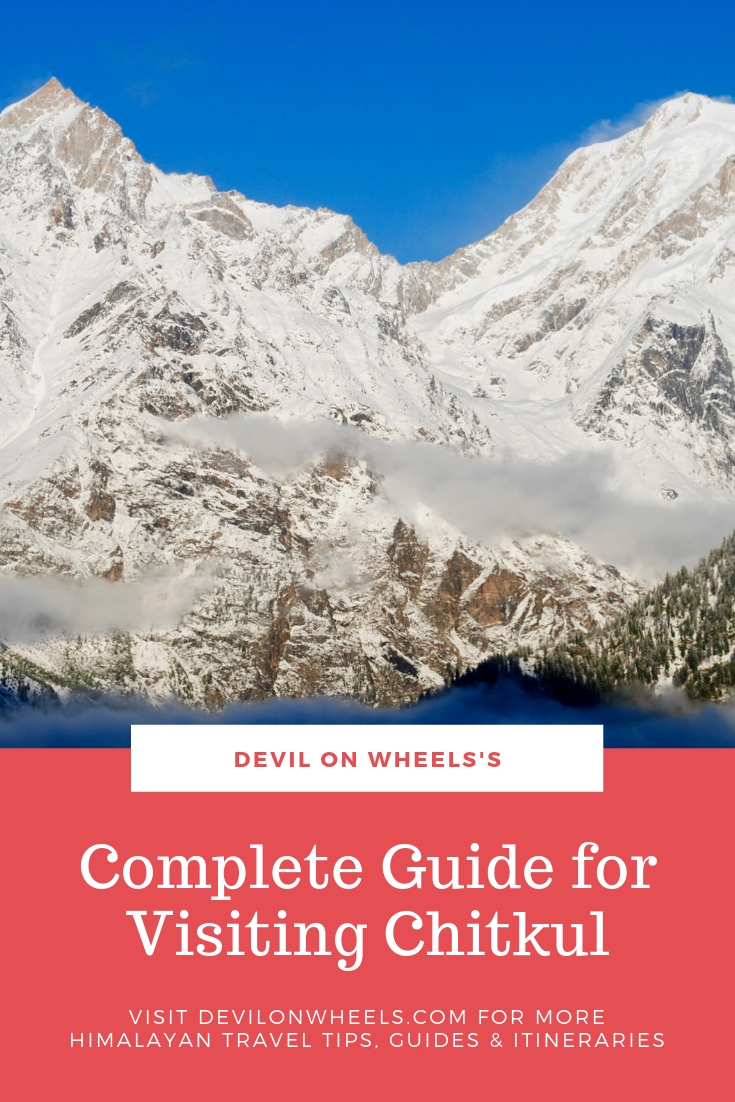
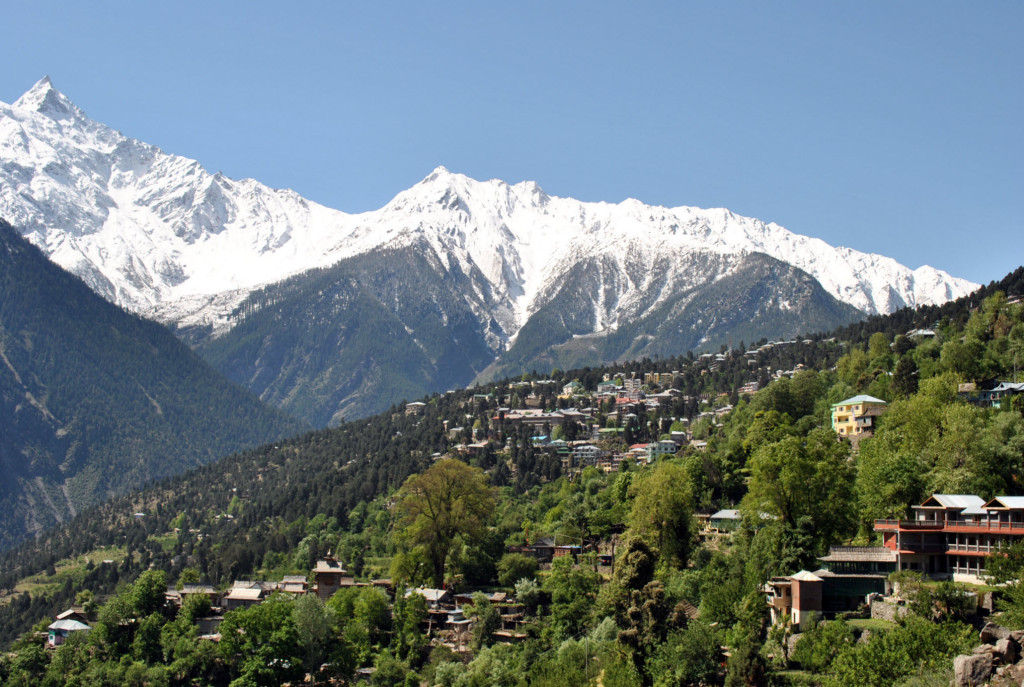
The Baspa River runs right through the village, Kinner Kailash towers in the backdrop, and the silence here is the kind that recharges you. Chitkul is also the finishing point of the multi-day Kinnaur Kailash Parikrama trek, which circles the Kinner Kailash massif from Thangi village via the Charang La pass. Chitkul sits in Kinnaur Valley of Himachal Pradesh, surrounded by Deodar forests, Chilgoza pines, and some of the finest apple orchards in India. The village has a population of just under 1,000 people who speak Kinnauri (a Tibeto-Burman dialect) and wear distinctive green pahadi caps. In ancient mythology, the people of Kinnaur were known as Kinnaras, halfway between gods and humans, lending to the belief that Kinnaur is the land between heaven and earth.
Chitkul sits at 11,319 feet (3,450 m) in Himachal Pradesh’s Baspa Valley, India’s last inhabited village on the old Hindustan-Tibet trade route. That is about 2,400 feet higher than nearby Sangla, so altitude sickness is a real risk without acclimatization. Rest a night at Sangla or Kalpa first, hydrate well, and carry Diamox as a precaution.
Let's quickly dive into the details:
Quick Facts About Chitkul at a Glance
Before diving into the details, here is a quick snapshot of what you need to know about Chitkul. This covers the essentials for anyone planning a first visit.
| Detail | Information |
|---|---|
| Altitude | 11,319 Ft (3,450 m) |
| Location | Baspa Valley, Kinnaur, Himachal Pradesh |
| Known For | India’s last inhabited village on Indo-Tibet border |
| Distance from Delhi | 569 km (14-16 hours by road) |
| Distance from Shimla | 247 km (8-10 hours) |
| Distance from Sangla | 28 km (1-1.5 hours) |
| Best Time to Visit | April to June, September to October |
| Permits Required | No permit for Indian nationals |
| Budget (per day) | Rs 1,500-2,500 (budget), Rs 3,000-5,000 (mid-range) |
| Mobile Network | BSNL only (intermittent), no data/internet |
| ATM | None. Nearest at Sangla or Reckong Peo |
| Nearest Petrol Pump | Tapri or Reckong Peo |
Where Exactly is Chitkul Located?
Chitkul is located on the right bank of the Baspa River in the Baspa Valley (also called Sangla Valley), which is part of Kinnaur district in Himachal Pradesh. Kinnaur is bordered by Tibet on the east, Garhwal (Uttarakhand) on the south, Spiti Valley on the north, and Kullu on the west.
The distance from Delhi to Chitkul is approximately 569 km, from Chandigarh it is about 345 km, and from Shimla roughly 247 km. The nearest town is Sangla, at 28 km. Rakcham village sits midway between Sangla and Chitkul, and that drive from Rakcham to Chitkul along the Baspa River is genuinely one of the most beautiful stretches of road in Himachal.
Interestingly, the Uttarakhand border is just 20 km from Chitkul. If you are an experienced trekker, you can walk into Govind Pashu Vihar National Park and Sanctuary after crossing Borasu Pass (17,880 ft). The Indo-Tibetan Border Police (ITBP) controls the area beyond the village, and no civilian movement is allowed past the checkpost.
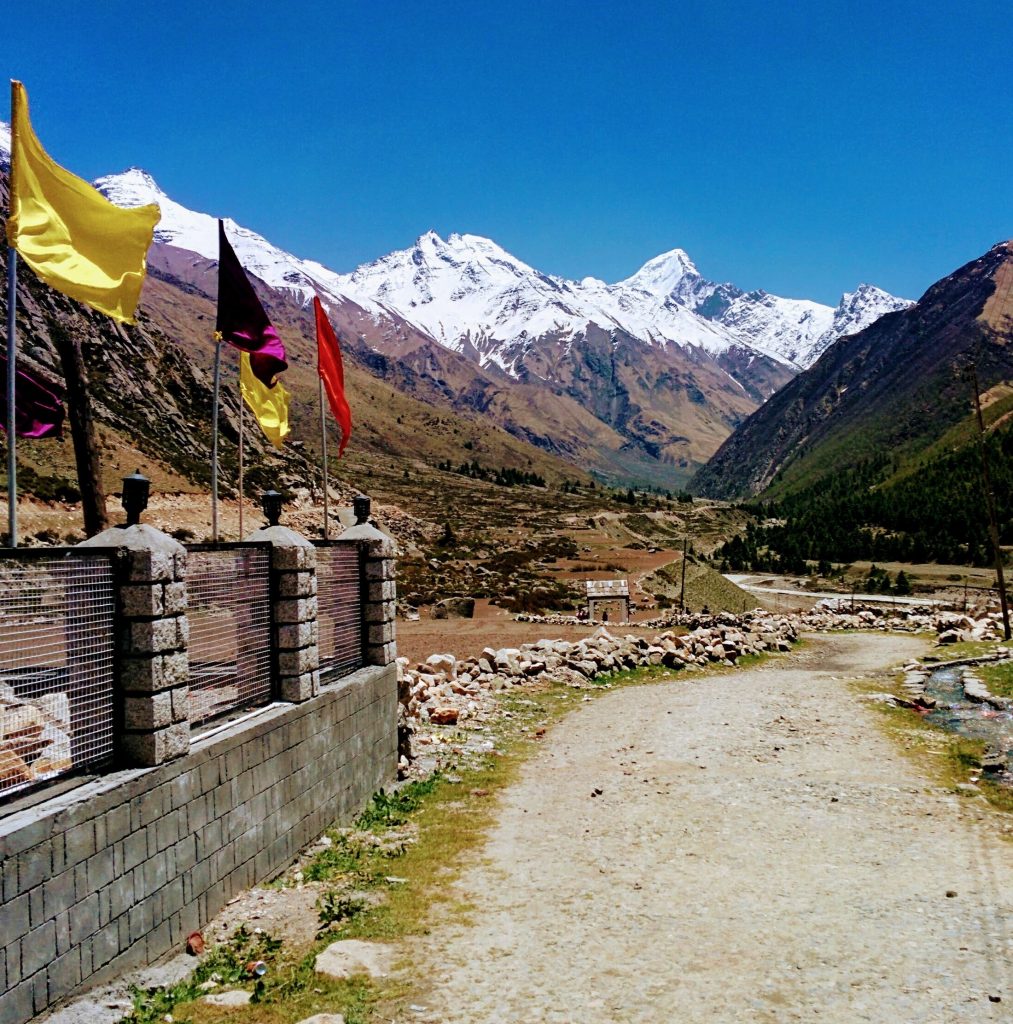
What is the Best Time to Visit Chitkul?
The best months to visit Chitkul are April to June and September to October. These windows give you clear skies, accessible roads, and comfortable temperatures. The summer months (April-June) have daytime highs around 15-20 degrees Celsius and nighttime lows around 5 degrees. September-October brings the apple harvest, and the entire valley turns golden.
Chitkul in March to June
The road to Chitkul typically reopens in March, though early March can still have snow on the road. April onwards is when the season really picks up. May and June are peak months, with pleasant weather and long daylight hours. Keep in mind that June-end brings pre-monsoon showers, so plan accordingly.
Chitkul in July and August (Monsoon)
July and August are monsoon months, and I would generally advise caution during this period. The entire Kinnaur region is geologically fragile, and landslides are common. Road closures between Karcham and Sangla can strand travelers for hours or even days. If you must travel during monsoon, keep a buffer of 1-2 extra days in your itinerary and check road conditions daily.
Chitkul in September to November
September to mid-October is personally one of my favorite windows. The monsoon has passed, roads are in better shape, the apple orchards are loaded with fruit, and the weather is crisp and clear. Late October onwards, the winter chill begins to set in, especially in the mornings and evenings. You should also read my article on the best time to visit Kinnaur Valley for a month-by-month breakdown of the entire region.
Chitkul in December to February (Winter)
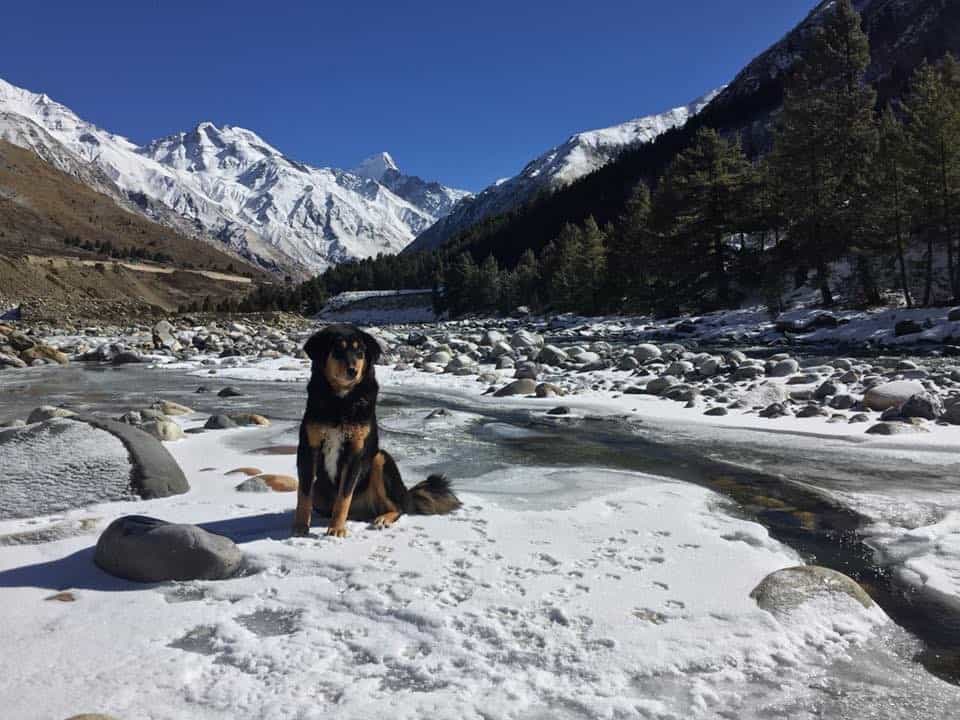
Winter temperatures in Chitkul can drop to -20 degrees Celsius. The road from Sangla to Chitkul typically closes by mid-December due to heavy snowfall and does not reopen until March. I do not advise spending a night in Chitkul in December even if the road is still open. The road can close overnight, stranding you for weeks. The villagers themselves migrate to lower elevations during winter months in Kinnaur. The hamlet is virtually cut off from the world during this time.
How to Reach Chitkul from Delhi and Other Cities?
Getting to Chitkul is an adventure in itself. The roads in Kinnaur are carved along mountain cliffs, running high above river valleys, and they demand full attention. Personally, I found the Manali-Leh Highway easier in comparison because on that route you mostly drive along the river bed unless ascending a pass. In Kinnaur, the roads are carved at higher points on the hills, making every turn more intense.
What is the Best Route from Delhi to Chitkul?
The recommended route from Delhi is:
Delhi >> Chandigarh >> Shimla (2,200 m) >> Narkanda (2,708 m) >> Rampur (1,350 m) >> Karcham (1,813 m) >> Sangla (2,696 m) >> Rakcham (3,048 m) >> Chitkul (3,450 m)
The total distance is approximately 569 km and takes 14-16 hours of actual driving, split ideally over 2 days. Most travelers break the journey at Narkanda or Rampur on the first night. The road runs along the Hindustan-Tibet Highway (NH-05) for most of the journey. Once you cross Narkanda, you descend to the Sutlej River bed at Karcham, from where the road climbs again towards Sangla and onwards to Chitkul.
In 2024, BRO began constructing the 40-km Karcham-Sangla-Chitkul section of the Karcham-Harsil road. This means road conditions may be disrupted during construction season (2025-2026), so check locally before you travel.


By Air
The nearest airport to Chitkul is Shimla’s Jubbarhatti Airport (247 km). Bhuntar Airport near Kullu is approximately 275 km away. However, both are small airports with limited connectivity. Chandigarh Airport at about 350 km is the most practical option if you are flying in from another part of India. From the airport, you will need to travel by road.
By Train
The nearest broad-gauge railway station is Shimla (on the famous Kalka-Shimla line) or Chandigarh. From either station, you continue by road. There is no direct rail connectivity to Kinnaur.
How to Reach Chitkul by Bus or Public Transport?
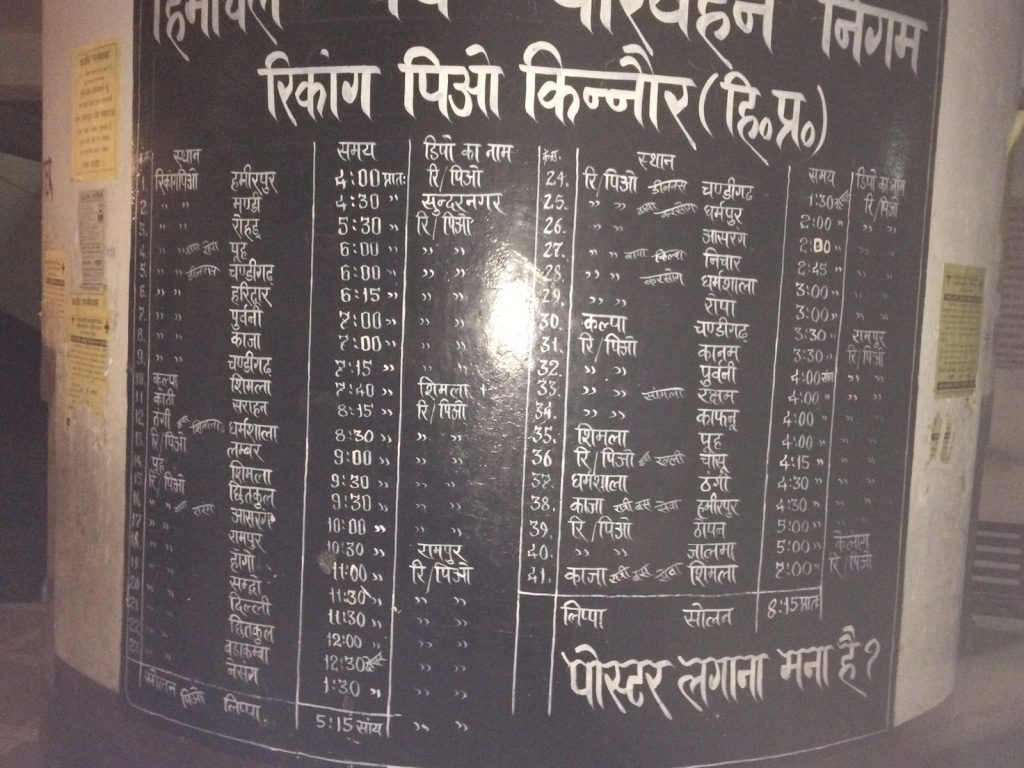
Chitkul is connected by HRTC buses. Here is how the bus connectivity works:

- Shimla to Sangla: One direct HRTC bus departs at 6:50 AM from Shimla ISBT, reaches Narkanda around 10:00 AM, and arrives at Sangla by 5:00 PM.
- Shimla to Reckong Peo: Multiple daily buses (ordinary and semi-deluxe). From Reckong Peo, you can catch a connecting bus to Sangla or Chitkul.
- Reckong Peo to Chitkul: Two HRTC buses daily, first departing at 9:30 AM. Journey time is about 3-3.5 hours. Fare is approximately Rs 150.
- Sangla to Chitkul: Local bus available, fare around Rs 110. The last return bus from Chitkul towards Sangla is at approximately 4:00 PM (schedules may vary seasonally, verify with HRTC before travel).
- Chitkul to Sangla/Reckong Peo: Three buses from Chitkul at 6:30 AM, 1:30 PM, and 4:00 PM. The 1:30 PM bus continues to Reckong Peo.
For more details on bus routes and timings across the valley, read my article on visiting Kinnaur Valley by public transport.
By Road (Self-Drive or Taxi)
If you are driving yourself, the road runs along NH-05 (the old Hindustan-Tibet Highway) for most of the journey. Be prepared for narrow stretches, hairpin bends, and occasional oncoming traffic on single-lane sections. The Himachali bus drivers on these roads are incredibly skilled, but the roads demand full concentration.
Taxis are available from Shimla, Chandigarh, or Reckong Peo. Local taxi drivers in Kinnaur typically charge Rs 3,500-5,000 per day (as of 2025-2026). For a multi-day trip covering Sangla, Chitkul, and Kalpa, expect to spend Rs 15,000-25,000 on taxi depending on the number of days. You can find trusted drivers in this list of taxi drivers in Kinnaur and Spiti Valley. Self-drive rental cars from Delhi or Chandigarh are another good option if you are comfortable with mountain driving.
Getting Around Chitkul Village
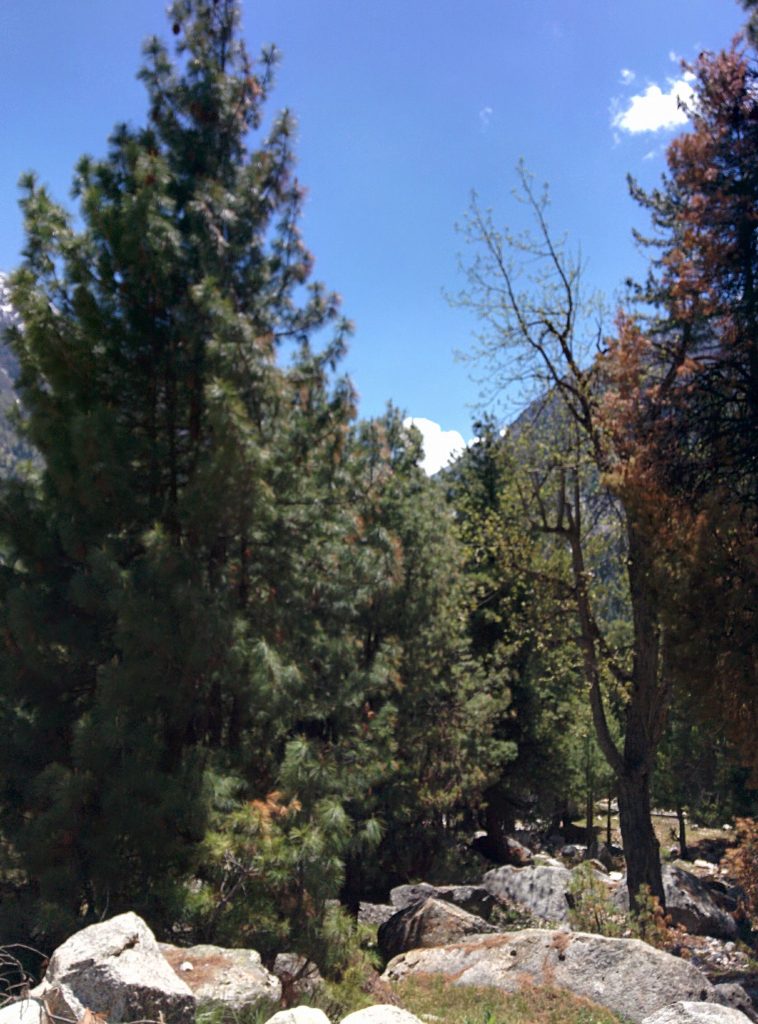
As I always recommend for Himalayan hamlets, Chitkul is best explored on foot. Walk through the narrow alleyways, sit by the Baspa River, and soak in the pace of village life. There are no auto-rickshaws, taxis, or public transport within the village. Everything is within walking distance.
What Are the Top Things to Do in Chitkul?
Do not let the small size of the village fool you. There is plenty to see and do in and around Chitkul. The more time you spend, the more the village reveals itself. I, for one, never wanted to leave.
Explore the Village and Mathi Devi Temple
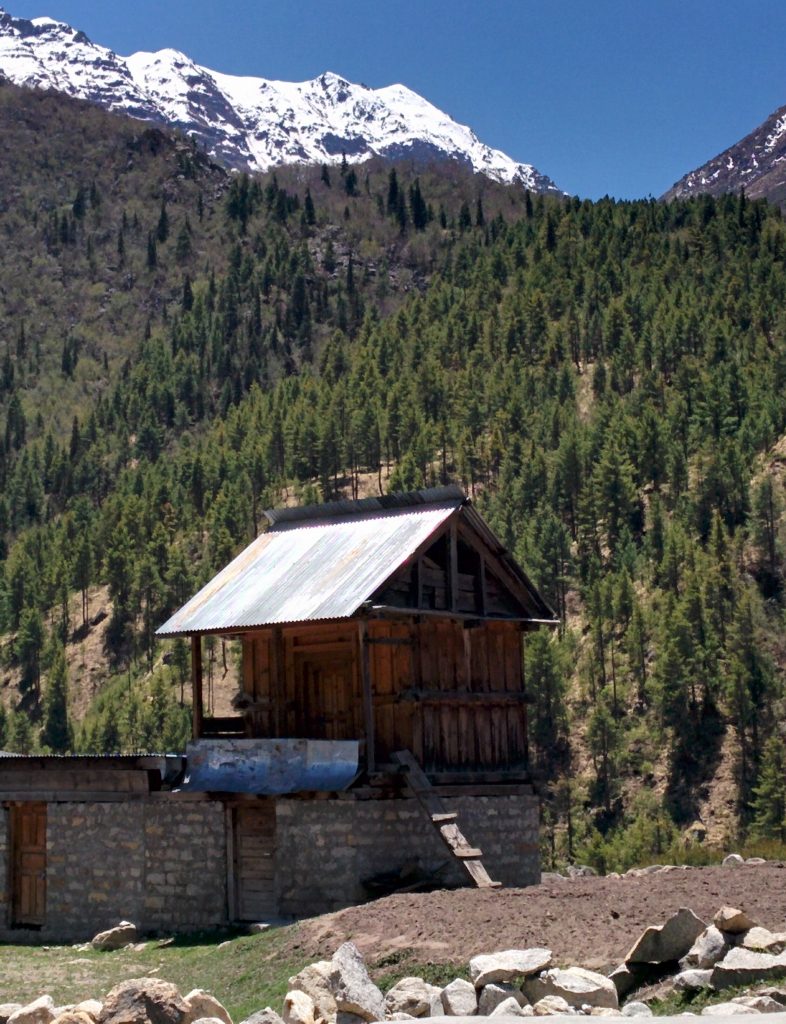
Chitkul has three temples dedicated to Mathi Devi (an incarnation of Goddess Durga). The oldest is said to be over 500 years old and features beautiful Kinnauri wooden architecture with images of Shakyamuni Buddha, a wheel of life, and four directional kings flanking the entrance. The temple compound is a must-visit. You will also notice pilgrims from Bengal visiting the temple, as it holds significance in Bengali religious traditions.
Walk through the village and you will find two schools where little kids zoom about their lives. The old-school Himachali wooden houses, the village square, and the ITBP checkpost at the far end all make for interesting exploration.
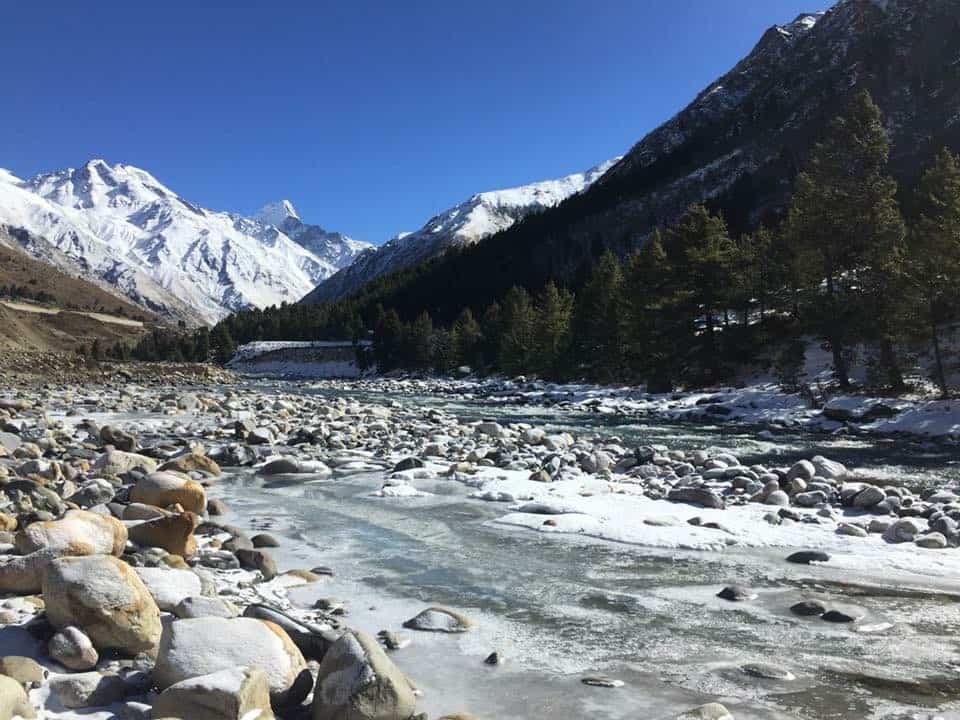
Walk to the Baspa River Banks
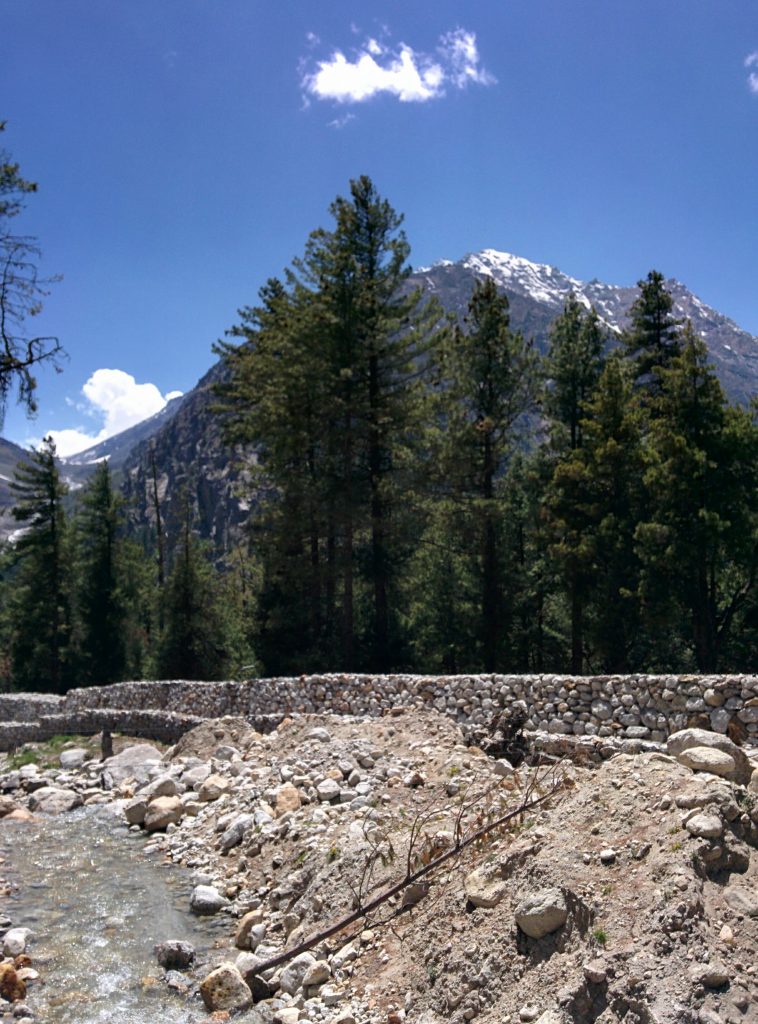
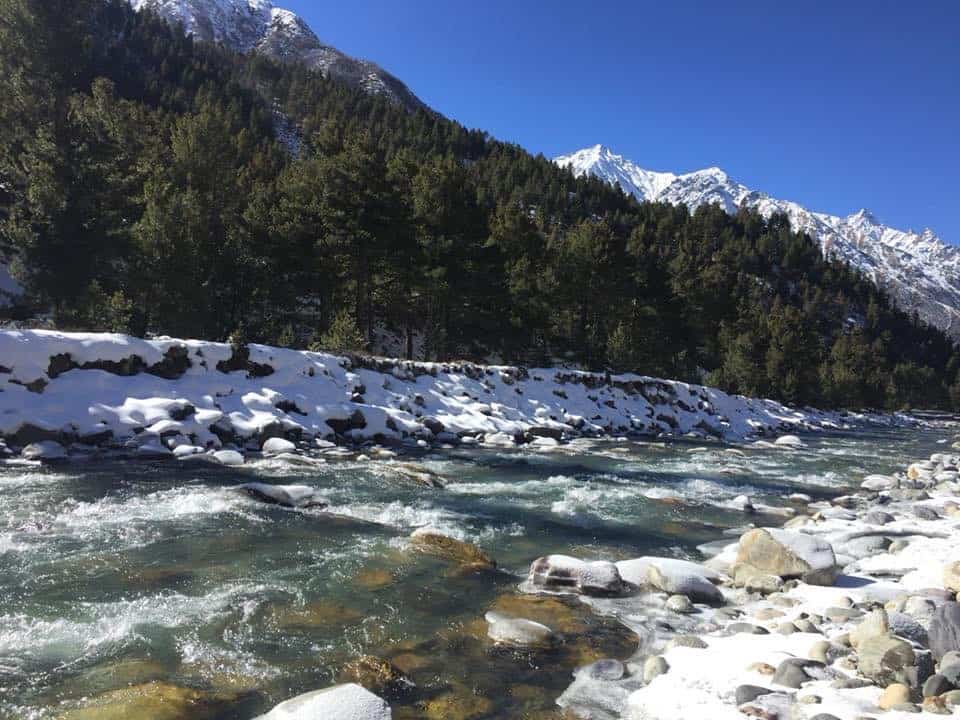
This is non-negotiable, my friend. Walk down to the banks of the Baspa River and spend an hour just sitting there. The water is crystal clear and glacially cold. On a bright, sunny day, I spent an entire afternoon mulling about life and how inconsequential my daily problems felt with the mighty Himalayas staring me down. With Kinner Kailash visible in the backdrop and snow-clad peaks on the left bank, the views from the river are something else entirely.
Visit the “Last Dhaba of India”
The famous photo doing rounds on the internet, “Hindustan ka Aakhri Dhaba” (Last Dhaba of India), is right here. There are actually several dhabas at the end of the road, each claiming to be the last one. Pick whichever you fancy. The momos and thukpa here reflect the Tibetan influence. And of course, Maggi and paranthas are always available. A meal at these dhabas costs Rs 100-250.
Try Trout Fishing on the Baspa River
The Baspa River is famous for its fresh-water trout. Both rainbow and brown trout swim in these crystal-clear waters. You can find a quiet spot and try your hand at fishing. But be warned, the water is so clear that the fish spot you as quickly as you spot them. You need to be extremely quiet and quick with your movements. It is a patience game, but incredibly rewarding when it pays off.
Camping Under the Stars
There are several camping spots near the village, and locals can help you find the right one. If you have your own tent, spending a night beside the Baspa River under a billion-star sky is one of the best experiences Chitkul offers. There are also organized campsites for those who prefer a setup. Read more about camping tips for Kinnaur.
Which Treks Start from Chitkul?
Chitkul is the starting point for some remarkable treks ranging from easy day hikes to multi-day expeditions. Here are the main options.
Nagasti ITBP Trek (Easy, 4 km)
This is a relatively easy trek of approximately 4 km from the village towards the ITBP camp at Nagasti. The trail offers beautiful views of the valley and is doable for most fitness levels. Carry a water bottle and keep sipping water to stay hydrated at this altitude.
Rani Kanda Meadows Trek (Easy-Medium, 10 km)
The trek from Chitkul to Rani Kanda Meadows (approximately 3,700 m) is about 10 km round trip and takes 5-6 hours. The panoramic views of the surrounding valleys and peaks make the effort completely worthwhile. This is also the first camp on the longer Lamkhaga Pass route, so it gives you a taste of what lies beyond.
Borasu Pass Trek (Difficult, 6-8 days)
At 17,880 feet (5,450 m), Borasu Pass connects Himachal Pradesh and Uttarakhand. This trek takes you through the Har-ki-Dun Valley with sights of glacial lakes like Zhupkia and Morinda Taal. It is a difficult trek involving glaciers, narrow ridges, steep slopes, and boulder fields. Prior high-altitude trekking experience is essential. The trek takes 6-8 days, and forest permits are required due to border proximity. Best window is June to September.
Lamkhaga Pass Trek (Very Difficult, 12-15 days)
Often regarded as one of the toughest treks in the Indian Himalayas, the Lamkhaga Pass (5,265 m / 17,270 ft) connects Chitkul in Kinnaur to Harsil in the Garhwal region near Gangotri. This route was first explored by Marco Pallis in 1933. The Jalandhari Valley section is especially beautiful post-monsoon when it is covered in blooming flowers. The trek ends near Wilson’s Cottage in Harsil, built in 1864.
This trek takes 12-15 days. Best time is mid-May to June or September to mid-October. Since you traverse along the Indo-Tibet border, an Inner Line Permit is required. You can apply at the SDM office in Reckong Peo.
Other Activities
Beyond treks, try your hand at off-roading (if you have an appropriate vehicle), bouldering on the riverside rocks, or simply long walks through the apple orchards and Deodar forests surrounding the village.
Where to Stay in Chitkul? Hotels, Homestays and Budget Options
Accommodation options in Chitkul have grown significantly over the past few years. Here is what is available as of 2025-2026.
| Type | Options | Price Range (per night) |
|---|---|---|
| Budget Hostels | Zostel Chitkul (dorm beds + private rooms) | Rs 500-1,900 |
| Homestays | Wanderer’s Nest, Sunny Mountain View, local homes | Rs 500-1,200 |
| Mid-range Hotels | Adobe The Cloud, converted Himachali wooden houses | Rs 1,500-3,000 |
| PWD Rest House | Basic government accommodation | Rs 300-800 |
| Camping | Organized campsites and DIY spots near the river | Rs 500-1,500 |
Zostel Chitkul is an adults-only hostel with dorm beds, private rooms, a restaurant, free WiFi, and mountain views. Heating is charged extra at Rs 300/night during cold months. The Wanderer’s Nest sits at a higher elevation and provides stunning views. The place is basic but the staff is extremely courteous and the food is always piping hot. I would highly recommend it.
For a full list across the valley, check the accommodation options in Kinnaur Valley.
Keep in mind that due to Chitkul’s isolation, these places tend to be slightly more expensive than Sangla or Kalpa. Also, very few places accept UPI or cards, so carry enough cash.
What Does a Chitkul Trip Cost? Budget Breakdown
A trip to Chitkul can be done on a range of budgets. Here is a rough per-person, per-day breakdown based on 2025-2026 prices.
| Expense | Budget | Mid-Range |
|---|---|---|
| Accommodation | Rs 500-800 | Rs 1,500-2,500 |
| Food (3 meals) | Rs 300-500 | Rs 500-800 |
| Local transport | Rs 100-200 | Rs 300-500 |
| Daily Total | Rs 900-1,500 | Rs 2,300-3,800 |
Transport from Delhi adds Rs 1,500-2,500 by bus (one way) or Rs 5,000-8,000 for a shared taxi/car rental split. For the full Kinnaur Valley budget breakdown, check my cost guide for Kinnaur Valley.
What is the Best Itinerary for a Chitkul Trip?
I strongly advise spending at least 1-2 nights in Chitkul to properly experience the place. However, many travelers do a day trip from Sangla, which works if you are short on time. Below is a suggested 3-day itinerary for the Sangla-Chitkul section.
Pro tip: If you are also visiting Kalpa on your Kinnaur trip, visit Kalpa first. It sits at a slightly lower altitude (9,711 ft vs Chitkul’s 11,319 ft), which helps with acclimatization. Sleeping directly at Chitkul’s altitude without a gradual climb can result in Acute Mountain Sickness (AMS).
Day 1 | Kalpa to Sangla / Rakcham (Baspa Valley)
- Leave for Sangla Valley after breakfast
- Visit Kamru Fort and the trout hatchery across the river in Sangla
- Take walks through the woods and apple orchards
- About 3 hours of driving
- Overnight at Sangla or Rakcham
Day 2 | Sangla / Rakcham to Chitkul
- Drive to Chitkul (28 km from Sangla, 14 km from Rakcham)
- Explore the village, visit Mathi Devi Temple, walk to the ITBP checkpost
- Spend the afternoon at the Baspa River banks
- Visit the “Last Dhaba of India” for momos and thukpa
- About 1-2 hours of driving
- Overnight at Chitkul (recommended) or return to Sangla/Rakcham
Day 3 | Chitkul / Sangla to Narkanda / Chail
- Start your return journey. If you have time, camp at Daranghati Wildlife Sanctuary
- Alternative: take the route via Chail for a different return experience
- Stop at Negi Dhaba in Narkanda for food
- 6-9 hours of driving depending on your destination
- Overnight at Daranghati, Narkanda, or Chail
For a complete day-by-day plan covering the entire valley, follow my detailed itinerary for Kinnaur Valley.
What Practical Tips Should You Know Before Visiting Chitkul?
- No permits required for Indian nationals to visit Chitkul. Foreign nationals should check Inner Line Permit requirements beforehand.
- No petrol pump in Chitkul. The nearest fuel stations are at Tapri and Reckong Peo. Fill your tank before entering the Baspa Valley.
- No ATM available. Carry enough cash. The nearest ATMs are in Sangla and Reckong Peo. UPI/card acceptance is very limited.
- Mobile connectivity is minimal. Only BSNL works, and even that is intermittent, limited mostly to voice calls and SMS. No reliable data/internet. Enjoy the digital detox.
- No hospital or clinic. The nearest hospital is in Sangla or Reckong Peo. However, the ITBP and Army personnel stationed nearby are helpful in emergencies. Do not hesitate to ask for help.
- Electricity is available. Despite the isolation, Chitkul has a decent electricity connection. Charge your devices when you can.
- Stay hydrated. At 11,319 feet, you are at significant altitude. Drink plenty of water, avoid alcohol on your first day, and do not over-exert yourself.
- Pack warm layers. Even in summer, mornings and evenings can be cold (5-8 degrees Celsius). A good jacket, thermals, and sturdy shoes are essential.
- Carry a basic first-aid kit including Diamox (for altitude sickness), ORS, painkillers, and band-aids.
Related Reading for Your Kinnaur Trip
- Kinnaur Valley Complete Travel Guide (pillar guide covering Kalpa, Sangla, and Chitkul)
- Sangla Valley Detailed Travel Guide
- Kalpa Travel Guide
- Sarahan Travel Guide
- Kinnaur Valley Itinerary
- Kinnaur Valley Budget Guide
- Kinnaur by Public Transport
- Offbeat Places in Himachal Pradesh
Frequently Asked Questions
Is Chitkul really the last village of India?
Chitkul is the last inhabited village on the old Hindustan-Tibet trade route in the Baspa Valley. No civilian movement is allowed beyond the village, as the area is controlled by the ITBP. However, India has other “last villages” on different borders, such as Mana near the Tibet border in Uttarakhand. Chitkul’s claim is specific to the Kinnaur-Tibet route.
Do I need a permit to visit Chitkul?
No. Indian nationals do not need any permit to visit Chitkul. The Inner Line Permit requirement for Kinnaur applies only to areas beyond Chitkul and to certain treks along the Indo-Tibet border (like Lamkhaga Pass). Foreign nationals should check with the DC office in Reckong Peo for current ILP requirements.
Is there mobile network in Chitkul?
Only BSNL works in Chitkul, and even that is intermittent. You will get voice calls and SMS on a good day, but do not expect data or internet connectivity. Jio, Airtel, and Vi do not have coverage in Chitkul. The nearest reliable connectivity is at Sangla or Reckong Peo.
Can I visit Chitkul in winter?
Technically, you can visit Chitkul until mid-December if the road from Sangla is still open. However, I strongly advise against overnight stays in winter. Temperatures drop to -20 degrees Celsius, and the road can close overnight due to snowfall, potentially stranding you for weeks. The villagers themselves migrate to lower altitudes during winter.
How many days are enough for Chitkul?
You can do a day trip to Chitkul from Sangla (28 km, 1-1.5 hours each way). However, I recommend spending at least one night to properly experience the village. For the full Baspa Valley experience covering Sangla, Rakcham, and Chitkul, plan 2-3 days.
Is Chitkul safe for solo travelers and women?
Yes. Chitkul is generally very safe. The locals are friendly and helpful, and there is an ITBP presence in the village. Solo travelers and women travelers regularly visit without issues. Standard precautions apply: inform someone about your travel plans, carry a charged phone (even without network, for emergencies), and avoid venturing too far from the village alone after dark.
Where is the nearest ATM and petrol pump from Chitkul?
There is no ATM or petrol pump in Chitkul. The nearest ATM is in Sangla (28 km) or Reckong Peo (60 km). For fuel, the nearest reliable petrol pump is at Tapri (on NH-05, before the Karcham turn-off to Sangla Valley) or at Reckong Peo. Always fill your tank before entering the Baspa Valley.
What is the height of Chitkul?
Chitkul sits at 11,319 feet (3,450 m) above sea level in the Baspa Valley of Kinnaur, Himachal Pradesh. It is noticeably higher than nearby Sangla (8,900 ft) and Kalpa (9,711 ft), which is why many travelers acclimatize at one of those two stops before driving up to Chitkul.
Does Chitkul’s altitude cause AMS?
Yes, altitude sickness is a real risk at 11,319 feet, especially if you drive straight up without acclimatization. I recommend spending a night at a lower point like Kalpa or Sangla first, staying hydrated, avoiding alcohol on your first day, and carrying Diamox as a precaution. Keep in mind that symptoms can range from a mild headache to something more serious, so do not ignore them.
Is the Karcham-Sangla-Chitkul road under construction in 2026?
Yes. As of mid-May 2026, BRO started tarring and repair work on the Karcham-Sangla-Chitkul stretch, and local reports mention a midday traffic closure window. Road conditions on this stretch can change quickly during the construction season, so check locally with taxi drivers in Sangla or Reckong Peo before you set out.

Last Updated: July 2026
Chitkul is one of those rare places where time genuinely slows down. Whether you are a first-timer to the Himalayas or someone who keeps coming back, this village will surprise you with its quiet beauty and warm people.
Have a travel question?? You can subscribe to my YouTube channel and leave a comment to ask your travel questions about traveling to the Himalayas.
If you have any questions about planning your trip to Chitkul, feel free to drop them in the comments below. If you have already been, I would love to hear your experience and any tips that might help fellow travelers. And if you know someone planning a Kinnaur trip, do share this guide with them 🙂

8 Comments
Comments section gets closed in 90 days. To ask your travel questions, you can follow my YouTube Channel for a faster reply or for a much slower reply follow me on Instagram. :)
Will asthmatic people have problem by spending night at chitkul?
Ps the person has already been to hatu peak and couple of more similar altitude places(11k ft). ik the terrain situation is completely different, though the doctor has said to visit with medication(considering only the altitude, he was not aware about the place) but the difference in the landscape situation bothers me. Please Guide. TIA
Hi Dheeraj,
First of all a big thank you for posting such a beautiful and informative blog, it is very helpful in planning the road trip to Kinnuar. I am also planning to visit Kinnuar in 2nd week of June. Would like to the know if you have any recent updates about the road conditions. I am travelling from Delhi.
Thanks & Regards
Thanks for the prompt reply.
Dear Dheeraj Sir,
Me and my wife will be reaching Simla on the 8th May 2019. I request you to please suggest the itinerary for eight to nine nights to cover Kinnaur valley. Pl let me know the places to be stayed overnight. I have seen your article about kinnaur. Pl accept my hearty congratulations for it. I request you to please reply ASAP so that I can book the hotels /homestay. Once again a sincere thanks for the article. I am sorry to put this at a very short notice. Thanks and regards.
Hemendra ji, you can follow our default itinerary of Kinnaur Valley. Add rest days in Sangla and Kalpa accordingly as you have more days.
Wikipedia and other sites claim Chitkul is at a height of 11,300 ft. Where did you quote 14,900 ft from?
Thanks for suggesting the correction, I believe it got copied from another article as copy paste error.
Informative Article, I love road trips and tracking keep sharing.