


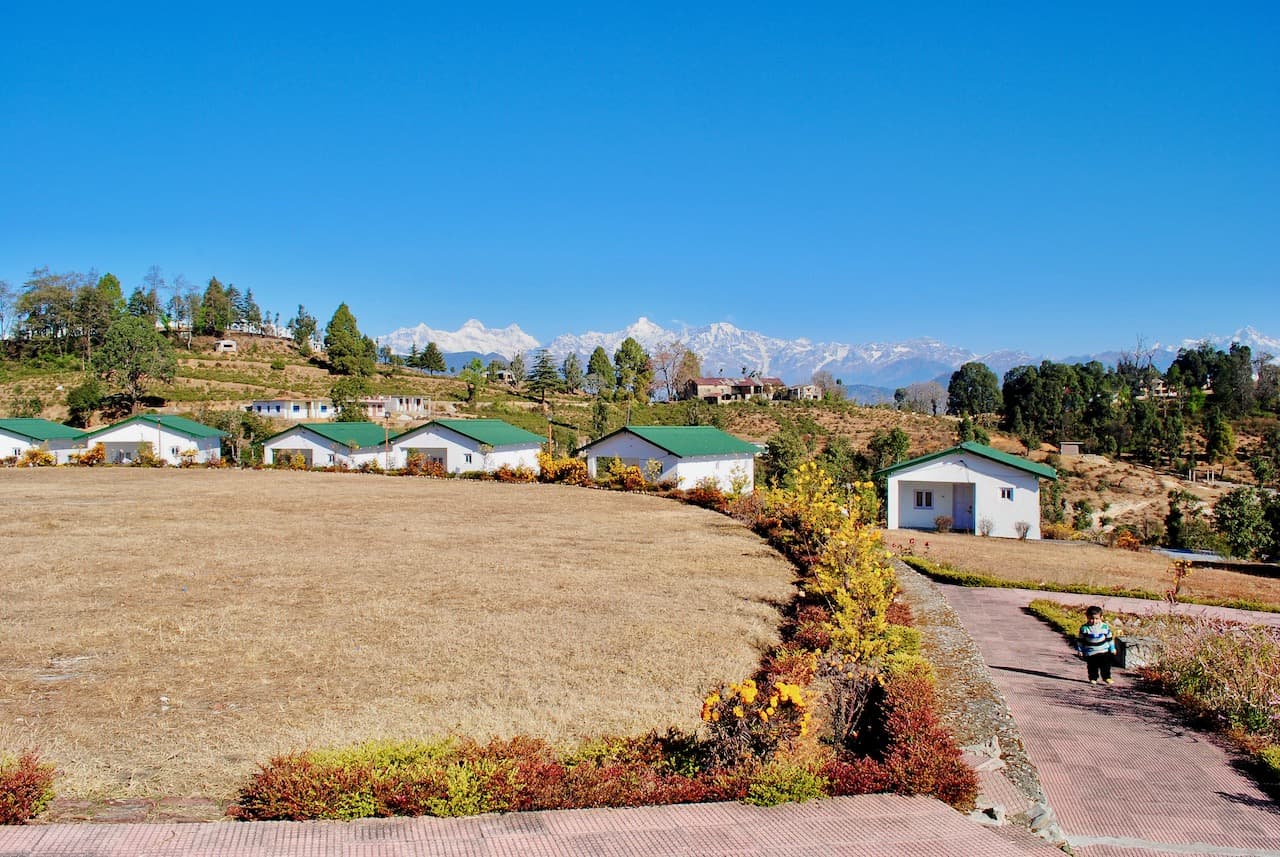
Chaukori sits at 2,010 meters (6,594 feet) in Pithoragarh district, Kumaon, Uttarakhand, an altitude low enough to carry no AMS risk. This bowl-shaped village, whose name means “four corners,” opens onto a sweeping Himalayan panorama, from Nanda Devi to the five-peaked Panchachuli range. The nearest railhead is Kathgodam, 193 km away.
Chaukori is one of those places in the Kumaon Himalayas that most people have never heard of. It does not show up on the usual Nainital-Almora tourist circuit, it has no fancy resorts lining its roads, and you will not find a Starbucks anywhere within a 200 km radius. What you will find is a bowl-shaped village at 2,010 meters, surrounded by dense forests of pine, oak, and rhododendron, with a panoramic wall of snow-capped peaks from Nanda Devi to Panchachuli right in front of you. If that sounds like your kind of place, this Chaukori travel guide will help you plan every detail of your trip.
Let's quickly dive into the details:
What Makes Chaukori Worth Visiting in 2026?
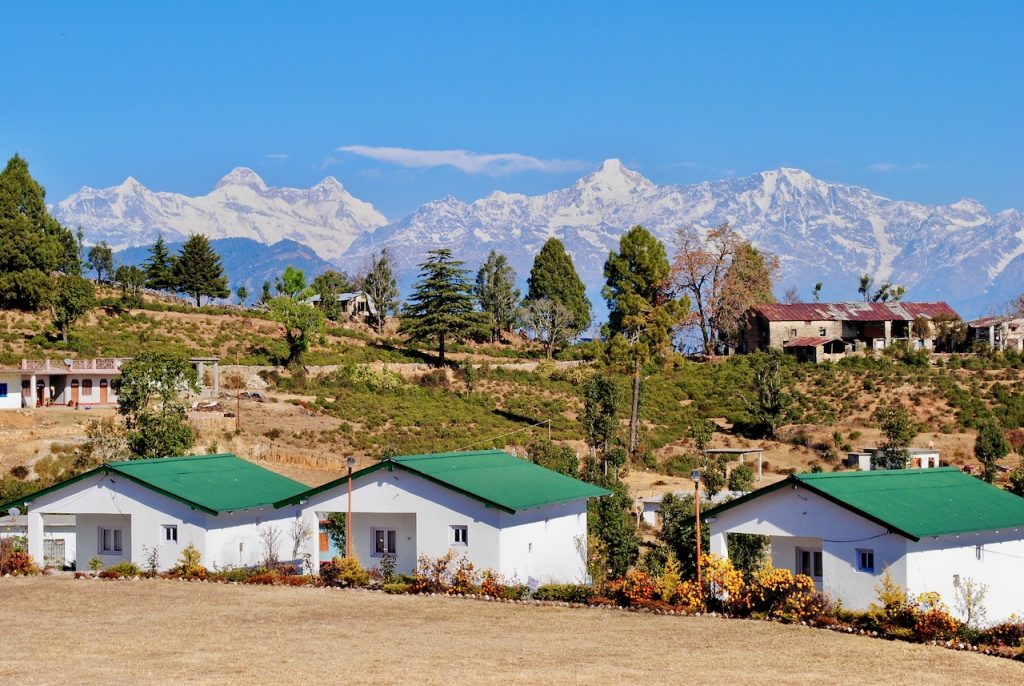
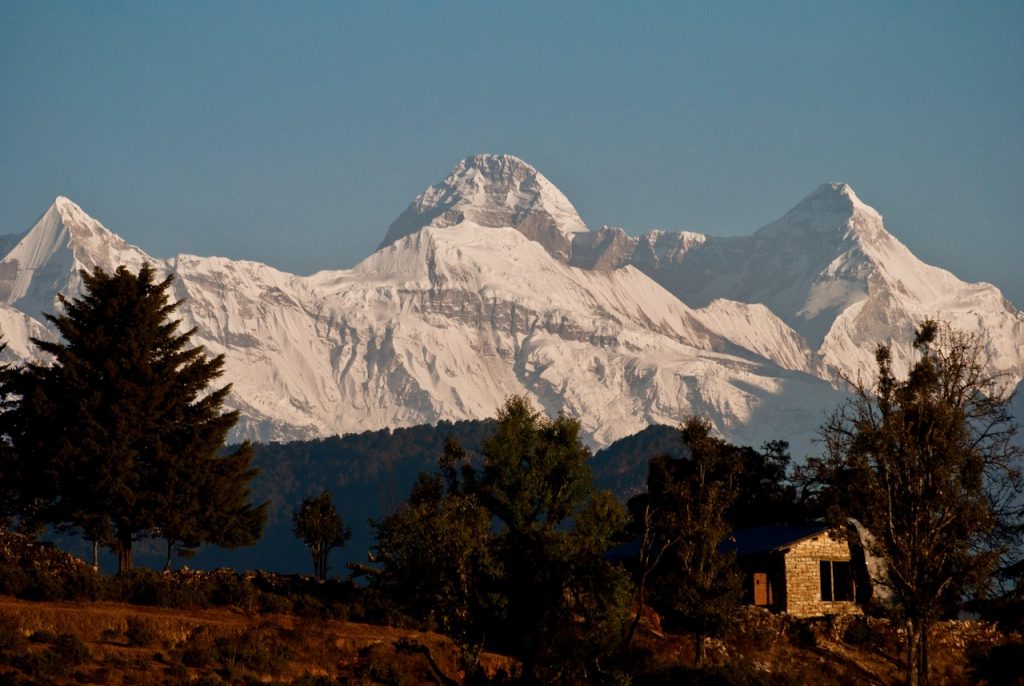
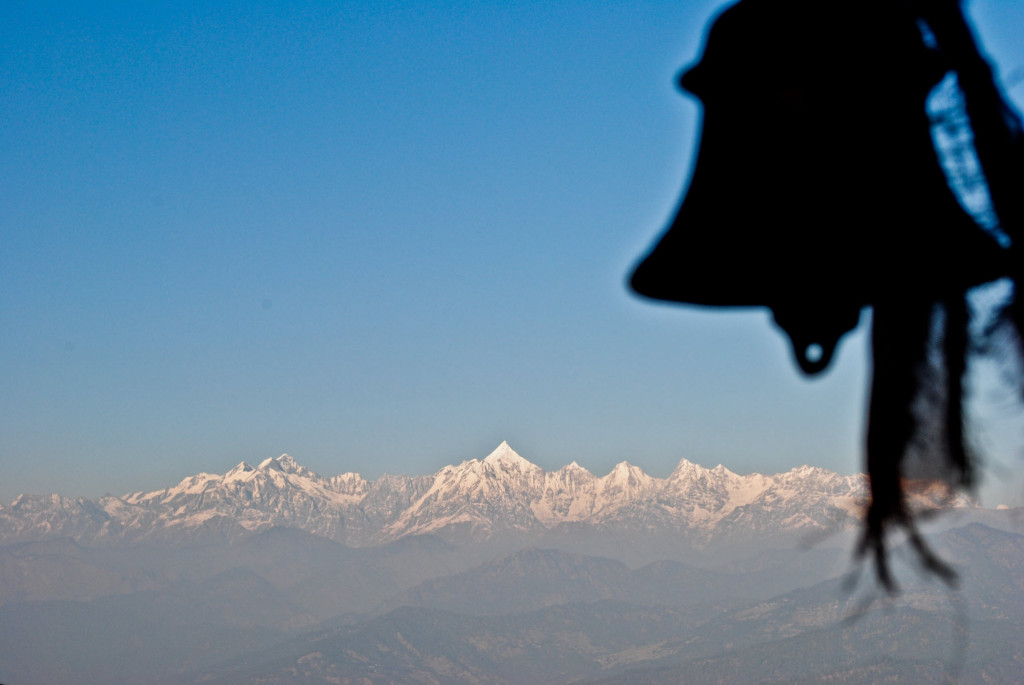
Chaukori is a quiet hill station in the Pithoragarh district of Uttarakhand’s Kumaon region. The name comes from its bowl-like shape (“chau” meaning four and “kori” meaning corners). The village sits surrounded by fruit orchards, tea gardens established during the British era, and some of the most diverse flora and fauna in the Kumaon hills. But the real draw is the Himalayan panorama. From almost any point in Chaukori, you can see Nanda Devi, Chaukhamba, Trishul, Nanda Kot, and the five-peaked Panchachuli range.
What sets Chaukori apart from more popular Kumaon destinations like Nainital or Mukteshwar is the complete absence of crowds. Even during peak season, you are unlikely to share a viewpoint with more than a handful of people. The village runs on a slow rhythm. Locals are genuinely warm because tourism here is community-driven, not commercial. If seclusion and peace are what you are looking for, Chaukori delivers. It firmly establishes itself as a must-visit offbeat place in Uttarakhand.
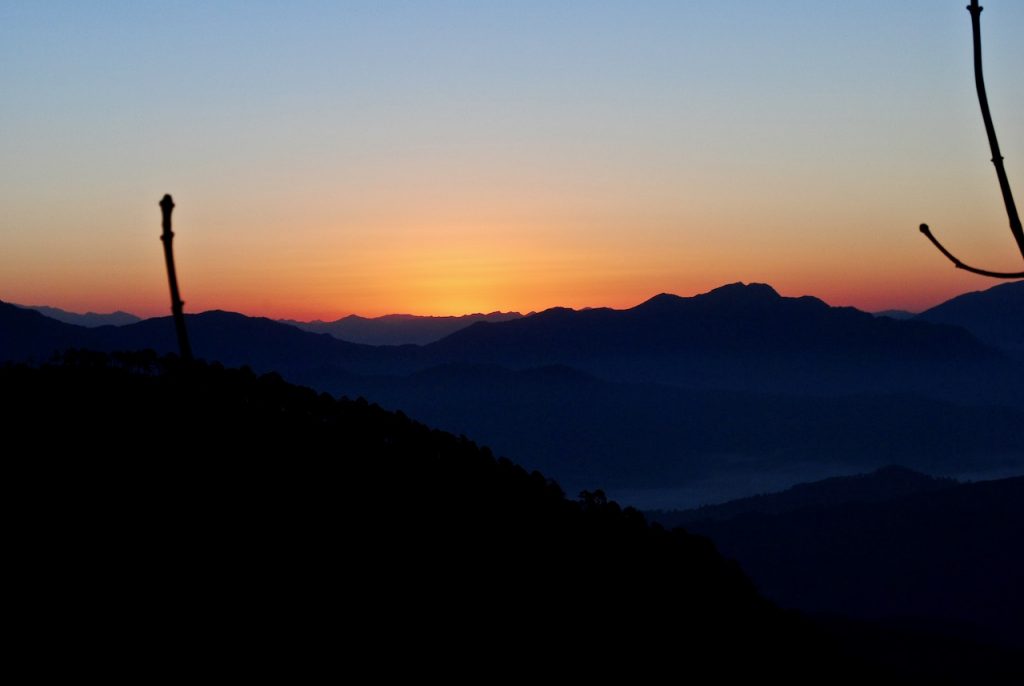
The sunrises and sunsets here are something else entirely. The way light hits the Himalayan snow line during golden hour, painting everything from deep orange to soft pink, is worth every hour you spend getting here. The nights are equally special. With minimal light pollution, the Milky Way is visible on clear nights, and there is something about the night sky at 2,010 meters that makes you feel both small and at peace.
How Is the Weather in Chaukori Through the Year?
Chaukori enjoys pleasant weather for most of the year, which is one reason the British chose it for tea cultivation. Summers (March to June) are mild, with temperatures between 15 and 30 degrees Celsius. This is the most comfortable time for sightseeing, hiking, and simply sitting outdoors with a cup of chai. Monsoon months (July to mid-September) bring heavy rainfall, landslides on approach roads, and leeches on forest trails. I would strongly recommend avoiding this period, especially if you are a first-time visitor.
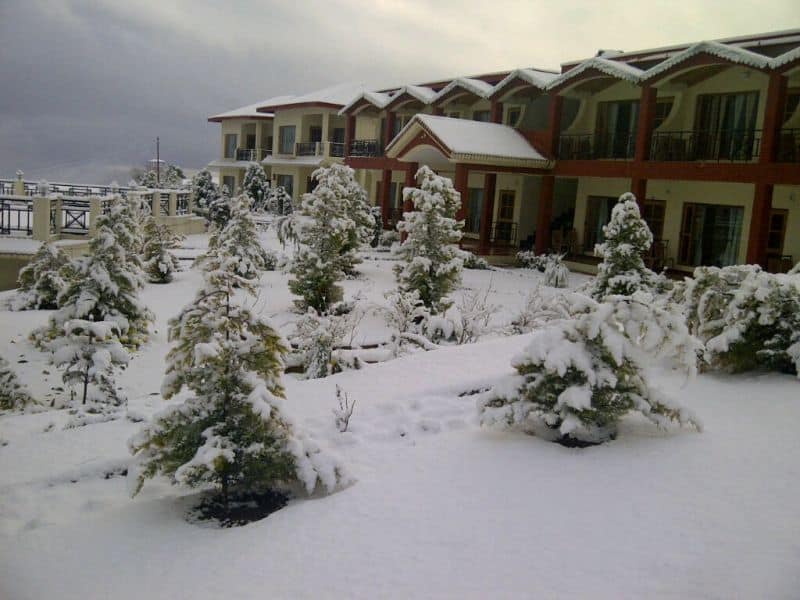
Autumn (late September to November) is arguably the best season. The air is crisp, the skies are clear after the rains, and the Himalayan views are at their sharpest. Winters (December to February) bring temperatures down to around -5 to 10 degrees Celsius, with occasional snowfall. Chaukori is actually one of the places near Delhi where you can experience snowfall in Uttarakhand. If you do not mind the cold, a winter visit offers a completely different, snow-covered version of the village.
When Is the Best Time to Visit Chaukori?
The best time to visit Chaukori is from March to June and from late September to November. These months give you clear skies, comfortable temperatures, and the best visibility for Himalayan views. Keep in mind that April and May can occasionally see forest fires in the Kumaon region, which can haze the air and affect your route.
I personally also like visiting Chaukori in November and December. During the year-end holiday rush, when places like Manali and Shimla are packed, Chaukori remains quiet and uncrowded. It is the perfect escape for those who want to end the year in the mountains without dealing with traffic jams and overbooked hotels.
How Do You Reach Chaukori from Delhi?
The distance from Delhi to Chaukori is approximately 420 to 490 km depending on your route. The drive takes 11 to 13 hours. There are three ways to get here.
By Air
The nearest airport is Pantnagar (Naini Saini Airport), roughly 227 km from Chaukori. From Pantnagar, you can hire a taxi for about Rs 4,000 to Rs 5,000 for the 6-hour drive to Chaukori. Flights from Delhi to Pantnagar are limited, so book early.
By Train
The nearest railway station is Kathgodam, about 193 km from Chaukori. Two daily trains run from Delhi to Kathgodam (Ranikhet Express and Uttarakhand Sampark Kranti). From Kathgodam, you can hire a taxi (Rs 4,000 to Rs 5,000 one-way) or take a UTC bus to Almora and then onward to Chaukori. Kathgodam is the main gateway for the entire Kumaon region, and taxis and buses are readily available from the station for nearby places in Kumaon.
By Road
There is no direct bus from Delhi to Chaukori. Your best option is to catch a UTC (Uttarakhand Transport Corporation) bus from ISBT Anand Vihar to Almora (Rs 650 to Rs 900, overnight journey). From Almora, take a shared taxi or local bus to Berinag (about 100 km, 3 to 4 hours), and then another short ride of 10 km to Chaukori. Alternatively, you can take a bus to Haldwani or Kathgodam and find a bus heading toward Thal, Nachani, or Munsiyari. All these buses pass through or near Chaukori.
If you are driving, the route goes via Delhi, Moradabad, Haldwani, Almora, and Berinag. The roads are generally well-maintained until Almora. After that, the road narrows through forested stretches and offers some beautiful but tight mountain driving. A sedan can manage the route, though an SUV is more comfortable on the final stretch.


Travel Tip: If you are exploring Kumaon, do not miss Manila, an unknown offbeat gem in Uttarakhand.
What Is the Best Chaukori Itinerary for a 3-Day Trip?
Chaukori is the kind of place where you can go either way. Let nature lead, or put some loose structure around your days. The itinerary below gives you a framework, but feel free to adjust based on your energy and mood. If you have more days in hand, you can always extend this into a longer Kumaon region itinerary.
Day 0: Overnight Journey from Delhi
Leave Delhi by evening, whether by overnight bus, train to Kathgodam, or by driving through the night. The goal is to reach Chaukori as early as possible the next morning so you have the full day ahead of you.

Day 1: Explore Chaukori Village and Hanging Rocks
Spend the morning settling into your hotel or homestay and simply taking in the views. The Himalayan panorama from Chaukori includes Trishul, Chaukhamba, Nanda Devi, Nanda Kot, and Panchachuli. Take your time with this. A cup of chai and that view is honestly the main experience here.
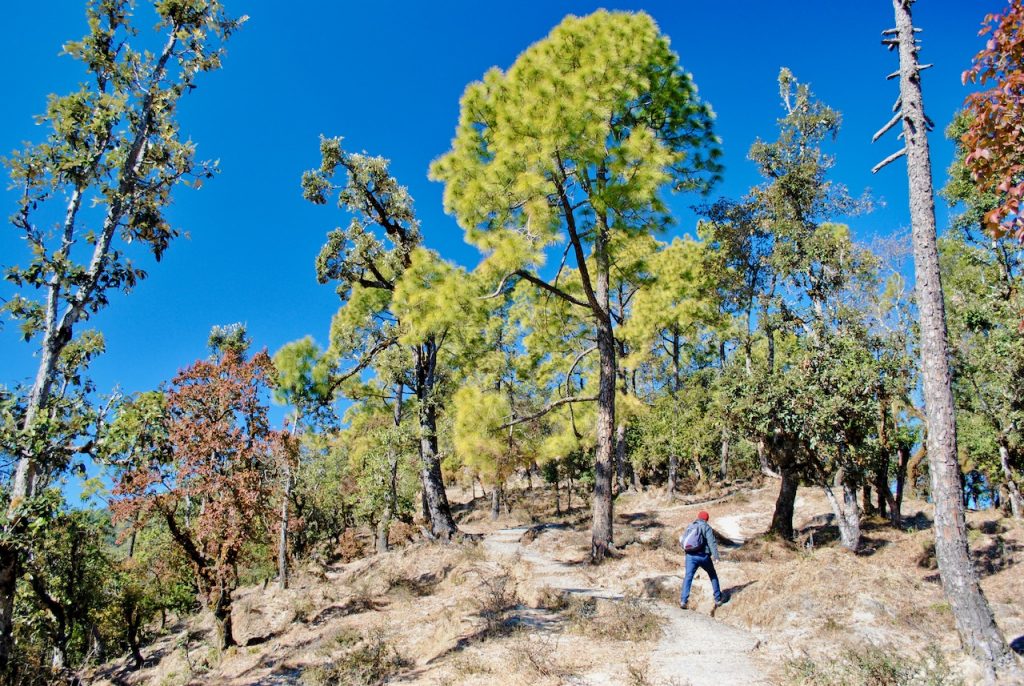
In the afternoon, head to the Hanging Rocks. The trek is short, less than a kilometer, but the views from the top are surreal. The rocky outcrop gives you a 270-degree view of the valley and the peaks beyond. If you are lucky, you might spot a Musk Deer, which is extremely rare in this region. Carry some snacks, a foldable chair if you have one, and make an evening of it. Chances are, you will have the entire place to yourself.
There is also a short hike to the Musk Deer Conservation Park nearby, where you can learn about conservation efforts and spot these elusive animals in a more structured setting.
Travel Tip: If you are planning a trip to Himachal instead of Uttarakhand, check these 12 must-visit offbeat places in Himachal.
Day 2: Tea Gardens and Patal Bhuvaneshwar
Chaukori is one of the very few places in Kumaon with lush tea gardens. Established by the British during the colonial era, these gardens are still operational and produce quality tea. Walking through acres of neatly trimmed tea bushes with the aroma of fresh leaves in the air, backed by snow-capped peaks, is a vivid memory you will carry home.
If you covered the tea gardens on Day 1, or if you want a more active Day 2, drive to Patal Bhuvaneshwar. It is about 38 km from Chaukori, roughly a 1.5-hour drive. Patal Bhuvaneshwar is a limestone cave temple that goes 160 meters deep and 90 feet below the entrance point. The naturally formed stalactites and stalagmites inside resemble various Hindu deities, and the entire cave has mythological significance. If you are into geology or mythology, this is a must-visit. Entry costs Rs 50 per person (as of 2024, verify locally for current rates).
Day 3: Sunrise and Return
Wake up early for one last sunrise. The KMVN property has a watchtower that offers the best sunrise views in Chaukori. After a hearty breakfast, begin your drive back to Delhi or continue deeper into the Kumaon region toward Munsiyari or Kausani.
Can You Travel from Chaukori to Munsiyari?
Yes, and I would highly recommend it if you have a couple of extra days. The distance between Chaukori and Munsiyari is about 98 km, and the drive takes approximately 4 hours through beautiful mountain roads. Do not plan a day trip as it will be exhausting. Instead, leave Chaukori in the morning, drive to Munsiyari, and stay overnight.
On the way, stop at Birthi Waterfall, which is about 63 km from Chaukori on the Chaukori-Munsiyari road. The waterfall is a beautiful cascade that makes for a refreshing pitstop. Munsiyari itself offers incredible views of the Panchachuli range and is a base for several treks including the Milam Glacier trek.
Where Should You Stay in Chaukori?
Accommodation in Chaukori ranges from budget guesthouses to comfortable resorts. Here are the main options.
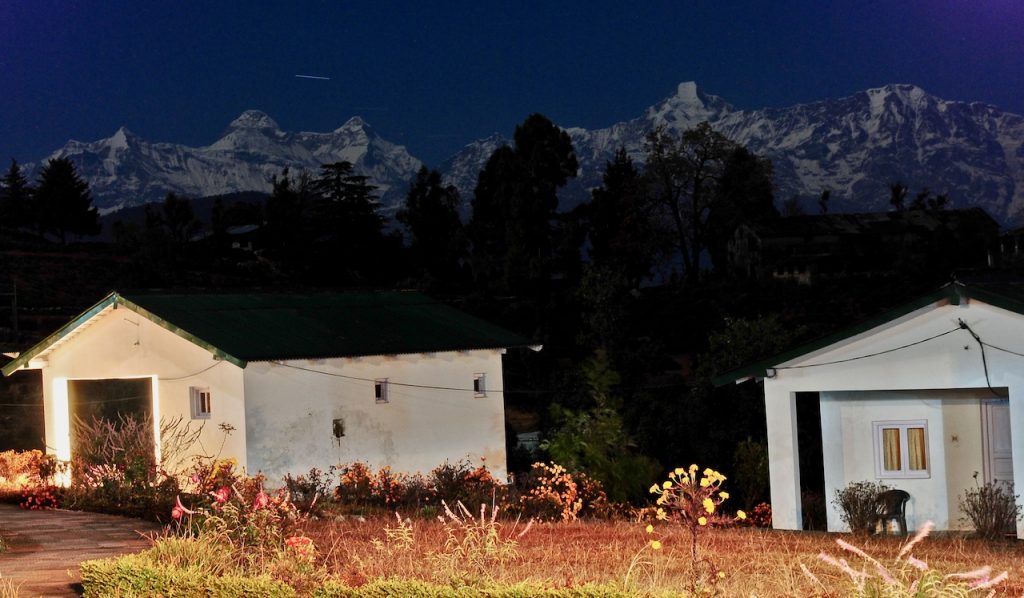
KMVN Tourist Rest House: The government-run KMVN Chaukori is the most popular stay and for good reason. It has the best views in town, a watchtower for sunrise and sunset, and clean rooms. Room categories include Deluxe (Rs 990/night), Super Deluxe (Rs 1,300/night), and Executive (Rs 1,400/night). A 4-bedded Super Deluxe room goes for Rs 1,400/night. These are KMVN listed rates, verify for current season pricing.
Ojaswi Resort: One of the more upscale options in Chaukori with spacious rooms, a beautiful garden, and gorgeous Himalayan views. Expect to pay Rs 3,000 to Rs 6,000 per night depending on the season.
Hotel Himshikhar: A simple, budget-friendly option right in the tea garden area. Rooms are basic but clean, washrooms are decent, and they offer round-the-clock in-room dining. Budget around Rs 800 to Rs 1,500 per night.
Homestays: This is where I would encourage you to venture out. Homestays in Chaukori give you the most authentic experience, and you directly support local families. Passpas Homestay in the village is one option with an online presence, but many others do not have a website. Let your sense of adventure take over, ask around, and you might find a family happy to host you for Rs 500 to Rs 1,200 per night with home-cooked meals.
What Are the Food Options in Chaukori?
Chaukori is a small hamlet, so do not expect a row of restaurants. Most of the food options are within the resorts and guesthouses. KMVN serves meals in their restaurant, and the food is simple but filling. The real treat is requesting local Kumaoni food from your homestay or guesthouse host. Most residents are happy to cook local dishes for guests. Kumaoni cuisine includes dishes like Bhatt ki Churkani (black soybean curry), Aloo ke Gutke (spiced potatoes), and Bal Mithai (a local sweet).
Keep in mind that Chaukori’s tourism is largely run by residents, so they are far more hospitable and invested in giving you a good experience. Do not hesitate to ask. A meal at KMVN or a local guesthouse costs around Rs 150 to Rs 300 per person.

You should always carry your water bottle and refill it as many times as you need water. It will not only keep you hydrated always, but you will also help in saving the Himalayas from plastic garbage. Remember, every tiny step counts and your step in this direction can help save the Himalayas too !! 🙂 🙂
What Are the Nearby Attractions and Temples Around Chaukori?
Chaukori sits in the heart of Dev Bhoomi, and the area is steeped in mythology. There are numerous Hindu shrines within a short drive, including Dhaulinag, Kalinag, Feninag, Bashukinag, Pinglenag, Mostamanu Temple, Ghunsera Temple, Kedar Temple, and Kapileshwar Mahadev cave temple. The most famous nearby temple is Patal Bhuvaneshwar (covered in the Day 2 itinerary above).
Other notable places near Chaukori include:
- Binsar: A wildlife sanctuary and hill station with incredible 360-degree Himalayan views. I have covered Binsar in a detailed travel guide.
- Dharamghar: 9 km from Chaukori. Sarla Behn, a disciple of Mahatma Gandhi, spent her last days here. A quiet, contemplative place worth a short visit.
- Berinag: Just 10 km from Chaukori at 1,740 meters. Berinag is a small town that offers different perspectives on the Himalayan peaks. It is also known for its tea gardens and is the nearest point for basic supplies.
- Gangolihat: About 35 km away, home to the ancient Mahakali Temple (one of the 51 Shaktipeethas). A significant pilgrimage site that draws devotees from across India.
- Kausani: About 80 km from Chaukori, often called the “Switzerland of India.” I have written a complete guide to Kausani that you can check if you want to extend your trip.
Pro Travel Tip: Do not forget to check my list of things to carry on Himalayan trips.
What Is the Budget for a Chaukori Trip from Delhi?
Chaukori is one of the most affordable hill station trips you can take from Delhi. Here is a rough breakdown for a 3-day, 2-night trip per person.
| Expense | Budget (Rs) | Mid-Range (Rs) |
|---|---|---|
| Delhi to Chaukori (bus + shared taxi) | 800 – 1,200 | 1,500 – 2,500 (private taxi share) |
| Accommodation (2 nights) | 1,000 – 2,400 | 2,600 – 6,000 |
| Food (2 days) | 600 – 900 | 1,000 – 1,800 |
| Local transport and sightseeing | 300 – 500 | 800 – 1,500 |
| Return travel | 800 – 1,200 | 1,500 – 2,500 |
| Total per person | 3,500 – 6,200 | 7,400 – 14,300 |
If you are driving your own car, add approximately Rs 3,000 to Rs 4,000 for fuel (round trip from Delhi) and any tolls on the way.
Practical Information for Your Chaukori Trip
Here are some important practical details to keep in mind before you head to Chaukori.
- Altitude: 2,010 meters (6,594 feet). No risk of altitude sickness at this elevation.
- Mobile network: BSNL has the widest coverage in the Chaukori-Berinag area. Jio and Airtel work intermittently, mostly in Berinag town, 10 km away. Do not rely on data connectivity in Chaukori village itself.
- ATM: There is no ATM in Chaukori. The nearest ATMs are in Berinag (10 km) and Bageshwar (45 km). Carry sufficient cash.
- Petrol pump: The nearest petrol pump is at Berinag. If you are driving from Almora, fuel up before leaving as options are limited on the route.
- Hospital: The nearest hospital with decent facilities is in Bageshwar (45 km). For emergencies, the district hospital is in Pithoragarh (about 75 km). Carry a basic first-aid kit.
- Road condition: The road from Almora to Berinag is generally well-maintained. The last 10 km from Berinag to Chaukori is a narrow mountain road but manageable in a regular car.
- Best vehicle: A sedan can make the trip, but an SUV offers more comfort on the final stretch. Hatchbacks are fine too.
How Can You Extend Your Chaukori Trip into a Kumaon Circuit?
Chaukori works beautifully as part of a longer Kumaon road trip. Here is a suggested 7 to 8-day circuit that covers the best of the region.
- Day 1: Delhi to Almora (370 km, overnight drive or bus)
- Day 2: Almora to Chaukori via Berinag (100 km, 3 to 4 hours)
- Day 3: Chaukori sightseeing, Hanging Rocks, Tea Gardens
- Day 4: Chaukori to Munsiyari (98 km, 4 hours)
- Day 5: Munsiyari sightseeing, Khaliya Top trek
- Day 6: Munsiyari to Kausani via Bageshwar (130 km, 5 hours)
- Day 7: Kausani sightseeing, Baijnath temples
- Day 8: Kausani to Delhi (420 km, 10 to 11 hours)
This circuit gives you a comprehensive taste of Kumaon without rushing. You can check my detailed Gwaldam-Munsiyari-Dharchula-Chaukori itinerary for road conditions and day-by-day breakdowns. If you have an extra day, slot in Gwaldam between Almora and Chaukori, it has a similar quiet charm and great valley views, my friend.
Final Thoughts on Visiting Chaukori
Nature is at her best in places like Chaukori. When you visit these quiet hill towns in Kumaon, you realize how isolated yet wonderful, how slow yet deeply peaceful, life can be away from the city noise. There is no rush here, no queue for a viewpoint, no honking on the roads. Just mountains, forests, tea gardens, and the sound of birds.
I hope this Chaukori travel guide helps you plan a perfect trip to the Kumaon region in the upcoming season. If you have any questions, feel free to drop them in the comments or reach out to the DwD community. We are always happy to help fellow travelers plan their Himalayan adventures.
Have a travel question?? You can subscribe to my YouTube channel and leave a comment to ask your travel questions about traveling to the Himalayas.
I am forever grateful for the experiences of bonfires beneath the starry skies that help you reconnect with yourself. Chaukori is a perfect example of a place that helps in rejuvenation. Head on out and enjoy your own company, my friend. 🙂
Last Updated: March 2026
Frequently Asked Questions About Chaukori
Is Chaukori safe for solo travelers?
Yes, Chaukori is very safe for solo travelers, including women. The village is small, the locals are friendly and community-oriented, and crime is virtually unheard of. The main concern for solo travelers is limited mobile network connectivity, so inform someone about your travel plans before you go.
How many days are enough for Chaukori?
Two to three days are ideal. One day for the village, Hanging Rocks, and sunset views. One day for tea gardens or a day trip to Patal Bhuvaneshwar. A third day gives you time to explore at a relaxed pace or visit Berinag.
Is there snowfall in Chaukori?
Yes, Chaukori receives snowfall during December, January, and sometimes February. The snow is usually light to moderate, turning the village into a white wonderland. Roads may be temporarily affected during heavy snowfall, so check conditions before traveling in winter.
Can I visit Chaukori with family and kids?
Absolutely. Chaukori is one of the best family-friendly hill stations in Kumaon. The altitude is safe (2,010 meters), there are no strenuous treks required, and the KMVN property has comfortable family rooms. The pace of the village is perfect for families with young children or elderly members.
What is the nearest petrol pump to Chaukori?
The nearest petrol pump is in Berinag, about 10 km from Chaukori. If you are driving from Almora or Haldwani, make sure to fuel up at Almora as the next reliable option is Berinag.
Is Chaukori better than Kausani?
They serve different purposes. Kausani has better infrastructure, more hotels, and wider Himalayan views. Chaukori is quieter, more offbeat, and feels more like a real village experience. If you want seclusion, pick Chaukori. If you want convenience with views, pick Kausani. Better yet, visit both on a Kumaon circuit.

Do I need any permit to visit Chaukori?
No permit is required for Indian nationals to visit Chaukori. Foreign nationals also do not need any special permits for Chaukori, though they should carry valid ID and passport at all times in Uttarakhand border areas.
Where is Chaukori village located?
Chaukori village is in Berinag tehsil of Pithoragarh district, Uttarakhand, about 10 km from Berinag town and 86 km from the Pithoragarh district headquarters. It sits in the Kumaon Himalayas at 2,010 meters, roughly 460 km from Delhi by road.
What does the name Chaukori mean?
Chaukori gets its name from two Kumaoni words, “chau” meaning four and “kori” meaning corners, describing the bowl-shaped valley the village sits in. The shape is what gives Chaukori its wraparound view of the Himalayan range rather than a single-direction vista.
