


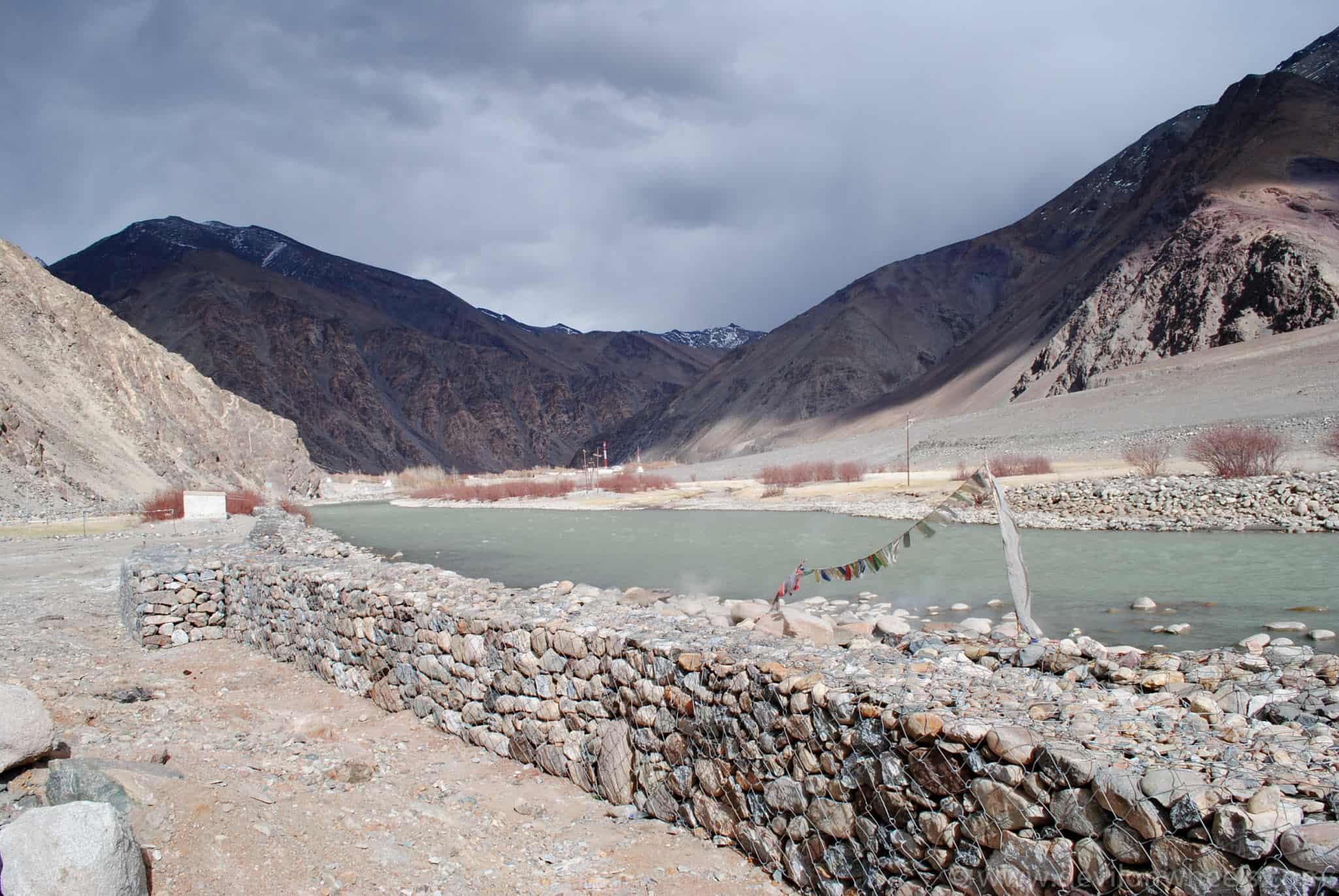
Chumathang and Panamik are two of Ladakh’s most remarkable hot spring destinations, sitting in the middle of a frozen landscape where temperatures regularly drop below zero. I visited both during an April 2012 trip through the Changthang region, and the experience of bathing in steaming sulphur water while the Indus River lay frozen beside me remains one of the wildest things I have done in all my years of traveling.
In this guide, I will share my personal experience at Chumathang Hot Springs and Panamik Hot Springs in Nubra Valley, along with everything you need to plan your own visit in 2026. This includes how to reach, permits, accommodation, best time, health benefits, and practical tips that most guides skip.
Ladakh’s temperature varies sharply by season and altitude. At Chumathang, my digital thermometer read just 2 degrees Celsius one April 2012 morning at 12,960 feet, minutes before I stepped into hot springs measuring near 60 degrees Celsius. Keep in mind, Leh summer days top 20 degrees Celsius while Changthang nights stay near freezing into spring.
What Are the Hot Springs of Ladakh and Why Should You Visit?
Ladakh sits on an active geothermal belt, and three major hot spring sites dot the region: Chumathang in the Indus Valley, Panamik in Nubra Valley, and Puga Valley near Tsokar Lake. These are natural sulphur springs where geothermally heated water, rich in minerals, breaks through the earth’s surface at temperatures ranging from 40 to 60 degrees Celsius. The sulphur content is believed to help with arthritis, skin conditions, muscle soreness, and respiratory ailments.
What makes these springs truly special is the contrast. You are standing at over 13,000 feet, surrounded by barren mountains and frozen rivers, and yet the water coming out of the ground is hot enough to scald you. It is an experience that feels almost surreal, and I can say from personal experience that the rush of hot water on a freezing Ladakhi morning stays with you for years.
How Was My Experience at Chumathang Hot Springs?
It was Day 3 of my April 2012 Ladakh trip when we headed towards the Changthang region. There was not much tourist activity at that time since the season was just about to begin. We had spent the first two days acclimatizing in Leh, and the cold was relentless, with occasional snowfall. I had this idea of bathing in the hot springs at Chumathang, but given the conditions, it felt like madness.
We left Leh at 8 AM on a sunny morning. No snowfall, but still bitterly cold. Our plan was to explore Hemis Monastery and Thiksey Monastery on the way to Chumathang. We did visit Hemis but skipped Thiksey because after three days of monastery visits, we had reached our limit 🙂
We reached Chumathang around 4 PM. The cold hit hard the moment we stepped out of the vehicle. Being right beside the Indus River, which was frozen at several sections, the wind chill was brutal. I could see fumes rising from the banks of the Indus where the hot sulphur springs were breaking through the ground. I wanted to step in, but a pounding headache from the altitude and general fatigue held me back. The super-chilled wind was another factor that kept me away from the water 😉
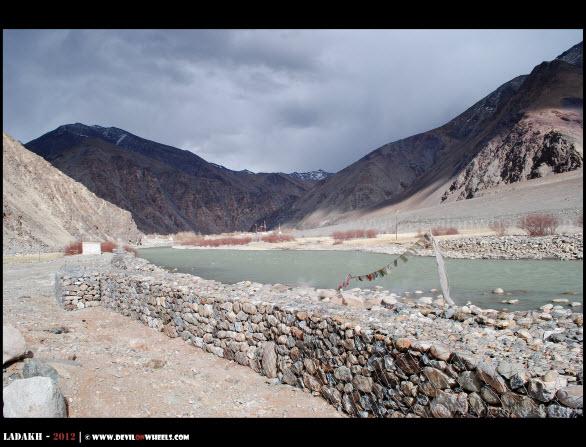
Sleep was difficult that night, but I managed somehow. Next morning, I stepped out and was glad to see the wind had calmed down and the sun was shining bright. I saw Rigzin, our driver, already taking a bath in the hot springs. I glanced at my friend, he nodded, and since the headache had completely gone, we decided to go for it.
My digital thermometer read 2 degrees Celsius. The water, on the other hand, was very hot. It was a unique feeling. The first mug of water running over my body sent a shock through the system, but once it settled, the warmth was incredible. The moment the hot water’s effect faded, the cold air hit the wet skin and the body started shivering, making me rush for the next mug.
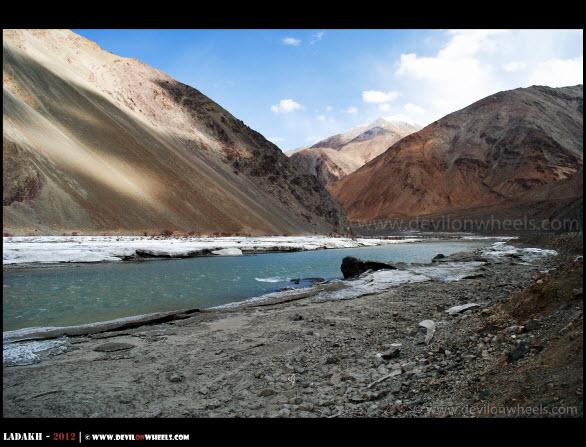
That rush between mugs, the musical sound of the Indus River flowing just in front, the sight of frozen riverbanks on the opposite side, the freezing cold temperatures. It is an experience that only a few would dare, and that too after a night of altitude headache 🙂 After 10-12 mugs of water in a rush, we both ran into our rooms to dry off and get into heavy woolens.
Where Exactly Is Chumathang and How Do You Reach It?
Chumathang is a small village located approximately 140 km southeast of Leh, on the road towards Tso Moriri Lake. The village sits at an altitude of roughly 3,950 meters (about 12,960 feet) along the banks of the Indus River. The drive from Leh takes about 4 to 5 hours via the Leh-Upshi-Mahe-Chumathang route.
The road from Leh to Upshi (about 47 km) is well-paved NH3. Beyond Upshi, the route enters narrow valleys running alongside the Indus River. The road quality is decent for Ladakh standards, though you will encounter inverted speed bumps placed for water drainage. Keep in mind, this is the same road that continues towards Hanle and the Changthang plateau, so it sees regular traffic from BRO maintenance crews and military convoys.
Route from Leh: Leh → Karu (30 km) → Upshi (47 km) → Mahe (90 km) → Chumathang (140 km). Total drive time: 4-5 hours one way.


Do You Need a Permit for Chumathang Hot Springs?
Chumathang itself does not require a separate permit for Indian nationals. However, if you are continuing towards Tso Moriri, Hanle, or any other area in the Changthang region, you will need the online Ladakh EDF receipt. Since 2021, Indian tourists no longer get a stamped Inner Line Permit; you pay the fee online and carry the printout. Since most people visit Chumathang as a stopover on the way to Tso Moriri, sorting this out before leaving Leh makes sense.
As of 2026, the Ladakh Environmental and Development Fee (EDF) is Rs 400 per person (one-time), plus Rs 20 per person per day (Wildlife Protection Fee) and a one-time Rs 50 Red Cross contribution. Hence, for a typical 7-day trip, the total works out to about Rs 590 per person. This applies to all domestic tourists entering Ladakh. You register and pay online on the official LAHDC Leh portal (lahdclehpermit.in) and print the receipt yourself, so no Tourist Information Centre visit or physical stamp is needed. Keep in mind that the receipt is valid for 21 days and you must select the right circuit for where you are going.
What Is the Best Time to Visit Chumathang Hot Springs?
The road to Chumathang is accessible from May to October, which is the standard tourist season in Ladakh. For the hot springs experience specifically, many people argue that winter (November to February) is the best time because the extreme cold outside makes the contrast with the hot water even more dramatic. However, winter travel in Changthang is only possible if you fly into Leh and hire a local taxi, since the Manali-Leh and Srinagar-Leh highways remain closed.
I visited in April, which is early season. The cold was still intense, and most tourist infrastructure was shut. If you want the best balance between accessibility and the hot spring experience, I would recommend late May or September/October. The roads are open, you will find accommodation, and the weather is cold enough to make the hot springs feel absolutely magical. For detailed month-by-month conditions, check my best time to visit Ladakh guide.
What About Accommodation and Food at Chumathang?
Chumathang is a small village, and accommodation options are limited. There are a few homestays and guesthouses offering basic rooms with home-cooked meals. The Hot Spring Resort near the springs has basic rooms, and one of them reportedly includes a private hot bath. Expect to pay around Rs 800-1,500 per night for a room with meals.
Food is simple Ladakhi fare. Thukpa (noodle soup), momos, dal-rice, and chapati are the standard offerings. If you are particular about food options, carry some snacks and instant noodles from Leh. There is no restaurant or dhaba scene here. Your homestay host will cook for you, and the food is honest and filling.
Keep in mind, Chumathang now has 24/7 electricity and 4G network connectivity (upgraded in 2022), though coverage can still be patchy at times since BSNL has the widest reach in the Changthang region. This was not the case when I visited in 2012, so things have improved significantly on the infrastructure front.
What Are the Health Benefits of Chumathang Hot Springs?
The hot springs at Chumathang are sulphur-rich geothermal springs with water temperatures reaching approximately 60 degrees Celsius at the source. The mineral content includes sulphur, calcium, magnesium, and trace elements that are traditionally believed to provide relief from several conditions.
Reported health benefits include:
- Arthritis and joint pain: The warm sulphur water helps relax stiff joints and reduce inflammation
- Skin conditions: Sulphur is known for its antibacterial properties and may help with eczema, psoriasis, and other skin issues
- Muscle soreness: After days of driving on rough Ladakhi roads, the hot soak provides genuine relief
- Respiratory issues: The steam from sulphur springs can help clear nasal passages
- Improved blood circulation: The alternating hot water and cold air naturally stimulates circulation
I am not a doctor, so please treat these as traditional beliefs and reported experiences rather than medical advice. But I can tell you from experience that after a night of altitude headache and three days of freezing cold, that morning bath at Chumathang felt genuinely restorative.
How Was My Experience at Panamik Hot Springs in Nubra Valley?
After Chumathang, our trip continued through Tso Moriri, Hanle, Pangong Tso, Shyok Village, and Sumur. We reached Panamik on Day 6 of the trip. It was an overcast day with occasional snowfall, and the memory of bathing at Chumathang was still fresh, so we were curious about the Panamik springs.
Rigzin, our driver, suggested skipping the hot springs and instead hiking to a lake nearby. After a 15-20 minute hike, we reached Yarab Tso Lake at Panamik. It turned out to be a sacred lake, so swimming, bathing, or even washing hands was not allowed. But it was a beautiful spot, and I am glad we made the hike.
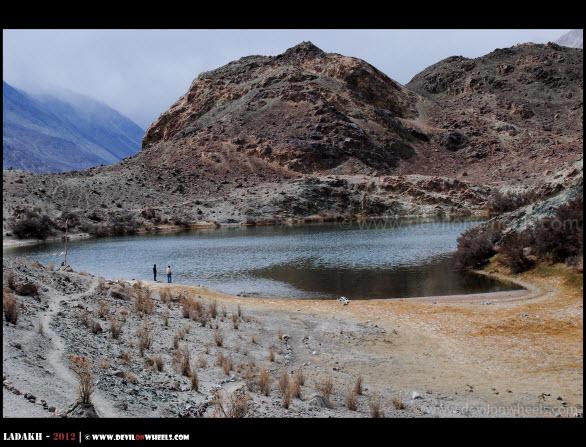
When we came back and asked Rigzin about the actual hot springs, he told us that unlike Chumathang, the Panamik hot springs are more structured. The water runs through pipes into enclosed rooms with small bathing chambers. It is not the raw, open-air experience we had at Chumathang. Given the cold weather and the fact that we had already had our hot spring adventure, none of us was interested enough to try it.
Looking back, I wish I had visited the Panamik springs anyway. They have been developed further since 2012, with separate bathing areas for men and women, and the entry fee is just Rs 20-30 per person. If you are on a Nubra Valley trip, it is definitely worth a stop.
Where Is Panamik and How Do You Reach the Hot Springs?
Panamik is located in Nubra Valley, approximately 150 km from Leh and about 55 km beyond Diskit. The village sits at an altitude of 10,442 feet (3,183 meters) and is considered the northernmost point in India that tourists can visit. The drive from Leh takes 6-7 hours, crossing the Khardung La pass (17,582 feet) on the way.
Route from Leh: Leh → South Pullu → Khardung La (17,582 ft) → North Pullu → Khalsar → Diskit (120 km) → Panamik (150 km). Total drive time: 6-7 hours.
Indian tourists need the online EDF receipt for Panamik and the entire Nubra Valley (no stamped ILP anymore). You can pay it through the Ladakh EDF portal. Make sure Nubra Valley is selected in your circuit. Most people club Panamik with their Nubra Valley circuit covering Diskit, Hunder, and Turtuk.
What Is the Difference Between Chumathang and Panamik Hot Springs?
Since people often ask me which one is better, here is a quick comparison based on my experience and research.
| Factor | Chumathang | Panamik |
|---|---|---|
| Location | Indus Valley, en route to Tso Moriri | Nubra Valley, beyond Diskit |
| Distance from Leh | ~140 km (4-5 hours) | ~150 km (6-7 hours) |
| Altitude | ~12,960 ft (3,950 m) | ~10,442 ft (3,183 m) |
| Water Temperature | ~60°C at source | 40-50°C |
| Bathing Style | Open-air, natural, beside the Indus | Enclosed rooms with piped water |
| Entry Fee | Free (no ticketing as of 2026) | Rs 20-30 per person |
| Permit Needed | No (unless continuing to Tso Moriri) | Yes (online EDF receipt, Nubra circuit) |
| Best For | Raw adventure, photography | Comfortable bathing, family-friendly |
If you are looking for the raw, wild experience of bathing in nature, Chumathang wins hands down. If you prefer a more structured and comfortable setup, Panamik is the better choice. Ideally, visit both since they fall on different routes and you can cover them on different days of your Ladakh trip.
What About Puga Valley Hot Springs?
While Chumathang and Panamik are the most visited, Ladakh has a third major geothermal site at Puga Valley, located about 22 km from Tsokar Lake. Puga is famous for its visible sulphur deposits, with ground temperatures exceeding 220 degrees Celsius at depth. The landscape here looks almost alien, with yellow sulphur patches, bubbling mud pools, and steam vents.
Puga is more of a geological curiosity than a bathing destination. The springs here are too hot and scattered for recreational use, and there are no facilities. However, if you are passing through the Tsokar-Chumathang route, it is worth a brief stop to see the geothermal activity. The Indian government has been studying Puga for geothermal power generation potential since the 1970s.
How to Include Chumathang Hot Springs in Your Ladakh Itinerary?
Chumathang works best as a night halt on the Leh to Tso Moriri route. Here is a suggested plan.
Option 1: Tso Moriri Circuit (4-5 days)
- Day 1: Leh → Hemis/Thiksey → Chumathang (night stay, enjoy hot springs)
- Day 2: Chumathang → Tso Moriri via Mahe-Sumdo (night stay at Korzok)
- Day 3: Tso Moriri → Tsokar Lake → Puga Valley (night stay at Tsokar or drive back)
- Day 4: Return to Leh via Upshi
Option 2: Extended Changthang Loop (6-8 days)
- Day 1: Leh → Chumathang (hot springs)
- Day 2: Chumathang → Tso Moriri
- Day 3: Tso Moriri → Hanle
- Day 4: Hanle → Pangong Tso via Chushul
- Day 5: Pangong Tso → Shyok → Panamik (hot springs again)
- Day 6: Panamik → Diskit/Hunder (Nubra Valley)
- Day 7: Nubra → Leh via Khardung La
This second option is essentially what I did in April 2012, and it covers both hot spring locations. For more itinerary options, check my Ladakh itinerary guide and the Ladakh route maps page. In case you are planning a longer self-drive circuit that brings you into Ladakh via Zanskar, my Manali to Leh via Zanskar guide covers the complete route stage by stage.
What Should You Carry for Visiting Hot Springs in Ladakh?
Based on my experience, here is what helps.
- Quick-dry towel: Essential. A regular cotton towel takes forever to dry in Ladakh’s cold
- Flip-flops or waterproof sandals: The ground near springs can be rocky and hot
- Change of clothes in a dry bag: You will want dry, warm clothes immediately after
- Thermal inner layer: Put this on first after drying off
- Sunscreen: Even in cold weather, the UV at this altitude is brutal
- Water bottle: Hot spring bathing dehydrates you, especially at high altitude
- Basic first aid: The sulphur water can irritate open cuts or sensitive skin
For a complete packing checklist for Ladakh trips, refer to my Ladakh clothing guide.
What Are the Important Safety Tips for Hot Springs at High Altitude?
Hot spring bathing at 13,000 feet is not the same as visiting a spa in the plains. Here are some things to keep in mind.
- Acclimatize first: Do not attempt hot spring bathing if you have a headache or any symptoms of Acute Mountain Sickness (AMS). I learned this on Day 1 at Chumathang when I had to skip the springs due to altitude headache
- Test the water temperature: The source water can be 60 degrees Celsius, hot enough to burn. Some springs are fenced off for safety. Only bathe in designated areas
- Stay hydrated: The combination of hot water, cold air, and high altitude can cause dehydration quickly
- Keep it short: 15-20 minutes is plenty. Extended exposure to hot sulphur water at altitude can cause dizziness
- Go with company: Never bathe alone at these remote locations. If you slip or feel dizzy, someone needs to be around
- Dress quickly after: The temperature shock between hot water and cold air is extreme. Have warm clothes ready within arm’s reach
How Much Does a Chumathang Hot Springs Trip Cost in 2026?
Here is a rough budget breakdown for a Chumathang trip from Leh, assuming 2 nights and 3 days on the Tso Moriri route.
| Expense | Budget (Per Person) |
|---|---|
| Taxi (Leh-Chumathang-Tso Moriri-Leh, shared 4 pax) | Rs 4,000-5,000 |
| Accommodation (2 nights, homestay) | Rs 1,600-3,000 |
| Meals (3 days) | Rs 900-1,500 |
| Ladakh EDF + permits | Rs 460-520 |
| Chumathang Hot Springs entry | Free |
| Miscellaneous | Rs 300-500 |
| Total (per person, shared taxi) | Rs 7,260-10,520 |
For current taxi rates, check the Ladakh taxi rate card. If you are on a tight budget, my Ladakh budget calculator has a detailed breakdown for different trip durations.
What Else Can You See Near Chumathang?
Chumathang is not a standalone destination for most travelers. It falls on the route to some of Ladakh’s most spectacular places.
- Hemis Monastery: Largest and wealthiest monastery in Ladakh, 45 km from Leh. The Hemis Festival (June/July) is a major attraction
- Thiksey Monastery: Often called “Mini Potala Palace,” 19 km from Leh. The morning prayer ceremony at 6 AM is worth waking up for
- Tso Moriri Lake: The crown jewel of Changthang, about 90 km beyond Chumathang. One of the most beautiful high-altitude lakes in India
- Hanle: Home to the Indian Astronomical Observatory, reachable via Chumathang-Mahe-Loma route
- Puga Valley: Geothermal wonder with sulphur deposits, about 22 km from Tsokar Lake
- Stakna Monastery: A quieter monastery you can combine with Hemis on the way to Chumathang. I have covered this alternate route in a separate trip report
Practical Information Box
Quick Reference: Chumathang & Panamik Hot Springs
- Chumathang Altitude: ~12,960 ft (3,950 m)
- Panamik Altitude: ~10,442 ft (3,183 m)
- Chumathang Distance from Leh: ~140 km (4-5 hrs)
- Panamik Distance from Leh: ~150 km (6-7 hrs via Khardung La)
- Best Time: May-October (road access), Nov-Feb (winter experience)
- Permits: online EDF receipt needed for Tso Moriri/Nubra extensions, not for Chumathang alone
- Entry Fee: Chumathang free, Panamik Rs 20-30
- Accommodation: Homestays Rs 800-1,500/night at Chumathang
- Mobile Network: 4G available at Chumathang (since 2022)
- Nearest Fuel: Leh (fill up before leaving)
- Last Updated: September 2026
Frequently Asked Questions
Can you actually bathe in Chumathang Hot Springs?
Yes, you can bathe in designated areas at Chumathang. Some of the springs have been fenced off due to geothermal risks, but there are accessible spots along the Indus riverbank where the water is at a comfortable temperature. It is an open-air experience, not a structured bathing facility.
Is there an entry fee for Chumathang Hot Springs?
As of 2026, there is no entry fee for Chumathang Hot Springs. The springs are a natural feature along the Indus River banks and are freely accessible. However, you will need to pay the standard Ladakh EDF (Rs 400 per person plus daily charges) which applies to all visitors.
How hot is the water at Chumathang Hot Springs?
The water temperature at the source reaches approximately 60 degrees Celsius, which is too hot for direct contact. At the bathing areas, where the spring water mixes with cooler river water or has some distance from the source, the temperature is more manageable. Always test the water with your hand before stepping in.
Can you visit Chumathang in winter?
Yes, Chumathang is accessible in winter if you fly into Leh and hire a local taxi. The road from Leh to Chumathang is maintained for military access. Winter visits offer the most dramatic hot spring experience with extreme cold outside, but accommodation options are very limited and conditions are harsh. Carry extra warm clothes and emergency supplies.
Which is better for hot springs: Chumathang or Panamik?
Chumathang offers a raw, open-air natural bathing experience beside the Indus River, which is more adventurous and photogenic. Panamik has enclosed, structured bathing facilities with separate sections for men and women, which is more comfortable and family-friendly. If you can only visit one, choose based on what kind of experience you prefer.
Do you need a permit to visit Chumathang?
Chumathang itself does not require a permit for Indian nationals. However, most travelers combine it with a trip to Tso Moriri or Hanle, both of which need the online EDF receipt (Indians no longer need a stamped ILP). It is advisable to pay it before starting the trip so you have the flexibility to continue beyond Chumathang.
Is Chumathang safe for solo travelers?
Chumathang village is safe, and the locals are welcoming. However, I would not recommend bathing in the hot springs alone. The combination of high altitude, extreme temperature contrast, and slippery rocks near the springs means you should always have someone around. For the drive itself, hiring a local taxi driver who knows the Changthang roads is the safest approach.
What is the road condition from Leh to Chumathang?
The road from Leh to Upshi (47 km) is well-paved national highway. Beyond Upshi, the road follows the Indus Valley and is generally in decent condition, maintained by BRO for military access. Expect some rough patches, inverted speed bumps, and narrow sections. Any standard SUV or even a sedan can make this drive in fair weather. In winter, snow and ice can make sections challenging.
What is the temperature in Ladakh?
Ladakh’s temperature depends heavily on season and altitude. In April 2012, my digital thermometer read just 2 degrees Celsius one morning at Chumathang (12,960 ft), right before I stepped into hot springs measuring close to 60 degrees Celsius. Summer days in Leh typically climb past 20 degrees Celsius, while high-altitude Changthang nights stay near freezing well into spring.

Conclusion
Bathing in the hot springs at Chumathang, with the frozen Indus River just meters away and the thermometer reading 2 degrees Celsius, remains one of the most raw and exhilarating experiences of my travel life. It is not something you read about in most Ladakh guides, and that is exactly what makes it special.
If you are planning a trip to the Changthang region or the Tso Moriri circuit, make Chumathang a proper night halt instead of just a passing stopover. Wake up early, brave the cold, and take that dip. You will not regret it.
If you have questions about visiting Chumathang or Panamik hot springs, or need help planning your Ladakh itinerary, feel free to ask in the comments section below or on our community page. I will be happy to help, my friend 🙂
Last Updated: September 2026

1 Comment
Comments section gets closed in 90 days. To ask your travel questions, you can follow my YouTube Channel for a faster reply or for a much slower reply follow me on Instagram. :)
wow, awesome article.Much thanks again. Want more.