


One of the most common questions I get from readers at Discover with Dheeraj is, “What are the most important things to consider for a Ladakh trip?” It sounds like a simple question, but the answer never is. Ladakh is not your regular tourist destination. It sits at 11,500 ft and above, the roads are some of the most challenging in the world, and basic amenities that you take for granted at home simply do not exist for hundreds of kilometers.
Over the last decade, I have interacted with thousands of travelers every season who are planning their first (or fifth) Ladakh trip. The mistakes repeat themselves. People underestimate altitude, overestimate their vehicles, and assume that a Google search will be enough preparation. It is not. Hence, I put together this detailed guide covering the most important things you must consider before heading to Ladakh via Manali or Srinagar.
Let's quickly dive into the details:
What Are the Key Things to Consider for a Ladakh Trip in 2026?
Quick answer: The six things that make or break a Ladakh trip are altitude acclimatization, vehicle preparedness, mobile network blackouts, weather-related road delays, permits and the EDF fee, and a realistic budget. Get these six right and everything else, packing, itinerary, sightseeing, falls into place.
A successful Ladakh trip comes down to preparation. The trans-Himalayan region operates on its own rules. Things that work in the plains do not apply here. Below, I have outlined the most critical factors based on real experiences, both mine and the community’s, that can make or break your Ladakh adventure.
I have already covered the top 9 mistakes people commit on a Ladakh trip and the top 12 myths about traveling to Ladakh in separate articles. Today’s guide focuses on the practical considerations you need to think about before you even start packing.
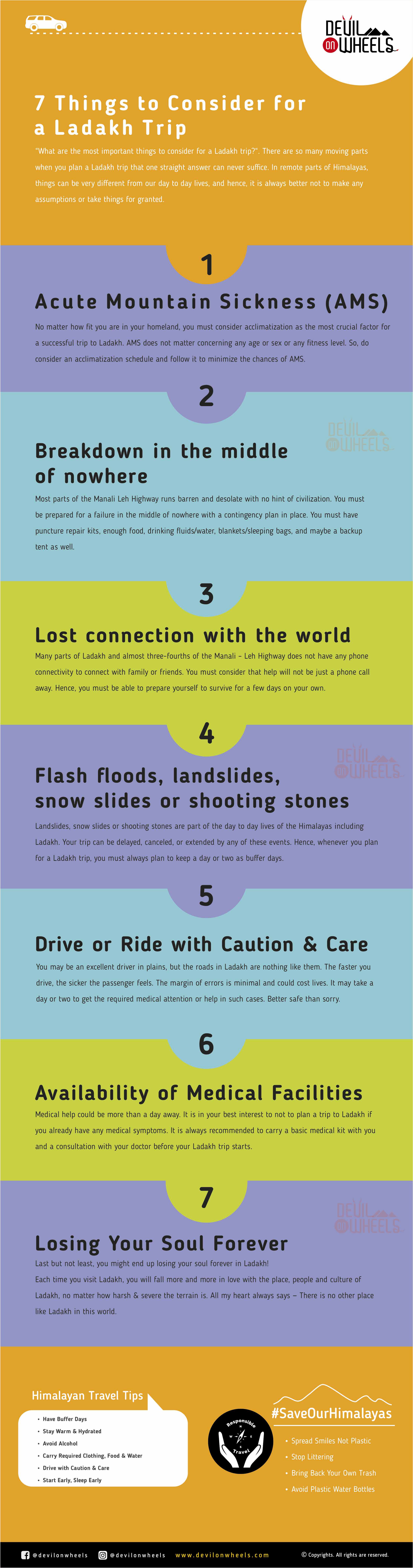
Download your FREE high-resolution PDF copy of this infographic guide for important things to consider for a Ladakh trip. If you liked it and found it helpful, please feel free to share it with your family and friends to help them too.
How Serious Is Acute Mountain Sickness (AMS) in Ladakh?
Quick answer: AMS is the single biggest health risk in Ladakh and it does not care about age or fitness. Spend at least 2 full days acclimatizing in Leh before any strenuous activity, drink 3-4 liters of water daily, and carry Diamox after consulting your doctor. Watch for headache, nausea, or breathlessness that does not improve with rest.
AMS is the single biggest health risk on any Ladakh trip. Leh sits at 11,520 ft, Khardung La at 17,582 ft, and Pangong Tso at 14,270 ft. Your body needs time to adjust to the reduced oxygen at these altitudes. No amount of gym fitness protects you from AMS. I have personally seen the fittest people kneel and cry when altitude sickness hits them hard.
What you must do: Spend at least 2 full days in Leh doing absolutely nothing strenuous. Walk slowly, drink 3-4 liters of water daily, avoid alcohol for the first 48 hours, and sleep with your head elevated. If you are driving via Manali, the acclimatization happens gradually over the highway. If you are flying into Leh, the sudden altitude gain from sea level to 11,500 ft makes acclimatization even more critical.
Carry Diamox (Acetazolamide) after consulting your doctor before the trip. Keep in mind that AMS does not discriminate by age, sex, or fitness level. A 25-year-old athlete is just as vulnerable as a 60-year-old. The only proven prevention is gradual acclimatization. A portable pulse oximeter (Rs 500-1,500, easily available online) is a small, worthwhile addition to your kit. It lets you track your blood oxygen saturation and catch early warning signs before symptoms become severe. Read my detailed guide on AMS prevention and the importance of acclimatization before you finalize your itinerary.
What Happens If Your Vehicle Breaks Down in the Middle of Nowhere?
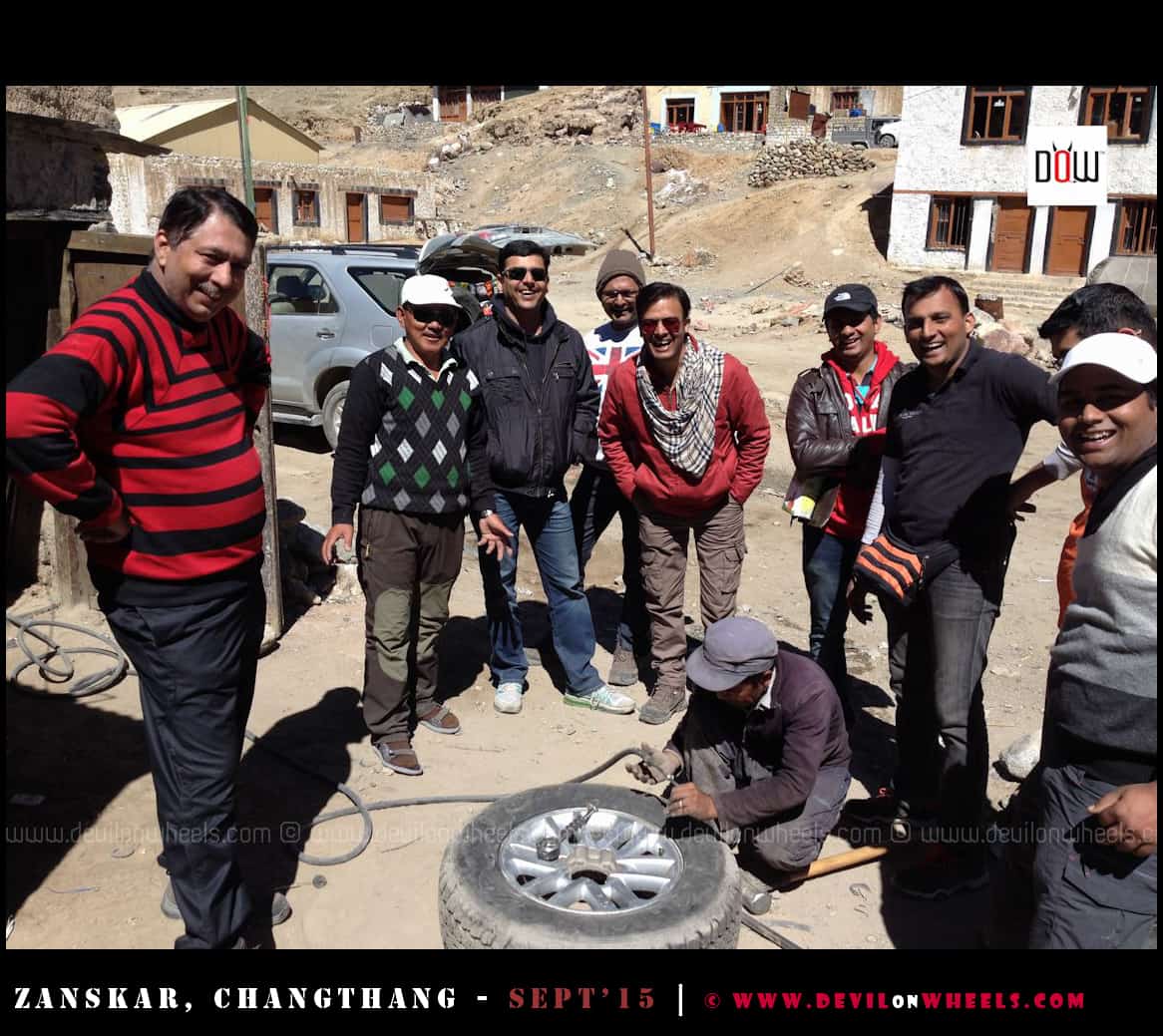
Quick answer: It happens every season, mostly on the barren 100 km stretch between Pang and Upshi. Bikers should carry a puncture kit and tools; car drivers need a fully inflated spare, tow rope, and extra fuel. Everyone should carry 2-3 days of food, water, and warm layers, because help can be a full day away.
This is not a hypothetical scenario. It happens every season. Most of the Manali-Leh Highway, roughly 300+ km, runs through barren terrain with zero civilization. The stretch between Pang and Upshi alone is about 100 km of nothingness. If your vehicle breaks down here, the next mechanic could be a full day away.
For bikers: Carry a puncture repair kit, tyre levers, a spare tube, basic tools (spanners, pliers, electrical tape), and a can of tyre sealant foam. Front brake application on loose gravel is the number one cause of falls. Train yourself to use the rear brake primarily on unpaved sections.
For car travelers: Ensure your spare tyre is properly inflated before you leave Manali or Srinagar. Carry a tow rope, jumper cables, and extra engine oil. A can of extra fuel is highly recommended since petrol pumps are scarce. The last reliable fuel station on the Manali side is at Tandi (32 km before Jispa). On the Leh side, the next pump after Leh towards Nubra is at Diskit, and towards Pangong, IndianOil opened a pump at Tangste in 2023.
For everyone: Always carry enough food, drinking water, warm blankets, and a sleeping bag to survive 2-3 days without help. This is not being overly cautious. This is being sensible in a region where help may not arrive for days. If you are considering an alternative to the standard highway, repeat travelers often ask me about the newer Manali to Leh via Zanskar route through Shinku La. It is a genuinely different experience but comes with even less traffic, fewer mechanics, and no fuel between Kargil and Padum, so it demands even more self-sufficiency than the standard highway.
Is There Mobile Network and Internet Connectivity in Ladakh?
Quick answer: No, not everywhere. About three-fourths of the Manali-Leh Highway has zero coverage. BSNL postpaid has the widest reach across Ladakh, and Jio/Airtel now offer 5G in Leh city. Only postpaid SIMs from outside J&K/Ladakh work here; prepaid connections from other states do not function at all.


Large parts of Ladakh and about three-fourths of the Manali-Leh Highway have no mobile connectivity at all. This means no phone calls, no internet, no GPS maps, and no way to contact family in an emergency. You must accept this reality and plan accordingly.
Network coverage in 2026: BSNL postpaid has the widest coverage across Ladakh, reaching Nubra Valley, Pangong, and most of the highway. Jio launched 5G in Leh city in April 2023 and has 4G at Sarchu since September 2021. Airtel rolled out 5G in Leh plus a 40-zone expansion in April 2024. However, only postpaid connections from outside J&K/Ladakh work. Prepaid SIMs from other states do not function here at all. As per TRAI’s June 2025 report, Airtel actually had the best call success rate in the region at 57%, followed by Jio at 50% and BSNL at 47%, though BSNL had the lowest call drop rate (4.67% versus Jio’s 7.17% and Airtel’s 9.70%). In practice, that means BSNL connects less often but holds the call better once it does, which is why most locals and taxi drivers still carry a BSNL postpaid SIM as their primary line.
My detailed guide on mobile phone connectivity in Leh Ladakh covers 10 practical tips including which operator to choose, where signals exist, and how to stay connected. The bottom line: download offline maps (Google Maps or OsmAnd), inform family about expected blackout periods, and do not rely on your phone for navigation in remote areas.
How Do Flash Floods, Landslides, and Shooting Stones Affect Ladakh Travel?
Quick answer: Landslides and shooting stones are routine in the Himalayas, especially July-August. Your itinerary can get delayed or rerouted by days. Build in 2-3 buffer days, check the IMD forecast before you leave, and never stop for photos in a marked shooting-stones zone.
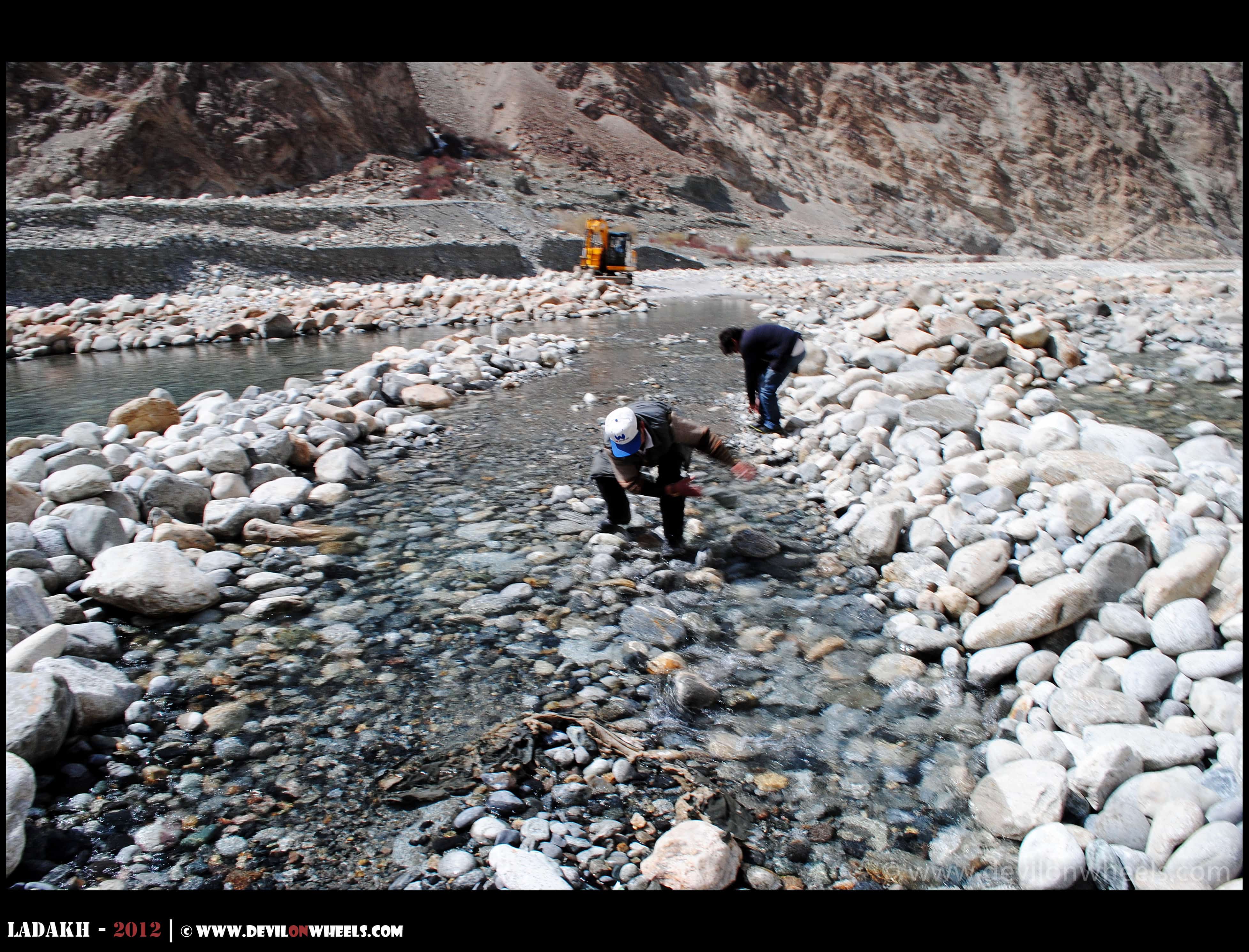
Landslides, snow slides, and shooting stones are part of daily life in the Himalayas. They are not rare events. They happen regularly, especially during July and August when monsoon rains destabilize the mountains. As a recent example, a flash flood briefly shut the Manali-Leh Highway near Jispa on June 30, 2026, and BRO cleared the debris and restored traffic the same day. IMD also issued a flash flood alert for nine Himachal Pradesh districts, including Lahaul-Spiti and Kullu, on July 22, 2026, with 13 landslide-related deaths reported statewide that monsoon season.
What this means for your trip: Your itinerary can get delayed, rerouted, or extended by days due to road closures. According to BRO (Border Roads Organisation) officials, teams work continuously to clear roads, but some blockages take 24-48 hours or more to resolve. In case you are traveling during July-August, the risk is highest on the Manali-Leh Highway between Sissu and Sarchu. Check the IMD’s Leh weather forecast before you leave and again at your last connectivity point.
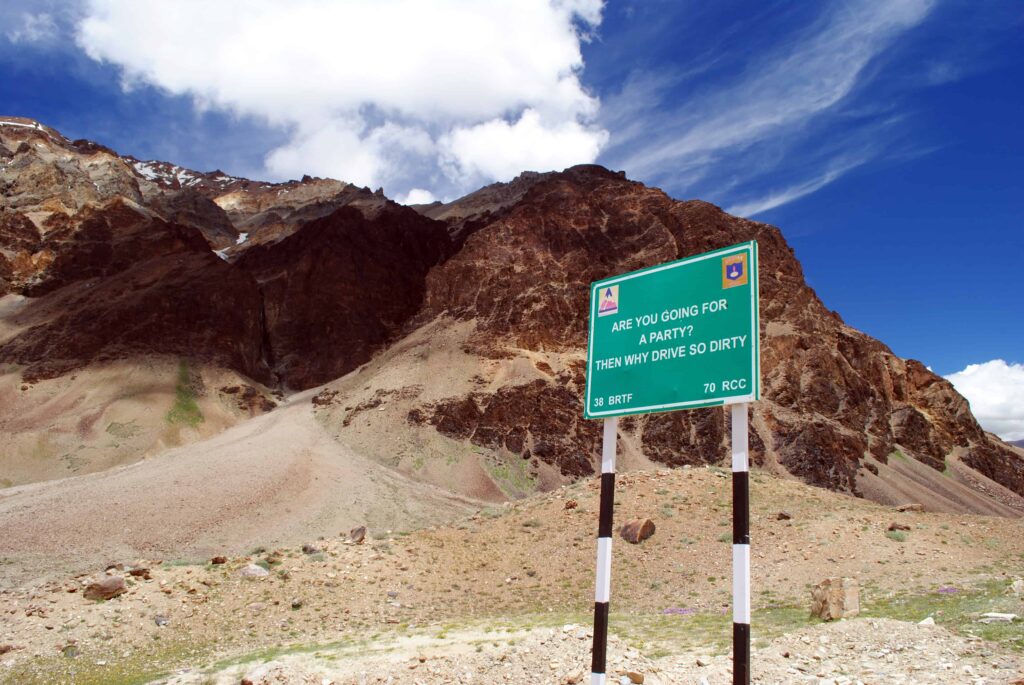
Golden rule: Always keep 2-3 buffer days in your Ladakh itinerary. If you have exactly 7 days and zero flexibility, Ladakh will test you. Plan for 9-10 days minimum so that a day lost to a landslide does not ruin your entire trip. Also, keep in mind that shooting stones sections (marked by BRO signboards) must be crossed quickly. Do not stop for photographs in these zones no matter how tempting the view looks.
How Many Days Do You Really Need for a Ladakh Trip?
Quick answer: Budget a minimum of 9-10 days for a Manali or Srinagar road trip, including 2 buffer days for weather and acclimatization. If you are flying in and out of Leh, 6-7 days is workable since you skip the highway travel time, but you still need 2 full acclimatization days before any sightseeing.
This is the question I get asked more than almost any other, right after “is it safe?” A calendar week sounds like enough until you actually map it out. Two days are gone just driving in from Manali or Srinagar, two more are needed for acclimatization before you can push higher, and if you want to see Nubra Valley, Pangong Tso, and Tso Moriri without rushing, each deserves its own overnight stop. Cramming all of this into 7 days with zero buffer is exactly how a single landslide or a bout of AMS turns your dream trip into a stressful sprint back to catch a flight.
My own recommendation, based on planning thousands of these trips with readers, is 9-10 days minimum if you are self-driving via the highway, and 6-7 days if you fly in and out of Leh and only cover the closer circuits. For a full day-by-day breakdown, check my complete road itinerary for Leh Ladakh, the itinerary by air, or, if you have less time, how to make a Ladakh trip work in 9 days.
Why Must You Drive or Ride with Extra Caution in Ladakh?
Quick answer: Loose gravel, ice patches, river crossings, and narrow roads with steep drops demand a different driving style than the plains. Use the rear brake on gravel, keep a steady 30-40 kmph, and remember that the nearest hospital could be 6-10 hours away if something goes wrong.
You may be an excellent driver or rider in the plains, but the roads in Ladakh are a completely different challenge. Loose gravel, ice patches, river crossings, narrow single-lane roads with 500 ft drops, and unpredictable weather create conditions that even experienced mountain drivers respect.
For motorcycle riders: The most common cause of accidents is applying the front brake on gravel or ice. Use the rear brake predominantly. Reduce speed before turns, not during them. Water crossings require first gear with steady throttle. Walk through the crossing first if you are unsure of the depth. My guide on 7 tips for a self-drive to Ladakh covers driving techniques in detail.
For car drivers: The faster you drive, the sicker your passengers feel. High-altitude roads combined with sharp turns and uneven surfaces make passengers nauseous quickly. Maintain a steady 30-40 kmph on mountain roads. Use engine braking on descents instead of riding the brake pedal, which can cause brake fade on long downhill stretches.
Critical safety point: The margin of error is extremely small. A lapse in concentration can cost lives. Medical help may be more than a day away from most locations in Ladakh. A minor injury that would be treated in 30 minutes at home could turn serious here because the nearest hospital (SNM Hospital in Leh) might be 6-10 hours away depending on where you are.
What Medical Facilities Are Available in Ladakh?
Quick answer: SNM Hospital and the Army General Hospital in Leh are the only fully equipped facilities. Outside Leh, small dispensaries handle minor issues only. Carry a proper medical kit, including Diamox, ORS, and your personal prescriptions, since evacuation to Leh or Delhi is the only option for anything serious.
This is something most first-time travelers completely overlook. When traveling in Ladakh, the nearest doctor or hospital can be more than a day away. The only well-equipped hospitals are in Leh city: SNM Hospital (government, open 24/7) and the Army General Hospital (which also helps civilian tourists in emergencies).
Outside Leh, medical facilities are extremely basic. Small dispensaries exist in Diskit (Nubra), Panamik, Karu, and a few other towns, but they handle only minor issues. For anything serious, evacuation to Leh or airlifting to Delhi is the only option. Even untreated diarrhea, which you would manage with a quick pharmacy visit at home, can become dangerous at 14,000 ft where dehydration accelerates rapidly.
What you must carry: A basic medical kit is non-negotiable. Include Diamox (for AMS, after doctor consultation), ORS packets, anti-diarrheal medication, painkillers, antiseptic cream, bandages, a pulse oximeter, and any personal prescription medicines. If you have any pre-existing conditions like asthma, heart issues, or severe anaemia, consult your doctor before planning a Ladakh trip. I always recommend carrying a complete medical and travel kit.
What Permits and Fees Do You Need for Ladakh in 2026?
Quick answer: Indians have not needed a stamped Inner Line Permit since 2021. Instead, you pay the Ladakh Environment and Development Fee (EDF) online: Rs 400 one-time plus Rs 20 per day plus an optional one-time Rs 50 Red Cross contribution, roughly Rs 590 for a 7-day trip, not Rs 610.
This is one area where rules have changed significantly, and it is also the single most commonly misquoted fact across Ladakh travel blogs, including an older version of this very article. Since 2021, Indian nationals no longer need a separate stamped Inner Line Permit (ILP) for tourist circuits in Ladakh including Nubra Valley, Pangong Tso, Tso Moriri, Hanle, and Khardung La. Instead, you pay the Ladakh Environment and Development Fee (EDF) entirely online. There is no Tourist Information Center visit or physical stamping required anymore.
Current EDF fee structure (2026): Rs 400 per person as a one-time environment fee, plus Rs 20 per person per day as a wildlife fee, plus an optional one-time Rs 50 per person Red Cross Fund contribution. For a typical 7-day trip, this works out to approximately Rs 590 per person, not the Rs 610 figure that circulates when the Red Cross contribution is wrongly treated as a daily charge instead of a one-time optional add-on. Your receipt stays valid for 21 days and covers Nubra Valley, Pangong Tso, Tso Moriri, Hanle, and Umling La on a single payment. Register, pay, and print your own receipt through the LAHDC Leh permit portal.
Foreign nationals still need a Protected Area Permit (PAP) which can be obtained through registered travel agents in Leh. Groups of minimum 2 foreigners are required. For complete details on the permit process, documents needed, and online application steps, read my detailed guide to Ladakh permits.
How Much Does a Ladakh Trip Cost in 2026?
Quick answer: Budget travelers can manage Rs 2,000-3,000/day using shared taxis, guesthouses, and dhaba meals. Mid-range travelers should plan Rs 4,000-6,000/day. Add flights (Rs 5,000-15,000) or an HRTC bus (Rs 700-1,500) on top of your daily spend, depending on how you get to Leh.
Budget is a major consideration, and costs have risen over the years. Here is a realistic breakdown for 2026.
Budget traveler (Rs 2,000-3,000/day): Shared taxis or HRTC buses, budget guesthouses in Leh (Rs 800-1,500/night), local dhabas for meals (Rs 150-300 per meal), and self-arranged sightseeing.
Mid-range traveler (Rs 4,000-6,000/day): Private taxi (shared cost with group), mid-range hotels (Rs 2,000-4,000/night), restaurant meals, and guided excursions.
Transport costs: Delhi to Leh flights range from Rs 5,000-15,000 depending on season and advance booking. HRTC bus from Manali to Leh costs Rs 700-1,500 (ordinary to deluxe); verify current fares with HRTC before booking since they revise seasonally. Private taxi rates from Leh for sightseeing circuits run Rs 3,500-5,500/day depending on the route. For a detailed cost breakdown, check my Ladakh trip budget calculator.
What Should You Pack for a Ladakh Trip?
Quick answer: Layer for both scorching sun and freezing cold in the same day. Pack SPF 50+ sunscreen, polarized sunglasses to prevent snow blindness, thermals, a sleeping bag rated to -5C, and enough cash for your entire trip since ATMs beyond Leh do not exist.
Packing for Ladakh is different from packing for any other Indian destination. The weather can swing from scorching sun to freezing cold within the same day. At 11,500 ft and above, UV radiation is intense even when it does not feel hot, and the glare off snow and light-colored rock can cause snow blindness (photokeratitis), a genuinely painful, temporary sunburn of the eye, if you skip proper eye protection.
Essential items: Layered clothing (thermals, fleece, windproof jacket), sunscreen SPF 50+, polarized UV-protection sunglasses (not just any dark lenses, they must block UV to prevent snow blindness), lip balm with SPF, sturdy shoes with ankle support, a warm sleeping bag (rated to -5C minimum), rain gear, and a good quality backpack. For a complete packing list, read my guide on what clothes and gear to carry for Ladakh.
Often overlooked items: Cash (ATMs in Leh are unreliable and none exist beyond Leh, so budget your entire trip’s cash needs before you leave rather than counting on withdrawing more along the way), power banks (electricity is erratic in many places), offline maps on your phone, photocopies of all permits and ID proofs, and a basic toolkit if you are on a motorcycle.
Will You Lose Your Soul to Ladakh Forever?
This one is not a practical consideration. It is a warning, my friend. 🙂
Ever since I went to Ladakh about a decade back, it is the mere mortal body of mine that has returned. My soul has been lost somewhere up in that heavenly place forever. Every day when I close my eyes, my wandering soul in those mountains transmits back the majestic vistas of Ladakh. Every day I wish I could go back in search of my soul and bring it back. However, I always overlook the fact that some things in this world are still impossible, and bringing back your soul from Ladakh is one of them.
Each time you visit Ladakh, you will fall more and more in love with the place, its people, and the culture. No matter how harsh the terrain is to survive, the magic of Ladakh is unlike anything else. All my heart always says, there is no other place like Ladakh in this world.
Practical Info Box: Ladakh Trip Quick Reference 2026
| Best Time to Visit | June to September (roads open, pleasant weather) |
| Leh Altitude | 11,520 ft (3,512 m) |
| Acclimatization | Minimum 2 days rest in Leh before sightseeing |
| EDF Fee (2026) | Rs 400 one-time + Rs 20/day + Rs 50 one-time optional Red Cross (~Rs 590 for 7 days) |
| ILP for Indians | Not required since 2021 (EDF fee replaces it, paid online) |
| Best Network | BSNL postpaid (widest coverage), Jio/Airtel 5G in Leh only |
| Budget per Day | Rs 2,000-3,000 (budget) / Rs 4,000-6,000 (mid-range) |
| Minimum Trip Duration | 9-10 days by road / 6-7 days by air (including buffer + acclimatization days) |
| Key Hospital | SNM Hospital, Leh (24/7 emergency) |
| Last Fuel (Manali side) | Tandi (32 km before Jispa) |
Frequently Asked Questions
Is Ladakh safe for first-time travelers?
Yes, Ladakh is safe for first-time travelers if you prepare properly. The biggest risks are altitude sickness and vehicle breakdowns, both of which are preventable with planning. Follow the acclimatization schedule, carry a medical kit, keep buffer days in your itinerary, and inform someone about your travel plans. Thousands of first-timers visit Ladakh every year without incident.
Can I visit Ladakh with kids or elderly family members?
Yes, but with extra precautions. Children under 5 and elderly travelers with heart or respiratory conditions face higher AMS risk. Fly into Leh and allow 3 days for acclimatization instead of the standard 2. Avoid routes above 16,000 ft (like Khardung La) with very young children. Read my complete guide to traveling Ladakh with kids for detailed advice.
How much does the Ladakh permit or EDF fee actually cost?
Indians do not pay for a stamped Inner Line Permit anymore, that requirement ended in 2021. Instead, you pay the Ladakh Environment and Development Fee (EDF) online: Rs 400 per person one-time, plus Rs 20 per person per day, plus an optional one-time Rs 50 Red Cross Fund contribution. For a 7-day trip this totals roughly Rs 590 per person, not Rs 610, since the Red Cross fee is a one-time optional add-on and not a recurring daily charge as some older guides state.
Do I need a special vehicle for Ladakh?
Any well-maintained car with decent ground clearance can handle Ladakh roads. SUVs are preferred but not mandatory. The Manali-Leh Highway has been significantly improved by BRO, and most sections are now paved. However, the Nubra-Pangong direct route via Shyok and some internal Zanskar roads still require high ground clearance. For bikes, anything above 150cc works, though 350-500cc is more comfortable for the long haul.
When do the Manali-Leh and Srinagar-Leh highways open?
The Srinagar-Leh Highway typically opens by late March or early April and stays open until late November. The Manali-Leh Highway usually opens by late May or early June, though in 2026 BRO connected both ends and opened it even earlier, on May 12. It typically closes by mid-October. However, with the Atal Tunnel (opened October 2020, 9.2 km long, sits at 10,171 ft), the Manali side is now accessible up to Sissu year-round. Beyond Sissu towards Leh, it depends on BRO clearing Baralacha La and other high passes. I keep my Manali Leh Highway status 2026 page updated with the current opening and closing situation.
Is it better to fly or drive to Leh?
Both have pros and cons. Flying saves 2-3 days of travel time but increases AMS risk due to sudden altitude gain. Driving via Manali or Srinagar allows gradual acclimatization and the road trip experience is unforgettable. If you are short on time, fly in and allow extra acclimatization days. If you have 10+ days, driving is the recommended experience. My guide on Ladakh itinerary by air and the complete road itinerary cover both options in detail.
Can I do a solo trip to Ladakh?
Absolutely. Thousands of solo travelers, including women, visit Ladakh every season. The key is preparation. Inform family about your itinerary, carry a BSNL postpaid SIM, join convoy groups on the highway for safety, and stay at established guesthouses. My articles on solo trip to Ladakh tips and women solo travel in Ladakh have detailed guidance.

Related Reading
- AMS Prevention and Acclimatization Guide
- Complete Guide to Ladakh Permits (EDF) Online
- How to Calculate Your Ladakh Trip Budget
- 7 Useful Tips for a Self-Drive to Ladakh
- Manali to Leh via Zanskar: The Complete Guide
Conclusion
Planning a Ladakh trip is not just about booking hotels and mapping a route. It is about understanding and respecting the challenges of high-altitude travel in one of the most remote regions of India. The considerations outlined above, from AMS prevention to vehicle preparedness to understanding the permit system, are based on real experiences of thousands of travelers who write to me every season.
If you prepare well, Ladakh will reward you with experiences that no other destination in the world can match. If you do not, the same trip can turn into a nightmare. The choice is entirely yours.
If you have any questions about planning your Ladakh trip, feel free to ask in the comments section below or join the Discover with Dheeraj community on Facebook where thousands of fellow travelers share real-time updates and advice. Also, feel free to share this article with friends who are planning their first Ladakh trip. It might save them a lot of trouble. 🙂
Last Updated: August 2026

21 Comments
Comments section gets closed in 90 days. To ask your travel questions, you can follow my YouTube Channel for a faster reply or for a much slower reply follow me on Instagram. :)
Hi Dheeraj,
First of all, I would like to take a moment to thank you for giving the wonderful information.
We prepared our Itinerary – Private Car From Chennai to Leh ( 11th – 27 th Aug). While finalizing it, we come across Taxi Mafia gang attack for Private / Self driven cars in recent days @Leh and very hesitant to proceed with our Itinerary. We need support to understand the current situation and was the news published in media is real ?,. with mixed information about mafia attack still in confusion stage. Please advise, thanks
Thank you Sakthi !!
There is no attack at all since last few years and there was just one single off ugly incident when it happened. I am not sure where you got mixed info. With private personal vehicle, there is no issue at all in Ladakh as far as I know and community members are posting in forum updates.
Hi Dheeraj,
Thanks for your advice for our Leh Ladakh trip which I recently completed on 26th may. Your technical advise was of really helpful. Specifically for taking the Pangong to Tso Moriri direct route via man, merek chusul…. This route is simply outstanding.
Thank you
Uday.
Thank you Uday, glad it was helpful and you had a memorable trip. How about sharing some travel tale or photo tale or some important updates/reviews that might help others too in their plans.
Hello sir ,
I am planning for Delhi -manali -leh trip, for 10 days. Me nd my wife will reach Delhi on 11th may at night. From then I have to plan. From where should I start my trip manali or leh ?? So how should I plan. please Suggest
It will take 4 days to reach Leh from Srinagar side starting from Delhi with stop overs at Jammu, Srinagar, Kargil and 3 days to come back from Leh from Manali side to Delhi with stopovers at Sarchu, Manali. This makes it 7 days. 1 Day is required in Leh for acclimatization. You have about 10 days. 1 Day can be used as Day trip to Pangong Tso and other day can be used as day trip to Nubra Valley or just Khardung La pass.
Opt to go via Manali – Leh Highway and I will suggest that you refer the thread for more details on the route and night halts though it is of 9 days: Manali – Leh – Ladakh – Manali | Itinerary for 9 Days. You can fit in plan I suggested in above para in this plan
I am going for an internship in Ladakh for 4 weeks. After that I want to go to srinagar. I wanted to know that is the way from leh to srinagar generally open by the end of MAY if i want to travel by bus?
Yes Parnita, Srinagar to Leh road will be open by the end of May and you can travel by bus at that time or also use shared taxis too.
Thank you soo much for mentioning so many cautions. This is really helpful for the ones who decide on riding to Leh. It would be great if you could share some places to spend night along the way.
You can check a very balanced and most common itinerary for Leh – Ladakh followed by many travellers including me at the link here for 13-14 days: Most Common Itinerary for Leh – Ladakh.
You can check the nice, preferred list of accommodation options in entire Leh – Ladakh (Leh, Nubra Valley, Pangong Tso, Tso Moriri) including moderate (cheap budget hotels as well) in the series of articles starting on the link here
Good Morning,
Is it advisable for going with family on Leh – Manali high way. which time is suitable for family. We are four persons. we will reach Leh on flight from delhi. Our plan is to cover leh – manali- Amruthsar and come to delhi in 10-12 days. Request suggest itinerary in economy way. If any other join with us most welcome
Thank you
Hello rammohan,
Firstly, I will suggest you that please plan it in other direction as going via Srinagar – Leh Highway will be much much easier on your body and help you acclimatize to the high altitude of Manali – Leh Highway. Also, it allows you to enjoy the beauty of Manali – Leh by splitting the journey almost evenly in two days which is very difficult in the other direction. Thirdly, it will allow you to fit Tso Moriri lake into the itinerary in better way. You can read more reasons on the link here
You can check a very balanced and most common itinerary for Leh – Ladakh followed by many travellers including me at the link here for 13-14 days: Most Common Itinerary for Leh – Ladakh.
You can check the nice, preferred list of accommodation options in entire Leh – Ladakh (Leh, Nubra Valley, Pangong Tso, Tso Moriri) including moderate (cheap budget hotels as well) in the series of articles starting on the link here
For the leh – ladakh taxi union rate list 2016 – 17 including the contacts of some reliable taxi drivers within Leh – Ladakh, check the link here. You can get about 10-12% of discount by directly getting in touch with drivers and of course, talking in person rather on phone always help in bargaining more.
For the list of good restaurants in Leh – Ladakh or eateries or food joints where food is enjoyed by many travellers including me, you can check the link here: List of Good Restaurants in Leh – Ladakh | Restaurant Reviews
Check the list of things to carry for Leh – Ladakh or other trip including basic medical kit, clothing, must haves etc. at the link here: List of Things to Carry for Leh – Ladakh trip.
I am planning a trip to leh Ladakh, My journey dates are 19th to 26th may 2017 by flight to leh. Please suggest the below mentioned itenary is ok or not.13, 2016 2:27 pm Ali
Dear Mr. Uday sankar,
Greetings!!!
Please find below our best possible discounted rates and send us confirmation email as soon as possible.
Itinerary
Day 1 | Delhi – Leh (By Flight)
On arrival transfer to hotel.
Day 2 | Leh to sham valley.
Sham Valley include Alchi, Likir, Basgo Palace, Magnetic Hills, Confluence at Nimmu, Gurudwara Pather Sahib
Day 3 | Leh – Khardung La – Deskit – Hunder
Head for Nubra Valley and stay overnight at Hunder / Deskit. On the way enjoy a cup of soup at Highest Motorable Pass (as claimed) Khardung La. DO NOT stay more than 10-12 minutes.
Deskit has monasteries with tallest lord Buddha statue and Hunder has sand dunes and bacterian camel safari.About 5-6 Hrs drive, depending upon the breaks you take in between and at Khardung La.
Day 4| Hunder / Diskit – Sumur – Panamik – Sumur – Khardung La – Leh
Sumur has a famous monastery to check out and Panamik has hot water springs.Overnight at Leh.About 7-9 Hrs drive, depending upon the breaks you take in between.
Day 5| Leh – Hemis Monastery – Pangong Tso Lake
Cover either of Thiksey and Shey on the go towards Pangong Tso Overnight at Pangong Tso (Spangmik orLukung) About 5-6 Hrs drive, depending upon the breaks you take in between
Day 6 Pangong Tso Lake to Tso Moriri Lake via Changthang (Merak – Chusul – Nyoma)
You can go to Tso Moriri from Pangong Tso directly via the remote and ever beautiful Changthang region. The drive between Pangong Tso and Tso Moriri is one of the most beautiful drives in whole Ladakh region. Foreigners are not allowed to go beyond Man – Merak Villages as permits are not issued to them for this route. Hence, they need to follow the indirect, slightly longer route to Tso Moriri from Pangong Tso. You need to mention all the places mentioned in the route below on your permit form in order to under take this route. The route along with distance between the subsequent places is as follows:Spangmik (Pangong Tso) – Man (9 KMs) – Merak (12 KMs)– Kakstet (4 KMs) – Chusul (24 KMs) – Tsaga La (33 KMs) – Tsaga Village (20 KMs) – Loma (23 KMs) – Nyoma (22 KMs) – Mahe (25 KMs) – Sumdo (10 KMs) – Tso Moriri / Korzok (53 KMs) = 235 KMs
Day 7 | Tso Moriri – Tso Kar – Debring (Manali – Leh Highway starts) – Taglang La – Upshi – Leh
Come back via Tso Kar and Manali – Leh Highway to Leh.Cover Hemis, on the way towards Leh.Overnight at Leh.About 9-10 Hrs drive, depending upon the breaks you take in .
Day 8 flight to Delhi.
Today pick up from Hotel and transfer to airport to board the flight.
Look forward to hear from you as earliest.
Tour End
Tour cost:
On Triple sharing the Net cost is Rs.26500/- per person
Is the cost acceptable.
Your plan looks OK to me and cost seems OK types too.
Thanks,your website and information about the whole himalayas is amazing.
Happy new year 2017 and good health always.
Love uday.
My travel dates are 19 may 2017 reaching leh by flight at 7.20 am. and leaving leh at 26 may 2017.
Hope the travel time is OK.
Love Uday.
Yes, Uday, time is OK. Go preapred with woollens as it will be quite cold in May as well especially at higher altitude.
Thank you Uday !! Appreciate it and Happy New Year to you and your family too 🙂
Place can be changed to kolkata from kolkata..
Please reply 9749853813
I owe you a big thanks for a while now… I took all the tools that you provided during my trip last year and it was really an awesomatic one… Will definitely replan one in the years to come.. onset again, you made the planning lot easy.. THANK YOU
Thank you, glad Discover with Dheeraj was help for you to plan a memorable trip !!