


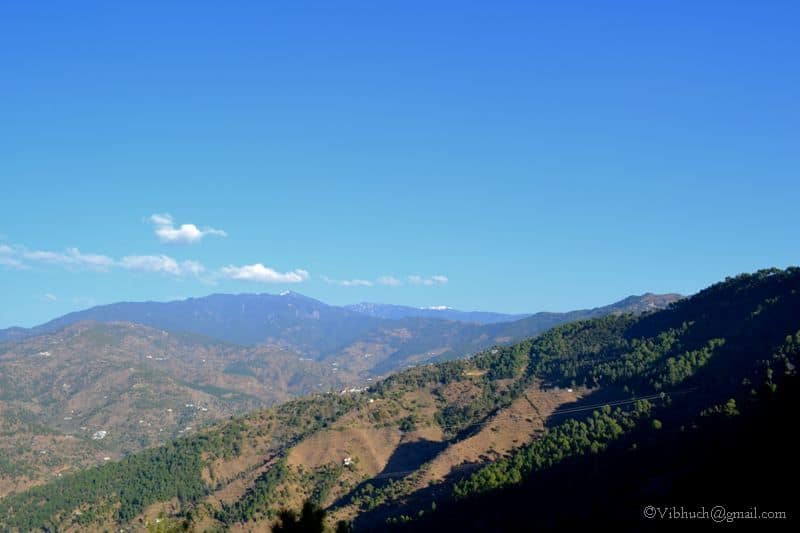
Rajgarh is one of those hidden gems in Himachal Pradesh that most people have never heard of. Tucked away in the Sirmour district on the Solan to Nahan route, this small hill town sits at an altitude of about 2,170 meters (7,120 ft) and is surrounded by apple orchards, peach farms, and thick pine forests. It is popularly known as the Peach Valley of Himachal Pradesh, and once you visit, you will understand why.
Rajgarh is roughly 105 km from Chandigarh, making it a very doable weekend trip. The town itself is quiet, unhurried, and completely off the tourist radar. If you are someone who enjoys camping, easy treks, orchards, and being surrounded by nature without the crowd, Rajgarh should be on your list. It is also the base for the Churdhar Peak trek, one of the finest moderate treks in the lower Himalayas and, importantly, the highest peak in the entire Outer Himalayan range at 3,647 meters (11,965 ft).
Here is a fact that will surprise you: Sir George Everest, the man after whom Mount Everest was named, conducted astronomical observations and measurements from Churdhar Peak around 1834. He used this summit as a triangulation point while surveying the full length of India. Most travelers who visit Rajgarh never hear this, and none of the other travel guides for this area mention it prominently. That tells you something about how underappreciated this region is.
This guide covers everything you need to plan your trip to Rajgarh in 2026, from how to reach, where to stay, what to do, budget estimates, and practical tips based on research and local inputs.
The best places to visit in and around Rajgarh, Himachal Pradesh are Churdhar Peak with the summit-top Shirgul Maharaj Temple (28 km via Nohradhar), Dolanji Bon Monastery (28 km), Haripur Dhar’s Bhangayani Devi Temple (56 km), Baru Sahib Gurudwara (26-29 km), the Rondi waterfall trail, and the peach and apple orchards around town itself.
- Churdhar Peak (28 km from Rajgarh via Nohradhar, trek only): the highest peak in the outer Himalayas at 3,647 m, with the Sir George Everest triangulation history from 1834.
- Shirgul Maharaj Temple, Churdhar summit: a deodar-roofed shrine to Lord Shiva at 3,647 m, reachable only on foot after the Nohradhar trek.
- Dolanji Bon Monastery (28 km, near Solan): one of the most significant Bon monasteries outside Tibet, founded in 1969, rarely crowded.
- Haripur Dhar and Bhangayani Devi Temple (56 km, about 2-hour drive): an ancient temple for the deity considered Lord Shirgul’s sister, reached through forest roads.
- Baru Sahib Gurudwara (26-29 km): a Sikh pilgrimage site tied to Sant Attar Singh Ji, next to the Akal Academy campus.
- Rondi waterfall trail (10-20 km stretches, unmarked): a string of waterfalls best seen September to November, once the monsoon runoff has fed them.
- Peach and apple orchards around Rajgarh town: walk-in fruit picking with the owner’s permission, peak season June-July for peaches.
- Chail (13 km): the old Patiala summer capital with the world’s highest cricket ground and the Chail Wildlife Sanctuary, a common day-trip add-on.
Altitude: 2,170 m (7,120 ft) | District: Sirmour, Himachal Pradesh
Distance from Chandigarh: 105 km (3-4 hrs) | From Delhi: 374 km (8-9 hrs) | From Shimla: 90 km (3-4 hrs)
Best Time: March-June (peach blossoms + treks) or October-November (apple harvest, clear views)
Trek: Churdhar Peak, 3,647 m (11,965 ft), highest peak in the Outer Himalayas. No permits needed.
Stays: Camps from Rs 1,200/night | Budget guesthouses from Rs 600/night | Resorts Rs 2,000-4,500/night
Mobile Network: BSNL widest coverage; Jio/Airtel works in town, patchy on trek routes
Fuel: Fill up at Solan (40 km before Rajgarh). Do not rely on Rajgarh pumps for a full tank
Let's quickly dive into the details:
Where Exactly Is Rajgarh and Why Should You Visit?
Rajgarh is a nagar panchayat in the Sirmour (Sirmaur) district of Himachal Pradesh. It lies on the road connecting Solan to Nahan, about 40 km from Solan town. The region is part of the Shivalik foothills, so the altitude is moderate and the climate is comfortable year-round compared to higher Himalayan destinations like Spiti or Ladakh.
What makes Rajgarh special is the combination of fruit orchards (peaches, plums, apricots, and apples), dense deodar and pine forests, and the fact that it is the gateway to Churdhar Peak, the highest summit in the outer Himalayas at 3,647 meters (11,965 ft). The area also has several waterfalls, ancient temples, and Bon monasteries within day-trip distance.
If you are based in Chandigarh, Delhi, or anywhere in the Punjab-Haryana belt, Rajgarh works perfectly as a 2-3 day escape. There are no crowds, no overpriced hotels, and no Instagram influencer chaos. Just orchards, trails, and clean air. And at 105 km from Chandigarh, it is one of the closest places in the country where you can trek to the highest peak in the outer Himalayan range.
What Is the Best Time to Visit Rajgarh?
Rajgarh is accessible throughout the year, but the best months depend on what you are looking for. Here is a month-by-month breakdown to help you decide.
| Season | Months | What to Expect |
|---|---|---|
| Spring | March – April | Peach and plum blossoms in full bloom. Clear skies, pleasant 15-25°C days. Best for photography and orchard walks. |
| Summer | May – June | Warm days (20-30°C), cool evenings. Fruit harvest season begins. Good for camping and treks. Pack a light jacket for evenings. |
| Monsoon | July – September | Heavy rainfall, frequent landslides on hill roads. Avoid unless you are comfortable with disrupted travel plans. |
| Autumn | October – November | Apple season. Clear views, crisp weather (10-20°C). Excellent for the Churdhar trek. |
| Winter | December – February | Snowfall at higher elevations, temperatures drop to 0-5°C at night. Beautiful but cold. Layer up well. |
My recommendation: visit between March and June or October and November. The monsoon months (July to September) are best avoided because the Solan-Nahan road is prone to landslides and you might get stuck for hours. If you are visiting for snowfall, January and February are your months, but be prepared for freezing nights.
How to Reach Rajgarh from Delhi, Chandigarh, and Shimla?
Rajgarh does not have its own airport or railway station, but it is well connected by road from major cities in north India. Here are the main routes.
By Road from Delhi (374 km, 8-9 hours)
Take NH-44 towards Ambala, then continue to Chandigarh, and from Chandigarh follow the Kalka-Solan-Rajgarh route. Alternatively, you can go via Dehradun-Paonta Sahib-Nahan if you prefer the eastern approach. The Delhi route via Chandigarh is faster and the road quality is better.
By Road from Chandigarh (105-130 km, 3-4 hours)
This is the most common approach. From Chandigarh, head towards Kalka, then Solan, and from Solan take the road towards Nahan. Rajgarh is about 40 km from Solan. The roads are decent hill roads, nothing too challenging if you have some experience driving in the hills. In case you are driving your own vehicle, fill up fuel at Solan as fuel availability in Rajgarh town is limited.
By Road from Shimla (90-96 km, 3-4 hours)
From Shimla, take the road via Chail or via Solan. The Chail route is scenic but slower. The Solan route is more straightforward. If you are combining Rajgarh with a Shimla region circuit, this is a natural add-on.


By Air
The nearest well-connected airport is Chandigarh (105 km). Shimla airport exists but has very limited flights. Dehradun airport is about 180 km away via the Nahan side. For most travelers, flying to Chandigarh and hiring a cab or taking a bus to Solan is the most practical option.
By Train
The nearest broad-gauge station is Kalka (90 km from Rajgarh). You can also take the Kalka-Shimla toy train and get off at Solan (40 km from Rajgarh). From Solan, HRTC buses and shared taxis run to Rajgarh. Chandigarh Railway Station (130 km) is the major junction with good connectivity from Delhi, Mumbai, and Kolkata.
By Bus (HRTC)
HRTC runs buses from Chandigarh and Solan to towns in Sirmour district. From Solan, you can find direct buses or shared vehicles to Rajgarh. The frequency is limited, so check the HRTC website (hrtchp.com) or call the Solan bus stand before planning. Expect to pay Rs 80-150 for the Solan to Rajgarh stretch depending on the bus type. Keep in mind that HRTC schedules on this route are limited to a few services per day, so check before you leave.

What Are the Top Things to Do in Rajgarh?
Rajgarh is not a destination where you tick off 15 tourist spots in a day. It is a slow-travel destination. You come here to walk through orchards, trek to a peak, visit an ancient temple, and sit by a campfire. Here are the things worth doing.
1. Trek to Churdhar Peak (3,647 m / 11,965 ft): Outer Himalayas’ Highest Summit
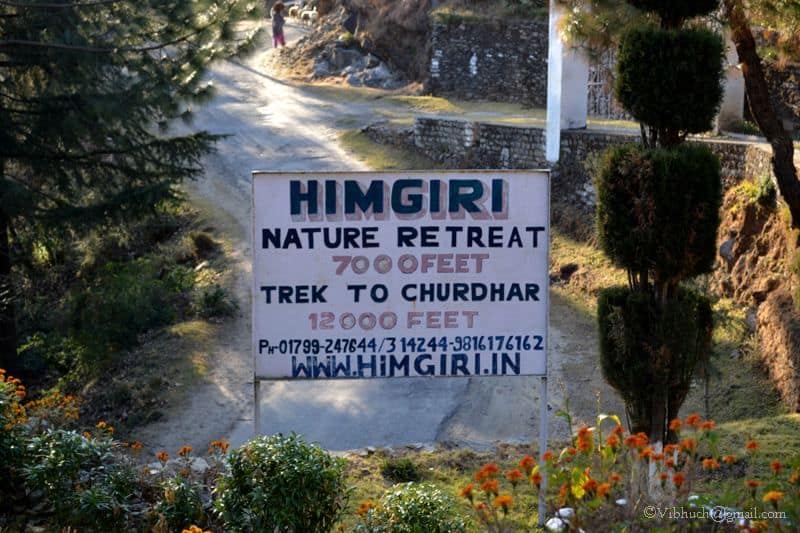
Churdhar (also spelled Churadhar or Chur Dhar) is the highest peak in the outer Himalayas and the crown jewel of Sirmour district. The most popular route starts from Nohradhar (about 28 km from Rajgarh) and covers approximately 18 km one way with an elevation gain of over 1,500 meters.
The trek is rated moderate to strenuous. The first hour is the toughest, with steep, rocky slopes through dense deodar forests. After that, the trail passes through terraced farmlands, alpine meadows, and eventually opens up to panoramic views of the Shivalik and Greater Himalayan ranges.
At the summit sits the ancient Shirgul Maharaj Temple (also called Chureshwar Mahadev), a deodar-roofed shrine dedicated to Lord Shiva with a sacred lingam inside. Pilgrims from Sirmour, Shimla, Chaupal, Solan, and Dehradun visit this temple regularly. And here is the historical fact that almost no travel guide mentions: Sir George Everest, the Surveyor General of India after whom Mount Everest is named, used Churdhar Peak as an astronomical reference point around 1834 while conducting his survey of the full length of the Indian subcontinent. He measured the earth’s curvature from these coordinates. No other peak in the outer Himalayas carries that kind of scientific history.
The Churdhar Wildlife Sanctuary surrounds the peak, covering 56 sq km and home to Himalayan black bear, barking deer, musk deer, langur, and leopards. Hence, keep your eyes open on the trail. No permits are required for the Churdhar trek. Best season is April to June and September to November. Plan for 2 nights / 3 days. You can camp near the summit or find basic shelter at trekker huts along the way.
Trek routes to Churdhar from different starting points:
- Nohradhar to Churdhar: 14-18 km (most popular, moderate)
- Sarahan (Sirmour) to Churdhar: 7 km (steep but shorter)
- Sailpaw-Dhokhta to Churdhar: 7 km
- Haripurdhar to Churdhar: 17 km
- Habban to Churdhar: 15 km
2. Haripur Dhar and Bhangayani Devi Temple
Haripur Dhar is about 56 km from Rajgarh and is famous for the ancient temple of Mata Bhangayani Devi, who is considered the god-sister of Lord Shirgul, the principal deity of the Churdhar region. The drive from Rajgarh to Haripur Dhar takes about 2 hours and passes through beautiful forest roads. This is worth a day trip if you are staying in Rajgarh for more than 2 days.
3. Dolanji Bon Monastery (Yungdrung Bon Monastery)
Located about 28 km from Rajgarh (near Solan), the Dolanji Bon Monastery is one of the most significant Bon monasteries outside Tibet. Founded in 1969 by Naoot Lungtog Tenpai Nyima, it follows the Yungdrung Bon tradition, which pre-dates Tibetan Buddhism. The monastery is peaceful, architecturally simple, and rarely crowded. It is a good stop on your way from Solan to Rajgarh or as a half-day excursion.
4. Baru Sahib Gurudwara
Baru Sahib is a Sikh pilgrimage site located about 26-29 km from Rajgarh, set in the lush Shivalik foothills. The Gurudwara here is associated with Sant Attar Singh Ji and is surrounded by the Akal Academy campus, one of the largest rural education networks in India. The campus itself, spread across the hillside, is worth seeing.
5. Orchard Walks and Fruit Picking
Rajgarh is called the Peach Valley for a reason. The entire area is dotted with orchards growing peaches, plums, apricots, and apples. If you visit between May and August, you can walk through these orchards and, with the owner’s permission, pick fresh fruit straight from the trees. The peach harvest in particular (June-July) is something you will not find in most other tourist destinations. Some guesthouses and camps arrange orchard walks for their guests, so ask when you book.
6. Waterfall Trails from Rondi
The route from Rondi (a village near Rajgarh) offers a series of waterfalls, one after the other, each within 10-20 km. These are not well-marked tourist trails, so you will need to ask locals for directions. Carry good trekking shoes and be prepared for muddy paths, especially post-monsoon. The waterfalls are at their best from September to November after the rains have fed them fully.
Where to Stay in Rajgarh?
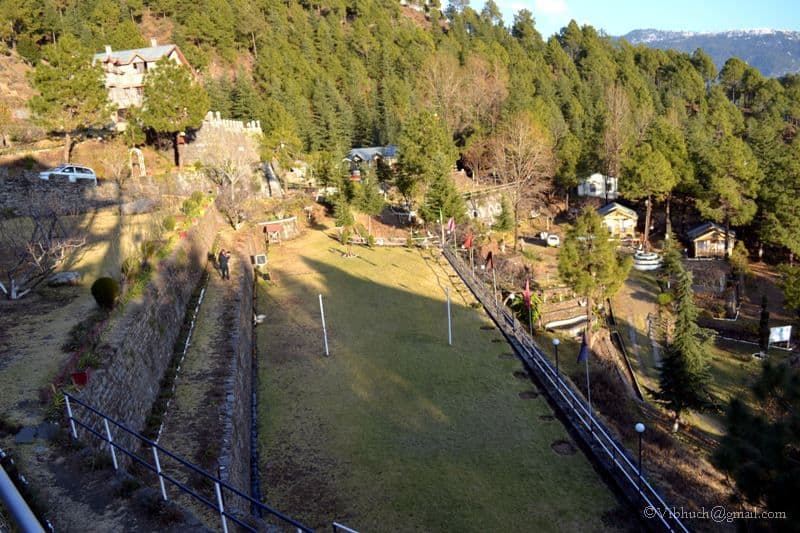
Rajgarh is a small town, so do not expect five-star resorts. What you will find is a mix of budget hotels, government rest houses, eco-resorts, and camping options. Here is a breakdown.
| Type | Options | Approximate Cost (2026) |
|---|---|---|
| Budget Hotels | The Tourist Inn (HPTDC), local guesthouses | Rs 600-1,500/night |
| Mid-Range Resorts | Mist n Meadows Resort, Rajgarh Exotica, Splendid View Eco Orchard Resort | Rs 2,000-4,500/night |
| Camping | Camp Peach Valley (12 log huts), Churwadhar Camping (5 km from town) | Rs 1,200-2,800/night (includes meals at most camps) |
| Government Rest Houses | PWD Rest House, Forest Department Rest House | Rs 500-1,000/night (book in advance through district office) |
Camp Peach Valley is probably the most popular option for tourists. They have 12 log huts with attached washrooms and offer activities like rock climbing, river crossing, and rappelling with trained staff. If you are into camping, this is a solid pick. Prices as of 2026 are approximately Rs 1,200-2,800 per night depending on the package, so verify directly with the camp before booking as rates vary by season and group size.
For the Churdhar trek, basic trekker huts are available along the route. Carry your own sleeping bag and food if you are trekking independently.
What to Eat in Rajgarh?
The food scene in Rajgarh is simple but satisfying. There are a few local dhabas along the main road serving standard Himachali and north Indian fare: dal, rice, rajma, roti, and seasonal vegetables. Most camps and resorts include meals in their packages. A typical dhaba meal will cost you Rs 120-200 per person, which is very reasonable for a hill destination.
One detour worth considering is the Chail area, about 13 km from Rajgarh. The heritage charm of Chail combined with a decent meal at one of the properties there makes it a worthy stop. If you are extending your trip towards Shimla, the drive through the pine forests is a bonus.
If you are staying in a camp, expect home-style meals cooked by the camp staff. Carry some snacks, dry fruits, and energy bars if you are heading for the Churdhar trek, as there are no food stalls on the trail.
How Much Does a Trip to Rajgarh Cost?
Rajgarh is a budget-friendly destination compared to popular Himachal spots like Manali or Shimla. Here is a rough budget breakdown for a 2-night, 3-day trip from Chandigarh for two people.
| Expense | Budget (2 people) | Mid-Range (2 people) |
|---|---|---|
| Transport (Chandigarh-Rajgarh return by own car/bike) | Rs 1,500-2,000 (fuel) | Rs 1,500-2,000 (fuel) |
| Transport (by bus, return) | Rs 300-600 | Rs 300-600 |
| Accommodation (2 nights) | Rs 1,200-3,000 | Rs 4,000-9,000 |
| Food (3 days) | Rs 1,500-2,000 | Rs 2,500-4,000 |
| Activities (camping extras, if any) | Rs 0-500 | Rs 500-2,000 |
| Total (2 people, 3 days) | Rs 4,500-8,100 | Rs 8,800-17,600 |
If you are traveling solo on a tight budget, you can manage a Rajgarh trip for under Rs 3,500 including transport from Chandigarh. Government rest houses and dhabas keep costs very low. The accommodation rates in the table above reflect 2026 pricing, which is higher than pre-2023 figures due to general cost increases across Himachal hill resorts. Keep in mind that weekend rates at camps and resorts can be 15-20% higher than weekday rates, so factor that in when planning.
What Should You Know Before Visiting Rajgarh?
Here are some practical tips to keep in mind before you head to Rajgarh.
- Mobile Network: BSNL has the widest coverage in Sirmour district. Jio and Airtel work in Rajgarh town but may be patchy in surrounding villages and on trek routes. Download offline maps before you leave.
- ATM: There is an ATM in Rajgarh town, but it is not always operational. Carry enough cash for your entire stay. Nearest reliable ATMs are in Solan.
- Fuel: Fill up your tank at Solan. There are fuel pumps in Rajgarh area, but they are small and may run out of stock. Do not rely on them for a full tank.
- Medical: Rajgarh has a basic government hospital. For anything serious, the nearest well-equipped hospitals are in Solan (40 km) or Chandigarh (130 km).
- Permits: No permits are required for visiting Rajgarh or trekking to Churdhar Peak. The area is open to all Indian and foreign tourists.
- Road Conditions: The Solan to Rajgarh road is a standard two-lane hill road. It is manageable in any car. Avoid monsoon months (July-August) when landslides are common on this stretch.
- Clothing: Even in summer, evenings get cool at 2,170 meters. Always carry a light jacket or fleece. In winter, pack thermals and a proper warm jacket.
- Wildlife Sanctuary: The Churdhar Wildlife Sanctuary is home to leopards and black bears. Do not venture onto the Churdhar trail after dark and do not carry food in open bags. The sanctuary is protected and camping inside it requires Forest Department clearance.
How to Plan a 2-3 Day Rajgarh Itinerary?
Here is a suggested itinerary for a comfortable trip to Rajgarh.
Day 1: Arrive and Settle In
Drive from Chandigarh (3-4 hours). If starting from Delhi, you will arrive by late afternoon. Check into your hotel or camp. If you have time, take a short walk through the nearby orchards. Evenings are best spent at the campfire if you are staying at one of the camping sites. The cool air at 7,120 ft makes evenings genuinely pleasant, even in May-June.
Day 2: Explore or Trek
Option A (Trek): Drive to Nohradhar (28 km from Rajgarh) early morning and begin the Churdhar trek. This is a full-day effort if you plan to reach the summit and return. I suggest considering camping near the summit if you want a more relaxed pace and want to catch the sunrise views from the Outer Himalayas’ highest peak.
Option B (Sightseeing): Visit the Dolanji Bon Monastery on the way towards Solan, drive to Haripur Dhar for the Bhangayani Devi Temple, and explore the waterfall trails near Rondi. This covers the major sights without the physical demand of the Churdhar trek.
Day 3: Return
If you skipped it earlier, visit Baru Sahib Gurudwara on your way out. Head back to Chandigarh or continue to Narkanda or Shimla if you want to extend your trip. The drive from Rajgarh to Shimla takes about 3-4 hours via Solan.
How Does Rajgarh Compare to Other Offbeat Himachal Destinations?
If you are trying to decide between Rajgarh and other offbeat places in Himachal Pradesh, here is a quick comparison.
| Feature | Rajgarh | Tirthan Valley | Jibhi |
|---|---|---|---|
| Distance from Chandigarh | 105 km | 250 km | 265 km |
| Altitude | 2,170 m (7,120 ft) | 1,600 m | 1,500 m |
| Crowd Level | Very Low | Moderate (growing) | High (overtouristed) |
| Best For | Camping, Churdhar trek, orchards | River activities, trout fishing | Cafes, short hikes |
| Budget (per day) | Rs 1,200-3,000 | Rs 1,500-3,500 | Rs 2,000-4,500 |
Rajgarh is the least commercialized of the three. If you are looking for a genuine escape without cafe culture or hostel party vibes, Rajgarh delivers. The absence of crowds is not a temporary state either. Most travelers from Delhi and Chandigarh still head to Shimla, Kasol, or Manali by default, which means Rajgarh sees a fraction of that footfall. That said, if you want more dining options and a traveler social scene, Kasol might suit you better for that kind of vibe.
Nearby Places to Visit from Rajgarh
If you have extra days or want to combine Rajgarh with a longer Himachal circuit, here are some nearby options.
- Chail (13 km): The old summer capital of the Patiala princely state. Visit the Chail Palace, the world’s highest cricket ground, and the Chail Wildlife Sanctuary.
- Solan (40 km): The mushroom capital of India. Visit Mohan Shakti Heritage Park and the Shoolini Devi Temple.
- Thanedar (via Shimla, ~120 km): Famous for apple orchards and the Satyanand Stokes legacy. A good extension if you are heading towards Shimla.
- Mashobra (via Shimla, ~110 km): A quieter alternative to Shimla with forested walks and the IIAS campus.
- Nahan (65 km): The district headquarters of Sirmour. Visit Renuka Lake (the largest natural lake in Himachal Pradesh) and the Jaitak Fort.
- Chopal and Rohru (via Nahan, ~120 km): Apple country in the Sirmour and Shimla districts, connected by the scenic Chansal Pass route. Worth considering if you want more orchard landscapes and a longer Himachal circuit.
Frequently Asked Questions
Is Rajgarh safe for solo travelers and women?
Yes, Rajgarh is a safe destination. It is a small, close-knit community and the local people are friendly and helpful. Solo travelers and women travelers should have no concerns visiting Rajgarh. Standard precautions apply as with any hill destination: inform someone about your plans, carry a charged phone, and avoid trekking alone in unfamiliar forest areas after dark.
Can I visit Rajgarh in winter?
Yes, Rajgarh receives snowfall in January and February at higher elevations. The town itself may or may not get snow, but the surrounding areas and the road towards Churdhar usually do. Roads remain open in winter, though expect some delays. Carry proper winter gear if visiting between December and February.
How difficult is the Churdhar trek?
The Churdhar trek is rated moderate to strenuous. The route from Nohradhar is about 18 km one way with a steep first hour. If you have basic fitness and some trekking experience, you can complete it in 2-3 days. It is not recommended for complete beginners or people with knee problems due to the steep descents. The Sarahan (Sirmour) route at 7 km is shorter but steeper, better for experienced trekkers wanting a single-day push.
Is there public transport to Rajgarh?
Yes, HRTC runs buses from Solan and Chandigarh to towns in Sirmour district. From Solan, you can find buses or shared taxis to Rajgarh. The frequency is limited (a few buses per day), so plan accordingly or book a private taxi from Solan. Check the HRTC website for current schedules. Fare from Solan to Rajgarh is approximately Rs 80-150 depending on the service type (as of 2026, verify locally for current rates).
Do I need any permits for Rajgarh or Churdhar?
No permits are required for visiting Rajgarh or trekking to Churdhar Peak. The area is open to all Indian and foreign tourists without any special documentation. The Churdhar Wildlife Sanctuary can be entered for trekking purposes without a permit, though camping inside the sanctuary core requires Forest Department clearance.
What is the best season for the Churdhar trek?
The best months for the Churdhar trek are April to June and September to November. The trail is accessible from April through November. Avoid monsoon months (July-August) due to slippery trails and poor visibility. Winter treks are possible but require snow trekking experience and proper gear.

Is Rajgarh good for camping with kids?
Rajgarh is an excellent destination for family camping. Camps like Camp Peach Valley offer log huts with attached washrooms, so you do not need to rough it out. Activities like rock climbing and rappelling are conducted by trained staff, making it safe for older children. The orchards and easy nature walks around Rajgarh are suitable for kids of all ages.
What is the altitude of Rajgarh and Churdhar Peak?
Rajgarh town sits at about 2,170 meters (7,120 ft). Churdhar Peak is at 3,647 meters (11,965 ft), making it the highest peak in the outer Himalayas. The elevation gain from Rajgarh to the Churdhar summit is approximately 1,477 meters over the trek route. At this altitude, temperatures at the summit can drop below freezing even on summer nights, so carry adequate warm layers.
I hope this guide helps you plan a great trip to Rajgarh in 2026. This is one of those places that rewards travelers who do a little research beyond the usual Shimla and Manali circuit. The George Everest connection to Churdhar, the absence of crowds, and the sheer variety of orchards, forests, and highland trails make it genuinely special. If you have been to Rajgarh or trekked to Churdhar, I would love to hear about your experience. Drop a comment below or join the DwD community to connect with fellow travelers planning Himachal trips. Feel free to ask any questions about the route or accommodation and I will get back to you 🙂
Last Updated: June 2026
