


The sky was a flat monsoon grey and vestiges of last night’s rain were still visible in the fresh puddles in the lawn. From my hotel window, at early dawn, the holy city of Puri seemed mystical, the skyline a little blurry in the rain-triggered mist. In the distance, the temple of Lord Jagannath spiraled up towards the sky, as if guarding the city itself.
Standing on a promontory, surrounded by lush green coconut palms, the Srimandira, the temple abode of Lord Jagannath, is one of the finest specimens of the Kalinga style of architecture. Soaring 200 feet from the ground, it dominates the skyline of the city. This ancient town on the east coast of India has attracted the pious and the devout for millennia. The Mahabharata narrates how the Pandava brothers offered prayers on the sacred platform here.
If you are planning a trip to Puri in 2026, this guide covers everything you need to know. From Jagannath Temple darshan timings to Rath Yatra 2026 dates, from where to eat to how to reach, I have tried to put together all the practical details you will need. Keep in mind, Puri is not just a pilgrimage town. It is a place where ancient spirituality meets coastal charm, and the food alone makes the journey worthwhile.
What Makes Puri Special as a Travel Destination in 2026?
Puri is one of the four sacred Char Dham sites in Hindu tradition, alongside Badrinath, Dwarka, and Rameswaram. But beyond its religious significance, Puri offers a unique blend of culture, history, and coastal leisure. The Jagannath Temple, built in the 12th century by King Anantavarman Chodaganga Deva, stands as a masterpiece of Kalinga architecture. Its 65-metre Vimana (tower) topped with the Sudarshana Chakra is visible from miles around.
The year 2026 holds special importance for Puri. This is a Nabakalebara year, which occurs once every 12-19 years. During Nabakalebara, the wooden idols of Lord Jagannath, Lord Balabhadra, and Goddess Subhadra are ceremonially replaced with new ones. The last Nabakalebara was in 2015, and the 2026 edition is expected to draw millions of additional devotees. If you have been considering a trip to Puri, this is the year to go.
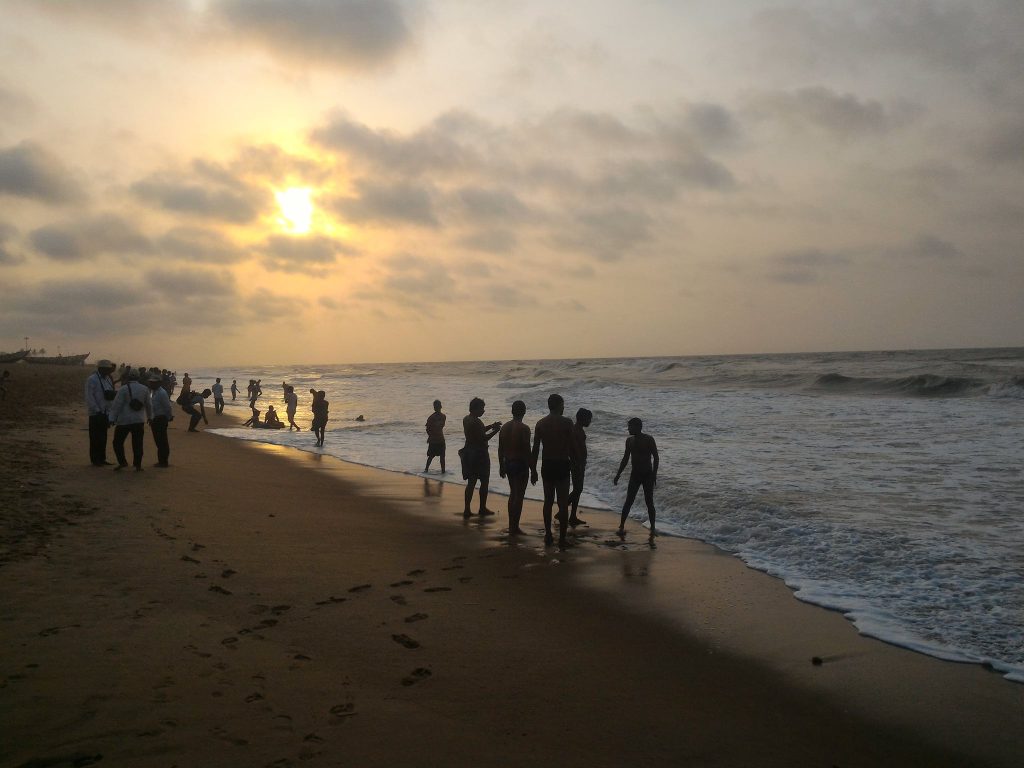
Beyond the temple, Puri’s Golden Beach received the prestigious Blue Flag certification from the Foundation for Environment Education, Denmark, in 2020. This recognition highlights the beach’s cleanliness, safety infrastructure, and environmental standards. The beach stretches for several kilometers and remains one of the safest along India’s eastern coast.
What Are the Jagannath Temple Darshan Timings and Rules?
The Jagannath Temple opens around 5:00 AM for the Mangala Arati (first morning ritual) and closes around 10:30 PM after the Bada Singhar Dhupa. There is an afternoon break from approximately 1:00 PM to 4:00 PM when the deities rest, and no darshan is available during this period.
Important rules to keep in mind:
- Entry: Only through Singhadwara (Lion Gate), the main entrance on the eastern side. The temple follows a Dhadi Darshan queue system.
- General darshan is free. There is no ticket or online booking for regular darshan.
- Dress code: Conservative attire is mandatory. Sarees, dhotis, salwar suits, or kurta-pyjamas are appropriate. Shorts, sleeveless tops, and casual Western wear are not permitted.
- No electronics: Mobile phones, cameras, smartwatches, and any electronic devices are strictly prohibited inside the temple. Deposit counters are available near the entrance.
- No leather items: Wallets, belts, and bags made of leather must be left outside.
- Non-Hindus: Entry into the main temple complex is restricted to Hindus only. However, non-Hindu visitors can view the temple’s magnificent Vimana and Sudarshana Chakra from the rooftop of the Raghunandan Library, located opposite Singhadwara.
Best time for darshan: Early mornings between 5:00 AM and 8:00 AM offer a peaceful atmosphere with fewer crowds. If you visit during festivals or weekends, expect long queues and plan for 2-3 hours of waiting time.
When Is Rath Yatra 2026 and What Happens During the Festival?
The Rath Yatra 2026 falls on Thursday, July 16, 2026 (Ashadha Shukla Dwitiya). The return journey, known as Bahuda Yatra, takes place on Friday, July 24, 2026. The entire festival spans about nine days of ceremonies and processions.
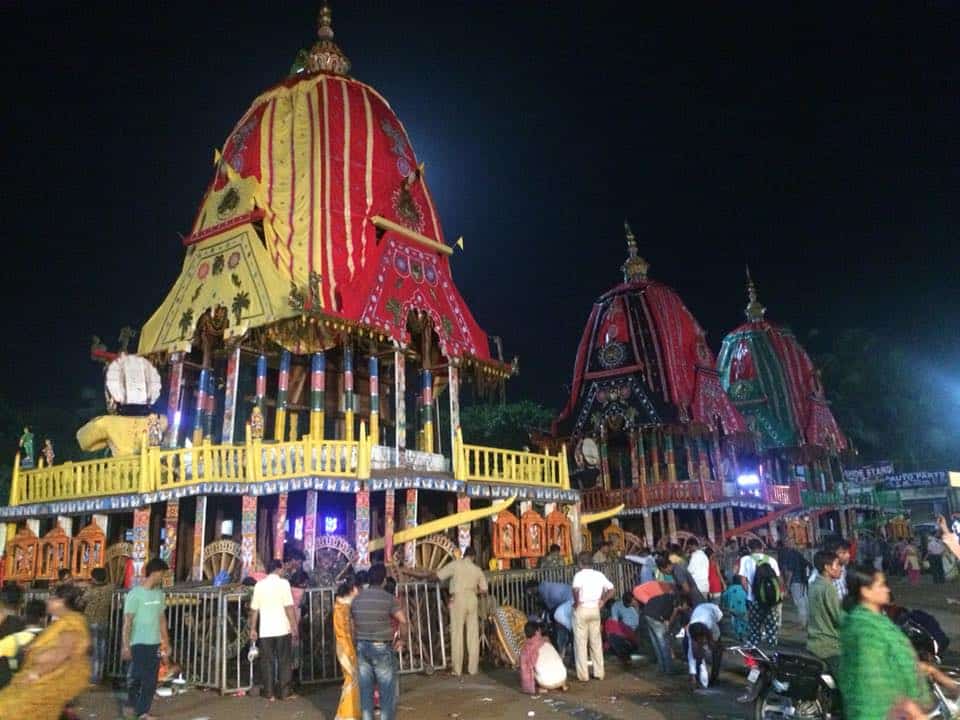
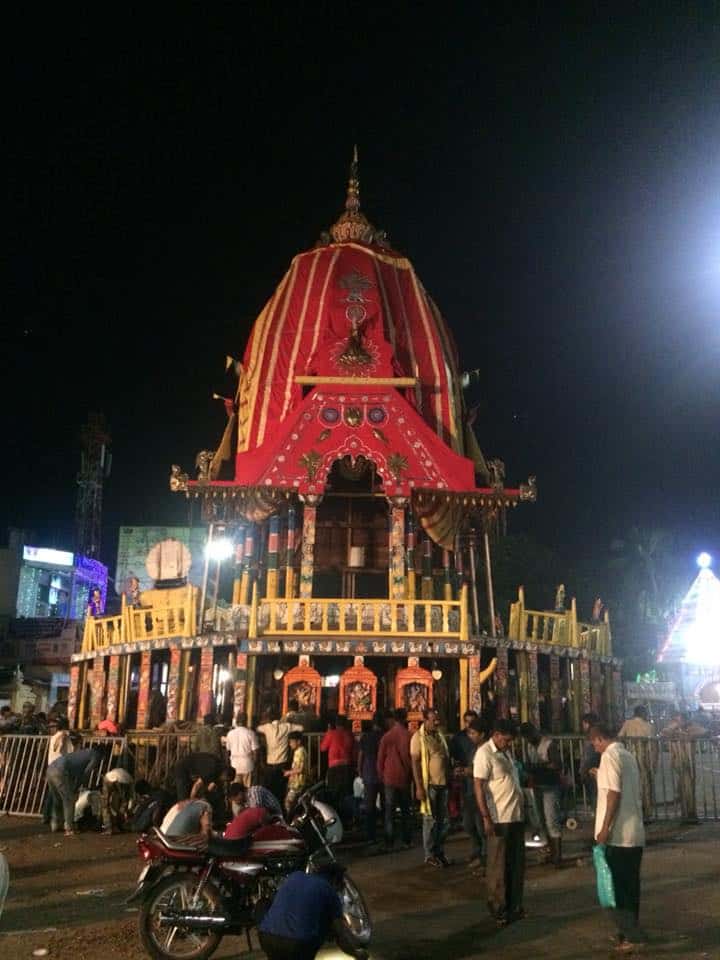
During Rath Yatra, the idols of Lord Jagannath, Lord Balabhadra, and Goddess Subhadra are brought out from the temple sanctum and placed on three massive wooden chariots. Each chariot is freshly constructed every year.
- Nandighosa: Lord Jagannath’s chariot, 45 feet tall, with 16 wheels, decorated in red and yellow cloth.
- Taladhwaja: Lord Balabhadra’s chariot, 44 feet tall, with 14 wheels, draped in red and green.
- Darpadalana: Goddess Subhadra’s chariot, 43 feet tall, with 12 wheels, covered in red and black.
The deities are carried to their chariots in a slow, ceremonial movement known as Pahandi. Servitors carry circular ceremonial umbrellas and large fans with applique work, while trumpet calls, clashing cymbals, and drum beats fill the air. Dancers and acrobats perform as loud chanting by a sea of devotees reverberates through the streets.


The Gajapati king of Puri then performs the Chhera Pahanra ceremony, sweeping and cleaning each chariot with a golden broom. After this, devotees pull the chariots along Puri’s grand avenue (Bada Danda) for about 3 kilometers to the Gundicha Temple. The journey takes almost half a day as hundreds of thousands jostle for a chance to pull the ropes.
After a week at Gundicha Temple (considered Lord Jagannath’s birthplace), the deities ride their chariots back during Bahuda Yatra. On the return, Lord Jagannath is offered Poda Pitha, a traditional dessert, by Goddess Ardhasini, believed to be his aunt. The next day brings the Suna Vesha (golden appearance), a glittering spectacle witnessed by millions when the deities are adorned with gold ornaments on their chariots.
![What to pack for Ladakh Bike Ride or Spiti Bike Ride? [Clothes, Spares, Gear & Accessories]](https://discoverwithdheeraj.com/yt_vid_thumbs/ladakh/88.png)
Finally, during Niladri Bije, the deities return to the sanctum. On this day, Lord Jagannath ceremonially offers Rasagola to Goddess Mahalakshmi, his celestial spouse. This sweet, made of fresh cottage cheese, is one of Puri’s most celebrated delicacies.
Travel tip for Rath Yatra: If you plan to visit during Rath Yatra, book your hotel at least 2-3 months in advance. Prices can triple during the festival period, and rooms fill up fast. The city becomes extremely crowded, so carry water, sunscreen, and comfortable walking shoes.
What Other Festivals Are Celebrated in Puri?
Puri celebrates over 100 festivals annually at the Jagannath Temple. Besides Rath Yatra, the most notable ones include:
- Snana Yatra (June): The bathing festival when the deities are ceremonially bathed.
- Jhulana Yatra (August): Celebrated at the Mathas (monasteries) around the temple. Idols of Radha and Krishna are placed on decorated ceremonial swings. Many Mathas organize Gotipua dance performances, a variant of Odissi where young boys present acrobatic postures set to traditional Odissi songs.
- Dola Yatra (March): The Holi festival celebrated in Puri’s unique style.
- Chandan Yatra (May-June): A 42-day summer festival where the deities are anointed with sandalwood paste.
How to Reach Puri from Delhi and Other Cities?
Puri is well-connected by air, rail, and road. Here are your options:
By Air
The nearest airport is Biju Patnaik International Airport in Bhubaneswar, about 60 km from Puri. IndiGo, Air India, and Vistara operate daily flights from Delhi, Mumbai, Kolkata, Bengaluru, and other major cities. The Delhi-Bhubaneswar flight takes approximately 2 hours. From Bhubaneswar airport, you can take a pre-paid taxi (Rs 1,200-1,500) or a bus to Puri, which takes about 1.5-2 hours.
By Train
Puri Railway Station is well-connected to all major cities. Key trains from Delhi include:
- Purushottam SF Express (12802): Departs New Delhi at 22:40, reaches Puri in about 30 hours.
- Neelachal Express (12876): Departs New Delhi at 07:30, takes approximately 34 hours.
There are also direct trains from Mumbai (3 weekly), Kolkata (7 daily), and Bengaluru (1 weekly). Kolkata to Puri is the shortest route at about 8-10 hours by train.
By Road
Puri is connected to Bhubaneswar via NH316 (60 km, 1.5 hours). The Puri bus stand near the temple provides frequent connections to Bhubaneswar (Rs 50-80 for ordinary buses) and Cuttack. If you are driving from Kolkata, the distance is about 500 km via NH16, taking 8-10 hours.
What Is a Good Itinerary for Puri in 3 Days?
Here is a practical 3-day itinerary that covers the best of Puri and surrounding areas:
Day 1: Bhubaneswar Arrival and Exploration
Arrive in Bhubaneswar by flight or train. If you arrive early, visit Nandankanan Zoological Park (entry Rs 50 for adults, Rs 10 for children), which is home to the famous white tigers. Alternatively, explore the ancient temples of the old city, including the Lingaraja Temple and Mukteshwar Temple. Overnight in Bhubaneswar or drive to Puri in the evening.
Day 2: Konark Sun Temple and Puri
Start early and head to the Konark Sun Temple, a UNESCO World Heritage Site about 65 km from Puri. Entry is Rs 40 for Indians and Rs 600 for foreigners. The temple, built in the 13th century, is designed as a giant stone chariot with 24 intricately carved wheels and seven stone horses. After Konark, stop at Chandrabhaga Beach for its serene atmosphere. You can also visit Raghurajpur, a heritage craft village where every house is an art studio featuring Pattachitra paintings and palm-leaf engravings. Reach Puri by afternoon. Evening darshan at Jagannath Temple and aarti. Visit the beach for sunset.
En route, you can also stop at Pipli village, famous for its vibrant applique craft, and Dhauli Peace Pagoda, where Emperor Ashoka renounced war after the Kalinga battle.
![Why avoid traveling on Manali Leh Highway in October for Ladakh trip? [5 Safety Reasons]](https://discoverwithdheeraj.com/yt_vid_thumbs/ladakh/104.png)
Day 3: Chilika Lake and Departure
Early morning darshan at Jagannath Temple. Then drive to Chilika Lake, Asia’s largest brackish water lagoon, about 50 km from Puri. You can take a boat ride (Rs 100-200 per person for shared boats) to spot Irrawaddy dolphins and, during winter months (November-February), see migratory birds at Nalabana Bird Sanctuary. Return to Bhubaneswar by evening for your departure.
Where Should You Stay and Eat in Puri?
In Puri, you have two main areas for accommodation: near the beach or near the temple. Both areas are about a 15-20 minute walk from each other, or a short ride by local cycle rickshaw.
Accommodation Options (2026 Prices)
- Budget hotels and guesthouses: Rs 500-1,500 per night. Simple rooms with basic amenities. Many are located on Chakra Tirtha Road.
- Mid-range hotels: Rs 2,000-4,000 per night. Options include OTDC (Odisha Tourism) hotels, which are well-maintained and reasonably priced.
- Heritage and luxury hotels: Rs 5,000-15,000 per night. The Mayfair Heritage, Mahodadhi Palace, and the historic BNR Hotel (now Hotel Chanakya BNR) offer premium experiences with sea views.
- Temple accommodation: Purushottam Bhakta Nivas and Neeladri Bhakta Nivas near the temple offer basic rooms for pilgrims at very affordable rates.
Where to Eat
Being close to the sea, Puri offers excellent seafood. A spiced fish thali can give you the real taste of Odisha in an instant. Here are the key eating zones:
- Chakra Tirtha Road: Home to the best backpacker cafes in Puri. Budget-friendly and traveler-friendly.
- VIP Road: More formal restaurants, suitable for families.
- Marine Drive: Esplanade dining with slightly upmarket options and sea views.
- Anand Bazaar (inside temple complex): This is where you get the famous Mahaprasad. Available from approximately 2:00 PM onwards. The spread includes rice, khichdi, dal, and various vegetable preparations. It is one of the largest kitchens in the world, with 400 cooks working around 200 hearths daily to feed over 10,000 people.
Do not miss the local sweet delicacies sold near the temple, including Rasagola, Gaja, Khaja, Poda Pitha, and Malpua.
What Is the Best Time to Visit Puri?
The ideal time to visit Puri is between October and February, when temperatures range from 15 to 25 degrees Celsius. The weather is comfortable for both temple visits and beach activities.
- October to February: Best weather. Cool and pleasant. Ideal for sightseeing and beach time. Peak tourist season, so book hotels in advance.
- March to June: Hot and humid, with temperatures reaching 40 degrees Celsius. Not ideal unless you are visiting for a specific festival like Chandan Yatra.
- July to September: Monsoon season. Heavy rainfall, but this is when Rath Yatra takes place. The city comes alive during the festival, though rain can be a challenge.
What Are the Essential Travel Tips for Puri?
- Summer heat is severe: If visiting between March and June, carry sunglasses, sunscreen, a hat, and plenty of water.
- Carry cash: While UPI is widely accepted in hotels and larger restaurants, smaller shops, rickshaw drivers, and street food vendors may prefer cash. ATMs are available near the temple and beach areas.
- Beach safety: Puri Beach has local lifeguards called Nulia. Always swim in areas they supervise. Avoid the beach after dark as lighting can be patchy. The Blue Flag beach section near the lighthouse has better facilities.
- Cycle rickshaws: The most convenient way to get around Puri town. A ride between the temple and beach area costs Rs 20-50.
- Auto-rickshaws and taxis: Available for longer trips. Negotiate the fare before boarding. Auto-rickshaws within the city charge Rs 50-150 depending on distance.
- Mobile connectivity: Jio, Airtel, and BSNL all work well in Puri and Bhubaneswar.
How Much Does a Trip to Puri Cost?
Here is a rough budget breakdown for a 3-day trip to Puri from Delhi for two people (2026 estimates):
| Expense | Budget (INR) | Mid-Range (INR) |
|---|---|---|
| Delhi-Bhubaneswar flights (return, 2 pax) | 8,000-12,000 | 12,000-18,000 |
| Bhubaneswar-Puri transport (return) | 200-400 (bus) | 2,400-3,000 (taxi) |
| Hotel (2 nights) | 1,000-3,000 | 4,000-8,000 |
| Food (3 days, 2 pax) | 1,500-2,500 | 3,000-5,000 |
| Konark entry + local transport | 200-500 | 1,000-2,000 |
| Chilika Lake boating | 200-400 | 400-800 |
| Miscellaneous | 500-1,000 | 1,000-2,000 |
| Total (approx.) | Rs 11,600-19,800 | Rs 23,800-38,800 |
If you take the train instead of flying, you can save Rs 5,000-10,000 on the Delhi-Puri route. Sleeper class on the Purushottam Express costs around Rs 500-700 per person, while 3AC is Rs 1,200-1,800.
Frequently Asked Questions
Can non-Hindus visit Jagannath Temple in Puri?
No. Entry into the main Jagannath Temple complex is restricted to Hindus only. However, non-Hindu visitors can view the temple’s magnificent tower and Sudarshana Chakra from the rooftop of the Raghunandan Library, located directly opposite the main gate (Singhadwara). Non-Hindu visitors can also participate in the Rath Yatra by pulling the chariots outside the temple.
What is the Jagannath Temple dress code?
Visitors must wear conservative Indian attire. Sarees, dhotis, salwar suits, and kurta-pyjamas are appropriate. Shorts, sleeveless tops, and jeans are not allowed. Additionally, mobile phones, cameras, leather wallets, and belts must be deposited at counters near the entrance before entering.
When is Rath Yatra 2026 in Puri?
Rath Yatra 2026 falls on Thursday, July 16, 2026. The return journey (Bahuda Yatra) is on Friday, July 24, 2026. The year 2026 is also a Nabakalebara year, making it an especially significant edition of the festival.
What is the best time to visit Puri?
October to February is the ideal period, with pleasant temperatures between 15 and 25 degrees Celsius. This is perfect for temple visits, beach activities, and excursions to Konark and Chilika Lake. Avoid the March-June summer heat unless visiting for a specific festival.
How far is Konark Sun Temple from Puri?
Konark Sun Temple is approximately 35 km from Puri (about 45 minutes by road). Entry costs Rs 40 for Indian citizens and Rs 600 for foreigners. The temple is open from sunrise to sunset. Allow 2-3 hours for a proper visit.
Is Puri Beach safe for swimming?
Puri Beach is relatively safe compared to many other Indian beaches. It holds the Blue Flag certification and has local lifeguards called Nulia who patrol the swimming areas. Always swim within the designated zones and under their supervision. Avoid venturing into the sea during monsoon months (July-September) due to strong currents.
What food should I try in Puri?
The Mahaprasad at Anand Bazaar inside the temple complex is a must-try. This vegetarian spread is prepared in the world’s largest kitchen. Also try local sweets like Rasagola, Gaja, Khaja, Poda Pitha, and Malpua. For non-vegetarian food, the fish thali at local restaurants on Chakra Tirtha Road is excellent. Puri’s seafood, especially the prawn curry, is outstanding.
![How to tackle water-crossings on Ladakh Bike Trip / Spiti Valley Bike Trip? [20 Important Tips]](https://discoverwithdheeraj.com/yt_vid_thumbs/ladakh/82.png)
I hope this guide helps you plan your trip to Puri. It is a city that stays with you, not just for the temple or the beach, but for the overall experience. The food, the festivals, the sound of the sea. If you have any questions about visiting Puri, feel free to ask in the comments section below. I would be happy to help.
If you liked this article, consider joining the Discover with Dheeraj community on social media. We share travel tips, itineraries, and road trip stories from across India. Happy traveling, my friend. 🙂
Last Updated: April 2026
