


Ever since I went to Leh Ladakh in 2010, it is the mere mortal body of mine that has returned. My soul has been lost in that heaven forever. Every day when I close my eyes, my wandering soul in the heaven transmits back the majestic vistas of Ladakh. Every day I wish I could go back in search of my soul and bring it back.
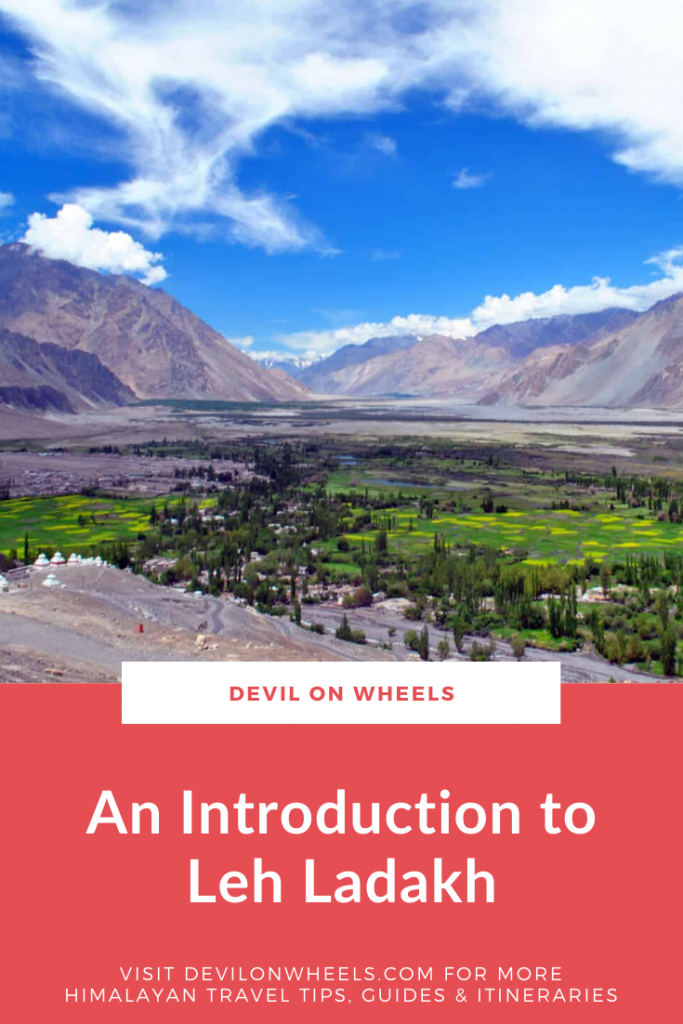
However, I always overlook the fact that some things in this world are still impossible, and bringing back your soul from heaven is one of them.
Each time you visit Ladakh, you will fall more and more in love with the place, the people, and the culture of Ladakh. It does not matter how rugged the terrain is or how difficult the conditions are to survive. It is nothing but the magic of the heaven named Ladakh.
All my heart says, there is no other place like Ladakh in this world.
Practical Info: Ladakh is a Union Territory of India (since October 2019), covering about 59,000 sq km with seven districts (Leh, Kargil, Nubra, Sham, Changthang, Zanskar, and Drass, reorganized from the original two in April 2026). Leh and Kargil are its joint capitals, and Leh town sits at 11,520 ft (3,500 m). Best time to visit is May to September. You do not need a stamped Inner Line Permit anymore. Just pay the Ladakh Environment Development Fee (EDF) online, about Rs 590 for a 7-day trip, before heading to Nubra, Pangong, Tso Moriri, or Hanle. Budget roughly Rs 2,200-3,700 per day on a shoestring, or Rs 4,800-9,000 mid-range (see the budget table below).
Let's quickly dive into the details:
Why Does Ladakh Leave Such a Deep Impression on Every Visitor?
Quick Answer: Ladakh’s stark high-altitude landscapes, deep Tibetan Buddhist culture, and warm, welcoming locals combine into an experience unlike anywhere else in India. Most first-time visitors talk about going back within weeks of leaving, and many, including me, end up returning five or six times.
I am not the only one who lost his soul after visiting Ladakh. Many people who have traveled to this barren land of magical colors have experienced the same thing. I feel it is always better to misplace your soul in heaven while you are alive than to burn it in the hell of modern civilization.
I am sure of my belief that every person in the world must visit this masterpiece of Himalayan natural beauty once in their lifetime. In fact, I call it a place to be visited #LifeMeinBaarBaar. I have visited Ladakh about five to six times in different seasons, and each trip felt completely new.
The versatility in geographical and cultural offerings of this place has been responsible for many different names that Ladakh has carried through history. Some people call it La-Dags meaning “Land of High Mountain Passes“, some call it “Cold Desert in the Skies” and some refer to it as “Land of Moon“. The Tibetans historically called the region Maryul, meaning the “Low Land,” because it sits lower than the Tibetan Plateau.
Do you have a name for it?
What Is Leh Ladakh and Where Exactly Is It Located?
Quick Answer: Ladakh is a high-altitude cold desert Union Territory in northern India, formed in October 2019 from the former state of Jammu and Kashmir. It spans about 59,000 sq km across seven districts as of April 2026 (originally just Leh and Kargil), bordered by Tibet, Himachal Pradesh, Jammu and Kashmir, and Pakistan-administered Gilgit-Baltistan. Leh is its main town, not a separate region.
Ladakh is a high-altitude cold desert situated in the northernmost part of India. It became a separate Union Territory on 31 October 2019, carved out from the erstwhile state of Jammu and Kashmir. The region spans approximately 59,000 sq km. Ladakh was originally divided into two districts, Leh and Kargil, but that changed on 27 April 2026, when the Lieutenant Governor notified five new districts, taking the total to seven. More on that below. The total population is around 2.7 lakh (2011 Census).
Leh vs Ladakh, what is the difference? This confuses a lot of first-timers, so here is the short version. Ladakh is the whole Union Territory. Leh is its biggest town (about 30,870 people as per the 2011 Census) and also the name of a district. When people say “Leh Ladakh”, they usually mean flying or driving into Leh and using it as a base to explore the rest of Ladakh. Leh and Kargil serve as the joint capitals of the UT. And no, Leh is not in Jammu and Kashmir anymore. It was until 31 October 2019, which is why older maps, bus tickets, and even some blogs still write “Leh, J&K”. Keep in mind that your vehicle papers and hotel bookings will now say “Leh, Ladakh”.
Ladakh is surrounded by the highest mountain ranges on earth, including the Great Himalaya, the Karakoram, the Zanskar Range, and the Ladakh Range. To the east lies the Tibet Autonomous Region of China. To the south is Himachal Pradesh. To the west are Jammu and Kashmir and Pakistan-administered Gilgit-Baltistan.
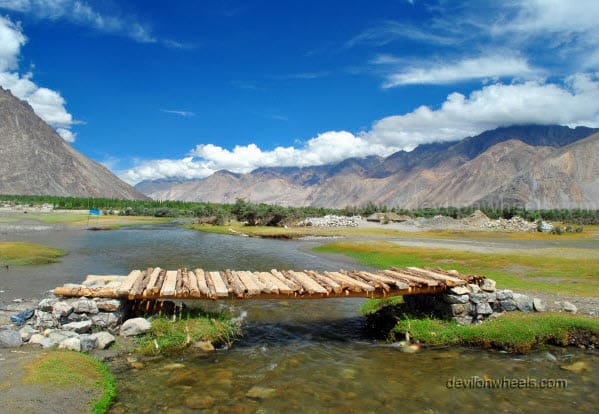
The Indus is the major river flowing through Ladakh. Along with its tributaries including Shyok, Zanskar, Dras, and Nubra, it acts as the lifeline of the entire region. The ancient Indus Valley trade routes once passed through Leh, connecting Tibet, Kashmir, Central Asia, and the Indian subcontinent.
What Makes Ladakhi Culture So Unique?
Quick Answer: Ladakh’s culture is rooted in Tibetan Buddhism, practiced by over 77 percent of Leh district, alongside a strong Muslim community in Kargil. Masked Cham dances, centuries-old monasteries, and festivals like Hemis, Losar, and Dosmoche keep this living heritage visible everywhere you travel.
Apart from the natural vistas, Ladakh is known for its deep Tibetan Buddhist culture. The rich cultural heritage is reflected in the lives of Ladakhis, their architecture (ancient monasteries and palaces), food, festivals, and celebrations. Buddhism is practiced by over 77% of the population in Leh district, with Islam being predominant in Kargil district.
The people in Ladakh love to dance with masks. These masked dances are theatrical representations of the fight between good and evil. You can witness this rich culture at one of the most popular festivals of Ladakh, particularly the Hemis Festival held every June/July. Other notable festivals include Losar (Ladakhi New Year), Dosmoche, and the Ladakh Festival organized by the tourism department every September.
What Does Julley Mean and Why Is It So Special?
Quick Answer: Julley (also spelled Joolay) is the all-purpose Ladakhi greeting used for hello, goodbye, and everything in between. Locals and travelers use it across Ladakh, Lahaul-Spiti, and parts of Kinnaur, and saying it back instantly breaks the ice with anyone you meet.
“Ladakhi” is the language spoken by the people residing in this cold desert. It belongs to the Tibetic language family and has its own script. A lot of people ask me, what do you mean by Julley or Joolay or जुले?
“(जुले)” or “Joolay” or “Julley” in the Ladakhi language means “Namaskar” in Hindi or “Hello” with respect in English. Sometimes people use it to say Goodbye as well, and I use it all the time in all my emails. Julley is not just a word but a magical word in itself. The word Julley is viral among travelers, tourists, and locals greeting each other in the higher Himalayas of Ladakh and the tribal regions of Lahaul, Spiti Valley, and Kinnaur in Himachal Pradesh.
Julley Meaning in English
Julley in English means or can be used to say “Hi”, “Hello”, “How are you?”. This word is now even used to say “Goodbye” as well.
Julley Meaning in Hindi (जुले)
Julley in Hindi (pronounced as जुले) can be used to say “Namaskar”, “Namaste”, “How are you?”
So, if you visit Leh Ladakh or Lahaul-Spiti next time, do not forget to greet everyone with “Julley” and you will experience the magic of the word. 🙂
What Local Food Should You Try in Ladakh?
Quick Answer: Ladakhi food leans heavily on Tibetan influences, thukpa (noodle soup), momos, and skyu (a hearty wheat-dumpling stew) built for cold weather and long days at altitude. Butter tea (gur gur cha) is worth trying at least once, even if the taste takes getting used to.


Food is where Ladakh’s Tibetan roots come through the clearest. Thukpa and momos are everywhere in Leh Main Bazaar, but the more traditional dish to look for is skyu, a wheat-dumpling stew with root vegetables that Ladakhi families have relied on for centuries to stay warm and energized. Chutagi, a bowtie-pasta version of the same idea, is another local favorite.
Butter tea, locally called gur gur cha, is salty rather than sweet and made with yak butter, and apricot season (July-August) brings fresh apricots and apricot juice across Leh, Nubra, and Turtuk. For a full breakdown of dishes, where to eat them, and restaurant recommendations in Leh, read our Ladakh food guide.
How Can You Reach Ladakh in 2026?
Quick Answer: Fly directly into Leh (about 90 minutes from Delhi), drive the 474 km Manali-Leh Highway (open late May to mid-October), or take the gentler 434 km Srinagar-Leh Highway (open April to November). Whichever route you pick, budget at least a day for acclimatization before heading to any high pass.
There are three main ways to reach Ladakh. Each has its own charm and challenges. Keep in mind that whichever route you choose, acclimatization is critical when visiting Ladakh and you should never take it lightly. If ignored, AMS can take lives and may prove fatal.
By Air
You can take a direct flight to Kushok Bakula Rimpochee Airport in Leh from Delhi, Mumbai, Srinagar, or Chandigarh. Flights from Delhi take about 90 minutes. However, when you choose this option, you will need proper acclimatization for at least 24-36 hours before exploring any region. Leh sits at 11,520 ft, and your body needs time to adjust after arriving directly from the plains. Flights typically cost Rs 4,000-12,000 one-way depending on season and advance booking.

By Road via Manali
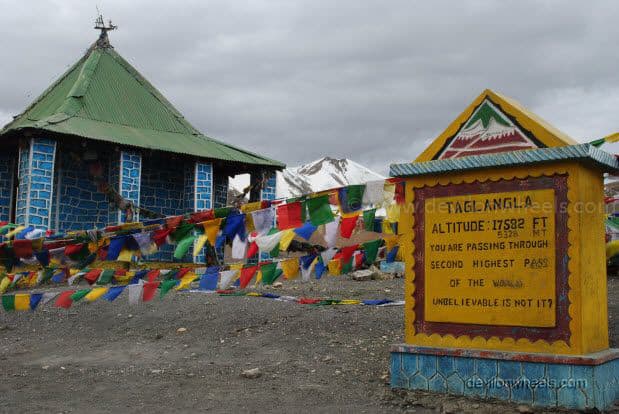
The 474 km Manali-Leh Highway is one of the dream road trips for any adventure lover. This route passes through some of the highest motorable passes in the world, including Atal Tunnel (which bypasses Rohtang Pass since October 2020), Baralacha La (16,040 ft), Lachalung La (16,616 ft), and Taglang La (17,480 ft). The road typically opens in late May or early June and closes by mid-October. The journey takes 2 days with an overnight halt at Jispa or Sarchu. If you would rather skip the driving, HRTC runs a direct Manali-Leh bus for around Rs 833 one-way, covered in detail in our Leh Ladakh bus rates and timetable guide.
By Road via Srinagar
The 434 km Srinagar-Leh Highway is considered safer for first-timers and families because the altitude gain is more gradual. This route passes through Sonamarg, Zoji La (11,575 ft), Drass, Kargil, Lamayuru, and Magnetic Hill before reaching Leh. JKSRTC operates daily bus services on this route during the season. The highway typically opens in April and remains accessible until November.
What Are the Must-Visit Places in Leh Town?
Quick Answer: Leh town at 11,520 ft is your base for the whole trip. Changspa Road and Leh Main Bazaar have most hotels, cafes, and gear shops, while Shanti Stupa, Leh Palace, Hemis Monastery, Thiksey Monastery, and Magnetic Hill are the top sightseeing stops within easy reach.
Leh is the main town of Ladakh and acts as the base for every tourist or traveler. People reach Leh town first, which is the most populated area of the Ladakh UT, and then move on to explore the surrounding regions. Leh sits at 11,520 ft (3,500 m) in the Indus Valley, sheltered by mountains on all sides.
There are plenty of hotels available in Leh town, and tourists book taxis, accommodation, and adventurous activities like trekking and rafting from here. Changspa Road, along with Leh Main Bazaar, tops the list of hot spots. You will find cafes, gear shops, travel agencies, and currency exchange counters in this area. Getting around Leh town itself is easy on foot for most of Changspa and the main bazaar, and cycle rickshaws and shared autos cover the rest for Rs 50-150 per ride.
Keep in mind, Indian nationals no longer need to get an Inner Line Permit stamped at the DC office in Leh. Since 2021, that requirement has been replaced by the Ladakh Environment Development Fee (EDF), paid entirely online. Being close to international borders, you still need to pay this fee before visiting Nubra Valley, Pangong Tso, Tso Moriri, Hanle, Turtuk, and several other restricted areas. As of 2026, the EDF works out to Rs 400 per person (one-time environment fee) plus Rs 20 per person per day (wildlife fee), plus an optional one-time Rs 50 Red Cross Fund contribution, roughly Rs 590 for a 7-day trip. The entire process is online via lahdclehpermit.in, and your receipt stays valid for 21 days. Foreign nationals still need a Protected Area Permit (PAP) through a registered travel agent.
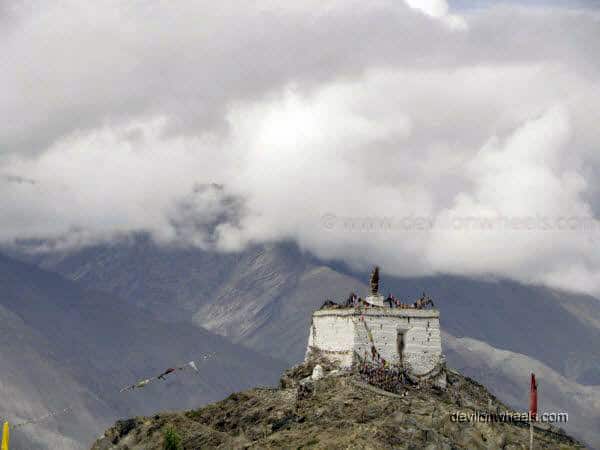
People most commonly visit local monasteries and sightseeing spots around Leh including Shanti Stupa, Leh Palace, Hemis Monastery, Thiksey Monastery, and Magnetic Hill before heading out to the valleys.
What Does the Name Leh Mean?
Quick Answer: The name Leh comes from the old Ladakhi word sLes, meaning an “encampment of nomads”, a walled pastureland enclosure. The town is believed to have grown out of a Tibetan nomads’ camp. On 27 April 2026, Ladakh’s Lieutenant Governor notified Leh district’s boundaries afresh: Nubra, Sham, and Changthang split off as separate districts, leaving Leh with 44 revenue villages.
A lot of websites will tell you Leh means “pass” or “gateway”. That is not what the historical record says. As the Wikipedia entry on Leh notes, citing older historical sources, the original name was not sLel (the modern written spelling) but sLes, which denotes an “encampment of nomads”. In Lower Ladakh the same word is pronounced sLas and means a walled enclosure that nomads set up for their herds. Hence, the town most likely began as a seasonal herders’ camp in the Indus Valley. Its location later made it a key halt for caravans moving between Tibet, Kashmir, Yarkand, and Central Asia, and it grew into the seat of the Namgyal kings. Leh Palace, built in the 17th century by King Sengge Namgyal, still overlooks the town from the ridge above Leh Main Bazaar. Not to be confused with Ladakh, which comes from the Tibetan La-dvags, “land of high passes”. So the “pass” meaning belongs to Ladakh, not to Leh. 🙂 The Archaeological Survey of India has been carrying out structural conservation on Leh Palace through FY 2025-26, including roof water-tightening and pathway restoration.
Administratively, Leh has changed shape more in the last year than in decades before it. On 27 April 2026, Lieutenant Governor Vinai Kumar Saxena approved a reorganization that split Ladakh into seven districts from the original two. Nubra (HQ Diskit), Sham (HQ Khaltse), and Changthang (HQ Nyoma) were carved out of the old Leh district, while Zanskar (HQ Padum) and Drass came out of Kargil district. Leh district itself is now down to 44 revenue villages. Keep this in mind if you are cross-checking older sources, since anything written before April 2026 will still say Ladakh has only two districts.
What Can You See and Do in Nubra Valley?
Quick Answer: Nubra Valley, reached via Khardung La (17,582 ft), is famous for the 32-metre Maitreya Buddha at Diskit Monastery, the double-humped Bactrian camels at Hunder’s sand dunes, and Turtuk village, which was part of Pakistan until 1971. Most travelers spend 1-2 nights here.
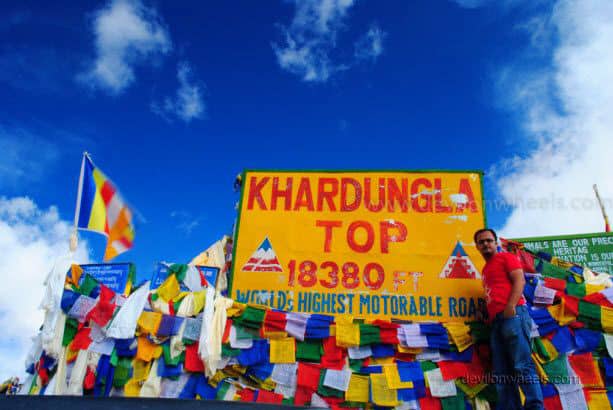
Nubra Valley is located north of Leh, accessed via Khardung La (17,582 ft). Khardung La is a famous tourist spot, though its claim of being the “highest motorable road in the world” is a well-known misconception.
Nubra Valley is famous for the Diskit Monastery with its 32-metre tall Maitreya Buddha statue, the sand dunes of Hunder village where you can ride unique Bactrian (double-humped) camels found only in this region, and the village of Turtuk which was part of Pakistan until 1971. Sumur Monastery, hot water springs at Panamik, and the banks of the aqua-colored Shyok River are other highlights.
Most travelers spend 1-2 nights in Nubra Valley. Budget guesthouses cost Rs 800-1,500 per night, and mid-range hotels range from Rs 2,000-4,000 per night. A private taxi from Leh to Nubra and back costs approximately Rs 10,000-12,000 for a 2-day trip.
Why Is Pangong Tso Lake So Famous?
Quick Answer: Pangong Tso, at 14,270 ft, is a 134 km saltwater lake made famous by the film 3 Idiots. Its water shifts through shades of blue, turquoise, and green during the day. Most visitors reach it from Leh via Chang La in 5-6 hours and stay overnight in a lakeside tent camp.
The mighty Pangong Tso, situated at an altitude of about 14,270 ft (4,350 m), was made famous among Indian tourists by the Bollywood blockbuster “3 Idiots.” This saltwater lake is 134 km long and 5 km wide at its broadest point. More than 60% of the lake extends into China. The color of the water changes through the day, from deep blue to turquoise to green, depending on the sunlight and the time of year.
You can reach Pangong from Leh via Chang La (17,585 ft), which takes about 5-6 hours one-way. Alternatively, if you are coming from Nubra Valley, there is a direct route via the Shyok road that takes 5-7 hours. Accommodation at Pangong consists mostly of tent camps (Rs 2,000-5,000 per night) and a few basic guesthouses.
What Makes Tso Moriri a Must-Visit Destination?
Quick Answer: Tso Moriri, at 15,075 ft, is a Ramsar wetland and sacred lake far less crowded than Pangong. It is home to the black-necked crane and the Tibetan wild ass, with the 14th-century Korzok Monastery on its banks. Reaching it takes 7-8 hours from Leh via Chumathang.
The holy Tso Moriri, at an altitude of 15,075 ft (4,595 m), is famous among Ladakhis and foreign tourists. Ladakhis believe that a person with a pure heart can see the image of God in Tso Moriri. Hence, they never let an opportunity pass by for visiting this sacred place.
Tso Moriri is less crowded than Pangong and offers a more peaceful experience. The lake is a designated Ramsar wetland site and home to the black-necked crane, bar-headed geese, and the Tibetan wild ass (kiang). The village of Korzok on its banks has a monastery dating back to the 14th century. Getting to Tso Moriri takes about 7-8 hours from Leh via Chumathang.
What Other Regions in Ladakh Are Worth Exploring?
Quick Answer: Beyond Leh, Nubra, and the lakes, Suru Valley, Zanskar Valley (home to the cliffside Phugtal Monastery and the winter Chadar Trek), and remote Changthang destinations like Hanle offer a quieter, more offbeat side of Ladakh with far fewer tourists.
The Suru Valley for hiking activities and the Zanskar Valley for trekking, white water rafting, and the famous Chadar Trek in winters are other regions of great interest among travelers. Phugtal Monastery in Zanskar, built into a cave on a cliff face, is one of the most spectacular monasteries in the entire Himalayas.
Apart from these popular places, there are restricted, non-tourist, very little explored places like Hanle, Chusul, Turtuk, Changthang, and Marisimik La in the Ladakh region. These places lure many regular visitors every subsequent year. Hanle, in particular, has one of the world’s highest astronomical observatories operated by the Indian Astronomical Observatory (IAO).
The beauty of each region in Ladakh is different and unique to its own taste. In fact, at every other turn, you will witness an altogether unique vista equally stunning as the last. One cannot feel bored even after spending more than a couple of months in Ladakh.
The pictures of Ladakh that you might have seen give you only a glimpse of the beauty present here. They will not do justice to the actual beauty of Ladakh, ever.
What Should You Budget for a Ladakh Trip in 2026?
Quick Answer: A budget traveler should plan for Rs 2,200-3,700 per day, and a mid-range trip runs Rs 4,800-9,000 per day, covering stay, food, local transport, and the EDF permit fee. For a full 10-12 day trip from Delhi and back, that works out to Rs 22,000-44,000 budget or Rs 48,000-1,08,000 mid-range.
The cost of a Ladakh trip varies depending on your travel style, but here is a rough daily breakdown in INR per person to help you plan.
![Why avoid traveling on Manali Leh Highway in October for Ladakh trip? [5 Safety Reasons]](https://discoverwithdheeraj.com/yt_vid_thumbs/ladakh/104.png)
| Expense | Budget (INR) | Mid-Range (INR) |
|---|---|---|
| Accommodation | Rs 800-1,500/night | Rs 2,000-4,000/night |
| Food (3 meals) | Rs 400-600/day | Rs 800-1,200/day |
| Transport (shared taxi/bus) | Rs 500-800/day | Rs 1,500-3,000/day (private) |
| Permits & Entry Fees (EDF) | Rs 450 one-time + Rs 20/day | Rs 450 one-time + Rs 20/day |
| Fuel (self-drive) | Rs 500-800/day | Rs 500-800/day |
| Daily Total | Rs 2,200-3,700 | Rs 4,800-9,000 |
For a typical 10-12 day trip from Delhi and back, a budget traveler should plan for Rs 22,000-44,000 (excluding Delhi-Leh travel), while a mid-range traveler would spend Rs 48,000-1,08,000. For detailed taxi rates, check our Leh Ladakh taxi rates guide.
What Should You Carry for a Ladakh Trip?
Quick Answer: Pack layered clothing (thermals to a windproof jacket), Diamox and basic medicines, a power bank, and Rs 10,000-15,000 in cash since ATMs are unreliable outside Leh. Prepaid SIMs from outside J&K and Ladakh do not work here, so sort out a postpaid connection before you leave the plains.
Packing for Ladakh requires some thought because the weather can swing from scorching sun to freezing cold within the same day. Here are the essentials you must carry.
Clothing: Multiple layers are the key. Carry thermal inners, fleece jackets, a windproof/waterproof outer layer, and warm gloves. Even in July, nights in Pangong and Tso Moriri drop below 0 degrees Celsius. Read our detailed guide on what clothes to carry for Ladakh.
Medicines: Carry Diamox (for AMS prevention, consult your doctor first), basic painkillers, anti-diarrhea tablets, ORS packets, and any personal medications. Oxygen cylinders can be rented in Leh for extra precaution.
Electronics: Power banks are essential because charging points are scarce outside Leh. Only postpaid BSNL, Jio, and Airtel SIMs from other states work in Ladakh. Prepaid SIMs issued outside J&K and Ladakh do not work at all. For details, read our mobile connectivity guide for Ladakh.
Cash: Carry sufficient cash (Rs 10,000-15,000 minimum). ATMs are available only in Leh town and are unreliable. UPI works in Leh Main Bazaar but not in remote areas.
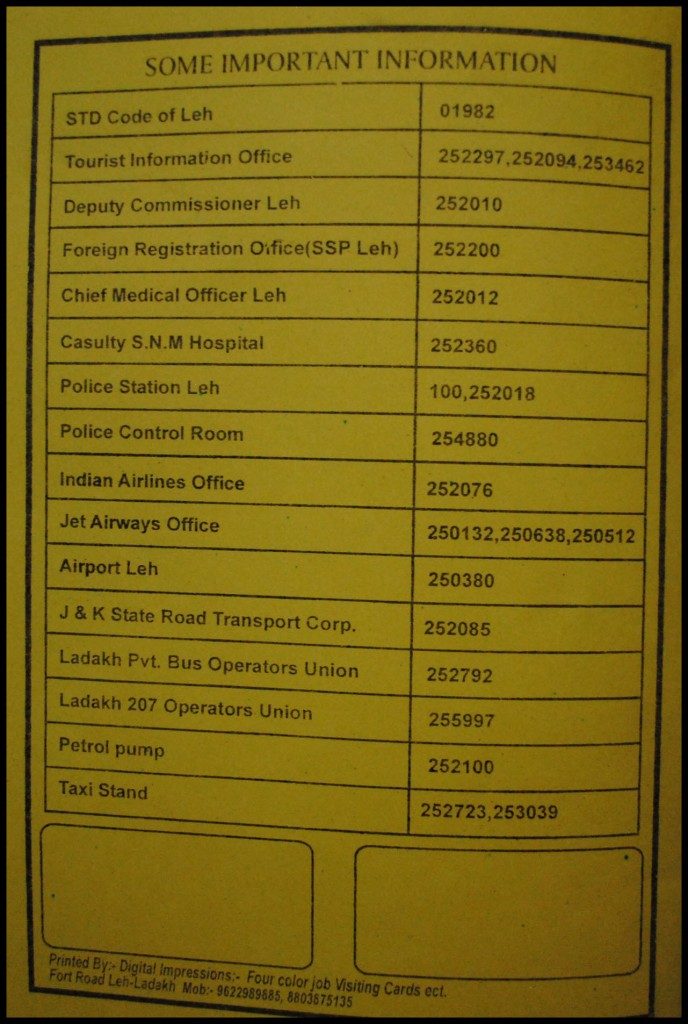
What Are the Important Emergency Contact Numbers in Leh Ladakh?
Quick Answer: Save the police, hospital, and rescue helpline numbers below on your phone before you leave Leh, since several stretches of Ladakh have no mobile signal at all.
I am sharing below some critical emergency contact numbers in Leh Ladakh. These can prove useful in case of emergency. I recommend carrying a printout of this list when traveling in Ladakh. You never know when it could save a life.
You should always carry your water bottle and refill it as many times as you need water. It will not only keep you hydrated always, but you will also help in saving the Himalayas from plastic garbage. Remember, every tiny step counts and your step in this direction can help save the Himalayas too!! 🙂 🙂
What Is the Best Time to Visit Ladakh?
Quick Answer: May-June suits road trips with fewer crowds, July-August is peak season with every region accessible, September-October offers the clearest skies for photography, and November-March is for winter specialists chasing the frozen Chadar Trek and winter wildlife.
The best time to visit Ladakh depends on what you want to experience. Here is a quick month-by-month overview.
May-June: Highways open. Snow still present on passes. Less crowded. Perfect for road trips. Manali-Leh Highway opens late May. Temperatures in Leh: 5 to 22 degrees Celsius. Roads change quickly, so check the latest in my Manali Leh Highway status for 2026.
July-August: Peak season. All regions accessible. Hemis Festival in late June/early July. Monsoon brings occasional landslides on Manali-Leh Highway but Srinagar route stays mostly clear. Temperatures: 10 to 30 degrees Celsius in Leh.
September-October: Post-monsoon clarity. Best photography conditions. Less crowded than July-August. Highways close by mid-October. Temperatures start dropping sharply.
November-March: Winter in Ladakh is harsh but has its own beauty. Only flights reach Leh. The famous Chadar Trek on the frozen Zanskar River happens in January-February. This is also the best window for spotting snow leopards in Hemis National Park, covered in our snow leopard safari guide. Temperatures drop to minus 20 to minus 30 degrees Celsius.
Is Ladakh Safe for Solo Travelers and Women?
Quick Answer: Yes. Ladakh has a very low crime rate, warm locals, and a heavy army presence that adds to the sense of security. The real risks are altitude sickness and road conditions, not personal safety, and solo women travelers report consistently positive experiences.
Ladakh is one of the safest regions in India for all types of travelers. The crime rate is extremely low, the locals are warm and helpful, and the army/paramilitary presence adds an additional layer of security. I have traveled solo to Ladakh multiple times and have always felt completely safe.
Women solo travelers visit Ladakh regularly and have consistently reported positive experiences. The key safety concerns are not related to crime but to altitude sickness, road conditions, and weather. As long as you acclimatize properly, carry the right gear, and do not take unnecessary risks on the road, Ladakh is perfectly safe.
If you are traveling with kids, take extra precautions for altitude. Children below 3 years should ideally avoid high-altitude destinations like Pangong and Khardung La.
Related Ladakh Guides to Read Next
If this introduction has you planning a trip already, these guides go deeper into the parts that matter most.
- Leh Ladakh Bus Services: Rates and Timetable, for exact fares and schedules if you are traveling by public transport
- Top 12 Myths About Traveling to Ladakh, busted with facts
- Manali to Leh via Zanskar (Shinkula Pass), a newer, less crowded alternative to the classic Manali-Leh route
- Leh Ladakh Road Trip: Living the Ultimate Dream, a first-person trip report if you want a feel for the journey before you book
In the End…
The beauty of Ladakh is defined by the mountain ranges topped with popcorn-like white clouds that can mesmerize any soul. Sometimes they appear like cotton candies, sometimes they appear as ice cream over a cone, and sometimes they just leave you speechless. You can witness a peak over the peak from various vantage points while exploring different regions of Ladakh.
I look forward to your comments in case you have any questions about planning a trip to Ladakh. Feel free to ask anything, my friend, and I will be happy to help. You can also join the DwD travel community to find travel buddies and get a free personal consultation for your Ladakh plan.
Have a travel question? You can subscribe to my YouTube channel and leave a comment to ask your travel questions about traveling to the Himalayas.
So, what are you waiting for? Plan your vacation to Ladakh this summer and I am sure you will never forget the experience. Julley! 🙂
Last Updated: October 2026
Frequently Asked Questions
How many days are enough for a Ladakh trip?
A minimum of 7-8 days is recommended to cover Leh, Nubra Valley, and Pangong Tso with proper acclimatization. If you want to include Tso Moriri, Zanskar Valley, or Hanle, plan for 12-14 days. A detailed day-by-day itinerary for Ladakh will help you plan better.
Do I need a permit to visit Ladakh?
Indian nationals do not need a stamped Inner Line Permit (ILP) anymore. Since 2021, that has been replaced by the Ladakh Environment Development Fee (EDF), which you pay entirely online before visiting Nubra Valley, Pangong Tso, Tso Moriri, Hanle, Turtuk, and other restricted areas. The EDF can be paid online and works out to roughly Rs 590 for a 7-day trip. Foreign nationals still need a Protected Area Permit (PAP) through a registered travel agent.
Is Ladakh safe for solo female travelers?
Ladakh is one of the safest destinations in India for solo female travelers. The locals are respectful and helpful, the tourist infrastructure is well-established, and there is a strong security presence. The main risks are altitude sickness and road conditions, not personal safety. Read our complete guide for women solo travelers in Ladakh for detailed tips.
Which mobile network works in Ladakh?
Only postpaid SIMs from other states work in Ladakh. Prepaid SIMs issued outside J&K and Ladakh do not work at all. BSNL has the widest coverage across Nubra, Pangong, and the highways. Jio and Airtel have 4G/5G in Leh city and are expanding to other areas. For a detailed breakdown of coverage by location, check our Ladakh mobile connectivity guide.
Can I visit Ladakh by public transport?
Yes. HRTC operates a daily bus from Manali to Leh (2-day journey, overnight at Keylong/Jispa, around Rs 833 for the direct service, schedules vary seasonally so verify with HRTC before travel). JKSRTC runs a daily bus from Srinagar to Leh. Within Ladakh, there are local bus services connecting Leh to Nubra, Pangong, and other destinations, though frequencies are limited. Shared taxis are another affordable option. A budget trip by public transport can cost as low as Rs 1,500-2,000 per day. See our complete bus rates and timetable guide for every route.
What is the best route to reach Ladakh by road?
There are two main road routes. The Manali-Leh Highway (474 km, 2 days) is more adventurous with higher passes and dramatic landscapes. The Srinagar-Leh Highway (434 km, 2 days) offers a more gradual altitude gain and is recommended for families and first-timers. Many experienced travelers go via one route and return via the other. Read the complete Manali-Leh Highway planning guide for details.
What is the meaning of Julley?
Julley (also spelled Joolay or जुले in Hindi) is a Ladakhi greeting that means “Hello,” “Namaste,” or “How are you?” in English and Hindi respectively. It is also used to say goodbye. The word is widely used by locals and travelers across Ladakh, Lahaul-Spiti, and parts of Kinnaur.
What food should I try in Ladakh?
Try thukpa, momos, and skyu (a traditional wheat-dumpling stew) at local Leh eateries, along with butter tea (gur gur cha). Fresh apricots are widely available in July-August across Leh, Nubra, and Turtuk. Our Ladakh food guide has restaurant-level recommendations.
What does the name Leh mean?
Leh comes from the old Ladakhi word sLes, which means an “encampment of nomads” or a walled pastureland enclosure, since the town is believed to have grown out of a Tibetan nomads’ camp. The popular “pass” or “gateway” meaning actually belongs to Ladakh (La-dvags, “land of high passes”), not Leh. Leh later became the seat of the Namgyal kings, who built Leh Palace above the town in the 17th century.
How many districts does Ladakh have as of 2026?
Ladakh has seven districts as of 27 April 2026: Leh, Kargil, Nubra, Sham, Changthang, Zanskar, and Drass. The Lieutenant Governor approved a reorganization that carved Nubra, Sham, and Changthang out of Leh district, and Zanskar and Drass out of Kargil district, leaving Leh district with 44 revenue villages.
Is Leh in Jammu and Kashmir or Ladakh?
Leh is in Ladakh. It was part of the state of Jammu and Kashmir until 31 October 2019, when Ladakh became a separate Union Territory. Leh is the main town of Ladakh, while Ladakh is the whole UT that also includes Kargil, Nubra, Zanskar, Changthang, and other regions.
What is the capital of Ladakh?
Leh and Kargil are the joint capitals of the Union Territory of Ladakh. Leh is the larger town and the base for almost every traveler, with the airport, most hotels, and the taxi unions.

5 Comments
Comments section gets closed in 90 days. To ask your travel questions, you can follow my YouTube Channel for a faster reply or for a much slower reply follow me on Instagram. :)
Well i just came from Leh (Ladakh) & must say that it was an amazing experience to visit !! Beauty cannot be explain so one once must visit…
Awesome Ritish, If possible, try and share your Himalayan experience with us at DoW – Himalayan Travel Community as Photo Tale or Travel Tale Or your reviews of the hotels/guest houses where you stayed or dhabhas/restaurants you ate food on your trip… All this might help others planning the similar trip too 🙂 🙂
Hi Shoiab,
Sorry for the late reply but I am outta town now a days. I may not know much about Ladakh than what you may have known for last 3 years but still you can reach me at dheerajsharma14@gmail.com
Regards
Dheeraj
Writer of above mentioned information about Ladakh region please provide your email address so that I should be able to inquire further information about Ladakh region because I have been studying in the internet about Ladakh region for last 3 years.
checking status of this email