


If you are planning your first trip to Leh – Ladakh in 2026 and wondering what you will actually eat for two weeks at 11,500 feet, let me put your mind at ease. Ladakhi food is hearty, surprisingly varied, and built for high-altitude survival. From thick noodle soups that warm you from inside to buttered breads that fuel a full day of sightseeing, the food in Leh tells the same story as its landscape.
I still remember my very first lunch in Leh, sitting at a tiny family-run place just off the Main Bazaar, watching steam rise from a bowl of vegetable thukpa. The altitude had stolen my appetite that morning, but the warm broth, the chewy hand-pulled noodles, and the simple flavors brought me back to life within twenty minutes. That meal cost me about Rs 150, and I have been chasing the same comfort in every Ladakh trip since.
This Ladakh food guide walks you through must-try traditional dishes, the best restaurants in Leh across Main Bazaar, Fort Road, and Changspa Road, vegetarian options, street food safety, and a clear daily food budget in INR for 2026, my friend.
Quick Answer: What is Ladakhi Food Like?
Ladakhi food is a mix of Tibetan and Central Asian influences shaped by high-altitude living. The staples are barley-based breads (khambir, tagi), hearty noodle soups (thukpa, skyu), steamed dumplings (momos), and yak dairy products (butter, cheese, butter tea). Most restaurants in Leh now serve a blend of authentic Ladakhi dishes alongside Indian, Tibetan, Israeli, and Continental cuisines. Expect to spend Rs 150 to Rs 250 per meal at budget places and Rs 250 to Rs 450 at mid-range restaurants in 2026.
Practical Info at a Glance (2026):
- Where to eat: Main Bazaar for budget/authentic, Fort Road for mid-range variety, Changspa Road for cafes and vegan food
- Daily food budget: Rs 500 to Rs 800 backpacker, Rs 1000 to Rs 1500 comfortable, Rs 2000 to Rs 3500 splurge, per person
- Dish to try first: Vegetable thukpa (Rs 100 to Rs 180), the gentlest thing on your stomach in your first 24 hours
- Best months for full menus: June to September, when fresh vegetables and every restaurant are open
- Water and hygiene: Bottled or filtered water only, avoid raw salads and street food for the first 2 to 3 days
What Makes Ladakhi Cuisine Unique?
Ladakh sits at an average altitude of about 11,500 feet, with most of the region above 9,500 feet. The climate is harsh, the growing season short, and traditionally, the food had to keep people warm, well-fed, and resilient through long winters where almost nothing grows. Hence, Ladakhi cuisine is built around three pillars: barley (which thrives in cold, dry conditions), root vegetables, and yak dairy.
The Tibetan Buddhist influence runs deep through the food, part of the wider culture of Ladakh. You will see Tibetan thukpa, momos, and tingmo bread on almost every menu. From the Kashmiri side, you get a touch of mutton curries and pulao. From Central Asia (Yarkand specifically), Nubra Valley still preserves the Yarkand Pulao tradition. Keep in mind, that Ladakhi food is not spicy in the Indian sense. It leans toward warming, savory, slightly fatty flavors that suit cold weather rather than chili heat.
Dairy also plays a huge role. Butter tea, yak cheese, fresh curd, and butter feature in most meals. If you are lactose intolerant or vegan, you will need to ask before ordering many traditional dishes. The good news, I will cover vegan options later.
Must-Try Traditional Ladakhi Dishes
Below are the dishes I recommend you try at least once during your Leh trip. Most of these are available across multiple restaurants, so you do not need to chase a specific place for each one.
1. Thukpa (Noodle Soup) – The Staple
Thukpa is the dish you will eat the most in Ladakh, and rightly so. It is a warming, hearty noodle soup with a clear or slightly thickened broth, filled with vegetables, meat (chicken or mutton), and sometimes yak cheese. There are several variants you will see on menus. Gyathuk uses thin Chinese-style noodles. Thenthuk uses thick hand-pulled noodles and is my personal favorite. Pathug uses hand-rolled pinched noodles that look like small shells.
A bowl of vegetable thukpa typically costs Rs 100 to Rs 180 at most restaurants in Leh. Mutton or chicken thukpa runs Rs 180 to Rs 280. Order it the day you arrive in Leh, when your appetite is low from altitude. The hot broth is one of the gentlest things you can put in your stomach above 11,000 feet.
2. Skyu (Hand-Rolled Pasta in Stew)
Skyu is one of the truly authentic Ladakhi dishes that you will not find on every menu. It is a hearty stew made with small thumb-pressed pieces of dough that look like little shells or pasta, cooked in a thick broth with root vegetables and sometimes mutton. The dough soaks up the broth, the stew sticks to your ribs, and one bowl of skyu is often a complete meal. Expect to pay Rs 200 to Rs 400 depending on whether you order the veg or mutton version.
If you want the most authentic skyu, head to Alchi Kitchen (they have branches in Leh now) or Gesmo Restaurant on Fort Road. I will share more about both later in the restaurants section.
3. Momos (Steamed Dumplings)
Momos are everywhere in Leh, and you will be hard-pressed to find a restaurant that does not serve them. Veg momos are typically filled with cabbage, carrot, onion, and spring onion. Meat momos use minced chicken or mutton. A plate of 6 to 8 momos costs Rs 80 to Rs 180 depending on the place and the filling. The traditional accompaniment is a spicy red chutney that varies in heat from mild to “open the windows” hot.
Beyond the standard steamed momos, look out for two variants. Mokthuk is a soup version where momos float in a thukpa broth, perfect for a chilly evening. Fried momos are pan-fried after steaming and have a crisp shell. Personally, I stick to steamed for digestion at altitude.
4. Butter Tea (Gur Gur Chai) – The Polarizing One
Butter tea, called Gur Gur Chai locally, is the most polarizing thing you will taste in Ladakh. It is made by churning together tea leaves, salt, butter (traditionally yak butter), and milk in a wooden tube. The result is a salty, savory, slightly oily drink that locals swear keeps them warm and hydrated through brutal winters. Honestly, my friend, on first taste most travelers find it strange. It does not taste like the sweet milky chai we are used to. It is closer to a thin, salty broth.
That said, give it two or three tries. By the second or third cup, many travelers (myself included) start to appreciate why this drink has sustained Ladakhis for centuries. It is wonderful for sore throats, helps with cold-induced dehydration, and pairs surprisingly well with khambir bread. Try it at a homestay or at Gesmo Restaurant. A cup is typically Rs 30 to Rs 80.


5. Tsampa (Roasted Barley Flour)
Tsampa is roasted barley flour, the original Ladakhi superfood. Eat it raw mixed with butter tea, knead it into a dough ball, or cook it as porridge. For trekkers and old-school Ladakhi farmers, tsampa is high-energy fuel through long days in the mountains. You will not find tsampa on every restaurant menu, but you can buy it at the Leh Main Bazaar in 500g and 1kg packets for around Rs 80 to Rs 150. A great souvenir to take home.
6. Chhurpe (Hard Yak Cheese)
Chhurpe (also spelled chhurpi) is hard cheese made from yak or dzomo (yak-cow hybrid) milk. It is sun-dried until rock-hard, and Ladakhis chew on small pieces over hours, much like chewing gum. The taste is mild and slightly tangy. Used in cooking, chhurpe goes into thukpa and stews where it dissolves and adds richness. You can buy small packets in Leh Main Bazaar for Rs 100 to Rs 300. Keep in mind, your jaw will get a workout on the hard kind.

7. Khambir Bread
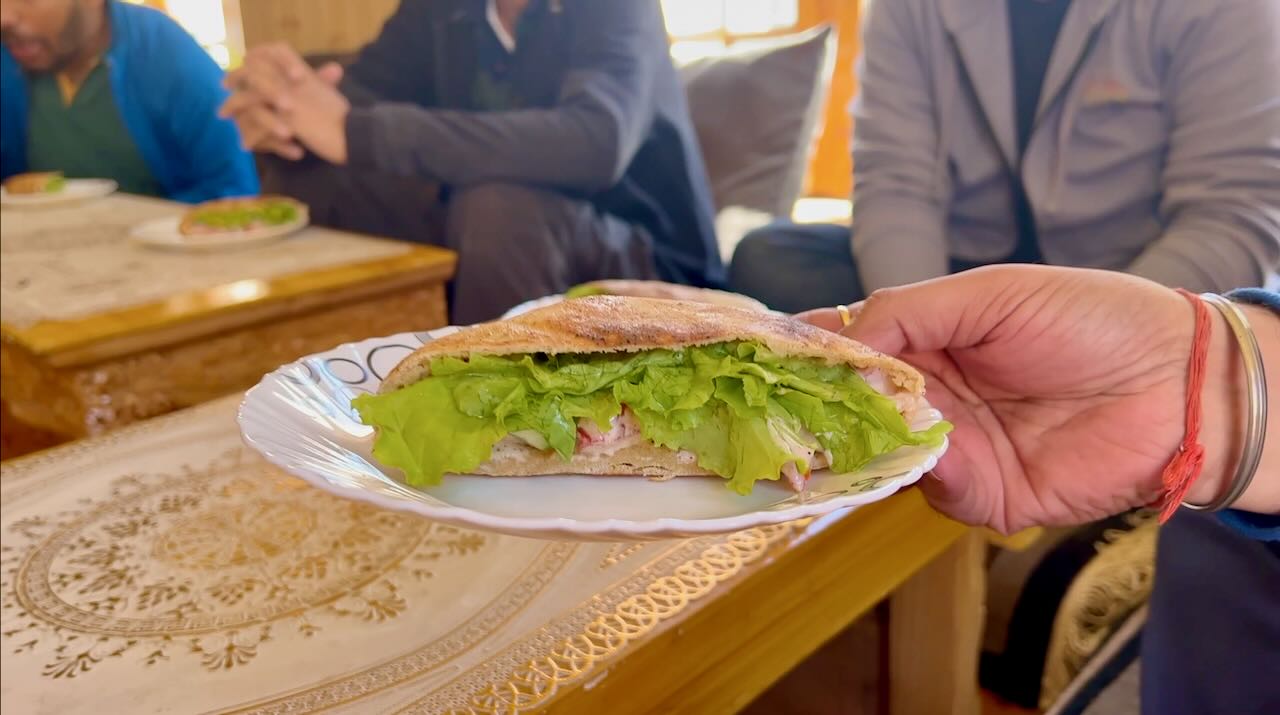
Khambir is the local Ladakhi flatbread that you will find at almost every breakfast table in Leh. It is a round, slightly sour, wheat-based bread that is fluffy inside with a firm crust. Khambir is culturally significant in Ladakh, traditionally offered to guests as a symbol of hospitality. It pairs beautifully with butter tea, apricot jam, or as a sandwich filled with vegetables and cheese.
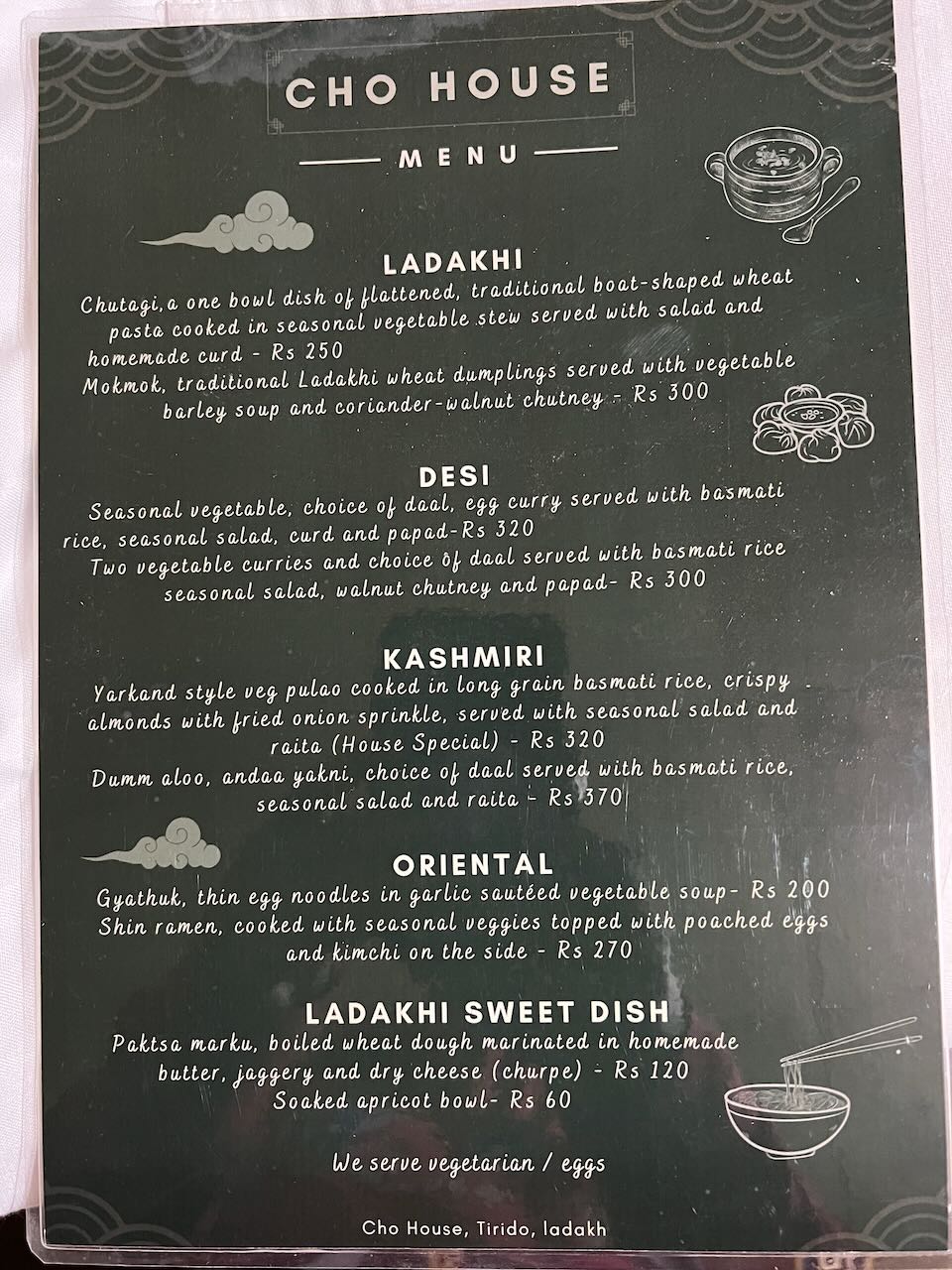
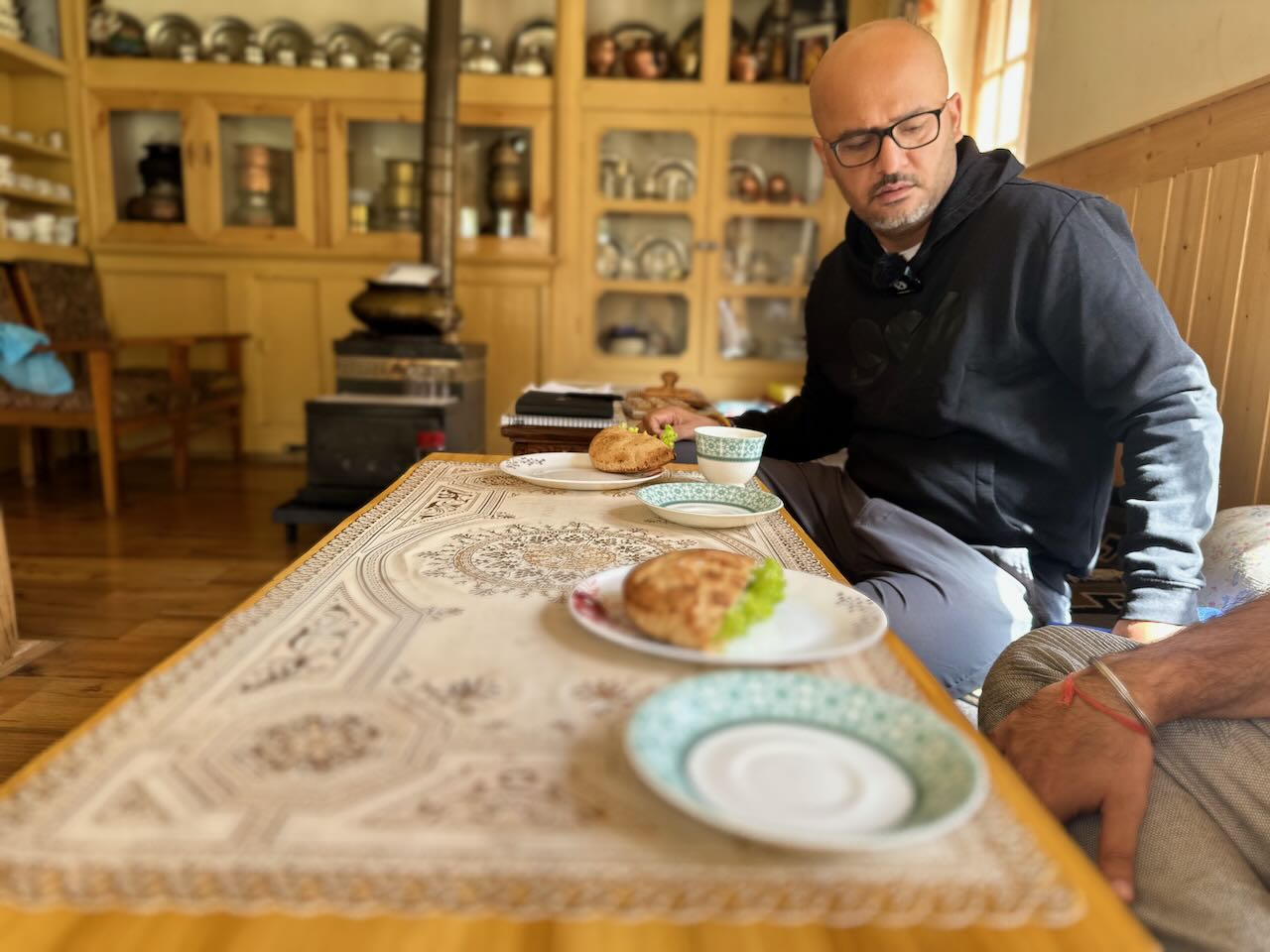
If you stay at any traditional homestay in Leh or villages like Turtuk, Hunder, or Tirido in Nubra Valley, khambir will be a staple on the breakfast plate. I still cannot forget the taste of the Khambir Sandwiches served at Cho House in Teri Village. For more on that experience, check our Turtuk travel guide, which covers other Nubra Valley homestays as well.
8. Ladakhi Apricots and Apricot Jam
Ladakhi apricots, especially those from Skurbuchan, Kargil, and the Sham Valley orchards, are among the finest in India. You will find them fresh (July to September), dried (year-round), as jam, and as kernel oil used in cooking and beauty products. Look for dried apricots at Main Bazaar shops, taste before you buy. A 250g pack of good-quality dried apricots costs around Rs 200 to Rs 400. Apricot jam goes for Rs 150 to Rs 300 per jar. Both make wonderful gifts.
9. Chhutagi and Mokthuk
Chhutagi is a less-famous cousin of skyu. The dough is shaped into small bow-tie pieces and cooked in vegetable broth with spinach, potato, and turnip. Mokthuk, as mentioned earlier, is a momo-soup combo that I would highly recommend for cold evenings. Both dishes cost around Rs 180 to Rs 350 at restaurants like Alchi Kitchen and Gesmo.
10. Gyuma and Shapchen (For the Curious Eater)
If you want to go beyond the restaurant staples, ask about gyuma and shapchen. Gyuma is a Ladakhi blood sausage, a preparation that goes back to the region’s tradition of using every part of an animal in a harsh climate where nothing goes to waste. Shapchen is a local tartare made with pounded yak or mutton meat, closer to a raw preparation than anything you will see on a Main Bazaar menu. In case you are wondering, I have not personally eaten gyuma yet on my own trips. I am flagging it here based on research and conversations with Ladakhi hosts rather than firsthand experience, so treat this as a heads-up rather than a review.
Neither dish is common on Leh town restaurant menus. Your best chance of trying either is at a genuine home-cooked meal in a Ladakhi village, usually if a homestay host offers to cook something traditional beyond the standard tourist thali. If you are squeamish about offal or raw meat preparations, it is completely fine to politely decline and stick to thukpa and momos, my friend. Nobody will be offended.
Best Restaurants in Leh: Where to Eat in 2026
Leh is small enough that you can walk between most restaurants in 15 to 20 minutes. The food scene is concentrated in three main areas, and each has its own vibe. Let me walk you through what is available and where to go for what. If you want an even longer, community-sourced list with individual reviews, do check our dedicated Leh restaurant reviews guide, where DwD community members add their own recommendations too.
Main Bazaar: Budget and Authentic
The Main Bazaar runs through the heart of old Leh, lined with shops, tour operators, and small family-run restaurants. This is where you will find the most budget-friendly and authentic food, often served by Ladakhi or Tibetan families.
- Tenzing Dickey (Main Bazaar): Family-run Tibetan-Ladakhi spot. Excellent veg momos, thukpa, and tingmo. Rs 150 to Rs 300 per person. Casual seating, friendly staff.
- Norlakh Restaurant (Main Bazaar): Famous for its momos. Reliable veg menu, good for a quick lunch. Rs 150 to Rs 280 per person.
- Neha Snacks (Main Bazaar): The go-to spot if you are missing North Indian or South Indian food. Thalis, dosas, samosas, pakoras. Pure veg. Rs 120 to Rs 250 per person.
Fort Road: Mid-Range Variety
Fort Road (sometimes called Old Fort Road) is the main eat street of Leh. You will find back-to-back restaurants here covering Ladakhi, Tibetan, Indian, Israeli, Italian, and Continental cuisines. This is where most travelers end up for dinner.
- Gesmo Restaurant (Fort Road): A long-running favorite known for its Ladakhi Thali, freshly baked bread, pizzas, and momos. Cozy upstairs seating, warm wooden interiors. Rs 250 to Rs 450 per person. Strong vegetarian menu.
- Lamayuru Restaurant (Fort Road): Multi-cuisine with reliable Tibetan-Ladakhi dishes. Good Israeli food too (Leh has a sizeable Israeli backpacker scene). Rs 250 to Rs 400 per person.
- Chopsticks Noodle Bar (Fort Road): Pan-Asian focus. Excellent noodles, dumplings, and Thai curries. Rs 250 to Rs 400 per person. Great for a break from local cuisine.
- Alchi Kitchen branches (newer Leh branches): Authentic Ladakhi food with a modern twist. Try the skyu, chhutagi, and khambir with soaked apricot. Rs 300 to Rs 600 per person. Started by Nilza Wangmo in 2016, this place put authentic Ladakhi cuisine on the map.
- Bon Appetit (Fort Road): One of the oldest and most-loved cafes in Leh, known for its cozy setup and a wide continental, Indian, and Tibetan menu. A reliable comfort-food stop after a long sightseeing day. Pricing is broadly in line with other Fort Road spots above.
Changspa Road: Cafes and Relaxed Vibe
Changspa Road, about a 15-minute walk from the Main Bazaar, has a completely different feel. It is quieter, greener, and lined with cafes that have garden seating. This is the area where most budget guesthouses and backpacker hostels are located, so it gets a young, slow-traveler crowd.
- Jeevan Cafe (Changspa Road): Solid all-day breakfast spot. Good portions, fair prices, friendly owners. Rs 150 to Rs 300 per person. My pick for the first breakfast in Leh.
- Bodhi Greens (Changspa Road): The best dedicated vegan and organic restaurant in Leh. Buddha bowls, smoothies, fresh salads (eat these only after you are altitude-adjusted). Rs 300 to Rs 500 per person.
- The Tibetan Kitchen (Changspa area): Good Tibetan classics, momos and thukpa done well. Rs 200 to Rs 400 per person.
Newer Cafes and Restaurants Getting Attention in 2026
Leh’s food scene keeps expanding every season, and a few newer names are showing up consistently in traveler reviews alongside the old favorites above. Lehvenda Restaurant and Cafe and The Terrace are both newer entrants getting strong word-of-mouth from recent visitors in 2026, with menus similar in spirit to the Fort Road and Main Bazaar spots covered above (multi-cuisine, Ladakhi-Tibetan classics, cafe-style seating). Since menus and exact pricing at newer places can shift within a season, I have not listed specific rates for these two, my friend. Ask locally or check recent reviews before you go, and treat the pricing ranges above as a reasonable ballpark until you have confirmed on the ground.
Splurge Option: Tsas by Dolkhar
If you want to celebrate one evening or experience modern Ladakhi fine dining, Tsas by Dolkhar is the place. Set inside an apricot and apple orchard at the Dolkhar boutique stay, this restaurant blends traditional Ladakhi flavors with contemporary plating. Expect to spend Rs 800 to Rs 1500 per person. Reservations are recommended, especially in peak season (July to September). The vegetarian menu here is particularly thoughtful.
Vegetarian and Vegan Options in Leh
Good news for vegetarians, Ladakh is one of the most veg-friendly Himalayan regions. The Buddhist influence means that many monasteries serve only vegetarian food, and most restaurants in Leh have an equally strong veg menu as non-veg. Many traditional dishes like thukpa, skyu, chhutagi, and momos are naturally vegetarian when ordered as such.
For pure vegetarians, your best bets are Neha Snacks, Gesmo Restaurant, and any small dhaba in the Main Bazaar. For vegans, Bodhi Greens on Changspa Road is the dedicated option. Tsas by Dolkhar also has a strong vegan menu. Keep in mind that butter tea and most traditional dairy-based dishes are off the table if you are strictly vegan, so ask before ordering. Fresh vegetables in Ladakh are seasonal. June to September, you will get tomatoes, spinach, cabbage, carrots, peas, and potatoes. October to May, the menu shifts to dried and preserved vegetables, more meat-based options, and packaged Indian basics.
Street Food in Leh: What to Try and What to Avoid
Leh has a small but interesting street food scene, mostly concentrated around the Main Bazaar and near the Polo Ground. You will find momo stalls, tibetan bread vendors, fresh juice carts (in summer), and roasted corn or chai stalls. A plate of street momos costs Rs 50 to Rs 100, fresh juice is Rs 80 to Rs 150, and a roasted corn is around Rs 40.
That said, please take utmost caution with street food at altitude, especially in the first 2 to 3 days. Your digestion slows significantly above 11,000 feet, and food poisoning at high altitude is a much bigger deal than at sea level. Stick to hot, freshly cooked food. Avoid raw cut fruits, uncovered chutneys, and anything that has been sitting out for hours. Bottled or filtered water only. Avoid ice in drinks unless you are sure of the water source.
Best Time for Ladakhi Food
The food scene in Leh changes dramatically with the seasons. Most travelers visit between June and September, when all restaurants are open, fresh local vegetables are abundant, and the menu variety is at its peak. This is also when fresh apricots and apples come into season.
In May or early October (shoulder season), some restaurants will be opening or closing for the season, but main spots like Gesmo, Lamayuru, and Bodhi Greens stay open. In winter (November to April), Leh becomes quiet. Only a handful of restaurants stay open, the menu shrinks, and the focus shifts to dried foods, hearty thukpa, and chhang (local barley beer). Winter is a fascinating time to experience traditional Ladakhi eating culture, just be ready for limited options. For seasonal planning, refer to our best time to travel Ladakh guide.
Daily Food Budget for Ladakh (2026 Prices)
Food in Leh costs about 20 to 40 percent more than Delhi or Chandigarh because almost everything is transported in by road or by air. Once you accept that, the prices are reasonable. Here is a realistic breakdown of what to expect per person, per day, in 2026.
| Budget Tier | Per Day (per person) | What it Covers |
|---|---|---|
| Backpacker | Rs 500 to Rs 800 | Breakfast at homestay or Jeevan, thukpa lunch at Main Bazaar, dhaba dinner, butter tea or chai breaks |
| Comfortable | Rs 1000 to Rs 1500 | Cafe breakfast, mid-range lunch (Gesmo or Lamayuru), proper dinner with starters at Fort Road, drinks |
| Splurge | Rs 2000 to Rs 3500 | Boutique breakfast, lunch at Alchi Kitchen, one dinner at Tsas by Dolkhar per week, cafe stops |
Hence, for a 7-day trip in Leh, a backpacker can manage food costs around Rs 3,500 to Rs 5,600, a comfortable traveler around Rs 7,000 to Rs 10,500, and someone splurging would budget Rs 14,000 to Rs 24,500. Keep in mind that this is just food. For a complete trip cost breakdown including accommodation, fuel, and permits, check our detailed guide on calculating Ladakh trip budget.
Food Beyond Leh: Nubra, Pangong, and Tso Moriri
Once you leave Leh and head to remote regions, the food situation simplifies. Nubra Valley villages like Hunder, Turtuk, and Diskit have homestays and small guesthouses serving home-cooked Ladakhi food. Expect a basic but warm menu: thukpa, rice and dal, momos, khambir for breakfast, and the famous Yarkand pulao if you are lucky to find it. Costs at homestays usually run Rs 200 to Rs 400 per meal, often included in the room rate. For more on the area, check our Nubra Valley guide and the Diskit Monastery travel guide.
At Pangong Lake (Spangmik, Maan, Merak villages) and Tso Moriri (Korzok village), options are even more limited. You will mostly eat at your homestay or campsite, with one or two dhabas serving Maggi, omelet-bread, rice-dal, and thukpa. Pack snacks like dry fruits, energy bars, and biscuits if you have specific food preferences. Rates here are higher due to remoteness, Rs 250 to Rs 500 per meal is typical.
Practical Tips for Eating in Ladakh
A few hard-earned tips from years of eating my way through Leh and Ladakh.
- Eat light the first 24 hours in Leh. Thukpa, soup, plain rice. Your body is busy adjusting to altitude, not digesting heavy mutton curries.
- Hydrate constantly. Water, herbal tea, butter tea, lemon honey water. Avoid alcohol the first 48 hours.
- Carry small snacks for sightseeing days. Restaurants between Leh and Pangong (about 5 hours) are limited. A pack of dry fruits and biscuits saves you.
- Tip the staff if service is good. Most places do not add service charge. Rs 30 to Rs 80 per meal is appreciated.
- Vegetables and salads are best avoided in the first 2 to 3 days. Stick to cooked vegetables. Once you are adjusted, fresh salads at Bodhi Greens or Tsas are wonderful.
- Stock up on snacks before leaving Leh for remote areas. Reliance Smart, Sangam Plaza, and Main Bazaar shops have everything you need.
- Try a homestay meal at least once. The best Ladakhi food is not in a restaurant but in a Ladakhi home. Plan one or two nights at a village homestay.
Chhang and Homestay Food Etiquette
Chhang is the local barley beer, mildly fermented and served warm or at room temperature, mostly in homes and villages rather than restaurants in Leh town. It comes up a lot in winter, when it is part of everyday Ladakhi eating culture, but you may also be offered a cup during a festival or a warm village welcome in any season. It is mild compared to most alcohol, but keep in mind you are already at altitude, so go easy and skip it entirely in your first 2 to 3 days while you are still acclimatizing. One 2026 update worth knowing: Ladakh’s new excise policy, approved on 31 May 2026, allows guesthouses and homestays to apply for liquor licences for the first time and adds retail liquor outlets in Nubra, Changthang, Sham and Zanskar. Rules will take time to reach every village, so do not assume your homestay serves alcohol, and ask your host before you expect any.
If a homestay host offers you chhang, khambir, or a full home-cooked thali, a little food etiquette goes a long way. Eat what is offered rather than asking for substitutes, since a Ladakhi kitchen is not built like a restaurant with a menu of alternatives. Accepting seconds is a genuine compliment to the cook. If you cannot finish a dish for health reasons, say so politely rather than leaving food untouched, most hosts will happily swap it for something lighter. This is also where the DwD community’s responsible travel values matter, carry small gifts like stationery or dry fruits for the household if you can, and always ask before photographing someone’s kitchen or family meal.
How to Order Like a Local
If you want to feel like an insider, here are a few phrases and ordering tips. When you walk into a small family-run place, a friendly “Julley” (the all-purpose Ladakhi greeting for hello, goodbye, thank you, and please) goes a long way. Ask the owner what they recommend for the day. Often, the unspoken specials are not on the menu.
Hence, do not just stick to thukpa and momos every meal. Try the chhutagi at Alchi Kitchen, the Ladakhi Thali at Gesmo, the khambir breakfast at any homestay. Ask if they have apricot jam from the local Sham Valley orchards. The owners are usually delighted when travelers show genuine curiosity about local food. For a list of itineraries that include food-focused homestay stops, browse our complete Leh Ladakh itinerary.
Frequently Asked Questions
What is the most famous food of Ladakh?
Thukpa, a hearty noodle soup, is Ladakh’s most famous food, followed by momos and skyu (hand-rolled pasta stew), with butter tea (Gur Gur Chai) as the signature drink and khambir bread the daily staple. Alchi Kitchen (started in Alchi village, now with a Leh branch), a top pick here for authentic Ladakhi food, is listed on Zomato at Rs 400 for two as of September 2026.
Is Ladakhi food spicy?
No, traditional Ladakhi food is not spicy in the Indian sense. It leans toward warming, savory, and slightly fatty flavors built for cold weather. Chili usually comes as a side chutney that you can add to taste. Indian restaurants in Leh of course serve regular spicy Indian food if you crave it.
Is Leh good for vegetarians?
Yes, Leh is very vegetarian-friendly. Most restaurants have extensive veg menus, and traditional Ladakhi dishes like thukpa, skyu, chhutagi, and momos are commonly served in vegetable versions. Neha Snacks, Gesmo, Bodhi Greens, and most Main Bazaar dhabas are reliable vegetarian options.
What is the best restaurant in Leh for authentic Ladakhi food?
Alchi Kitchen is widely considered the best for authentic Ladakhi cuisine, run by a mother-daughter duo with multiple branches now in Leh. Gesmo Restaurant on Fort Road is a close second, especially for its Ladakhi Thali. For a splurge experience, Tsas by Dolkhar offers modern Ladakhi fine dining.
How much does food cost per day in Leh?
Budget travelers can eat well for Rs 500 to Rs 800 per day in Leh. Comfortable travelers should budget Rs 1000 to Rs 1500 per day. Those splurging at fine dining like Tsas by Dolkhar may spend Rs 2000 to Rs 3500 per day. Food is roughly 20 to 40 percent more expensive than Delhi prices.
What should I avoid eating in Ladakh?
Avoid raw salads, uncovered street food, and tap water in your first 2 to 3 days at altitude. Heavy meat dishes are also harder to digest above 11,000 feet. Once altitude-adjusted, you can enjoy most things. Always stick to bottled or filtered water, and avoid ice in drinks unless the water source is trusted.
Is butter tea worth trying?
Yes, butter tea (Gur Gur Chai) is worth trying at least 2 to 3 times. The salty, savory flavor surprises most first-timers, but many travelers grow to appreciate it. It is excellent for hydration, sore throats, and warming you up in cold weather. Try it at a homestay or at Gesmo Restaurant in Leh.
Can I find Indian food in Leh?
Absolutely. North Indian, South Indian, and Indo-Chinese cuisines are widely available across the Main Bazaar and Fort Road. Neha Snacks for thalis and dosas, Penguin Garden for North Indian, and almost any multi-cuisine restaurant on Fort Road will have familiar Indian options. Hence, picky eaters and families with kids will find plenty to enjoy.
Are there any new restaurants worth trying in Leh in 2026?
Yes. Bon Appetit on Fort Road is one of the oldest cafes in Leh but keeps getting fresh mentions for its cozy setup and continental-Indian menu. Lehvenda Restaurant and Cafe and The Terrace are newer names picking up strong traveler reviews in 2026. Since newer places can change menus and pricing within a season, ask locally or check recent reviews before you commit an evening to one.
What are gyuma and shapchen?
Gyuma is a traditional Ladakhi blood sausage and shapchen is a raw pounded yak or mutton meat preparation, both rooted in the region’s harsh-climate tradition of using every part of an animal. Neither is common on Leh town restaurant menus. You are most likely to encounter them at a genuine home-cooked meal in a Ladakhi village, usually offered by a homestay host rather than found on a printed menu.
Final Thoughts
Ladakhi food is the kind of cuisine that grows on you. The first thukpa might just be a warm bowl of soup, but by your fifth day in Leh, you will start to taste the slow-cooked broth, the chewy hand-rolled noodles, the comfort of food designed by a people who survived centuries at brutal altitudes. Even the salty butter tea, that polarizing drink, starts to make sense after a cold morning at 12,000 feet.
My suggestion, do not just eat at one place every day. Rotate between the budget Main Bazaar joints, the mid-range Fort Road favorites, and at least one splurge meal at Tsas or Alchi Kitchen. Spend one or two nights at a village homestay in Nubra or Sham Valley and let your hosts decide the menu. That is where you will find the real food memories of Ladakh.
If you found this guide useful, do share it with friends and family planning their 2026 Leh trip. For more practical resources, check our Leh Ladakh taxi rates, Leh Ladakh bus services, Ladakh inner line permits, and mobile connectivity in Ladakh.
If you have any questions about restaurants, dietary preferences, or food at altitude, feel free to ask in the comments section below. If you have your own favorite eating spots in Leh that I missed, please share them too. I will be happy to hear from you 🙂 …
Last verified: October 2026
