



Last Updated: November 2026
Are you looking for a quiet hill village in Kumaon with real spiritual history, Himalayan views and none of the Nainital crowds? Kasar Devi, about 8 km from Almora in Uttarakhand, is exactly that kind of place. This small hamlet sits at roughly 2,116 metres (about 6,940 Ft) on the Kaashay hills, looking across the Kumaon valleys towards the snow peaks. Instead of a mall road, you get forest walks, a ridge that once drew Beat poets and hippies, and a Devi temple whose origins are commonly dated to the 2nd century CE.
Let me be upfront with you, my friend. My own Kumaon miles run through Almora, not Kasar Devi. In December 2012 I drove past Almora on a rushed (and badly navigated) run from Nainital to Chaukori, and the photos in this guide come from that archive. I have not stayed in Kasar Devi itself. Hence, the Kasar Devi specifics below are based on research, and wherever I quote a number I have named the source, usually the Almora district administration, Incredible India or IMD. Where sources disagree, I say so instead of picking the prettiest number.
Kasar Devi is not a valley, despite the search term. It is a small Himalayan hamlet and temple village in Almora district, Uttarakhand, at about 2,116 metres and roughly 8 km from Almora town. The last stretch to the temple is a steep stone stairway from the road gate, about 20 to 30 minutes on foot.
Let's quickly dive into the details:
Quick Facts About Kasar Devi
Quick answer: Kasar Devi is a temple village about 8 km from Almora at roughly 2,116 m. It is about 375 km from Delhi by road, and the nearest railhead is Kathgodam (around 95 to 105 km). The temple is open 7 AM to 7 PM as per Incredible India. The best months are March to June and September to November.
Kasar Devi takes its name from the Kasar Devi Temple, dedicated to a local form of Shakti. The Almora district administration’s Kasar Devi page dates the temple structure to the 2nd century CE. Here is the practical info box before we get into the details.
| Detail | Information |
|---|---|
| Location | Kaashay Hills, about 8 km from Almora on the Almora-Binsar road, Kumaon, Uttarakhand |
| Altitude | About 2,116 m (approx. 6,940 Ft), the widely quoted figure |
| Temple Timings | 7:00 AM to 7:00 PM (as listed by Incredible India) |
| Nearest Railway Station | Kathgodam (about 95 to 105 km) |
| Nearest Airport | Pantnagar (about 135 km; the district site gives 127 km to Almora) |
| Distance from Delhi | Approx. 375 km (10-12 hours by road) |
| December Weather | Days around 14 degrees C, nights around 3-4 degrees C (IMD normals for nearby Mukteshwar) |
| Best Time to Visit | March to June, September to November |
| Known For | Kasar Devi Temple, Crank’s Ridge (Hippie Hill), Himalayan views, the Van Allen Belt legend |
| Budget Stay | Rs 500 – Rs 1,500/night (budget), Rs 2,000 – Rs 5,000/night (mid-range), early 2026 ranges, verify before booking |
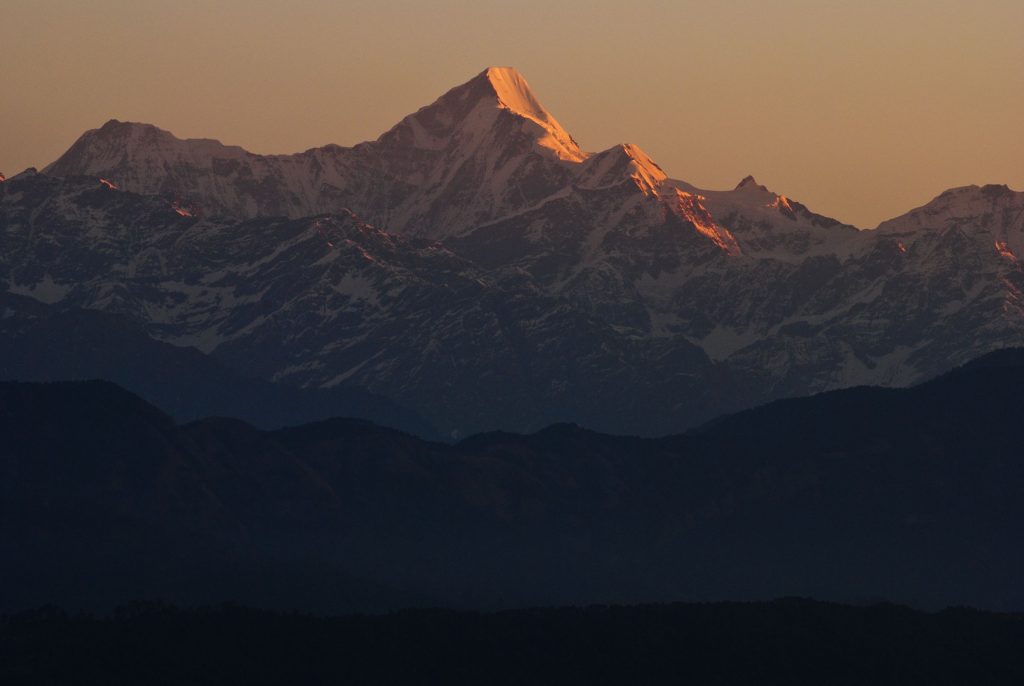
What Makes Kasar Devi Special? The Van Allen Belt Connection
Quick answer: Kasar Devi is often said to sit on the Van Allen Belt, alongside Machu Picchu and Stonehenge. Keep in mind this is a popular claim, not a published NASA finding. What is real is the silence, the Himalayan view, and 130 years of seekers who chose this ridge to sit still.
Ask anyone in Almora about Kasar Devi and within two minutes you will hear about the Van Allen Belt. The story goes that there are three places on Earth with an unusual geomagnetic “gap” and a strong pull of cosmic energy: Machu Picchu in Peru, Stonehenge in the UK, and Kasar Devi in Almora. Even the Incredible India page for Kasar Devi Temple mentions the Van Allen Belt and calls it an energy vortex.
Here is my honest take. The actual Van Allen radiation belts are rings of charged particles held by Earth’s magnetic field, high above the planet, and they wrap around the whole globe rather than sitting over one temple. Wikipedia’s Kasar Devi article says NASA has “allegedly” documented a gap here, and I could not find any NASA paper that says so. Hence, treat it as a lovely piece of local folklore, not science.
Does that make Kasar Devi any less special? Not at all. Swami Vivekananda meditated here in the 1890s, and for over a century writers, monks and wanderers kept coming back to this ridge. Whether you believe in cosmic energy or not, sitting on a pine ridge at 2,100 m with the Himalaya in front of you and no honking behind you does something to your head. That, in itself, makes it worth experiencing 🙂
What Is the History of Kasar Devi?
Quick answer: The Kasar Devi shrine is commonly dated to the 2nd century CE, though the present structure was rebuilt in 1948. Swami Vivekananda meditated here in the 1890s. Sunyata Baba and Lama Anagarika Govinda later settled nearby, and in the 1960s and 70s the ridge became a stop on the Hippie Trail.
The Almora district administration dates the Kasar Devi Temple structure to the 2nd century CE. The building you see today, though, is much newer. According to Wikipedia’s Kasar Devi article, the current temple was rebuilt in 1948 with support from the Birla family, replacing a simple stone shrine. The village truly came into prominence in the 1890s when Swami Vivekananda visited and meditated here, which put Kasar Devi on India’s spiritual map.
In the 1930s, Danish mystic Alfred Sorensen (known as Sunyata Baba) made Kasar Devi his home and lived here for decades. Ernst Hoffman, who later became the Tibetan Buddhist Lama Anagarika Govinda, also settled here with Li Gotami. Their presence drew a steady stream of western seekers. In the early 1960s, Govinda was visited by Beat poets Allen Ginsberg, Peter Orlovsky and Gary Snyder, which cemented the village’s reputation as a spiritual hub.
Crank’s Ridge and the Hippie Trail
At the peak of the Hippie movement in the 1960s and 1970s, Kasar Devi became part of the famous Hippie Trail. A ridge just outside the village, known as Crank’s Ridge (or colloquially, Hippie Hill), became a gathering point for bohemian artists, writers and western Tibetan Buddhists. In hippie lore the nickname is tied to American psychologist Timothy Leary, whose 1960s visit is still the most retold story on the ridge.
Other well-known names reportedly connected to Kasar Devi include Bob Dylan, George Harrison, Cat Stevens, and the mystic-saint Anandamayi Ma. Take the celebrity list with a pinch of pahadi salt. Hence, if you appreciate history and counter-culture heritage, walking along Crank’s Ridge is almost like walking through a living museum of the 1970s spiritual movement.
What Is the Best Time to Visit Kasar Devi?
Quick answer: The best time to visit Kasar Devi is March to June and September to November, when days are pleasant and the peaks are usually clear. December to February is cold but quiet, with nights near freezing. Avoid July and August, when monsoon landslides make Kumaon roads unreliable.
The best months to visit Kasar Devi are March to June and September to November. Spring and early summer bring pleasant days and, on good mornings, clear views of the Himalayan peaks. Post-monsoon months (October and November especially) bring the cleanest air of the year after the rains have washed the haze away.
Winters (December to February) are cold, with nights dropping close to freezing, and light snowfall is possible in some years. If you enjoy the cold and want a quieter experience, winter is fine, but keep in mind that some guesthouses may shut or run reduced services during this period.
Monsoon (July to August) is best avoided. The roads in this part of Uttarakhand get battered by heavy rains, and landslides are a genuine concern on the Haldwani-Almora stretch. If you are not an experienced hill driver, I suggest staying away during the monsoon.
What Is the Temperature at Kasar Devi in December?
Quick answer: Expect December days around 14 degrees C and nights around 3 to 4 degrees C at Kasar Devi. That is based on IMD’s 1991-2020 normals for Mukteshwar, an observatory at 2,171 m, about the same altitude. Cold snaps can push nights well below zero, so pack proper woollens.


There is no IMD weather station at Kasar Devi, and I have seen wildly different “Kasar Devi temperature” numbers floating online. The most reliable proxy is the IMD observatory at Mukteshwar, which sits at 2,171 m, only about 55 m higher than Kasar Devi and in the same Kumaon hills. Here are its long-term winter normals as reproduced on Wikipedia’s Mukteshwar page (IMD, 1991-2020; record lows from 1901-2020):
| Month | Average Day Max | Average Night Min | Record Low |
|---|---|---|---|
| November | 17.2 degrees C | 6.1 degrees C | -2.3 degrees C |
| December | 14.4 degrees C | 3.6 degrees C | -5.7 degrees C |
| January | 12.1 degrees C | 1.7 degrees C | -7.6 degrees C |
| February | 13.5 degrees C | 2.7 degrees C | -7.8 degrees C |
On the ground, December afternoons in the sun feel lovely, almost like a Delhi October. Once the sun drops behind the ridge, the temperature falls fast. Hence, carry a proper down or fleece jacket, cap and gloves, and check whether your room has a heater. January is the coldest month and the likeliest for snow. I still remember the bone-chilling air when I stepped out of the car in the forests beyond Almora on 20th December 2012, and that was before sunset.
When Is the Kasar Devi Fair in 2026?
If you want to see the cultural side, plan your visit around the Kasar Devi Fair, held at the temple on Kartik Poornima. In 2026, Kartik Poornima falls on 24 November as per most panchang calendars. It is one of the biggest local events of the year and gives you a taste of authentic Kumaoni culture. Keep in mind that stays fill up around the fair, and local dates can shift by a day, so confirm with your guesthouse before you lock the trip.
How to Reach Kasar Devi from Delhi?
Quick answer: Kasar Devi is about 375 km from Delhi, a 10 to 12 hour drive via Moradabad, Haldwani and Bhowali to Almora, then 8 km up the Binsar road. Without a car, take the Ranikhet Express or Shatabdi to Kathgodam, then a bus or taxi to Almora and a local cab to Kasar Devi.

The distance from Delhi to Kasar Devi is approximately 375 km (Wikipedia puts Almora at about 365 km from Delhi, and Kasar Devi is roughly 8 km further). It takes about 10-12 hours by road if you travel via Moradabad and Haldwani. Here are all the ways you can reach Kasar Devi.
By Road (Self-Drive)
The most common route from Delhi is: Delhi – Moradabad – Haldwani – Kathgodam – Bhimtal/Bhowali – Almora – Kasar Devi. The roads up to Almora are well-maintained, and any car can handle this drive comfortably. From Almora to Kasar Devi is a short climb on a narrow but motorable hill road (most sources say 8 km, Wikipedia says about 10 km by road, depending on where in Almora you start). I suggest starting early from Delhi (around 4-5 AM) to beat traffic through Ghaziabad and Moradabad.
One mistake to avoid, and I am speaking from painful experience here. If you are coming from Nainital, do not follow the old Almora signage near Kaladhungi. In 2012 I did exactly that and ended up back near Haldwani-Kathgodam, adding 90-plus km and 3-4 hours to the day. The correct road goes from Nainital to Bhowali and joins the main Almora highway there. Almora is only about 50 odd km from that junction. My full story is in A Mad Run to Chaukori via Almora.
By Bus
UTC (Uttarakhand Transport Corporation) and KMOU (Kumaon Motor Owners Union) buses run from ISBT Anand Vihar, Delhi to Haldwani/Kathgodam and Almora. As per the Almora district “How to Reach” page, most hill buses start from the Haldwani roadways bus stand, and shared taxis wait at Haldwani taxi stand and Kathgodam station. Haldwani to Almora takes around 3-3.5 hours. In Almora, a local taxi for the last 8 km cost around Rs 300-500 one way as of early 2026. Check UTC Online for current schedules and fares.
By Train
Kathgodam is the nearest railway station. The Almora district site puts it about 90 km from Almora town (its separate Kasar Devi page says around 105 km), so count on roughly 95 to 105 km to Kasar Devi. According to the district’s How to Reach page (last updated November 2025), these are the useful trains from Delhi:
- Ranikhet Express: leaves Old Delhi at 10:30 PM daily, reaches Kathgodam at 5:05 AM. Perfect if you want to be in Almora by breakfast.
- Uttaranchal Sampark Kranti Express: leaves Delhi at 4:00 PM, reaches Kathgodam at 10:45 PM.
- Kathgodam Shatabdi Express: leaves New Delhi at 6:00 AM, reaches Kathgodam at 11:10 AM, every day except Thursday.
Keep in mind that railway timings change, so recheck on IRCTC or NTES before you book. From Kathgodam, taxis and buses run frequently to Almora. A taxi from Kathgodam to Kasar Devi cost approximately Rs 1,500-2,000 one way as of early 2026; verify locally for current rates.
By Air
The nearest airport is Pantnagar Airport, about 127 km from Almora as per the district site, so roughly 135 km from Kasar Devi. Flights from Delhi are limited. A taxi from Pantnagar to Kasar Devi was quoted at approximately Rs 2,500-3,500 as of early 2026. For many travellers, flying to Delhi and catching the overnight Ranikhet Express is simply easier.

How Far Is Kasar Devi from Delhi, Kathgodam and Nearby Towns?
Quick answer: Kasar Devi is roughly 375 km from Delhi, 95 to 105 km from Kathgodam, about 97 km from Haldwani, about 74 km from Nainital and 60 to 65 km from Bhowali. All are approximate road distances, built from Almora district figures plus the 8 km climb from Almora to Kasar Devi.
Almost every route to Kasar Devi passes through Almora, so I have taken the Almora district administration’s road distances wherever available and added the roughly 8 km from Almora. Treat these as planning numbers, not odometer readings.
| From | Approx. Distance to Kasar Devi | Approx. Drive Time | Basis |
|---|---|---|---|
| Delhi | 375 km | 10-12 hours | Wikipedia (Almora 365 km) + 8 |
| Kathgodam railway station | 95-105 km | 3-3.5 hours | Almora district site |
| Haldwani | About 97 km | 3-3.5 hours | District site (89 km) + 8 |
| Nainital | About 74 km | 2.5 hours | District site (66 km) + 8 |
| Bhowali | About 60-65 km | 2-2.5 hours | Bhowali-Almora ~50-55 km + 8 |
| Pantnagar Airport | About 135 km | 4-4.5 hours | District site (127 km) + 8 |
| Ranikhet | About 55 km | 2 hours | Commonly quoted 45-50 km + 8 |
| Jageshwar Dham | About 45 km | 1.5-2 hours | 35-40 km from Almora + 8 |
| Binsar Sanctuary | About 22-25 km | 1 hour | Same road; Binsar 33 km from Almora |
| Almora town | 8-10 km | 20-30 minutes | Depends on start point |
Keep in mind that 100 km here is not 100 km on an expressway. Plan on 25-30 km per hour once you leave Haldwani, and if anyone in the car gets motion sickness, drive slower on the curves. My family learned that the hard way on the 2012 drive.
What Are the Top Things to Do at Kasar Devi?
Quick answer: At Kasar Devi, climb to the temple for the Himalayan view, walk Crank’s Ridge at sunrise or sunset, meditate or do yoga, and wander the village. Nearby, you can birdwatch in Binsar Wildlife Sanctuary, see Jageshwar Dham’s 124 shrines, the Katarmal Sun Temple, Bright End Corner and Almora’s old bazaar.
Despite being a small village, Kasar Devi and its surroundings offer plenty to do. Here is everything you can explore in the area.
Visit the Kasar Devi Temple
This is the main attraction. The temple is dedicated to Goddess Kasar Devi, a form of Shakti. A winding walkway from the gateway on the main road leads up to the temple, and it is a steep stone stairway, so take it slow. The complex has two groups of shrines, one for the Devi and the other for Shiv Ji and Bhairav, a little higher up. The main temple houses an akhand jyoti (eternal flame) and a dhuni (sacred fire) where a log burns continuously. Many devotees believe the ash from this dhuni has healing properties. The temple is open from 7:00 AM to 7:00 PM, as listed on the Incredible India page.
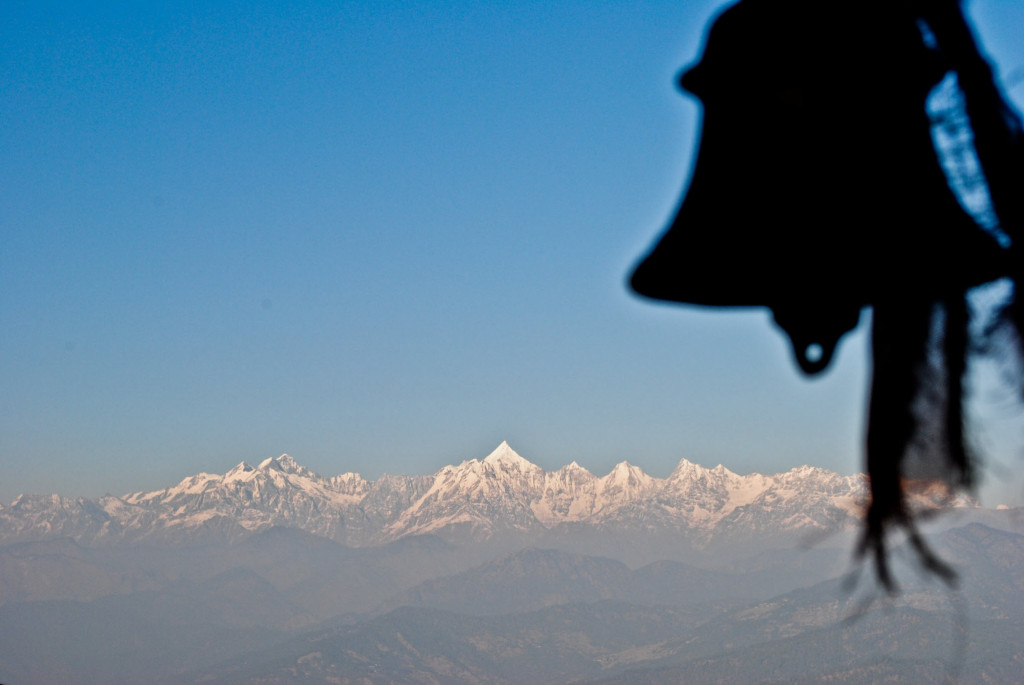
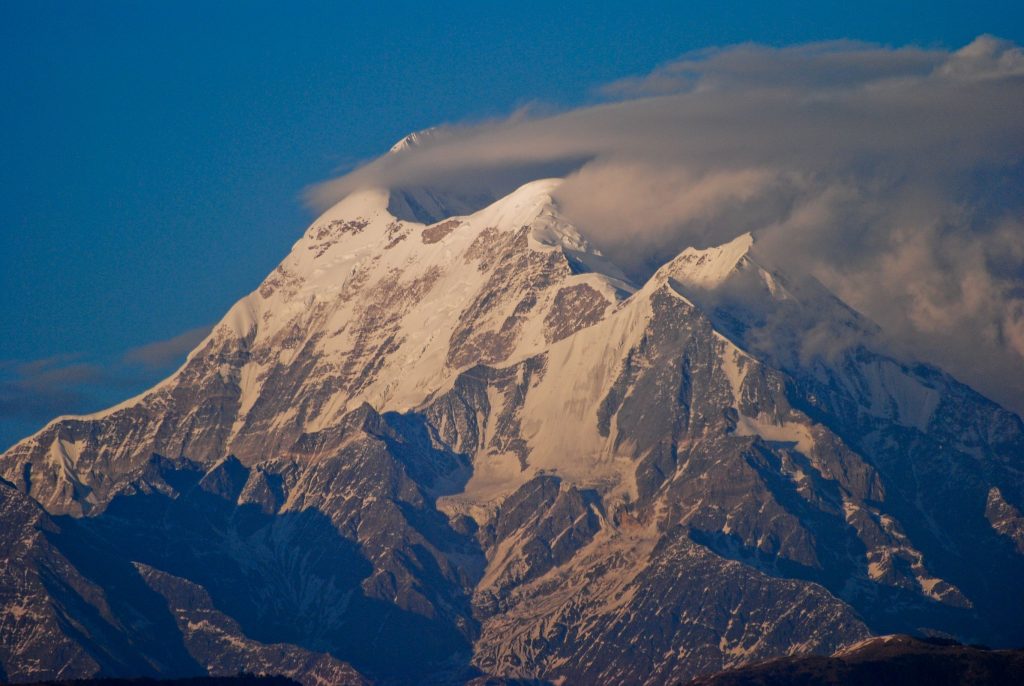
The views from the top are the real reward. On a clear day, you can see from Bandarpunch peak on the Himachal Pradesh border all the way to Api Himal in Nepal, with the Almora ridge and Hawalbagh Valley in the foreground. While you can take a cab to the gate, the best way is to walk up. Give it about 20-30 minutes from the main road at an easy pace.
Walk Along Crank’s Ridge (Hippie Hill)
Just beyond the Kasar Devi Temple lies the famous Crank’s Ridge. This forested stretch is peaceful and ideal for reflection, with viewpoints for sunrise and sunset. The walk is easy and can be done by anyone with basic fitness. In the 1960s and 70s, this ridge was home to poets, artists and spiritual seekers from across the world, and a few cafes and homestays keep a bit of that vibe alive.
Meditation and Yoga
Given its spiritual history, Kasar Devi is a popular spot for meditation and yoga, and several stays in the area run sessions. If you are coming specifically to meditate, early mornings at the temple or along Crank’s Ridge are the best, before the day-trippers from Almora arrive.
Explore the Village
Walking through a hill village and understanding the way of life there is something I personally enjoy anywhere in the mountains. The forests around Kasar Devi are a treat, and you get a glimpse of traditional Kumaoni houses and the simple lifestyle of hill communities. Keep in mind that these are real communities, not tourist setups. Please ask before photographing people, and do not play loud music on the ridge.
Bird Watching at Binsar Wildlife Sanctuary
Binsar Wildlife Sanctuary is about 22-25 km further along the same Binsar road and is an ideal spot for birds and wildlife. A pair of binoculars is all you need to spot a wide range of resident and migratory birds. The forest trails inside Binsar are well-maintained and make for a lovely half-day outing, and Zero Point gives you one of the widest Himalayan views in Kumaon.
Visit Nearby Attractions
There are several places worth visiting near Kasar Devi:
- Bright End Corner (about 2 km from Almora): A viewpoint famous for Himalayan sunrises and sunsets. Especially lovely in winter.
- Jageshwar Dham (about 35-40 km from Almora): A temple complex of 124 ancient shrines in a deodar forest. One of the most significant Shiva temple complexes in India.
- Katarmal Sun Temple (about 17 km from Almora): A 9th-century sun temple with remarkable stone architecture, often called the most important sun temple after Konark.
- Kausani (about 52-60 km from Almora): Known as the “Switzerland of India” for its Himalayan views, a great day trip or overnight extension.
- Almora Town (8 km): Walk the old bazaar for Kumaoni sweets (especially bal mithai and singauri), woollens and copper crafts.

Where to Stay at Kasar Devi?
Quick answer: Kasar Devi has homestays, backpacker hostels and a few resorts on and around the Binsar road. Budget rooms ran roughly Rs 500-1,500 a night and mid-range stays Rs 2,000-5,000 as of early 2026. Almora town, 8 km away, has far more hotels if Kasar Devi is booked out.
Kasar Devi has a growing number of places to stay, from family-run guesthouses to backpacker hostels and small resorts. Since the village is small, I suggest booking in advance, especially in peak season (April-June), in October-November, and around the Kasar Devi Fair.
Here is how the options break down across budgets (price bands as of early 2026, please verify current rates before booking):
- Budget (Rs 500 – Rs 1,500/night): Family-run guesthouses and homestays along the Binsar road and around Crank’s Ridge. Expect basic, clean rooms, often with home-cooked meals. For official info, see the KMVN website; KMVN’s own properties are in Almora and Binsar.
- Backpacker hostels and mid-range (Rs 2,000 – Rs 5,000/night for private rooms): The Hosteller Kasar Devi, goSTOPS Kasar Devi and Traveller Hive Kasar Devi all list properties here, with dorm beds and common areas. Reviews vary a lot, so read recent ones before booking.
- Resorts (Rs 5,000+/night): A handful of resorts, Kasar Himalaya Holiday Resorts among them, sit at the top of the price range. If you are coming in December or January, ask specifically about room heating before you pay.
Should You Stay in Kasar Devi or Almora?
My simple rule: stay in Kasar Devi if you are coming for the quiet, the sunrise on the ridge and a slow 2-3 days. Stay in Almora if you are on a family trip, want more food and hotel choices, or are using it as a base for Jageshwar, Katarmal and Kausani. Almora has a much wider range of hotels and restaurants, and Kasar Devi is just a 20-30 minute taxi ride away. In case you are planning to explore the wider Kumaon region, Almora works as a convenient base.
What to Eat at Kasar Devi?
Quick answer: Kasar Devi has small cafes along the Binsar road, and most guesthouses and hostels serve meals. Do not leave without Almora’s bal mithai and singauri from the town bazaar. A dhaba meal was about Rs 100-200 per person and a cafe meal Rs 200-400 as of early 2026.
Given the proximity to Almora (just 8 km), food is not an issue at all. You will find cafes and small restaurants along the Almora-Binsar road around Kasar Devi. Several of the guesthouses and hostels also serve meals.
Do try some of the local Kumaoni food when you are here. Bal Mithai (a chocolate-like fudge coated with sugar balls) and Singauri (a khoya and coconut sweet wrapped in a maalu leaf) are Almora’s signature sweets, and you will find them at shops in Almora’s bazaar. Ask your homestay whether they can make a Kumaoni thali with bhatt ki churkani, aloo ke gutke or madua roti. For regular meals, expect simple North Indian food at dhabas and cafes. A meal at a local dhaba cost about Rs 100-200 per person, while cafe meals ran Rs 200-400 as of early 2026.
How to Plan Your Kasar Devi Itinerary?
Quick answer: Kasar Devi works best as a 3-day trip from Delhi. Day 1, drive or take the overnight train to Kathgodam and reach Almora. Day 2, temple at sunrise, Crank’s Ridge, then Jageshwar, Katarmal or Binsar. Day 3, Almora bazaar for bal mithai and an early start back to Delhi.
Kasar Devi works best as a 2-3 day trip from Delhi. Here is a suggested itinerary that covers the highlights without rushing.
Day 1: Delhi to Almora/Kasar Devi
Start early from Delhi (4-5 AM). Drive via Moradabad and Haldwani and reach Almora by afternoon (10-12 hours including breaks). If you are on the overnight Ranikhet Express instead, you will be in Kathgodam at 5 AM and can reach Kasar Devi by late morning, which gives you a bonus half-day. Check in at Kasar Devi or Almora. If you arrive with daylight remaining, take an evening walk to Bright End Corner or the ridge for sunset.
Day 2: Kasar Devi Temple, Crank’s Ridge, and Nearby Sightseeing
Start your morning with the walk up to the Kasar Devi Temple, ideally right when it opens at 7 AM. Spend time at the temple, then walk along Crank’s Ridge. Post lunch, drive to Jageshwar Dham (about 45 km via Almora) or Katarmal Sun Temple (about 17 km from Almora). Return to Kasar Devi for the evening. Alternatively, visit Binsar Wildlife Sanctuary for birdwatching (22-25 km, needs about 3-4 hours).
Day 3: Almora Town and Return
Explore Almora’s old bazaar and pick up Bal Mithai and other local souvenirs. Visit the Nanda Devi Temple in town. Start your return drive to Delhi by late morning. You can also extend this trip by adding Kausani (about 52-60 km from Almora) or Chaukori for a longer Kumaon circuit.
What Is the Budget for a Kasar Devi Trip?
Quick answer: A 3-day, 2-night Kasar Devi trip from Delhi costs roughly Rs 4,500-8,000 per person on a budget and Rs 8,500-17,000 mid-range, sharing a car among 2-4 people. These are early 2026 estimates. Solo travellers on buses can manage on about Rs 4,000-6,000, depending on current bus fares.
Here is a rough budget breakdown for a 2-night, 3-day trip to Kasar Devi from Delhi (per person, assuming a group of 2-4 people in a car). These are early 2026 estimates, so please treat them as a planning range and verify current rates locally.
| Expense | Budget (Rs) | Mid-Range (Rs) |
|---|---|---|
| Fuel (Delhi-Almora-Delhi, ~750 km), your share | 2,500-3,000 (split) | 2,500-3,000 (split) |
| Accommodation (2 nights) | 1,000-3,000 | 4,000-10,000 |
| Food (3 days) | 600-1,200 | 1,200-2,400 |
| Local Taxi/Transport | 300-500 | 500-1,000 |
| Sightseeing/Entry Fees | 100-200 | 200-400 |
| Total per person | Rs 4,500-8,000 | Rs 8,500-17,000 |
If you are travelling by bus from Delhi, replace the fuel cost with bus tickets. We had pegged ordinary seats at roughly Rs 600-1,200 per person round trip to Kathgodam/Almora in early 2026, but please check the live fare on UTC Online before you budget. A taxi from Kathgodam to Kasar Devi adds about Rs 1,500-2,000 one way (split between passengers). Hence, a solo budget traveller using buses could manage the entire trip for around Rs 4,000-6,000 for 3 days as of early 2026.
Important Tips for Visiting Kasar Devi
Quick answer: Carry cash from Almora since Kasar Devi has no ATM, expect patchy mobile signal in the village, and pack a warm layer even in summer. Altitude sickness is not a concern at about 2,100 m. Dress modestly at the temple, avoid night driving in rain or fog, and carry your trash back.
- Mobile network: Jio and Airtel work in and around Almora. Coverage at Kasar Devi village can be patchy. BSNL has decent coverage in the region.
- ATMs: Available in Almora town. Carry enough cash before heading to Kasar Devi as there are no ATMs in the village.
- Clothing: Even in summer, evenings get cool at this altitude, so carry a light jacket. In winter, carry proper woollens (see the December temperatures above). If you are visiting for a snowfall experience near Delhi, Kasar Devi in late December to February is a fair bet, though snow is never guaranteed.
- Road conditions: The road from Almora to Kasar Devi is narrow but motorable, and any car can handle it. Avoid driving during heavy rain or fog, and in winter watch for frost on shaded bends early in the morning.
- Altitude: At about 6,940 Ft, altitude sickness is not a concern here. However, some people may feel the exertion on the uphill stairway to the temple.
- Respect local customs: The Kasar Devi Temple is an active place of worship. Dress modestly and maintain silence inside the temple premises.
- Drive in daylight: Plan to leave Haldwani by early afternoon. Kumaon roads are all curves, and in December the sun sets around 5:15-5:30 PM.
A Humble Appeal
It is my humble request to anyone reading this to PLEASE not litter in the hills. Even if you are going to touristy places, and especially in far-flung, isolated villages, please ensure you clean up after yourself. Carry a water bottle with you and keep refilling it. If you have to buy filtered water, please ensure you dispose of the bottle properly.
There are no cleanup crews coming after you to pick up your trash. It breaks my heart to go into the hills and see plastic bottles, cigarette butts, paper plates, half-eaten food containers, and discarded clothes strewn around.
I love the hills, as I am sure you do too! Let us do our part in ensuring that when we return the next time, the place is still the same. Anyone who travels through the hills is a part of a very sacred community. It is our duty to ensure the hills are clean for our community. We should not be making it difficult for people living in these villages in already tough circumstances! With folded hands, I request you to please clean up after yourself.

Kasar Devi as Part of a Larger Kumaon Trip
If you have more than 3 days, I highly recommend combining Kasar Devi with a larger Kumaon itinerary. The Kumaon region is full of offbeat places in Uttarakhand that most tourists miss. From Kasar Devi, you can extend to Nainital and Chaukori, explore Mukteshwar, or head to Kausani for that famous wide Himalayan panorama. On the way up from Delhi, the quiet lakes of Sattal near Bhimtal make a peaceful first-night halt. For trekking enthusiasts, the Tungnath and Chandrashilla trek in the Garhwal region is another option if you have a week to spare.
Kasar Devi, the former Hippie Hill of Uttarakhand, has a lot to offer. No doubt its tranquility attracted the peace lovers of the 70s, and today it continues to draw those who seek something deeper than just another hill station. When you visit Kasar Devi, you will realize that Kasol is not the only place to seek peace. The hills have many such places for you to discover 🙂 …
Related Reading from DwD
- A Drive from Delhi to Nainital Lake (Candid Kumaon)
- Kausani, A Place Where Time Sleeps (Candid Kumaon)
- An Escape to Quiet Mukteshwar with family
- Lohaghat Travel Guide for offbeat eastern Kumaon
- Munsiyari Travel Guide for the Panchachuli views
- Pangot Travel Guide for birders near Nainital
Have a travel question?? You can subscribe to my YouTube channel and leave a comment to ask your travel questions about traveling to the Himalayas.
I hope this travel guide on Kasar Devi was helpful to you! In case you have more questions about the place, planning your trip, or need help with a custom itinerary, feel free to comment below and I will be happy to get into more details. If you have been to Kasar Devi recently, do share current room rates or bus fares in the comments so the rest of us can keep this guide honest. Also, feel free to check the DwD Travel Circle community for travel partner requests and more Uttarakhand travel discussions. Happy Travelling 🙂 …
Frequently Asked Questions
How to reach Kasar Devi from Delhi?
Kasar Devi is about 375 km from Delhi, a 10-12 hour drive via Moradabad, Haldwani and Bhowali. By train, take the overnight Ranikhet Express or the Kathgodam Shatabdi to Kathgodam, then a bus or taxi to Almora and a local cab for the last 8 km. Pantnagar (about 135 km) is the nearest airport.
How far is Kasar Devi from Kathgodam?
Kasar Devi is roughly 95 to 105 km from Kathgodam railway station, about 3 to 3.5 hours by road. The Almora district administration lists Kathgodam about 90 km from Almora town and about 105 km from Kasar Devi. The route runs via Bhowali and the Almora highway, then 8 km up the Binsar road.
What are the Kasar Devi Temple timings?
Kasar Devi Temple is open from 7:00 AM to 7:00 PM, as listed on the Incredible India page for the temple. Hours may differ on festival days such as Kartik Poornima, which falls on 24 November in 2026, so arrive early if you want a quiet darshan.
What is the temperature at Kasar Devi in December?
Expect December days around 14 degrees C and nights around 3 to 4 degrees C. This is based on IMD’s 1991-2020 normals for the Mukteshwar observatory (2,171 m), which sits at almost the same altitude as Kasar Devi. Record December lows there have touched -5.7 degrees C, so carry proper woollens. Light snowfall is possible in some years, most often in January.
Is Kasar Devi worth visiting?
Yes, if you value quiet, spiritual history and Himalayan views over crowded tourist spots. The old Devi temple, Crank’s Ridge and the panorama from Bandarpunch to Api Himal make it special. Give it 2-3 days, ideally within a wider Kumaon trip. If you want nightlife or shopping, Nainital suits you better.
What is the best time to visit Kasar Devi?
March to June and September to November are the best months. Spring is pleasant with good Himalayan views, and October-November bring the clearest skies after the monsoon. Winters (December-February) are cold and quiet, with nights near freezing and occasional snow. Avoid July-August due to monsoon landslides on Kumaon roads.

Are there hotels near Kasar Devi Temple?
Yes. Budget guesthouses and homestays ran about Rs 500-1,500 per night as of early 2026, and hostels such as The Hosteller Kasar Devi and goSTOPS Kasar Devi offer dorm beds and private rooms. Mid-range stays cost about Rs 2,000-5,000 per night, and a few resorts charge Rs 5,000 and up. Almora, 8 km away, has many more hotels.
What is the Kasar Devi Van Allen Belt connection?
Popular belief says Kasar Devi sits on a rare gap in the Van Allen Belt, alongside Machu Picchu and Stonehenge. Keep in mind there is no published NASA study backing this, and the real radiation belts wrap the whole planet far above the surface. Treat it as folklore. The calm of the place is real either way.
What is Crank’s Ridge at Kasar Devi?
Crank’s Ridge, or Hippie Hill, is the forested ridge next to Kasar Devi that became famous during the 1960s-70s Hippie movement. Timothy Leary, Allen Ginsberg and other counter-culture figures visited. Today it is a peaceful walking trail with sunrise and sunset viewpoints and a handful of cafes.
Is Kasar Devi a valley?
No, despite the popular search term “Kasar Valley,” Kasar Devi is not a valley. It is a small hamlet and temple village on a ridge in Almora district, Uttarakhand, at about 2,116 metres and roughly 8 km from Almora town. The last stretch is a steep stone stairway, about 20 to 30 minutes on foot.

1 Comment
Comments section gets closed in 90 days. To ask your travel questions, you can follow my YouTube Channel for a faster reply or for a much slower reply follow me on Instagram. :)
Hi Shefali Joshi, I was just searching for the guide to kesar devi and you have shared very amazing information about how to reach there and where to stay. Thank You & keep traveling.