


Here is the short answer for 2026, my friend. Indian tourists do not need a separate Inner Line Permit (ILP) anywhere in Ladakh anymore. You just pay the Ladakh Environment and Development Fee (EDF) online at lahdclehpermit.in, print the receipt, and you are good to visit Nubra Valley, Pangong Tso, Tso Moriri, Hanle, Umling La Pass, Marsimik La, and even Demchok or Chumur. For a 7-day trip, the total cost works out to roughly Rs 590 per person (Rs 400 one-time environment fee + Rs 140 wildlife fee at Rs 20 per day + Rs 50 optional Red Cross Fund). The receipt is valid for 21 days. Foreign nationals still need a Protected Area Permit (PAP) processed through a registered Leh agent, and that part has not changed.
Quick Answer (Updated May 2026): No, Indians do not need an Inner Line Permit for Ladakh in 2026. The ILP was replaced by the Ladakh Environment Fee (EDF) in 2021. You pay Rs 590 per person for a 7-day trip online at lahdclehpermit.in, carry the printout, and the same single receipt now covers Nubra Valley, Pangong Tso, Tso Moriri, Hanle Dark Sky Reserve (including MACE telescope area), and Umling La. Foreigners still need a Protected Area Permit (PAP) through a registered Leh agent.
I have walked this process multiple times in the last few years, both online from home and in person at the Leh DC office. In this guide, I have laid out the exact step-by-step procedure, the eight permit circuits with what each one covers, the offline backup process, and the special rules for Hanle, Chusul, and Umling La. Hence, by the time you finish reading, you will know exactly what to pay, where to pay, and what receipt to keep handy at the checkposts.
Let's quickly dive into the details:
Do You Need Any Permits in Ladakh in 2026?
Indians do not need any separate permits in Ladakh for regular sightseeing in 2026. You just need to pay the Ladakh Environment Fee on the official LAHDC (Ladakh Autonomous Hill Development Council) website and carry the receipt. As per LAHDC officials, this single online receipt now covers what used to require multiple in-person stamps just a few years ago. Here is the direct link to pay: https://www.lahdclehpermit.in/register-as-domestic
The current Ladakh Environment/Development Fee (EDF) is broken down as follows:
- Environment/Green Fee = Rs 400 per person (one-time per year)
- Wildlife Fee = Rs 20 per person per day
- Red Cross Fund Fee = Rs 50 per person (one-time per year, optional). You can skip this fee if you choose not to pay it.
Practical Info Box (Updated May 2026)
Official Portal: www.lahdclehpermit.in
Environment Fee: Rs 400/person (one-time) + Rs 20/person/day (wildlife) + Rs 50 Red Cross (optional)
Example 7-day cost: Rs 400 + Rs 140 + Rs 50 = Rs 590 per person
Payment: Online via credit/debit card, net banking, or UPI
ID Required: Aadhaar, Passport, Driving License, or Voter ID
Permit Validity: 3 weeks for Indians, 15 days for foreigners
Children: Below 12 years are exempt (carry valid photo ID)
Agent Discount: 10% discount on total fees when applied through a local registered travel agent
DO NOT confuse the environment fee receipt with the old Ladakh Inner Line Permit. You just need to carry the fee payment receipt, either a hard copy or a soft copy on your phone. This receipt may be checked at some checkposts. Hence, people still confuse it with a permit. But this is simply a verification that you have paid the Ladakh environment fees.
What Is the History Behind Ladakh Inner Line Permits?
The permit system in Ladakh has gone through several changes over the years. Understanding this history helps clear up the confusion that many travelers still have about whether they need permits or just the environment fee.
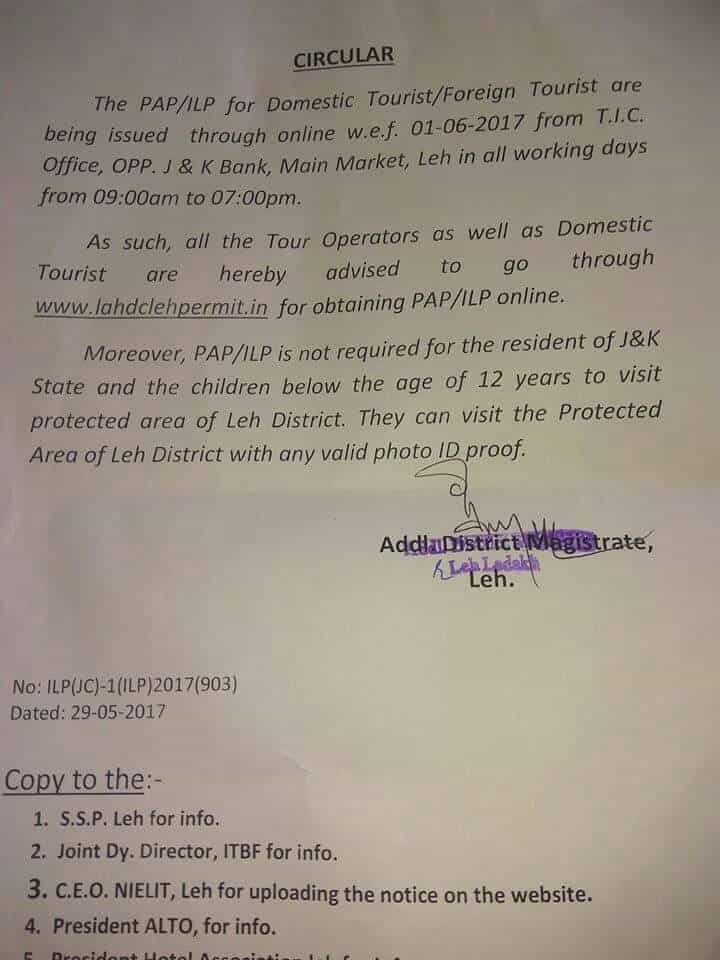
In June 2017, Ladakh Inner Line Permits were made available online from the official website of the Leh Ladakh administration. It was a piece of very welcoming news for all the people planning their trip to Leh Ladakh. This step helped all those tourists who travel to Ladakh during holidays and found the Leh DC office closed during those days to get the permits to travel to tourist spots.
Tourists could apply for the Leh Ladakh permits online, choose a tour operator to pay the fee, and get their copies of the Ladakh permit online. This step eased the process and eliminated the hassles of procuring these permits in advance. Leh Ladakh Inner Line Permits were available online for both domestic tourists as well as foreigners.
Back in 2014, the concept of Inner Line Permits for domestic Indian tourists was waived. It meant all Indians traveling to the Inner Line region of Ladakh, including Nubra Valley, Pangong Tso, and Tso Moriri, were exempted from the need for Inner Line permits. Domestic tourists just required a self-declaration form when visiting these places, and that acted as a permit for them.
However:
The decision was reverted in 2017 to the original requirements of having permits. In April 2017, authorities in Leh Ladakh re-introduced the Environment Fee of Rs 300, the Red Cross Fund fee of Rs 100, and Inner Line Permits for domestic tourists as well. Now all tourists, foreigners, and Indians, visiting the Inner Line region of Leh Ladakh needed these permits to visit Nubra Valley, Pangong Tso, and Tso Moriri.
Then in 2021, the ILP requirement was replaced by the Environment/Development Fee (EDF) system. The fee amounts were revised to the current structure of Rs 400 environment fee, Rs 20/day wildlife fee, and Rs 50 optional Red Cross fund. Since then, Indian tourists no longer need a separate “permit” document. They just need the EDF payment receipt.
Foreigners need a Protected Area Permit (PAP) to visit tourist places in Ladakh, which is different from the environment fee paid by domestic tourists. Foreign nationals must apply through a registered travel agent in Leh or through the official LAHDC website, and the rule is to travel in a group of two or more (recently relaxed for select areas). Keep in mind that visitors from Afghanistan, Bangladesh, China, Myanmar, Pakistan, and Sri Lanka need to apply separately through the Ministry of Home Affairs in New Delhi. As per the latest LAHDC norms in 2026, foreign tourists are now allowed to visit Hanle, but only if they stay at registered Astro-stays and do not wander off the designated roads near the Indian Astronomical Observatory.
How to Pay the Ladakh Environment Fee Online in 2026?
Paying the Ladakh Environment Fee online is straightforward and saves you the hassle of visiting government offices in Leh. This will help you a lot in planning your trip to Ladakh smoothly. I will also discuss the offline process for those who prefer to do it in person at the Leh DC office.
The Ladakh Environment Fee is required for Indian tourists, while foreigners require a Protected Area Permit (PAP). You need the EDF receipt to visit inner line places like Nubra Valley, Khardung La, Pangong Tso, Tso Moriri, Dah, Hanu Villages, Man, Merak, Nyoma, Loma Bend, Turtuk, Tyakshi, Chusul, Hanle, Digger La, and Tangyar (for trekking only).


You do not need any permits or EDF receipt to travel on the Manali Leh Highway or Srinagar Leh Highway or to Zanskar Valley.
These permits/fees are not required for residents of Ladakh UT and children below the age of 12 years. They can visit the inner line region by showing a valid Photo ID proof.
Both the Environment Fee (for Indians) and Protected Area Permits (for foreigners) are available online from the official website www.lahdclehpermit.in of the LAHDC Leh administration. All tourists can go through the website to pay the fee or obtain permits.

You need to pay an Environment fee of Rs 400 per person (one-time), Wildlife fee of Rs 20 per person per day, and an optional Red Cross Fund fee of Rs 50 per person. You need to provide a valid photo ID proof to apply. Payment can be made online via credit/debit card, net banking, or UPI.
What Are the Steps to Pay the Ladakh Environment Fee Online?
The entire process takes about 10-15 minutes. Follow these steps carefully to complete your Ladakh Environment Fee payment online before your trip.
- Visit the official LAHDC Leh website at www.lahdclehpermit.in and click on the “Apply for Permits -> Domestic Clients” button on the center bottom of the screen. It will take you to the first step of providing your details.
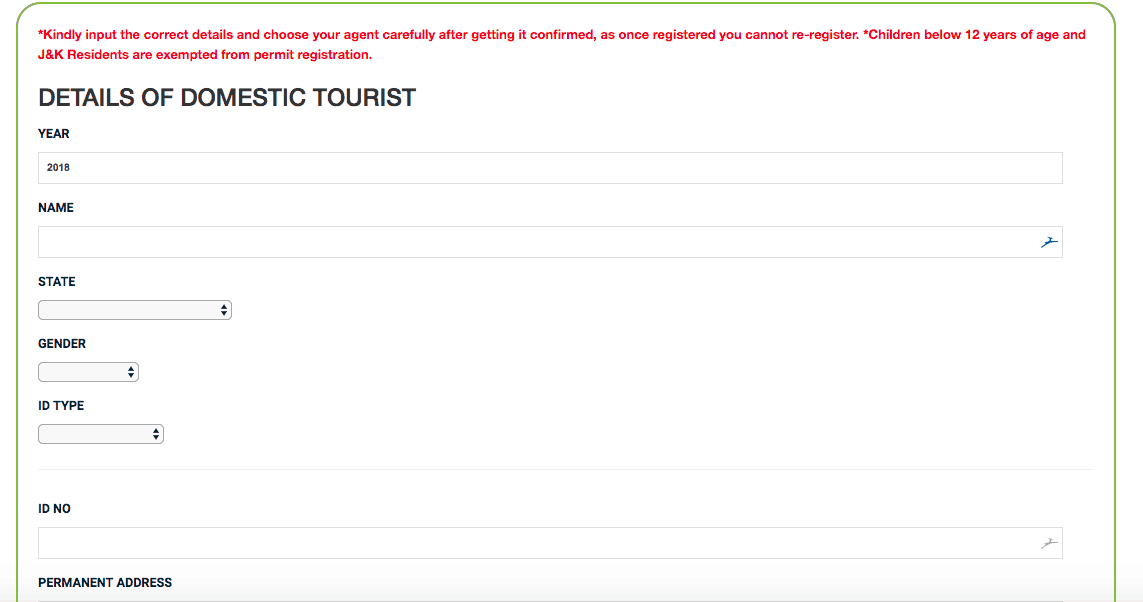
- On this page, you need to enter your details including Name, State, Gender, ID Type, ID Number, and Home Address.
- Apart from that, you need to choose if you are applying directly or through an agent. I recommend choosing to apply directly because with the agent option, you have to get in touch with the agent to get your permit processed. However, going through a registered local agent gives you a 10% discount on fees.
- Lastly, you need to enter the Arrival Date when you are arriving in Leh and will start exploring inner line areas of Ladakh. Then, click on Submit.
- When you click on submit, it will take you to the screen with two options: “Click here to issue an individual permit” and “Click here to issue group permit.”
- If you are applying alone, click on the Individual permit option. If you are in a group, choose the group option and add details of other members on the next screen.
- Once you choose the respective option (and fill group details if applicable), you will go to the next screen where you need to select the circuits you plan to visit in Ladakh. A reference number will be generated on the page.
- IMPORTANT: Note down the reference number and save it somewhere safe. You will need it to reprint your permit/receipt anytime later.
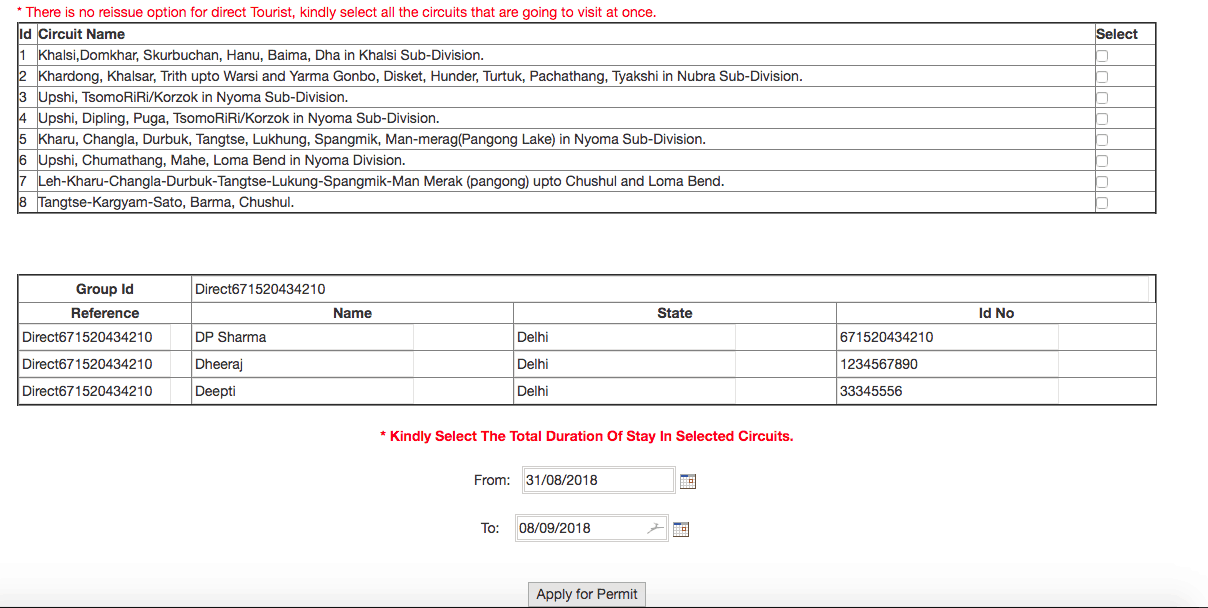
- Select the required circuits based on your Ladakh itinerary. You cannot reissue permits easily, so choose all the circuits you plan to visit at once. The circuit table below will help you select the right ones.
- Enter the Start Date and End Date of the permit, which determines the total wildlife fee (Rs 20 per person per day).
- Click on Apply for Permits button to go to the confirmation page that shows your selected circuit details with dates.
- Click on the Proceed button to generate your permit/receipt. Print a few copies of this. Download the sample online permit for reference.
- Your receipt shows the total fee that includes Environment Fee (Rs 400 per person, one-time), Red Cross Fund Fee (Rs 50 per person, one-time, optional), and Wildlife Fee (Rs 20 per person per day).
- You can click on the Pay Now option to pay online using a Credit/Debit Card, Net Banking, or UPI. On successful payment, a receipt will be generated with a unique Collection ID. Take printouts of both the Permit Receipt and the Transaction Receipt. SMS and Email confirmations will also be sent.
- You can use the reference number to reprint your permit anytime from the homepage menu options.
Step 1: Register as a Domestic Tourist on LAHDC Portal
Step 2: Choose Individual or Group Permit
Step 3: Select Circuits and Date Range
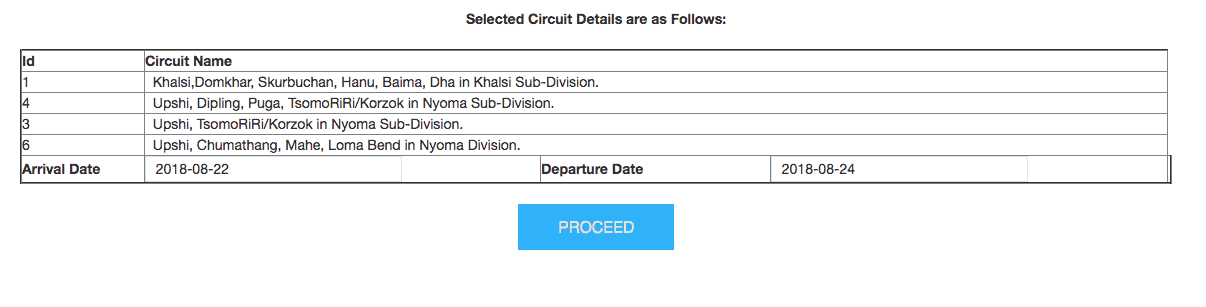
Step 4: Review and Generate Your Permit
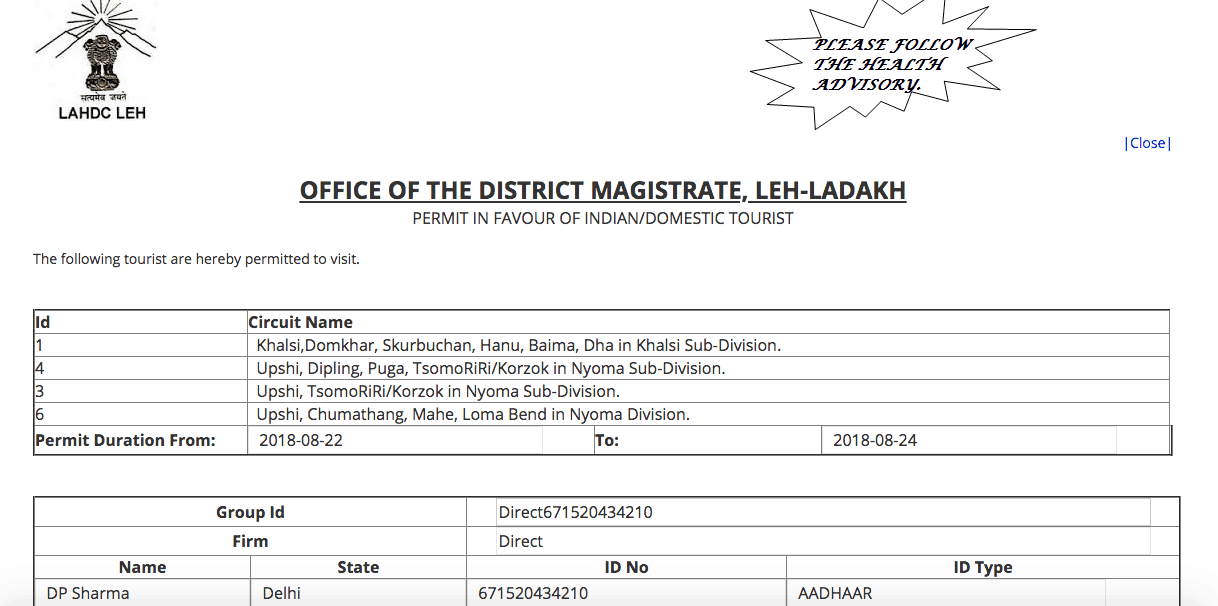
Step 5: Pay the Environment Fee Online
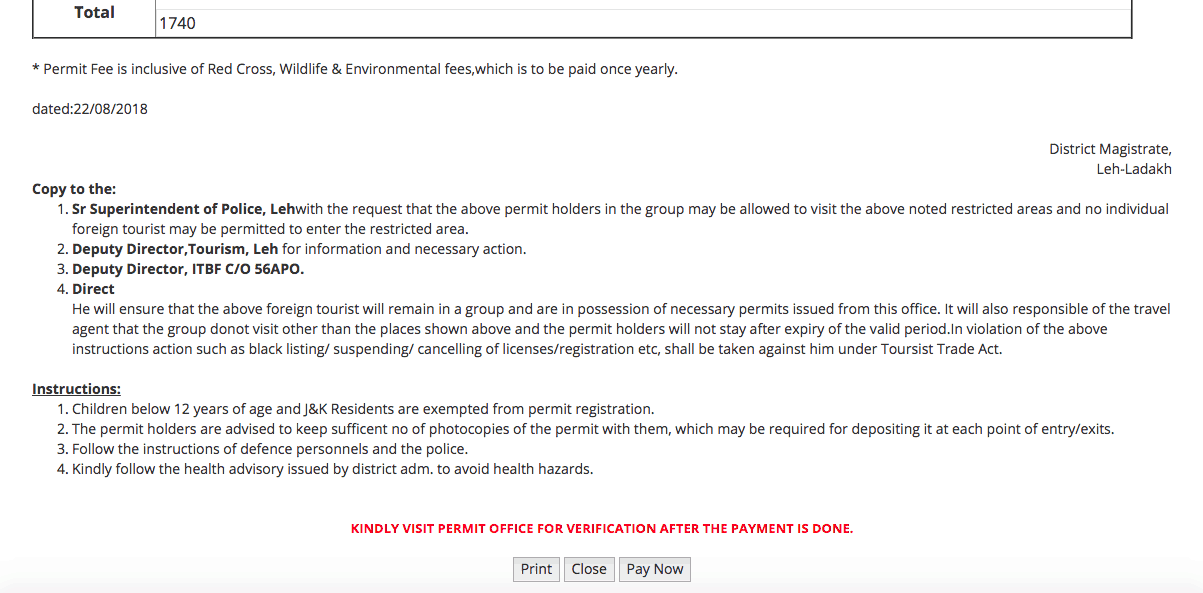
Which Ladakh Permit Circuits Should You Select?
The entire inner line permit area in Ladakh is divided into 8 circuits. You need to select the ones matching your itinerary. Here is the complete list to help you choose:
| # | Circuit Covers | Select If You Plan To Visit |
| 1 | Khalsi, Domkhar, Skurbuchan, Hanu, Baima, Dha in Khalsi Sub-Division | Dah Hanu Villages |
| 2 | Khardong, Khalsar, Trith up to Warsi and Yarma Gonbo, Disket, Hunder, Turtuk, Pachathang, Tyakshi in Nubra Sub-Division | Nubra Valley including Turtuk, Tyakshi |
| 3 | Upshi, TsomoRiRi/Korzok in Nyoma Sub-Division | Tso Moriri |
| 4 | Upshi, Dipling, Puga, TsomoRiRi/Korzok in Nyoma Sub-Division | Tso Moriri and Tso Kar |
| 5 | Kharu, Changla, Durbuk, Tangtse, Lukhung, Spangmik, Man-Merak (Pangong Lake) in Nyoma Sub-Division | Pangong Tso |
| 6 | Upshi, Chumathang, Mahe, Loma Bend in Nyoma Division | Loma |
| 7 | Leh-Kharu-Changla-Durbuk-Tangtse-Lukung-Spangmik-Man Merak (Pangong) up to Chushul and Loma Bend | Chusul and Loma Bend (for Pangong to Tso Moriri direct route) |
| 8 | Tangtse-Kargyam-Sato, Barma, Chushul | Chusul |
Pro Travel Tip: Apply for the Ladakh Environment Fee online only when your travel dates are finalized. The system stores your photo ID card number in the database, and the same ID proof cannot be used again for the next 15 days. So if you change your dates after applying, you will need to use a different ID. Also, select all circuits you plan to visit at once since reissuing permits requires waiting or using a different ID.
How to Apply for the Environment Fee or Permits Offline at Leh DC Office?
If you prefer to pay the environment fee in person or if you need to get special stamps for Hanle and Chusul routes, you can visit the Tourist Information Center (TIC) Office, opposite J&K Bank, Main Market, Leh. You can also apply at the Leh DC Office.
The TIC office is open on all working days (Monday to Saturday) from 09:00 AM to 07:00 PM. The Leh DC office timing is 10:00 AM to 5:00 PM, but they generally do not accept applications after 3 PM. Hence, you should reach the Leh DC office before 2 PM. Best approach is to reach around 10:15 AM to find the least rush and a hassle-free process.
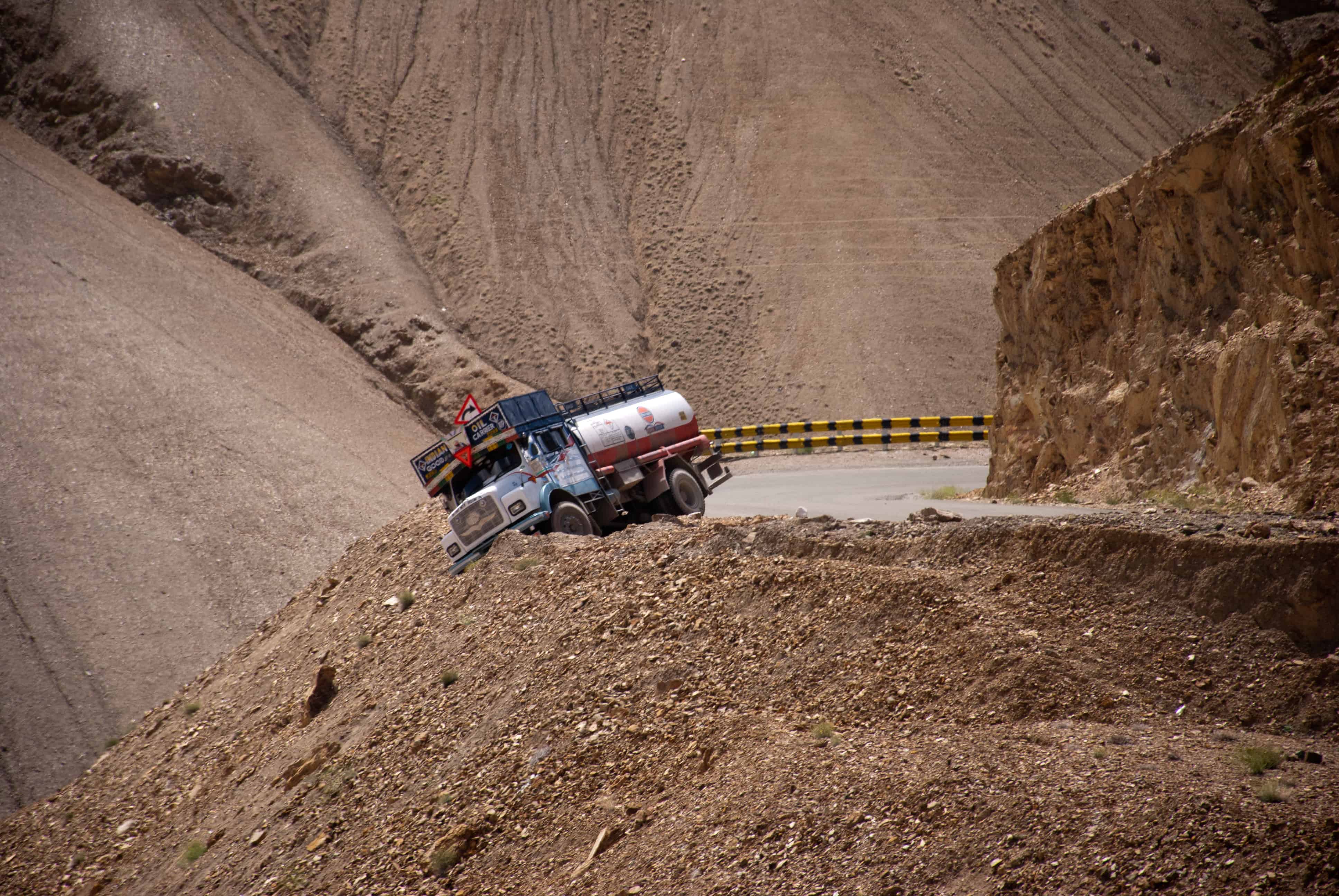
Is the Leh DC Office Open on Saturday and Sunday?
Leh DC office is closed on Sundays and national holidays. Hence, you should plan your Leh Ladakh trip such that your first sightseeing day does not fall on a Sunday or a holiday. I have heard that the DC office is sometimes open on Sundays for half a day, but I will say do not count on it. If that is the case, the best approach is to pay the Ladakh environment fee online before your trip or get it arranged through a local travel agent.
The offline/in-person application is primarily needed if you want to get special stamps for Hanle or Chusul routes on your receipt. For regular tourist destinations like Nubra Valley, Pangong Tso, and Tso Moriri, the online payment receipt is sufficient.
Below are the steps for applying at the DC office in Leh in person:
- You need to fill the permit application form to get the approval. Carry a pen with you if filling the form at the Leh DC office.
- The fee structure is the same as online: Rs 400 for environment fee (one-time), Rs 20 per day per person for the wildlife/permit fee, and Rs 50 one-time towards the Red Cross Fund (optional). There is a special discounted fee for students, which is a one-time Rs 20. Students need to show their institution i-card.
- You need to have photocopies of a valid Photo-ID proof (Passport, Driving License, Aadhaar, Voter ID, PAN Card, etc.) that proves your identity. Although the photocopies were not checked for attestation during my visits, I feel one should not take any chance and get them attested before going to Leh Ladakh.
- You can apply for permits for your entire group, but you need to attach the photocopy of photo-ID cards for each member and fill the details of all group members in the application form.
- Anyone who has your group’s photocopies of valid Photo-IDs can get the permits on your behalf. Usually, hotels in Leh town provide this facility if you are comfortable sharing photocopies of your ID proofs with them via email.
- The permit approval process may take anywhere from 30 minutes to 3 hours. Hence, it is always best to reach the DC office early morning. Sometimes, when there is a rush of tourists, permits are issued in two batches, morning and evening. Try to be in the morning batch so that you have time to start your Leh local sightseeing the same day.
- The application forms are usually available at the photostat shops nearby (one is just behind Leh DC office). You can also download the form from here: Inner Line Permit Form and Application Letter (Page 2).
- Usually, the form remains the same, so filling it at home and completing the documentation beforehand can save a lot of time in Leh.
- In the application form, for each member, you need to mention the name with parent/guardian name, complete permanent address, the places you want to visit, and the specific dates for which you need the permits. In the copy information section, mention the hotel name and address where you are staying in Leh.
- Write Nubra Valley, Pangong Tso, and Tso Moriri to cover all three major tourist spots. Writing Nubra Valley covers all places in Nubra including Khardung La and Turtuk.
- Besides the permit application form, you need to write a request application letter addressing the DC of Leh Ladakh district for the approval of your permits.
- In the application letter, express your interest in visiting the desired places along with the dates. Both the application form and the request letter should be in sync for places, names, and dates. Download the unfilled request application from here: Inner Line Permit Form and Application Letter (Page 3).
- Make two to three photocopies of the entire set: Application Form, Approval Request Letter, and Photo IDs of all members.
- Submit the photocopies at the DC office along with the original copies of the form and request application.
- The clerk will ask you to deposit the fees (amount depends on number of days and members) + Red Cross Fund fees (Rs 50 per member, optional) + Environment Fee (Rs 400 per member).
- Once you deposit the fee, the clerk will stamp the permits. In some cases, the clerk may ask you to get a signed approval from the ADC room, or your documents will be placed in the ongoing batch. In the latter case, you may wait 1 to 3 hours for approved permits.
- Once you get the stamped approved permits, go to the photostat shop and make photocopies.
- These photocopies are submitted at every checkpost on the way to your sightseeing destinations, including Nubra Valley, Pangong Tso, and Tso Moriri. Hence, make at least ten copies if you are staying long enough in Ladakh.
- The validity of the permits is three weeks for Indians and one week (15 days as of 2026) for foreigners. There is no limit on the number of times you can enter a place during the valid period as long as you have the permit.
- Although not strictly required, carry passport-sized photographs as well. On all your trips, you should carry them because you never know when you may need one. Did you check my comprehensive list of things to carry on a Ladakh trip?
Do You Need a Separate Permit for Hanle in 2026?
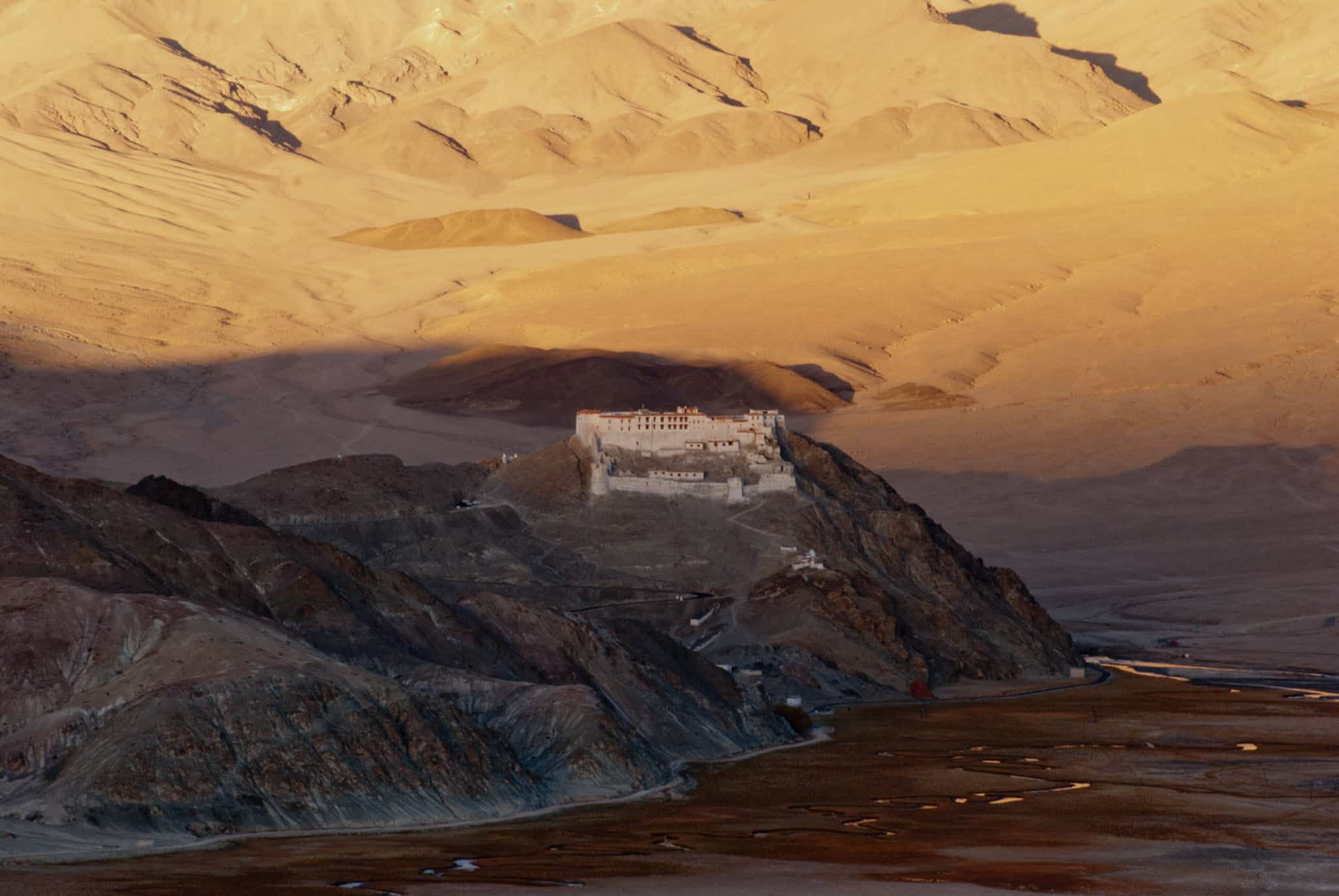
Since March 2022, no separate Inner Line Permit is required for Hanle village. Indian tourists can visit Hanle with just the standard Ladakh Environment Fee receipt. You do need to select the appropriate circuits (Circuit 6 for Loma and the Hanle route) when applying online.
However, keep in mind that access to Hanle is always subject to the current border security situation. The army at Loma checkpost has the final say. They can, and sometimes do, turn back tourists based on prevailing conditions. So while you do not need a separate permit document, getting past the Loma checkpost depends on the army’s assessment on that day. If you are visiting the DC office in person, getting an additional Hanle stamp on your receipt can help, though it is not technically mandatory anymore.
One thing I have noticed in 2026 is that more DwD community members are specifically planning Hanle trips for stargazing. The big reason is the MACE (Major Atmospheric Cherenkov Experiment) telescope, inaugurated in October 2024 at Hanle by BARC (Bhabha Atomic Research Centre) and TIFR. At an altitude of about 4,300 meters, it is the world’s highest imaging Cherenkov telescope. The Hanle Dark Sky Reserve surrounding the Indian Astronomical Observatory (IAO) is Asia’s largest dark sky reserve. If you are planning a Ladakh trip in the summer months, adding Hanle and its night skies to your itinerary makes a lot of sense. Indian tourists can visit both the village and the telescope viewpoint with just their standard EDF receipt. Keep in mind that photography near the telescope area may be restricted, so always follow the instructions from security personnel on site. As per the latest LAHDC norms in 2026, foreign tourists are allowed to visit Hanle only if they stay at registered Astro-stays and do not wander off designated roads near the Observatory.
What About the Pangong Tso to Tso Moriri Direct Route via Chusul?
For the direct route from Pangong Tso to Tso Moriri that passes through Chusul village, select Circuit 7 (Pangong to Chushul and Loma Bend) when applying online. This route also falls under the environment fee system now.
Like Hanle, the Chusul route is near the border and army checkposts have the discretion to allow or deny passage based on the security situation. Getting the appropriate circuit stamps at the DC office can provide additional documentation, though the online receipt with the correct circuits selected should work.
Can Tourists Visit Umling La Pass in 2026?
Umling La Pass, at an altitude of 5,883 meters (19,300 feet), is the world’s highest motorable road, built and opened by BRO. It is about 105 km from Hanle Village and about 235 km from Leh. In 2021, Guinness World Records officially recognized it as the highest motorable road in the world.
Indian tourists can visit Umling La Pass with the standard Ladakh Environment Fee receipt. No separate permit is required since March 2022. However, because of its proximity to the China border, army checkposts control access and can restrict civilian movement at any time. Many travelers have been turned back from the Loma checkpost depending on the border situation on that particular day. So while there is no permit barrier, the army’s decision on the ground is final.
What Are the Important Rules for Hanle, Chusul, and Umling La?
To travel to Hanle, Chusul, or Umling La, make sure you select the correct circuits during the online application. When applying online, select circuits covering Man, Merak, Chusul, Tsaga, Loma, Nyoma, and Hanle to cover all routes in inner Changthang. The permits/EDF receipt for inner Changthang and Hanle are issued only to Indian nationals, not for foreign tourists.
Access to Hanle, Chusul, and Umling La is always subject to the current political or border situation. Sometimes, the army does not allow tourists on these routes regardless of having a valid EDF receipt.
Even with the correct circuits selected and a valid receipt, do not consider it a guaranteed pass. Army personnel have turned back many tourists since 2011, even those with valid permits, based on the actual political and border security situation. Unless you pass the Chusul checkpost or Loma checkpost to the other side, there is no guarantee you will not be turned back on these routes.
One more thing: photography equipment is sometimes not allowed beyond Loma towards Hanle. In case you have cameras, pack them in bags and refrain from taking pictures in sensitive border areas.
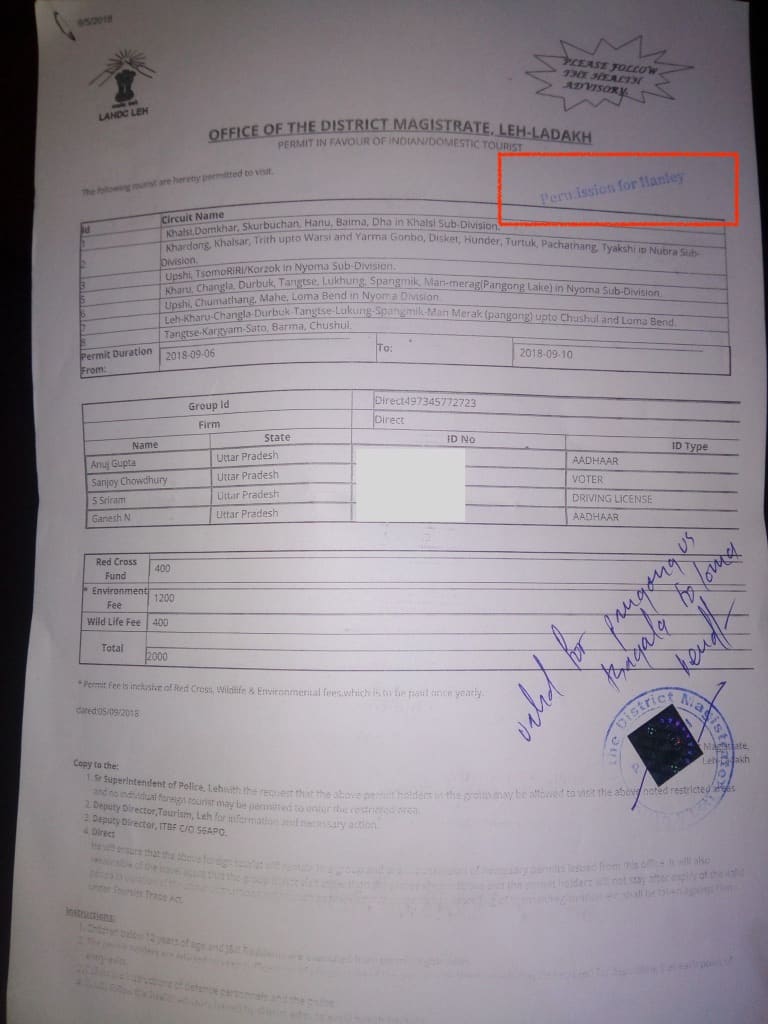
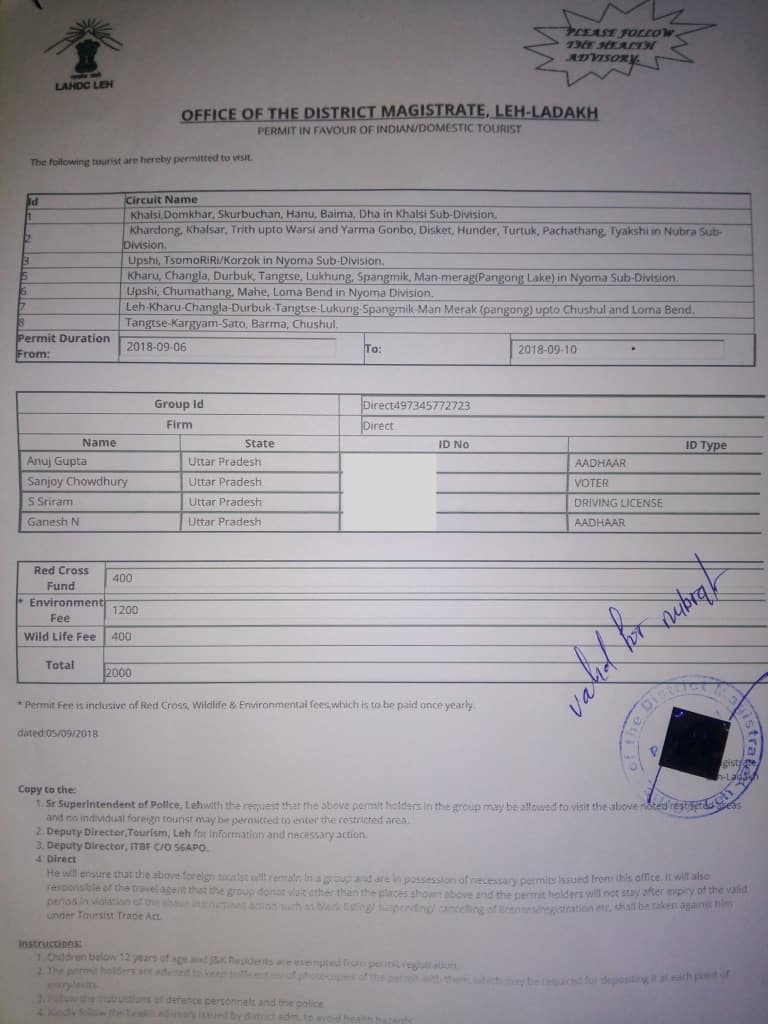
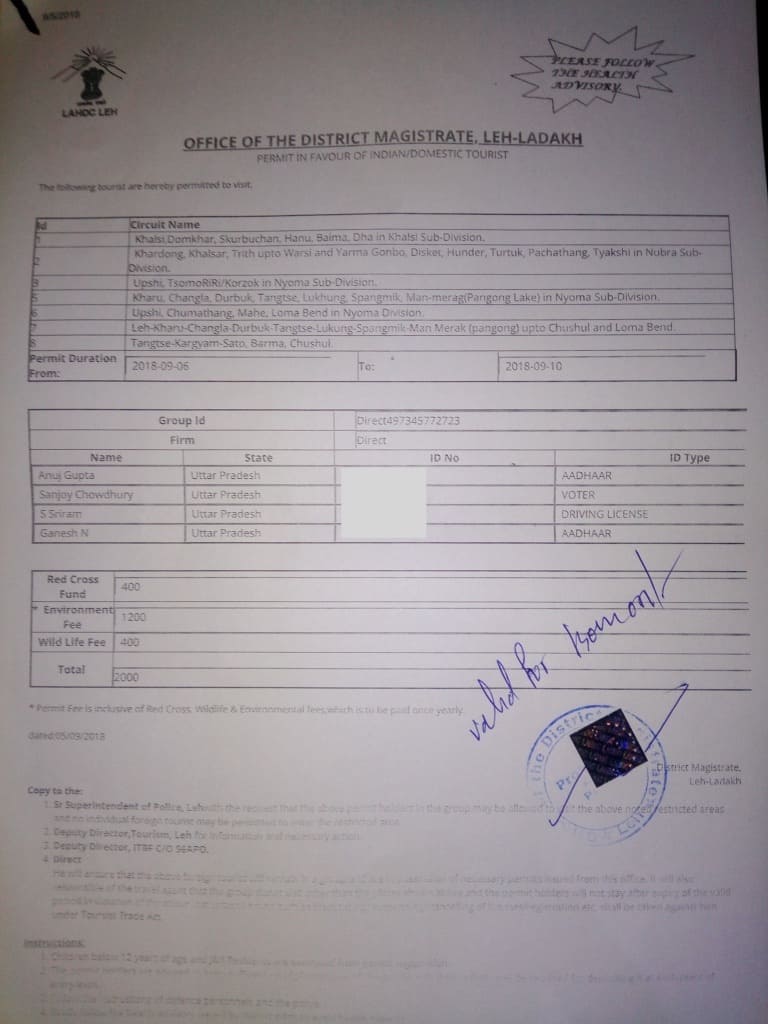
Here are sample permits issued and stamped by the Tourist Information Center:
What Is the Fastest Way to Get Ladakh Permits?
The fastest and most convenient approach in 2026 is to simply pay the Ladakh Environment Fee online from the comfort of your home, before you even start your trip. This saves you all the hassle of visiting the DC office in Leh.
However, if you also plan to visit Hanle or travel the Chusul route, here is my recommended approach. First, download the application form at home. Fill the form completely and attach photocopies of photo ID proofs for all members of your group.
Write a request application letter addressing the Leh Ladakh DC expressing your intent to visit the desired places and requesting the permits for your travel duration. Staple the entire bundle, including the filled application form, request letter, and photocopies of photo ID proofs.
Once you reach Leh, go to the DC office and submit the bundle along with the required fees. Get the permit stamped. For Hanle and Chusul, make sure you specifically ask for the relevant stamps. Otherwise, you may be sent back by the army from the checkposts.
On the way back, get 8-10 photocopies of the stamped permits. You need to submit these at checkposts while going to Nubra Valley, Pangong Tso, Tso Moriri, Hanle, etc.
This approach will save a lot of time and energy in Leh. Otherwise, you will keep running to photocopy shops for one thing or another, and that will surely eat into your precious sightseeing time.
The worst-case scenario would be that the DC office changes the format of the application form. Even then, you will just need to fill the new form and attach your documents. The pre-prepared photocopies and request letter will still be useful.
Frequently Asked Questions
Do Indians need Inner Line Permits in Ladakh in 2026?
No, Indian tourists do not need a separate Inner Line Permit. Since 2021, the ILP has been replaced by the Ladakh Environment/Development Fee (EDF). You just need to pay Rs 400 (environment fee) + Rs 20/day (wildlife fee) + Rs 50 (Red Cross, optional) online at www.lahdclehpermit.in and carry the receipt.
How much does the Ladakh environment fee cost for a 7-day trip?
For a 7-day trip to Ladakh, the total environment fee per person is approximately Rs 590. This includes Rs 400 one-time environment fee, Rs 140 wildlife fee (Rs 20 x 7 days), and Rs 50 optional Red Cross Fund fee. If you apply through a local travel agent, you get a 10% discount.
Can I pay the Ladakh environment fee online before my trip?
Yes, and this is actually the recommended approach. Visit www.lahdclehpermit.in, click on “Domestic Clients,” fill in your details, select the circuits you plan to visit, and pay via credit/debit card, net banking, or UPI. You can do this from anywhere before reaching Leh.
Do foreigners need permits for Ladakh?
Yes, foreign nationals need a Protected Area Permit (PAP) to visit restricted areas in Ladakh. The PAP must be applied through a registered travel agent in Leh or via the LAHDC official website. Foreigners must travel in a group of two or more. Visitors from Afghanistan, Bangladesh, China, Myanmar, Pakistan, and Sri Lanka must apply through the Ministry of Home Affairs in New Delhi.
Is Hanle open for tourists without special permits?
Since March 2022, Hanle does not require a separate Inner Line Permit. Indian tourists can visit with just the Ladakh EDF receipt. However, access depends on the army’s decision at Loma checkpost, which is based on the current border security situation. Getting a Hanle stamp at the Leh DC office in person can help, but is not mandatory.
Can I visit Umling La Pass in 2026?
Indian tourists can visit Umling La Pass (19,300 ft, the world’s highest motorable road) with the standard Ladakh Environment Fee receipt. No separate permit is needed. However, access is controlled by army checkposts near Loma, and they can restrict civilian movement at any time based on border security conditions.
What is the validity of Ladakh permits?
The Ladakh EDF receipt / Inner Line Permit is valid for up to 3 weeks (21 days) for Indian citizens and 15 days for foreign nationals. During the valid period, you can enter and re-enter any permitted area unlimited times as long as you carry copies of your permit.
Do I need permits for Manali Leh Highway or Srinagar Leh Highway?
No. You do not need any permits or environment fee receipt to travel on the Manali Leh Highway, Srinagar Leh Highway, or to Zanskar Valley. The EDF is only required when you visit inner line areas like Nubra Valley, Pangong Tso, Tso Moriri, Hanle, and other restricted destinations.
Final Thoughts
I hope this article helps you understand the complete process of paying the Ladakh Environment Fee online and obtaining permits for Leh Ladakh. The system has become much simpler since the shift from Inner Line Permits to the online Environment/Development Fee in 2021. For regular tourist destinations like Nubra Valley, Pangong Tso, and Tso Moriri, you can complete the entire process online from your living room before you even pack your bags.
You no longer need to worry about holidays or odd timings of reaching Leh and then running around for permits. Just pay the fee online, carry the receipt, and focus on enjoying your Ladakh trip.
In case you find this article useful, feel free to share it with your family and friends who are planning a trip to Ladakh. And if you have any further questions about permits, fees, or planning your trip, please post them in the comments section below, our DwD community is always happy to help. You can also check the Leh District official website and the LAHDC permit portal for the latest official updates. Have a wonderful trip to Ladakh, my friend 🙂
Again, to download the application form for Leh Ladakh Inner Line Permit, click the following link: Ladakh Inner Line Permit Form and Application Letter
Last Updated: May 2026
