


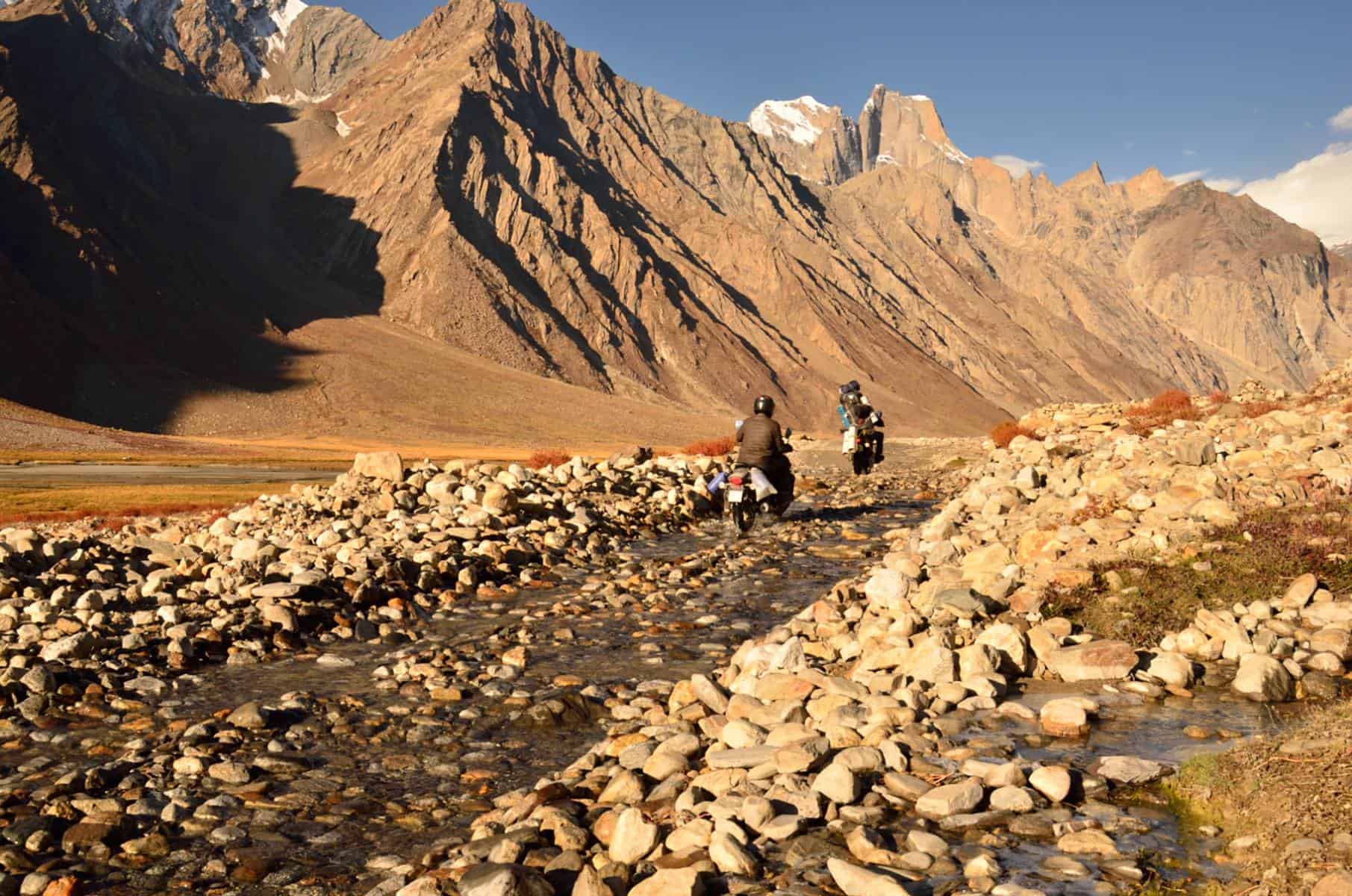
Planning a bike ride to Ladakh or Spiti Valley? Preparing your motorcycle is the single most important thing you can do before you hit the road. I have seen riders break down at Sarchu, struggle with flat tyres near Baralacha La, and deal with engine seizures on the Manali-Leh Highway. All of this because they skipped proper bike preparation.
This guide covers everything you need to check, fix, and carry on your motorcycle before riding to Ladakh or Spiti. Whether you own a Royal Enfield Bullet, Classic 350, Himalayan 450, or any other bike, the checklist below will help you ride through the trans-Himalayas with confidence. I have been riding and driving through Ladakh and Spiti for over a decade, and every point here comes from real experience on these roads.
Quick Answer: Start bike preparation 2-3 weeks before departure. Priority order: engine service and chain set, tyres and suspension, electrical system, then spare parts and riding gear. Budget roughly Rs 10,000 to Rs 21,000 for a full pre-trip prep (service, tyres, spares) depending on your bike’s condition, as of 2026. Carry 2-3 litres of extra fuel between Tandi and Karu on the Manali-Leh Highway, and 2-3 litres between Tandi and Kaza on the Spiti route via Manali.
Let's quickly dive into the details:
What Should You Check on Your Bike Before a Ladakh or Spiti Ride?
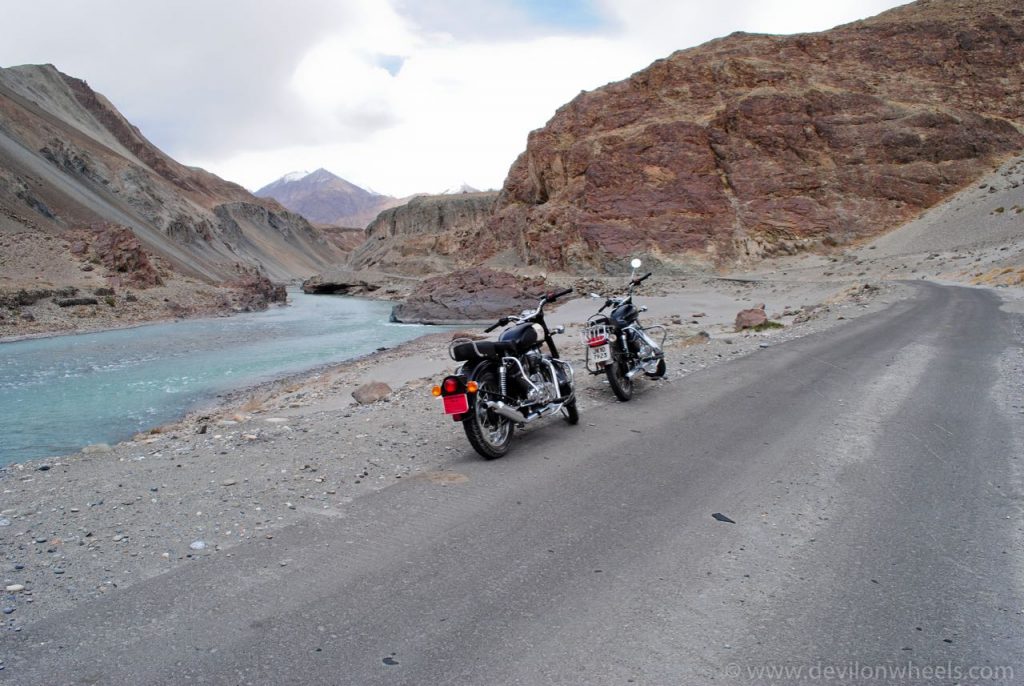
The trans-Himalayan region is harsh on motorcycles. You will be riding at altitudes above 10,000 ft, crossing water streams, navigating gravel roads, and dealing with temperature swings from 35 degrees in the plains to near-zero at high passes. Your bike needs to handle all of this without breaking down in the middle of nowhere. Hence, preparation is everything.
I break down the preparation into five categories: engine and transmission, tyres and suspension, electrical systems, spare parts toolkit, and riding gear. Let us go through each one.
Quick answer: Check five categories before any Himalayan bike ride: engine and transmission, tyres and suspension, electrical systems, spare parts and toolkit, and riding gear. Do this 2-3 weeks before departure so you have time to test ride and fix anything a mechanic missed.
How Do You Prepare the Engine and Transmission for Mountain Riding?
The engine is the heart of your motorcycle, and it takes the most punishment in the mountains. Here is a complete engine and transmission checklist that I follow before every Himalayan ride.
Quick answer: Service the engine 2-3 weeks before your trip, check for exhaust smoke, inspect the chain set and clutch, and get a thorough inspection if your bike has crossed 50,000 km. Carry a spare clutch cable and spare chain set. These two parts fail most often between Sarchu and Pang.
1. Get a Full Service Done 2-3 Weeks Before the Trip
Do not wait until the last day. Get your bike serviced at least 2-3 weeks before departure. This gives you time to ride the bike after servicing and catch any issues the mechanic may have introduced. A full service should include engine oil change, oil filter replacement, air filter cleaning or replacement, and a general inspection of all moving parts.
2. Check for Excessive Exhaust Smoke
If you notice white or blue smoke coming out of the exhaust, your engine has a problem. Blue smoke usually means oil is burning in the combustion chamber, which could indicate worn piston rings or valve seals. Get a piston job done if needed. Ignoring this on a Ladakh ride means you will burn through engine oil much faster than expected, and finding the right grade of oil in remote areas is nearly impossible.
3. Has Your Bike Crossed 50,000 km?
If your engine has clocked 50,000 km or more, get it thoroughly inspected. It might need piston ring replacement, clutch plate changes, or even a top-end overhaul. The trans-Himalayas are brutal on engines. Your bike will be climbing continuously at high altitudes where oxygen is thin, which puts extra stress on the engine. A bike that runs fine in the plains can struggle badly above 12,000 ft if the engine is worn out.
4. Listen for Unusual Engine Noises
Take your bike for a 30-40 km ride and listen carefully. Any tapping, knocking, or rattling sounds need immediate attention. Random noises often indicate loose components, worn bearings, or timing chain issues. Keep in mind that at high altitudes, every small problem gets amplified because the engine is already working harder with less oxygen.
5. Clean or Replace Air Filter, Spark Plugs, and Fuel System
This is critical. Clean and adjust your air filter, spark plugs, and fuel delivery system (carburetor or fuel injection) before the ride. If your air filter has done over 5,000 km in dusty conditions, replace it outright. And here is something important: never remove your air filter in the mountains thinking it will improve performance. It will ruin your engine by letting dust and grit into the combustion chamber. I have seen riders do this, and they end up with seized engines.
For fuel-injected bikes like the Royal Enfield Himalayan 450 or KTM Adventure series, altitude adjustment happens automatically through the ECU. Carbureted bikes (older Bullets, Classic 350 pre-2023 models) may need the carburetor re-jetted for high altitude. Ask your mechanic about this if you ride a carbureted motorcycle.
6. Test Clutch Plates and Cable
If the motorcycle is not pulling cleanly through the gears, or if the clutch slips under load, adjust or replace the clutch plates. Carry a spare clutch cable with you. Clutch cables snap more often than you would think, especially on older Enfields where the cable routing puts constant stress on it. A broken clutch cable in Pang or Sarchu means you are stuck until someone gives you a tow.
7. Inspect the Chain Set
Check the chain and both sprockets for wear. If you spot even one broken or worn tooth on the sprocket, replace the entire chain set (chain + front sprocket + rear sprocket) before the ride. Keep a spare chain set with you too. In Ladakh, your bike will be climbing three of the world’s highest motorable passes, and a worn chain set under that kind of stress can snap without warning.
Are you self-driving to Ladakh, Spiti Valley, or Zanskar Valley? If yes, check the must-have list of items to carry on a self-drive trip to Ladakh or other parts of the Himalayas. It covers everything beyond just the bike.
How Should You Check Tyres and Suspension Before the Ride?
Tyres are arguably the most important component for a Himalayan bike ride. You will ride on tarmac, gravel, slush, river beds, and loose sand, sometimes all in a single day. Here is what you need to check.


Quick answer: Replace tyres older than 3 years, go tubeless if your rims support it, check fork oil and rear shocks for leaks, and inspect brakes and spoke tightness. Check tyre pressure every single morning, cold mountain air drops it overnight.
1. Check Tyre Condition and Age
Inspect both tyres for excessive wear, cracks, and tread depth. If the tyres are older than 3 years, replace them even if they look fine on the surface. Rubber compounds degrade over time, and old tyres lose grip in wet and muddy conditions. You do not want to discover this while crossing a river bed near Gramphu on the way to Spiti Valley.
2. Go Tubeless If Possible
I strongly recommend tubeless tyres for a Ladakh or Spiti ride. Tubeless tyres are safer because they deflate slowly when punctured (instead of a sudden blowout), and you can fix a tubeless puncture with a simple plug kit in 10 minutes on the roadside. If your rims support tubeless, go for dual-sport or adventure-touring tyres. Good options include CEAT Gripp XL, Ralco Speed Blaster, or MRF Mogrip series. Budget roughly Rs 2,500 to Rs 4,500 per tyre depending on your bike.
If you have spoke wheels that do not support tubeless, carry spare tubes and a full puncture repair kit including tyre levers and a portable air pump. Replace both tubes before the trip as a precaution.
3. Check Shock Absorbers and Suspension
Check both front and rear shock absorbers. For the front forks, look for oil leaks around the seals. Replace front fork oil and oil seals if they are leaking or if it has been over 15,000 km since the last change. Carry a spare pair of fork seals with you.
For the rear suspension, push down on the seat firmly and release. If the bike bounces more than once or bottoms out easily over speed bumps, replace the rear shock absorbers. The road conditions in Ladakh and Spiti are terrible in many stretches, and soft suspension means your spine will take all the beating.
4. Check Brakes Thoroughly
Check brake shoes or pads on both wheels. Replace if the friction material is less than 2mm thick. If your bike has disc brakes, top up brake fluid and bleed the lines if the lever feels spongy. You will be riding steep descents from passes like Khardung La (17,582 ft) and Baralacha La (16,040 ft) where reliable brakes are literally a matter of life and safety.
5. Fix Any Wheel Wobble
If you have spoke wheels and feel even the slightest wobble, get the wheels trued and aligned immediately. Loose spokes at high speed on mountain roads are dangerous. Check and tighten all spokes, and carry a spoke wrench for trail-side adjustments.
Always check tyre pressure every morning before riding. Cold mountain air drops pressure overnight, and underinflated tyres wear faster and handle poorly on gravel.
What Electrical and Cable Checks Does Your Bike Need?
Electrical failures are more common in the Himalayas than most riders expect. Temperature changes, vibration from rough roads, and water crossings all take a toll on your bike’s electrical system.
Quick answer: Test your battery, all lights (including a night ride to check visibility), horn, mirrors, and every cable before departure. A dead battery at 5 AM in Sarchu or a snapped throttle cable near Pang are both preventable with a 20-minute check the week before you leave.
- Battery: If your battery is older than 2 years, get it tested and replace it if it is not holding charge properly. A dead battery at a campsite in Sarchu at 5 AM is not a fun experience. Carry a portable jump starter if possible.
- Lights: Check high beam, low beam, indicators (both front and rear), tail light, and brake light. Go for a ride in pitch darkness to test actual visibility. If the headlight is dim, replace the bulb and carry a spare. Always ride on low beam to avoid blinding riders coming from the opposite direction.
- Horn: Check that it works and the mounts are solid. But keep in mind, avoid using a loud horn in the mountains. You are in the Himalayas, and excessive honking disturbs the environment and local communities.
- Mirrors: Both rearview mirrors must be mounted and working. You will need them badly, especially on the highway and the More Plains where trucks come at speed.
- Cables: Inspect throttle cable, clutch cable, and brake cable (if cable-operated). Look for fraying, kinks, or stiffness. Replace any cable that shows wear and carry spares for clutch and throttle cables.
Which Spare Parts and Tools Should You Carry?
Breakdowns happen. The question is whether you are prepared to fix them on the spot or have to wait hours for a rescue. Here is the spare parts and toolkit I recommend carrying on every Ladakh or Spiti bike ride.
Quick answer: Carry a spare clutch cable, chain set, spark plugs, fuses, tubes, and a basic toolkit with spanners, an Allen key set, and tyre levers. Between Tandi and Leh (365 km), there is no proper motorcycle workshop, so you are your own mechanic on that stretch.
Essential Spare Parts Checklist
- Spare clutch cable and throttle cable
- Spare chain set (chain + sprockets) for chain-drive bikes
- 2 spare spark plugs (same grade as currently fitted)
- Spare brake lever and clutch lever
- Spare fuses (assorted sizes for your bike)
- Spare headlight bulb and indicator bulb
- Spare tubes (2, if running tube-type tyres)
- Tubeless puncture repair kit with CO2 cartridges or a portable air pump
- Engine oil (1 litre of the same grade your bike uses)
- Fork seal (1 pair)
- Duct tape and zip ties (the universal fix for everything)
Basic Toolkit
- Combination spanners (8mm to 19mm)
- Allen key set
- Screwdriver set (flat and Phillips)
- Pliers (regular and needle-nose)
- Tyre levers (3 pieces)
- Spoke wrench (if you have spoke wheels)
- Portable 12V air pump or foot pump
- Small torch or headtorch for night-time repairs
- WD-40 or chain lube spray
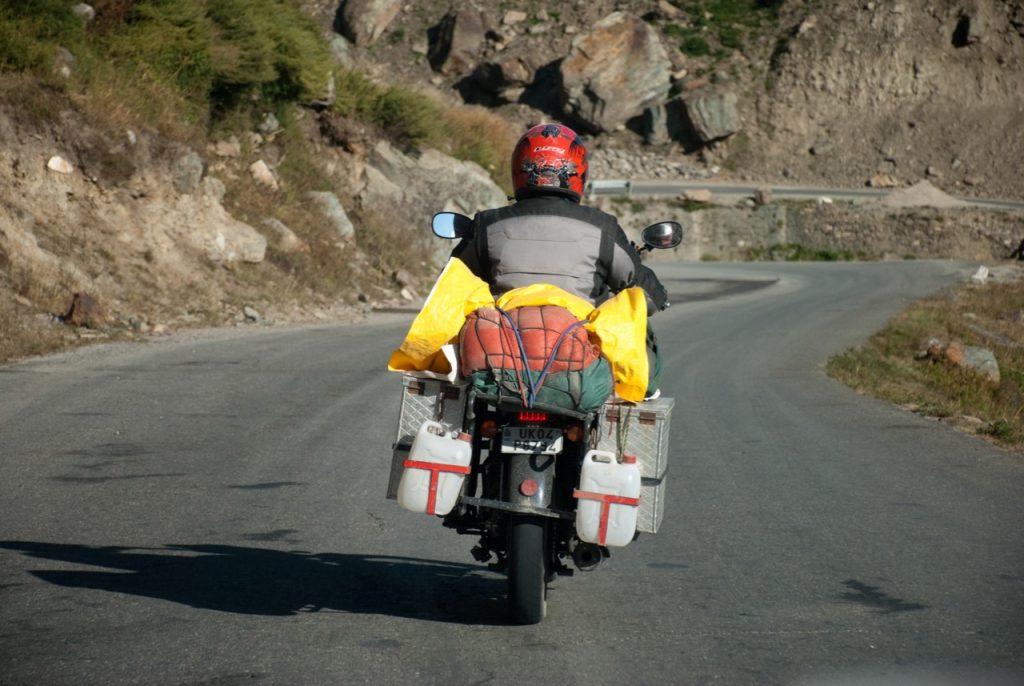
All of this fits into a small tool roll or a saddlebag compartment. Do not skip on the toolkit thinking you will find a mechanic everywhere. Between Tandi and Leh on the Manali-Leh Highway (a stretch of 365 km), there is no proper motorcycle workshop. The same goes for the Manali-Kaza stretch through Kunzum Pass. For more details on carrying spare fuel and luggage safely on your motorcycle, I have a separate detailed guide.
What Riding Gear Do You Need for a Himalayan Bike Ride?
Your bike may be ready, but are you? Riding gear for a Ladakh or Spiti trip is not optional. Here is what I recommend based on years of riding in these regions.
Quick answer: A full-face helmet, waterproof riding jacket and gloves, sturdy boots, a complete rain suit, and UV-protection sunglasses are non-negotiable. Layer for temperature swings from 35 degrees in the plains to near-zero at high passes, sometimes in the same day.
- Helmet: A full-face helmet is non-negotiable. Make sure it fits perfectly with no wobble. Get a new, scratch-free visor, and carry a clear visor for night riding if your primary one is tinted.
- Riding jacket: A good waterproof jacket that keeps you warm. Layering works best. A textile riding jacket with a removable thermal liner is ideal.
- Gloves: Waterproof riding gloves. Wet hands at 15,000 ft in cold wind is genuinely painful. Carry two pairs if possible.
- Shoes: Sturdy riding boots or trekking shoes like Quechua Foreclaz. Avoid regular sneakers. For water crossings, carry separate floaters or gum boots and tie them to the back of your bike.
- Rain gear: A complete rain suit (jacket + pants) plus a large plastic cover for your luggage. Mountain weather changes in minutes.
- Muffler/balaclava: To cover your neck and face at high passes where wind chill is extreme.
- Sunglasses: UV-protection sunglasses are essential. The sun at 15,000 ft is much stronger than in the plains and can cause snow blindness.
Packing Tips for the Ride
- Use bungee cords instead of ropes. They are faster to tie and untie, and they grip better.
- A tank bag is extremely useful. Keep your camera, phone, wallet, and documents in it for instant access. Check my guide on how to pack your backpack like a pro for more packing strategies.
- Make a separate small bag with your medical kit, toiletries, and rain gear. Keep it on top where you can access it quickly.
- Carry one headtorch for camp setups and night-time repairs.
- Keep plastic polythene bags to wrap around your lower legs and shoes when crossing water streams. This keeps your feet dry without having to change shoes every time.
For a full clothing and accessories list, read my detailed guide on clothes and accessories to carry on a Manali-Leh bike trip. And if you plan to pack for long-distance motorcycle riding, check the ultimate packing guide for long-distance motorcycle riding.
How Does Altitude Affect Your Motorcycle’s Performance?
This is something most first-time riders do not think about. At sea level, your engine gets plenty of oxygen. At 15,000 ft, the air has roughly 40% less oxygen. This directly affects your engine’s power output.
Quick answer: Expect 20-30% lower fuel efficiency and noticeable power loss above 12,000 ft. Carbureted bikes lose the most power because they run rich at altitude, while fuel-injected bikes adjust automatically through the ECU and handle the thin air far better.
Carbureted bikes (older Royal Enfield Bullets, pre-2023 Classic 350s) lose significant power at altitude because the carburetor delivers the same amount of fuel but gets less air. The engine runs rich, causing sluggish acceleration, black smoke, and higher fuel consumption. Some riders get the carburetor re-jetted for high altitude, but this means the bike will run lean when you come back to the plains. A simpler solution is to lean out the air-fuel mixture slightly at altitude and reset it when you descend.
Fuel-injected bikes (Royal Enfield Himalayan 450, KTM 390 Adventure, BMW G 310 GS) handle altitude much better. The ECU (engine control unit) adjusts the fuel-air mixture automatically based on sensors. You will still notice some power loss, but it is much less dramatic. This is one big reason why fuel-injected adventure bikes have become so popular for Himalayan rides in recent years.
Regardless of your bike type, expect about 20-30% lower fuel efficiency in the mountains compared to plains riding. Your bike will spend most of its time in low gears climbing steep gradients, which burns more fuel. Plan your fuel stops accordingly.
What About Fuel Availability on the Ladakh and Spiti Routes?
Fuel planning is critical. Here is a quick overview of petrol pump locations on the main routes.
Quick answer: The longest fuel gap on the Manali-Leh route is Tandi/Keylong to Karu (roughly 350-365 km). On the Spiti route via Manali, it is Tandi to Kaza (roughly 200 km). Carry 2-3 litres of extra fuel in a jerry can on both stretches, as of 2026.
Manali-Leh Highway: The last reliable petrol pumps before the long stretch are at Tandi (about 110 km from Manali) and Keylong (operational since 2021, about 115 km from Manali). The next one after that is at Karu, roughly 350-365 km away, just before Leh. If your bike has a 15-litre tank and gives 30 km/l on mountain roads, you get roughly 450 km of range. That is enough, but I always recommend carrying 2-3 litres of extra fuel in a jerry can just to be safe, and topping up fully at both Tandi and Keylong. Read my complete guide on fuel availability in Ladakh for detailed pump locations.
Spiti Valley (via Shimla/Kinnaur): Petrol pumps are available at Shimla, Narkanda, Rampur, Reckong Peo, and Kaza. The longest gap is between Reckong Peo and Kaza (roughly 200 km). Carry extra fuel for this stretch.
Spiti Valley (via Manali): After Tandi, the next pump is at Kaza (approximately 200 km through Kunzum Pass). Carry extra fuel here as well. For detailed tips on carrying spare fuel, check my guide on how to carry extra fuel and luggage safely on your motorcycle.
What General Tips Should You Follow During the Ride?
Your bike is ready, but your body and mindset matter just as much. Here are general riding tips that I have learned over multiple Himalayan trips.
Quick answer: Hydrate constantly, take a 10-minute break every hour, sleep well, ride within your skill level, and keep rain gear within reach at all times. Fatigue and dehydration both worsen AMS, so treat rest stops as part of your safety plan, not a luxury.
- Hydrate constantly. Drink water frequently throughout the day. Dehydration at altitude worsens Acute Mountain Sickness (AMS) symptoms. Carry a water bottle on your tank bag or in an easily accessible spot.
- Take breaks every hour. Stop for 10 minutes every hour of riding to stretch your back, legs, and neck. Long hours in the saddle at high altitude cause fatigue much faster than plains riding.
- Get adequate sleep. Never ride when you are tired. AMS risk increases significantly with fatigue.
- Do not ride rash. The mountains demand respect. Overtaking on blind curves, racing with other riders, or pushing beyond your skill level leads to accidents. The road is not a racetrack.
- Be ready for weather changes. Keep your rain gear accessible at all times. It can be sunny one moment and hailing the next, especially on passes.
- Adjust seat padding. If you can, visit a local mechanic who can adjust the padding inside your seat for better comfort. Small investment, huge difference on a 10-day ride.
Travel Tip: If you are trekking during your trip, check the 12 must-have things to carry on a trekking or hiking trip.
Which Bike Is Best for a Ladakh or Spiti Ride?
This is the most common question I get from riders planning their first Himalayan trip. The short answer: almost any well-maintained motorcycle can do it. But some are better suited than others.
Quick answer: The Royal Enfield Himalayan 450 is the best all-round choice for Ladakh and Spiti in 2026, fuel-injected with good ground clearance. The Classic 350 and Bullet 350 remain solid, more affordable options if you stick to main routes rather than off-road stretches.
Royal Enfield Himalayan 450: Purpose-built for adventure touring. Fuel-injected, good ground clearance, comfortable riding posture, and it handles off-road sections well. The best all-round choice for Ladakh and Spiti in 2026. On-road prices have moved up to roughly Rs 3.08-3.40 lakh as of 2026, so check with your nearest RE dealer for the exact figure in your state.
Royal Enfield Classic 350 / Bullet 350: The traditional Ladakh touring bike, and considerably more affordable, with ex-showroom prices starting around Rs 1.87 lakh as of 2026. The newer J-series platform (2021 onwards) is fuel-injected and much more reliable than the older UCE engines. Good for highway touring but heavier and less capable off-road compared to the Himalayan. Still a solid choice if you stick to main routes.
KTM 390 Adventure: Lighter, more powerful, and very capable off-road. But the aggressive riding posture can be tiring on long days, and it runs hot in traffic. Better suited for experienced riders.
Honda CB350 / CB300: Reliable and fuel-efficient. Good for touring on tarmac, but limited off-road capability. Fine for the Srinagar-Leh route where roads are better, less ideal for the Manali-Leh route with its rough sections.
In case you are renting a bike, check my guide on how to rent a bike or motorcycle in Manali for tips and things to watch out for with rental bikes.
Related Guides in the Ladakh-Spiti Bike Ride Series
- The Complete Guide: Long Distance Motorcycle Riding
- Packing List for Long-Distance Motorcycle Riding
- Safely Carrying Spare Fuel and Luggage on Motorcycle
- Tips for Cold Weather Motorcycle Ride in Ladakh or Spiti
- Clothes and Accessories to Carry on Ladakh Bike Ride
- Tips for Tackling Water Crossings on Ladakh-Spiti Bike Ride
- 11 Tips for a Bike Ride to Spiti Valley
How Much Does It Cost to Prepare a Bike for Ladakh or Spiti?
Riders ask me this every season, so here is the honest breakdown, as of 2026. Costs vary by bike model, workshop, and how much of the checklist above your bike already needs, but this table gives you a realistic range to budget against.
| Item | Cost Range (Rs) |
|---|---|
| Full pre-trip service (oil, filters, chain set, brake check, general inspection) | 3,000 – 8,000 |
| New tyres, tubeless (pair) | 5,000 – 9,000 |
| Spare parts and toolkit | 2,000 – 4,000 |
| Total bike preparation budget | 10,000 – 21,000 |
This budget does not include riding gear (helmet, jacket, gloves, boots) if you do not already own it, since that is a one-time investment most riders reuse across multiple trips. In case your bike is relatively new and has been serviced recently, you may land at the lower end of this range. Older bikes with 40,000+ km on the clock, or bikes that have never been ridden at altitude before, should budget closer to the upper end.
Conclusion
Preparing your bike for a Ladakh or Spiti ride is not complicated, but it requires discipline. Start with the engine, work through the tyres and suspension, check all electrical systems, pack the right spare parts and toolkit, and get proper riding gear. The key is to do all of this 2-3 weeks before departure so you have time to test ride and catch any remaining issues.
I would also strongly suggest learning some basic motorcycle maintenance. Know how to change a spark plug, fix a puncture, adjust your chain, and replace a clutch cable. Bullet riders, I am looking at you. Working out a flat tyre on an Enfield takes muscle, so be prepared for that. 🙂
Above all, remember that a Himalayan bike ride is about the journey, not just the destination. Be respectful of fellow travelers, do not ride rash, and cherish every moment in the mountains. Make friends with fellow riders along the way. You will find the most interesting characters and stories on these roads.
If you have any questions about preparing your bike for Ladakh or Spiti, feel free to drop a comment below or reach out to the Discover With Dheeraj Travel Circle community. We are always happy to help fellow riders plan their dream ride. Safe travels, my friend!
Last Updated: September 2026
Frequently Asked Questions
What is the best bike for Ladakh trip in 2026?
The Royal Enfield Himalayan 450 is the best overall choice for a Ladakh trip in 2026. It is fuel-injected (handles altitude well), has excellent ground clearance, and is purpose-built for adventure touring. The Classic 350 and Bullet 350 are also reliable options if you stick to main routes. KTM 390 Adventure is a great choice for experienced riders who want more power and lighter weight.
How much does it cost to prepare a bike for Ladakh?
A full pre-trip service and preparation typically costs between Rs 3,000 and Rs 8,000 depending on your bike’s condition. This includes engine oil change, filter replacements, chain set adjustment, brake check, and a general inspection. New tyres add Rs 5,000 to Rs 9,000 for a pair. Spare parts and toolkit budget another Rs 2,000 to Rs 4,000. Total budget for bike preparation works out to roughly Rs 10,000 to Rs 21,000, as of 2026.
Do I need to carry extra fuel for Ladakh bike ride?
On the Manali-Leh route, the longest gap between petrol pumps is Tandi to Karu (approximately 365 km). If your bike has a 15-litre tank and gives 30 km/l in mountains, you should have enough range. But I recommend carrying 2-3 litres of extra fuel as a safety buffer. On the Spiti route via Manali, the Tandi to Kaza gap (about 200 km) also requires careful fuel planning.
Can I ride a 150cc bike to Ladakh?
Yes, riders have done Ladakh on 150cc and even 125cc bikes. The ride is possible but significantly harder. Smaller engines struggle more at high altitude, climbs are slower, and overtaking heavy vehicles becomes more challenging. You also need to be extremely disciplined about weight, as a 150cc bike has limited load capacity. For a more comfortable experience, a 350cc or higher engine is recommended.
Should I use tubeless or tube tyres for Ladakh?
Tubeless tyres are strongly recommended. They deflate slowly when punctured (no sudden blowout), are easier to repair on the roadside with a simple plug kit, and provide better grip. If your rims do not support tubeless, carry spare tubes and a complete puncture repair kit with tyre levers and a portable pump.
What are the most common breakdowns on Ladakh bike trips?
The most common breakdowns are flat tyres (from sharp gravel and nails), snapped clutch cables, electrical issues (dead battery, blown fuses from water crossings), and chain problems (stretched or snapped chain). Carrying spare clutch cables, fuses, tubes, and a puncture kit covers the majority of roadside situations.
How do I maintain my bike during the Ladakh trip?
Check tyre pressure every morning. Lubricate the chain every 300-400 km or after every water crossing. Check engine oil level daily. Tighten any loose bolts or mirrors after rough sections. Clean the air filter every 2-3 days if riding through dusty stretches. These 5-minute daily checks can prevent most mid-trip breakdowns.
How many days before departure should I get my bike serviced?
Get your bike serviced 2-3 weeks before departure, not the day before. This gives you time to ride the bike after servicing and catch any issue the mechanic may have introduced or missed. A last-minute service is one of the most common reasons riders get stranded in the first two days of a Ladakh or Spiti trip.
Do I need to prepare a rented bike the same way as my own bike?
Yes, and arguably you need to be more careful. A rented Royal Enfield or Himalayan may look fine but could have skipped a proper service between previous riders. Before you leave the rental shop, personally check the tyre condition and age, chain set, brakes, and clutch cable, and insist on a test ride. Check my guide on how to rent a bike or motorcycle in Manali for what else to verify before you sign the rental agreement.
