


Dzongu is a protected Lepcha tribal reserve in North Sikkim, sandwiched between the Teesta River and the Kanchenjunga range, open only to Lepchas and permit-holding Indian travelers. Spread across roughly 80 square kilometers and 30 villages, it has no hotels, only homestays. As of September 2026, a landslide near Chyakoong left the Sankalang-Phidang road passable only to light vehicles.
Dzongu is one of those rare Himalayan places that stays with you long after you leave. Tucked into North Sikkim’s remote wilderness, this protected Lepcha reserve feels like stepping into a world that the rest of India forgot about. I first heard of Dzongu from a fellow traveler, and the moment I got there, I understood why people struggle to describe it in words.
If you are planning a trip to Dzongu in Sikkim, this detailed travel guide covers everything you need. Permits, homestays, how to reach, budget, best time to visit, and a 3-day itinerary. Updated for 2026 with the latest road conditions after the October 2023 Teesta floods.
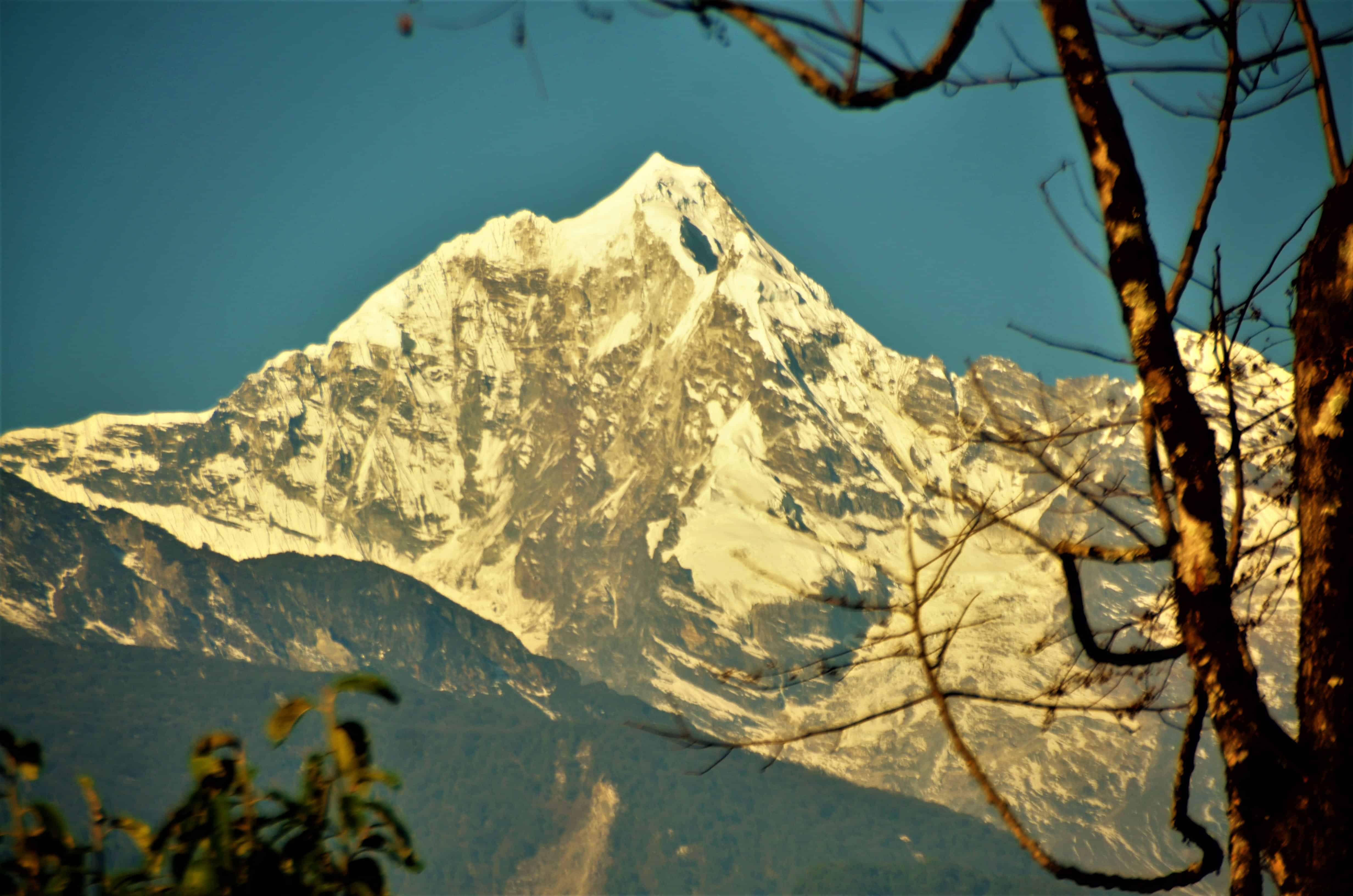
Let's quickly dive into the details:
Dzongu at a Glance
- Location: North Sikkim, between the Teesta River and the Kanchenjunga range
- Permit needed: Yes, Inner Line Permit (ILP), Rs 150 per person, arranged via your homestay or the SDM office in Mangan
- Distance: About 70 km / 3 hours from Gangtok, 150 km / 5-6 hours from Siliguri
- Nearest railhead/airport: New Jalpaiguri (NJP) and Bagdogra (IXB), both in Siliguri
- Where to stay: Lepcha homestays only, no hotels, Rs 1,000-1,500 per person per day with all meals (as of 2026, verify locally)
- Best time to visit: Late February to early June, and October to November
- Mobile network: Patchy BSNL/Jio, no reliable data, be ready to go offline for 2-3 days
What Is Dzongu and Why Should You Visit?
Dzongu is a sparsely populated triangular region in North Sikkim, bordered by the Teesta River to the southeast and the Kanchenjunga range to the west. With a population of roughly 4,500 people spread across 30 villages in less than 80 square kilometers, it is a declared natural reserve of the Lepcha people since the 1960s. The entire region falls within the Kanchenjunga Biosphere Reserve, with its far fringes reaching deep into the Kanchenjunga National Park.
Most tourists visiting North Sikkim head straight to Lachen, Lachung, Yumthang Valley, and Gurudongmar Lake on fixed tour packages from Gangtok. Dzongu gets overlooked completely. That, honestly, is what makes it so special. There are no hotels here. No restaurants. No souvenir shops. Just Lepcha homestays, cardamom fields, unnamed waterfalls, and the kind of silence that makes your ears ring.
Who Are the Lepchas of Dzongu?
The Lepchas are the aboriginal people of Sikkim. The word transliterates to “children of the snowy peak” or “children of the gods.” They believe they are natural descendants of the mountains, not migrants who arrived from elsewhere. With a total population of about 50,000 scattered across parts of Sikkim, Nepal, Bhutan, and West Bengal, the Lepchas are a peace-loving, quiet community that worships Mother Nature in all her forms.
Kanchenjunga is their mother protector. Rivers, lakes, trees, waterfalls, everything is sacred. In Lepcha teachings and folklore, Dzongu is said to be the bridge to Mayal Lyang, the place where all Lepchas originate from and will ultimately return to. Think of it as their concept of heaven, hidden somewhere in the foothills of Kanchenjunga. This spiritual significance is precisely why Dzongu has been a marked natural habitat and reserve for the Lepchas since the sixties.
What Does Dzongu Look Like? Nature and Landscapes
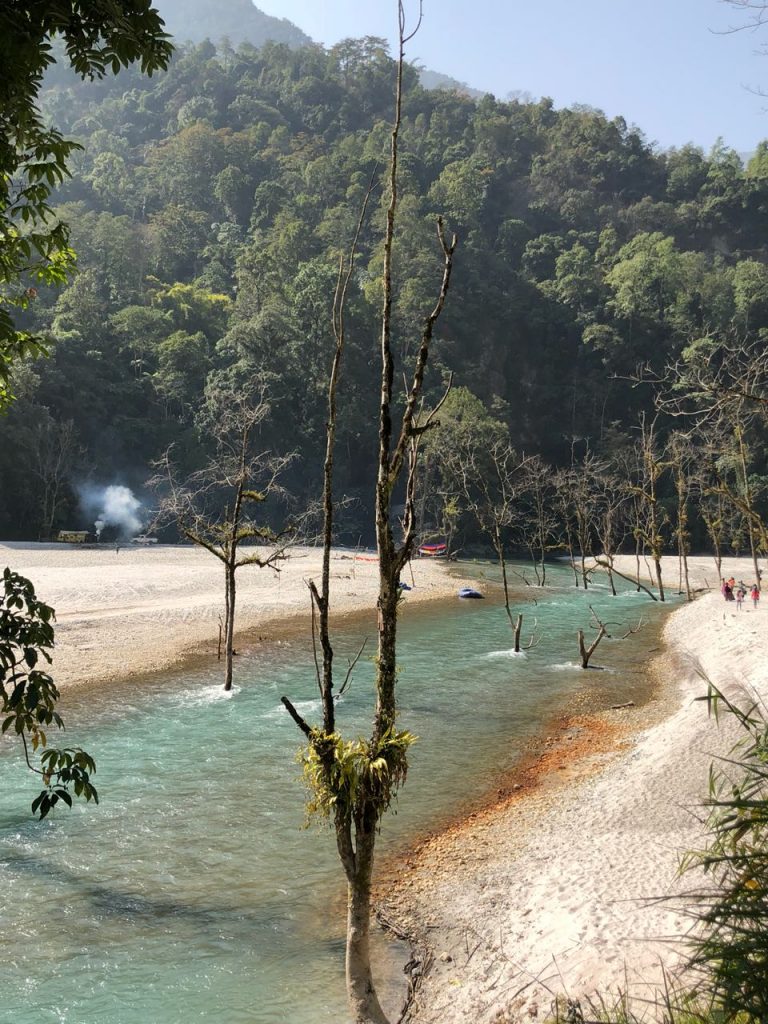
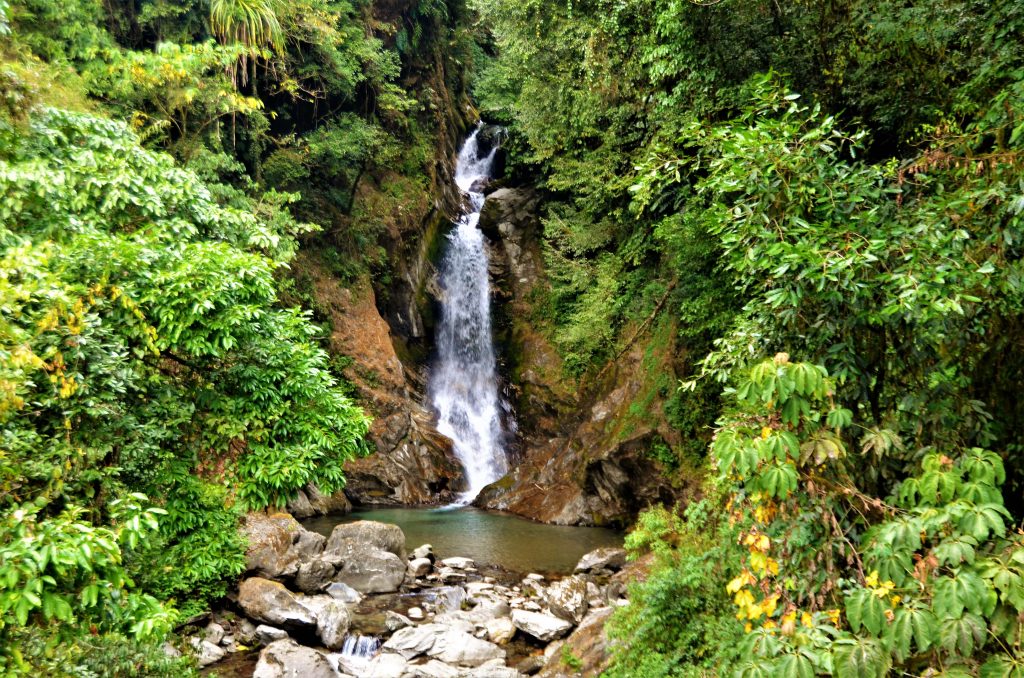
Setting aside the folklore and mythology, Dzongu as a Himalayan region is simply stunning. Scores of unnamed waterfalls appear sprinkled across the slopes. Lush forest covers every inch that your eyes can reach. The roads are narrow, with green bamboo shoots forming canopies overhead that block out daylight, creating an almost deliberately mysterious darkness.
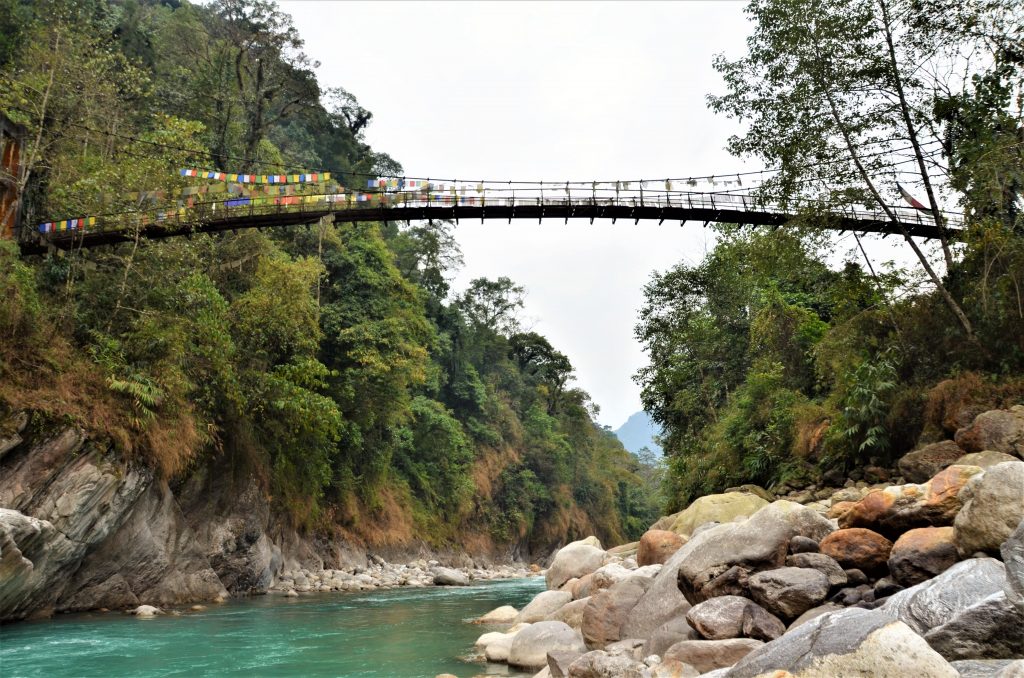
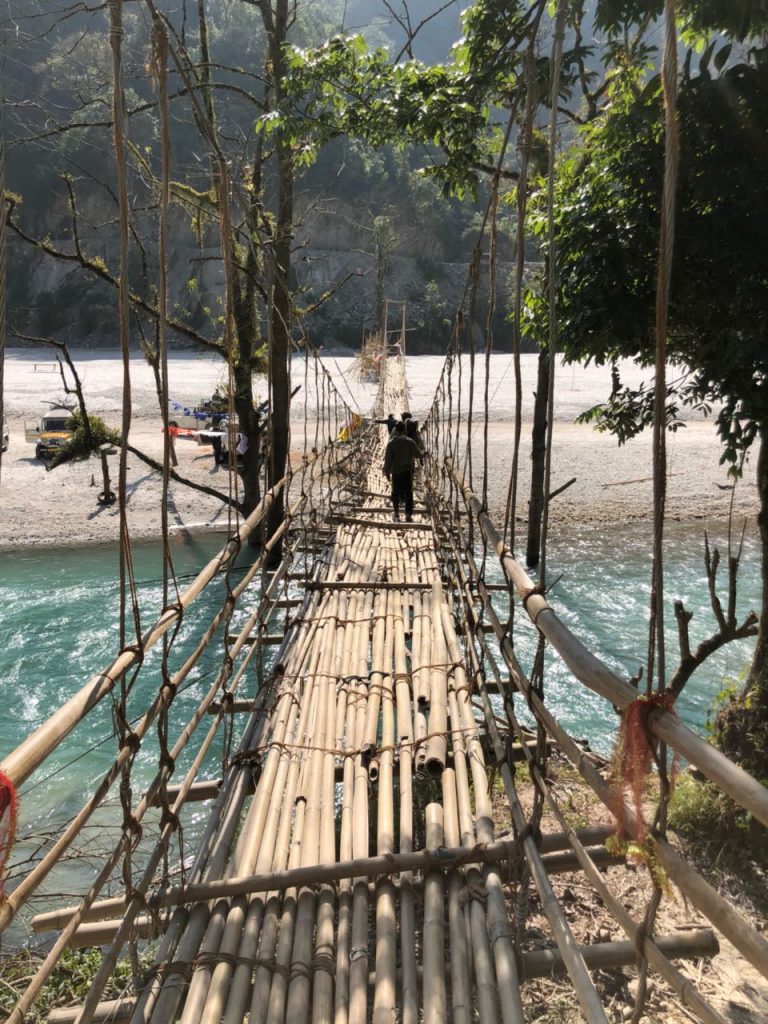
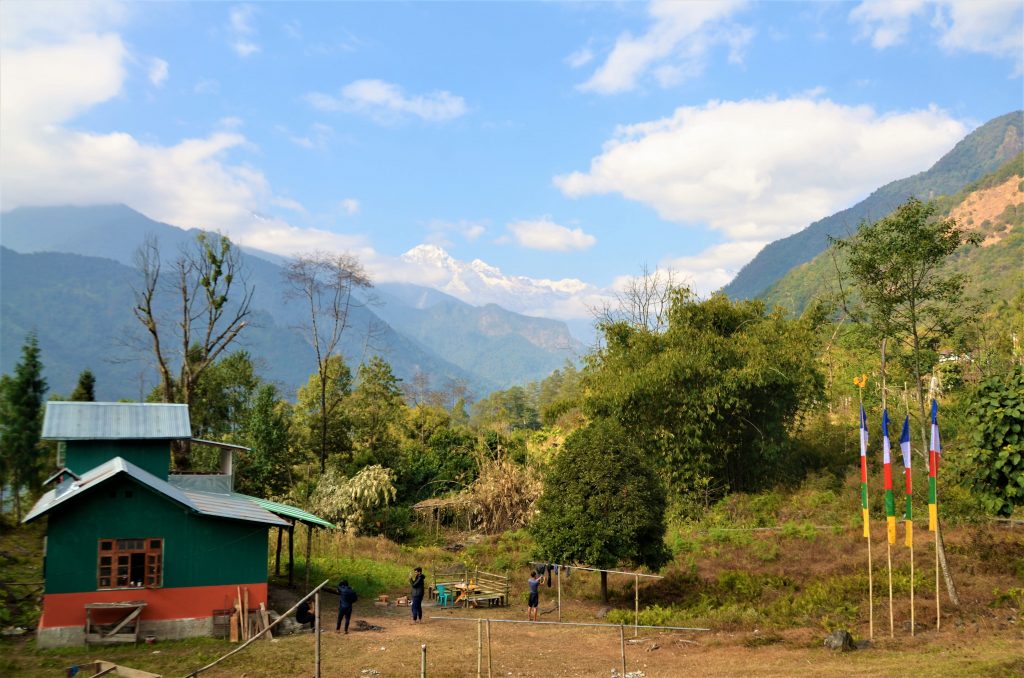
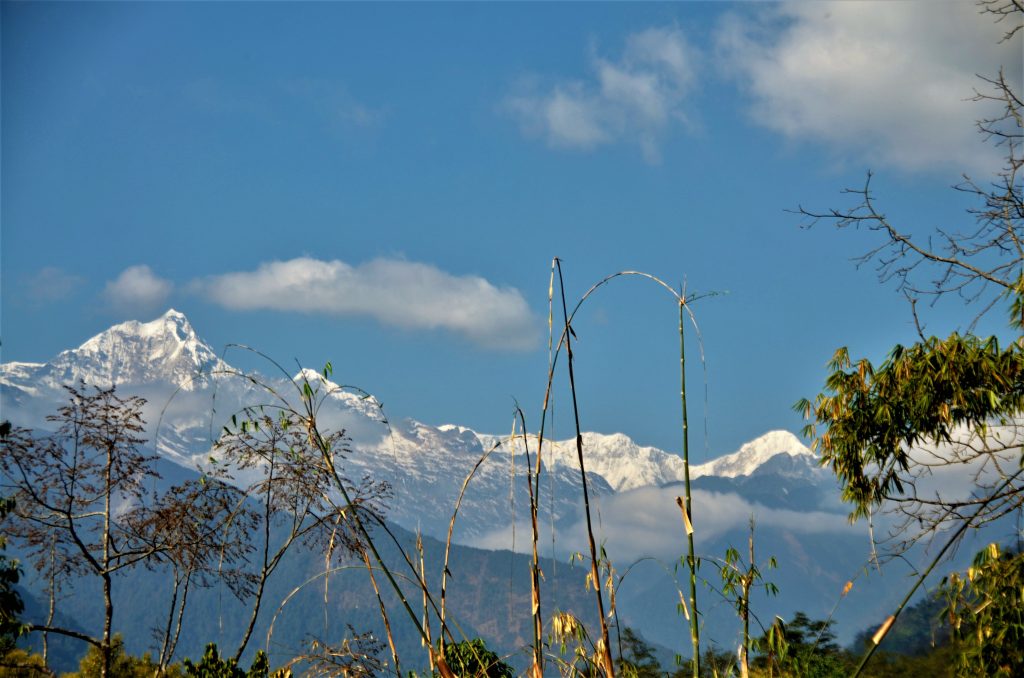
Icy rivulets roll through crystal-clear rocky basins. Red, green, white, and blue prayer flags hang on bamboo poles at every bend, their Buddhist hymns catching the breeze. Rare clusters of modest traditional huts sit amidst fragrant fields of cardamom and rice. Bamboo bridges hang across cliffs over streams and gorges. The Kanchenjunga massif, in whose shadow this entire region exists, looks mesmerizing when the skies clear up.
The air is cool, crisp, and fresh. The people are gentle and genuine. The serenity is invigorating. If you have been to the crowded hill stations of Himachal or Uttarakhand, Dzongu will feel like a completely different country.
How Is Dzongu Divided? Upper and Lower Dzongu
The Rongyang Chu river (a tributary of Teesta) splits Dzongu into two halves. The northern half is called Upper Dzongu and the southern half is Lower Dzongu. Both are dotted with small villages where travelers can find homestays.
Keep in mind that you cannot see all of Dzongu in a single visit unless you have a month to spare. The region is vast and mostly uninhabited. Only 5-6 villages have homestays that are commonly known. For comprehensive coverage, you would need to trek and camp for several weeks with a local Lepcha guide.
The villages of Hee-Gyathang, Lingdong, and Passingdong fall in Lower Dzongu and are connected by motorable roads. Tingvong, Kusong, Sakyong-Pentong, and Lingthem comprise Upper Dzongu. Motorable roads end at Lingzya in Upper Dzongu, after Tingvong. All other villages in the upper region require trekking.
How to Reach Dzongu from Siliguri, NJP, or Gangtok?
Dzongu is 150 km from Siliguri (5-6 hours) and about 70 km from Gangtok (3 hours). The nearest railhead is New Jalpaiguri (NJP), connected by trains from most major Indian cities. The nearest airport is Bagdogra (IXB), with daily flights from Delhi, Kolkata, and Mumbai. Both are in Siliguri, West Bengal.
What Are the Transport Options to Dzongu?
Here are your options to reach Mangan and then Dzongu.
Option 1: Siliguri/NJP to Mangan directly. Prepaid taxis from NJP or Bagdogra airport to Mangan cost around Rs 4,000-5,000 for a Bolero or Sumo. The route goes via Rangpo, Singtam, and Mangan. Takes about 5-6 hours. You do not need to go through Gangtok.
Option 2: Shared jeeps with transfers. Take a shared jeep from Siliguri to Singtam (Rs 200-250 per person, 3 hours), then another from Singtam to Mangan (Rs 150-200 per person, 2 hours). From Mangan, shared jeeps to Dzongu villages are available but very limited. Only 1-2 in an entire day. The last shared jeep to Dzongu leaves Mangan around 3 PM.
Option 3: Via Gangtok. If you are already in Gangtok, take a shared jeep to Mangan from the Vajra Taxi Stand (North Sikkim Taxi Stand). From Mangan, hire a vehicle or take a shared jeep into Dzongu.
My recommendation: Ask your homestay owner to arrange a pickup from Mangan. They are generally happy to do it. A pickup from Mangan to Tingvong village in Upper Dzongu, involving two vehicles (one to the bamboo bridge and another beyond it), cost me Rs 1,200. This is by far the easiest option for first-time visitors.
Helicopter service is available between Bagdogra and Gangtok (30 minutes) but is expensive and not always reliable.
What About the October 2023 Teesta Floods? Is Dzongu Accessible in 2026?
This is important. On October 4, 2023, a glacial lake outburst flood (GLOF) from South Lhonak Lake caused catastrophic damage along the Teesta River. The flood destroyed the Teesta III Dam at Chungthang and severely damaged roads and bridges across North Sikkim, including the critical Sangkalang bridge that connects Mangan to Upper Dzongu.
The good news: the Indian Army’s 72 Engineer Regiment rebuilt a 180-foot Bailey bridge at Sangkalang, which reopened for traffic on April 24, 2025. However, keep in mind that these temporary Bailey bridges over the Teesta and its tributaries have needed repeat repairs since the GLOF. Heavy rain washed away the Phee Chu bridge near Phidang, the same stretch that connects Mangan to Dzongu, on the night of June 28, 2026. BRO rebuilt it in five days and reopened it on July 4, 2026. A permanent bridge at this location is expected to be launched by October 2026, once the monsoon eases.
Hence, the honest picture for 2026 is this: the road via Phidang-Sangkalang to Dzongu is generally driveable, and the Mangan District Administration’s official road status bulletin confirmed it as clear as of August 2026. But this is a monsoon-vulnerable stretch that can go down again within days of heavy rainfall, so do not treat “open” as a permanent state. Before you plan your trip, verify the current road status with your homestay owner or check the official Mangan district bulletin directly. Roads in North Sikkim are still being repaired and conditions change fast, especially between June and September.
Is the Road to Dzongu Open Right Now? September 2026 Landslide Update
On the night of September 5-6, 2026, a landslide broke away from the hillside above the Chyakoong River near Toong Naga, opposite OC Bhir in North Sikkim, and partially blocked the Teesta. Police personnel from the Chungthang and Theng check posts moved in to monitor the site, and the water level at the Sankalang and Phidang outposts was reported muddy but flowing normally. The slide sits close to the same Phidang stretch of the Mangan-Sankalang-Dzongu road that has needed repeated repair since the 2023 GLOF.
Hence, the current picture (mid-September 2026) has two versions depending on where you look. The Government of Sikkim’s official road conditions bulletin lists the Dzongu cutoff as blocked by landslides at multiple points. Local reports citing the office of the SDM, Dzongu, say the Sankalang-to-Phidang stretch is passable, but only for light vehicles, not full two-lane traffic. Both can be true in North Sikkim: a stretch can be technically driveable one day and shut the next, depending on rainfall and debris clearance.


My advice: do not plan around either bulletin alone. Call your homestay host the morning you leave Mangan, since they get updates from Sankalang and Phidang locals faster than any website does. Keep the Mangan district disaster management helpline (03592-234538) saved on your phone as a backup. If you are traveling in September or October, build in a spare day at Mangan in case the stretch closes for a few hours of debris clearance.
Do You Need a Permit for Dzongu? How to Get It?
Yes, Dzongu is a restricted zone for everyone who is not a Lepcha by ethnicity. Even Sikkimese citizens need a special permit. Foreigners are generally not permitted to enter Dzongu (only Indian nationals are allowed).
In case you are wondering, this is officially an Inner Line Permit (ILP), not the same document as the ILP/EDF process you may have used for Ladakh or the ILP for Lahaul-Spiti in Himachal. Each restricted zone in India runs its own version through its own district administration, and Dzongu’s is issued by the office of the Sub-Divisional Magistrate at Mangan, and can only be applied for offline (no online portal as of 2026, confirmed on the official Mangan district website).
Getting the permit is straightforward in practice. Send scanned copies of your ID proof (Aadhaar or Voter ID) and a passport-size photo to your homestay owner beforehand. They will get the permit arranged for you from the SDM office at Mangan. The permit fee is Rs 150 per person.
You can also obtain the permit yourself from the Sub-Divisional Magistrate’s office in Mangan. Right before you enter the Dzongu protected area, there is a police checkpost at Sankalang where you must submit the original copy of your permit. If you only have the duplicate, they will accept it and ask you to submit the original when you return. Your homestay host can hand you the original copy.
When Is the Best Time to Visit Dzongu?
Dzongu is accessible year-round, but the best months depend on what you are looking for.
Late February to early June is ideal for most visitors. The weather is comfortable, skies are relatively clear, and the roads are in good condition. March and April bring wildflowers and comfortable temperatures.
Mid-June to September is the monsoon. Avoid this window. It rains heavily, landslides are common, and bridges can get washed away. The October 2023 GLOF disaster was a stark reminder of how dangerous monsoon-season travel can be in this region.
October to November is excellent. The rains have cleared, skies are crisp, and you get the best views of Kanchenjunga.
December to February is bitterly cold with snowfall at upper villages. The views are the clearest of the year, though. If you can handle the cold, winter visits offer a different kind of magic.
For those interested in Lepcha culture, various periodic festivals happen throughout the year. Ask your homestay host about upcoming celebrations when you book.
What Are the Top Things to Do in Dzongu?
Dzongu is not the kind of place with a checklist of “tourist attractions.” It is best experienced slowly, one village at a time. That said, here are the highlights.
Village Walks
This is the single best thing you can do in Dzongu. Just walk around the villages. The paths are secluded. The smell of cardamom fills the air. Butterflies everywhere. Bird calls in tunes you have never heard before. The walk through lush bamboo groves, along the edges of paddy fields, or that moment of introspection by a waterfall, Dzongu offers the kind of raw, primitive connection with nature that most hill stations lost decades ago. The walks between Passingdong to Lingthem and Tingvong to Kusong are particularly recommended.
Treks Around Dzongu
Dzongu will leave you spoilt for choices when it comes to trekking. Here are the notable ones.
Tholung Monastery Trek: A day trek from Tingvong. The monastery at 8,000 feet houses some of the rarest and oldest artifacts of a particular order of Tibetan Buddhism, displayed once every three years. Ancient manuscript scrolls dating back centuries are stored here alongside weapons and tools used by the earliest Lepchas. The setting is spectacular, right beside a majestic waterfall diving into a deep gorge, with mysterious caves in the adjacent mountains. This 18th-century structure alone is worth the trek.
Keushong Valley and Lake: The holy grail of Dzongu. This is an arduous 5-day round-trip trek that involves camping. Everyone in Dzongu considers it the jewel in the crown of the entire region. You will need a local guide and proper camping equipment.
Pentong Village Trek: The closest village to the Kanchenjunga range. A day-long trek from Tingvong across rivulets and cliffs, offering views of the Sleeping Buddha formation and the Kanchenjunga massif.
Lingzya (Lingzey) Waterfall
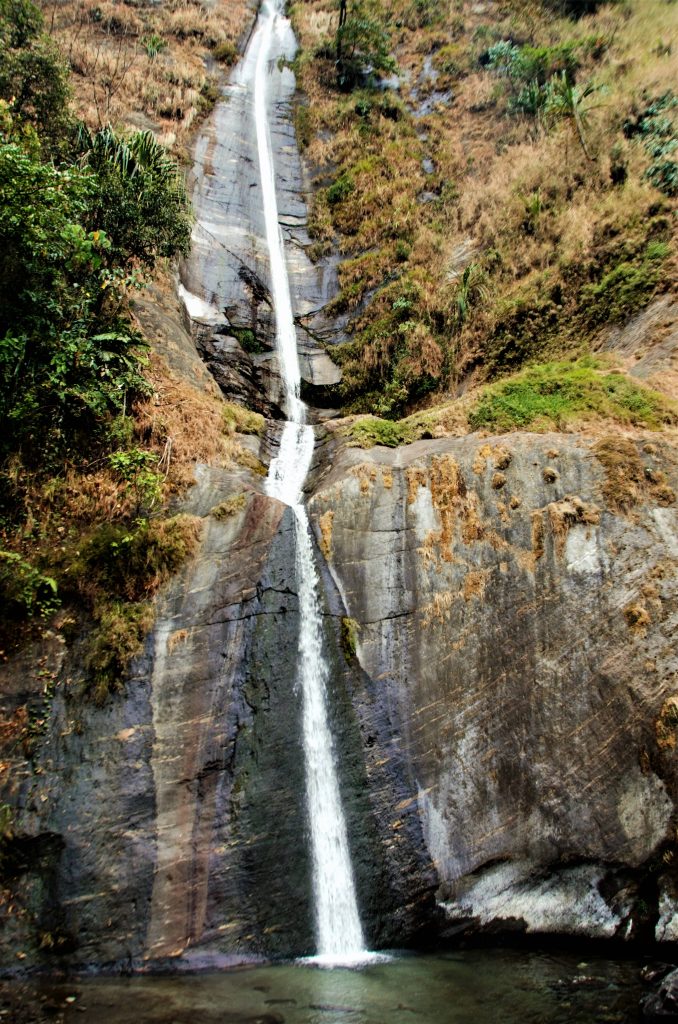
Among the many waterfalls of Dzongu, this one is the ace. Located in upper Lingzya village with a vertical drop of about 300 feet, Lingzya waterfall is wild and untouched. No tea stalls on the sides, no railings, no concrete platforms. You hear the splashing sound from within the woods, follow it through a couple of turns, and it reveals itself.
The locals practice hammer fishing on the natural shelf of the falls, which is fascinating to watch. Taking a bath in the icy cold water is an experience in itself.
Hot Springs Near Lingdem Village
Near the village of Lingdem in Lower Dzongu, across a thin rivulet and about fifty steps into the forest, you will find two log cabins, one for men and one for women. These are the hot sulphur springs of Dzongu. The locals believe they have medicinal and healing powers. The location itself is eerie and beautiful. Imagine taking a dip in a hot spring within a dense forest, beside a river of icy melt.
Fishing in Dzongu
The Teesta, Rongyang Chu, and Rong Kyung rivers, along with waterfall shelves, provide opportunities for trout fishing. The general method is angling or the more unique hammer-fishing technique. Ask your homestay host before fishing, as some areas may have local restrictions.
Traditional Lepcha Museum at Namprikdang
Near the entry point of Sankalang, by the confluence of the Teesta and Rongyang Chu rivers, there is a traditional Lepcha house that has been set up as a museum. The architecture is fascinating. The house is built on strong stone pillars, a design that makes sense in a region that has experienced earthquakes and flash floods throughout its history. Inside, you will find artifacts and historical pointers that help visitors understand the Lepcha way of life.
Organic Food and Local Liquor Tasting
The inhabitants of Dzongu lead a largely self-sustained life. All vegetables and crops are grown with organic manure. Apart from oil and essential spices, everything you eat will be locally grown. The Lepcha way of cooking is still on earthen ovens with log fire, using very little oil and spices. The food is usually boiled or roasted. Simple but genuinely delicious.
Two locally brewed drinks are famous here. Chee is made from fermented millets, something like an organic beer. It is served in hollow bamboo mugs with a thin bamboo straw and packs a mild punch. Aarack is brewed from parts of the cinnamon plant. Colorless and slightly pungent in taste. Most homestays offer these complimentary.
How Many Days Do You Need for a Dzongu Trip?
Ideally, come and stay for a week. Dzongu rewards those who slow down. However, if you are short on time, a 2-3 day visit to one of the villages will not disappoint. It will just leave you wanting to come back.
You can also combine Dzongu with the rest of North Sikkim or a broader Sikkim itinerary covering Gangtok and Nathu La, Pelling, and Zuluk. Or you could make a dedicated trip just to Dzongu, because it is a place worthy of that in every way.
What Is a Good 3-Day Dzongu Itinerary?
Day 1: Arrive at NJP, Bagdogra, or Siliguri. Travel to Mangan (5-6 hours). From Mangan, continue to Tingvong Village in Upper Dzongu. Settle into your homestay. Evening campfire with Chee and Aarack.
Day 2: Wake up to sunrise over Kanchenjunga, right from your homestay room. Visit the Lingzey Falls, either as a quick sightseeing stop or as a half-day excursion including the hanging bridge and the riverbed. Try hammer fishing and roast the catch inside bamboo tubes right beside the waterfall. In the second half, explore Tingvong village. Visit the school ground. Get to know the Lepcha community and their way of life.
Day 3: Hire a car and visit the hot springs at Lingdem, the Lepcha museum at Namprikdang, and exit Dzongu on the way out. If extending, you can head to Gangtok (3 hours) or continue to other parts of North Sikkim.
Where to Stay in Dzongu? Homestays and Costs
Dzongu has no proper hotels, and that is a good thing. Homestays are available in the villages of Tingvong, Passingdong, Lingdong, Lingthem, and Hee-Gyathang. In recent years, a few have come up in Kusong, Sakyong-Pentong, and Bay villages as well.

The homestays offer all-inclusive deals per person, covering accommodation, all meals (breakfast, lunch, dinner), and snacks. Prices typically range from Rs 1,000 to Rs 1,500 per person per day (as of 2026, verify locally for current rates). Some of the more popular homestays may charge slightly higher. The Lepchas traditionally do not prefer attached toilets, so most homestays have separate washrooms outside the main house. Western toilets and hot water are commonly available.
Here are some of the notable homestays in Dzongu.
Mayal Lyang Homestay, Passingdong Village (Lower Dzongu): Run by Mr. Gyatso Lepcha, this is perhaps the most famous homestay in Dzongu. The guestbook includes the crown prince of Norway and his family. Located atop a small hill with a river stream nearby. Phone: 094344 46088, 090028 84972.
Dzongu Lee Homestay, Lingdong Village (Lower Dzongu): Run by Mr. Sonam Lepcha. A comparatively newer property that has become popular in recent times. Phone: 096098 64255.
Tingvong Homestay, Tingvong Village (Upper Dzongu): Run by Mr. Dupden Lepcha, a pleasant personality with many stories to tell. Probably the most popular homestay in Tingvong. Phone: 098002 54465, 095937 83043.
Lingthem Lyang Homestay, Lingthem Village (Upper Dzongu): Probably the only homestay in Lingthem, located right within cardamom fields. Lingthem supposedly has one of the best views of Kanchenjunga in all of Dzongu. Phone: 095937 81926, 084360 00318.
Rumlyang Homestay, Tingvong Village (Upper Dzongu): This is where I stayed. Run by Mr. Karma Lepcha, a great soul who does everything possible to make guests comfortable. Three double rooms on the ground floor, a cozy attic upstairs for hanging out when it gets cold, and a bamboo sit-out where they light campfires in the evening. The rooms are basic but comfortable. The property has orange trees and an avocado tree. Kanchenjunga and the Pandim massifs are visible right from the bed. Phone: 087683 22211, 074073 45281 (available on WhatsApp and Instagram).
Karma’s brother, Mr. Zigmee Lepcha, runs a homestay just adjacent and slightly uphill. The property is larger and aesthetically more pleasing. Phone: 074071 83112.
How Much Does a Dzongu Trip Cost? Budget Breakdown
Dzongu is one of the most budget-friendly destinations in the Indian Himalayas. Here is a rough breakdown for a solo traveler on a 3-day trip from Siliguri.
Transport: Shared jeep Siliguri to Singtam (Rs 200-250), shared jeep Singtam to Mangan (Rs 150-200), pickup Mangan to Tingvong (Rs 600-700 per person if sharing). Return costs similar. Total transport: approximately Rs 1,500-2,000 round trip.
Accommodation + Food: Rs 1,000-1,500 per person per day, all meals included. For 3 days: Rs 3,000-4,500.
Dzongu Permit: Rs 150 per person.
Miscellaneous: Rs 500-1,000 for tips, local transport within Dzongu, and small purchases.
Total estimated cost for 3 days: Rs 5,000-8,000 per person from Siliguri. If you opt for a private taxi (Rs 4,000-5,000 one way to Mangan), the total goes up to Rs 12,000-15,000.
What About Mobile Network and ATMs in Dzongu?
Dzongu is remote. Mobile coverage is patchy at best. BSNL and Jio have some coverage in certain villages, but do not count on data connectivity. Calls may work intermittently. The internet is practically non-existent in most parts. Honestly, that is part of the charm.
There are no ATMs in Dzongu. The nearest ATMs are in Mangan (25 km away), but even those are unreliable. Withdraw all the cash you need from Siliguri, Gangtok, or Singtam before heading in. Homestays operate on cash only.
Mangan, being the district headquarters, has all necessary facilities including a petrol pump, hospital, shops, and a few basic restaurants. Buy any provisions you need from Mangan before entering Dzongu. Bottled water is officially banned in Sikkim, though it is available in some places. The natural water in Dzongu is perfectly safe to drink.
What Happened to the Hydel Project Controversy?
This is worth mentioning for anyone traveling to Dzongu. The Lepcha community has been in a long-standing struggle against proposed hydroelectric projects on the Teesta River, which they believe are destroying their natural habitat and disintegrating the biosphere. The ecology of the region is sacrosanct for them, and any threat to it is vehemently opposed.
The October 2023 GLOF disaster, which destroyed the Teesta III Dam at Chungthang, added a tragic dimension to this debate. The Lepchas had warned for years that building dams on glacial rivers in seismically active zones was dangerous. The flood proved their concerns right. As a visitor, being aware of this context helps you appreciate why the Lepchas are so protective of their land.
Practical Tips for Your Dzongu Trip
Based on my experience and research, here are some practical things to keep in mind.
- Carry enough cash. No ATMs, no UPI, no card machines in Dzongu. Withdraw everything from Siliguri or Gangtok.
- Book your homestay in advance. Not just for accommodation, but because your host will arrange the Dzongu permit for you.
- Carry a refillable water bottle. Natural water is safe, and it helps reduce plastic waste in this pristine region.
- Pack warm clothing regardless of the season. Evenings get cold even in summer at these altitudes.
- Carry a good torch/headlamp. Electricity can be unreliable, and village paths have no streetlights.
- Inform your family about limited connectivity. You may be offline for 2-3 days. That is normal here.
- Respect the Lepcha culture. Ask before photographing people or sacred sites. Dzongu is their home, not a tourist attraction.
- Carry basic medicines. The nearest hospital is in Mangan, 25 km away. Keep a first-aid kit, painkillers, and any personal medication.
- Check road conditions before traveling, especially during and after monsoon (June-September). The Mangan-Sangkalang-Dzongu stretch is monsoon-vulnerable and has needed repeat bridge repairs since the 2023 floods. Save the Mangan district disaster management helpline (03592-234538) for real-time updates.
How to Combine Dzongu with a Sikkim Itinerary?
If you have a week or more, Dzongu works perfectly as part of a broader Sikkim trip. Here is one way to do it.
Days 1-2: Gangtok and Nathu La. Explore MG Road, visit the monastery, and take the Nathu La day trip.
Days 3-5: Dzongu. Follow the 3-day itinerary above.
Days 6-7: Pelling in West Sikkim, for Kanchenjunga views from a different angle and the Pemayangtse Monastery.
If you prefer offbeat destinations, consider adding Zuluk on the Old Silk Route to your itinerary. For a deeper exploration of East Sikkim’s Silk Route, you will need 2-3 extra days.
Conclusion
If you wish to experience a Himalayan world that is preserved in its own tranquility, come to Dzongu. Everything this place is may not remain as such forever, but while it does, Dzongu will not disappoint you. The essential rawness of nature, the primordial serenity of the Himalayas, is still frozen in secrecy here.
Be it a peaceful holiday, a backpacking trip, or just to escape the synthetic obvious of daily life, Dzongu would most certainly leave you wanting to come back. I know it did that to me.
If you have any questions about planning your trip to Dzongu or Sikkim, feel free to reach out on my Instagram. If you found this guide helpful, share it with anyone who is looking to explore offbeat places in the Indian Himalayas. The DwD community grows when travelers help each other 🙂
Last Updated: August 2026
Follow me on Instagram and Ask any questions you might have for me!!
Frequently Asked Questions
Do I need a permit to visit Dzongu in Sikkim?
Yes, Dzongu is a restricted area reserved for the Lepcha community. Indian nationals need an Inner Line Permit (ILP), issued by the SDM office in Mangan, which costs Rs 150 per person and can only be applied for offline. The easiest way is to send your ID proof and photo to your homestay owner, who will arrange the permit for you. Foreign nationals are generally not permitted to enter Dzongu.
How do I reach Dzongu from Gangtok?
Dzongu is about 70 km from Gangtok (3 hours by car). Take a shared jeep from Vajra Taxi Stand in Gangtok to Mangan. From Mangan, hire a vehicle or ask your homestay for pickup. The last shared jeep from Mangan to Dzongu leaves around 3 PM.
Is Dzongu safe to visit after the 2023 floods?
Yes, generally, but the road is monsoon-vulnerable and status changes fast. The Bailey bridge at Sangkalang was rebuilt in April 2025, and a separate bridge near Phidang that washed out in heavy rain on June 28, 2026 was repaired within five days. A fresh landslide near Chyakoong on the night of September 5-6, 2026 again affected the Sankalang-Phidang stretch, with the Government of Sikkim’s road conditions bulletin listing the Dzongu cutoff as landslide-blocked while the office of the SDM, Dzongu reported it passable for light vehicles only. Always check the current road status with your homestay owner, the Mangan district administration, or the disaster management helpline (03592-234538) before traveling, especially between June and September.
What is the cost of a Dzongu trip for 3 days?
A budget 3-day trip from Siliguri costs approximately Rs 5,000-8,000 per person using shared transport and homestays. This includes transport (Rs 1,500-2,000), homestay with all meals (Rs 3,000-4,500), permit (Rs 150), and miscellaneous expenses. Private taxi raises the total to Rs 12,000-15,000.
Are there hotels in Dzongu?
No, there are no hotels in Dzongu. Accommodation is exclusively through Lepcha homestays, which offer all-inclusive packages (room + three meals + snacks) for Rs 1,000-1,500 per person per day. Homestays are available in Tingvong, Passingdong, Lingdong, Lingthem, and Hee-Gyathang villages.
Can foreigners visit Dzongu?
Generally, no. Dzongu is a protected Lepcha reserve, and entry is typically restricted to Indian nationals only. Foreigners need special permission from the state government, which is rarely granted. If you are a foreign national interested in visiting, contact the Sikkim Tourism Department for the latest policy.
Is there mobile network in Dzongu?
Mobile coverage in Dzongu is patchy. BSNL and Jio work intermittently in some villages for voice calls, but data connectivity is practically non-existent. There is no WiFi at homestays. Plan for 2-3 days without reliable phone or internet access.
What is the best time to visit Dzongu?
The best time is late February to early June and October to November. Avoid mid-June to September due to heavy monsoon rains and landslide risk. Winter (December-February) offers the clearest views but is bitterly cold with possible snowfall at upper villages.

2 Comments
Comments section gets closed in 90 days. To ask your travel questions, you can follow my YouTube Channel for a faster reply or for a much slower reply follow me on Instagram. :)
Excellent information on Dzongu, since I am going to this region in November , i need your help to sort out the transportation.
I will be completing Sandhakfu trip and want to go from Manebhanjan to Mangan / Dzongu? Can you suggest me a cheaper option, travel agent is asking 7k for this parth?
Hire a local car from Manebhanjan for Singtam, it is 80 odd kilometers and should not cost you more than 3k. You will easily get a similar car from Singtam for Mangan at less than 2k. Start early from Mane