


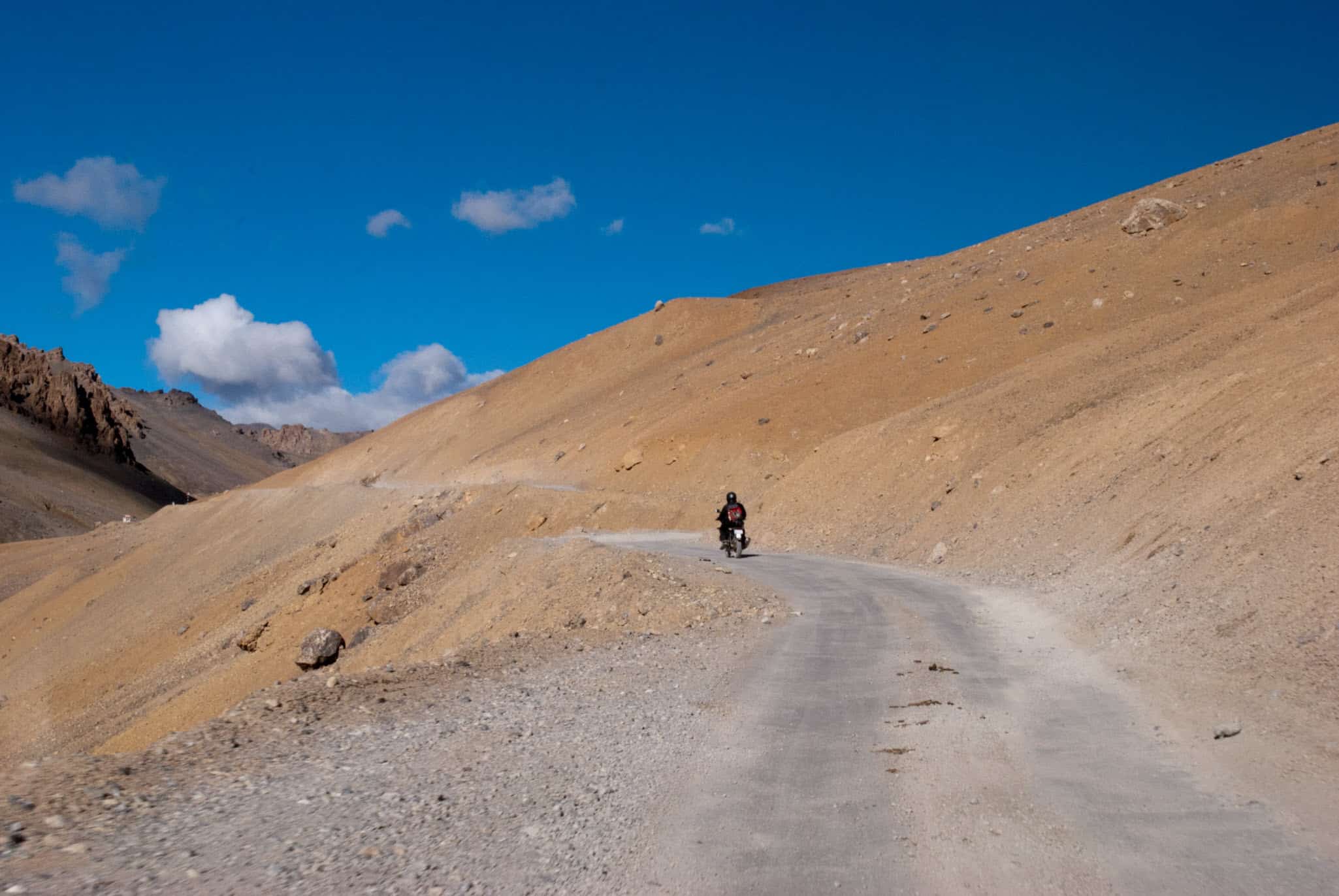
The Manali to Leh bike trip is one of those journeys that stays on your bucket list for years before you finally take the plunge. I remember my first ride on this route, shivering at Baralacha La in June despite wearing what I thought was “enough.” That experience taught me a lesson I want to pass on to you. What you wear and carry on this ride can make the difference between an incredible adventure and a miserable ordeal.
This guide covers everything you need to pack for a Manali to Leh motorcycle trip in 2026, from riding gear and clothing layers to bike accessories and emergency essentials. Whether you are riding your own bike or renting one in Manali, this packing list will help you prepare for the cold, rain, altitude, and rough roads that define this legendary highway.
Let's quickly dive into the details:
What Makes Packing for Manali to Leh Different from Other Trips?
The Manali to Leh highway is not your regular hill station road trip. You will cross five major passes above 15,000 feet, ride through water crossings that can be knee-deep, face temperatures ranging from 25 degrees Celsius in the plains to minus 5 degrees at night camps, and deal with unpredictable rain, snow, and wind. All of this in a single day sometimes. Hence, packing for this ride requires a completely different approach compared to a weekend trip to Manali or Shimla.
The golden rule is simple: layer up, dress down. Weather on this highway changes in minutes. You could be sweating in the sun near Tandi and freezing at Baralacha La two hours later. Carrying multiple thin layers that you can add or remove is far better than one thick jacket.
What Riding Gear Do You Need for the Manali Leh Bike Trip?
Your riding gear is the single most important category of items on this trip. The right gear protects you from falls, cold, rain, and UV exposure at high altitude. Here is what you should carry.
Full-Face Helmet with Clear Visor
This is non-negotiable. A full-face helmet protects your jaw and chin during falls, blocks wind chill on high passes, and shields your face from dust and gravel. Always pick a clear visor over tinted or chrome ones, because visibility drops rapidly during evening rides and cloudy weather in the mountains. If you are renting a helmet in Manali, check the padding and visor seal before you accept it. A loose-fitting helmet is worse than no helmet in a real crash.
Knee Guards and Elbow Guards
Do not skip these. I have seen riders skip guards because “it is uncomfortable” and then regret it after a low-speed slide on gravel near Pang. A good set of CE-rated knee and elbow guards from brands like Rynox or Solace costs around Rs 2,000 to Rs 4,000 and can save you from a serious injury. Wear them over your riding pants or under a loose outer layer.
Riding Jacket with Armour
A proper riding jacket with shoulder and back armour is your best investment. Look for one that is windproof, water-resistant, and has a removable thermal liner. Rynox, Royal Enfield, and Solace make affordable options in the Rs 5,000 to Rs 12,000 range that work well for Indian conditions. If you already have a good windproof jacket without armour, you can pair it with a separate armour vest underneath.
Keep in mind that a jacket should be your constant companion on this ride. Even if the sun is warm where you are standing, the moment you start climbing a pass and gaining altitude, wind chill can be harsh and unforgiving. I have ridden through sunny weather at Keylong only to face near-freezing winds at Baralacha La 90 minutes later. Have the jacket on you at all times.
Riding Gloves (Two Pairs)
Wet, frozen hands are a genuine safety hazard on a motorcycle. Once your fingers go numb, you lose grip on the clutch and brakes. Carry two pairs of gloves: one lightweight pair for warm stretches in the plains and lower valleys, and one waterproof, insulated pair for the high passes and cold mornings. I witnessed snow three times during my June trip, and waterproof gloves were a lifesaver each time. Even if you think summer means no cold, the passes do not care about the calendar.
What Clothes Should You Pack for Manali to Leh?
Clothing for this ride follows the layering principle. You need a base layer, mid layer, and outer layer that you can mix and match depending on conditions. Here is a practical breakdown.
Base Layer: Thermals
This is often forgotten and is a must-have on your Manali to Leh bike trip. Thermal tops and bottoms trap body heat close to your skin. If you spend your halt night in Sarchu at 14,070 feet, you will be cursing yourself on why you ever took this trip without thermals. I have been there, done that. Carry at least two sets so you always have a dry one available. Decathlon’s Forclaz range or Wildcraft thermals work well and cost between Rs 800 and Rs 1,500 per set.
Mid Layer: Fleece or Down Jacket
A lightweight fleece or a packable down jacket serves as your insulation layer. This goes between your thermals and your outer riding jacket. Fleece works better in wet conditions because it retains warmth even when damp, while down is lighter but useless once wet. For the Manali to Leh route, I prefer fleece because you will encounter rain and water crossings frequently.


Outer Layer: Windproof and Waterproof
Your riding jacket is your primary outer layer, but also carry a poncho or a waterproof rain suit. In case it rains, a big extra-large poncho lets you keep riding without stopping to change. The poncho covers your upper body and part of your luggage too. A separate set of waterproof riding pants is also highly recommended for monsoon-season rides in July and August.
Riding Pants: Stretchy and Protective
If you are wearing jeans for this trip, it will be painful. Your legs will feel jammed after hours of riding, thanks to the restrictive movement of hard denim. Go for stretchable riding pants with knee armour inserts, or at least cargo pants with a bit of give. Ensure your pants allow your body enough breathing space while also keeping you protected. With regard to clothes, you need to cover as much of your body as you can.
Socks and Inner Garments
Think of how many socks you might need for your journey. Double that number and carry with yourself. Weather is fickle, and your wet clothes might not dry fast at these altitudes. I cannot stress this enough. The same goes for your underwear. Carry at least 6 to 8 pairs of thick woollen or merino socks. Cold feet on a motorcycle at 16,000 feet is genuinely painful.
What Accessories Are Essential for the Manali Leh Bike Ride?
Beyond clothing and riding gear, several accessories can make your ride significantly more comfortable and safe. These are the items most first-time riders forget and later regret.
Shoes and Footwear
If gloves protect your hands, shoes protect your feet, and good footwear is the reason you will actually enjoy this ride. A good pair of hiking shoes like Quechua Forclaz (around 6 inches high) work well for most of the journey. However, the real problem is that hiking shoes do not dry easily once submerged, especially in the cold and damp conditions on the Manali to Leh highway.
Gumboots win here. Their height is more than regular shoes, and even if water does seep in, you can take them off, empty them, change your socks, and you are ready to go. Buy a cheap pair in Manali (Rs 200 to Rs 400) specifically for water crossings. Carry a sturdy pair of sneakers separately for exploring Leh city and for the evenings.
Some people will tell you to carry floaters or slippers for stream crossings. I truly suggest avoiding floaters and sandals while crossing streams, as there are sharp rocks underwater and the cold water can hurt your toes badly.
Bonus Tip: Keep a small hair dryer with you so you can dry shoes wherever possible. First, stuff your shoes with newspapers to soak excess water. After that, use the dryer. This trick has saved me multiple times.
Muffler or Balaclava
Mufflers and scarves are integral to your journey, especially on a motorcycle. You must have your face and neck area covered along with your full-face helmet at all times. No matter how warm it feels outside, keeping your skin protected from UV rays, wind, and dust is necessary. The elements at 15,000 feet can cause sunburn, windburn, and cracked lips faster than you expect. A balaclava that covers your entire face and neck works better than a regular muffler because it stays in place while riding.
Sunglasses (UV-Protected)
If there is one accessory that is a MUST for your Manali to Leh trip, whether you are on a motorcycle, in a car, or on a bus, it is a pair of UV-protected sunglasses. Your eyes will thank you. Direct sunlight at high altitude makes your eyes watery, impacts your vision, and tires you out faster. UV exposure is significantly stronger above 12,000 feet, and snow blindness is a real risk if you are riding past snow-covered passes. Invest in a pair with UV400 protection. Polarized lenses are even better for reducing glare off the road and water.
Hydration Pack
This is something the original riders from 10 years ago did not carry, but it has become essential knowledge now. Dehydration at altitude directly contributes to Acute Mountain Sickness (AMS). You need to drink 4 to 5 litres of water daily on this route. A hydration pack like a Camelbak (Rs 1,500 to Rs 3,000) lets you sip water while riding without stopping. If you stop to drink, you will not drink enough. Add electrolyte sachets (ORS or Electral) to your water to prevent muscle cramping, which can be dangerous when maneuvering a heavy motorcycle on steep turns.
Bungee Cords and Tank Bag
Carry bungee cords in place of ropes. Bungee cords are far easier to tie and untie, and they absorb vibrations better than rope. Rental bikes especially vibrate heavily, and saddlebags can loosen over rough stretches. Spider straps (multi-hook bungee nets) work best for securing odd-shaped luggage.
A tank bag is extremely useful. It fits on your fuel tank, and your camera or phone fits nicely into it. You do not have to carry a backpack at all times, and you can instantly grab your camera when a stunning view appears. This is especially useful on the More Plains stretch where photo opportunities come every few minutes.
Plastic Bags and Dry Sacks
While I know plastic is environmentally concerning, do carry plastic-polythene bags to wrap around your lower pants in the form of gaiters. You can even wear them on your socks for added protection during water crossings. This ensures no water seeps into your shoes. Use zip-lock pouches for your phone, charger, earphones, and camera to protect them from rain. Please be mindful and bring the plastic bags back with you.
Head Torch
Make a small bag just for riding essentials, and keep a head torch in it along with your medical kit and toiletries. You will need the head torch for tent setups at night camps, bike repairs in the dark, and navigating around camp areas where there is no electricity. A basic LED head torch (Rs 300 to Rs 500) is sufficient.
What Motorcycle Accessories Should You Carry for the Manali Leh Road Trip?
When making this journey on your bike, remember that between Tandi (the last petrol pump on the Manali side) and Karu near Leh, there is a stretch of about 365 km with no proper motorcycle workshop. You need to be self-sufficient. Here is the essential toolkit.
Basic Toolkit Checklist
- Screwdriver set (flat and Phillips)
- Spanner set (full range matching your bike’s bolt sizes)
- Small hammer
- Cutting pliers
- Spare tube (a must for spoke-wheel bikes)
- Puncture repair kit with patches and solution
- Air compressor or foot pump (electric pump preferred)
- Valve tube removing key
- Tire removing lever
- Spare clutch cable
- Spare accelerator cable
- Spare clutch plates (for older Enfields)
- Spare handle lever (brake and clutch)
- Spare spark plug and fuse
- Spare bike key
- Chain lock and lubricant
- M-Seal and Quick Fix adhesive (2 to 3 packs)
- Jump start cables
- Spare bulbs (headlight and tail light)
- Foot rest rod (Royal Enfield riders, this breaks often)
Fuel and Luggage
Carry extra fuel in 2 to 5 litre jerry cans or, better yet, two 2-litre cold drink bottles. Jerry cans have a tendency to leak on rough roads, while PET bottles sealed tightly do not. A metal carrier rack helps distribute luggage weight evenly. For a detailed guide on safely carrying spare fuel, read my post on carrying extra fuel and luggage on your motorcycle. Also check fuel availability across Ladakh so you know where the pumps are.
What Medical Supplies Should You Carry?
A first aid kit is not optional on this route. You are riding through remote areas where the nearest hospital could be 6 to 8 hours away. Here is what your medical kit should include.
- Diamox (Acetazolamide): For altitude mountain sickness prevention. Consult your doctor before the trip for dosage.
- Painkillers: Paracetamol and Ibuprofen for headaches and body pain.
- ORS sachets: At least 10 to 15 packets. Dehydration at altitude is the number one cause of AMS.
- Antiseptic cream and bandages: For cuts and scrapes from falls.
- Muscle relaxant spray: Volini or similar, for cramps after long riding days.
- Anti-diarrhoeal tablets: Road dhaba food can sometimes cause stomach issues.
- Sunscreen SPF 50+: UV radiation is extremely strong above 12,000 feet.
- Lip balm with SPF: Cracked lips are almost guaranteed without this.
- Personal prescriptions: Carry enough for 3 to 4 extra days beyond your planned trip duration.
For a detailed understanding of altitude sickness and how to prevent it, I strongly recommend reading the AMS prevention guide before your trip.
What Is the Complete Packing Checklist for Manali Leh Bike Trip?
Here is a consolidated checklist you can screenshot or print before your trip. This covers everything discussed above plus a few extras.
| Category | Items | Estimated Cost (INR) |
|---|---|---|
| Riding Gear | Full-face helmet, riding jacket with armour, knee guards, elbow guards, 2 pairs gloves | Rs 8,000 to Rs 20,000 |
| Clothing | 2 thermal sets, fleece jacket, rain poncho, 2 riding pants, 6-8 socks, 6-8 underwear | Rs 3,000 to Rs 8,000 |
| Footwear | Hiking shoes, gumboots, sneakers for evenings | Rs 2,000 to Rs 5,000 |
| Accessories | Sunglasses (UV400), balaclava, hydration pack, bungee cords, tank bag, head torch, dry sacks | Rs 3,000 to Rs 6,000 |
| Bike Toolkit | Full spanner set, puncture kit, spare tubes/cables, compressor, adhesives | Rs 2,000 to Rs 4,000 |
| Medical Kit | Diamox, painkillers, ORS, antiseptic, sunscreen SPF 50+, lip balm, personal meds | Rs 500 to Rs 1,500 |
| Electronics | Phone charger, power bank 20000mAh, zip-lock bags, GoPro mount | Rs 1,500 to Rs 3,000 |
| Total Estimated | Rs 20,000 to Rs 47,500 |
Keep in mind that if you already own riding gear and a good jacket, your actual spending will be much lower. Many riders on a budget pick up gumboots and thermals in Manali itself before starting the ride.
How Should You Pack Differently for Summer vs Monsoon Rides?
The Manali to Leh highway is open from late May/early June to mid-October, and what you prioritize in your packing depends on when you ride.
June (Early Season): Expect snow on Baralacha La and possibly Rohtang (if not taking the Atal Tunnel). Water crossings are moderate. Prioritize thermals and insulated gloves. Night temperatures can drop to minus 5 to minus 10 degrees at Sarchu and Pang.
July to August (Monsoon): Water crossings are at their most aggressive. The nallahs between Tandi and Sarchu can become dangerously swollen by afternoon. Prioritize waterproof gear, gumboots, and dry sacks. Read about handling water crossings on your motorcycle before attempting this season.
September to October (Late Season): Roads are generally in the best condition. Water crossings are minimal. But nights get progressively colder, and the highway can close with little warning after mid-October. Carry extra thermals and a good sleeping bag rated for minus 10 degrees.
What Mistakes Do First-Time Riders Make While Packing?
Having ridden this route multiple times and spoken to hundreds of riders in the DwD community, here are the most common packing mistakes I see.
- Overpacking clothes, underpacking tools: You do not need 10 T-shirts. You need 3 to 4 quick-dry ones and a complete toolkit instead.
- Skipping thermals because “it is summer”: It is never summer at 16,000 feet. Tanglang La does not care that it is July.
- No waterproof protection for electronics: One rain shower can kill your phone, camera, and power bank. Zip-lock bags cost Rs 20 and save Rs 20,000 worth of electronics.
- Wearing floaters at water crossings: Rocks and cold water will hurt your toes. Always wear gumboots or at least sturdy shoes.
- Not carrying enough water: Dehydration causes AMS. Carry a hydration pack and drink 4 to 5 litres daily.
- Ignoring sunscreen: Sunburn at altitude is severe. Apply SPF 50+ every 2 to 3 hours.
Related Reads: Spiti and Ladakh Bike Ride Series
This article is part of a comprehensive motorcycle riding series on DwD. If you are planning a Manali to Leh or Spiti bike trip, these guides will help you prepare thoroughly.
- How to Prepare Your Bike for a Ladakh or Spiti Ride
- The Complete Guide to Long Distance Motorcycle Riding
- Packing Guide for Long-Distance Motorcycle Riding
- Safely Carrying Spare Fuel and Luggage on Your Motorcycle
- Tips for Cold Weather Motorcycle Riding in Ladakh or Spiti
- Tips for Tackling Water Crossings on a Ladakh or Spiti Bike Ride
- How to Hire or Rent a Bike in Manali for Ladakh
- Tips for Carrying Clothes for a Ladakh Trip (General Guide)
For planning your overall route and itinerary, check the complete Manali Leh Highway travel guide and the Manali Leh Highway road guide.
Frequently Asked Questions
How many clothes should I carry for a 10-day Manali to Leh bike trip?
For a 10-day trip, carry 2 thermal sets, 3 to 4 quick-dry T-shirts, 2 riding pants, 1 fleece jacket, 6 to 8 pairs of socks, and 6 to 8 sets of inner garments. Laundry services are available in Leh and Keylong, so you do not need a fresh set for every day. The key is having enough dry clothes in case your riding gear gets wet, which it will.
Can I buy riding gear in Manali before starting the trip?
Yes. Manali’s Mall Road and Old Manali have several shops selling riding gloves, gumboots, thermals, ponchos, and basic knee guards. Quality varies and prices are slightly higher than online, but it is convenient for last-minute purchases. For proper CE-rated armour and riding jackets, buy online before your trip as Manali shops mostly stock generic options.
Is a riding jacket necessary if I am traveling in July?
Absolutely. July may be warmer in the valleys, but the passes above 15,000 feet are cold and windy regardless of the month. Add monsoon rain to the equation, and a riding jacket becomes your primary protection against hypothermia. Never skip it.
What is the best way to keep my phone and camera dry during rain?
Use double-layered zip-lock bags for your phone and keep it inside your tank bag or a dry sack. For cameras, a dedicated waterproof camera bag or a dry bag works best. Avoid using your phone while it is raining. One splash on an unprotected phone can cause permanent water damage.
Should I carry a sleeping bag for the Manali to Leh bike trip?
If you plan to stay at tent camps in Sarchu, Pang, or along the highway, yes. Tent camps provide blankets, but they are often not warm enough at minus 5 to minus 10 degrees. A sleeping bag rated for minus 10 degrees (available for Rs 2,000 to Rs 5,000) adds significant comfort. If you are staying only at hotels and guesthouses in Keylong, Jispa, and Leh, you can skip it.
Do I need separate shoes for riding and walking?
Ideally, yes. Riding shoes or hiking boots for the road, gumboots for water crossings, and sneakers or sandals for evenings in town. If space is tight, prioritize hiking shoes and gumboots. Your hiking shoes double as walking shoes, and gumboots pack flat.

How much weight should my luggage be for a Manali to Leh motorcycle trip?
Try to keep your total luggage under 25 to 30 kg. This includes saddlebags, tail bag, and tank bag. Heavier luggage makes the bike harder to handle on gravel, water crossings, and steep climbs. Distribute weight evenly on both sides. If traveling with a pillion, you will need to be even more selective about what you carry.
That covers everything you need to know about packing for the Manali to Leh bike trip. If you still have questions, feel free to ask in the comments section below or join the DwD community on social media where fellow riders share their real-time experiences. Safe riding, my friend, and remember, it is always better to be over-prepared than sorry on this highway 🙂
Last Updated: March 2026
