


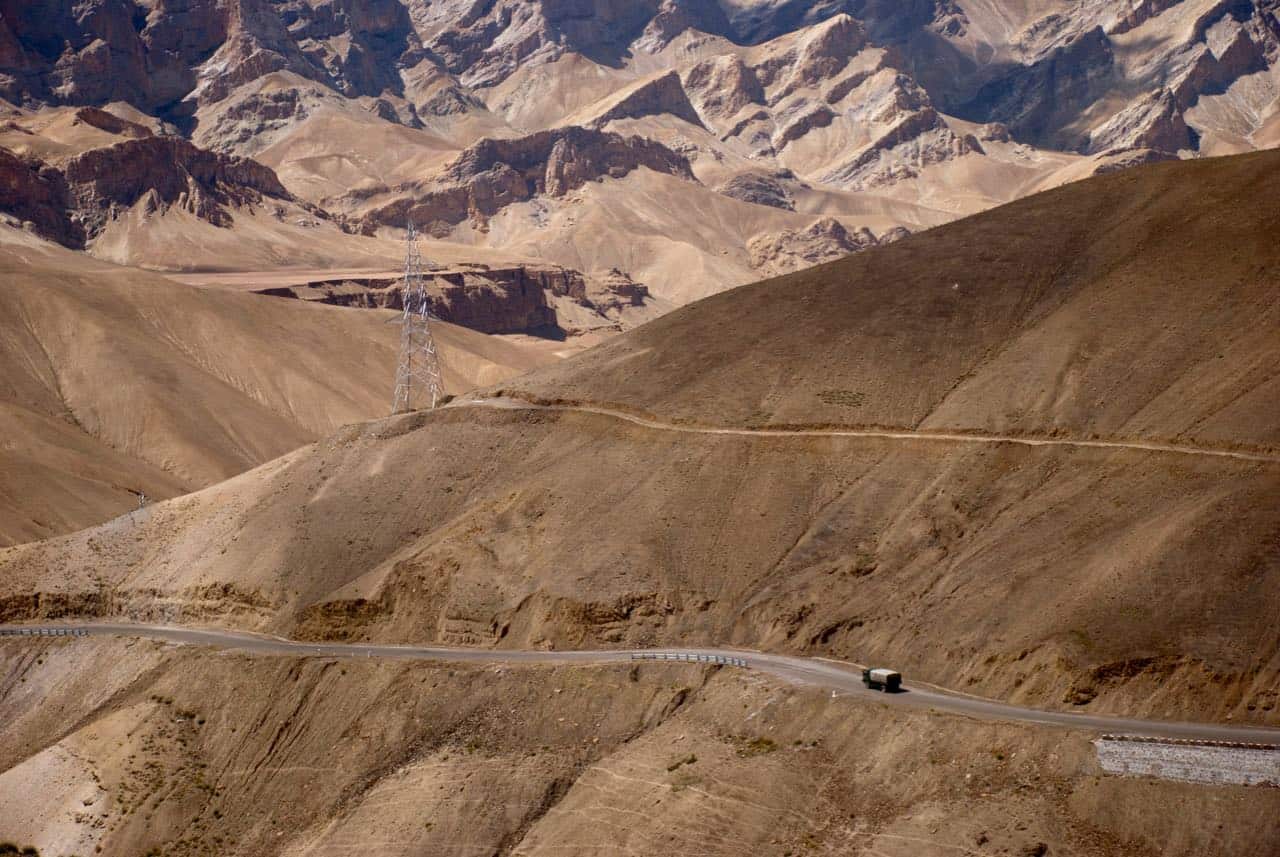
Ladakh or Spiti, which one should you pick for your Himalayan adventure? This is probably the most common question I get from first-time travelers planning a high-altitude road trip. Both regions sit on the rain shadow side of the Himalayas, both feature stark mountain desert landscapes, and both will leave a lasting impression. But they are very different places, and the right choice depends entirely on what you want out of the trip.
I have traveled to both Ladakh and Spiti Valley multiple times over the years. In this guide, I will break down the honest differences between the two, covering everything from accessibility and budget to road conditions, permits, and the kind of experience each region offers. By the end, you will know exactly which trip suits your travel style, time, and budget.
Ladakh is a high-altitude Union Territory in the Indian Himalayas, spanning roughly 59,000 sq km across the Leh and Kargil districts at elevations above 9,000 feet. Known for cold-desert landscapes, Buddhist monasteries, and lakes like Pangong Tso, it’s frequently compared with Spiti Valley as India’s other classic high-altitude road trip destination.
As of 2026, Indian travelers no longer need a separate Inner Line Permit anywhere in Ladakh, that system was discontinued back in 2021. You register online and pay an Environment Development Fee of Rs 400 per person (one-time) plus a Rs 20 per person, per day wildlife fee, roughly Rs 590 total for a 7-day trip, at lahdclehpermit.in, and the receipt stays valid for 21 days.
Let's quickly dive into the details:
What Is the Key Difference Between Ladakh and Spiti Valley?
Ladakh is a Union Territory covering a massive area of over 59,000 sq km, with Leh as its main town at 11,520 ft. Spiti Valley is a sub-division of Lahaul-Spiti district in Himachal Pradesh, much smaller in area, with Kaza as its main town at about 12,500 ft. While the barren landscapes look similar in photographs, the feel on the ground is completely different. Ladakh is vast, spread out, and diverse. Spiti is compact, raw, and deeply connected to Tibetan Buddhist culture.
Here is a quick comparison table before we get into the details.
| Factor | Ladakh | Spiti Valley |
|---|---|---|
| Accessibility | Direct flights to Leh from Delhi (1.5 hrs). Two road routes open May-Oct | No airport. Road only via Manali or Shimla-Kinnaur. 2 days minimum by road |
| Best Time | June to September (roads). Year-round by air | June to October. Limited winter access via Shimla route |
| Altitude & AMS Risk | Leh sits at 3,524 m (11,562 ft). AMS risk is real but manageable with 1-2 acclimatization days | Kaza sits at 3,650 m (11,980 ft), slightly higher than Leh, so AMS risk is marginally greater and builds faster on the Manali side |
| Budget (per day) | Rs 2,500-4,000/person | Rs 1,200-2,500/person |
| Permits Required | No ILP for Indians since 2021. EDF Rs 400 one-time + Rs 20/day wildlife fee | No permits for most areas. Forest fee Rs 150 for some zones |
| Infrastructure | Well-developed. Hotels, restaurants, ATMs, hospitals, fuel pumps | Basic. Limited ATMs (Kaza only), few fuel pumps, basic homestays |
| Mobile Network | 4G/5G in Leh. BSNL postpaid on highways | BSNL postpaid in Kaza, patchy elsewhere. No network in many villages |
| Road Difficulty | Well-maintained by BRO. Some rough patches | Challenging. Narrow mountain roads, landslide-prone sections |
| Ideal Duration | 7-12 days | 7-10 days |
Why Should You Pick Ladakh Over Spiti Valley?
If you have limited vacation days and want the maximum variety of experiences, Ladakh is the stronger choice. Here are the reasons, based on my personal experience of traveling to both regions.
1. How Does Ladakh’s Accessibility Compare to Spiti?
Ladakh wins on accessibility by a wide margin. Leh has a well-connected airport with daily flights from Delhi, Mumbai, and Srinagar. Flight time from Delhi is just 1.5 hours, which means you can land in Leh and start your trip the same day (after acclimatization rest, of course). Delhi to Leh flights typically cost Rs 4,000-12,000 one way if booked in advance, though peak summer fares climb higher.
By road, you have two options: the Manali-Leh Highway (open June to mid-October) and the Srinagar-Leh Highway (open May to November). Thanks to heavy army movement, these roads are maintained far better than most mountain roads in India. The Atal Tunnel has made the Manali side even more accessible, cutting the journey by several hours.
Spiti, on the other hand, has no airport. The nearest airports are Bhuntar (Kullu) and Shimla, both of which have limited connectivity. Getting to Kaza means at least two full days of driving, either via Manali over Kunzum Pass or via Shimla through Kinnaur. The Manali route opens only around late June, and the Shimla-Kinnaur route, while open year-round, takes 12-14 hours of driving from Shimla to Kaza.
2. What Activities and Places Can You Explore in Ladakh?
Ladakh offers a staggering variety that Spiti simply cannot match in terms of sheer scale. You can complete the classic Manali to Ladakh to Srinagar circuit and still have excursions left for Nubra Valley, Pangong Tso, Tso Moriri, and Zanskar.
Most people assume that Ladakh is “mainstream” and Spiti is “offbeat.” That is only half true. Leh town and Pangong have become touristy, yes. But there are so many places in Ladakh that remain untouched. Turtuk, the land of the Baltis, offers a cultural experience unlike anything else in India. The Suru Valley leading up to Zanskar is hauntingly beautiful. Panamik has sulphur hot water springs right before you approach the Siachen area. Basgo, Uleytokpo, Sumur, and dozens of small villages offer the kind of solitude that many travelers associate only with Spiti.
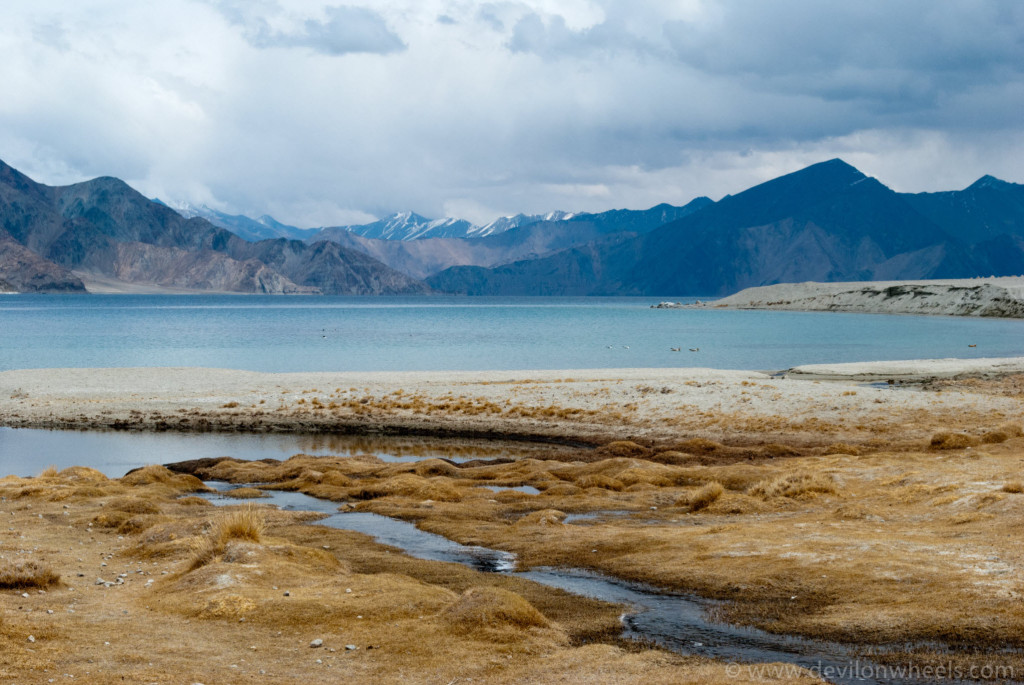
I can guarantee that while certain places in Ladakh will give you the comfort of a well-set-up tourist destination, the region has so many pristine, undiscovered corners that you could return five times and still find something new.
3. How Does Infrastructure and Safety Compare?
This is where Ladakh pulls far ahead, especially for first-time high-altitude travelers. Leh has proper hospitals (SNM Hospital with 24/7 emergency, plus the Army General Hospital that helps tourists), multiple ATMs, fuel pumps, a wide range of accommodation from Rs 800 guesthouses to luxury hotels, and plenty of restaurant options.
The army presence across Ladakh is a huge safety net. If you break down or get stuck, chances are an army convoy will pass within hours. Roads are maintained by BRO (Border Roads Organisation) and see regular traffic, so you are never truly alone on the highway.
Spiti has improved in the last few years, but infrastructure is still basic. Kaza has an ATM now (it did not until a few years ago), and there are a couple of fuel pumps in the valley. But medical facilities are limited, mobile connectivity is patchy, and if something goes wrong on a remote stretch, help can be hours away. For families, solo women travelers, or anyone with health concerns, Ladakh is the safer, more comfortable option.


4. What Cultural Experiences Does Ladakh Offer?
When we say India is a secular land with love and respect, it is the biggest reality in Ladakh. You will experience the calm of Buddhism at monasteries like Hemis, Thiksey, and Diskit. You will see the faith of Islam in the old town of Leh and in parts of Kargil. Hinduism has its presence too. This beautiful coexistence of faiths is something that defines the Ladakhi identity.
Getting to interact with the villagers of Turtuk, you will truly understand the struggles of losing and regaining identities (Turtuk was part of Pakistan until 1971). The zeal for life that Ladakhi people carry despite harsh conditions is inspiring. The people here and the lives they have built are a true testimony to abundance rather than scarcity. Their biggest belief system is being kind and open.
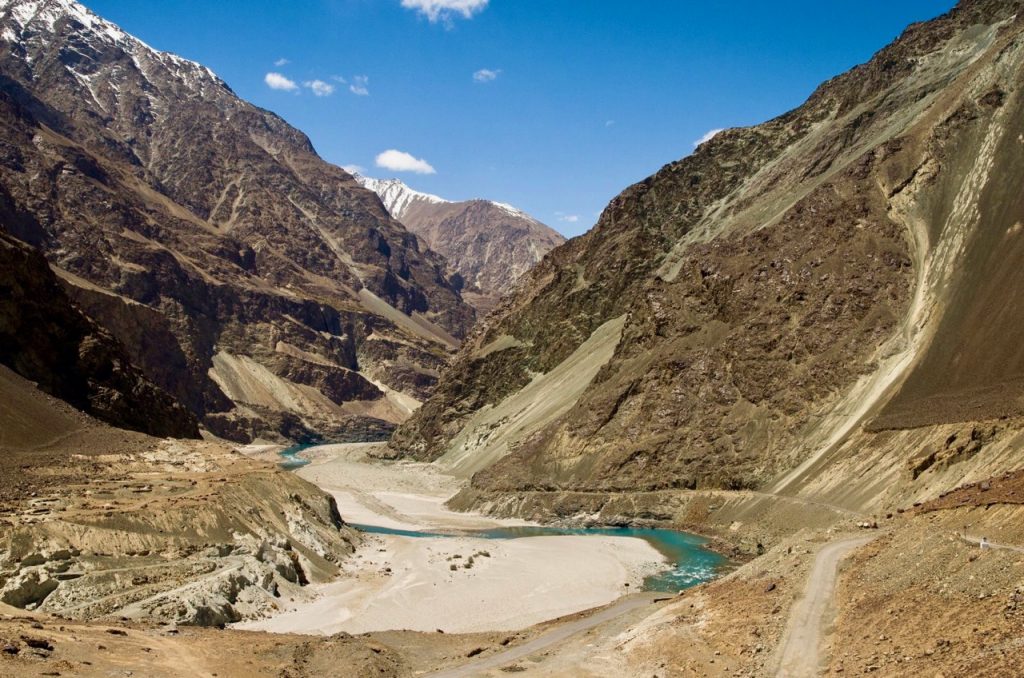
Spiti also has a rich Buddhist culture, especially at monasteries like Key, Tabo, and Dhankar. But Ladakh’s cultural diversity, with multiple religions, ethnicities (Ladakhi, Balti, Changpa, Dard), and distinct valley identities, gives it a depth that is hard to match.
5. What Adventure Options Does Ladakh Have?
Whether you want to do the Chadar Trek on the frozen Zanskar River, climb Stok Kangri (6,153m), trek the Markha Valley, or ride a motorcycle over the world’s highest motorable passes, Ladakh has it all. From national parks like Hemis (home to snow leopards) to surreal valleys like Changthang, Ladakh is vast and a large portion of it remains unexplored.
The landscape is a land of contrasts. Harsh mountains meet the bluest of skies. Every turn of the road gives you another “wait, what am I looking at” moment. While it might all seem unforgiving, it is strangely comforting at the same time.
Spiti has its own treks (Pin Parvati, Parang La) and the beautiful Chandratal Lake, but the options are fewer in number. If adventure variety is what you are after, Ladakh is the clear winner.
6. Can You Visit Ladakh Year-Round?
Yes, and this is a major advantage. You can fly to Leh from Delhi throughout the year. While many off-the-beaten-path locations close in winter due to snow, Leh and its surrounding areas remain accessible. You can even plan a winter trip to Ladakh to experience the frozen landscapes, the Chadar Trek, and the peace of off-season Leh.
Spiti is accessible year-round only via the Shimla-Kinnaur route (the Manali side closes in winter). But winter Spiti is extremely harsh, with temperatures dropping to -30C, and most guesthouses shut down. Only the most experienced travelers attempt a winter trip to Spiti.
When Should You Pick Spiti Valley Over Ladakh Instead?
In all fairness, this is not a one-sided debate. Spiti has its own strengths, and for certain travelers, it is actually the better choice. I have written a separate companion article on 5 reasons to head to Spiti Valley and skip Ladakh. But here is a quick summary of when Spiti makes more sense.
Pick Spiti if you are on a tight budget. Spiti is significantly cheaper than Ladakh. Accommodation costs Rs 500-1,500 per night versus Rs 800-3,000 in Ladakh. Taxi rates, food, and entry fees are all lower. A 7-day Spiti trip can cost Rs 15,000-25,000 per person, while a similar Ladakh trip runs Rs 25,000-45,000.
Pick Spiti if you want a rawer, less touristy experience. Despite Spiti’s growing popularity, it is still far less crowded than Ladakh. Villages like Langza, Komic, Hikkim, and Demul see a fraction of the footfall that Pangong or Nubra get. If you want to sit in a monastery courtyard with no other tourist in sight, Spiti is your place.
Pick Spiti if you love the journey as much as the destination. The drive to Spiti, especially via the Shimla-Kinnaur route, is one of the most scenic road trips in India. The landscape transforms gradually from green hills to barren desert over two days, and the journey itself becomes a highlight.
How Much Does a Ladakh Trip Cost vs a Spiti Valley Trip in 2026?
Budget is often the deciding factor, so here is a realistic comparison of costs for a 7-day trip in 2026.
| Expense | Ladakh (7 days) | Spiti Valley (7 days) |
|---|---|---|
| Transport (from Delhi) | Rs 4,000-12,000 (flight) or Rs 1,500-2,500 (bus to Manali + shared taxi) | Rs 1,000-1,500 (bus to Manali/Shimla) + Rs 500-800 (local bus) |
| Local taxi/transport | Rs 3,000-5,000/day (shared among group) | Rs 4,000-6,000/day for full circuit taxi (shared) |
| Accommodation/night | Rs 800-3,000 | Rs 500-1,500 |
| Food/day | Rs 500-1,000 | Rs 300-600 |
| Permits | Rs 400 EDF + Rs 20/day wildlife fee (no ILP) | Rs 150 forest fee (select areas only) |
| Total estimate | Rs 25,000-45,000/person | Rs 15,000-25,000/person |
Keep in mind that these are estimates for a mid-budget trip. If you fly to Leh and hire a private taxi, your Ladakh costs can easily cross Rs 50,000. On the other hand, if you take public transport in Ladakh, costs come down significantly.
What Permits Do You Need for Ladakh and Spiti in 2026?
Indian nationals no longer need a separate Inner Line Permit anywhere in Ladakh, the old ILP requirement for Indians was dropped in 2021. Instead, you register online and pay an Environment Development Fee (EDF) of Rs 400 per person (one-time), a Rs 20 per person per day wildlife fee, and an optional Rs 50 Red Cross contribution, roughly Rs 590 total for a 7-day trip. Register and pay at lahdclehpermit.in, the receipt is valid for 21 days and is what gets checked at Nubra Valley, Pangong Tso, Tso Moriri, and Hanle. Foreign nationals still need a Protected Area Permit (PAP) through registered agents.
Spiti is much simpler on the permit front. Indian nationals do not need any permits for most of the valley, including Kaza, Tabo, Pin Valley, Dhankar, Langza, Hikkim, Komic, and Kibber. A forest department fee of Rs 150 per person applies at certain checkpoints. The only area requiring special permission is beyond certain restricted border zones, and even those permits are straightforward.
For the Manali route to either destination, you may need a Rohtang Pass/Atal Tunnel permit (Rs 800 for petrol vehicles, Rs 400 for diesel) during peak season.
Which Has Better Road Conditions, Ladakh or Spiti?
Ladakh roads are maintained by BRO, and because of the heavy army presence and strategic importance, they get regular attention. The Manali-Leh Highway and Srinagar-Leh Highway both have stretches of excellent tarmac mixed with some rough patches. Overall, road quality in Ladakh is improving every year, and most routes are manageable in a standard car or SUV.
Spiti roads are a different story. The Manali to Kaza route via Kunzum Pass has some of the worst road conditions you will encounter anywhere in India. Narrow mountain tracks, loose gravel, water crossings, and landslide-prone sections are the norm. The Hindustan-Tibet Road via Kinnaur is better maintained but still has challenging stretches, especially between Nako and Tabo.
If you are a first-time mountain driver or traveling with family, Ladakh is the safer bet for road conditions. If you enjoy the thrill of conquering difficult roads, Spiti will not disappoint.

Can You Combine Ladakh and Spiti in One Trip?
Yes, and this is something many experienced travelers do. The Spiti to Ladakh via Manali route is a classic circuit. You start from Shimla, drive through Kinnaur to Kaza, continue to Manali, and then head to Leh via the Manali-Leh Highway. This circuit typically takes 14-18 days and lets you experience both regions in a single trip.
Keep in mind that this is a demanding itinerary. You will be at high altitude for an extended period, covering long distances on mountain roads. Proper acclimatization is critical. I would recommend this only if you have at least 15 days and some prior experience with high-altitude travel. For first-timers, pick one and do it properly rather than rushing through both.
Practical Tips for Planning Your Ladakh or Spiti Trip
Regardless of which destination you choose, here are a few things to keep in mind.
Acclimatize properly. Both Ladakh and Spiti are above 10,000 ft. Acute Mountain Sickness (AMS) is a real risk. Spend at least one full day resting at your first high-altitude stop. Do not rush.
Carry cash. ATMs in both regions are unreliable. In Spiti, Kaza is the only town with an ATM. In Ladakh, Leh has multiple ATMs but they run dry during peak season. Carry enough cash for your entire trip.
Start early, sleep early. This is a golden rule for any high-altitude trip. Mountain weather changes fast, and you want to reach your next stop before dark.
Check road status before you leave. The Manali-Leh Highway status and Spiti road conditions can change overnight due to landslides or snowfall. Always check current status before starting your journey.
BSNL postpaid is your best friend. In both Ladakh and Spiti, BSNL postpaid has the widest coverage. Jio and Airtel work in Leh and Kaza towns but are patchy beyond. If you need connectivity on the highway, get a BSNL postpaid SIM before your trip.
My Personal Take: Which One Should You Visit First?
If you are a first-time high-altitude traveler, go to Ladakh. The better infrastructure, airport access, medical facilities, and army safety net make it a more forgiving destination for beginners. You can fly in, acclimatize in Leh, and gradually explore the surrounding areas without the stress of extreme road conditions.
If you are an experienced road tripper who has done a few mountain trips and wants something rawer, go to Spiti. The journey itself is the reward, and the quieter, more intimate villages will give you stories you will tell for years.
There is a reason why people say that you MUST visit Ladakh at least once in your life. No list will be able to convince you. You have to go there to experience the true personality of the place. Ladakh truly leaves its footprint on your soul, and you return from the region a changed person. It is hard to describe the magic hidden in the experience.
Staring up at intimidating mountains, navigating routes that seem humanly impossible, helping someone on the road who has been stuck for a while, getting to Pangong and experiencing that first glimpse of its impossible blue. All of that is part of the Ladakh package. The list of reasons to visit Ladakh is one you write for yourself.
If you have been dreaming about either of these places, stop thinking and start planning. Both Ladakh and Spiti will change you as a traveler. Feel free to drop a comment below or reach out on the Discover With Dheeraj community group if you need help planning your trip. Happy travels, my friend 🙂
Last Updated: March 2026
Frequently Asked Questions
Where is Ladakh located?
Ladakh is a Union Territory in northern India, bordered by Jammu and Kashmir to the west, Himachal Pradesh to the south, Tibet to the east, and China’s Xinjiang region to the north. It covers roughly 59,000 sq km across the Leh and Kargil districts, with Leh town sitting at 11,520 ft.
What is Ladakh famous for?
Ladakh is famous for high-altitude lakes like Pangong Tso and Tso Moriri, Buddhist monasteries such as Hemis, Thiksey, and Diskit, some of the world’s highest motorable passes, and stark cold-desert landscapes that draw road trippers, trekkers, and motorcyclists from across India and abroad.
Is Ladakh a state or a union territory?
Ladakh is a Union Territory of India, carved out of the former state of Jammu and Kashmir on 31 October 2019. It is administered directly by the central government and comprises two districts, Leh and Kargil.
Is Ladakh or Spiti better for a first-time traveler?
Ladakh is the better choice for first-timers. The airport at Leh gives you a quick entry without multi-day road journeys, and the infrastructure (hospitals, hotels, restaurants, army presence) makes it more forgiving if something goes wrong. Spiti demands more road experience and comfort with basic facilities.
Which is cheaper, Ladakh or Spiti Valley?
Spiti Valley is significantly cheaper. A 7-day Spiti trip costs Rs 15,000-25,000 per person, while a similar Ladakh trip costs Rs 25,000-45,000. Accommodation, food, and transport are all more affordable in Spiti. However, if you use public transport in Ladakh, the gap narrows.
Can I visit both Ladakh and Spiti in one trip?
Yes. The Shimla-Kinnaur-Spiti-Manali-Leh circuit is a popular route that covers both regions. You need at least 14-18 days for this combined trip. However, this is a demanding itinerary, so it is best suited for experienced travelers with proper acclimatization time built in.
What is the best time to visit Ladakh vs Spiti?
Both regions are best visited between June and September when all roads are open and the weather is pleasant. Ladakh has the advantage of year-round air access via Leh airport. Spiti is accessible year-round via the Shimla-Kinnaur route, but winter travel (November-March) is extremely harsh with temperatures dropping to -30C.
Do I need permits for Ladakh and Spiti?
Indian nationals do not need an ILP for Ladakh anymore, that requirement was dropped in 2021. You now just pay an Environment Development Fee (EDF) of Rs 400 per person plus a Rs 20 per person per day wildlife fee, registered online at lahdclehpermit.in. Spiti does not require permits for Indian nationals in most areas, just a Rs 150 forest fee at some checkpoints.
Is Ladakh safe for solo travelers and women?
Ladakh is one of the safest destinations in India for solo travelers and women. The local people are warm and welcoming, the army presence adds a layer of security, and Leh has a well-established tourist infrastructure with hostels, cafes, and tour operators catering to solo travelers. Spiti is also safe but has fewer facilities and less traffic on roads, which can feel isolating.
Which has better roads, Ladakh or Spiti?
Ladakh has better roads overall. BRO maintains the highways due to strategic military importance, and the roads see regular traffic. Spiti roads, especially the Manali-Kaza route via Kunzum Pass, are among the roughest in India with narrow tracks, loose gravel, and frequent water crossings.

2 Comments
Comments section gets closed in 90 days. To ask your travel questions, you can follow my YouTube Channel for a faster reply or for a much slower reply follow me on Instagram. :)
Sir
You have given me perfect itinerary for 25 days for covering both Spiti and Leh including Nubra Valley in year 2018 but unfortunately it was misplace, can you please send it again, I have 30 days time to visit the said places, in year 2018 we did road trip from India to Iran covering Nepal, China, Kyrgyzstan, Uzbekistan, Turkmenistan and then Iran so we were unable to travel on the said route.
Nice description, Ladakh is surely a place to visit.