


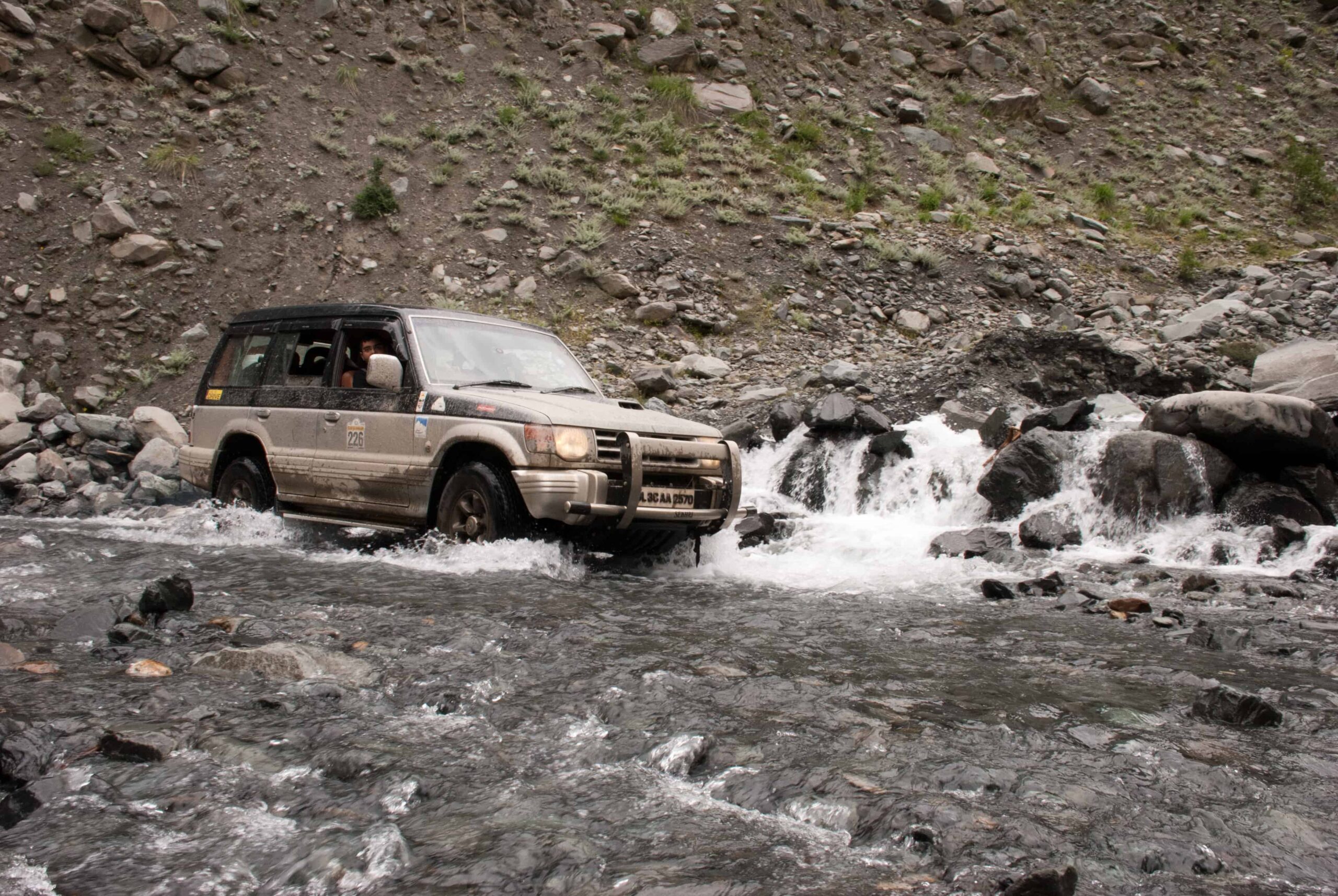
Planning a self-drive trip to Ladakh? One of the first questions that comes to mind is, “what should I carry in my car?” And trust me, this question deserves more attention than most people give it. On a Ladakh road trip, you will be driving through some of the most remote stretches in India where the nearest mechanic can be 100+ km away, fuel pumps are few, and mobile network coverage is patchy at best.
Over the years, I have driven to Ladakh multiple times and learned many of these lessons the hard way. In this guide, I am sharing a complete checklist of things to carry on a Ladakh self drive trip in 2026, covering everything from spare parts and tools to medical supplies and documents. Whether you are driving on the Manali-Leh Highway or the Srinagar-Leh Highway, this list will help you stay prepared for anything the Himalayas throw at you.
A Ladakh trip by car needs five things above everything else: metal jerry cans (10-20L) for the 365 km Tandi-Leh gap, a heavy-duty air compressor and puncture repair kit, a tow rope and shovel for mud or snow, Diamox and a pulse oximeter for altitude, and spare fuses and a fan belt for your car.
Let's quickly dive into the details:
What Are the Essential Things to Carry on a Ladakh Self Drive Trip?
The short answer is: everything you would need to survive a breakdown in a place where no help is coming for hours. The fuel pumps in Ladakh are limited, mechanics are scarce beyond Leh, and even basic supplies like coolant or engine oil can be impossible to find on routes like Nubra to Pangong via Shyok.
If you have not already read my 7 useful tips for a self drive to Ladakh, I will strongly recommend starting there. That article covers route planning, car selection, and driving tips. This one focuses purely on the checklist of items to carry.
I have categorized the items into logical groups so you can shop category by category and make sure nothing is missed. Keep in mind that some items overlap across categories, so go through the entire list before you start shopping.
Practical Info: Quick Reference for Your Ladakh Self Drive Trip
| Detail | Info |
|---|---|
| Best time for self-drive | June to September (both highways open) |
| Recommended car type | SUV or crossover with high ground clearance |
| Last fuel pump (Manali side) | Tandi (32 km before Jispa), then 365 km to Leh |
| Last fuel pump (Srinagar side) | Kargil, then 230 km to Leh |
| Fuel pumps within Ladakh | Leh, Karu (45 km), Diskit (Nubra), Tangste (34 km before Pangong), Nyoma (Tso Moriri route, opened 2024) |
| Permits needed | Ladakh EDF: Rs 400 + Rs 20/day + Rs 50 Red Cross (one-time) |
| Mobile network on highways | BSNL postpaid widest coverage; Jio 4G patchy; Airtel 5G in Leh city |
| Expected mileage drop | 20-30% less than plains due to altitude and terrain |
| Last updated | April 2026 |
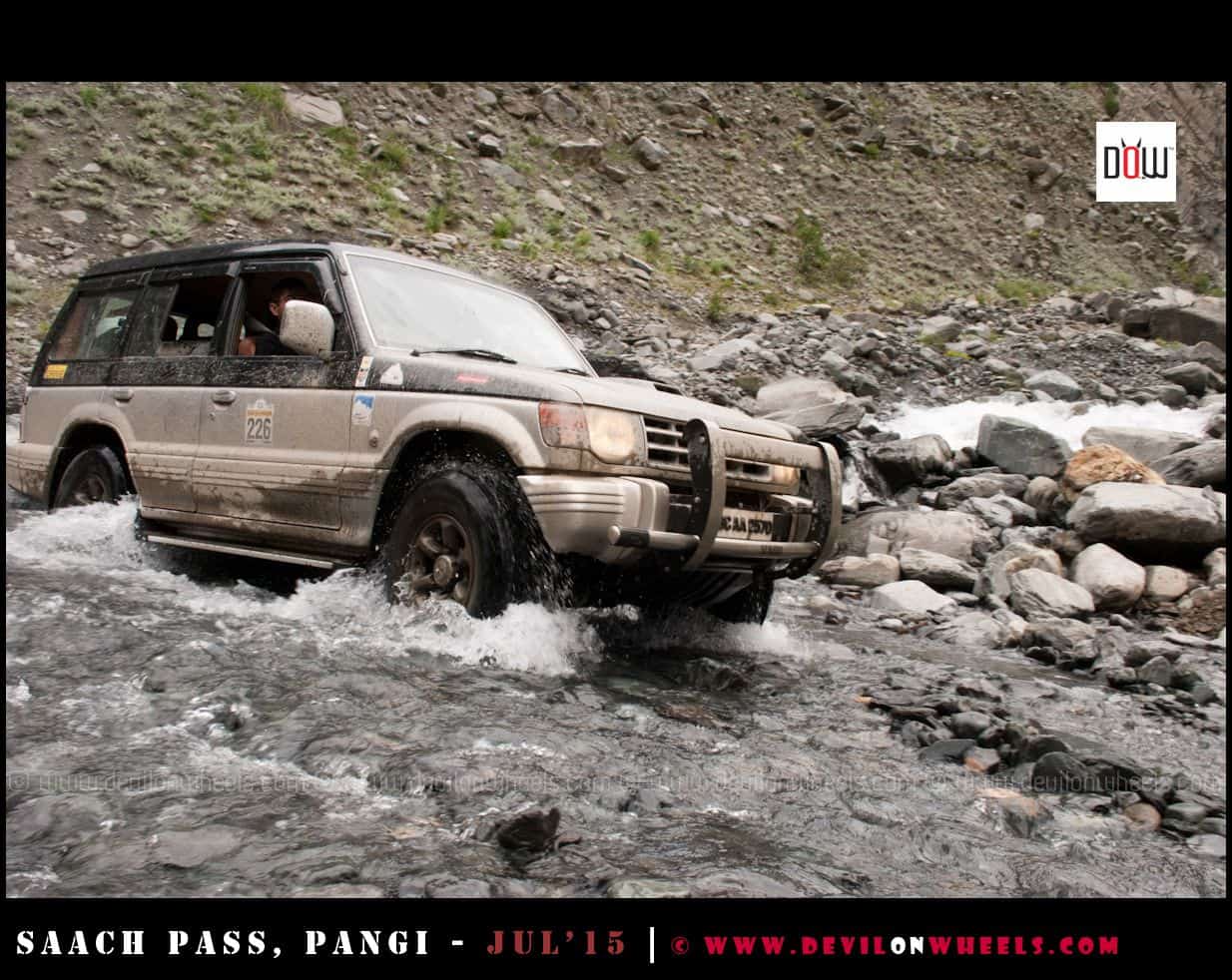
How Should You Prepare Your Car Before Leaving for Ladakh?
Before we get to the items to carry, let me quickly cover car preparation. Get your car serviced at least 2-3 weeks before departure, not the day before. This gives you time to identify issues that surface after a service. Here is what to focus on.
- Engine oil: Change to synthetic oil if your car supports it. It handles temperature extremes better at altitude.
- Coolant: Top up and check for leaks. Overheating on steep climbs is common.
- Brake pads: Replace if even slightly worn. The descents from Khardung La, Chang La, and Baralacha La are steep and long. Faulty brakes on these stretches can be fatal.
- Tyres: All four tyres should have at least 70-80% tread depth. Check the spare tyre too. Many people discover their spare is flat only when they need it at 15,000 feet.
- Suspension: Get it checked thoroughly. Ladakh roads will punish weak suspension.
- Air filter: Clean or replace. Dusty roads will clog it faster than you expect.
- Underbody guard: If your car has low ground clearance, get an engine sump guard installed. A single rock hit can crack the oil sump and leave you stranded.
- Battery: Cold nights at 14,000+ feet drain batteries fast. If your battery is older than 2 years, consider replacing it.
What Tools and Spare Parts Should You Carry for Puncture and Battery Issues?
The most common breakdown on a Ladakh road trip is a tyre puncture. Sharp stones on unpaved stretches make it almost inevitable on longer trips. Battery issues are the second most common problem, especially after cold nights at high altitude. Here is what you need to handle both situations without a mechanic.
- Basic toolkit including jack and spanner (your car’s toolkit, fully checked)
- Air compressor or foot pump. This is one of the most important items. Go with a heavy-duty metal-body air compressor, not plastic. Overuse in thin air can melt plastic ones.
- Tubeless tyre puncture repair kit including rubber strips and insertion tools. This has saved me multiple times along with the air compressor.
- Tyre sealant. For when the puncture is beyond strip repair, sealant can buy you enough time to reach the next town.
- Hydraulic jack (if your car’s stock jack is flimsy)
- Spare tyre in addition to the stepney. Check both for punctures before leaving home.
- Spare tube (if your tyres are tubed)
- Tyre removing lever
- Spare tyre valves and valve removing key
- Jump start cables. Essential for cold mornings when batteries die.
- Jump start battery bank. A portable lithium battery jumper is lighter and works even when no other car is around. These have become quite affordable now, and I consider them more reliable than cables since you do not need to depend on another vehicle.
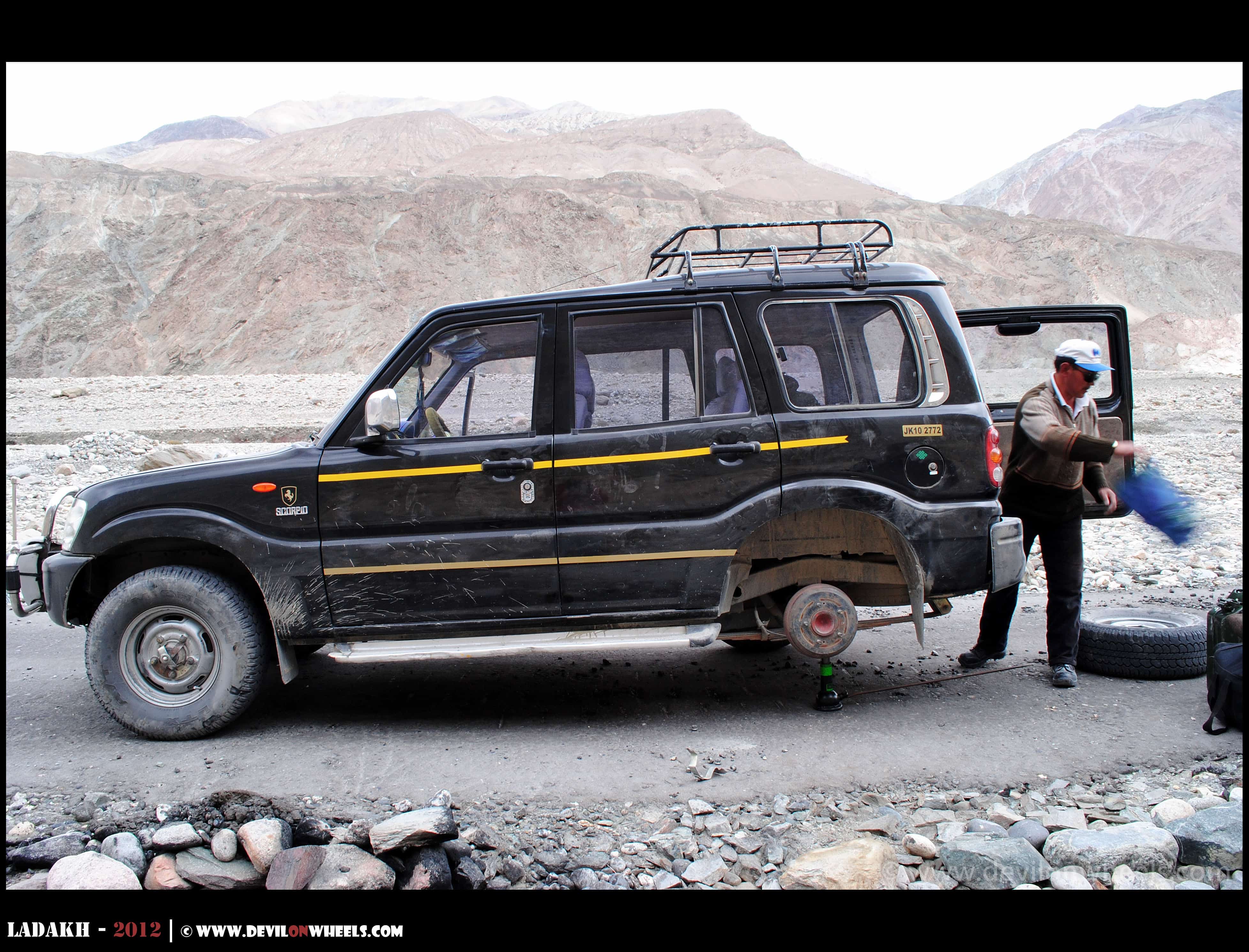
How Do You Handle Fuel Shortage on a Ladakh Road Trip?
Fuel management is critical on a Ladakh self drive trip. On the Manali-Leh Highway, the last fuel pump is at Tandi, which is about 32 km before Jispa. After Tandi, there is no fuel station for approximately 365 km until you reach Leh. On the Srinagar side, Kargil is the last reliable fuel stop before Leh (230 km). You can read my detailed guide on fuel availability in Ladakh for route-wise pump locations.
The good news is that fuel infrastructure within Ladakh has improved significantly in recent years. As of 2026, you now have fuel pumps at Karu (45 km from Leh), Diskit (Nubra Valley), Tangste (34 km before Pangong, opened 2023), and Nyoma on the Tso Moriri route (opened 2024). This means you no longer need to carry as much spare fuel for sightseeing within Ladakh as you used to. However, the Manali-Leh and Srinagar-Leh highway stretches still require careful fuel planning.


Also keep in mind that your car’s mileage will drop by 20-30% at altitude due to thinner air and rough terrain. Plan your fuel stops accordingly. For detailed tips on carrying spare fuel safely, check my guide on how to carry extra fuel safely.
- 12. Jerry cans (1-2 units, 10-20 litres each). Metal jerry cans are safer than plastic. Never use Coke bottles for fuel, despite what you may see others doing.
- 13. A 10-foot rubber/plastic pipe. Useful for siphoning fuel from one vehicle to another in emergencies.
- 14. Funnel. For clean fuel transfer without spilling.
- 15. Thin cloth for filtering. Critical when buying “black fuel” (roadside fuel) from remote village shops. Impurities can damage your engine.
What Do You Need When Your Car Gets Stuck in Water, Mud, or Slush?
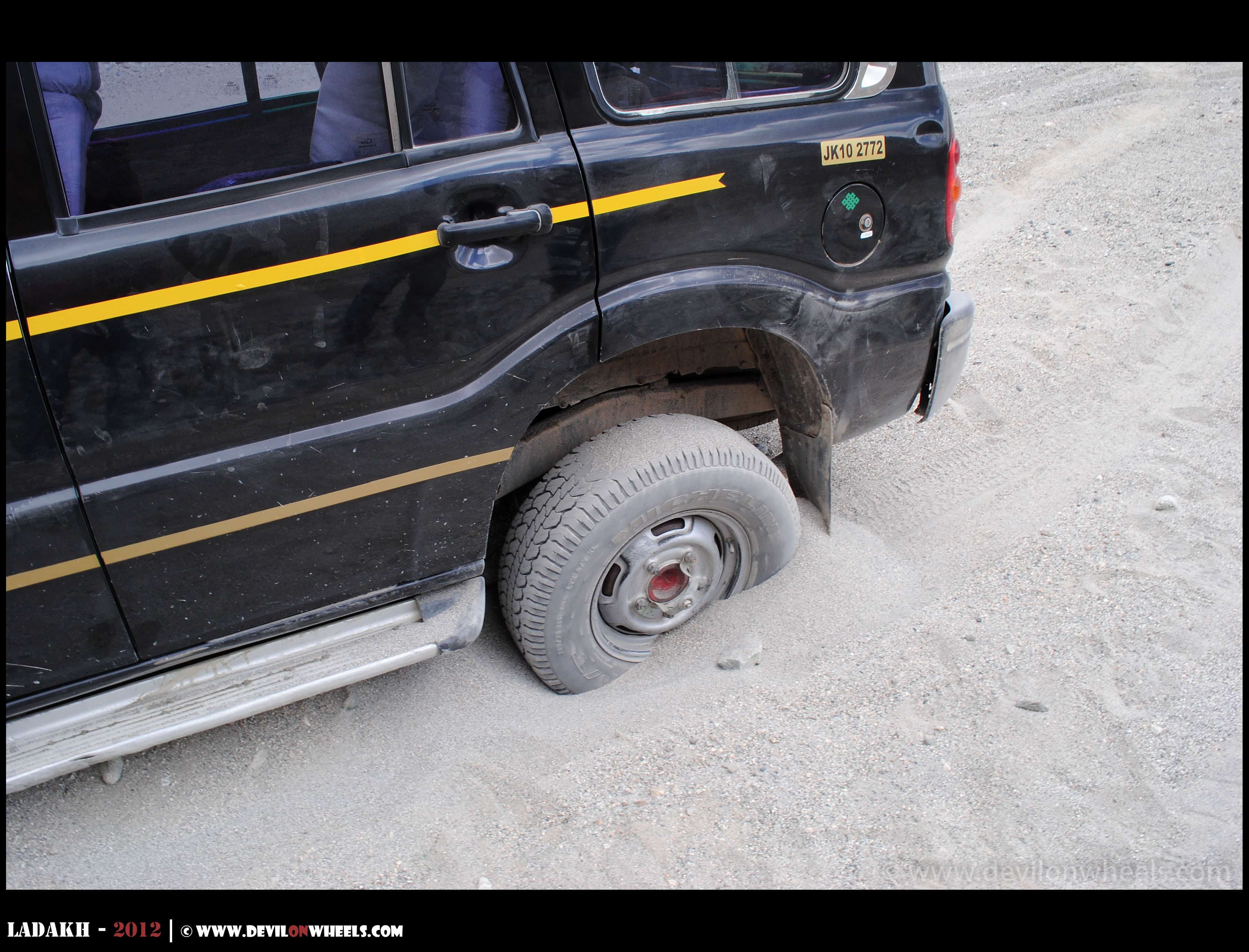
Getting stuck is one of the most common situations on a Ladakh road trip. Water crossings become ferocious in the afternoon as glacial melt peaks. Muddy patches after rain can trap even SUVs. I have seen it happen to experienced drivers. Here is what you need to get yourself (or someone else) out.
- 16. Tow rope or cable (4-6 ton capacity, at least 4 meters). A steel wire towing rope is more durable than nylon.
- 17. Shovel. A compact foldable shovel works. You can dig your tyres out of mud or snow.
- 18. Long stick or iron rod. To check water crossing depth before driving through.
- 19. Tarpaulin. Multi-purpose: protect the engine from rain, lay it under stuck tyres for traction, or cover your car at night.
- 20. Small hammer. Useful for loosening stuck bolts or hammering tent pegs if you are camping.
A golden rule for water crossings: cross before noon whenever possible. Glacial melt raises water levels significantly by afternoon, and what was ankle-deep at 8 AM can be knee-deep by 2 PM.
Planning to cover Ladakh via Manali? Check this most common itinerary for a Ladakh trip via Manali for day-by-day planning.
Which Windshield and Patch-Up Items Should You Pack?
Your windshield is your visibility and safety. Loose stones flying from passing trucks, rough patches, and sudden weather changes can damage it. Adhesives and tapes come in handy for all sorts of patch-up work beyond just the windshield. Here is what to carry.
- 21. Windshield cleaner (Colin or a good quality automotive windshield cleaner)
- 22. Old newspapers. The best streak-free windshield cleaning method.
- 23. Spare wipers. If your wipers break in the rain, driving becomes dangerous. They cost very little and are worth the peace of mind.
- 24. Adhesive tapes. Both double-sided and insulation tape. Can hold together broken parts temporarily.
- 25. M-Seal (2-3 packs). Works as a temporary fix for cracked pipes, minor leaks, and other emergencies.
- 26. Quick Fix/Fevikwik (2-3 packs). Instant adhesive for quick repairs on the road.
Not planning a self-drive? Check this list of trusted taxi drivers in Ladakh or explore self-drive car rental options for Ladakh.
What Car Spare Parts Should You Carry to Ladakh?
This section depends on your car brand. If you own a Maruti or Mahindra, spare parts are relatively easier to find even in small towns across Himachal. But if you drive a Hyundai, Kia, Tata, or any luxury brand, finding specific parts in remote areas is nearly impossible. Hence, carrying these spares is strongly recommended.
- 27. Spare headlight bulbs. Night driving with a dead headlight in the mountains is extremely dangerous.
- 28. Spare coolant and engine oil (500ml-1L each). A small puncture in the engine sump or coolant pipe can slowly leak fluid. Topping up can get you to the next town.
- 29. Spare clutch cable. If it snaps on a pass, you are going nowhere without one.
- 30. Spare accelerator cable. I once could not find one for 50+ km even in Himachal, and I own a Maruti 😉
- 31. Spare air filter. Optional if yours is new, but clean it regularly during the trip. Dusty roads clog filters fast.
- 32. Spare fuses including master fuse. Electrical failures are more common at altitude than you would expect.
- 33. Spare fan belt. A broken fan belt means an overheating engine. Carry one that fits your car model.
What Medical Supplies and First Aid Kit Should You Carry?
This is a section many self-drive guides miss, but it is critical. On a Ladakh trip, you are driving at altitudes between 11,000 and 18,000 feet. Acute Mountain Sickness (AMS) is a real risk, and medical facilities beyond Leh are practically non-existent. The nearest hospital on the Manali-Leh Highway is in Manali on one side and Leh on the other. That is a gap of over 470 km. In Leh, the SNM Hospital operates 24/7 for emergencies, and the Army General Hospital also assists tourists in serious cases. If anyone in your group is at higher risk, renting an oxygen cylinder in Leh before you set off on the self-drive is a sensible backup. My oxygen cylinder rental guide for Ladakh covers where to rent one and what it costs, though you should still consult a doctor about your own risk factors before the trip.
- Diamox (Acetazolamide). Consult your doctor before the trip. Many travelers take it preventively starting a day before reaching high altitude.
- Painkillers (Paracetamol, Ibuprofen)
- Anti-nausea and motion sickness tablets (Avomine or Meclizine)
- ORS packets. Dehydration at altitude is common and makes AMS worse.
- Diarrhea medication (Norfloxacin or Loperamide)
- Antiseptic cream, band-aids, cotton, and gauze
- Cold and cough tablets
- Allergy medication (if you have known allergies)
- Any prescribed medication you take regularly, with a copy of the prescription
- Digital thermometer
- Portable pulse oximeter. Lightweight and inexpensive, it helps you monitor oxygen levels at altitude. If your SpO2 drops below 80%, it is time to descend immediately.
Keep in mind that pharmacies are available in Leh town, but outside Leh, you will not find one for hundreds of kilometers. Carry enough medication for the entire trip duration plus a few extra days.
What Documents and Permits Do You Need for a Ladakh Self Drive?
Missing a document can literally stop your trip at a checkpoint. Since 2021, Indian domestic tourists no longer need a traditional Inner Line Permit (ILP) for Ladakh. Instead, you need to pay the Ladakh Environment and Development Fee (EDF) online and carry the receipt. Here is the complete document checklist.
- Driving licence (original + 2 photocopies)
- Vehicle Registration Certificate (RC) (original + 2 photocopies)
- Vehicle insurance papers (ensure it covers J&K/Ladakh)
- PUC (Pollution Under Control) certificate
- Ladakh EDF receipt: Rs 400/person (one-time) + Rs 20/person/day + Rs 50 Red Cross fee (one-time). Apply online at the LAHDC Leh Permit Portal.
- Government-issued photo ID (Aadhaar, Voter ID, or Passport). Keep 5-6 photocopies. You will need them at army checkpoints along the way.
- NOC from the vehicle owner (if the car is not registered in your name)
- Travel itinerary (helps at checkpoints)
Pro tip: keep all documents in a waterproof pouch. Water crossings, rain, and accidental spills can damage paper documents quickly. I also recommend keeping digital copies of every document on your phone and sharing them with a co-traveler as backup.
What Miscellaneous and Multi-Purpose Items Should You Carry?
These are the items that do not fit neatly into one category but will prove useful in multiple situations. Some of them are car-related, others are for personal comfort and safety.
- 34. Swiss knife or multi-tool. I have been using a Victorinox Huntsman for over 15 years now. It has helped me in countless situations in the mountains and still works like new. One of the best investments I have made.
- 35. Screwdriver set (Phillips and flat head)
- 36. Assorted nuts and bolts. You would be surprised how often a loose bolt causes a problem on rough roads.
- 37. DC to AC inverter. Plug it into your car’s cigarette lighter to charge phones, cameras, laptops, and power banks while driving. This is extremely useful when you are spending full days on the road with no electricity.
- 38. Torch/flashlight with extra batteries. Head-mounted torches are best for hands-free use during nighttime repairs.
- 39. Fire extinguisher (small, car-sized). A safety precaution that is worth carrying, especially on steep passes where brakes overheat.
- 40. Drinking water and snacks. Carry at least 2-3 litres per person. Dry fruits, energy bars, and biscuits are essential for stretches where dhabas are closed or absent.
- Dashcam (bonus item). Useful for recording your journey and also serves as evidence in case of road incidents. Many travelers now carry them as standard equipment on Himalayan road trips.
Always carry your own water bottle and refill it along the way. It keeps you hydrated and helps reduce plastic waste in the Himalayas. Every small step counts towards responsible travel 🙂
What Personal Comfort Items Help on a Long Ladakh Drive?
Beyond car tools and spare parts, personal comfort items make a real difference on a trip where you are driving 6-10 hours a day at extreme altitudes. These are often overlooked but can save your trip from becoming miserable.
- Sunscreen (SPF 50+). The UV radiation at 14,000+ feet is intense. You will burn through your car window if you are not careful.
- Lip balm with SPF. Cracked, bleeding lips are common in Ladakh’s dry air.
- Sunglasses (UV-protected). Snow blindness is a real risk on passes.
- Warm layers. Even in summer, temperatures can drop below 0 at night. Carry thermals, a fleece, and a windproof jacket. If you would rather not haul bulky winter kit all the way from home, especially for a shoulder-season drive in April-May or October, a handful of small outfitters cluster in Leh’s Changspa neighbourhood, a short walk from Main Bazaar. Mero Expedition, near Raku Complex on Fort Road, has been renting down jackets, snow boots, gloves, and sleeping bags to trekkers and self-drivers since 1990. Worth a stop before you head out on the highway if the forecast looks rough.
- Toilet paper and hand sanitizer. Toilets along the highway are basic at best.
- Power bank (20,000 mAh+). Mobile network in Ladakh is limited, but your phone is still your map, camera, and emergency communication device. Download offline maps (Google Maps or OsmAnd) before you leave.
- Cash (Rs 10,000-15,000 minimum). ATMs work in Leh and Kargil, but are unreliable elsewhere. UPI payments have started appearing at some shops in Leh town, but do not count on them outside the city. Carry enough cash for fuel, food, and emergencies for the entire trip.
- Blanket or sleeping bag. If your car breaks down at night at 15,000 feet, this could be life-saving.
Planning your complete Ladakh trip? Check the most common itinerary for a Leh Ladakh road trip covering both Manali-Leh and Srinagar-Leh highways.
What About Rented Self-Drive Cars in Ladakh?
A quick but important note. If you are planning to take a rented self-drive car to Ladakh, be aware that there are restrictions. Rented self-drive cars from outside Ladakh (like from Zoomcar or local rental agencies in Delhi/Manali) face restrictions on sightseeing within Ladakh due to local taxi union rules. Your own private car registered in your name or a family member’s name is fine, but rented vehicles may face issues at checkpoints.
Read my detailed article on self-drive car rental rules in Ladakh to understand the current situation before booking anything. If self-driving is not an option, you can check the latest taxi rates in Ladakh or browse my trusted taxi drivers list.
Quick Printable Checklist: Things to Carry on Ladakh Self Drive Trip
Here is the complete list in one place. Save this or take a screenshot before your trip.
| Category | Items |
|---|---|
| Puncture & Battery | Basic toolkit, air compressor, puncture repair kit, tyre sealant, hydraulic jack, spare tyre + stepney, spare tube, tyre lever, spare valves, jump cables, jump start battery bank |
| Fuel | Jerry cans (10-20L), siphon pipe, funnel, filter cloth |
| Stuck/Recovery | Tow rope (4-6 ton), shovel, iron rod, tarpaulin, hammer |
| Windshield & Repair | Windshield cleaner, newspapers, spare wipers, adhesive tapes, M-Seal, Fevikwik |
| Car Spares | Headlight bulbs, coolant, engine oil, clutch cable, accelerator cable, air filter, fuses, fan belt |
| Medical | Diamox, painkillers, ORS, anti-nausea, diarrhea meds, antiseptic, band-aids, thermometer, pulse oximeter |
| Documents | DL, RC, insurance, PUC, EDF receipt, photo ID (5-6 copies), NOC (if needed) |
| Multi-Purpose | Swiss knife, screwdrivers, nuts/bolts, DC-AC inverter, torch, fire extinguisher, water, snacks, dashcam |
| Personal | Sunscreen SPF 50+, lip balm, sunglasses, warm layers, toilet paper, power bank, cash, blanket |
Conclusion
I know this list looks long, and carrying all 40+ items might feel like overkill. But keep in mind that in the remote Himalayas, finding a mechanic is one thing, and him having a spare part for your specific car is another thing altogether 😉 The peace of mind you get from being self-prepared is worth every rupee spent on these items.
If you are planning your first self-drive trip to Ladakh, start with the self-drive tips guide, then come back here for shopping. You can also browse the complete budget breakdown for a Ladakh trip to plan your expenses. And for the broader packing list covering clothing, toiletries, and camera gear, check my master list of things to carry when you travel. If you also need a solid rucksack for the road, I have reviewed my own after 13 years of use in this Quechua Forclaz 60 rucksack review.
Feel free to drop your questions in the comments below or post them in the Travel Questions section. If I have missed anything on this list, do let me know so I can update it for fellow travelers. Safe travels, my friend 🙂
Related Reading
- Most Common Itinerary for a Leh Ladakh Road Trip
- Fuel Availability in Ladakh: Route-Wise Petrol Pump Guide
- Ladakh Trip Itinerary by Air
- Ladakh Environment Fee and Permits Guide
- Spiti Valley to Ladakh Combined Itinerary
Frequently Asked Questions
What are the most important things to carry for a Ladakh trip by car?
The most important things to carry for a Ladakh trip by car are metal jerry cans (10-20 litres) for the 365 km fuel gap after Tandi, a heavy-duty air compressor and puncture repair kit, a tow rope and shovel for mud or snow, Diamox and a pulse oximeter for altitude sickness, and spare fuses and a fan belt for your car’s specific model. If you need winter gear, outfitters like Mero Expedition in Leh’s Changspa area rent down jackets, snow boots, and sleeping bags by the day. For a full breakdown of tents, sleeping bags, and cooking gear if you plan to camp along the way, see my camping in Ladakh guide.
Can I take a sedan or hatchback on a Ladakh self drive trip?
Yes, but with limitations. Sedans and hatchbacks with decent ground clearance (170mm+) can handle the Manali-Leh and Srinagar-Leh highways if the roads are in good condition. However, offbeat routes like Nubra to Pangong via Shyok, Wari La, or the Umling La road require an SUV with high ground clearance. If taking a smaller car, drive carefully over broken patches and water crossings, and avoid the afternoon when water levels are highest.
How much spare fuel should I carry for a Ladakh road trip?
Carry at least 10-20 litres of spare fuel in metal jerry cans. The longest fuel gap is between Tandi (Manali side) and Leh, approximately 365 km. Your car’s mileage drops 20-30% at altitude, so calculate conservatively. Within Ladakh, fuel pumps now exist at Karu (45 km from Leh), Diskit (Nubra Valley), Tangste (34 km before Pangong), and Nyoma (Tso Moriri route, opened 2024). These additions have made local sightseeing much easier for self-drivers.
Do I need an Inner Line Permit for a self drive trip to Ladakh in 2026?
Indian domestic tourists no longer need a traditional ILP for Ladakh. You need to pay the Ladakh Environment and Development Fee (EDF) online: Rs 400 per person (one-time) + Rs 20 per person per day + Rs 50 (Red Cross, one-time). Carry the receipt and 5-6 photocopies for army checkpoints. Foreign nationals still need a Protected Area Permit (PAP).
What is the best time for a self drive trip to Ladakh?
June to September is the best window when both the Manali-Leh and Srinagar-Leh highways are open. Late June to early July gives you the best road conditions on most routes. The Srinagar-Leh highway typically opens earlier (April-May) than the Manali-Leh highway (mid-June). For detailed month-by-month guidance, check the Manali-Leh Highway status page.
Where can I find a mechanic in Ladakh if my car breaks down?
Leh has several mechanics and authorized service centers for Maruti, Mahindra, and Tata. Kargil also has basic mechanics. Beyond these two towns, finding a mechanic is extremely difficult. On the highway, army camps and fellow travelers are sometimes the only help available. This is why carrying your own tools and spare parts is so important on a Ladakh self drive trip.
![What to pack for Ladakh Bike Ride or Spiti Bike Ride? [Clothes, Spares, Gear & Accessories]](https://discoverwithdheeraj.com/yt_vid_thumbs/ladakh/88.png)
Is mobile network available on Ladakh highways for navigation?
BSNL postpaid has the widest coverage in Ladakh, including stretches of both highways and remote areas like Nubra and Pangong. Jio and Airtel have expanded in Leh city (Airtel now offers 5G in Leh as of 2024), but coverage drops off quickly on the highways. Download offline maps (Google Maps or OsmAnd) before you leave. Do not rely solely on mobile data for navigation on Ladakh roads.
Should I get my car’s underbody guard installed before a Ladakh trip?
If your car has low ground clearance (below 180mm), an engine sump guard is strongly recommended. The oil sump is the most vulnerable part of the underbelly, and a single rock hit on unpaved sections can crack it and leak all the engine oil. The cost of an aftermarket sump guard (Rs 2,000-5,000) is nothing compared to the cost of an engine replacement.

24 Comments
Comments section gets closed in 90 days. To ask your travel questions, you can follow my YouTube Channel for a faster reply or for a much slower reply follow me on Instagram. :)
Hello Dheeraj Bhai
I’m planning a trip from by this route,
Shimla-Nako-kaza-manali-Shimla.
It will be a great help if you can tell me that Do i require some permission ( pass) during this trip. If Yes, than from where i have to get these.
Thanks in advance.
No Rohit, if you are planning to travel from Shimla to Spiti, then you do not need any permits !!
Thank u so much dheeraj. Good to hear. Also pls tell me if its possible to the below places in a DL regiatered self drive rented car. If not pls guide me where all its possible to visit on srinagar leh highway.
Maitrey at Mulbek, Lamayuru Monastery, Lunar Landscape, Redzong / Rizong Monastery, Alchi Monastery, Likir Monastery, Basgo Palace, Confluence at Nimmu, Magnetic Hills, Pathar Sahib Gurudwara, Phyang Monastery, Spituk Monastery.
Most of these places fall on the route to Leh from Srinagar. You can skip Spituk and Phyang monasteries, rest should be fine to visited on delhi rented car
Hi Dheeraj.. Hope you’re doing great.. We are planning to do leh by sep mid.. entry via srinagar and exit via manali. We are planning to hire a self drive car from delhi. We are already aware by reading ur blog about local taxi union. So we have planned to park our car in leh town and hire a bike for all sightseeing in ladakh. Let me know if this will cause any problem? Or ok to do and safe..
Venkat, it is completely safe and you can surely use the rental car to drive to Leh and then out of Leh.
One more clarification bro, planning to exit leh via leh manali highway by oct 1st week beginning. I read in ur article regarding possible snow fall and road blocks due to himalayan motor rally. Please advise how we can plan. Many thanks in advance.
Nowadays snowfall is not that frequent in October but possible. Keep an eye on weather updates and I do not think rally is in first week of October this year.
Hi dheeraj, we planned our trip on sep 22nd to oct 6th. Planning to enter via srinagar-leh and exit leh-manali.. Hearing some news that there is a early snowfall now. Please give me an update on the same.. Whether it can be done wid out any delays. Where exactly it is snowing or possible snow fall.. I agree v cant predict nature however ur valuable suggestion will b helpfull for us.
There is snowfall and it is usual to that snowfall starts in September at all high passes in the Himalayas. Even on your dates it may be possible that snowfall happens, if it happens heavily the pass might close for a day or two at max. but this snow does not stay too much. Keep a tab on weather updates.
Hello sir,
Your post is sufficient in itself but still have some doubts left.
*Me & my gf planning to visit Spiti valley in mid-August (do you recommend this time?) by SUV.
*In total we have 6 Nights and 5 Days. Is it Doable?
*Tentative total budget for Delhi-Spiti-Delhi keeping in mind to stay in medium budget accommodations at max.
*We are using Shimla route for going and Manali route for coming.Your suggestions for itinerary? Place to visit?
Thanks in advance sir
I will suggest you read: 10 Tips for a Trip to Spiti Valley in Monsoons
Hi Dheeraj,
I am going Spiti through Shimla then Manali with my car (EON) on 18th May. Is that okay to go with EON or shall I switch to some SUV.
For hatchback/sedan taking on Manali – Leh Highway, Spiti Valley and Ladakh, I will say Possible = Yes, Difficult = Yes, at quite a few place:
You will indeed face few tough challenges on the route. The hatchback/sedan will increase the level of every challenge even further, sedan is the worst candidate. My suggestion will be to go via Srinagar route as it will help you feel comfortable with the driving, provide more acclimatization and then once you have done the local Leh-Ladakh, then come back via Manali side. Secondly, since you are in hatch/sedan, then you need to drive with extra care as well. There will be some sections on the Manali – Leh highway in which you might need to sacrifice some scratches on the underbelly. Just make sure you do not bump the engine sump (know it before where it is placed in your car). You need to protect it all around the trip. Thirdly, whenever in doubt do not rush into the section rather park aside and feel the section with your foot, see how other vehicles are crossing it and make a planned route in your mind to cross that section. At the very least do carry Mseal, quick fix, funnel, jerry cans and towing rope with you all the time.
Also, I will strongly suggest that you go through and read my series on Ladakh Self Drive tips at the links below:
7 Useful Tips for a Self Drive to Leh – Ladakh, Routes and Road Conditions In Leh – Ladakh | Ladakh Self Drive Tips, Fuel Availability In Leh – Ladakh | Ladakh Self Drive Tips
Hi Dheeraj,
Thanks a lot for the prompt reply..all your articles are awesome and knowledgeable.
I am not going to Ladhakh just the 360 degree tour from Delhi – Shimla- Kaza- Manali-Delhi.
Friday 18-delhi to Shimla night
Sat 19_ shimla to kinnaur(stay)
Sun 20 – kinnaur to nako/tabo(stay at tabo)
Mon 21- spiti/kaza
Tue 22- hiking komik langza
Wed 23 – kaza monestary and all local stuff
Thurs 24- kaza to chandratal(stay)
Friday 25 – chandratal to kasol(stay)
Saturday26 – kasol to Delhi 9pm ..Sunday morning will reach Delhi
Monday morning 28-delhi to mumbai
Let me know if there is any issue with above plan with EON and also Chandratal will be frozen in May or we can go to Manali from KAza or not.
Thanks in Advance,
Neha
Replied to your other comment.
Hi Dheeraj Bhai,
One more thing: Also, any bike service available in the Leh – Manali route?
2) Is Motul Aerosol tyre inflator reliable one?
Thank you so much
No Dennis, there is no service available on Leh – Manali route. The tyre inflator does help you buy sometime and few KMs.
Hi Dheeraj Bhai,
Any workshops/ tyre repair shops available for enfield bullet at any place in Nubra Valley?
Dennis, you will get the mechanic at Deskit.
Thanks…I have changed my itenary and added Hanle…also I have decided to breakup Day 13 and will take a night halt at upshi….Did not want to leave Tanglang la….Are there any stay options at upshi…..
Yes Sunil, Upshi and Rumtse both have basic home stays and guest houses. But do not expect much from these places.
Hi Dheeraj,
I am planning a trip to Leh in September. Earlier I was planning one to Spirit but got a few more days and decided to take it to Leh. My itenary is as below..
Day 1: Delhi- Ludhiana
Day 2: Ludhiana-Jammu
Day 3: Jammu- Srinagar
Day 4 : Srinagar – Kargil
Day 5: Kargil- Leh
Day 6: Leh
Day 7: Leh- Nubra via Khardungla
Day 8: Nubra
Day 9: Nubra to Pangong via Wari La
Day 10: Pangong
Day 11: Pangong to Tso Moriri
Day 12 Tso Morir
Day 13: Tso- Moriri to Sarchu
Day 14: Sarchu- Manali
Day 15: Manali- Ludhiana
Day 16: Ludhiana- Delhi.
Is this good….Any inputs?
Sunil, this is a nice plan. All I will recommend is that you skip the extra stay either at Pangong Tso or Tso Moriri or add one day to include Hanle in the trip. It will also help you split the long journey from Pangong Tso to Tso Moriri as well plus will let you visit one of the most beautiful villages in Himalayas or Ladakh 😉