


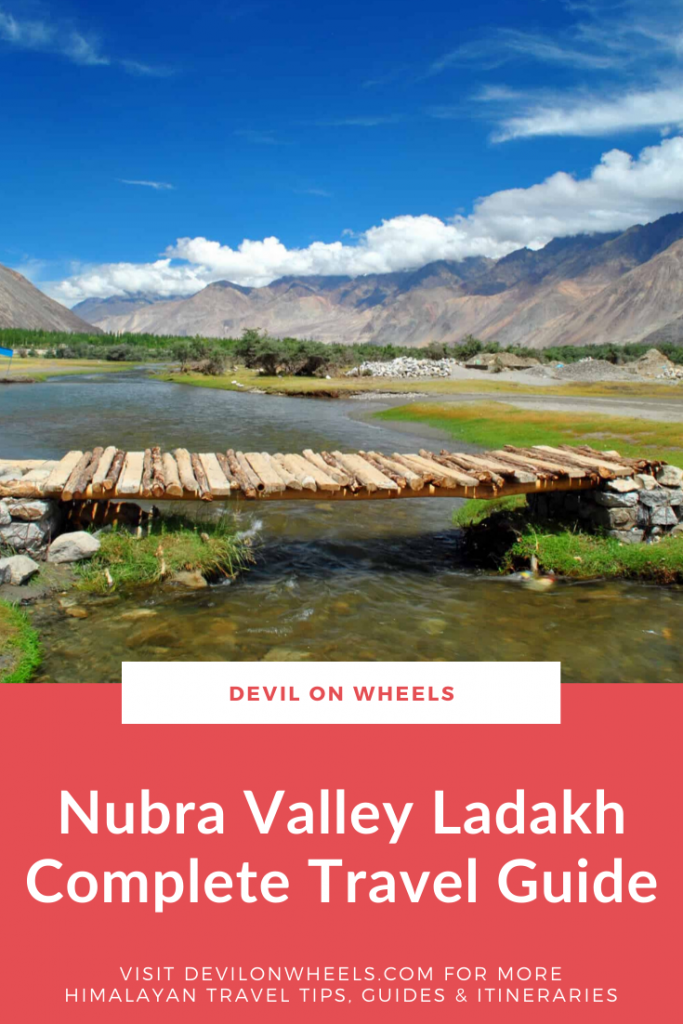
Nubra Valley is one of the MUST VISIT places in Ladakh, and if you are visiting for the first time, this is one destination you simply cannot skip. Located in the northern part of Ladakh with Diskit as its headquarters, Nubra Valley sits at an average altitude of about 10,000 Feet (3,048 meters) and offers a landscape so diverse that it will stay with you long after you have returned home.
In this guide, I have covered everything you need to know to plan your trip to Nubra Valley in 2026. From how to reach, best time to visit, places to see, accommodation options, budget breakdown, permits, and practical tips for a smooth journey. Let us get started 🙂 …
Let's quickly dive into the details:
What Makes Nubra Valley So Special?
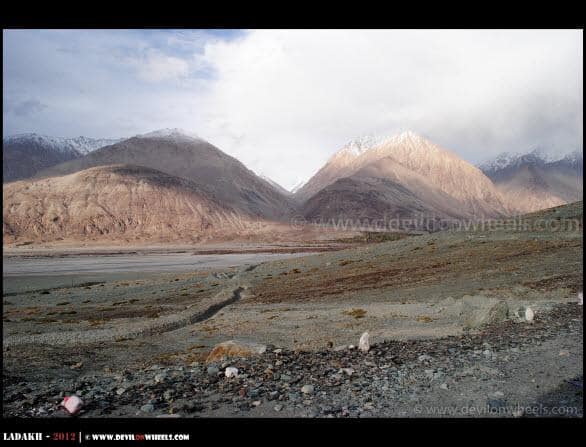
Nubra Valley is formed where the Shyok River, a tributary of the Indus, meets the Nubra (or Siachen) River, creating a large valley that separates the Ladakh and Karakoram mountain ranges. The result is a landscape that is unlike anything else you will find in Ladakh. Ultra-wide open spaces, towering mountain faces, sand dunes right next to snow-capped peaks, apricot orchards, and the musical flow of the Shyok River through the valley floor.
But beyond the visuals, Nubra Valley serves a very practical purpose in your Ladakh itinerary. Since it sits at about 10,000 Feet, which is lower than Leh (11,500 Feet), visiting Nubra early in your trip helps tremendously with acclimatization. You climb up to the high altitude of Khardung La from Leh, and then descend to sleep at a lower altitude in Nubra Valley. This up-and-down pattern is exactly what your body needs to adjust to the thin air.
Keep in mind that climbing to a very high altitude at Khardung La from Leh and then sleeping at a lower altitude in Nubra Valley DOES HELP tremendously in acclimatization. If you are missing Nubra Valley on your trip, you are almost missing out on the heart of your Ladakh journey. For more on this, read my detailed guide on AMS and acclimatization tips for Ladakh trips.
How to Reach Nubra Valley from Leh?
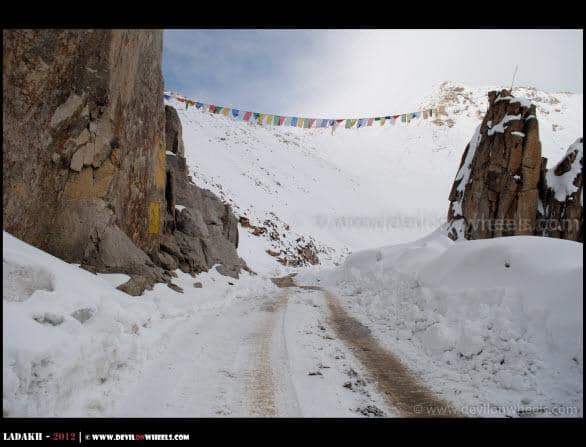
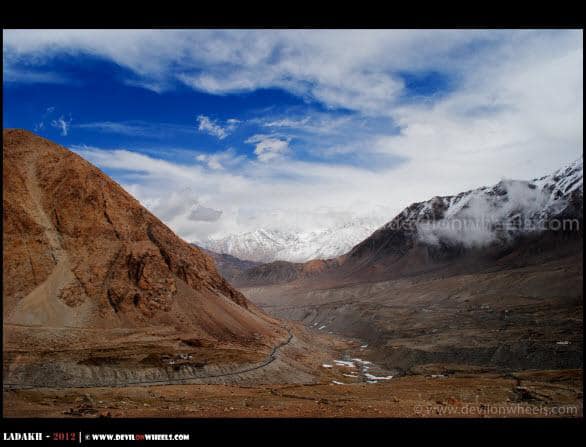
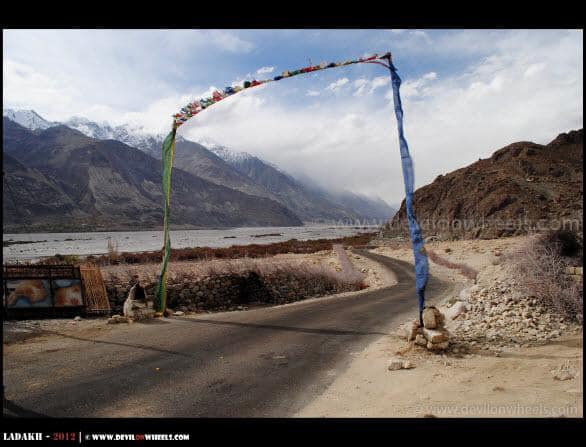
The only way to reach Nubra Valley is from Leh, and the journey takes you over the famous Khardung La Pass. The drive takes about 5 to 6 hours depending on the number of breaks you take and the traffic conditions at Khardung La. Here is the route with distances between each stop.
| From | To | Distance | Road Condition |
|---|---|---|---|
| Leh | Khardung La Pass | 40 km | Good (steep climb, hairpin bends) |
| Khardung La | Khardung Village | 34 km | Good (descent) |
| Khardung Village | Khalsar | 23 km | Good |
| Khalsar | Diskit | 19 km | Good |
| Total: Leh to Diskit | 116 km | 5-6 hours |
AMS Warning: Do not stay more than 15 minutes at Khardung La. Your body cannot cope with that altitude so quickly in the trip. Have a quick cup of soup, take your photos, and start the descent. I have seen people get severe headaches and nausea from spending too long at the top. Read more about acute mountain sickness and how to prevent it.
By Taxi from Leh
A taxi from Leh to Nubra Valley (Diskit/Hunder) costs approximately Rs 8,000 to Rs 12,000 one way as of 2025. For a 2-3 day round trip covering Nubra Valley and return, expect to pay Rs 12,000 to Rs 20,000 depending on the vehicle type and itinerary. You can check the latest rates on the Leh Ladakh taxi rates page which I update regularly.
By Bus from Leh
There are multiple bus services running between Leh and Nubra Valley. As of 2025, buses operate from Leh to Diskit/Hunder on Tuesdays, Thursdays, and Saturdays, departing around 6 AM to 7 AM. The one-way bus fare is approximately Rs 118 to Rs 200 per person. For complete bus schedules, timings, and fare details, refer to the detailed Leh to Nubra Valley bus service guide.
By Self-Drive
If you are self-driving, make sure to fuel up completely at Leh before starting. The Diskit petrol pump is operational even in winters as of 2016, but I always suggest keeping your tank full when leaving Leh as a precaution. Check my detailed guide on fuel availability in Ladakh for all the petrol pump locations you need to know about.
Do You Need a Permit for Nubra Valley?
Yes, since Nubra Valley is near the Line of Actual Control, you need an Inner Line Permit (ILP) to visit Nubra Valley, whether you are an Indian citizen or a foreigner. As of 2025, the permit costs Rs 560 per person (including environment and wildlife fees) and is valid for 3 weeks for Indian nationals.
The permit can be applied for online through the Ladakh UT administration portal, or you can get it from the DC Office in Leh. I strongly recommend getting it online before your trip to save time. For foreigners, the permit is valid for 7 days, and you must travel in a group of at least two people. Solo foreign travelers are not allowed. Check my step-by-step guide on how to get Ladakh Inner Line Permits online for the complete process.
What Is the Best Time to Visit Nubra Valley?
The best time to visit Nubra Valley depends on what kind of experience you are looking for. Here is a month-by-month breakdown based on my experience.
January to March: Nubra Valley remains largely shut down in cold, snowy conditions. Only a few homestays and guesthouses stay open with basic facilities. If you are visiting Ladakh in winters, Nubra is still accessible via Khardung La, but food and accommodation options are very limited.
April: Some guest houses start to open up, but food remains an issue in most places. You have to rely on homestays and home-cooked meals mostly. However, this is when you can see the stunning apricot flowers blooming all over Nubra Valley, which is truly a sight to remember.


May to August: This is the peak tourist season. All accommodation options are open with full staff and support. The weather is pleasant during the day (15 to 25 degrees Celsius) and cool at night. The roads are in their best condition, and all sightseeing spots are accessible. However, expect higher prices and more crowds.
September to mid-October: In my opinion, this is by far the best time to visit Nubra Valley. The tourists start to thin out, the colors turn magical with golden, orange, and brown hues painting the valley, and clouds hover like candies in the deep blue sky. You get better deals at hotels, and you enjoy more. So, you kill two birds at once. This is also the time to see the full glory of the burning colors of Ladakh with fewer crowds.
Late October to December: Most accommodation options pack up except small guesthouses and homestays. However, the situation in Nubra Valley in winters is not as bad as Pangong Tso and Tso Moriri, where only a few homestays run with basic facilities. For details on the best time to travel to Ladakh, check my detailed month-by-month guide.


Which Places Should You Visit in Nubra Valley?
Nubra Valley has several places worth visiting, and I suggest spending at least 2 to 3 days to cover them properly without rushing. Here are the main attractions.
Diskit
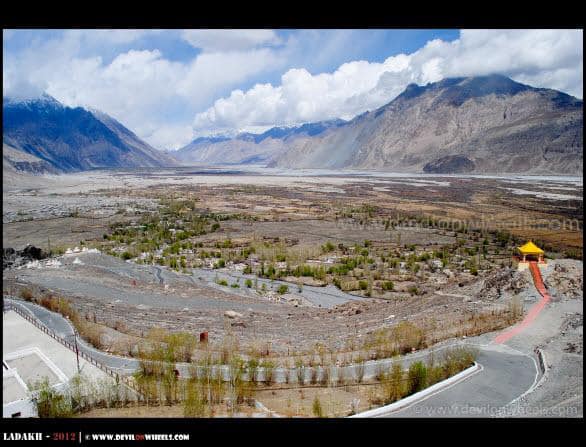
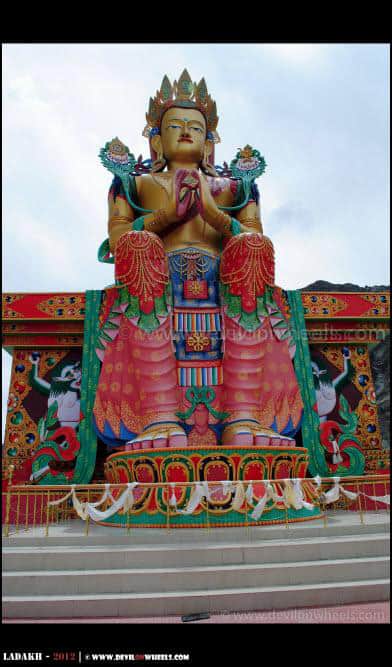
Diskit is the main town and headquarters of Nubra Valley. The Diskit Monastery is the largest and oldest Buddhist monastery in the valley, and it houses a stunning 106 feet tall Maitreya Buddha statue that overlooks the entire valley. There is also a Lachung Temple nearby. The views from the monastery are some of the best you will find in Ladakh, with the Shyok River and sand dunes visible below.
Hunder
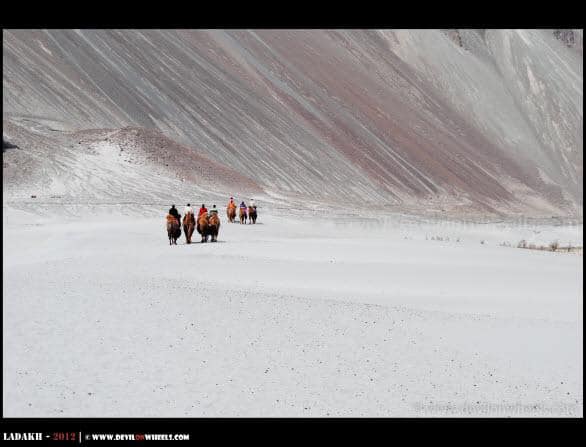
Hunder is famous for its sand dunes and the double-humped Bactrian camel safari. These camels are unique to this region, and riding them across the sand dunes with snow-capped mountains in the background is an experience unlike any other. As of 2025, the camel safari costs approximately Rs 300 per ride per person for a 15-minute session. Longer rides of 30 minutes cost about Rs 350, and an hour-long ride costs Rs 600. The best time for the camel ride is early morning or late afternoon when the light is softer and the weather is cooler.
Sumur
Between Sumur and Kyagar, you can visit the Samstanling Monastery. This is a quieter and less crowded monastery compared to Diskit, and it offers a peaceful setting for contemplation. The monastery dates back to the 19th century and houses beautiful murals and statues.
Panamik
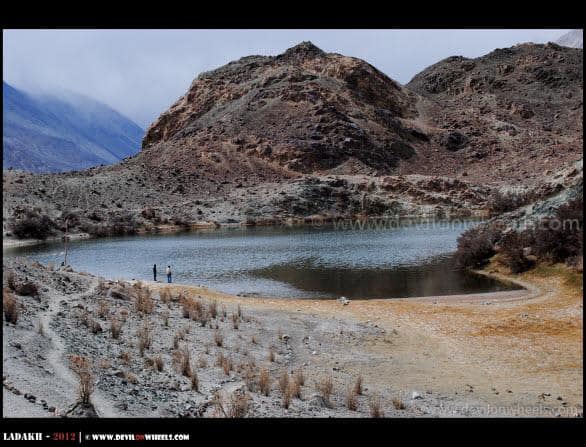
Panamik is known for its natural hot water springs, where you can soak your feet after a long day of traveling. The sacred Yarab Tso lake is also located nearby at the entrance of the village. The hot springs are believed to have medicinal properties, and the setting is quite serene.
Turtuk
If you have the time, Turtuk is an absolute must-visit. Located about 95 km from Diskit, Turtuk was opened for domestic tourists in 2010 and foreign tourists in 2013. It offers a completely different landscape and cultural experience from the rest of Nubra Valley. The village is predominantly Balti Muslim, and you can see apricot trees loaded around the entire village with views closer to the Karakoram Range. I strongly recommend adding an extra day to your itinerary just for Turtuk.
Warshi and Tyakshi Villages
Indian tourists can now travel up to Warshi village, which is about 39 km ahead of Panamik on the way towards the Siachen Base Camp. Along this route, you can visit the Yarma Gompa and Yarma Gonboo monasteries. No special permits are required beyond the standard Nubra Valley ILP. The Siachen base camp itself, however, remains out of bounds for civilians.
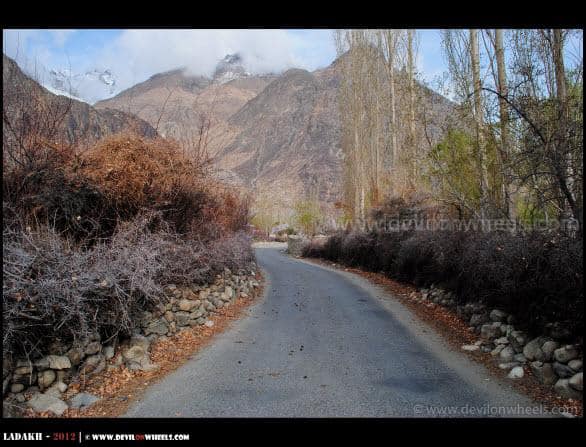
From the Hunder side, you can travel all the way to Tyakshi village beyond Turtuk, from where you can see the Indo-Pak border line.
What Is the Best Itinerary for Nubra Valley?
I suggest spending at least 2 nights in Nubra Valley. If you can spare a third day for Turtuk, even better. Here are two itinerary options depending on how much time you have.
2-Day Itinerary (Minimum Recommended)
Day 1 | Leh – Khardung La – Diskit – Hunder
- Start early from Leh (by 7 AM ideally). Drive via Khardung La Pass.
- Quick stop at Khardung La for photos and soup (15 minutes max).
- Reach Diskit by afternoon. Visit Diskit Monastery and the 106 Feet Maitreya Buddha statue.
- Head to Hunder (7 km from Diskit). Enjoy the Bactrian camel safari on the sand dunes during sunset.
- Overnight stay at Hunder or Diskit.
Day 2 | Hunder/Diskit – Sumur – Panamik – Khardung La – Leh
- Drive to Sumur and visit the Samstanling Monastery.
- Continue to Panamik for the hot water springs and sacred Yarab Tso lake.
- Return to Leh via Khardung La by evening.
- Overnight at Leh.
3-Day Itinerary (Recommended if You Have Time)
Follow Day 1 as above, then:
Day 2: Drive from Hunder/Diskit to Turtuk (95 km, about 3-4 hours). Spend the day exploring Turtuk village and its Balti culture. Overnight at Turtuk or return to Hunder.
Day 3: Cover Sumur, Panamik, and return to Leh via Khardung La.
Pro Tip: There is a direct route from Nubra Valley to Pangong Tso via Shyok Road. Many travelers now use this route to travel directly to Pangong Tso from Nubra instead of returning to Leh first. This saves an entire day on your Ladakh itinerary.
How Much Does a Trip to Nubra Valley Cost in 2026?
Here is a rough budget breakdown for a 2-3 day trip to Nubra Valley from Leh, per person. Keep in mind that costs can vary based on how you travel and what you choose to indulge in.
| Expense | Budget (per person) | Mid-Range (per person) |
|---|---|---|
| Permit (ILP) | Rs 560 | Rs 560 |
| Transport (shared taxi/bus) | Rs 500 – Rs 1,500 | Rs 3,000 – Rs 5,000 (private taxi share) |
| Accommodation (2 nights) | Rs 1,000 – Rs 2,000 | Rs 4,000 – Rs 8,000 |
| Food (2-3 days) | Rs 600 – Rs 1,000 | Rs 1,500 – Rs 2,500 |
| Camel Safari | Rs 300 | Rs 300 – Rs 600 |
| Total (approx.) | Rs 3,000 – Rs 5,500 | Rs 9,500 – Rs 17,000 |
If you are traveling in a group of 4, the transport costs come down significantly because you can share the taxi. Four is the magic number for Ladakh trips when it comes to saving money. For a more detailed cost breakdown of your entire Ladakh trip, check my guide on how to calculate the budget for a Leh Ladakh trip.
Where to Stay in Nubra Valley?
Nubra Valley offers a range of accommodation options from basic homestays to comfortable hotels and luxury camps. Most travelers stay in either Diskit or Hunder. Diskit has more options and is the main town, while Hunder is closer to the sand dunes and camel safari, which makes it convenient for early morning rides.
As of 2025, budget guesthouses and homestays in Nubra Valley start from Rs 1,000 to Rs 3,000 per night. Mid-range hotels and camps go for Rs 4,000 to Rs 8,000 per night. Luxury camps with attached bathrooms and meals can cost Rs 10,000 and above per night.
I have compiled a comprehensive list of accommodation options with details and reviews. You can refer to my guide on Good Hotels and Accommodation in Nubra Valley for the best options across all budgets.
What Are the Preferred Vehicles for Nubra Valley?
Higher ground clearance vehicles like SUVs and MUVs are preferable for the Leh to Nubra Valley drive. 4×4 is generally not required since the road via Khardung La is mostly tarmacked now. However, quite a few people do manage this drive in hatchbacks and sedans as well. It depends on your driving skills and the road conditions at the time of travel.
In case you are planning a self-drive trip, I suggest reading my 7 useful tips for self-driving to Leh Ladakh before you finalize your vehicle choice.
What Are the Practical Things to Know About Nubra Valley?
Mobile Network and Connectivity
BSNL postpaid connection works well in most parts of Nubra Valley with occasional signal drops at a few places. Jio postpaid also has coverage in Diskit and Hunder as of 2025. Airtel and Vodafone/Idea do not have reliable coverage in Nubra Valley. I suggest carrying a BSNL or Jio postpaid SIM for your Ladakh trip. For a complete guide on phone connectivity, check my article on mobile phone connectivity in Leh Ladakh.
Petrol Pumps and Fuel
Always refuel at Leh before heading to Nubra Valley. The petrol pump at Diskit has been mostly operational since 2016, including during winters. However, I always suggest keeping your tank full when leaving Leh as a precaution, especially if you plan to extend your trip to Turtuk or Warshi. Check my detailed article on petrol and fuel availability in Ladakh for all pump locations.
ATMs and Cash
There are no reliable ATMs in Nubra Valley. Hence, it is always better to carry enough cash from Leh, which is the only place in Ladakh with dependable ATM facilities. Some hotels and shops in Diskit may accept UPI payments, but do not rely on it. Carry enough cash for your entire Nubra Valley stay.
Medical Facilities
Diskit Village has a government hospital where you can get basic medical aid and treatment. For anything serious, you would need to get back to Leh, which has the SNM Hospital and army medical facilities. I suggest carrying a basic first-aid kit and any personal medication you might need.
Food and Eating Options
Most of the time, you will be eating at the hotel, camp, guest house, or homestay where you are staying. However, there are dhabas and eating joints at Khalsar and Khardung villages where people generally stop for lunch while on the way to or from Leh. In Diskit and Hunder, you will find small restaurants serving Indian, Tibetan, and Ladakhi food. Expect to pay Rs 100 to Rs 300 per meal at dhabas and Rs 300 to Rs 600 at hotel restaurants.
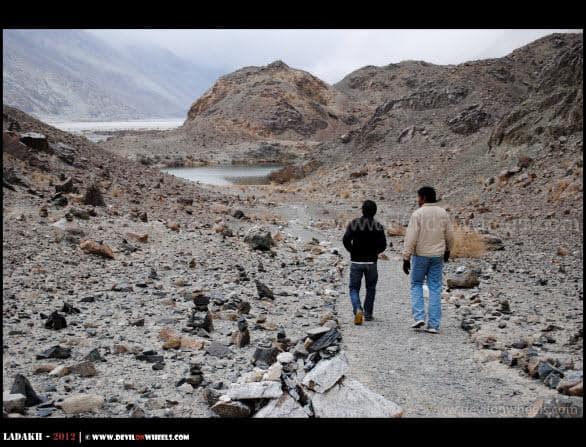
You should always carry your water bottle and refill it as many times as you need water. It will not only keep you hydrated always, but you will also help in saving the Himalayas from plastic garbage. Remember, every tiny step counts and your step in this direction can help save the Himalayas too !! 🙂 🙂
What Should You Pack for Nubra Valley?
Since Nubra Valley sits at 10,000 Feet, the weather can be unpredictable. Here is a quick packing checklist specific to Nubra Valley.
- Warm layers: Temperatures drop significantly at night, even in summer. Carry a warm jacket, thermal innerwear, and a fleece.
- Sunscreen and sunglasses: The UV exposure at altitude is intense. SPF 50+ sunscreen is a must.
- Cash: No ATMs, as mentioned. Carry Rs 5,000 to Rs 10,000 for a 2-3 day trip.
- Medicines: Diamox for AMS prevention (consult your doctor first), basic painkillers, and any personal medication.
- Power bank: Electricity can be unreliable in some guesthouses and camps.
- Water bottle: Stay hydrated at altitude. Carry a reusable bottle.
For a more comprehensive packing list, check my guide on what clothes and things to carry for a Ladakh trip.
Is Nubra Valley Safe to Visit?
Nubra Valley is generally safe for tourists, including solo travelers and women. The locals are warm and welcoming, and the area sees a steady flow of tourists during the season. However, keep these safety points in mind.
- AMS is the biggest risk. Acclimatize properly in Leh for at least 2 days before heading to Nubra Valley via Khardung La.
- Road conditions can change quickly. Landslides and weather disruptions, especially during July-August monsoon season, can block the road temporarily.
- Fuel up at Leh. While Diskit has a pump, do not take chances.
- Carry cash. Digital payments are unreliable.
- Start early. The start early, sleep early rule applies strongly in Ladakh. Aim to leave Leh by 7 AM to have enough daylight.
Related Reading
- Best Leh Ladakh Itinerary 2026 (12-14 Day Road Trip Plan)
- Nubra Valley to Pangong Tso Direct Route – Tips and Insights
- Pangong Tso Lake – Complete Travel Guide
- Tso Moriri Lake – Complete Travel Guide
- Leh Ladakh Taxi Rates 2025-26
Conclusion
Nubra Valley is a place that you simply must include in your Ladakh itinerary. Whether it is the sand dunes of Hunder, the monasteries of Diskit, the hot springs of Panamik, or the cultural richness of Turtuk, every corner of Nubra has something to offer. The fact that it also helps with acclimatization makes it a practical choice early in your Ladakh trip.
I hope this Nubra Valley travel guide will be useful in planning your upcoming trip to Ladakh. If you have any questions or doubts about planning your trip, feel free to post them in the comments section below. If you have been to Nubra Valley, do share your thoughts and any additional tips that might help fellow travelers.
If you know friends or family who are planning a trip to Ladakh, do share this article with them. For discussions, queries, finding travel partners, and more, check out the DwD Community. Happy travels 🙂 …
Have a travel question?? You can subscribe to my YouTube channel and leave a comment to ask your travel questions about traveling to the Himalayas.
Last Updated: February 2026
Frequently Asked Questions
How many days are enough for Nubra Valley?
A minimum of 2 days is needed to cover Diskit, Hunder, Sumur, and Panamik. However, I suggest 3 days if you want to include Turtuk in your plan, which I highly recommend. If you are short on time, a packed 2-day trip covering the main sights is doable but rushed.
Is Nubra Valley open in winter?
Yes, Nubra Valley remains accessible in winter via Khardung La, though the road conditions can be challenging due to snow and ice. Only a few homestays and guesthouses remain open with basic facilities. Food options are limited. If you are visiting Ladakh in winters, it is advisable to check the road status before planning.
Can I go to Nubra Valley without a permit?
No. An Inner Line Permit (ILP) is mandatory for visiting Nubra Valley. There are checkpoints at Khardung La and South Pullu where your permit will be checked. The permit costs Rs 560 per person as of 2025 and can be applied for online.
Is Nubra Valley safe for solo travelers?
Yes, Nubra Valley is safe for solo travelers, including women. The locals are friendly and helpful. However, solo travelers should take extra precaution regarding AMS, ensure they have proper acclimatization, and carry enough cash and supplies since facilities are limited outside Diskit.
Can I travel directly from Nubra Valley to Pangong Tso?
Yes, there is a direct route from Nubra Valley to Pangong Tso via the Shyok Road. This route has become quite popular as it saves an entire day by avoiding the return to Leh. The drive takes about 6 to 7 hours. Make sure your permit covers both Nubra Valley and Pangong Tso.
What is the altitude of Nubra Valley?
Nubra Valley has an average altitude of about 10,000 Feet (3,048 meters). Diskit sits at approximately 10,300 Feet, and Hunder is at about 10,100 Feet. This is actually lower than Leh (11,500 Feet), which is why Nubra Valley helps with acclimatization.
Is there mobile network in Nubra Valley?
BSNL postpaid works in most parts of Nubra Valley. Jio postpaid also has coverage in Diskit and Hunder as of 2025. Airtel and Vodafone/Idea are unreliable. Prepaid connections of any operator do not work in Ladakh for security reasons. Carry a BSNL or Jio postpaid SIM.
How much does the Bactrian camel safari cost in Nubra Valley?
The Bactrian camel safari at Hunder sand dunes costs approximately Rs 300 for a standard 15-minute ride per person as of 2025. A 30-minute ride costs about Rs 350, and an hour-long ride costs Rs 600. The rides are available from 9 AM to 7 PM during the tourist season.
