


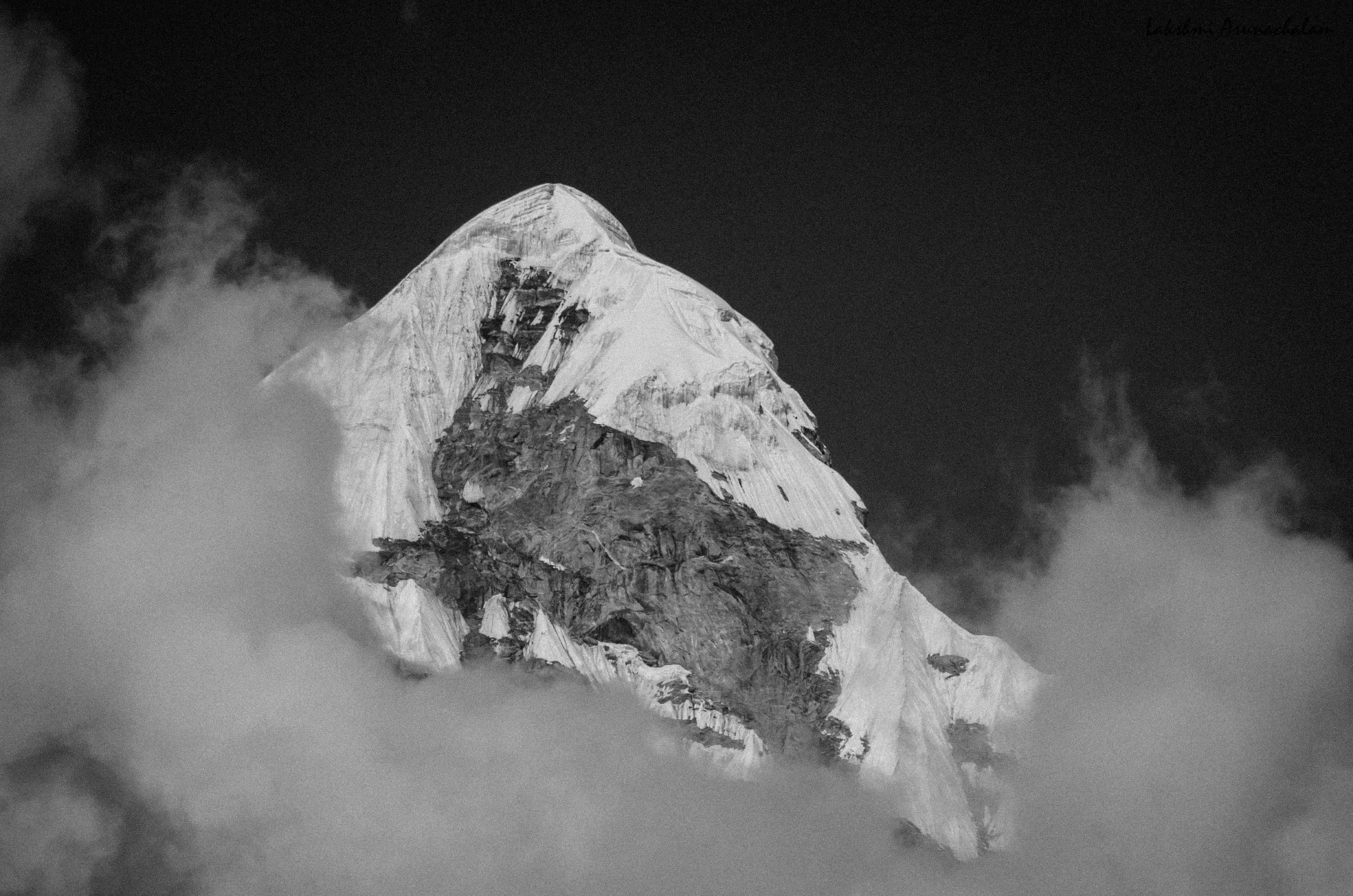
Planning a trip to Mana Village in Uttarakhand? This tiny hamlet, officially India’s “First Village” (formerly the Last Indian Village), sits just 3 km from Badrinath at an altitude of 3,200 m (10,500 Ft). It is the last inhabited settlement before the Tibet border, roughly 24-26 km from the Indo-Tibetan frontier at Mana Pass. About 600 people from the Bhotiya community call this place home, and I would say Mana deserves far more than the quick 30-minute photo stop that most Badrinath pilgrims give it.
One thing to know upfront: there are no hotels or guesthouses in Mana Village itself. You stay in Badrinath (3 km away) and visit as a day trip. The Vasudhara Falls trek starts from Mana and covers about 6 km one way, roughly 5-6 hours round trip. In this guide, I will cover how to reach Mana, what to see, the Vasudhara Falls trek, Char Dham registration for 2026, and practical tips. Let me walk you through it.
Road Update (June 2026): The Badrinath National Highway (NH-7) has been affected by landslides near Lambagad and Hanuman Chatti due to monsoon rains. BRO teams are actively clearing the route. Before you travel, check the latest road status with your hotel in Joshimath or on the Uttarakhand PWD portal. Keep buffer days in your itinerary during June-July.
Let's quickly dive into the details:
Practical Info at a Glance
| Best Time to Visit | May-June and September-October |
| Budget (per day) | ₹800 – ₹2,000 per person (budget to mid-range) |
| Difficulty Level | Easy (village itself), Moderate (Vasudhara Falls trek) |
| Nearest ATM | Joshimath (44 km); Badrinath has one ATM that often runs dry |
| Mobile Network | BSNL has the best coverage; Jio/Airtel work up to Badrinath, no signal in Mana or on the Vasudhara trail |
| Fuel Availability | Last petrol pump before Badrinath is at Joshimath |
| Permits Required | None for Mana itself; free Char Dham registration required; SDM permission needed beyond Mana Pass |
| Distance from Kedarnath | About 228 km by road via Rudraprayag and Joshimath (8-9 hrs drive) |
| Last Updated | July 2026 |
Kedarnath sits in a separate Garhwal valley from Mana Village, so no direct road links the two. The drive from Gaurikund, Kedarnath’s roadhead, to Mana covers about 228 km one way via Sonprayag, Rudraprayag, and Joshimath to Badrinath, then the final 3 km to Mana, roughly 8-9 hours by private taxi or bus.
Private taxis for the longer Gaurikund to Badrinath stretch run Rs 4,800-6,500 as of the July 2026 season, and shared jeeps cost Rs 30-60 per person on the same leg. No vehicle runs the full Kedarnath to Mana route direct, so most travelers break the drive with an overnight halt in Rudraprayag or Joshimath.
What Makes Mana Village Special?
Mana is a small hamlet where the Bhotiya community (an Indo-Mongolian tribal group) has lived for centuries. About 600 people call this village home. When you walk through the narrow lanes, you will see tiny wooden houses with women knitting woolen clothes on their doorsteps, vegetable gardens in every backyard (truly sustainable living), and a few shops selling handloom items and local snacks. The pace of life here is slow, and that is exactly the point.
The village has deep mythological roots. According to Hindu tradition, this is where Maharishi Ved Vyasa dictated the Mahabharata to Lord Ganesha. You can visit the Vyasa Cave (Vyasa Gufa) and Ganesha Cave (Ganesh Gufa), which are within a short walking distance from the village entrance. There is often a resident saint (Baba) in one of these caves who poses for photos with visitors.
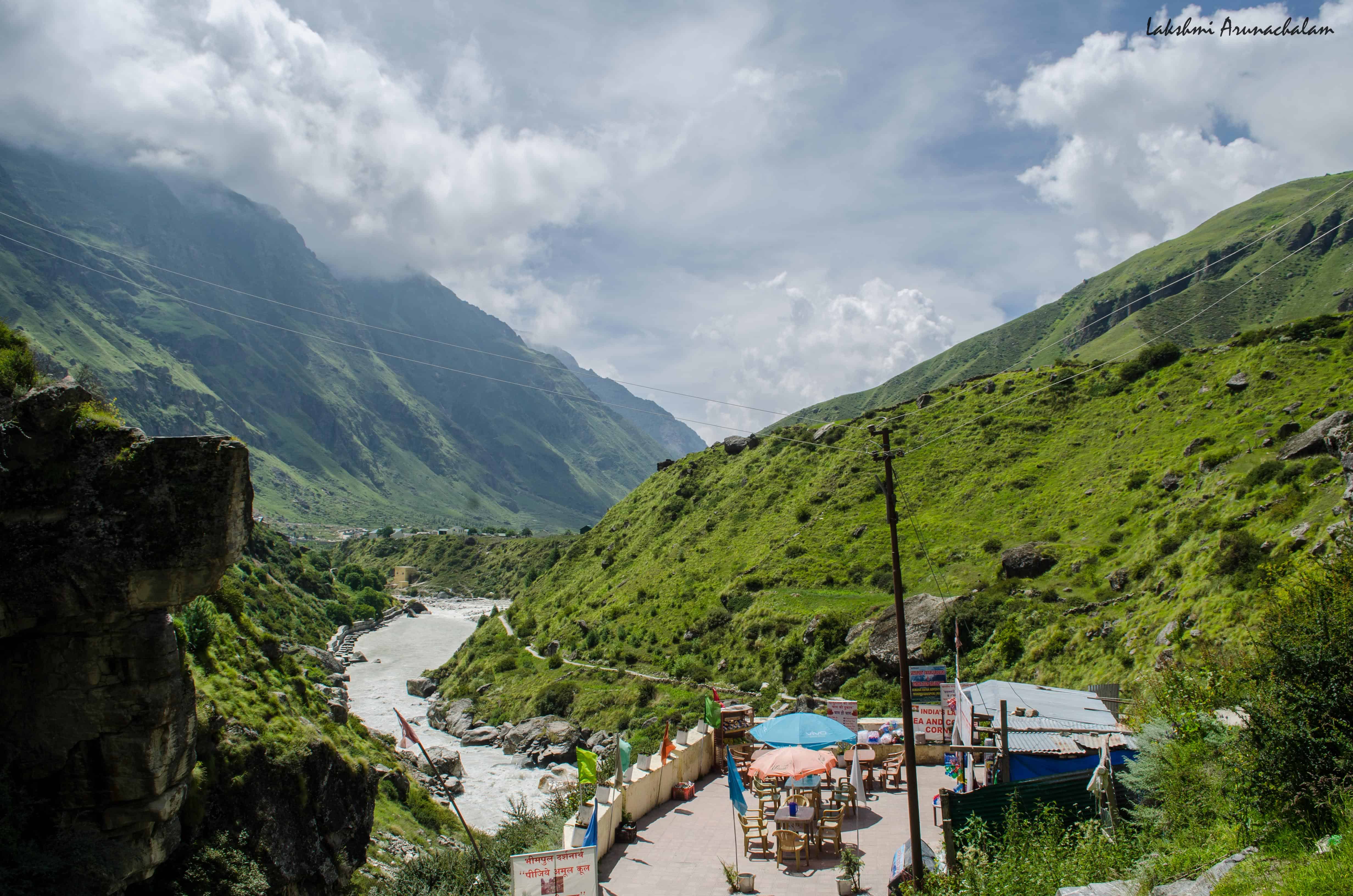
Then there is Bheem Pul, a natural rock bridge over the Saraswati River. Legend says Bheema placed this rock so that Draupadi could cross the river during the Pandavas’ journey to heaven. Whether you believe the mythology or not, the sight of the rushing Saraswati River beneath the rock bridge is genuinely impressive. And right next to it, you will find “The Last Tea Shop of India”, where you can sip piping hot chai while enjoying the mountain breeze. Keep in mind, this tea shop has become quite famous on social media, so expect a small crowd during peak season.
In 2019, Mana was awarded the title of “Most Clean, Iconic Tourist Destination” under the Swachh Bharat Mission (Rural). The village is genuinely well-maintained, and the community takes pride in keeping it clean.
How Did Mana Village Become the “First Indian Village”?
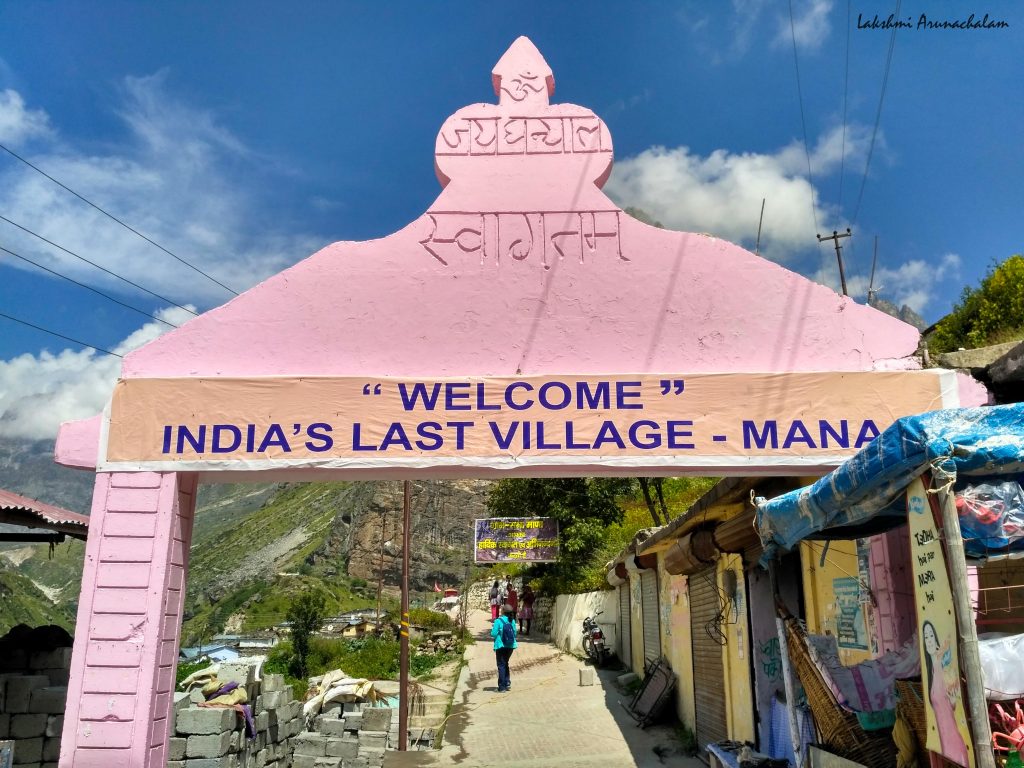
For decades, Mana was known as the “Last Indian Village” because it sits roughly 24-26 km from the Indo-Tibetan border at Mana Pass. During a visit in October 2022, Prime Minister Narendra Modi said that India’s border villages should be seen as the country’s first villages, not the last. In April 2023, the Border Roads Organisation (BRO) put up a new signboard at Mana’s entrance reading “First Indian Village.” This change in perspective is part of the government’s Vibrant Village Programme to develop border areas and improve connectivity to frontier communities.
However, I will be honest with you: many local guides and older residents still use “Last Village” out of habit, and you will find both labels referenced in different contexts. The spirit of the place has not changed either way. It is still a border village at the edge of the Himalayan frontier, and that remoteness is exactly what makes it special.
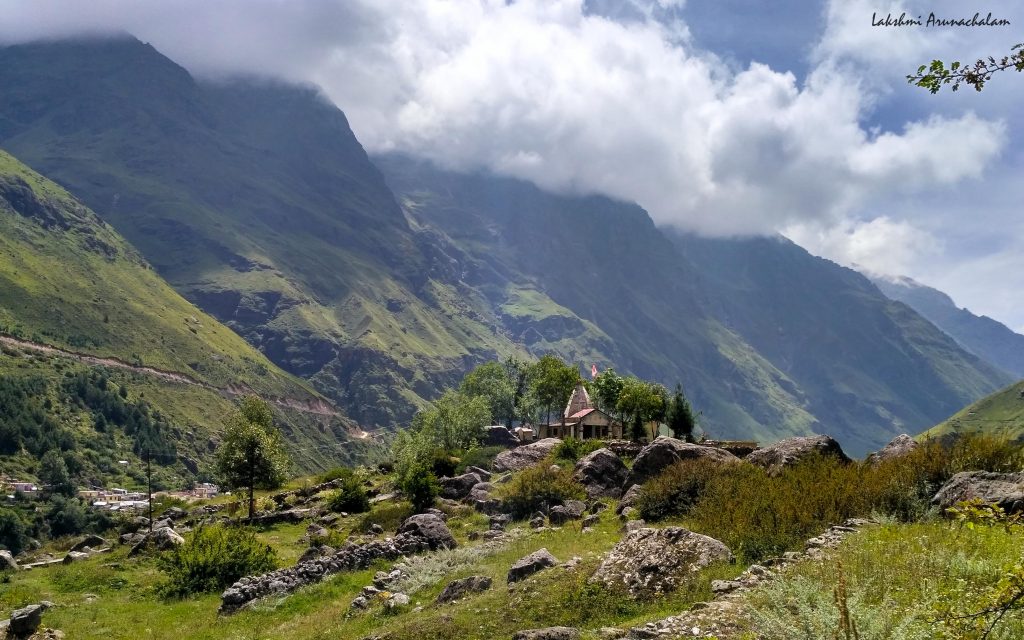
How to Reach Mana Village in 2026?
Mana Village is accessible only by road, and the route goes through Badrinath. Here is the step-by-step breakdown from Delhi.
Route from Delhi to Mana Village
- Delhi to Haridwar/Rishikesh: 230 km by road (5-6 hours). You can also take a train to Haridwar or fly to Dehradun’s Jolly Grant Airport.
- Rishikesh to Joshimath: About 250 km via Devprayag, Rudraprayag, and Chamoli. This stretch takes 9-11 hours by road, depending on traffic and road conditions. GMOU (state transport) and UKRTC buses run daily, fare around Rs 400-600.
- Joshimath to Badrinath: 44 km, about 1.5-2 hours by road. Shared jeeps and buses available, fare Rs 80-120 per person.
- Badrinath to Mana Village: Just 3 km. You can walk (30-40 minutes), take a shared jeep (Rs 20-30), or drive your own vehicle. The road is paved all the way.
If you are already visiting the Char Dham Yatra, Mana makes for a perfect half-day or full-day excursion from Badrinath. Those coming for the Valley of Flowers trek can easily add Mana since Govindghat (the VoF base) is on the same route, just 25 km before Badrinath.
Can You Reach Mana by Bus?
Yes. During the Char Dham season (May to November), regular GMOU buses ply from Rishikesh and Haridwar to Badrinath. From Joshimath, shared jeeps to Badrinath are frequent. From Badrinath, you will need to walk or take a shared jeep the final 3 km to Mana. There is no direct bus to Mana Village.
How Far Is Mana Village from Kedarnath?
Kedarnath sits at the end of a 16 km trek from Gaurikund, its own last motorable point, so all road distances to Mana Village start there. Gaurikund to Mana Village runs about 228 km via Rudraprayag and Joshimath, roughly 8-9 hours of driving, plus the final 3 km stretch from Badrinath to Mana.
Road distance figures for this stretch vary by source, from 215 km to 240 km, depending on whether they measure from Gaurikund or Sonprayag and which section of NH-7 they use. I would treat this as a full day of driving between the two shrines, not a same-day side trip. If you are doing the full Char Dham circuit, plan Kedarnath and Badrinath (with Mana) as separate legs, with an overnight halt at Joshimath or Rudraprayag in between.


There is no direct bus or shared taxi that runs the whole Kedarnath-to-Mana stretch. Most travelers backtrack from Sonprayag/Gaurikund to Rudraprayag, then continue north via Karnaprayag, Chamoli, and Joshimath before reaching Badrinath and the final 3 km to Mana. Keep in mind, this drive crosses landslide-prone stretches near Lambagad, so check the NH-7 status before you leave, especially during the monsoon months of July-September.
What Is the Best Time to Visit Mana Village?
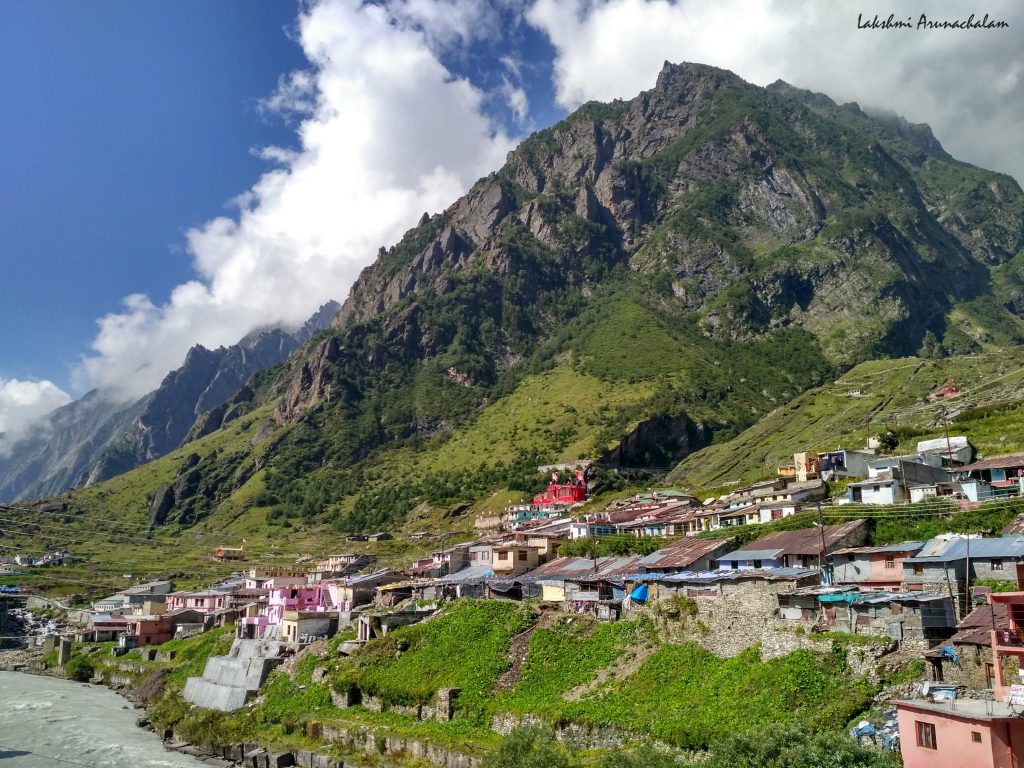
The best months to visit Mana Village are May to June and September to October. These windows give you the best combination of open roads, clear weather, and comfortable temperatures.
- May to June (Peak Season): This is when Badrinath Dham opens for the year. In 2026, the Badrinath temple opened on April 23, 2026. Wildflowers bloom along the trail to Vasudhara Falls. Expect crowds during weekends.
- July to September (Monsoon): Mana itself receives less rainfall compared to lower areas, but the roads from Rishikesh to Joshimath can be affected by landslides. If you travel during monsoon, keep buffer days in your itinerary and check NH-7 status before departure.
- October to early November: Post-monsoon clarity gives you the best mountain views. Fewer crowds. The season ends when Badrinath temple closes (around Bhai Dooj in November, roughly November 13 in 2026).
- November to April: The village is covered in heavy snow and completely inaccessible. The entire road from Joshimath to Badrinath remains closed.
What Are the Key Places to Visit in and Around Mana Village?
Mana is small, but there is plenty to explore in and around the village. Here is a list of the major attractions.
1. Vyasa Cave and Ganesha Cave
These two caves are within a 5-minute walk from the village entrance. The Vyasa Cave is where Sage Vyasa is believed to have composed the Mahabharata, while the adjacent Ganesha Cave is where Lord Ganesha served as the scribe. Both caves are small but hold immense spiritual significance. No entry fee.
2. Bheem Pul (Bhim Bridge)
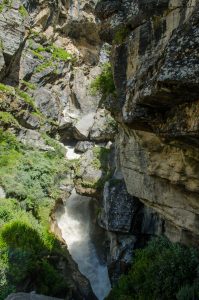
A natural rock arch over the Saraswati River. The legend says Bheema placed this rock for Draupadi, but geological evidence suggests it is a natural formation. Regardless, watching the turquoise Saraswati River rush beneath the bridge is stunning. This is also the starting point for the Vasudhara Falls trek.
3. The Last Tea Shop of India
Located near the caves, this tiny shop serves chai, coffee, and Maggi. The name has become iconic thanks to social media, and it is probably the most photographed tea stall in Uttarakhand. A cup of tea costs around Rs 20-30. Enjoy the view of the Saraswati River valley while you sip your chai.
4. Vasudhara Falls (6 km Trek from Mana)
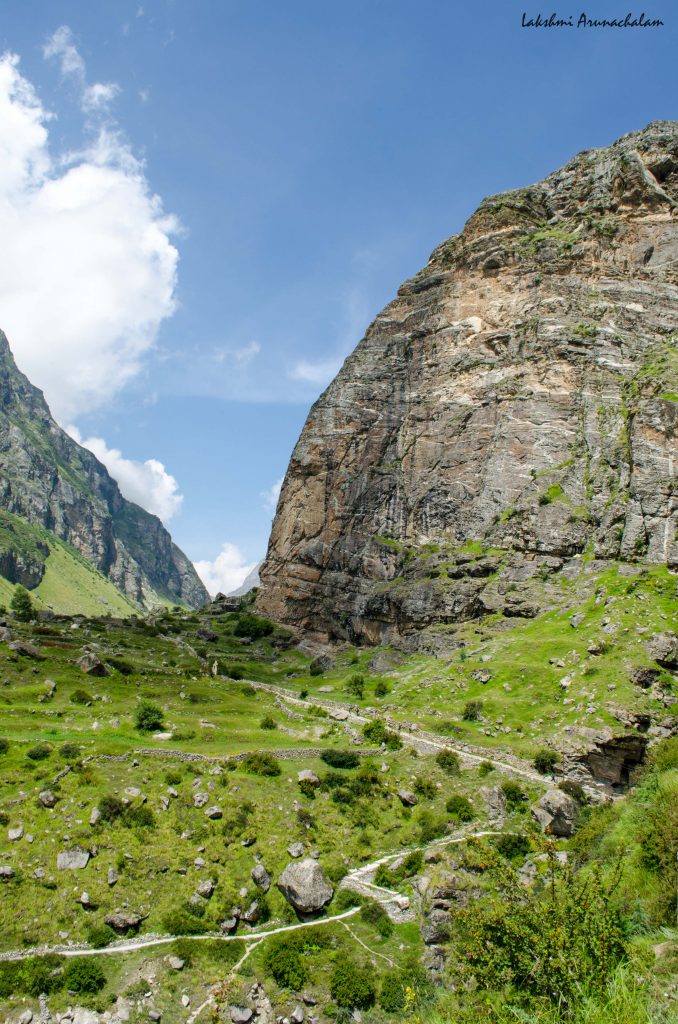
This is the highlight for trekking enthusiasts. Vasudhara Falls is a stunning waterfall about 6 km from Mana Village (approximately 9 km from Badrinath town). The trek takes roughly 3-4 hours one way from Mana, so plan for a 5-6 hour round trip at a comfortable pace. The trail starts from Bheem Pul and follows the Alaknanda River valley through meadows and wildflowers, especially beautiful in June. The falls drop from about 122 m (400 Ft), and the water spreads out like a spray rather than a single stream. During the flowering season, colorful alpine flowers dot the entire route.
The trek is of moderate difficulty. You do not need a guide, but carry water, snacks, and a rain jacket. There is no entry fee. Plan to start early (by 7-8 AM from Mana) so you can return before afternoon clouds roll in. Beyond the falls, the trail continues toward Satopanth Lake for serious trekkers.
5. Satopanth Lake Trek (Advanced, 3-4 Days)
For serious trekkers, the Satopanth Lake trek starts from Mana and goes through Vasudhara, Lakshmi Van, and Chakratheertha before reaching the glacial lake at around 4,600 m (15,092 Ft). You get views of Chaukhamba, Satopanth, and Neelkanth peaks. This is a difficult trek. You will need a local guide, camping gear, and all food provisions since there are no facilities on this trail. Hire a local porter from Mana Village, which helps the community earn during their short tourist season.
What Is the Best Itinerary for Mana Village?
I am suggesting itineraries starting from Joshimath, since most travelers would have already reached there either for Badrinath, Valley of Flowers, or Auli.
1-Day Itinerary (Mana + Vasudhara Falls)
- Early morning: Drive from Joshimath/Govindghat to Badrinath (44 km, 1.5 hrs)
- Continue to Mana Village (3 km, 10 min drive or 30 min walk)
- Trek to Vasudhara Falls (6 km one way from Mana, 3-4 hrs round trip)
- Return to Mana, explore Vyasa Cave, Ganesha Cave, Bheem Pul
- Tea at “The Last Tea Shop”
- Visit Badrinath Temple on the way back
- Return to Joshimath/Govindghat by evening
4-Day Itinerary (Mana + Satopanth Lake Trek)
- Day 1: Joshimath/Govindghat to Mana. Trek to Vasudhara Falls or Lakshmi Van (4-6 km). Camp.
- Day 2: Lakshmi Van to Chakratheertha (10 km). Camp.
- Day 3: Chakratheertha to Satopanth Lake and back (10 km round trip, difficult, includes glacial walking). Camp at Chakratheertha.
- Day 4: Chakratheertha to Vasudhara to Mana. Visit Badrinath Temple. Drive to Joshimath/Govindghat.
Going on a trek? Check out our guide on must-have things to carry on hiking or trekking trips before you pack.
Where to Stay Near Mana Village?
Mana Village itself does not have any hotels or guesthouses. Keep in mind, there is no option to stay overnight in Mana. Your best options are in Badrinath (3 km away) and Joshimath (44 km away).
Accommodation in Badrinath
- Budget: Dharamshalas and pilgrim accommodations run by charitable trusts. Very basic rooms with or without hot water. Rs 300-800 per night.
- Mid-range: Small hotels along the main road. Rs 1,000-2,500 per night with hot water and basic amenities.
- GMVN (Government): GMVN Tourist Rest House in Badrinath offers decent rooms. Rs 1,500-3,000 per night depending on season.
- Hot water tip: Badrinath has a natural hot water spring (Tapt Kund) adjacent to the temple with separate bathing areas for men and women. In case your hotel does not provide hot water, this is your backup.
Accommodation in Joshimath
Joshimath has a wider range of hotels, from Rs 500 budget rooms to Rs 3,000+ mid-range options. If you are combining Mana with Auli (13 km from Joshimath), it makes sense to base yourself here for a few days. Keep in mind, Joshimath was in the news in January 2023 due to land subsidence. As of 2026, the affected areas are cordoned off but the town is open for tourism and pilgrim traffic as usual.
What Is the Char Dham Registration Process for 2026?
Since Mana is accessed through Badrinath, you will need to complete the Char Dham Yatra registration. As of 2026, biometric registration is mandatory for all pilgrims and tourists visiting the Char Dham shrines (Badrinath, Kedarnath, Gangotri, Yamunotri). The registration is free of charge. Online registration opened March 6, 2026, and offline counters opened from April 15, 2026.
- Online: Register through the official “Tourist Care Uttarakhand” app (available on Google Play and Apple App Store) or the website registrationandtouristcare.uk.gov.in
- Offline: Biometric registration counters at key entry points (Rishikesh, Haridwar, Sonprayag, Govindghat). Your QR-code e-pass is checked at Rishikesh, Sonprayag, and Joshimath checkposts.
- Documents needed: Aadhaar card or any government-issued photo ID
- Medical fitness: A medical certificate may be required for pilgrims above 50 years or those with health conditions
No separate permit is required to visit Mana Village. However, if you want to go beyond Mana towards Mana Pass (on the Indo-Tibetan border), you need special permission from the SDM office in Joshimath. For the Vasudhara Falls trek and Satopanth Lake trek, no additional permits are needed. For a complete guide, check our Char Dham Yatra guide.
How to Support the Local Community in Mana?
Most tourists who visit Mana do it as a quick add-on to Badrinath, spending barely 30-60 minutes. But this village, inhabited by a few hundred families who survive on a short 5-6 month tourist season, deserves more than a hurried photo at the signboard.

Here is how you can help. Buy the woolen clothes and handloom items that the local women knit. I saw numerous ladies knitting away on their doorsteps, and these handmade items are their primary income source. Do not bargain aggressively. Have a cup of tea or snacks at the local shops. Hire a local porter if you are trekking to Vasudhara or Satopanth. Every small purchase makes a real difference when the village has only 5-6 months of income to sustain the entire year.
If you travel with the DwD Community, you already know our approach to responsible travel in the Himalayas. Carry stationery for the village school, medicines for the dispensary, or woolens for the villagers. These small acts go a long way.
What About Mobile Connectivity and Practical Tips?
Here are some practical things to keep in mind before visiting Mana Village.
- Mobile network: BSNL has the best coverage in this region. Jio and Airtel work in Joshimath and Badrinath town, but signal drops once you enter Mana Village. Beyond Mana (on the Vasudhara trek), there is zero connectivity. Carry an offline map.
- ATM: The nearest reliable ATMs are in Joshimath. Badrinath may have one ATM but it runs out of cash frequently. Carry enough cash from Joshimath.
- Medical: The nearest hospital is in Joshimath (District Hospital). Badrinath has a small medical dispensary. For anything serious, Joshimath or Chamoli is your option.
- Fuel: The last petrol pump before Badrinath is at Joshimath. Fill up there.
- Altitude: Mana is at 10,500 Ft (3,200 m). If you are coming directly from the plains, acclimatize in Joshimath (6,150 Ft) for at least one night before heading up. Mild AMS symptoms (headache, breathlessness) are possible at this altitude, especially if you rush up from lower elevations.
- Water: Carry a reusable water bottle and refill at natural streams along the way. It will keep you hydrated and help save the Himalayas from plastic garbage. Every tiny step counts 🙂
- Road status: During monsoon (July-September), keep a watch on NH-7 road closures. Landslides between Joshimath and Badrinath are common after heavy rain. Check the Uttarakhand PWD portal or your hotel before driving.
How Much Does a Trip to Mana Village Cost?
Here is a rough budget breakdown for a trip from Delhi to Mana Village (per person, assuming a group of 2-4 people).
| Expense | Budget (Rs) | Mid-Range (Rs) |
|---|---|---|
| Delhi to Rishikesh (bus/train) | 300-500 | 500-1,500 |
| Rishikesh to Joshimath (bus) | 400-600 | 1,500-2,500 (taxi share) |
| Joshimath to Badrinath (shared jeep) | 80-120 | 300-500 (private) |
| Accommodation per night | 300-800 | 1,500-3,000 |
| Food per day | 300-500 | 500-1,000 |
| Miscellaneous (tea, entry, shopping) | 200-300 | 500-1,000 |
For a 4-5 day trip from Delhi (including 2 nights in Joshimath/Badrinath), expect to spend around Rs 4,000-6,000 per person on a budget and Rs 10,000-15,000 per person for mid-range, excluding the Delhi-Rishikesh transport. If you are driving your own vehicle, add fuel costs (approximately Rs 3,000-4,000 for a round trip from Delhi in a petrol car).
How to Club Mana Village with Other Trips?
Mana Village works best as part of a larger Garhwal itinerary. Here are some combinations that make logistical sense.
- Badrinath + Mana + Vasudhara Falls: 2-3 days from Joshimath. The most common combination. Start with our complete Badrinath travel guide for the full picture.
- Valley of Flowers + Hemkund Sahib + Badrinath + Mana: 7-8 days from Rishikesh. The Valley of Flowers and Hemkund Sahib itinerary guide base at Govindghat is on the same road.
- Char Dham Circuit + Mana: If you are doing the full Char Dham (Yamunotri, Gangotri, Kedarnath, Badrinath), add half a day for Mana during your Badrinath visit.
- Auli + Badrinath + Mana: Auli is 16 km from Joshimath and makes a great 1-day add-on for skiing (winter) or meadow views (summer).
- Gaumukh Trek + Mana: For serious trekkers, combine the Gaumukh trek (from Gangotri) with Badrinath and Mana for a 10-12 day Garhwal expedition.
For a complete Garhwal region itinerary, refer to our Garhwal itinerary guide.
Frequently Asked Questions
Is Mana Village the last village or first village of India?
As of 2022, Mana has been officially renamed from “Last Indian Village” to “First Indian Village” by the Indian government. The BRO installed a new signboard in April 2023. Geographically, Mana is the last inhabited settlement before the Tibet border, roughly 24-26 km from the Mana Pass frontier.
Do I need a permit to visit Mana Village?
No special permit is needed for Mana Village, Vasudhara Falls trek, or Satopanth Lake trek. However, you must complete the Char Dham Yatra registration (free) since the route passes through Badrinath. If you want to go beyond Mana towards Mana Pass (border area), you need permission from the SDM, Joshimath.
Can I stay overnight in Mana Village?
There are no hotels or guesthouses in Mana Village. Your best options are Badrinath (3 km away, Rs 300-3,000/night) or Joshimath (44 km away, wider options). If you are trekking to Satopanth Lake, you will camp on the trail. Homestays in Mana may be possible if you ask locals directly, but nothing is formally available.
How long does the Vasudhara Falls trek take?
The trek from Mana to Vasudhara Falls is about 6 km one way (approximately 9 km from Badrinath town). At a comfortable pace, the round trip from Mana takes 5-6 hours including time at the falls. The trail is of moderate difficulty with some uphill sections. Start early in the morning, by 7-8 AM from Mana, for the best experience and to avoid afternoon cloud build-up.
Is Mana Village safe for solo travelers?
Yes, Mana Village is safe for solo travelers. The village is small, the locals are welcoming, and the trail to Vasudhara Falls is well-marked. However, for the Satopanth Lake trek, do not go solo. That trail is remote and difficult, and you should hire a local guide and porter from Mana.
What is the altitude of Mana Village?
Mana Village sits at an altitude of 3,200 m (10,500 Ft). Badrinath is at a similar altitude of about 3,133 m (10,279 Ft). If you are coming directly from the plains, spend at least one night at Joshimath (6,150 Ft) to acclimatize before heading up.
When does Mana Village open and close for tourists?
Mana Village follows the same season as Badrinath Dham. In 2026, the Badrinath temple opened on April 23, 2026, and will close around November 13, 2026 (Bhai Dooj). The village is completely inaccessible from November to April due to heavy snowfall.
What is the distance from Mana Village to the Tibet border?
Mana Village is approximately 24-26 km from the Indo-Tibetan border at Mana Pass (elevation 5,610 m / 18,406 Ft). You cannot visit the border without special permission from the SDM in Joshimath. For the rest of Mana including Vasudhara Falls, no special permits are needed.
What is the distance from Kedarnath to Mana Village?
Kedarnath has no road of its own, so all distances start from Gaurikund, the last motorable point, which requires a 16 km trek to reach the temple. By road, Gaurikund to Mana Village is approximately 228 km via Rudraprayag and Joshimath, roughly 8-9 hours of driving, including the final 3 km from Badrinath to Mana.
Can I visit Kedarnath and Mana Village in the same trip?
Yes, but not on the same day. Kedarnath and Mana Village (near Badrinath) are on separate valleys connected by a single road through Rudraprayag and Joshimath, so budget at least one full day of driving between them, plus an overnight halt at Joshimath or Rudraprayag if you are doing the complete Char Dham circuit.
Last Updated: July 2026
I hope this guide helps you plan a meaningful trip to Mana Village. This tiny hamlet at the edge of India deserves more than a quick selfie at the signboard. Walk through the lanes, talk to the locals, buy some handloom, trek to Vasudhara Falls, and take in the beauty of this corner of Garhwal. If you have been to Mana or have any questions about planning your trip, feel free to share them in the comments section below. You can also connect with fellow travelers in our DwD Community for real-time advice and travel partner matching.
If you found this article useful, please share it with your friends and family who are planning a trip to Badrinath, Mana, or the Garhwal Himalayas. Happy travels 🙂 …
