


If you are planning a motorcycle ride to Ladakh or Spiti Valley, fuel planning is not optional. It is the difference between rolling into your next stop and pushing your bike for 15 kilometers in thin air at 14,000 feet. I have covered thousands of kilometers on these roads, and the one thing I always tell every rider in the DwD Community is this: know your fuel gap before you leave, not after. This guide covers everything you need to know about how to carry extra fuel on your motorcycle for Ladakh or Spiti, along with tips on carrying luggage safely on the same trip.
Last Updated: February 2026. This article has been updated with current fuel gap data, container recommendations, and luggage tips for the 2026 riding season.
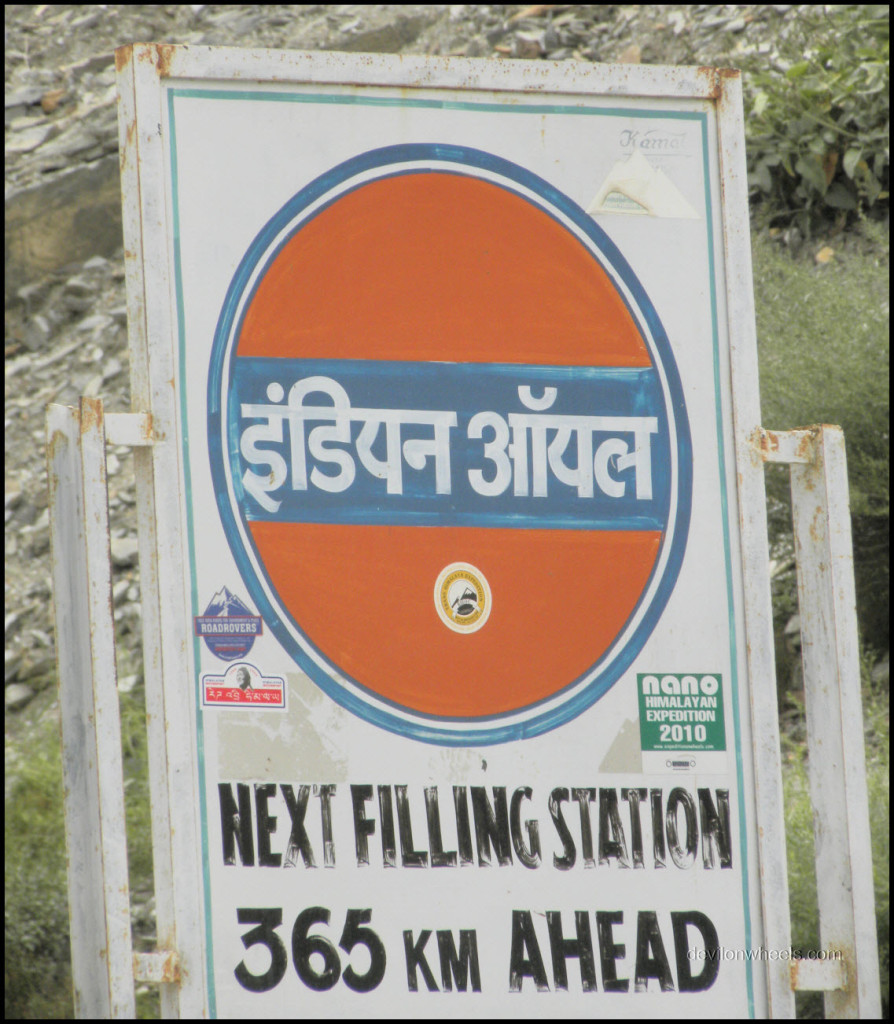
Yes, if you are riding the Manali – Leh Highway. The gap between Tandi petrol pump and the next pump at Karu is approximately 365 km. Even with a large 25-liter tank and 30 km/l mileage (optimistic at altitude), you get roughly 750 km range before reserves. Realistic mileage at altitude drops 30-35%, so your effective range is closer to 450-480 km. The Tandi-Karu gap is doable for most 350cc+ bikes, but add any extra weight, rough weather, or detours and the margin shrinks fast. For smaller bikes (below 220cc) or rental bikes with unknown mileage, carry at least 4-6 litres of spare fuel. For Spiti via Shimla, fuel availability is better and the gap is manageable without extra fuel for most bikes above 220cc.
Let's quickly dive into the details:
Why Does Fuel Planning Matter on Ladakh and Spiti Trips?
Carrying some additional fuel will make a massive difference between rolling into a gas stop or walking 15 kilometers. Of course, when you are with a group of riders, a simple siphon hose will get you out of a tough spot. But if you are traveling alone, that extra container of fuel will save you from a genuinely dangerous situation. AMS, cold weather, and exhaustion are enough to deal with. A fuel emergency on top of that is avoidable.
The specific stretch that catches riders off guard on the Manali – Leh Highway is from Tandi petrol pump (just past Keylong in Lahaul, at about km 116 from Manali) to Karu (about 35 km before Leh). That gap is approximately 365 km. Most of it is on rough terrain at high altitude, which means your actual fuel consumption will be significantly higher than your city average. I always suggest riders plan for at least 30-35% reduced mileage compared to what your bike delivers on flat roads. For a Royal Enfield Himalayan with a 15-liter tank doing 28 km/l on highways, expect 18-20 km/l on Ladakh roads. Do the math and you will see why an extra 4-6 litres is good insurance.
For more details on where exactly fuel pumps are located, which are operational in the current season, and which are seasonal, please check my dedicated post: Fuel Availability in Leh Ladakh, All You Need to Know (2025). That article is updated each year and will give you exact pump locations on both the Manali – Leh and Srinagar – Leh highways.
How Much Extra Fuel Do You Actually Need?
The answer depends on three things: your bike’s tank capacity, your realistic altitude-adjusted mileage, and your planned route. Right before you start your journey, know your motorcycle’s average mileage per tank. If you have a larger tank and excellent gas mileage, you may only need a small container. Let us look at this route by route:
| Route | Longest Fuel Gap | Extra Fuel Needed? |
|---|---|---|
| Manali – Leh Highway | Tandi to Karu (~365 km) | Yes. Carry 4-6 litres for bikes below 350cc or rental bikes. |
| Srinagar – Leh Highway | Khaltsi to Leh (~130 km) | Usually not needed for bikes above 150cc |
| Spiti via Shimla (NH-5) | Kaza area (~60-80 km gaps) | Not required for most bikes above 150cc |
| Leh local sightseeing (Nubra, Pangong, Tso Moriri) | Varies; Hanle stretch is longest | Carry 2-4 litres for Hanle/Tso Moriri routes |
Once you know how much extra fuel you need, the next step is figuring out how to carry it. You need to determine the amount of extra fuel you will require based on your tank capacity, planned route, and availability of petrol pumps. After that, figure out where and how to mount the fuel container on your specific motorcycle. This depends on the make of your bike, your luggage setup, and the available mounting points. Use creativity, but keep safety as the non-negotiable first priority.
What Containers to Use for Carrying Extra Fuel on a Motorcycle?
There are three main options for carrying extra fuel on your motorcycle in Ladakh or Spiti: cola bottles, metal jerry cans, and fuel bladders. Each has advantages and trade-offs. Let us look at all three.
A petrol carrier for a bike is a mountable jerry can strapped to the rear rack or a Ladakh carrier’s side frame. As of 2026, a branded 5-litre lockable jerry can with a mounting bracket costs Rs 1,500 to Rs 2,000 on Amazon or Flipkart, versus Rs 400 to Rs 800 for an unbranded metal can from Karol Bagh.
Popular petrol carrier options riders are actually buying in 2026:
- AUTOPOWERZ Universal 5-litre jerry can (with lock and mounting bracket): Rs 1,500 to Rs 2,000 on Amazon.in and Flipkart. Engineering plastic, UV and corrosion resistant, includes a bracket for direct rack mounting. This is the branded option most DwD Community riders mention when asked what they used.
- Unbranded metal jerry can (1 to 5 litre, army-style): Rs 400 to Rs 1,200 depending on size, available at Karol Bagh in Delhi or in Leh market. Leakproof and the most durable option on rough Ladakh terrain, though heavier than plastic.
- “Leh-Ladakh” branded 5-litre red jerry can: Rs 800 to Rs 1,500 on Flipkart, marketed specifically for Ladakh trips and sold with a lock. A lighter-duty option than the army-style can.
- Flexible fuel bladder (2 to 10 litre): Rs 600 to Rs 2,500 depending on size and brand. Fits irregular spaces on the bike and collapses flat for the return journey.
- Ladakh carrier (side rack for 2 jerry cans plus luggage): Rs 2,500 to Rs 4,000 to buy in Karol Bagh, or Rs 100 to Rs 200 per day to rent in Leh or Manali. You need this, or an equivalent rack, to mount any rigid can safely. It is not optional once you are carrying more than 2-3 litres.
Option 1: Cola Bottles (2-litre)
To carry fuel, cola bottles are fine as long as you can carry them somewhere secure. The bottles are quite convenient when you need to pour fuel. Coke bottles of 2 litres do a wonderful job if you can carry them with ease. Six 2-litre bottles give you 12 litres of spare fuel, which takes up noticeable space. They are fine for short backup amounts (2-4 litres), but for larger quantities they become impractical.
Pros: Cheap, readily available, decent seal for short-term storage, familiar to pour.
Cons: Bulky for larger quantities, may soften or distort in direct sunlight, harder to secure to the bike, not ideal for more than a couple of litres.
Option 2: Metal Jerry Cans
The best way to carry spare fuel is in sturdy metal jerry cans, which are leakproof. Those used in the army are the best ones. Jerry cans come in a variety of capacities ranging from 1 litre upwards. The beauty of these fuel containers is that they stack neatly together and are secured with a mounting bracket. This enables you to carry even more fuel along with other fluids like drinking water. Good quality jerry cans will not leak, and the rigid structure protects the fuel even on rough terrain.


Where to get them in Delhi: If you are in Delhi, you can enquire at Karol Bagh. Ask specifically for Ladakh carriers and fuel containers. You can often get both the jerry cans and the carrier rack on rent or purchase together.
Pros: Leakproof, rigid protection, stackable, available in multiple sizes, can be bracketed to the bike properly, durable over multiple trips.
Cons: Heavier than plastic options, higher cost, need proper mounting points on your bike.
Option 3: Flexible Fuel Bladder
Another option you may consider is a flexible fuel bladder. These have been used for many years by the military and on boats. They come in a large variety of sizes, are made of heavy fuel-safe plastics, welded at the edges, and have been proven to be an excellent method for short-term storage of petrol. The flexible nature means they can be fitted into irregular spaces on the bike, and they collapse flat when empty, saving space on the return journey.
Pros: Flexible shape fits awkward spaces, collapses when empty, lightweight, fuel-safe material.
Cons: More expensive than cola bottles, can puncture if not handled carefully, harder to secure firmly to the bike compared to rigid jerry cans.
How to Mount Fuel Containers on Your Motorcycle?
The last thing to figure out in terms of fuel capacity is how and where you will mount a fuel container. This will be dependent on the make of your motorcycle. There will be multiple restrictions and limitations, but use a bit of creativity, keeping safety as the absolute priority, and you will find a solution for almost any motorcycle.
Common mounting positions include:
- Rear luggage rack: The most common position. Strap or bracket the jerry can to the rack using bungee cords or ratchet straps. Make sure it does not shift under heavy braking or on corrugated roads.
- Pannier frames or side carriers: Ladakh-specific side carriers (Ladakh carriers) are available in Delhi and in Leh. These give you stable mounting points on both sides for fuel cans and luggage simultaneously.
- Tank bag area: Only suitable for very small containers (1-2 litres). Keep fuel away from your lap and body whenever possible.
- Saree guard / subframe area: On Royal Enfields and Himalayans, there are often attachment points near the subframe. Experienced riders use these for small jerry cans.
As for the luggage rack itself, if you are in Delhi you can enquire at Karol Bagh. Ask for a Ladakh carrier and see if you can get it on rent. Many shops there specialise in outfitting bikes for exactly this kind of trip.
Whichever petrol carrier you choose, the mounting hardware matters as much as the can itself. Check the bracket’s bolts and clamps at every fuel stop for the first 100 km, since corrugated sections of the Manali – Leh Highway vibrate hardware loose faster than most riders expect. Apply a drop of thread-locking compound on the bracket bolts before you leave Delhi or Manali, and carry a spare nut and a small wrench in your tool roll. Pad the contact points between a metal jerry can and the rack with a strip of rubber or an old inner tube to stop paint wear and rattling over the length of the trip.
Important Safety Tips for Carrying Spare Fuel on Ladakh and Spiti Trip
Carrying fuel on a motorcycle comes with real risks if not done correctly. Here are the most important safety tips I always share with riders from the DwD Community:
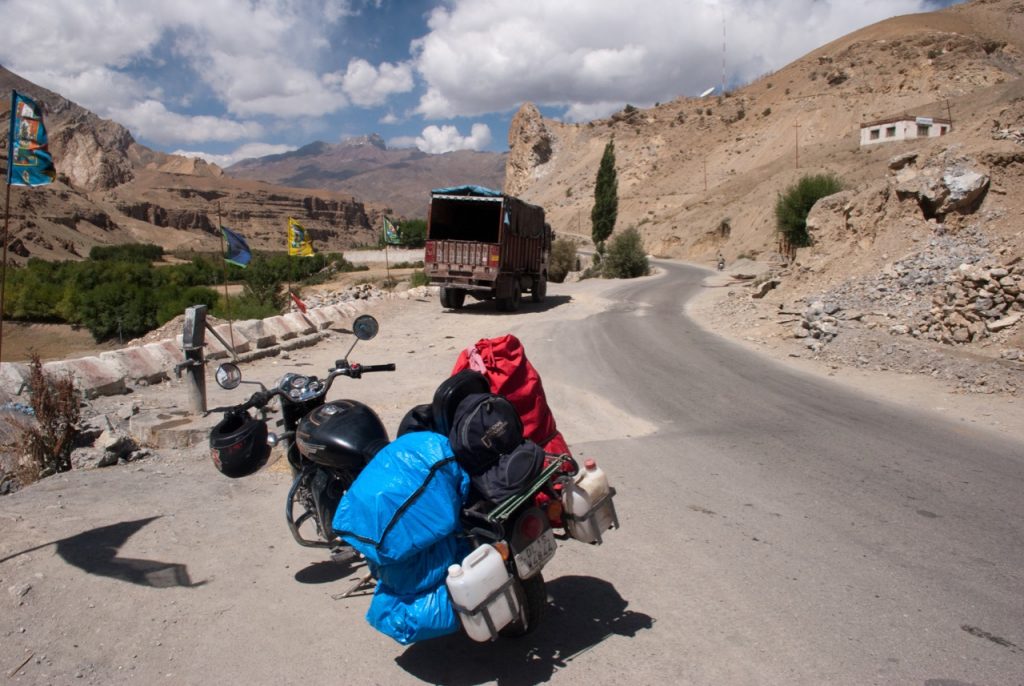
- The best way to carry spare fuel is in sturdy metal jerry cans, which are leakproof. Army-surplus ones are the gold standard.
- If you cannot get hold of jerry cans, carry 2-litre cola bottles as they are leak-proof and easy to handle. Avoid generic thin plastic containers.
- Avoid plastic jerry cans in Ladakh. The extreme temperature swings and UV exposure can cause them to become brittle or expand and burst. In a car, 20-litre water containers are sturdier than most plastic jerry cans, but even these are a compromise.
- Always use a plastic seal or tape over the cap to prevent spillage on rough roads.
- No matter what container you use, fill it to only 90% capacity. Leave space for thermal expansion, especially at altitude where temperature swings between day and night are extreme.
- When carrying containers on the bike, protect them from stones and pebbles that bounce off the road. A crack or puncture in a fuel container on a rough Ladakh trail can cause a fire. Wrap the container in a cloth or tarpaulin layer.
- Always carry a thin cloth for filtering in case you need to buy fuel in black. Roadside black-market fuel in villages is often contaminated with dirt or water. Filtering before pouring saves your engine.
- Keep all fuel containers away from direct sunlight. When fuel heats up, vapors expand, and under enough pressure the container can rupture or even explode. On sunny rest stops, shade the containers or cover them.
- Open and re-seal the containers every few hours to release built-up vapor pressure. Do this away from any heat source or spark.
- If you are renting a bike in Leh, do not take the bike rental shop’s word for the mileage. Take the bike for a local ride around Leh first. Rental bikes often have higher wear and will deliver 25-30% worse mileage than a well-maintained personal bike. Use 80% of whatever mileage you observe as your planning baseline for remote routes.
What to Do If You Run Out of Fuel on Ladakh or Spiti?
Despite the best planning, it can happen. Here is what to do if you find yourself out of fuel on a remote stretch:
- Group rides: If you are with other riders, a simple siphon hose will get you out of trouble. Always carry one. It costs almost nothing and takes zero space.
- Local villagers: It is important to be able to speak with local villagers when you spot them. Many households in remote Ladakh and Spiti keep small stocks of petrol for their own vehicles or generators. This is the so-called “black market” fuel. Pay a fair price, filter it through a cloth before using, and be respectful.
- Army posts and BRO camps: In some emergencies, BRO workers and Army posts have helped stranded motorcyclists with small amounts of fuel. This is not guaranteed, but it is worth asking politely.
- Push uphill, coast downhill: On Himalayan terrain, if you run dry on a descent, you can often coast several kilometers to the next settlement. Identify valley directions before entering long stretches.
How to Carry Luggage Safely on Your Motorcycle in Ladakh?
Ladakh is quite a safe place in general in terms of theft. If you are traveling to the middle of nowhere, expect minimal population around, so the threat of losing your stuff to other people is very low. However, nature is another game altogether. The harsh roads, the harsh climate, and the harsh hours will all take their toll on your luggage. Ensure all your stuff is packed and sealed properly.
Luggage System Options
There are several ways to carry luggage on a long-distance motorcycle trip to Ladakh or Spiti:
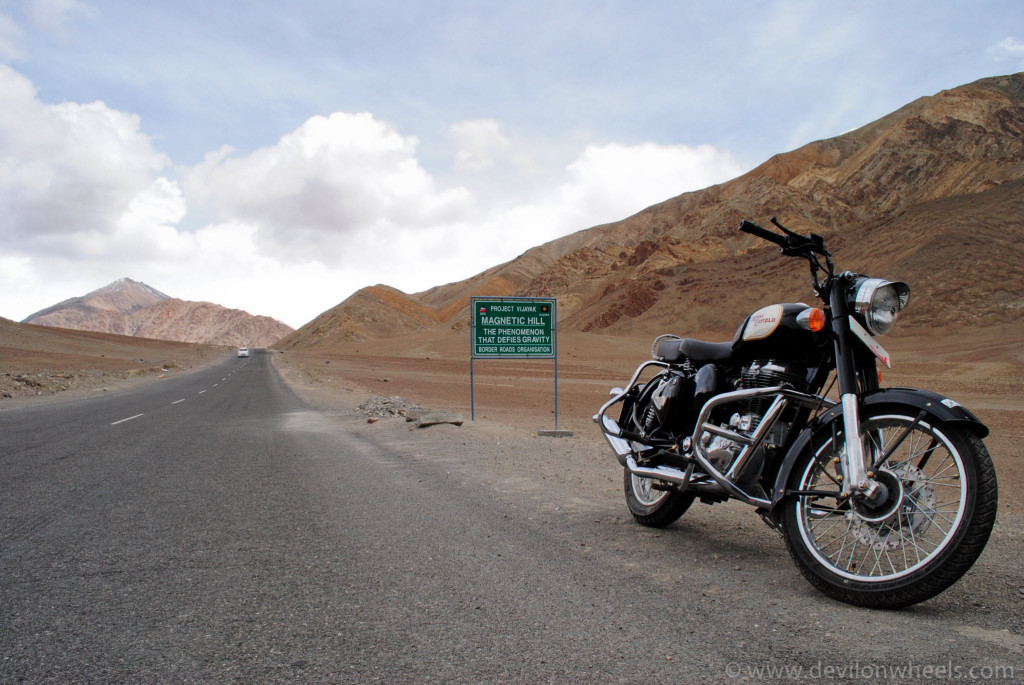
- Ladakh carrier (rear rack + side racks): The most practical setup for Ladakh and Spiti. You get structured mounting for both fuel cans and luggage bags. Available to rent or buy in Delhi’s Karol Bagh market.
- Pannier bags (soft): Soft panniers are preferred by many experienced riders because they absorb impacts better than hard cases on rough terrain. They are also lighter. Make sure they are waterproof or use a rain cover.
- Tank bags: Great for items you need quick access to (snacks, documents, phone, small camera). Keep weight under 3-4 kg in the tank bag to avoid handling issues.
- Tail bag on the pillion seat: Works well for sleeping bags, extra clothes, and soft items. Strap it down with both bungee cords AND ratchet straps. A loose tail bag at highway speed can shift and affect your bike’s balance.
- Bungee cords: Never rely on bungee cords alone for large items. Use them as supplementary security over a primary strap or net. Check them at every fuel stop, as vibration loosens them quickly.
Weight Distribution and Balance
Keep this in mind: the heavier items should always be as low and as central as possible. A high center of gravity is manageable on smooth roads but becomes genuinely dangerous on the off-camber, boulder-strewn tracks near passes like Khardung La, Chang La, or Baralacha La. Distribute weight equally on both sides wherever possible. An uneven load will make the bike pull to one side, especially on loose gravel and sand crossings.
For a complete packing list for a long-distance motorcycle ride, check out my article: The Ultimate Guide to Packing for Long-Distance Motorcycle Riding. And for the specific clothing and accessories for Manali – Leh trips, refer to Clothes and Accessories to Carry for Manali – Leh Bike Trip.
Waterproofing Your Luggage
Rain, river spray from water crossings, and morning dew at high altitude will soak through most luggage bags if they are not properly waterproofed. My recommendations:
- Use dry bags or inner waterproof liners for clothes, electronics, and documents.
- Camera gear and spare batteries go inside a dry bag first, then inside the tank bag or pannier.
- Keep your important documents (permits, ID, insurance) in a waterproof document pouch, accessible quickly at checkposts.
- Use a rain cover for the full luggage if your panniers or tail bag are not fully waterproof. Rs 200-500 rain covers from any camping shop will do the job.
A Note on Carrying Laptops at High Altitude
Though I doubt many riders carry laptops, if you are someone who does, keep in mind that your laptop’s hard disk may crash altogether if operated at high altitude. Better not to carry a laptop and instead take many spare memory cards with you. At higher altitudes, the reduced air pressure and increased vibration from rough roads can lead to failure of mechanical hard disks. Read more about carrying a laptop to Ladakh or high altitudes before you decide.
Special Considerations for Rented Bikes in Leh
If you are renting a bike in Leh or Manali, keep in mind that those bikes often do not have good mileage due to wear and tear and rough usage. Hence, do not take the words of the bike rental guys when they tell you about range or mileage. Always take the bike for a local Leh ride first to see how much mileage you are actually getting from it. Use that observation as your baseline, and then take 80% of that number to do your fuel calculations. On remote routes, mileage will drop even further due to altitude, load weight, and rough terrain.
Also check whether the rental bike has a luggage rack already fitted. Many rental bikes in Leh do come with a rear rack, but side carriers (Ladakh carriers) are not always included. Confirm this at pickup. If you need a Ladakh carrier, most bike rental shops in Leh can arrange it for an additional daily rental fee, usually Rs 100-200 per day. It is worth it.
For more tips on renting bikes and understanding rental rates, read: Leh Ladakh Bike Rental Rates 2024-25.
Preparation Checklist Before You Leave for Ladakh or Spiti
Right before you start your journey, run through this checklist:
- Know your motorcycle’s actual mileage at altitude (not manufacturer specs, not city average).
- Identify your route’s longest fuel gap from my fuel availability guide.
- Calculate how many extra litres you need and what containers to carry them in.
- Source the containers in Delhi or your home city before arriving in Leh (better selection, lower prices).
- Buy or rent a luggage carrier that has mounting points for fuel cans.
- Test-ride the bike with full luggage in Leh before heading to remote routes.
- Pack a thin cloth for filtering black-market fuel.
- Pack a short siphon hose (group rides).
- Confirm which fuel pumps are currently operational for your specific route (check DwD Community updates).
Also, make sure you have read my complete guide on preparing your bike for Ladakh or Spiti before you go. Fuel is only one part of the preparation. Your bike’s brakes, tyres, chain, and electrical system all need attention before a 2000+ km mountain expedition.
Other Articles in the Ladakh and Spiti Bike Ride Series
- Preparing your bike for Ladakh or Spiti trip
- The Complete Guide: Long Distance Motorcycle Riding
- Packing List for long-distance motorcycle riding
- Tips for Cold Weather Motorcycle Ride in Ladakh or Spiti
- Clothes & Accessories to Carry on Ladakh Bike Ride
- Tips for Tackling Water Crossings on Ladakh – Spiti Bike Ride
Frequently Asked Questions About Carrying Extra Fuel on a Motorcycle in Ladakh
What are the hazards of carrying extra fuel on a motorcycle?
The obvious danger is that fuel containers can burst or explode under certain circumstances. Damaged closures can cause leaks at the cap or cracks in the container. If leaking fuel finds a spark, it could be disastrous. There is also an inherent risk of puncturing the container in a crash or if it falls off the bike. You should continuously inspect the fuel containers to prevent these risks, and keep them away from heat, direct sunlight, and any source of ignition.
Can I carry jerry cans or fuel bottles in my backpack?
You can, but I do not recommend it at all. Even if you are using a fuel-safe container, carrying petrol on your back in the event of a crash makes you extremely vulnerable. If you are sliding along the pavement with petrol strapped to your back, you are likely to become a human flame thrower. It is much safer to carry fuel mounted somewhere on the motorcycle, rather than on your person. Never put fuel in your jacket pockets, panniers on your back, or anywhere attached to your body.
Do fuel bottles need to be vented?
No, they do not need venting. However, it is important to keep containers out of direct sunlight. When fuel heats up, the vapors expand and the container can burst under enough pressure. It is advisable to open and re-shut containers every few hours on long rides to release built-up pressure. Do this at a safe stop, away from any engine heat or spark.
How much fuel should I carry for Manali to Leh on a Royal Enfield?
For a Royal Enfield Himalayan (21-litre tank, highway mileage of around 25-30 km/l), the Tandi to Karu gap of 365 km is technically manageable on a full tank under ideal conditions. However, conditions on the Manali – Leh Highway are rarely ideal. Altitude, load weight, rough road sections, and cold temperatures will reduce your effective mileage by 30-35%. I suggest carrying at least 4-6 litres of extra fuel. For smaller Royal Enfields (Classic 350, Bullet 350) with a standard 13.5-litre tank, carry 6-8 litres as a safe buffer. Always fill up completely at Tandi before proceeding.
Is it safe to carry extra fuel on a Spiti trip?
Yes, and for most of the Spiti circuit via Shimla, extra fuel is not strictly necessary as fuel pumps are reasonably spaced. However, some stretches beyond Kaza toward Pin Valley, or if you are doing Spiti via the Manali side, it is still good practice to carry 2-4 litres as a backup. The fuel gap risk in Spiti is lower than Manali – Leh, but the remoteness means getting stranded is still a serious problem. When in doubt, carry it.
Where can I buy jerry cans for a Ladakh trip in Delhi?
Karol Bagh market in Delhi is the go-to place for Ladakh trip outfitting. You can find metal jerry cans, Ladakh carriers (rear and side racks), bungee cords, and other bike accessories here. If you prefer ordering online, search for “military surplus jerry can 5 litre” on Amazon or Flipkart. Make sure the can is rated for petrol storage, not just water.
How do I secure luggage on a motorcycle for a long Himalayan ride?
Use a combination of ratchet straps (primary fastening), bungee cords (secondary security), and a luggage net over the top. Never rely on bungee cords alone. Check all fastenings at every fuel or tea stop, as vibration on rough roads loosens even well-secured loads. Keep weight low and balanced on both sides. Use waterproof dry bags inside your panniers for electronics and clothes. For a detailed luggage packing guide, check out The Ultimate Guide to Packing for Long-Distance Motorcycle Riding.
What is black market fuel in Ladakh and is it safe to use?
Black market fuel refers to petrol or diesel informally sold by local villagers, often in repurposed containers. It is not illegal in the traditional sense but is sold outside official channels. It is generally safe to use in an emergency, but there is a risk of contamination from water, sediment, or mixing. Always filter it through a clean cloth before pouring it into your tank. In a true emergency, it is far better than pushing your bike. Pay a fair price, usually around 20-50% more than pump price, and the sellers are generally honest about what they have.
What is the best petrol carrier for a bike in Ladakh or Spiti?
For most riders, a 4 to 6 litre metal jerry can, either army-style or a branded option like the AUTOPOWERZ 5-litre lockable can, mounted on a Ladakh carrier’s side rack is the best combination. Metal cans handle rough roads and temperature swings better than plastic, and a proper side-rack mount keeps the weight low and balanced on both sides. A flexible fuel bladder is a good secondary option if your bike has no free rack space for a rigid can.
How much does a petrol carrier for a motorcycle cost in India?
As of 2026, a branded 5-litre jerry can with a lock and mounting bracket costs Rs 1,500 to Rs 2,000 on Amazon or Flipkart. An unbranded metal jerry can from Karol Bagh in Delhi costs Rs 400 to Rs 1,200 depending on size. A full Ladakh carrier side rack to mount the can costs Rs 2,500 to Rs 4,000 to buy, or Rs 100 to Rs 200 per day to rent in Leh or Manali.
Travel Tip: Make sure you check these tips on how to rent a bike in Leh Ladakh before your trip. And for questions, route planning, and finding fellow riders, join the DwD Community. Thousands of Himalayan riders share updates there every season.
Conclusion
When planning a trip to Ladakh or anywhere where fuel is limited, prepare fully before you leave. Carrying petrol is an integral part of Himalayan motorcycle experiences. It ensures you are not stuck in the middle of nowhere pushing your bike to the next petrol pump, which could be 100 km or more away. Keep in mind the storage of this highly flammable substance is critical, and you should put a lot of care into how you carry and mount it.

Have a travel question?? You can subscribe to my YouTube channel and leave a comment to ask your travel questions about traveling to the Himalayas.
I hope this guide on how to carry extra fuel and luggage safely on your motorcycle is useful for everyone planning a Ladakh or Spiti trip in 2026. If you have tips from your own rides that you think I should add here, please share them in the comments. And if you know fellow riders heading to Ladakh this season, feel free to share this article with them. Safe riding, my friend 🙂 …
