


Last Updated: March 2026
Dalhousie is one of the few hill stations in Himachal Pradesh that still feels like stepping back in time. Built by the British in 1854 as a summer retreat, this quiet town in the Chamba district sits on five hills, surrounded by deodar forests and views of the Dhauladhar and Pir Panjal ranges. If you are planning a trip to Dalhousie in 2026, this guide covers everything you need, from how to reach, where to stay, what to see, and how much it will cost.
Altitude: 2,036 m (6,680 ft) average | District: Chamba, Himachal Pradesh
Best Time: April to June and October to November
Nearest Railway Station: Pathankot (84 km, 3 hrs) | Nearest Airport: Gaggal/Kangra (130 km)
From Delhi: 570 km by road (11-12 hrs) | From Chandigarh: 330 km (7-8 hrs)
Permits Required: None for Indian nationals
Mobile Network: Jio and Airtel work in town; BSNL most reliable in outskirts
Trip Budget (3 days): Rs 3,000 to 5,000 (budget) | Rs 6,000 to 11,000 (mid-range)
Let's quickly dive into the details:
Where Is Dalhousie and Why Should You Visit?
Dalhousie sits at an average elevation of about 2,036 meters (6,680 ft) in the Chamba district of Himachal Pradesh. It is built on and around five hills, namely Balun, Bakrota, Tehra, Patreyn, and Kathlog. The Ravi river flows at the base of Dalhousie, through the Chamba valley. Unlike Shimla or Manali, Dalhousie has not been overrun by commercial tourism. The town retains its colonial-era bungalows, stone churches, and tree-lined walking paths. You will not find malls or nightclubs here, and that is exactly the point.
You can come here to relax, take leisurely strolls around the pine forests, visit ancient temples and colonial churches, soak in the beauty of Khajjiar, or explore nearby peaks and passes on foot. Both honeymooners and family vacationers will find their pace here. More adventurous travelers can trek to Dainkund Peak or explore the Kalatop Wildlife Sanctuary. Besides the Dhauladhars, you can even view the Pir Panjal mountain range from several viewpoints around town.
What Is the Best Time to Visit Dalhousie?
Dalhousie is one of those hill stations that offers something different in every season, so the best time really depends on what you want to experience.
April to June (Summer): This is the peak tourist season. Temperatures stay between 15 to 30 degrees Celsius. The weather is pleasant, snow has melted to reveal green valleys, and all roads and attractions are accessible. If you want clear views of the Dhauladhar range and comfortable walking weather, this is your window.
July to September (Monsoon): The valley turns incredibly green and lush, but rain is heavy and consistent. Landslides can disrupt road connectivity, especially on the Pathankot-Dalhousie stretch. I would suggest avoiding this period unless you are okay with unpredictable weather and possible delays.
October to November (Autumn): Crisp, chilly weather with fewer crowds. The skies are clear after the monsoon, making this an excellent time for photography. Hotel rates drop significantly during this lean period. If you can travel outside the summer rush, this is my personal recommendation.
December to February (Winter): If you want to experience snow-covered mountains and play in fresh snowfall, this is the time. Khajjiar and Dainkund Peak get a good snow cover. Temperatures can drop to minus 2 to 5 degrees Celsius. Keep in mind, some roads may be slippery and a few budget hotels shut down for the season.
How to Reach Dalhousie from Delhi, Chandigarh, and Dharamshala?
Dalhousie is well connected by road, rail, and air. Here are the main routes depending on where you are starting from.
By Road from Delhi (570 km, 11-12 hours)
The most common route from Delhi is via NH44 to Pathankot, then the hill road to Dalhousie. The highway stretch up to Pathankot is well-maintained, and the final 80 km climb is scenic with some winding sections. If you are self-driving, start early morning or drive overnight to reach by dawn. HRTC runs overnight buses from Delhi ISBT Kashmere Gate, with ordinary bus fares starting around Rs 800 to 1,000 and Volvo/semi-deluxe at Rs 1,200 to 1,800 (verify current fares on the HRTC official website before booking, as prices change by season). Several private operators also run sleeper buses on this route, typically priced Rs 1,500 to 2,500.
By Train via Pathankot (84 km from Dalhousie)
Pathankot is the nearest major railway station and is well connected with Delhi, Amritsar, Jammu, and Chandigarh. A night train from Delhi works best, as it reaches Pathankot early morning. From Pathankot, HRTC buses and shared taxis run to Dalhousie. The state bus fare from Pathankot to Dalhousie is around Rs 100 to 150, and a private taxi costs Rs 1,200 to 2,000 for the 3-hour drive (roughly 95 km). Shared taxis from Pathankot bus stand cost around Rs 300 to 400 per seat.
By Air via Gaggal Airport (130 km from Dalhousie)
The nearest airport is Gaggal (Kangra), which is approximately 3.5 hours of drive away from Dalhousie. SpiceJet and Air India operate regular flights from Delhi to Kangra airport. The easiest option for the onward journey is to take a pre-booked taxi from the airport. You can also catch a private bus if you land in the morning.
From Dharamshala (116 km, 4 hours)
If you are already in Dharamshala or McLeod Ganj, Dalhousie makes for a great extension to your trip. HRTC buses and private operators run morning services between 7 to 9 AM. The drive is scenic throughout, passing through pine forests and small Himachali towns. You can also hire a taxi for around Rs 2,500 to 3,500 one way.
What Are the Top Things to Do in Dalhousie?
Dalhousie is not a place where you tick off attractions in a rush. The town rewards slow exploration. That said, here are the places and experiences you should not miss.
Khajjiar (21 km from Dalhousie)
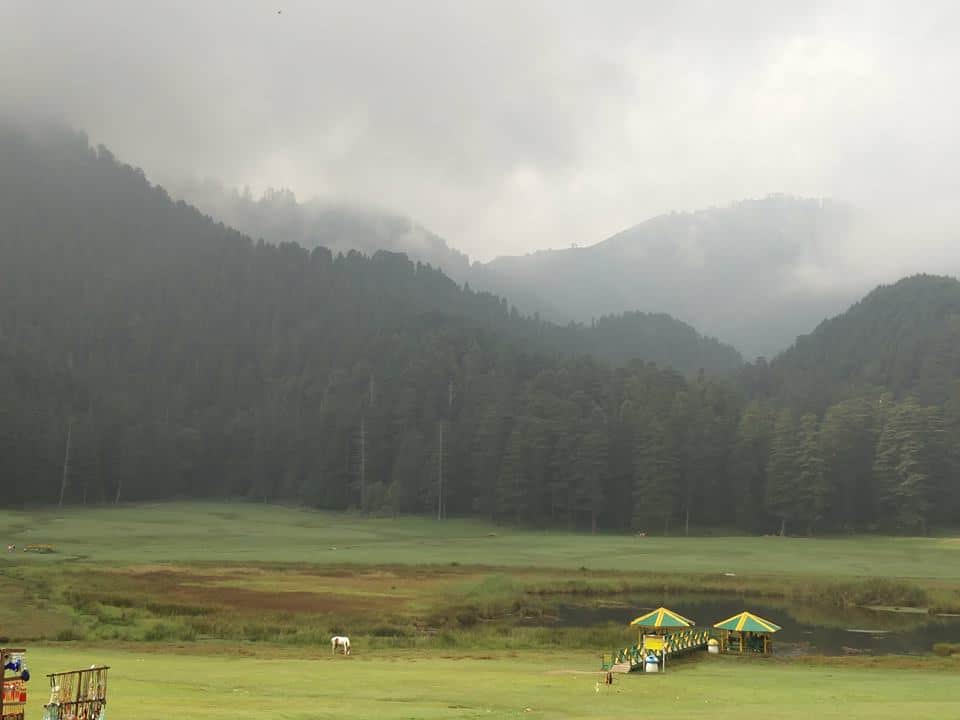
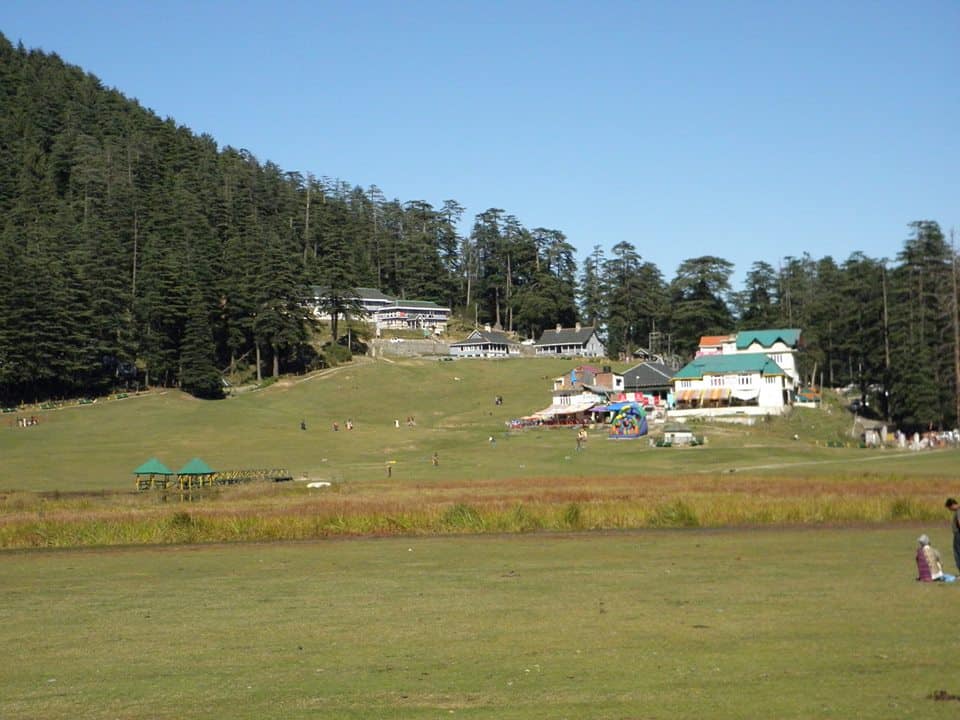
Khajjiar is the brand image of Dalhousie. The moment you mention the hill station, Khajjiar is what pops up in everyone’s mind. Located 21 km and almost an hour’s drive from the main town, Khajjiar sits at about 2,000 meters and is surrounded by tall, dense deodars and pines. It is often called the Mini Switzerland of India, and while that comparison is a stretch, the green meadow with a small lake at its center is genuinely beautiful.


The Khajjiar lake is technically almost dry, but the lush green meadows around it and thick forest cover make it a perfect picnic spot. You will find the usual recreational activities here, such as horse riding, zorbing, photo shoots in Himachali attire, and even short-distance paragliding. For me, the best thing to do there was simply to enjoy the scenic beauty and stroll around the meadows. Entry to Khajjiar is free, though activity vendors charge separately.
Kalatop Wildlife Sanctuary (8 km from Dalhousie)
Kalatop, meaning “black cap,” derives its name from the dark and thick forest that covers this hill. Located about 8 km from Dalhousie, Kalatop is a wildlife sanctuary that houses Himalayan black bear, black marten, leopards, pheasants, and other birds among oaks, pines, and deodars. The entry fee is Rs 250 per person (as of 2026). The sanctuary is open from 9 AM to 6 PM daily.
The best way to enjoy Kalatop is to walk the well-laid trails. Take a bus, taxi, or drive to Lakkarmandi, which is 4 km from Kalatop. From there, walk to Kalatop while soaking in the serene forest views. There is a forest rest house inside the sanctuary that can be booked through the HPTDC portal if you wish to spend a night right in the lap of the jungle. Keep in mind, you need to book well in advance, especially during summer months.
Dainkund Peak (2,755 m)
Dainkund Peak is the highest point in the Dalhousie area and offers panoramic views of the Dhauladhar and Pir Panjal ranges. The trek starts from the Dalhousie-Khajjiar road, about 6 km from Khajjiar, and the walk to the top takes about 30 to 45 minutes one way. It is an easy trek suitable for families and beginners. At the top, there is a small Pohlani Devi temple. On clear days, the view from the summit is spectacular, with snow-capped peaks stretching across the horizon. By car, it is a 10 to 20 minute drive from Dalhousie market, making it easy to combine with a Khajjiar day trip.
Bakrota Hills
If you are visiting Dalhousie during winters, Bakrota is where you should head for a good view of snow-covered mountains. Located at 2,085 meters, this is the highest point within Dalhousie town and is just over 4 km from the town center. We visited Dalhousie during summers and the place still looked pleasant with a background of Himalayan trees.
Since Bakrota is slightly on the outskirts, it is comparatively quiet and also has some beautiful homestays for those who prefer a peaceful setting. There are no specific activities here, just walks and strolls with mountain views. If you want to skip the tourist crowd around Gandhi Chowk, this is a good area to base yourself.
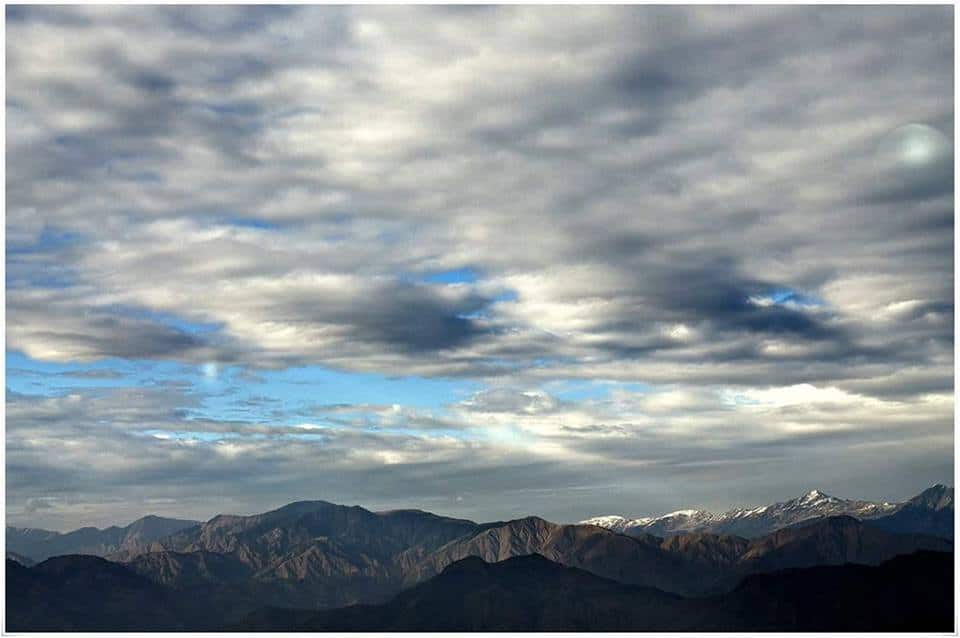
Satdhara Falls and Panchpulla
Satdhara Falls is located en route to Panchpulla, a popular picnic spot in Dalhousie. The waterfall is fed by seven streams (hence the name) of water flowing down from the mountains. People are allowed to take a dip in the falls except during monsoon when the water flow is heavy. The water is said to have medicinal properties because of the presence of mica in it.
Keep in mind that many waterfalls in the hills dry up by summer if there has not been enough snowfall during the season. So if you are visiting in May or June, do not expect a lot of water. Monsoon and post-monsoon (July to October) is when the falls look their best. From Gandhi Chowk, the walk to Satdhara is about 3 km, or you can take a cab.
Subhash Baoli and St. John’s Church
Subhash Baoli is a natural spring named after Netaji Subhash Chandra Bose, who stayed in Dalhousie during his illness in 1937. The area is quiet, surrounded by thick deodar forest, and makes for a pleasant morning walk from the town center. Nearby, St. John’s Church is one of the oldest churches in Dalhousie, built in 1863. Both spots are free to visit and give you a good sense of the town’s colonial heritage.
Chamba Town (56 km from Dalhousie)
If you have an extra day, the drive to Chamba town is worth it. Chamba sits on the banks of the Ravi river and is home to the 10th-century Lakshmi Narayan Temple complex, the Bhuri Singh Museum (with miniature Pahari paintings), and the famous Chaugan, a large open ground used for the annual Minjar Mela in July-August. The road from Dalhousie to Chamba via Khajjiar is scenic, so you can club both in a day trip. Plan at least 3 to 4 hours in Chamba itself to do it justice.
Where to Stay in Dalhousie? Hotels, Homestays, and Budget Options
Dalhousie has a good range of stay options across budgets. Here is what to expect in 2026.
Budget (Rs 800 to 1,500/night): Guesthouses and homestays around Subhash Chowk and the bus stand area. Basic rooms with hot water and mountain views. If you are a solo backpacker or traveling on a tight budget, these work perfectly fine.
Mid-range (Rs 2,000 to 4,000/night): Hotels like Hotel Grand View, Hotel Dalhousie Heights, and Hotel Snow Valley offer comfortable rooms with better amenities. We stayed at Hotel Grand View during our family visit. The staff was courteous and helpful, and the property has both outdoor and indoor play areas, which our toddler enjoyed thoroughly.
Premium (Rs 5,000 to 10,000/night): For those wanting a more luxurious experience, properties like the Grand View Hotel and Surya Resort offer premium rooms with spa facilities. The HPTDC properties are also a reliable option if you prefer government-run accommodation, with rates that are reasonable and bookable through the HPTDC portal.
Bakrota Homestays: For something quieter and more immersive, a homestay in the Bakrota area is a great choice. You get home-cooked Himachali food, personal attention from the hosts, and views without the crowd of the main town. Rates for these are typically in the Rs 1,000 to 2,500/night range depending on the season.
How Much Does a Dalhousie Trip Cost in 2026?
Here is a rough daily budget breakdown for a Dalhousie trip based on different travel styles. These are per-person estimates assuming double sharing for accommodation.
| Expense | Budget | Mid-Range | Comfort |
|---|---|---|---|
| Accommodation (per person, double sharing) | Rs 400-750 | Rs 1,000-2,000 | Rs 2,500-5,000 |
| Food (3 meals) | Rs 300-500 | Rs 500-800 | Rs 800-1,500 |
| Local Transport | Rs 100-200 | Rs 300-500 | Rs 500-1,000 |
| Activities/Entry | Rs 100-200 | Rs 200-400 | Rs 400-800 |
| Daily Total | Rs 900-1,650 | Rs 2,000-3,700 | Rs 4,200-8,300 |
For a 3-day trip, a budget traveler can expect to spend around Rs 3,000 to 5,000 (excluding travel to and from Dalhousie). A mid-range traveler will spend Rs 6,000 to 11,000. These numbers go up during peak season (May-June and December-January) when hotel rates increase by 30 to 50 percent. Off-season travel (October-November) can save you a significant amount.
What Is the Best Dalhousie Itinerary for 2 to 4 Days?
Here is a suggested itinerary depending on how many days you have.
Day 1: Arrive in Dalhousie. After checking into your hotel, walk around Gandhi Chowk and the Mall Road area. Visit St. John’s Church and Subhash Baoli in the afternoon. Enjoy sunset views from near the church area.
Day 2: Morning drive to Khajjiar. Spend 2 to 3 hours at the meadow. On the way back, stop at Dainkund Peak for the short trek (30-45 minutes to the top). If you have energy left, visit Panchpulla and Satdhara Falls in the evening.
Day 3: Morning trek to Kalatop Wildlife Sanctuary (start from Lakkarmandi). The walk through the forest is peaceful and takes about 2 to 3 hours round trip. Afternoon is free for shopping at the Tibetan Market or simply relaxing at your hotel.
Day 4 (optional): Day trip to Chamba town. Visit the Lakshmi Narayan Temple complex and Bhuri Singh Museum. Drive back to Dalhousie for the night or continue onward to your next destination.
If you only have a weekend, prioritize Day 1 and Day 2. Khajjiar is the non-negotiable stop, and the Dainkund trek on the way back is quick enough to add without losing much time. Save Kalatop for a longer visit.
What Are Some Practical Tips for Visiting Dalhousie?
Here are some things that will make your Dalhousie trip smoother.
ATMs and Cash: There are a few ATMs near Gandhi Chowk and the bus stand. However, they sometimes run out of cash, especially during peak season. Carry enough cash before arriving, particularly if you plan to visit Khajjiar or Chamba where card payments may not work at smaller shops.
Mobile Network: Jio and Airtel work reasonably well in Dalhousie town. BSNL coverage is the most reliable in surrounding areas. Network can get patchy on the drive to Khajjiar and beyond.
Clothing: Even in summer, evenings get chilly. Carry a light jacket or fleece. In winter, you will need proper woolen layers, especially if heading to Khajjiar or Dainkund.
Road Conditions: The Pathankot-Dalhousie road is generally well-maintained but can develop potholes during monsoon. If you are self-driving, any car with decent ground clearance will handle the roads without issues. No SUV or 4×4 is needed for Dalhousie itself.
No Permits Needed: Unlike destinations in Ladakh or Spiti, Dalhousie does not require any travel permits for Indian nationals. You can simply drive in and enjoy.
Best Local Food: Try the Himachali thali at local dhabas near the bus stand area. Rajma-chawal, siddu (steamed bread), and madra (chickpea curry) are regional staples worth trying. The Tibetan Market also has some good momos and noodle stalls.
Explore More of Himachal Pradesh
Dalhousie pairs well with other Himachal destinations. Here are some guides from the DwD community that might help you plan a longer Himachal trip.
- Dharamshala and McLeod Ganj Travel Guide
- Palampur, the Tea Capital of North India
- Bir Billing, Much More Than Paragliding
- Monasteries in Dharamshala, A Complete Guide
- Top Offbeat Places in Himachal Pradesh
- 5 Hill Station Alternatives to Shimla
- Snowfall Near Delhi: 7 Places in Himachal
- Narkanda, a Hidden Gem in the Shimla Hills
- Mashobra, an Offbeat Place near Shimla
Frequently Asked Questions
How many days are enough for a Dalhousie trip?
Two to three days are enough to cover the main attractions of Dalhousie, including Khajjiar, Kalatop, and the town itself. If you want to add Chamba town, plan for 4 days. A weekend trip from Delhi (Friday night departure, Sunday return) works perfectly for the highlights.
Is Dalhousie safe for solo travelers and women?
Yes, Dalhousie is quite safe for solo travelers and women traveling alone. It is a quiet, family-oriented hill station with a laid-back vibe. The local people are friendly and helpful. However, as with any travel, use standard precautions, avoid isolated areas after dark, and inform someone about your plans.
Can I visit Dalhousie and Dharamshala in one trip?
Absolutely. Dalhousie is about 116 km from Dharamshala, a 4-hour drive. A common itinerary is 2 days in Dharamshala/McLeod Ganj followed by 2 days in Dalhousie, or the other way around. HRTC buses connect the two towns daily.
Is Khajjiar worth visiting?
Yes, Khajjiar is worth a half-day trip from Dalhousie. The meadow is genuinely beautiful, especially in spring and early summer when the grass is lush green. The “Mini Switzerland” tag overhypes it a bit, but the setting with deodars surrounding a flat green meadow is unique in this part of Himachal. Plan 2 to 3 hours there.
Does it snow in Dalhousie?
Yes, Dalhousie receives snowfall typically from late December to February. Khajjiar and Dainkund Peak get heavier snowfall than the main town. If you specifically want to see snow, January is the most reliable month. Keep in mind that some budget hotels close during deep winter.
What is the nearest railway station to Dalhousie?
Pathankot Junction is the nearest major railway station, about 84 km (3 hours by road) from Dalhousie. It is well connected to Delhi, Amritsar, and Jammu by regular trains. From Pathankot, HRTC buses and taxis are readily available to Dalhousie.
Is there a direct bus from Delhi to Dalhousie?
Yes, HRTC operates overnight buses from Delhi ISBT Kashmere Gate to Dalhousie. The journey takes about 12 to 13 hours. Ordinary bus fares start around Rs 800 to 1,000, and semi-deluxe or Volvo services cost Rs 1,200 to 1,800. Private operators also run sleeper buses on this route. Book tickets on the HRTC website or through RedBus for convenience.
What is the taxi fare from Pathankot to Dalhousie?
A private taxi from Pathankot to Dalhousie costs around Rs 1,200 to 2,000 for the entire cab (95 km, about 3 hours). Shared taxis from Pathankot bus stand charge around Rs 300 to 400 per seat. Local sightseeing taxis within Dalhousie charge around Rs 2,000 to 3,000 per day for a sedan, or Rs 1,200 for a one-way Dalhousie to Khajjiar run.

Conclusion
Dalhousie is one of those hill stations that does not try too hard to impress you. It simply exists in its own quiet charm, with colonial architecture, deodar forests, and Himalayan views doing the talking. Whether you are planning a family vacation, a honeymoon, a solo retreat, or a weekend escape from Delhi, Dalhousie offers a refreshing change of pace without the chaos of more commercialized hill stations.
I hope this Dalhousie travel guide helps you plan your trip. If you have any questions or need help planning, feel free to drop them in the comments section below. You can also connect with fellow travelers in our DwD Community on Facebook for the latest tips and trip reports. If you found this guide useful, do share it with friends or family who might be planning a Himachal trip 🙂
All picture credits go to Shivang Mehta, Suyash Tripathi, and Soumyabrata Guhathakurta who were kind enough to share these pictures with us in the DoW Travel Community Facebook group. Want to feature your images in our articles? Feel free to join our Facebook group or follow us on Instagram and share your travel photos.
