


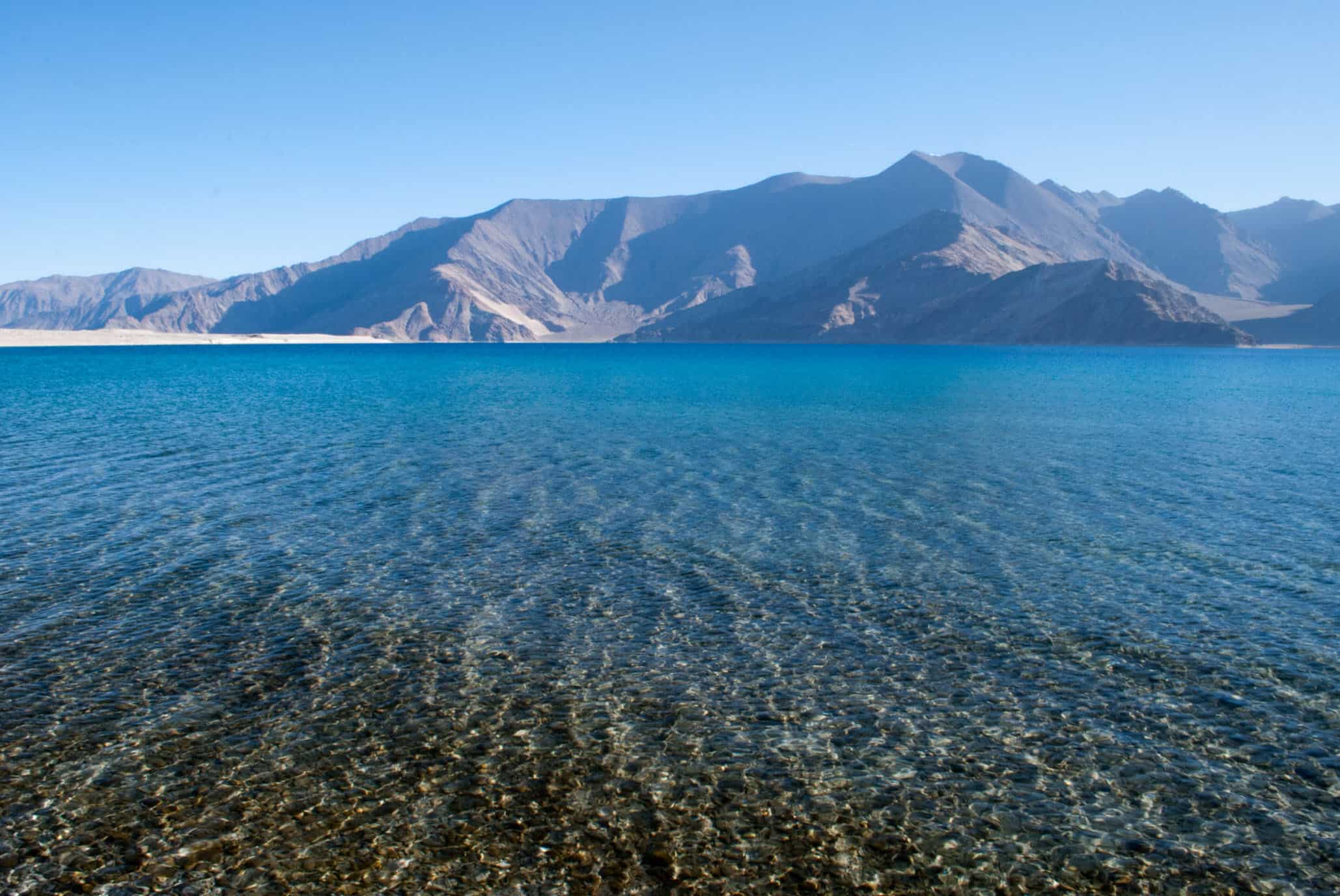
Pangong Tso is one of the most photographed lakes in India, and for good reason. The shifting shades of blue against a barren brown landscape make it a sight you carry with you long after you leave Ladakh. But here is the uncomfortable truth. The very tourism that celebrates this lake is slowly killing it. If you are planning a trip to Pangong Tso, understanding the environmental challenges this lake faces is just as important as knowing the route or the permit process.
I have been visiting Ladakh since 2012, and the change around Pangong over the years has been stark. What was once a quiet, remote lake with barely a handful of visitors now sees 300 to 600 vehicles every single day during the peak season. The camps, the plastic waste, the unregulated construction, it has all taken a toll. In this article, I will walk you through the environmental issues Pangong Lake faces in 2026, the court orders and regulations that have tried to fix things, and most importantly, what you and I can do as responsible travelers to protect this place.
Let's quickly dive into the details:
What Is the Current Environmental Situation at Pangong Lake?
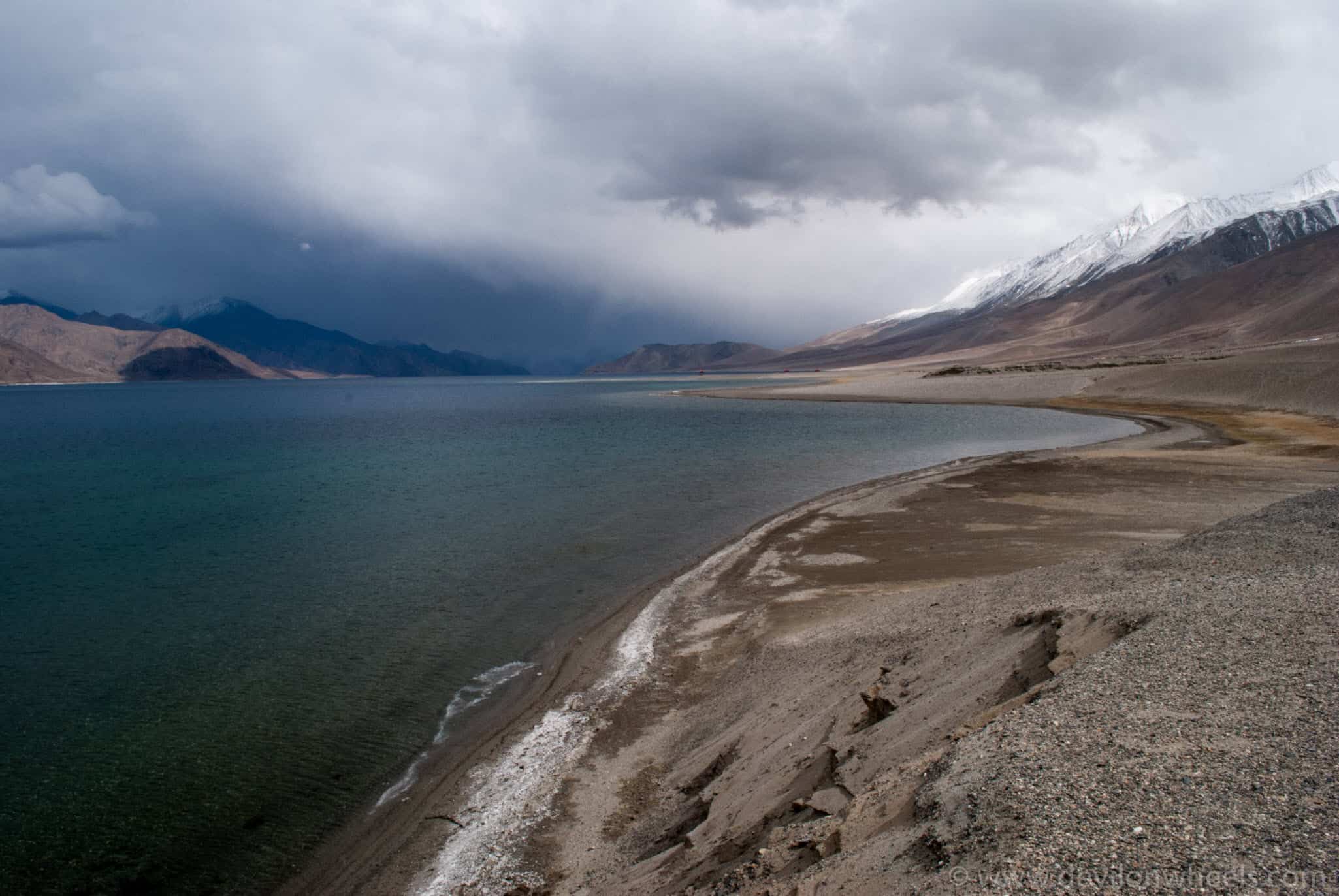
Pangong Tso sits at an altitude of 14,270 feet (4,350 meters), stretching 134 km across the border between India and China. About 40% of the lake lies in Indian-administered Ladakh, 50% in Tibet, and the remaining 10% is a disputed buffer zone. It is an endorheic lake, meaning it has no outflow. Whatever goes in stays in. This is what makes pollution here especially dangerous.
The post-3 Idiots era and the Instagram age brought a massive surge of tourists to Ladakh. Pangong became the poster child of this rush. During peak season (June to September), the numbers are staggering. With 300 to 600 cars arriving daily and each car carrying roughly four passengers, you are looking at 1,200 to 2,400 people reaching the lake every single day. According to a 2024 cleanup initiative across Ladakh, volunteers collected 11,975 items of waste from tourist areas, and plastics accounted for 93.3% of the total. The single biggest contributor? Single-use plastic water bottles. Rough estimates suggest that 5,000 to 10,000 plastic bottles are littered in the Pangong valley every day during the tourist season.
A lot has already been said about this in our detailed piece on Ladakh as an environmental disaster in the making. The situation at Pangong is perhaps the most visible example of what happens when mass tourism meets a fragile high-altitude ecosystem with zero waste management infrastructure.
What Court Orders and Regulations Exist to Protect Pangong Lake?
The Jammu and Kashmir High Court stepped in back in 2018 with a landmark order. Justice Tashi Rabstan directed the Leh district administration to remove all structures around Pangong Lake. The court also directed the administration to take up the issue of shifting structures erected by the army to another area. The observation was clear: the administration must take well-planned, sustainable, and scientific steps to prevent degradation or the ultimate death of the lake.
The High Court has directed the Leh district administration to remove all structures around the Pangong Lake. A bench of Justice Tashi Rabstan also directed the administration to take up the issue of shifting of the structures erected by army around the lake to any other area. The direction came after the court observed that the administration is required to take well planned, sustainable and scientific steps to prevent degradation or ultimate death of the lake.
“Not only this, a scheme/policy is also important to be formulated by the state government, if not already formulated, for preservation and conservation of Pangong Lake,” the court said.
Following this order, camping directly on the lakeshore was banned. The authorities made it clear that no tents, camps, or temporary structures would be allowed right at the water’s edge. The court also ordered the sealing of illegal bore wells and hand pumps being operated without permission around the lake. This was a significant step because unregulated water extraction was adding to the ecological stress.
Since Ladakh became a Union Territory in 2019, the administration has taken some additional steps. The Ladakh Pollution Control Committee (LPCC) has been organizing awareness programmes on plastic waste and solid waste management. In December 2024, the LPCC conducted a focused awareness drive on plastic waste, e-waste, and solid waste management rules, targeting both local communities and tour operators.
Where Can You Stay Near Pangong Lake in 2026?
With lakeside camping banned, your accommodation options are now in the villages along the road to Pangong, set back from the lakeshore. Keep in mind that these are basic setups at best. You are at 14,000+ feet in a region with no permanent power grid and limited water supply.
Spangmik Village (7 km from Pangong viewpoint) is the most popular base. This is where most camps and homestays are concentrated. Budget camps start at around Rs 2,000 to 3,000 per person (including meals), while premium eco-camps like Eco Travellers Camp charge Rs 4,500 to 5,000 per night. Spangmik has the widest range of options.
Lukung is closer to the lake approach and has a few cottages and guesthouses. Pangong Holiday Cottages here offer lake views at moderate rates, roughly Rs 3,000 to 4,000 per night.
Man and Merak Villages are further along the lake towards the east. These are quieter, less crowded, and more authentic. Homestays in Man and Merak range from Rs 1,500 to 2,500 per night with meals. A few retreat-style camps here charge Rs 5,000 to 9,000 per night.


For more details on hotels and accommodation options near Pangong Tso, check out our dedicated guide. If you want to explore further to Man and Merak, you will need an extended ILP, so plan that before leaving Leh.
How to Reach Pangong Lake from Leh?
Pangong Tso is approximately 160 km from Leh, and the drive takes about 5 to 7 hours depending on road conditions and traffic at Chang La pass. The route goes through Karu, Sakti, Chang La (17,585 feet), Tangtse, and then Lukung before reaching the lake.
By private taxi: A round trip from Leh to Pangong and back costs around Rs 10,000 to 15,000 for a sedan or SUV, depending on the season and vehicle type. This is the most comfortable option if you are traveling with family or a small group. Check our Leh Ladakh taxi rates guide for current pricing.

By shared taxi: Shared taxis leave from Leh Bus Stand every morning between 6:00 AM and 8:00 AM. The fare is roughly Rs 500 to 700 per person for a one-way drop. Availability depends on the season and demand.
By bus: There is a Leh to Pangong Tso bus service that runs on weekends (Saturday and Sunday), departing Leh at 6:00 AM. The fare to Tangtse is approximately Rs 186, and to the end of the route near Phobrang, it is around Rs 300. The bus reaches Pangong by late afternoon. Hence, you need to plan an overnight stay.
From Nubra Valley (direct route): If you are coming from Nubra Valley, there is a direct route via the Shyok River road. This avoids backtracking to Leh. The distance is about 160 km from Diskit and takes 5 to 7 hours. The road is mostly tarred now thanks to BRO improvements since 2016, though the Agham-Shyok section can be landslide-prone in July and August. We have a detailed guide on the Nubra to Pangong direct route that covers everything you need to know.
What Permits Do You Need for Pangong Lake in 2026?
You need an Inner Line Permit (ILP) to visit Pangong Tso. This applies to all Indian citizens. Foreign nationals need a Protected Area Permit (PAP) instead.
For Indian citizens, the ILP can be applied online through the LAHDC portal at lahdclehpermit.in. The fees as of 2026 are: Rs 400 Environmental Development Fee per person, Rs 20 per person per day for the ILP, and a one-time Rs 50 for Red Cross Fund. For a typical 2-day Pangong trip, the total comes to roughly Rs 490 per person.
For a detailed step-by-step walkthrough of the permit process, check our guide on how to get Ladakh Inner Line Permits online. The permits are usually processed within a few hours if you apply from Leh.
What Wildlife and Birds Can You Spot at Pangong Lake?
Did you know that Pangong Lake is home to around 90 bird species? Check out the citizen science eBird website where bird enthusiasts have recorded their bird observations at the Pangong Lake over the years.
Pangong Tso is an important breeding ground for migratory birds, especially during summer. The bar-headed goose, one of the highest-flying birds in the world, breeds here between May and September. Brahminy ducks (also called ruddy shelducks) are another common sight, their orange-brown plumage standing out against the blue water. You may also spot the black-necked crane, though sightings are rare and more common at Tso Moriri.
The lake also hosts fish species like Schizopygopsis stoliczkai, a cold-water fish adapted to high-altitude lakes. On land, keep an eye out for the kiang (Tibetan wild ass) and marmots in the grasslands along the approach road. The entire ecosystem around Pangong is delicate, and that is precisely why the environmental regulations matter so much.
How Is Waste Management Being Handled Around Pangong in 2026?
This is where the reality gets complicated. On paper, there are systems in place. In practice, they are struggling to keep up with the volume of tourists.
The UT Ladakh administration has established Solid Resource Management Centers (SRMCs) in 12 locations across Leh district, including one near Pangong. These are meant to handle waste segregation and processing. The Skampari Waste Management Plant, India’s first solar-powered waste facility, has a 30-tonne capacity and serves as a model for the region.
The Ladakh Pollution Control Committee has been running awareness campaigns, and the STP (Sewage Treatment Plant) Incentive Scheme 2024 offers partial reimbursement for hotels and guesthouses that install their own sewage treatment systems. Some eco-camps, like Eco Travellers at Spangmik, have taken the initiative on their own by setting up solar lighting, solar water heating, and proper garbage disposal systems. They also maintain a distance from the lakeshore to prevent wastewater from reaching the lake.
But the scale of the problem is enormous. When you have thousands of visitors generating plastic waste every day and the nearest proper recycling facility is back in Leh (160 km away), the logistics are brutal. Most of the waste still ends up in open dump sites or, worse, scattered across the landscape. The Extended Producer Responsibility (EPR) enforcement that was discussed at the LAHDC Mountain Legislators’ Meet in 2022 has been slow to materialize.

What Can You Do as a Responsible Traveler at Pangong?
I have said this before and I will say it again. The Himalayas are not a destination where you can afford to be a careless tourist. Here are practical things every visitor to Pangong should do.
Carry a reusable water bottle. This is the single most impactful thing you can do. Fill it at your hotel or homestay in Leh before leaving. Most camps near Pangong can refill it for you as well. One reusable bottle over a 2-day trip replaces 8 to 10 plastic bottles that would otherwise end up in the landscape.
Bring your trash back to Leh. There is no proper waste disposal infrastructure between Karu and Pangong. Carry a dedicated trash bag in your vehicle and bring everything back. This includes chip packets, biscuit wrappers, tissue papers, and especially wet wipes (which do not decompose for decades).
Skip the Maggi at roadside stalls. I know this is an unpopular opinion, but hear me out. Every Maggi packet generates plastic waste that has nowhere to go at 14,000 feet. The styrofoam bowls and plastic forks add to it. If you must eat, carry your own steel container and ask them to serve in that.
Choose eco-conscious camps. Ask before booking whether the camp has a waste disposal system, uses solar energy, and maintains a buffer distance from the lake. Camps that invest in these systems deserve your business over the cheapest option available.
Do not wash clothes or utensils in or near the lake. The soap and detergent residue is toxic to the aquatic ecosystem. Use water provided at your camp instead.
Stay on designated paths. The vegetation around Pangong is sparse but crucial. Walking off-trail crushes fragile plant life that takes years to recover at this altitude.
How to Plan a Responsible Pangong Trip: Practical Info
| Detail | Information |
|---|---|
| Altitude | 14,270 feet (4,350 m) |
| Distance from Leh | ~160 km via Chang La (5-7 hours) |
| Best time to visit | June to September |
| Permit required | ILP for Indians, PAP for foreigners |
| Permit cost (Indian) | ~Rs 490 for 2-day trip (EDF + ILP + Red Cross) |
| Budget camp (per person) | Rs 2,000 to 3,000/night with meals |
| Mid-range eco-camp | Rs 4,500 to 5,000/night |
| Homestay (Man/Merak) | Rs 1,500 to 2,500/night with meals |
| Private taxi (round trip) | Rs 10,000 to 15,000 |
| Shared taxi (one way) | Rs 500 to 700/person |
| Bus fare (Leh to Tangtse) | ~Rs 186 |
| Mobile network | BSNL only (intermittent beyond Tangtse) |
| ATM | None (nearest in Leh) |
| Fuel | None (nearest pump in Karu) |
What Is the Best Time to Visit Pangong Lake?
The lake is accessible from late May to early October, with June to September being the main tourist season. The road opens after the snow melts on Chang La pass, usually by mid-May, and closes by late October or November when the first heavy snowfall hits.
If you want to visit with fewer crowds and still have decent weather, aim for late May to mid-June or September. July and August bring the highest footfall, and that is when the environmental impact is at its peak. For a deeper understanding of Ladakh’s seasons, check our guide on the best time to travel to Ladakh.
In winter, the lake freezes completely despite being saline. It is a spectacular sight, but access is extremely limited and risky. Only experienced winter travelers should attempt it, and you would need special permissions from the district administration.
Related Reading
- Pangong Tso Lake Complete Travel Guide
- How to Get Ladakh Inner Line Permits Online
- Nubra to Pangong Tso Direct Route Tips
- Leh to Pangong Tso Bus Service
- Accommodation Options Near Pangong Tso
- Leh Ladakh Complete Itinerary
- Mobile Connectivity in Leh Ladakh
Frequently Asked Questions
Is camping allowed at Pangong Lake in 2026?
No, camping directly on the Pangong lakeshore has been banned since the 2018 High Court order. You cannot pitch your own tent at the water’s edge. However, authorized camps and homestays are available in nearby villages like Spangmik, Lukung, Man, and Merak, all set back from the lakeshore. Budget options start at Rs 2,000 per person per night including meals.
Why is Pangong Lake polluted?
The primary cause is mass tourism without adequate waste management infrastructure. During peak season, 300 to 600 vehicles visit the lake daily. Each visitor generates plastic waste (water bottles, food packaging, wet wipes) that has nowhere to go at this remote, high-altitude location. Pangong is an endorheic lake with no outflow, so pollutants that enter the water system stay there permanently. Illegal construction, bore wells, and untreated sewage from camps have added to the problem over the years.
Do I need a permit to visit Pangong Lake?
Yes. Indian citizens need an Inner Line Permit (ILP), which can be applied online at lahdclehpermit.in. The total cost is approximately Rs 490 for a 2-day trip (Rs 400 EDF + Rs 20/day ILP + Rs 50 Red Cross, one-time). Foreign nationals need a Protected Area Permit (PAP) obtained through a registered travel agent in Leh. Permits are usually processed within a few hours.
How far is Pangong Lake from Leh?
Pangong Tso is approximately 160 km from Leh via the Chang La pass route. The drive takes 5 to 7 hours depending on road conditions, traffic, and stops. The route crosses Chang La at 17,585 feet and passes through Sakti, Tangtse, and Lukung before reaching the lake.
What is the altitude of Pangong Lake?
Pangong Tso sits at approximately 14,270 feet (4,350 meters) above sea level. At this altitude, acute mountain sickness (AMS) is a real concern. Spend at least 2 days acclimatizing in Leh (11,520 feet) before heading to the lake. Read our detailed guide on AMS and acclimatization for tips.
Can I drive from Nubra Valley to Pangong Lake directly?
Yes, there is a direct route from Nubra Valley to Pangong via the Shyok River road. The distance from Diskit is about 160 km and takes 5 to 7 hours. The road is mostly tarred but can be tricky during July and August due to landslides near Agham-Shyok. There is no public transport on this route, so you will need a private vehicle or taxi. Make sure you have enough fuel as there is no pump between Diskit and Tangste.

Is there mobile network at Pangong Lake?
BSNL postpaid has the widest coverage in Ladakh and works intermittently at Pangong. Jio and Airtel may work at Tangtse (34 km before the lake) but signal drops off beyond that point. Do not rely on mobile data for navigation or communication at the lake itself. Download offline maps before leaving Leh. For complete coverage details, check our mobile connectivity in Leh Ladakh guide.
Last Updated: March 2026
Pangong Tso has survived centuries of harsh Ladakhi winters, but it may not survive decades of unchecked tourism. Every one of us who visits this lake has a choice. We can be part of the problem or part of the solution. Carry your trash back, choose responsible accommodation, skip the single-use plastic, and spread the word. If you have questions about planning a responsible trip to Pangong or anywhere in Ladakh, feel free to drop a comment below or join our Discover With Dheeraj community on Facebook where fellow travelers share real-time updates and tips 🙂

13 Comments
Comments section gets closed in 90 days. To ask your travel questions, you can follow my YouTube Channel for a faster reply or for a much slower reply follow me on Instagram. :)
Thank you Amit for a thorough schedule suggestion. Based on your suggestion, I have changed my plans of returning to Leh from Nubra and instead would now proceed directly to Pangong Tso (Hotel bookings have been rescheduled). However, due to other family constraints, spending an extra day in Leh for acclamatisation could not be managed. Keeping my fingers crossed.
Hello Mr. Bhattacharya. Thanks for asking me about your upcoming trip.
1st of all I would like to ask you how many people are your going.?Are you going with family or friends?
I would like to answer as per my experience in Ladakh.
It would have started Snowfall in some parts of Ladakh so weather would be very cold so carry Enough winter Clothes with you. You have made a short trip in which you have not give time to acclimatize yourself. Carry Diamox everytime with you.
Don’t stop more than 10-15 minutes in Khardungla. As temperature wil surely be in minus and if there would be snowfall around your dates you can be stranded in between.
You have made a mistake by going from Leh-Nubra and then coming back from Nubra-Leh and then proceed to Leh-Pangong and Pangong to Leh Back. This way you will be wasting your one day and then trip will also become more hectic and boring as you will follow the same path for To and Fro for Nubra and Pangong,
I will suggest you to talk to the tent or Camp owner whom you have booked for Stay in Pangong. If he is ready to change the dates. He may change the dates on your request as this is not the tourist season and his camps or cottages might be empty.
If I were u I would have followed the Itinerary like this.
15th Leh Rest. Explore Leh market. Go to Shanti Stupa by taxi not on foot.
16th Leh-Kargil Road by Bike till 40-50Km or go to lumaruyu 120 km from Leh in Taxi. Road is smooth and better than any national highways. Sightseeing in between.
17th Leh-Nubra. Sand Dunes &Bacterian Camel Ride. Stay at Nubra Valley(Hunder).
18th Nubra Valley-Pangong. Stay at Pangong.
19th Pangong To Leh.
20th Flight
By this itinerary you would have given time to acclimatize yourself and you are not tiring your self and not making it boring and you are also covering Srinagar highway as well.
1st of all talk to Pangong Camp or Tent owner if he he ready to give you refund for your booking if he is ready to cancel because some allows you to cancel the booking 15 days prior to stay. If not ready to cancel then ask him to change the dates. And follow the itinerary that I have provided. If you want I will provide you the contact details for Nubra Valley and Pangong Cottage Details For Stay. Nubra Valley Cottage was the best accomodation for our stay@2000 Rs including Breakfast and Dinner for a couple with best quality food and service and also the view.
It would be very hard for you to stay in Camps in Pangong if you have booked camp. In September it was so chilled and that is in Cottage so I don’t know what would happen in October when the weather would have been more chilled, If you have booked tent then try to cancel it on first place, if he is not ready then try to change the dates on priority.
You can ask any further more queries. I would be happy to answer.
Dear Amit,
Thank you for your offer to help. We are reaching Leh on 15th October. Proceeding to Nubra on 16th. Return to Leh on 17th. To Pangong on 18th. Again back to Leh on 19th. Return flight on 20th. Please guide. Accommodations are booked. If I would have seen your post before, could have saved some money. Already paid advance for stay at Pangong. Hope it will be operating till then, in view of the court order.
Hello Mr. Bhattacharya. Thanks for asking me about your upcoming trip.
1st of all I would like to ask you how many people are your going.?Are you going with family or friends?
I would like to answer as per my experience in Ladakh.
It would have started Snowfall in some parts of Ladakh so weather would be very cold so carry Enough winter Clothes with you. You have made a short trip in which you have not give time to acclimatize yourself. Carry Diamox everytime with you.
Don’t stop more than 10-15 minutes in Khardungla. As temperature wil surely be in minus and if there would be snowfall around your dates you can be stranded in between.
You have made a mistake by going from Leh-Nubra and then coming back from Nubra-Leh and then proceed to Leh-Pangong and Pangong to Leh Back. This way you will be wasting your one day and then trip will also become more hectic and boring as you will follow the same path for To and Fro for Nubra and Pangong,
I will suggest you to talk to the tent or Camp owner whom you have booked for Stay in Pangong. If he is ready to change the dates. He may change the dates on your request as this is not the tourist season and his camps or cottages might be empty.
If I were u I would have followed the Itinerary like this.
15th Leh Rest. Explore Leh market. Go to Shanti Stupa by taxi not on foot.
16th Leh-Kargil Road by Bike till 40-50Km or go to lumaruyu 120 km from Leh in Taxi. Road is smooth and better than any national highways. Sightseeing in between.
17th Leh-Nubra. Sand Dunes &Bacterian Camel Ride. Stay at Nubra Valley(Hunder).
18th Nubra Valley-Pangong. Stay at Pangong.
19th Pangong To Leh.
20th Flight
By this itinerary you would have given time to acclimatize yourself and you are not tiring your self and not making it boring and you are also covering Srinagar highway as well.
1st of all talk to Pangong Camp or Tent owner if he he ready to give you refund for your booking if he is ready to cancel because some allows you to cancel the booking 15 days prior to stay. If not ready to cancel then ask him to change the dates. And follow the itinerary that I have provided. If you want I will provide you the contact details for Nubra Valley and Pangong Cottage Details For Stay. Nubra Valley Cottage was the best accomodation for our stay@2000 Rs including Breakfast and Dinner for a couple with best quality food and service and also the view.
It would be very hard for you to stay in Camps in Pangong if you have booked camp. In September it was so chilled and that is in Cottage so I don’t know what would happen in October when the weather would have been more chilled, If you have booked tent then try to cancel it on first place, if he is not ready then try to change the dates on priority.
You can ask any further more queries. I would be happy to answer.
Thank you Amit for a thorough schedule suggestion. Based on your suggestion, I have changed my plans of returning to Leh from Nubra and instead would now proceed directly to Pangong Tso (Hotel bookings have been rescheduled). However, due to other family constraints, spending an extra day in Leh for acclamatisation could not be managed. Keeping my fingers crossed.
I would like to update on the camping nearby Pangong Lake. I came back from Ladakh Trip yesterday only & stayed in cottage in spangmilk from 16th to 17th Sep. 1st of all I will like to update that camps and cottage are still operational over there, But this might be the last month of camping as some of the camps started packing up for the season. But my suggestion is don’t prebook any camp, as you will get lesser price over there as very less crowd was there. Most of the people were making day visit from Nubra or Leh, But for this you have to start around 6-7 a.m then. We started at 9 a.m from Nubra and we reached around 4 p.m near Pangong including 2 hours of breaks in between. We were charged 2000 for 1 night stay including breakfast and dinner in cottage. We took Himalayan Wooden Cottage in Spangmilk.
My another suggestion is that, don’t take camp over there, Go for cottage if you want to stay over there near Pangong.There was so cold over there that even after taking 1 Quilt And 3 blanket it was chilled over there in the cottage and many of our group person felt shortness of breathe during that night stay and we had to take diamox. So it would be very very cold in Camps.
There was not much activities to do near Pangong. You can just admire the beauty of Pangong and click hundred of photos.
Nubra-Pangong Shyok Road is operational and it took 7 hours for us to reach over there including 2 hours of lunch and tea breaks.
I stayed in Pangong and Nubra & if anyone want to have any queries for their upcoming trip I would be happy to assist.
Thank you so much Amit for these great updates on Pangong Tso camping getting banned and of course other tips. I am sure it will help many others
as I have heard that High Court has ordered to shut down camps nearby Pangong Lake. We are reaching Leh on 13th Sep and were planning to have night stay in Camps on 16th Sep nearby Pangong Lake. So now what can we do?
Our itinerary will get change?
Our plan Was like that.
13 sep Reach Leh by Air. Rest
14 Sep Local Sightseeing
15 Sep Nubra Valley Stay
16 Sep Nubra Valley-Pangong. Stay at Pangong.
17th Back from Pangong to Leh
18th River Rafting.
19th Back to Delhi by Air
Now if we come back from Pangong on 16th Sep by not staying at Pangong lake. What should we do on 17th Sep. Where should we go? Because 17th will be our free day then. Or We should take accomodation at some other place nearby Pangong Lake. And if we should do that Kindly provide the affordable and best option.
Or whatever you feel we should change in Itinerary kindly provide the details.
Thanks
I think I did reply to your other comment. Right?
We are visiting Leh on 13th Sep and were planning to night stay in Camp at Pangong Lake on 16th Sep. As the court has ordered to shut down camps, Are we not going to get accomodation over there in Camps. And if all the camps is going to shut down please provide the affordable and best option available nearby Pangong Lake.
Amit, what I understand from the order is that the camps which are illegally setup without permission will fall under the removal of this order. So, I do not think all camps (unless all were illegal) will be removed.
Hi !
Good move no doubt! Does that mean all construction, both permanent and temporary, to be removed? If so, what will happen to Spangmik, Maan and Merak villages, as I understand, locals are living there for many years, while tourism influx has caused the spread of commercial resort like tents in these villages. So is there any clarity on what will happen to them (both commercial and residential) as of now?
There’s some more question- Does that mean there will be no tents (commercial) / home-stays near the lake- if so, where will people stay, if they wish to do so? And if someone like to bring their own tents- will they be allowed to pitch it there? – Or there will be some arrangements like that in the Chandratal, where you need to stay 2+ kms away from the Lake for the conservation of the nature.
-there are lots of questions and we may not have clarity on all of them right now. But these clarification will help many.
Thanks a lot in advance!!
Sayantan bhai, although things will get clear in few days and I will call few locals to get the understanding but this ban is for all illegal constructions and encroachments. Residential structures will not be moved IMO. Anything which is setup illegally without authorized permission will be taken away. I am sure there will be arrangement like that only that you will be allowed to stay some far away from the lake and around village pitching your own camps should be OK as even as per Ramsar site rules, the camps can be pitched 500 Mtrs way.